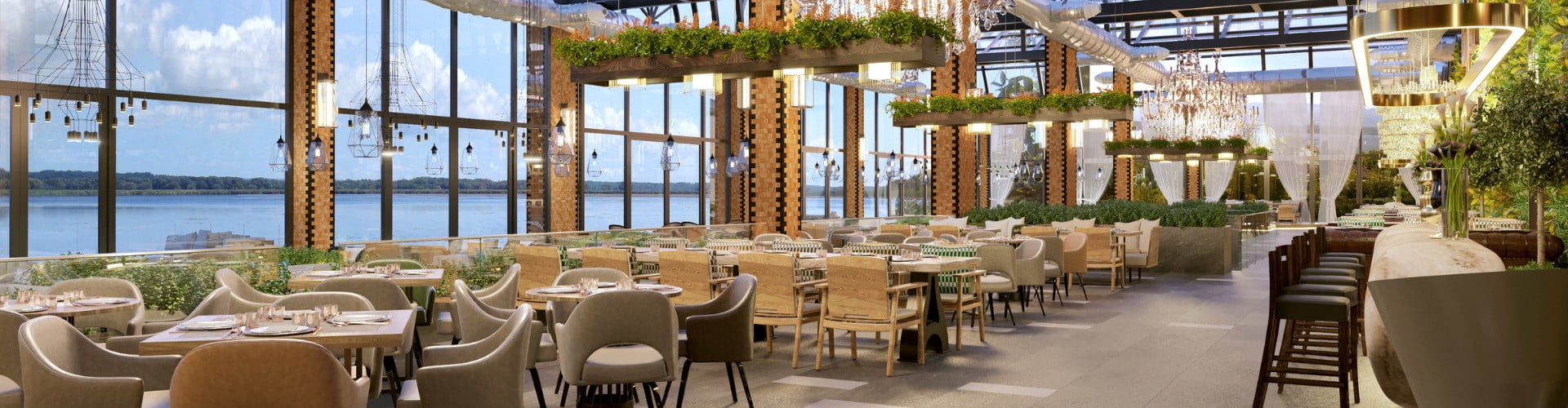
रेस्तरां
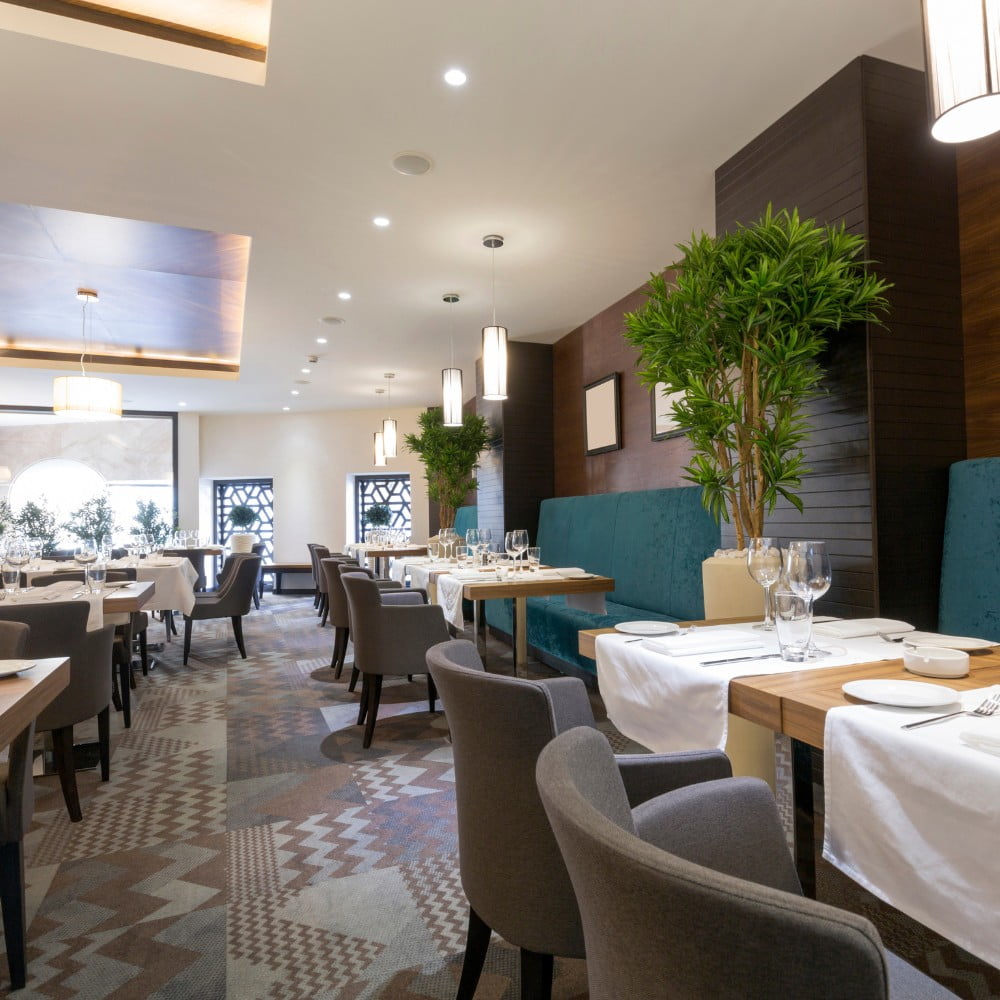
रेस्तरां के लिए ऊर्जा-बचत डिज़ाइन गाइड देखें, जहां कुशल लाइटिंग नियंत्रण ऊर्जा की खपत को कम करते हुए एक स्वागत योग्य माहौल बनाने की कुंजी है।

अपने रेस्तरां के लिए स्वचालित लाइटिंग नियंत्रण की शक्ति का उपयोग करें
रेस्तरां हलचल भरे स्थान होते हैं, जो स्वादिष्ट भोजन की सुगंध, कटलरी की खनक और बातचीत की गुनगुनाहट से भरे होते हैं। हालांकि, पर्दे के पीछे, ये उच्च-ऊर्जा खपत वाले क्षेत्र भी हैं, विशेष रूप से जब लाइटिंग की बात आती है। मूड सेट करने वाली वार्म एम्बिएंट लाइटिंग से लेकर रसोई में ब्राइट टास्क लाइटिंग और स्टोरेज क्षेत्रों में सुरक्षा लाइटिंग तक, रेस्तरां विभिन्न प्रकार की लाइटिंग का उपयोग करते हैं, जो सभी महत्वपूर्ण मात्रा में ऊर्जा की खपत करती हैं।
इसके अलावा, रेस्तरां के अनियमित और विस्तारित संचालन घंटों के कारण अक्सर लाइटें अनावश्यक रूप से जलती रह जाती हैं, जिससे उच्च ऊर्जा बर्बादी होती है। यह न केवल रेस्तरां के लाभ को प्रभावित करता है बल्कि ऊर्जा संरक्षण के बड़े मुद्दे में भी योगदान देता है।
इसे संबोधित करने के लिए, Rayzeek ऑक्यूपेंसी सेंसर के रूप में एक समाधान प्रदान करता है। ये सेंसर लोगों की उपस्थिति या अनुपस्थिति के आधार पर स्वचालित रूप से लाइटिंग को नियंत्रित कर सकते हैं, जिससे ऊर्जा की खपत में काफी कमी आती है। एक रेस्तरां सेटिंग में, इसका मतलब है कि डाइनिंग एरिया, किचन, रेस्ट रूम और स्टोरेज एरिया में लाइटें बिना किसी मैनुअल हस्तक्षेप के, इन स्थानों का उपयोग न होने पर स्वचालित रूप से बंद हो सकती हैं। यह न केवल ऊर्जा बचाता है बल्कि US एनर्जी कोड्स/एनर्जी मानकों द्वारा निर्धारित ऊर्जा दक्षता आवश्यकताओं का भी पालन करता है।
ऊर्जा कोड का अनुपालन करें

इंटरनेशनल एनर्जी कंजर्वेशन कोड (IECC) इंटरनेशनल कोड काउंसिल (ICC) द्वारा विकसित एक मॉडल कोड है जो भवनों में ऊर्जा दक्षता के लिए न्यूनतम डिजाइन और निर्माण आवश्यकताओं को स्थापित करता है। ऊर्जा संरक्षण प्रथाओं और प्रौद्योगिकियों में नवीनतम नवाचारों को शामिल करने के लिए IECC को हर तीन साल में अपडेट किया जाता है।
IECC, आपको इस पर ध्यान क्यों देना चाहिए
IECC को संयुक्त राज्य भर के राज्यों और नगर पालिकाओं द्वारा व्यापक रूप से अपनाया गया है। IECC ऊर्जा उपयोग के विभिन्न पहलुओं को कवर करता है, जिसमें बिल्डिंग लिफाफा (दीवारें, छतें और खिड़कियां), हीटिंग और कूलिंग सिस्टम और लाइटिंग सिस्टम शामिल हैं।
IECC विभिन्न क्षेत्रों में खाली पड़े स्थानों में ऊर्जा की बर्बादी को कम करने के लिए विशिष्ट लाइटिंग नियंत्रणों, जैसे ऑक्यूपेंसी सेंसर, का आदेश देता है।

ANSI/ASHRAE/IES मानक 90.1, कम ऊंचाई वाले आवासीय भवनों को छोड़कर साइटों और भवनों के लिए ऊर्जा मानक, अमेरिकन सोसाइटी ऑफ हीटिंग, रेफ्रिजरेटिंग एंड एयर-कंडीशनिंग इंजीनियर्स (ASHRAE) द्वारा प्रकाशित एक व्यापक रूप से मान्यता प्राप्त ऊर्जा मानक है।
ASHRAE 90.1, आपको इस पर ध्यान क्यों देना चाहिए
ASHRAE 90.1 का उपयोग पूरे संयुक्त राज्य अमेरिका में बिल्डिंग ऊर्जा कोड के लिए एक बेंचमार्क के रूप में किया जाता है और यह IECC के भीतर एक अनुपालन मार्ग के रूप में कार्य करता है जो वाणिज्यिक भवनों के घटकों जैसे बिल्डिंग लिफाफे, HVAC सिस्टम, वॉटर हीटिंग सिस्टम और लाइटिंग सिस्टम के ऊर्जा-कुशल प्रदर्शन के लिए न्यूनतम आवश्यकताओं की रूपरेखा तैयार करता है।
ASHRAE 90.1 मानक अधिकतम स्वीकार्य लाइटिंग पावर घनत्व और न्यूनतम लाइटिंग नियंत्रण आवश्यकताओं को निर्दिष्ट करता है, जिसमें विशिष्ट क्षेत्रों में ऑक्यूपेंसी सेंसर का उपयोग शामिल है।

कैलिफोर्निया बिल्डिंग स्टैंडर्ड्स कोड का शीर्षक 24, भाग 6, जिसे आधिकारिक तौर पर आवासीय और गैर-आवासीय भवनों के लिए भवन ऊर्जा दक्षता मानक के रूप में जाना जाता है, शीर्षक 24 कैलिफोर्निया ऊर्जा आयोग द्वारा प्रशासित किया जाता है और नई ऊर्जा दक्षता प्रौद्योगिकियों और विधियों को दर्शाने के लिए समय-समय पर अपडेट किया जाता है।
शीर्षक 24, आपको इस पर ध्यान क्यों देना चाहिए
शीर्षक 24 अपनी कठोर आवश्यकताओं के लिए जाना जाता है, जिसे अक्सर संयुक्त राज्य अमेरिका के कई अन्य ऊर्जा कोडों की तुलना में अधिक सख्त माना जाता है। शीर्षक 24 भवन निर्माण के सभी पहलुओं के लिए सख्त ऊर्जा प्रदर्शन मानकों का आदेश देता है, जिसमें हीटिंग, वेंटिलेशन, एयर कंडीशनिंग (HVAC), वॉटर हीटिंग और लाइटिंग शामिल हैं।
शीर्षक 24 में ऑक्यूपेंसी सेंसर लगाने की आवश्यकता होती है जो व्यावसायिक भवनों के विशिष्ट क्षेत्रों में कमरे में उपस्थिति के आधार पर प्रकाश को समायोजित करते हैं ताकि यह सुनिश्चित किया जा सके कि ऊर्जा बर्बाद न हो।
राज्य द्वारा ऊर्जा कोड अपनाना
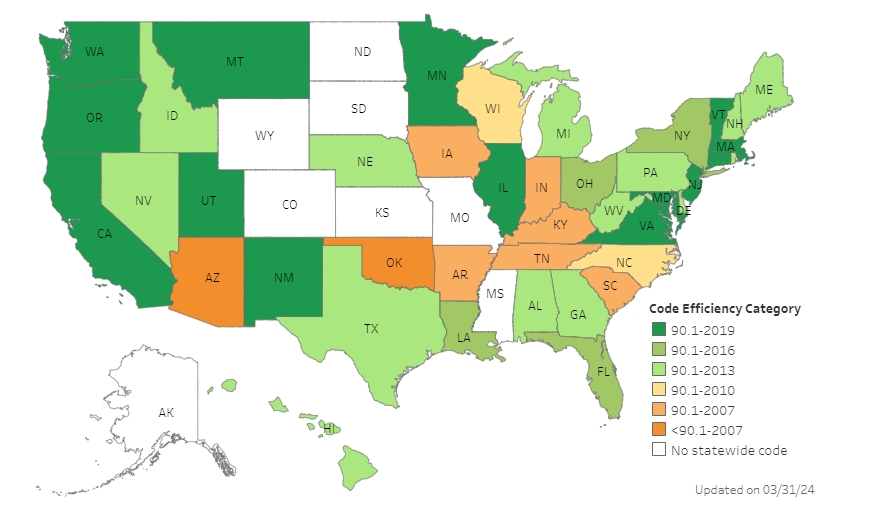
विस्तृत तालिका देखने के लिए विस्तार करें ↓
| राज्य | वर्तमान व्यावसायिक कोड | व्यावसायिक कोड दक्षता श्रेणी |
|---|---|---|
| अलबामा | 90.1-2013 | 90.1-2013 |
| अलास्का | राज्य भर में कोई नहीं | राज्य स्तर पर कोई कोड नहीं |
| एरिज़ोना | होम रूल | <90.1-2007 |
| अरकांसस | 2009 IECC और 90.1-2007 | 90.1-2007 |
| कैलिफ़ोर्निया | 2022 बिल्डिंग एनर्जी एफिशिएंसी स्टैंडर्ड्स | 90.1-2019 |
| कोलोराडो | होम रूल | राज्य स्तर पर कोई कोड नहीं |
| कनेक्टिकट | 2021 IECC और 90.1-2019 | 90.1-2019 |
| डेलावेयर | 2018 IECC और 90.1-2016 | 90.1-2013 |
| डिस्ट्रिक्ट ऑफ कोलंबिया | 90.1-2013^ | 90.1-2019 |
| फ्लोरिडा | 2021 IECC और 90.1-2019^ | 90.1-2016 |
| जॉर्जिया | 2015 IECC और 90.1-2013^ | 90.1-2013 |
| हवाई | होम रूल | 90.1-2013 |
| इडाहो | 2018 IECC और 90.1-2016 | 90.1-2013 |
| इलिनॉय | 2021 IECC और 90.1-2019 | 90.1-2019 |
| इंडियाना | 90.1-2007 | 90.1-2007 |
| आयोवा | 2012 IECC और 90.1-2010 | 90.1-2007 |
| कैनसास | होम रूल | राज्य स्तर पर कोई कोड नहीं |
| केन्टकी | 2012 IECC और 90.1-2010 | 90.1-2007 |
| लुइसियाना | 2021 IECC और 90.1-2019^ | 90.1-2016 |
| मेन | 2015 IECC और 90.1-2013 | 90.1-2013 |
| मैरीलैंड | 2021 IECC और 90.1-2019^ | 90.1-2019 |
| मैसाचुसेट्स | 2018 IECC और 90.1-2016^ | 90.1-2019 |
| मिशिगन | 2015 IECC और 90.1-2013^ | 90.1-2013 |
| मिनेसोटा | 90.1-2019^ | 90.1-2019 |
| मिसिसिपी | राज्य भर में कोई नहीं | राज्य स्तर पर कोई कोड नहीं |
| मिसौरी | होम रूल | राज्य स्तर पर कोई कोड नहीं |
| मोन्टाना | 2021 IECC और 90.1-2019 | 90.1-2019 |
| नेब्रास्का | 2018 IECC और 90.1-2016 | 90.1-2013 |
| नेवादा | 2018 IECC और 90.1-2016 | 90.1-2013 |
| न्यू हैम्पशायर | 2018 IECC और 90.1-2016^ | 90.1-2013 |
| न्यू जर्सी | 90.1-2019 | 90.1-2019 |
| न्यू मैक्सिको | 2021 IECC और 90.1-2019^ | 90.1-2019 |
| न्यू यॉर्क | 2018 IECC और 90.1-2016^ | 90.1-2016 |
| नॉर्थ कैरोलिना | 2015 IECC और 90.1-2013^ | 90.1-2010 |
| नॉर्थ डकोटा | होम रूल | राज्य स्तर पर कोई कोड नहीं |
| ओहायो | 2021 IECC और 90.1-2019^ | 90.1-2016 |
| ओक्लाहोमा | 2006 IECC और 90.1-2004 | <90.1-2007 |
| ऑरेगन | 90.1-2019 | 90.1-2019 |
| पेनसिल्वेनिया | 2018 IECC और 90.1-2016 | 90.1-2013 |
| रोड आइलैंड | 2018 IECC और 90.1-2016^ | 90.1-2013 |
| साउथ कैरोलिना | 2009 IECC और 90.1-2007 | 90.1-2007 |
| साउथ डकोटा | होम रूल | राज्य स्तर पर कोई कोड नहीं |
| टेनेसी | 2021 IECC और 90.1-2013 | 90.1-2007 |
| टेक्सास | 2015 IECC और 90.1-2013 | 90.1-2013 |
| यूटा | 2021 IECC और 90.1-2019^ | 90.1-2019 |
| वर्मोंट | 2021 IECC और 90.1-2019^ | 90.1-2019 |
| वर्जीनिया | 2021 IECC और 90.1-2019^ | 90.1-2019 |
| वाशिंगटन | 2018 वाशिंगटन राज्य ऊर्जा संहिता | 90.1-2019 |
| टेनेसी | 2012 IECC और 90.1-2010 | 90.1-2007 |
| टेक्सास | 2015 IECC और 90.1-2013 | 90.1-2013 |
| यूटा | 2021 IECC और 90.1-2019^ | 90.1-2019 |
| वर्मोंट | 2018 IECC और 90.1-2016^ | 90.1-2019 |
| वर्जीनिया | 2021 IECC और 90.1-2019^ | 90.1-2019 |
| वाशिंगटन | 2018 वाशिंगटन राज्य ऊर्जा संहिता | 90.1-2019 |
| वेस्ट वर्जीनिया | 90.1-2013 | 90.1-2013 |
| विस्कॉन्सिन | 2015 IECC और 90.1-2013^ | 90.1-2010 |
| व्योमिंग | होम रूल | राज्य स्तर पर कोई कोड नहीं |
- ^ जब ऊर्जा दक्षता को प्रभावित करने वाले किसी संशोधन को DOE प्रोटोटाइप बिल्डिंग मॉडल का उपयोग करके परिमाणित किया जा सकता है, तो उन्हें विश्लेषण में शामिल किया गया था।
- IECC और 90.1 दोनों को अपनाने वाले राज्यों के लिए, IECC संहिता का आमतौर पर इस अध्ययन में राज्य की वर्तमान संहिता के रूप में विश्लेषण किया जाता है, उन राज्यों को छोड़कर जिनमें IECC में व्यापक संशोधन किए गए हैं।
Design Guide Key Concepts for Restaurants
Designing an energy-efficient lighting control solution for restaurants involves strategic placement of occupancy sensors to ensure comprehensive coverage of the space.
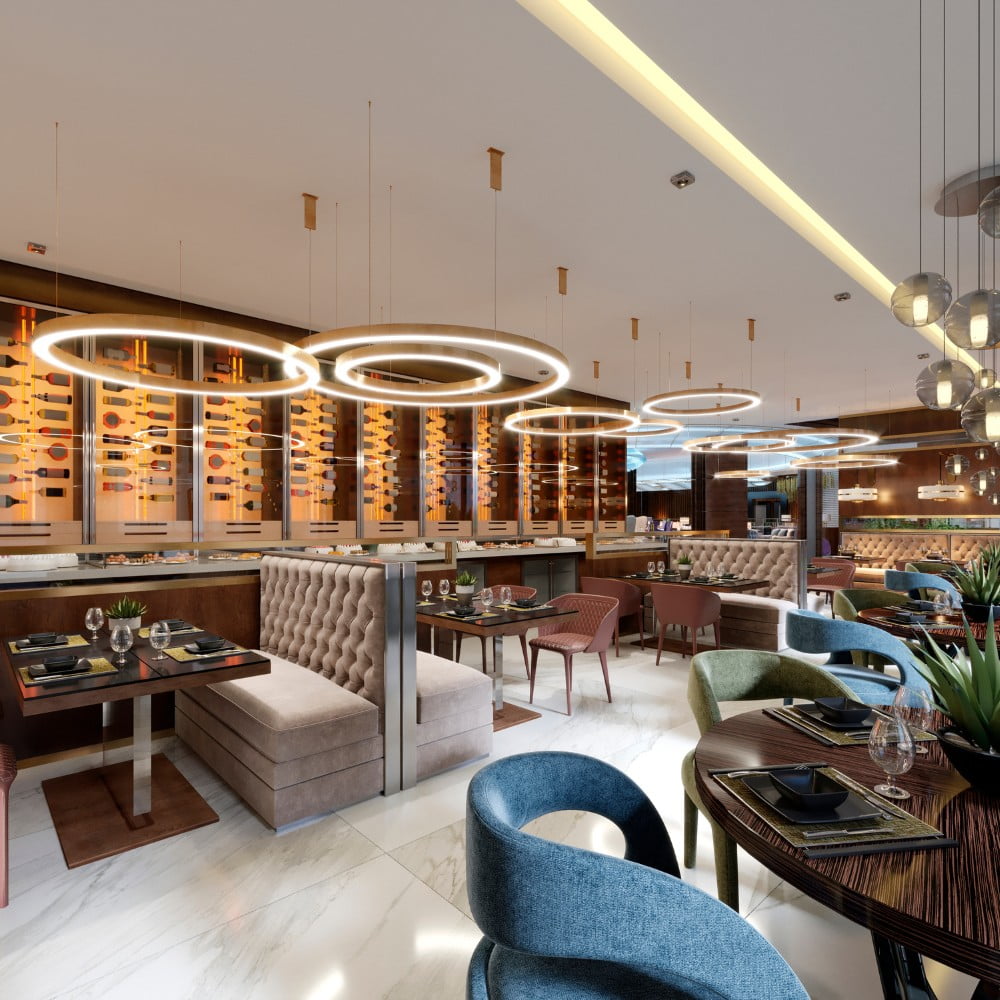
In a restaurant setting, the placement of occupancy sensors can be tailored to the specific needs of each area. Here’s a possible design guide:
- Dining Area: Ceiling occupancy sensors can be installed to cover the main dining area. These sensors can automatically turn on the lights when guests are seated and turn them off when the area is vacant. To avoid any blind spots, ensure that the coverage areas of these sensors overlap. This ensures that the dining area is always well-lit when needed, enhancing the dining experience while saving energy.
- Kitchen: Given the high activity level in restaurant kitchens, wall occupancy/vacancy sensors can be installed. These sensors can be manually turned on at the start of the day and when the kitchen is not in use, especially during off-peak hours, the lights can be automatically turned off, reducing unnecessary energy consumption.
- शौचालय: Restrooms in restaurants are ideal for ceiling occupancy sensors. These sensors can automatically control lighting based on occupancy, ensuring lights are not left on unnecessarily.
- Storage and Utility Rooms: In storage and utility rooms, where occupancy is sporadic, wall occupancy/vacancy sensors can be installed. These sensors can automatically turn the lights on when someone enters the room and off when the room is vacant.
- Manual Control: All lighting can be manually turned ON/OFF using the integrated controls in our occupancy/vacancy sensors. This provides flexibility for staff to control lighting based on specific needs or situations.
Featured Products & Solutions
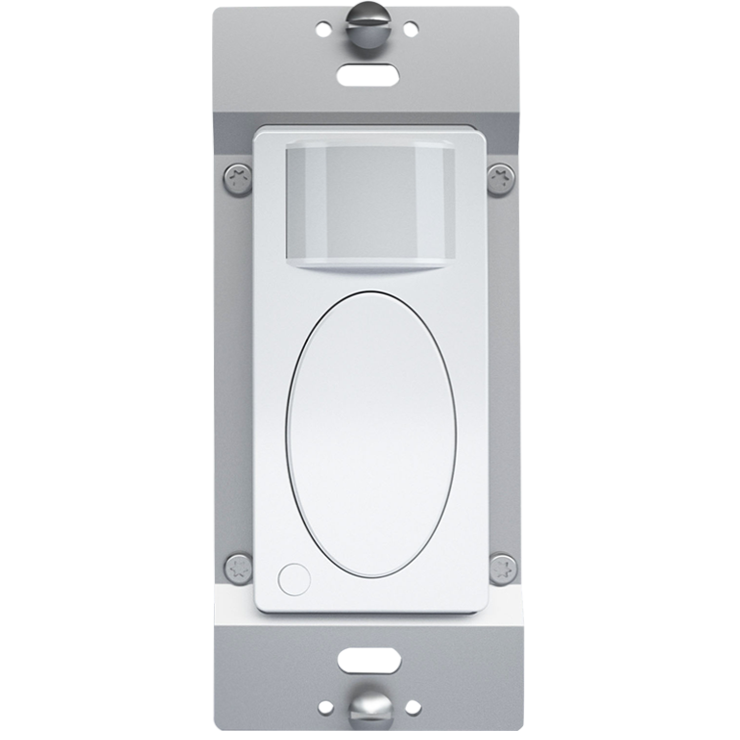
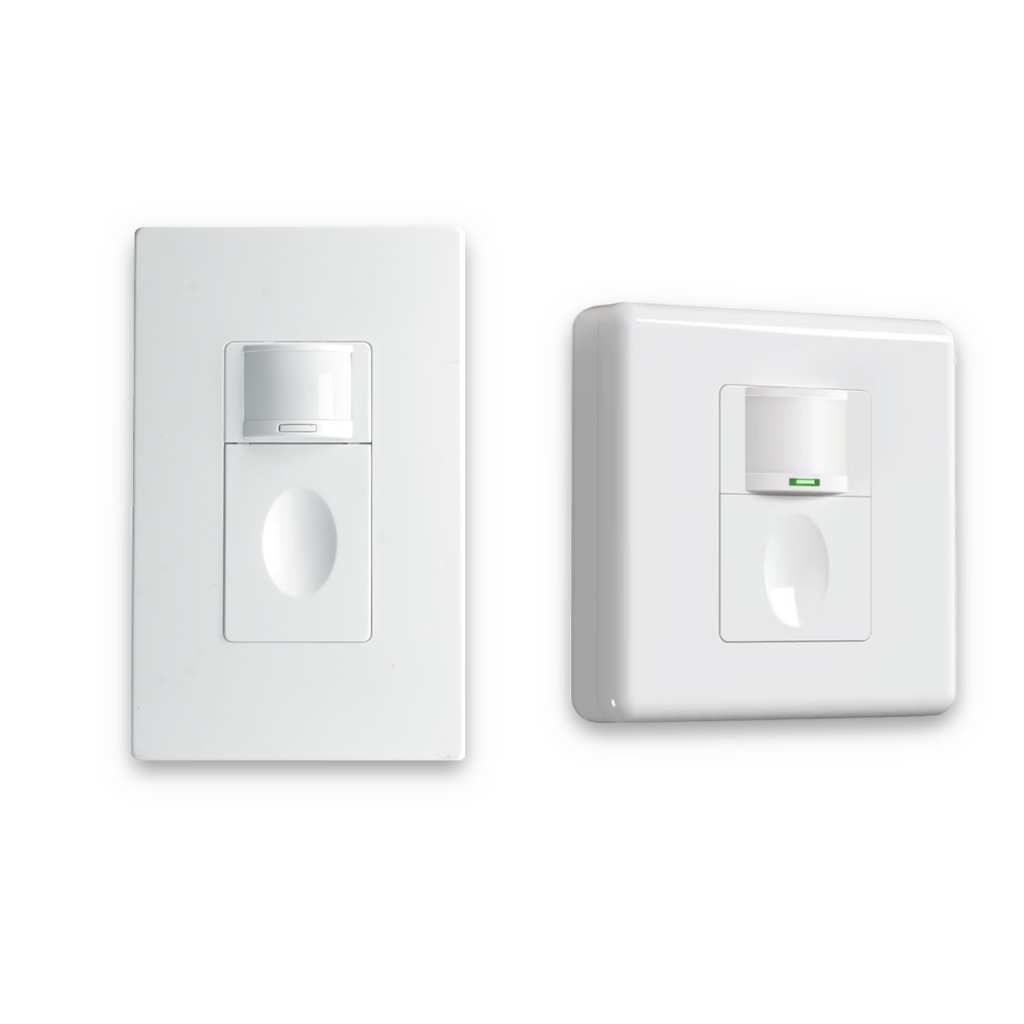
Wall Sensor Switches
RZ020/021 Motion Sensor Switches
- 2-wire, 3-wire, 4-wires wiring options
- Occupancy, Vacancy, Manual ON/OFF
- Adjustive time delay and ambient light control
Multi-Location Wireless Wall Sensors
RZ020A/021A + RZ022W Kits
- Hardwired RZ021A/022A occupancy sensor switch
- Wireless companion switch (RZ022W) for multi-location control

Ceiling Occupancy Sensors
RZ036
- Hardwired occupancy sensors
- Auto ON, auto OFF
- Line voltage and Low voltage available
Core features included:
- Integrated manual ON/OFF control for all lighting
- Vacancy sensors (Manual ON only): Lights must be turned on manually only
- Adjustable time-delay, lighting is automatically turned full OFF after 15mins
- Additional: multi-location wireless kits to expand the control range without re-wring
- Additional: multiple wiring options available for both new constructions and retrofit projects.
Meets the Mandatory Provisions
IECC – 2011
C405.2.1 Occupant sensor controls
Occupant sensor controls shall be installed to control lights in the space.
C405.2.1.1 Occupant sensor control functions
- Manual on or partial on to no more than 50% power.
- Full off within 20 minutes after all occupants have left the space
- A manual control to turn off the lights.
ASHRAE 90.1 – 2022
9.4.1.1 a Local control
There shall be one or more manual lighting control device that provides ON and OFF control
of all lighting in the space.
9.4.1.1 b Restricted to manual ON
None of the lighting shall be automatically turned on
9.4.1.1 c Restricted to partial automatic ON
No more than 50% of the lighting power for the general lighting shall be allowed to be automatically turned on
** NOTE: At least one 9.4.1.1 b or 9.4.1.1 c shall be implemented.
9.4.1.1 H Automatic full OFF control
All lighting in the space shall be automatically shut off within 20 minutes of all occupants leaving the space
Title 24 – 2022
130.1 (a) Manual area controls.
Each area enclosed by ceiling-height partitions shall provide lighting controls that allow the lighting in that area to be manually turned on and off.
130.1 (c) Shut-OFF Controls.
Lighting shall be controlled with occupant sensing controls to automatically shut OFF all of the lighting in 20 minutes or less after the control zone is unoccupied that shall function either as:
- A. Occupant sensing controls (if 130.1(b) not required to have multi-level lighting controls); or
- B. Partial-ON occupant sensing controls, or
- C. Vacancy sensing controls, where all lighting responds to a manual ON input only
Let us hear you.
Let Rayzeek help design and deliver a bespoke energy-saving lighting solution for you.