Restrooms
Prozkoumejte našeho průvodce energetickými úsporami pro toalety, který je navržen tak, aby vám pomohl porozumět řešením se senzory přítomnosti a implementovat je pro efektivní řízení osvětlení v souladu s americkými energetickými předpisy.
Maximize Energy Efficiency in Restrooms with Occupancy Sensors
Restrooms in commercial buildings are frequently used spaces that often remain lit even when unoccupied, leading to significant energy wastage. These spaces typically use high-intensity lighting fixtures that consume substantial amounts of energy. The sporadic and unpredictable nature of restroom usage further exacerbates this issue, as lights are often left on unnecessarily during periods of non-use.
Given these factors, the potential for energy savings in restrooms is substantial. By implementing occupancy sensor solutions, commercial facilities can significantly reduce their lighting energy consumption. Occupancy sensors detect the presence or absence of people and automatically control the lighting accordingly, ensuring lights are only on when needed. This not only saves energy but also extends the lifespan of lighting fixtures, leading to additional cost savings.
Splnění energetických předpisů

International Energy Conservation Code (IECC) je vzorový předpis vyvinutý organizací International Code Council (ICC) za účelem stanovení minimálních požadavků na návrh a konstrukci z hlediska energetické účinnosti budov. Předpis IECC je aktualizován každé tři roky, aby zohledňoval nejnovější postupy a technologie v oblasti úspory energie.
IECC a proč by vás měl zajímat
Předpis IECC je široce přijímán jednotlivými státy i samosprávami po celých Spojených státech. IECC pokrývá různé oblasti využití energie, včetně obálky budovy (stěny, střechy a okna), systémů vytápění a chlazení a osvětlovacích soustav.
Předpis IECC vyžaduje specifické prvky řízení osvětlení, jako jsou senzory přítomnosti, které minimalizují plytvání energií v neobsazených prostorech v různých oblastech.

Standard ANSI/ASHRAE/IES 90.1, Energy Standard for Sites and Buildings Except Low-Rise Residential Buildings, je široce uznávaný energetický standard vydávaný Americkou společností inženýrů pro vytápění, chlazení a klimatizaci (ASHRAE).
ASHRAE 90.1 a proč by vás měl zajímat
Standard ASHRAE 90.1 se používá jako srovnávací základna pro energetické předpisy budov po celých Spojených státech a slouží jako cesta k prokázání shody v rámci IECC. Definujeme minimální požadavky na energetickou účinnost prvků komerčních budov, včetně obálek budov, systémů HVAC, systémů ohřevu vody a osvětlovacích soustav.
Standard ASHRAE 90.1 stanovuje maximální povolenou hustotu příkonu osvětlení a minimální požadavky na řízení osvětlení, včetně použití senzorů přítomnosti v konkrétních prostorech.

Title 24, část 6 předpisu California Building Standards Code, oficiálně známá jako Building Energy Efficiency Standards for Residential and Nonresidential Buildings, je spravována orgánem California Energy Commission a pravidelně aktualizována s ohledem na nové technologie a metody energetické účinnosti.
Title 24 a proč by vás měl zajímat
Title 24 je známý svými přísnými požadavky, které jsou často považovány za náročnější než požadavky obsažené v mnoha jiných energetických předpisech napříč Spojenými státy. Title 24 vyžaduje přísné standardy energetické náročnosti pro všechny aspekty výstavby budov, což zahrnuje vytápění, větrání, klimatizaci (HVAC), ohřev vody a osvětlení.
Title 24 vyžaduje instalaci senzorů přítomnosti, které upravují osvětlení na základě obsazenosti místností v konkrétních prostorech komerčních budov, aby nedocházelo k plytvání energií.
Míra přijetí energetických předpisů podle států
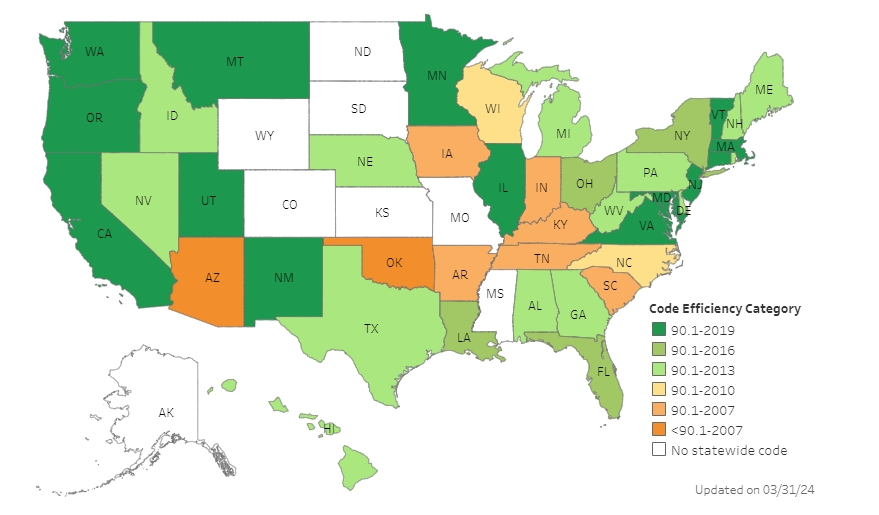
Rozbalte pro zobrazení podrobné tabulky ↓
| Stát | Platný komerční předpis | Kategorie účinnosti komerčního předpisu |
|---|---|---|
| Alabama | 90.1-2013 | 90.1-2013 |
| Aljaška | Žádný celostátní | Žádný celostátní předpis |
| Arizona | Místní samospráva (Home rule) | <90.1-2007 |
| Arkansas | 2009 IECC a 90.1-2007 | 90.1-2007 |
| Kalifornie | Normy energetické účinnosti budov z roku 2022 | 90.1-2019 |
| Colorado | Místní samospráva (Home rule) | Žádný celostátní předpis |
| Connecticut | 2021 IECC a 90.1-2019 | 90.1-2019 |
| Delaware | 2018 IECC a 90.1-2016 | 90.1-2013 |
| District of Columbia | 90.1-2013^ | 90.1-2019 |
| Florida | 2021 IECC a 90.1-2019^ | 90.1-2016 |
| Georgia | 2015 IECC a 90.1-2013^ | 90.1-2013 |
| Havaj | Místní samospráva (Home rule) | 90.1-2013 |
| Idaho | 2018 IECC a 90.1-2016 | 90.1-2013 |
| Illinois | 2021 IECC a 90.1-2019 | 90.1-2019 |
| Indiana | 90.1-2007 | 90.1-2007 |
| Iowa | 2012 IECC and 90.1-2010 | 90.1-2007 |
| Kansas | Místní samospráva (Home rule) | Žádný celostátní předpis |
| Kentucky | 2012 IECC and 90.1-2010 | 90.1-2007 |
| Louisiana | 2021 IECC a 90.1-2019^ | 90.1-2016 |
| Maine | 2015 IECC and 90.1-2013 | 90.1-2013 |
| Maryland | 2021 IECC a 90.1-2019^ | 90.1-2019 |
| Massachusetts | 2018 IECC and 90.1-2016^ | 90.1-2019 |
| Michigan | 2015 IECC a 90.1-2013^ | 90.1-2013 |
| Minnesota | 90.1-2019^ | 90.1-2019 |
| Mississippi | Žádný celostátní | Žádný celostátní předpis |
| Missouri | Místní samospráva (Home rule) | Žádný celostátní předpis |
| Montana | 2021 IECC a 90.1-2019 | 90.1-2019 |
| Nebraska | 2018 IECC a 90.1-2016 | 90.1-2013 |
| Nevada | 2018 IECC a 90.1-2016 | 90.1-2013 |
| New Hampshire | 2018 IECC and 90.1-2016^ | 90.1-2013 |
| New Jersey | 90.1-2019 | 90.1-2019 |
| Nové Mexiko | 2021 IECC a 90.1-2019^ | 90.1-2019 |
| New York | 2018 IECC and 90.1-2016^ | 90.1-2016 |
| Severní Karolína | 2015 IECC a 90.1-2013^ | 90.1-2010 |
| Severní Dakota | Místní samospráva (Home rule) | Žádný celostátní předpis |
| Ohio | 2021 IECC a 90.1-2019^ | 90.1-2016 |
| Oklahoma | 2006 IECC a 90.1-2004 | <90.1-2007 |
| Oregon | 90.1-2019 | 90.1-2019 |
| Pensylvánie | 2018 IECC a 90.1-2016 | 90.1-2013 |
| Rhode Island | 2018 IECC and 90.1-2016^ | 90.1-2013 |
| Jižní Karolína | 2009 IECC a 90.1-2007 | 90.1-2007 |
| Jižní Dakota | Místní samospráva (Home rule) | Žádný celostátní předpis |
| Tennessee | 2021 IECC a 90.1-2013 | 90.1-2007 |
| Texas | 2015 IECC and 90.1-2013 | 90.1-2013 |
| Utah | 2021 IECC a 90.1-2019^ | 90.1-2019 |
| Vermont | 2021 IECC a 90.1-2019^ | 90.1-2019 |
| Virginie | 2021 IECC a 90.1-2019^ | 90.1-2019 |
| Washington | Energetický kodex státu Washington z roku 2018 | 90.1-2019 |
| Tennessee | 2012 IECC and 90.1-2010 | 90.1-2007 |
| Texas | 2015 IECC and 90.1-2013 | 90.1-2013 |
| Utah | 2021 IECC a 90.1-2019^ | 90.1-2019 |
| Vermont | 2018 IECC and 90.1-2016^ | 90.1-2019 |
| Virginie | 2021 IECC a 90.1-2019^ | 90.1-2019 |
| Washington | Energetický kodex státu Washington z roku 2018 | 90.1-2019 |
| Západní Virginie | 90.1-2013 | 90.1-2013 |
| Wisconsin | 2015 IECC a 90.1-2013^ | 90.1-2010 |
| Wyoming | Místní samospráva (Home rule) | Žádný celostátní předpis |
- ^ Pokud lze změnu s dopadem na energetickou účinnost kvantifikovat pomocí prototypových modelů budov DOE, byla do analýzy zahrnuta.
- U států přijímajících normy IECC i 90.1 je v této studii norma IECC obvykle analyzována jako aktuální státní kodex, s výjimkou států s rozsáhlými změnami normy IECC.
Design Guide Key Concepts for Restrooms
Designing an energy-efficient lighting control solution for restrooms involves strategic placement of occupancy sensors to ensure comprehensive coverage of the space.
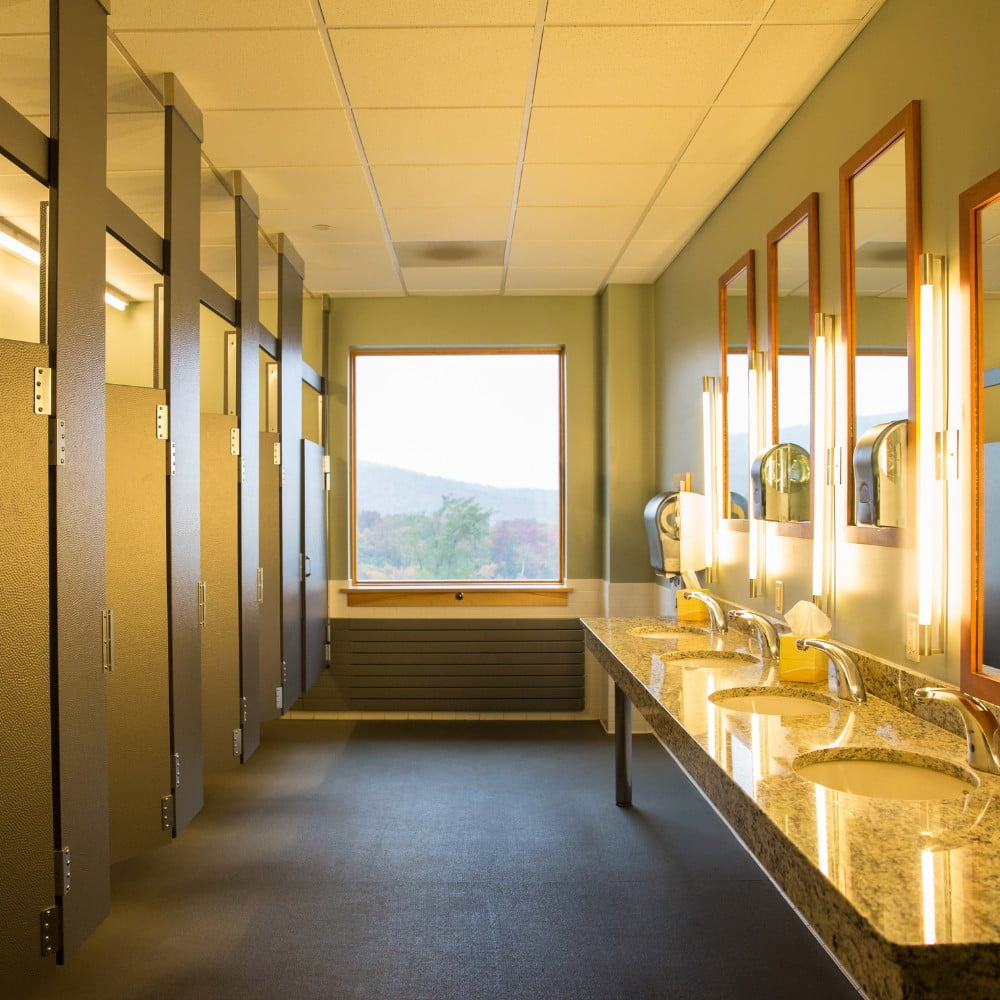
By following these guidelines, businesses can create an energy-efficient lighting control solution for restrooms that reduces energy waste, and lowers maintenance costs:
- Entrance Coverage: Install a wall occupancy sensor near the entrance to detect when someone enters the restroom. This sensor should be positioned high enough to avoid obstructions from the door and should not directly face the entrance to avoid false triggers from movement outside the restroom.
- Stall Coverage: Depending on customer preference for privacy, stalls can either be covered by a sensor or not. If stalls are not covered by a sensor, program a longer timeout (15 or 20 minutes) to prevent lights from turning off when someone is in the stall. If individual stall sensors are used, they should be installed in such a way that they do not detect movement outside the stall to avoid false triggers.
- Sink and Mirror Area: Install a ceiling occupancy sensor above the sink and mirror area. This sensor should be positioned to cover the entire area, ensuring that lights remain on when someone is using the sink or mirror.
- Avoidance of Air Vents: Do not mount sensors close to air vents, as the vibration and air flow can reduce the effectiveness of the sensor. PIR sensors should not be within 4ft of an air vent, and ultrasonic sensors should not be within 6ft of an air vent.
- Manual Control: Integrate manual control to turn ON/OFF all lighting with our occupancy/vacancy sensors. This allows for manual override of the lighting system if necessary.
Featured Products & Solutions
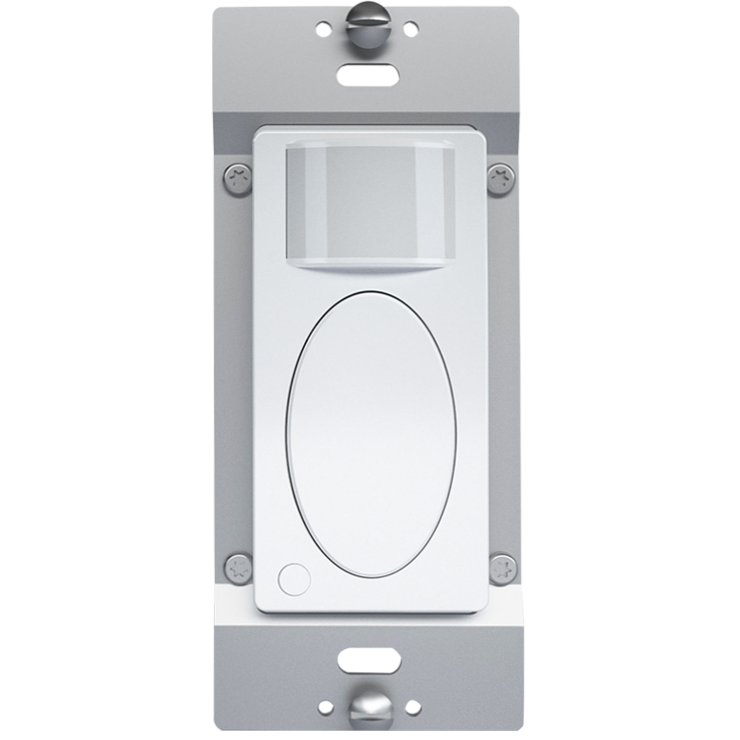
Wall Sensor Switches
RZ020/021 Motion Sensor Switches
- 2-wire, 3-wire, 4-wires wiring options
- Occupancy, Vacancy, Manual ON/OFF
- Adjustive time delay and ambient light control
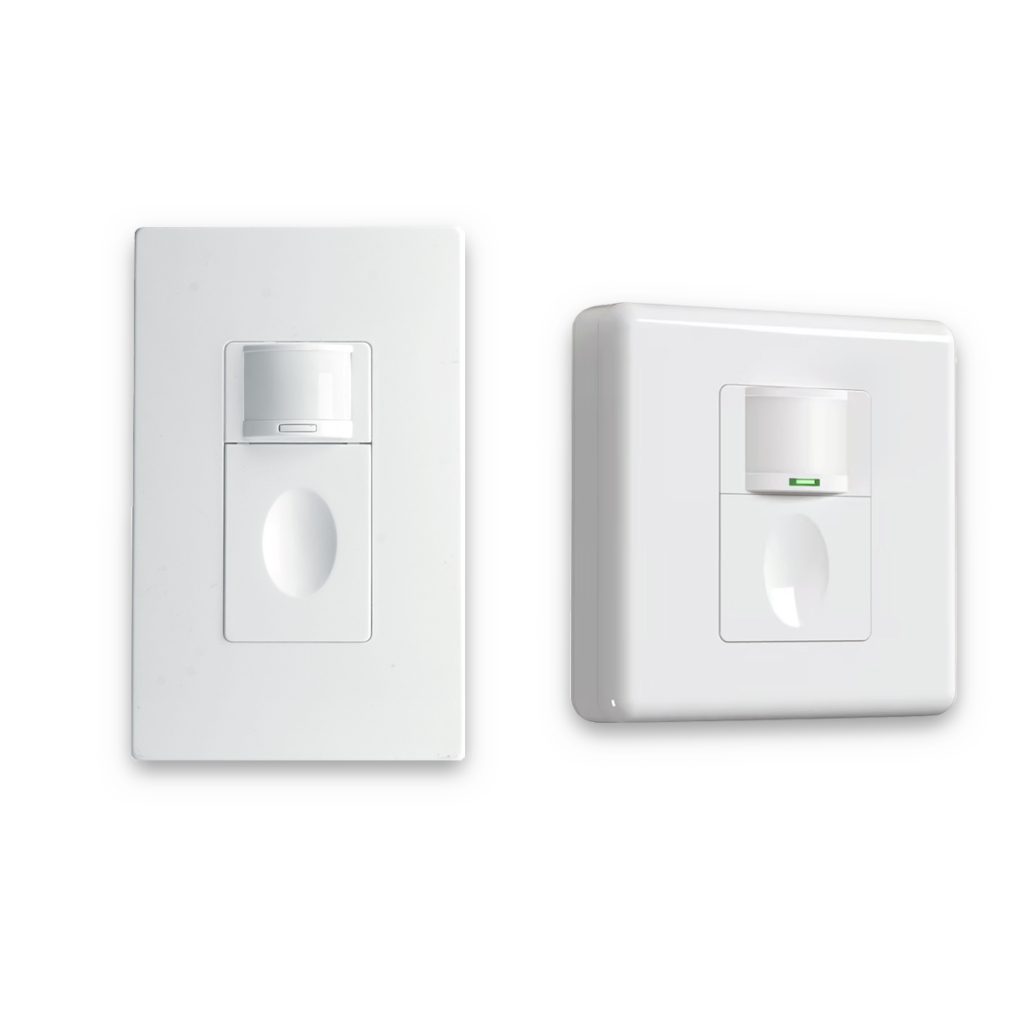
Multi-Location Wireless Wall Sensors
RZ020A/021A + RZ022W Kits
- Hardwired RZ021A/022A occupancy sensor switch
- Wireless companion switch (RZ022W) for multi-location control

Ceiling Occupancy Sensors
RZ036
- Hardwired occupancy sensors
- Auto ON, auto OFF
- Line voltage and Low voltage available
Core features included:
- Integrated manual ON/OFF control for all lighting
- Vacancy sensors (Manual ON only): Lights must be turned on manually only
- Adjustable time-delay, lighting is automatically turned full OFF after 15mins
- Additional: multi-location wireless kits to expand the control range without re-wring
- Additional: multiple wiring options available for both new constructions and retrofit projects.
Meets the Mandatory Provisions
IECC – 2011
C405.2.1 Occupant sensor controls
Occupant sensor controls shall be installed to control lights in the space.
C405.2.1.1 Occupant sensor control functions
- Manual on or partial on to no more than 50% power.
- Full off within 20 minutes after all occupants have left the space
- A manual control to turn off the lights.
**Full automatic-on controls with no manual control are permitted in restrooms where manual operation would endanger occupant safety or security.
ASHRAE 90.1 – 2022
Restrooms shall also be controlled by occupant sensors.
9.4.1.1 H Automatic full OFF control
All lighting in the space shall be automatically shut off within 20 minutes of all occupants leaving the space
Title 24 – 2022
130.1 (a) Manual area controls.
Each area enclosed by ceiling-height partitions shall provide lighting controls that allow the lighting in that area to be manually turned on and off.
** Restrooms having two or more stalls may use a manual control not accessible to unauthorized personnel.
130.1 (c) Shut-OFF Controls.
Lighting shall be controlled with occupant sensing controls to automatically shut OFF all of the lighting in 20 minutes or less after the control zone is unoccupied that shall function either as:
- A. Occupant sensing controls (if 130.1(b) not required to have multi-level lighting controls); or
- B. Partial-ON occupant sensing controls, or
- C. Vacancy sensing controls, where all lighting responds to a manual ON input only
Let us hear you.
Let Rayzeek help design and deliver a bespoke energy-saving lighting solution for you.