Restrooms
Pelajari panduan penghematan energi kami untuk toilet, yang dirancang untuk membantu Anda memahami dan menerapkan solusi sensor hunian demi kontrol pencahayaan yang efisien sesuai dengan Standar Energi AS.
Maximize Energy Efficiency in Restrooms with Occupancy Sensors
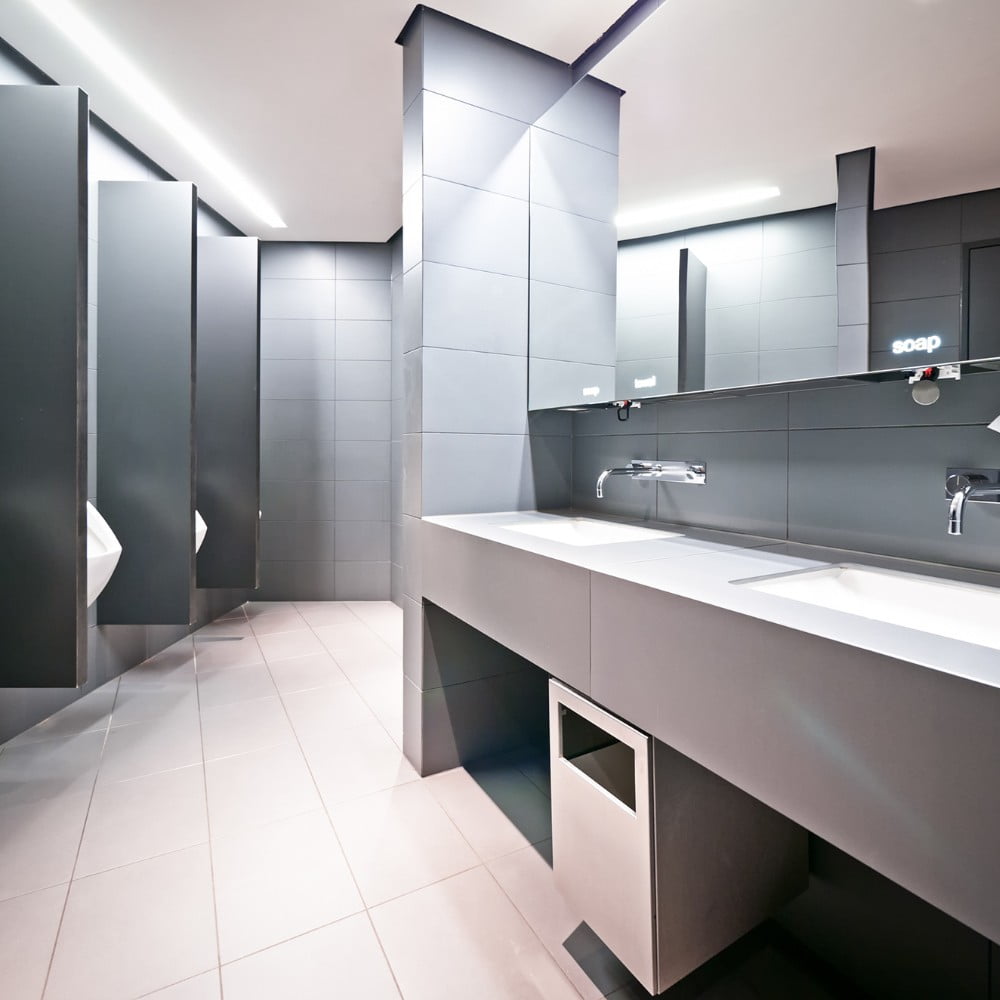
Restrooms in commercial buildings are frequently used spaces that often remain lit even when unoccupied, leading to significant energy wastage. These spaces typically use high-intensity lighting fixtures that consume substantial amounts of energy. The sporadic and unpredictable nature of restroom usage further exacerbates this issue, as lights are often left on unnecessarily during periods of non-use.
Given these factors, the potential for energy savings in restrooms is substantial. By implementing occupancy sensor solutions, commercial facilities can significantly reduce their lighting energy consumption. Occupancy sensors detect the presence or absence of people and automatically control the lighting accordingly, ensuring lights are only on when needed. This not only saves energy but also extends the lifespan of lighting fixtures, leading to additional cost savings.
Memenuhi Kode Energi

International Energy Conservation Code (IECC) adalah model kode yang dikembangkan oleh International Code Council (ICC) untuk menetapkan persyaratan desain dan konstruksi minimum untuk efisiensi energi pada bangunan. IECC diperbarui setiap tiga tahun untuk menggabungkan praktik dan teknologi konservasi energi terbaru.
IECC, Mengapa Anda Harus Peduli
IECC diadopsi secara luas oleh negara bagian dan kotamadya di seluruh Amerika Serikat. IECC mencakup berbagai aspek penggunaan energi, termasuk selubung bangunan (dinding, atap, dan jendela), sistem pemanas dan pendingin, serta sistem pencahayaan.
IECC mewajibkan kontrol pencahayaan khusus, seperti sensor hunian, untuk meminimalkan pemborosan energi di area yang tidak terisi di berbagai lokasi.

Standar ANSI/ASHRAE/IES 90.1, Standar Energi untuk Tapak dan Bangunan Kecuali Bangunan Hunian Rendah, adalah standar energi yang diakui secara luas yang diterbitkan oleh American Society of Heating, Refrigerating and Air-Conditioning Engineers (ASHRAE).
ASHRAE 90.1, Mengapa Anda Harus Peduli
ASHRAE 90.1 digunakan sebagai tolok ukur untuk kode energi bangunan di seluruh Amerika Serikat dan berfungsi sebagai jalur kepatuhan dalam IECC yang menguraikan persyaratan minimum untuk kinerja efisiensi energi komponen bangunan komersial termasuk selubung bangunan, sistem HVAC, sistem pemanas air, dan sistem pencahayaan.
Standar ASHRAE 90.1 menentukan kepadatan daya pencahayaan maksimum yang diizinkan dan persyaratan kontrol pencahayaan minimum, termasuk penggunaan sensor hunian di area tertentu.

Title 24, bagian 6 dari Kode Standar Bangunan California, yang secara resmi dikenal sebagai Standar Efisiensi Energi Bangunan untuk Bangunan Hunian dan Non-hunian, Title 24 dikelola oleh California Energy Commission dan diperbarui secara berkala untuk mencerminkan teknologi dan metode efisiensi energi baru.
Title 24, Mengapa Anda Harus Peduli
Title 24 dikenal dengan persyaratannya yang ketat, yang sering kali dianggap lebih ketat daripada yang ditemukan di banyak kode energi lainnya di seluruh Amerika Serikat. Title 24 mewajibkan standar kinerja energi yang ketat untuk semua aspek konstruksi bangunan, yang mencakup pemanas, ventilasi, pengondisian udara (HVAC), pemanas air, dan pencahayaan.
Title 24 mewajibkan pemasangan sensor hunian yang menyesuaikan pencahayaan berdasarkan tingkat hunian ruangan di area tertentu di bangunan komersial untuk memastikan bahwa energi tidak terbuang sia-sia.
Penerapan Kode Energi Berdasarkan Negara Bagian
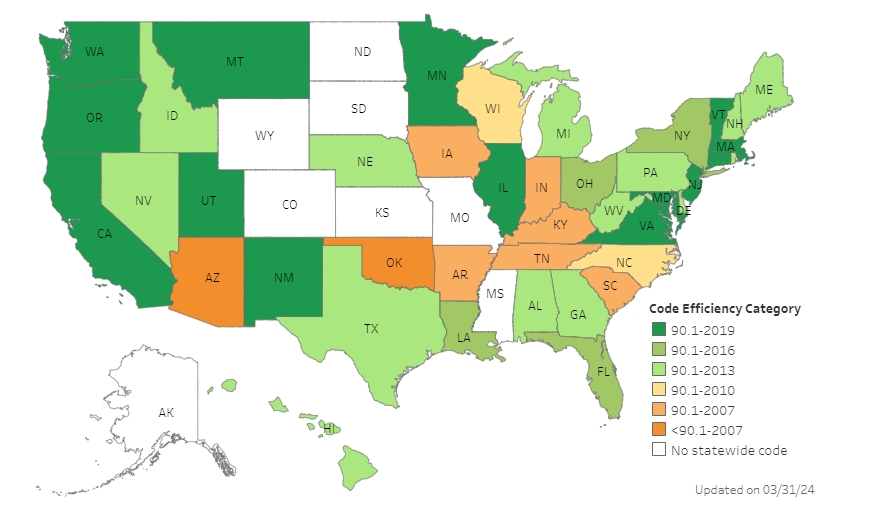
Perluas untuk melihat tabel terperinci ↓
| Negara Bagian | Kode Komersial Saat Ini | Kategori Efisiensi Kode Komersial |
|---|---|---|
| Alabama | 90.1-2013 | 90.1-2013 |
| Alaska | Tidak ada di seluruh negara bagian | Tidak ada kode seluruh negara bagian |
| Arizona | Pemerintahan mandiri (Home rule) | <90.1-2007 |
| Arkansas | 2009 IECC dan 90.1-2007 | 90.1-2007 |
| California | Standar Efisiensi Energi Bangunan 2022 | 90.1-2019 |
| Colorado | Pemerintahan mandiri (Home rule) | Tidak ada kode seluruh negara bagian |
| Connecticut | IECC 2021 dan 90.1-2019 | 90.1-2019 |
| Delaware | IECC 2018 dan 90.1-2016 | 90.1-2013 |
| District of Columbia | 90.1-2013^ | 90.1-2019 |
| Florida | IECC 2021 dan 90.1-2019^ | 90.1-2016 |
| Georgia | IECC 2015 dan 90.1-2013^ | 90.1-2013 |
| Hawaii | Pemerintahan mandiri (Home rule) | 90.1-2013 |
| Idaho | IECC 2018 dan 90.1-2016 | 90.1-2013 |
| Illinois | IECC 2021 dan 90.1-2019 | 90.1-2019 |
| Indiana | 90.1-2007 | 90.1-2007 |
| Iowa | IECC 2012 dan 90.1-2010 | 90.1-2007 |
| Kansas | Pemerintahan mandiri (Home rule) | Tidak ada kode seluruh negara bagian |
| Kentucky | IECC 2012 dan 90.1-2010 | 90.1-2007 |
| Louisiana | IECC 2021 dan 90.1-2019^ | 90.1-2016 |
| Maine | 2015 IECC dan 90.1-2013 | 90.1-2013 |
| Maryland | IECC 2021 dan 90.1-2019^ | 90.1-2019 |
| Massachusetts | 2018 IECC dan 90.1-2016^ | 90.1-2019 |
| Michigan | IECC 2015 dan 90.1-2013^ | 90.1-2013 |
| Minnesota | 90.1-2019^ | 90.1-2019 |
| Mississippi | Tidak ada di seluruh negara bagian | Tidak ada kode seluruh negara bagian |
| Missouri | Pemerintahan mandiri (Home rule) | Tidak ada kode seluruh negara bagian |
| Montana | IECC 2021 dan 90.1-2019 | 90.1-2019 |
| Nebraska | IECC 2018 dan 90.1-2016 | 90.1-2013 |
| Nevada | IECC 2018 dan 90.1-2016 | 90.1-2013 |
| New Hampshire | 2018 IECC dan 90.1-2016^ | 90.1-2013 |
| New Jersey | 90.1-2019 | 90.1-2019 |
| Meksiko Baru | IECC 2021 dan 90.1-2019^ | 90.1-2019 |
| New York | 2018 IECC dan 90.1-2016^ | 90.1-2016 |
| Karolina Utara | IECC 2015 dan 90.1-2013^ | 90.1-2010 |
| Dakota Utara | Pemerintahan mandiri (Home rule) | Tidak ada kode seluruh negara bagian |
| Ohio | IECC 2021 dan 90.1-2019^ | 90.1-2016 |
| Oklahoma | 2006 IECC dan 90.1-2004 | <90.1-2007 |
| Oregon | 90.1-2019 | 90.1-2019 |
| Pensilvania | IECC 2018 dan 90.1-2016 | 90.1-2013 |
| Rhode Island | 2018 IECC dan 90.1-2016^ | 90.1-2013 |
| Karolina Selatan | 2009 IECC dan 90.1-2007 | 90.1-2007 |
| Dakota Selatan | Pemerintahan mandiri (Home rule) | Tidak ada kode seluruh negara bagian |
| Tennessee | 2021 IECC dan 90.1-2013 | 90.1-2007 |
| Texas | 2015 IECC dan 90.1-2013 | 90.1-2013 |
| Utah | IECC 2021 dan 90.1-2019^ | 90.1-2019 |
| Vermont | IECC 2021 dan 90.1-2019^ | 90.1-2019 |
| Virginia | IECC 2021 dan 90.1-2019^ | 90.1-2019 |
| Washington | Kode Energi Negara Bagian Washington 2018 | 90.1-2019 |
| Tennessee | IECC 2012 dan 90.1-2010 | 90.1-2007 |
| Texas | 2015 IECC dan 90.1-2013 | 90.1-2013 |
| Utah | IECC 2021 dan 90.1-2019^ | 90.1-2019 |
| Vermont | 2018 IECC dan 90.1-2016^ | 90.1-2019 |
| Virginia | IECC 2021 dan 90.1-2019^ | 90.1-2019 |
| Washington | Kode Energi Negara Bagian Washington 2018 | 90.1-2019 |
| West Virginia | 90.1-2013 | 90.1-2013 |
| Wisconsin | IECC 2015 dan 90.1-2013^ | 90.1-2010 |
| Wyoming | Pemerintahan mandiri (Home rule) | Tidak ada kode seluruh negara bagian |
- ^ Ketika amandemen yang memengaruhi efisiensi energi dapat dikuantifikasi menggunakan Model Bangunan Prototipe DOE, amandemen tersebut telah dicakup dalam analisis.
- Bagi negara bagian yang mengadopsi IECC dan 90.1, kode IECC biasanya dianalisis sebagai kode berlaku negara bagian dalam studi ini, kecuali untuk negara bagian dengan amandemen ekstensif terhadap IECC.
Konsep Kunci Panduan Desain untuk Toilet
Merancang solusi kontrol pencahayaan yang hemat energi untuk toilet melibatkan penempatan sensor hunian secara strategis guna memastikan cakupan ruang yang menyeluruh.
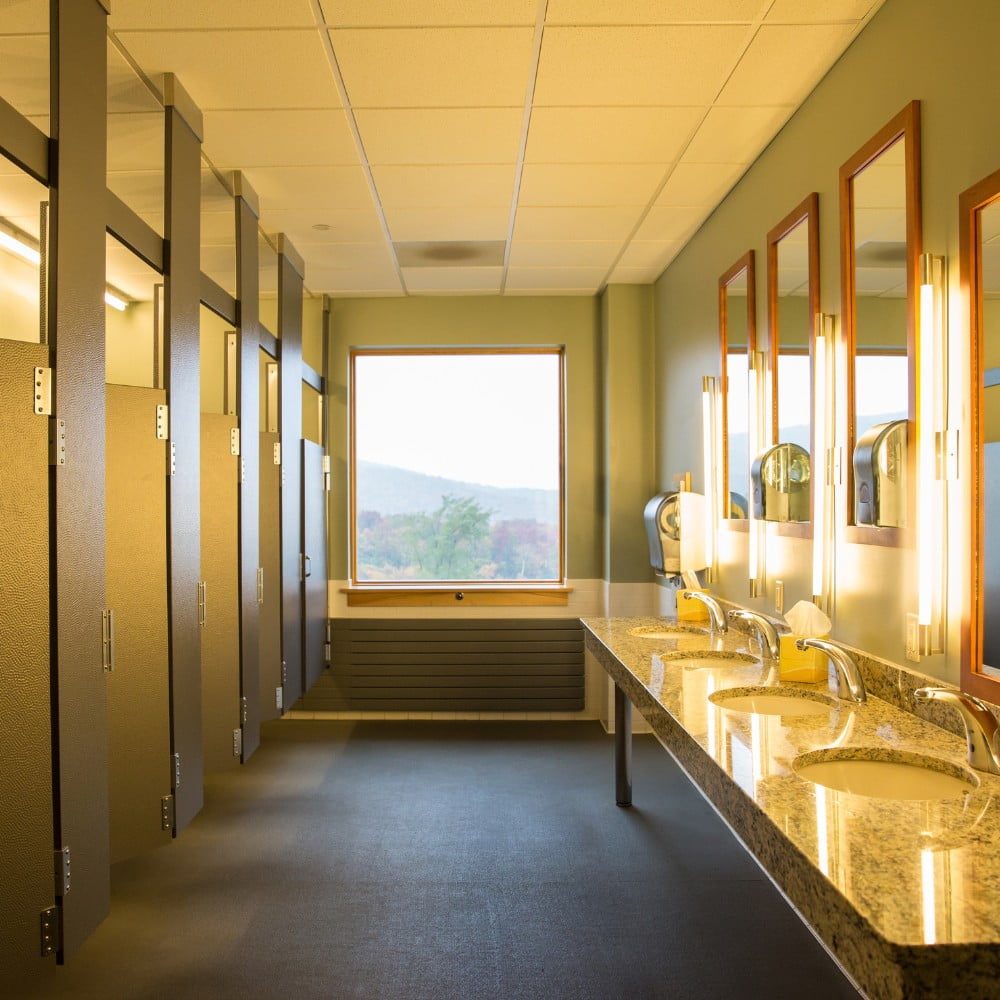
By following these guidelines, businesses can create an energy-efficient lighting control solution for restrooms that reduces energy waste, and lowers maintenance costs:
- Jangkauan Pintu Masuk: Install a wall occupancy sensor near the entrance to detect when someone enters the restroom. This sensor should be positioned high enough to avoid obstructions from the door and should not directly face the entrance to avoid false triggers from movement outside the restroom.
- Stall Coverage: Depending on customer preference for privacy, stalls can either be covered by a sensor or not. If stalls are not covered by a sensor, program a longer timeout (15 or 20 minutes) to prevent lights from turning off when someone is in the stall. If individual stall sensors are used, they should be installed in such a way that they do not detect movement outside the stall to avoid false triggers.
- Sink and Mirror Area: Install a ceiling occupancy sensor above the sink and mirror area. This sensor should be positioned to cover the entire area, ensuring that lights remain on when someone is using the sink or mirror.
- Avoidance of Air Vents: Do not mount sensors close to air vents, as the vibration and air flow can reduce the effectiveness of the sensor. PIR sensors should not be within 4ft of an air vent, and ultrasonic sensors should not be within 6ft of an air vent.
- Manual Control: Integrate manual control to turn ON/OFF all lighting with our occupancy/vacancy sensors. This allows for manual override of the lighting system if necessary.
Produk & Solusi Unggulan
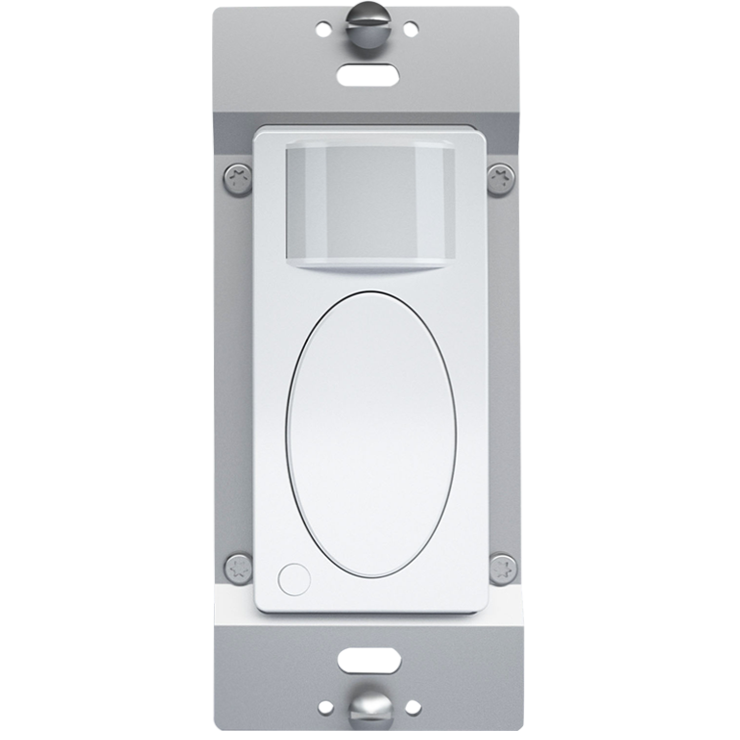
Sakelar Sensor Dinding
Sakelar Sensor Gerak RZ020/021
- Pilihan pengkabelan 2-kawat, 3-kawat, 4-kawat
- Okupansi, Vakansi, Manual NYALA/MATI
- Penundaan waktu dan kontrol cahaya sekitar yang dapat disesuaikan
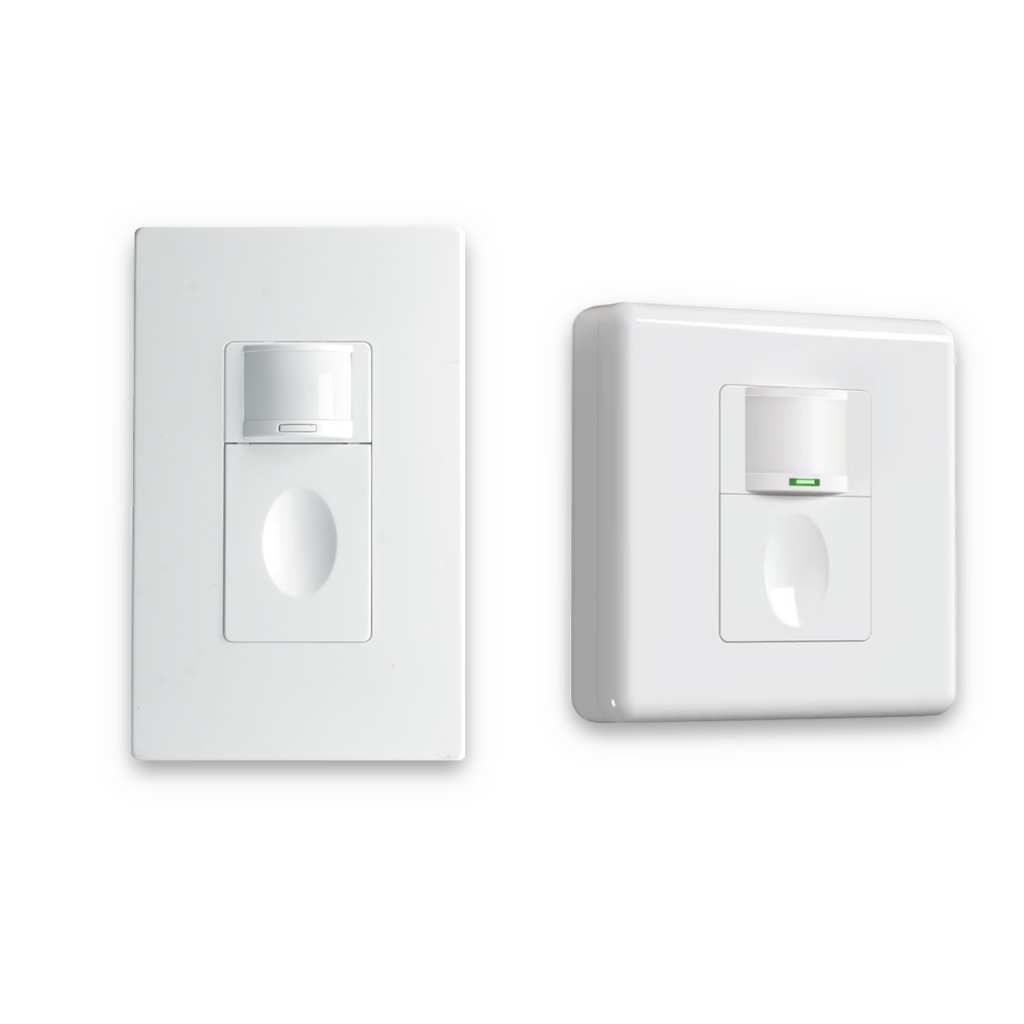
Sensor Dinding Nirkabel Multi-Lokasi
Kit RZ020A/021A + RZ022W
- Sakelar sensor okupansi kabel RZ021A/022A
- Sakelar pendamping nirkabel (RZ022W) untuk kontrol multi-lokasi

Sensor Hunian Plafon
RZ036
- Sensor okupansi kabel
- NYALA otomatis, MATI otomatis
- Tersedia tegangan saluran dan tegangan rendah
Fitur utama yang disertakan:
- Kontrol manual NYALA/MATI yang terintegrasi untuk semua pencahayaan
- Sensor vakansi (Hanya NYALA manual): Lampu harus dinyalakan secara manual saja
- Penundaan waktu yang dapat disesuaikan, pencahayaan secara otomatis padam sepenuhnya setelah 15 menit
- Tambahan: kit nirkabel multi-lokasi untuk memperluas jangkauan kontrol tanpa pengkabelan ulang
- Tambahan: tersedia beberapa pilihan pengkabelan untuk proyek konstruksi baru maupun renovasi.
Memenuhi Ketentuan Wajib
IECC – 2011
C405.2.1 Kontrol sensor penghuni
Kontrol sensor penghuni harus dipasang untuk mengontrol lampu di dalam ruangan.
C405.2.1.1 Fungsi kontrol sensor penghuni
- Menyala manual atau menyala sebagian hingga tidak lebih dari daya 50%.
- Full off within 20 minutes after all occupants have left the space
- A manual control to turn off the lights.
**Full automatic-on controls with no manual control are permitted in restrooms where manual operation would endanger occupant safety or security.
ASHRAE 90.1 – 2022
Restrooms shall also be controlled by occupant sensors.
9.4.1.1 H Automatic full OFF control
All lighting in the space shall be automatically shut off within 20 minutes of all occupants leaving the space
Title 24 – 2022
130.1 (a) Manual area controls.
Each area enclosed by ceiling-height partitions shall provide lighting controls that allow the lighting in that area to be manually turned on and off.
** Restrooms having two or more stalls may use a manual control not accessible to unauthorized personnel.
130.1 (c) Shut-OFF Controls.
Lighting shall be controlled with occupant sensing controls to automatically shut OFF all of the lighting in 20 minutes or less after the control zone is unoccupied that shall function either as:
- A. Occupant sensing controls (if 130.1(b) not required to have multi-level lighting controls); or
- B. Partial-ON occupant sensing controls, or
- C. Vacancy sensing controls, where all lighting responds to a manual ON input only
Let us hear you.
Let Rayzeek help design and deliver a bespoke energy-saving lighting solution for you.