Restrooms
Explore nuestra guía de ahorro energético para baños, diseñada para ayudarle a comprender e implementar soluciones de sensores de presencia para un control eficiente de la iluminación en cumplimiento con los códigos energéticos de EE. UU.
Maximize Energy Efficiency in Restrooms with Occupancy Sensors
Restrooms in commercial buildings are frequently used spaces that often remain lit even when unoccupied, leading to significant energy wastage. These spaces typically use high-intensity lighting fixtures that consume substantial amounts of energy. The sporadic and unpredictable nature of restroom usage further exacerbates this issue, as lights are often left on unnecessarily during periods of non-use.
Given these factors, the potential for energy savings in restrooms is substantial. By implementing occupancy sensor solutions, commercial facilities can significantly reduce their lighting energy consumption. Occupancy sensors detect the presence or absence of people and automatically control the lighting accordingly, ensuring lights are only on when needed. This not only saves energy but also extends the lifespan of lighting fixtures, leading to additional cost savings.
Cumplimiento de los códigos energéticos

El Código Internacional de Conservación de Energía (IECC) es un código modelo desarrollado por el Consejo Internacional de Códigos (ICC) para establecer los requisitos mínimos de diseño y construcción en materia de eficiencia energética en edificios. El IECC se actualiza cada tres años para incorporar las últimas prácticas y tecnologías en conservación de energía.
Por qué debería interesarle el IECC
El IECC ha sido adoptado ampliamente por estados y municipios de todo Estados Unidos. El IECC abarca diversos aspectos del uso de la energía, como la envolvente del edificio (paredes, cubiertas y ventanas), los sistemas de calefacción y climatización, y los sistemas de iluminación.
El IECC exige controles de iluminación específicos, como sensores de presencia, para minimizar el desperdicio de energía en espacios desocupados en diversas áreas.

La norma ANSI/ASHRAE/IES 90.1, Norma energética para sitios y edificios, excepto edificios residenciales de baja altura, es una norma energética ampliamente reconocida y publicada por la Sociedad Americana de Ingenieros de Calefacción, Refrigeración y Aire Acondicionado (ASHRAE).
Por qué debería interesarle la norma ASHRAE 90.1
La norma ASHRAE 90.1 se utiliza como referencia para los códigos energéticos de edificación en todo Estados Unidos y sirve como vía de cumplimiento dentro del IECC, definiendo los requisitos mínimos para el rendimiento de eficiencia energética de los componentes de los edificios comerciales, incluidos los cerramientos de los edificios, los sistemas HVAC, los sistemas de calentamiento de agua y los sistemas de iluminación.
La norma ASHRAE 90.1 especifica las densidades máximas de potencia de iluminación permitidas y los requisitos mínimos de control de iluminación, incluida la instalación de sensores de presencia en áreas específicas.

El Título 24, parte 6 del Código de Normas de Edificación de California, conocido oficialmente como las Normas de Eficiencia Energética en Edificios para Edificios Residenciales y No Residenciales (Título 24), es administrado por la Comisión de Energía de California y se actualiza periódicamente para reflejar las nuevas tecnologías y métodos de eficiencia energética.
Por qué debería interesarle el Título 24
El Título 24 es conocido por sus exigentes requisitos, a menudo considerados más estrictos que los de muchos otros códigos energéticos de Estados Unidos. El Título 24 exige normas estrictas de rendimiento energético para todos los aspectos de la construcción de edificios, como la calefacción, la ventilación, el aire acondicionado (HVAC), el calentamiento de agua y la iluminación.
El Título 24 requiere la instalación de sensores de presencia que regulen la iluminación en función de la ocupación de las salas en áreas específicas de edificios comerciales para garantizar que no se desperdicie energía.
Adopción de códigos energéticos por estado
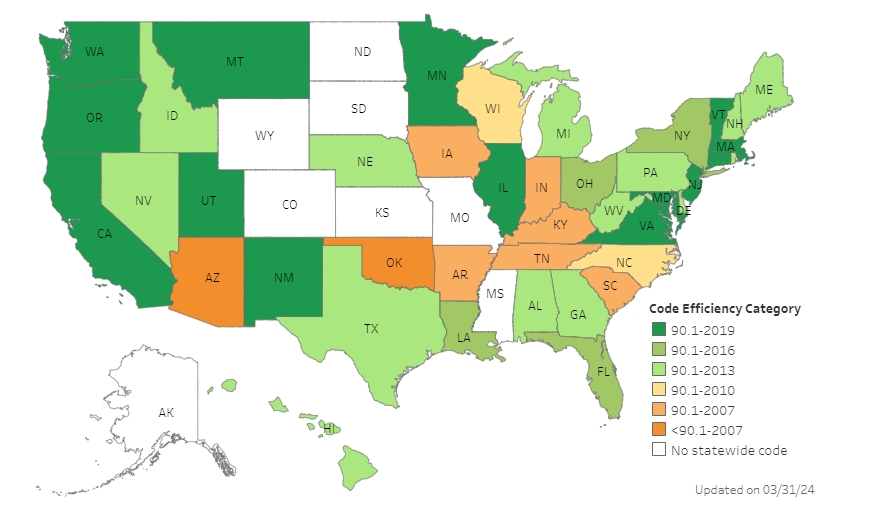
Despliegue para ver la tabla detallada ↓
| Estado | Código comercial actual | Categoría de eficiencia del código comercial |
|---|---|---|
| Alabama | 90.1-2013 | 90.1-2013 |
| Alaska | Sin código a nivel estatal | Sin código a nivel estatal |
| Arizona | Autonomía local | <90.1-2007 |
| Arkansas | 2009 IECC y 90.1-2007 | 90.1-2007 |
| California | Normas de Eficiencia Energética para Edificios de 2022 | 90.1-2019 |
| Colorado | Autonomía local | Sin código a nivel estatal |
| Connecticut | 2021 IECC y 90.1-2019 | 90.1-2019 |
| Delaware | 2018 IECC y 90.1-2016 | 90.1-2013 |
| Distrito de Columbia | 90.1-2013^ | 90.1-2019 |
| Florida | 2021 IECC y 90.1-2019^ | 90.1-2016 |
| Georgia | 2015 IECC y 90.1-2013^ | 90.1-2013 |
| Hawaí | Autonomía local | 90.1-2013 |
| Idaho | 2018 IECC y 90.1-2016 | 90.1-2013 |
| Illinois | 2021 IECC y 90.1-2019 | 90.1-2019 |
| Indiana | 90.1-2007 | 90.1-2007 |
| Iowa | 2012 IECC y 90.1-2010 | 90.1-2007 |
| Kansas | Autonomía local | Sin código a nivel estatal |
| Kentucky | 2012 IECC y 90.1-2010 | 90.1-2007 |
| Luisiana | 2021 IECC y 90.1-2019^ | 90.1-2016 |
| Maine | 2015 IECC y 90.1-2013 | 90.1-2013 |
| Maryland | 2021 IECC y 90.1-2019^ | 90.1-2019 |
| Massachusetts | 2018 IECC y 90.1-2016^ | 90.1-2019 |
| Míchigan | 2015 IECC y 90.1-2013^ | 90.1-2013 |
| Minnesota | 90.1-2019^ | 90.1-2019 |
| Misisipi | Sin código a nivel estatal | Sin código a nivel estatal |
| Misuri | Autonomía local | Sin código a nivel estatal |
| Montana | 2021 IECC y 90.1-2019 | 90.1-2019 |
| Nebraska | 2018 IECC y 90.1-2016 | 90.1-2013 |
| Nevada | 2018 IECC y 90.1-2016 | 90.1-2013 |
| Nuevo Hampshire | 2018 IECC y 90.1-2016^ | 90.1-2013 |
| Nueva Jersey | 90.1-2019 | 90.1-2019 |
| Nuevo México | 2021 IECC y 90.1-2019^ | 90.1-2019 |
| Nueva York | 2018 IECC y 90.1-2016^ | 90.1-2016 |
| North Carolina | 2015 IECC y 90.1-2013^ | 90.1-2010 |
| North Dakota | Autonomía local | Sin código a nivel estatal |
| Ohio | 2021 IECC y 90.1-2019^ | 90.1-2016 |
| Oklahoma | 2006 IECC and 90.1-2004 | <90.1-2007 |
| Oregon | 90.1-2019 | 90.1-2019 |
| Pennsylvania | 2018 IECC y 90.1-2016 | 90.1-2013 |
| Rhode Island | 2018 IECC y 90.1-2016^ | 90.1-2013 |
| South Carolina | 2009 IECC y 90.1-2007 | 90.1-2007 |
| South Dakota | Autonomía local | Sin código a nivel estatal |
| Tennessee | 2021 IECC and 90.1-2013 | 90.1-2007 |
| Texas | 2015 IECC y 90.1-2013 | 90.1-2013 |
| Utah | 2021 IECC y 90.1-2019^ | 90.1-2019 |
| Vermont | 2021 IECC y 90.1-2019^ | 90.1-2019 |
| Virginia | 2021 IECC y 90.1-2019^ | 90.1-2019 |
| Washington | 2018 Washington State Energy Code | 90.1-2019 |
| Tennessee | 2012 IECC y 90.1-2010 | 90.1-2007 |
| Texas | 2015 IECC y 90.1-2013 | 90.1-2013 |
| Utah | 2021 IECC y 90.1-2019^ | 90.1-2019 |
| Vermont | 2018 IECC y 90.1-2016^ | 90.1-2019 |
| Virginia | 2021 IECC y 90.1-2019^ | 90.1-2019 |
| Washington | 2018 Washington State Energy Code | 90.1-2019 |
| West Virginia | 90.1-2013 | 90.1-2013 |
| Wisconsin | 2015 IECC y 90.1-2013^ | 90.1-2010 |
| Wyoming | Autonomía local | Sin código a nivel estatal |
- ^ When an amendment impacting energy efficiency can be quantified using DOE Prototype Building Models, they were captured in the analysis.
- For states adopting both IECC and 90.1, the IECC code is usually analyzed as the state current code in this study except for states with extensive amendments to the IECC.
Design Guide Key Concepts for Restrooms
Designing an energy-efficient lighting control solution for restrooms involves strategic placement of occupancy sensors to ensure comprehensive coverage of the space.
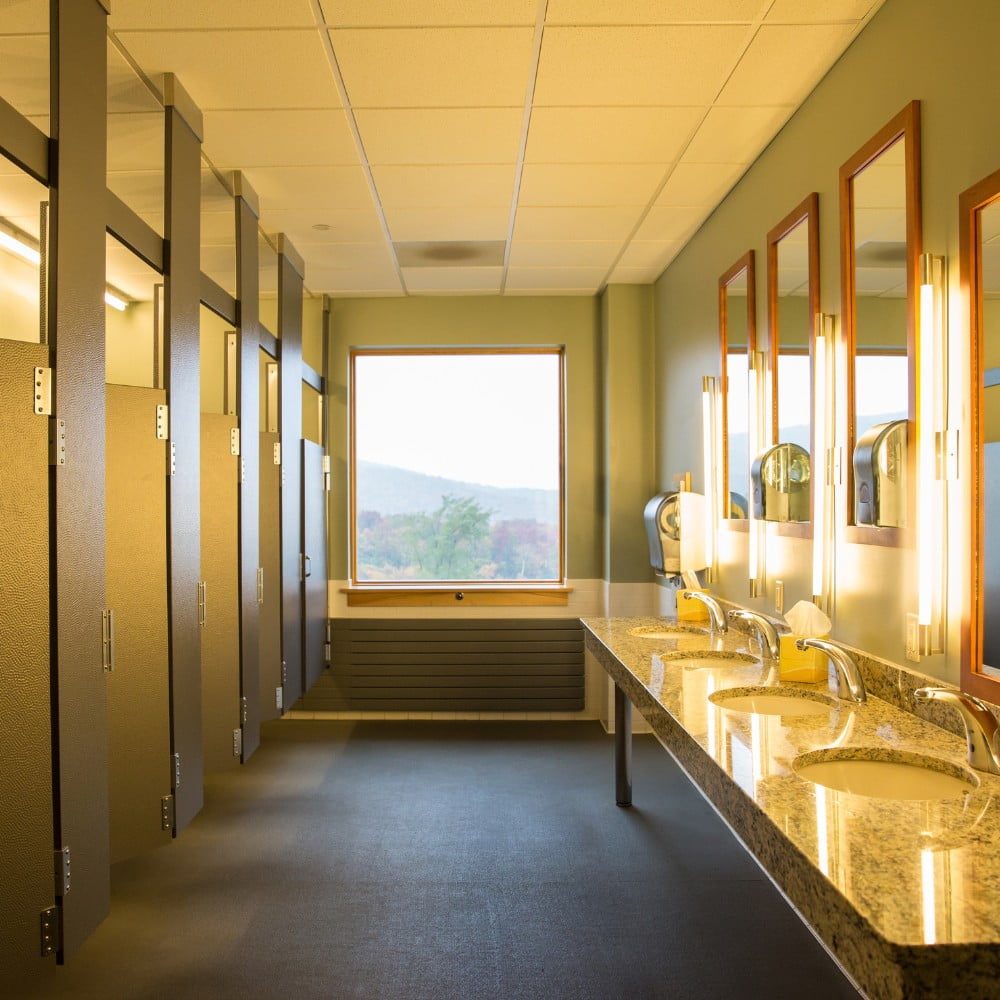
By following these guidelines, businesses can create an energy-efficient lighting control solution for restrooms that reduces energy waste, and lowers maintenance costs:
- Entrance Coverage: Install a wall occupancy sensor near the entrance to detect when someone enters the restroom. This sensor should be positioned high enough to avoid obstructions from the door and should not directly face the entrance to avoid false triggers from movement outside the restroom.
- Stall Coverage: Depending on customer preference for privacy, stalls can either be covered by a sensor or not. If stalls are not covered by a sensor, program a longer timeout (15 or 20 minutes) to prevent lights from turning off when someone is in the stall. If individual stall sensors are used, they should be installed in such a way that they do not detect movement outside the stall to avoid false triggers.
- Sink and Mirror Area: Install a ceiling occupancy sensor above the sink and mirror area. This sensor should be positioned to cover the entire area, ensuring that lights remain on when someone is using the sink or mirror.
- Avoidance of Air Vents: Do not mount sensors close to air vents, as the vibration and air flow can reduce the effectiveness of the sensor. PIR sensors should not be within 4ft of an air vent, and ultrasonic sensors should not be within 6ft of an air vent.
- Manual Control: Integrate manual control to turn ON/OFF all lighting with our occupancy/vacancy sensors. This allows for manual override of the lighting system if necessary.
Featured Products & Solutions
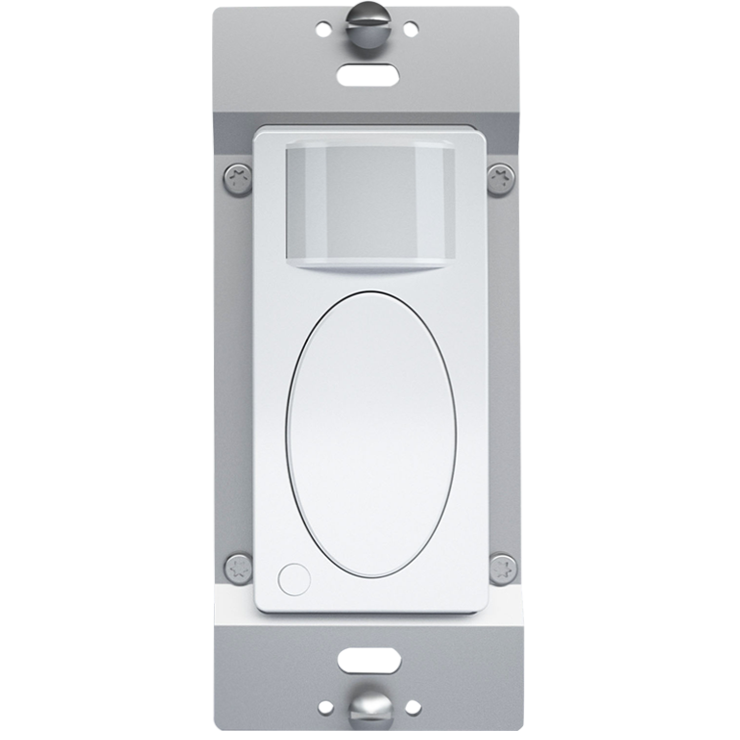
Wall Sensor Switches
RZ020/021 Motion Sensor Switches
- 2-wire, 3-wire, 4-wires wiring options
- Occupancy, Vacancy, Manual ON/OFF
- Adjustive time delay and ambient light control
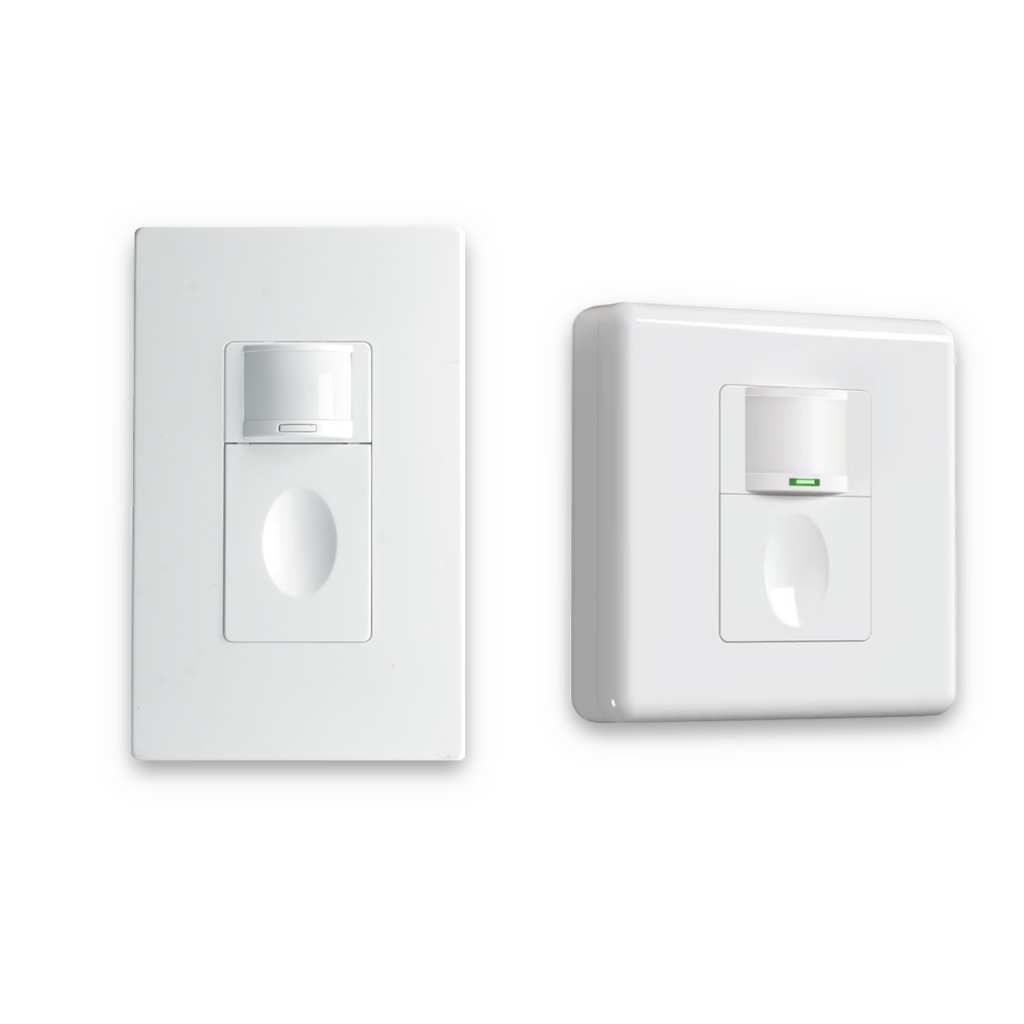
Multi-Location Wireless Wall Sensors
RZ020A/021A + RZ022W Kits
- Hardwired RZ021A/022A occupancy sensor switch
- Wireless companion switch (RZ022W) for multi-location control

Ceiling Occupancy Sensors
RZ036
- Hardwired occupancy sensors
- Auto ON, auto OFF
- Line voltage and Low voltage available
Core features included:
- Integrated manual ON/OFF control for all lighting
- Vacancy sensors (Manual ON only): Lights must be turned on manually only
- Adjustable time-delay, lighting is automatically turned full OFF after 15mins
- Additional: multi-location wireless kits to expand the control range without re-wring
- Additional: multiple wiring options available for both new constructions and retrofit projects.
Meets the Mandatory Provisions
IECC – 2011
C405.2.1 Occupant sensor controls
Occupant sensor controls shall be installed to control lights in the space.
C405.2.1.1 Occupant sensor control functions
- Manual on or partial on to no more than 50% power.
- Full off within 20 minutes after all occupants have left the space
- A manual control to turn off the lights.
**Full automatic-on controls with no manual control are permitted in restrooms where manual operation would endanger occupant safety or security.
ASHRAE 90.1 – 2022
Restrooms shall also be controlled by occupant sensors.
9.4.1.1 H Automatic full OFF control
All lighting in the space shall be automatically shut off within 20 minutes of all occupants leaving the space
Title 24 – 2022
130.1 (a) Manual area controls.
Each area enclosed by ceiling-height partitions shall provide lighting controls that allow the lighting in that area to be manually turned on and off.
** Restrooms having two or more stalls may use a manual control not accessible to unauthorized personnel.
130.1 (c) Shut-OFF Controls.
Lighting shall be controlled with occupant sensing controls to automatically shut OFF all of the lighting in 20 minutes or less after the control zone is unoccupied that shall function either as:
- A. Occupant sensing controls (if 130.1(b) not required to have multi-level lighting controls); or
- B. Partial-ON occupant sensing controls, or
- C. Vacancy sensing controls, where all lighting responds to a manual ON input only
Let us hear you.
Let Rayzeek help design and deliver a bespoke energy-saving lighting solution for you.