Restrooms
Udforsk vores energibesparende vejledning til toiletter, som er udviklet til at hjælpe dig med at forstå og implementere løsninger med tilstedeværelsessensorer for effektiv belysningsstyring i overensstemmelse med de amerikanske energireglementer.
Maximize Energy Efficiency in Restrooms with Occupancy Sensors
Restrooms in commercial buildings are frequently used spaces that often remain lit even when unoccupied, leading to significant energy wastage. These spaces typically use high-intensity lighting fixtures that consume substantial amounts of energy. The sporadic and unpredictable nature of restroom usage further exacerbates this issue, as lights are often left on unnecessarily during periods of non-use.
Given these factors, the potential for energy savings in restrooms is substantial. By implementing occupancy sensor solutions, commercial facilities can significantly reduce their lighting energy consumption. Occupancy sensors detect the presence or absence of people and automatically control the lighting accordingly, ensuring lights are only on when needed. This not only saves energy but also extends the lifespan of lighting fixtures, leading to additional cost savings.
Overhold energireglementerne

International Energy Conservation Code (IECC) er en modelstandard udviklet af International Code Council (ICC) med henblik på at fastsætte minimumskrav til projektering og udførelse for energieffektivitet i bygninger. IECC opdateres hvert tredje år for at integrere de nyeste praksisser og teknologier inden for energibesparelse.
IECC – Hvorfor det er vigtigt for dig
IECC er udbredt i delstater og kommuner over hele USA. IECC dækker forskellige aspekter af energiforbrug, herunder klimaskærmen (vægge, tag og vinduer), varme- og kølesystemer samt belysningsanlæg.
IECC stiller krav om specifikke belysningsstyringer, såsom tilstedeværelsessensorer, for at minimere energispild i ubrugte rum på tværs af forskellige områder.

ANSI/ASHRAE/IES Standard 90.1, Energy Standard for Sites and Buildings Except Low-Rise Residential Buildings, er en vidt anerkendt energistandard udgivet af American Society of Heating, Refrigerating and Air-Conditioning Engineers (ASHRAE).
ASHRAE 90.1 – Hvorfor det er vigtigt for dig
ASHRAE 90.1 anvendes som reference for bygningsreglementer i hele USA og fungerer som en overholdelsesmetode inden for IECC, der opstiller minimumskrav til energieffektive ydelser i erhvervsbygningers komponenter, herunder klimaskærme, HVAC-systemer, brugsvandssystemer og belysningsanlæg.
ASHRAE 90.1-standarden angiver maksimalt tilladte belysningseffekttætheder og minimumskrav til belysningsstyring, herunder brugen af tilstedeværelsessensorer i specifikke områder.

Title 24, del 6 af California Building Standards Code, officielt kendt som Building Energy Efficiency Standards for Residential and Nonresidential Buildings, Title 24 administreres af California Energy Commission og opdateres med jævne mellemrum for at afspejle nye teknologier og metoder inden for energieffektivitet.
Title 24 – Hvorfor det er vigtigt for dig
Title 24 er kendt for sine strenge krav, der ofte anses for at være mere vidtgående end kravene i mange andre energireglementer i USA. Title 24 opstiller strenge energiydelsesstandarder for alle aspekter af bygningskonstruktion, hvilket omfatter opvarmning, ventilation, aircondition (HVAC), brugsvand og belysning.
Title 24 kræver installation af tilstedeværelsessensorer, der tilpasser belysningen baseret på personers tilstedeværelse i specifikke områder af erhvervsbygninger for at sikre, at der ikke spildes energi.
Implementering af energireglementer efter delstat
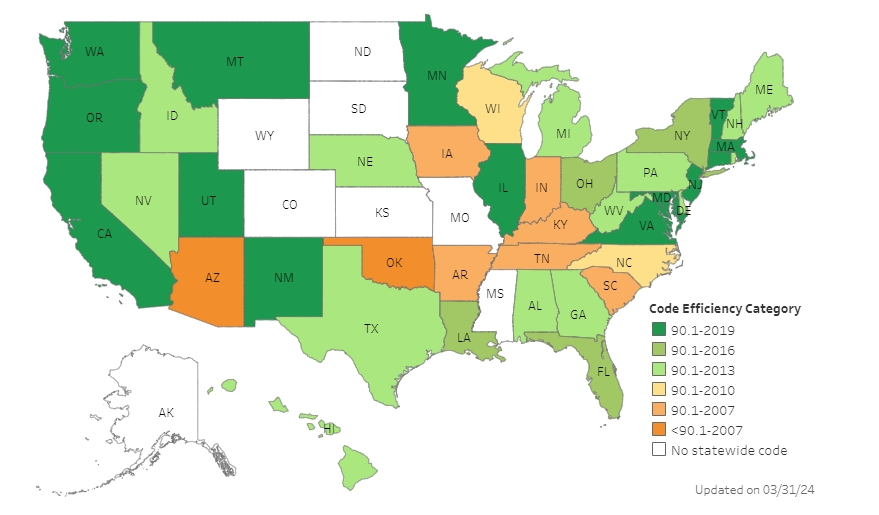
Fold ud for at se den detaljerede tabel ↓
| Delstat | Gældende erhvervsbygningsreglement | Effektivitetskategori for erhvervsbygningsreglement |
|---|---|---|
| Alabama | 90.1-2013 | 90.1-2013 |
| Alaska | Ingen på delstatsniveau | Intet reglement på delstatsniveau |
| Arizona | Kommunalt selvstyre | <90.1-2007 |
| Arkansas | 2009 IECC og 90.1-2007 | 90.1-2007 |
| Californien | 2022 Building Energy Efficiency Standards | 90.1-2019 |
| Colorado | Kommunalt selvstyre | Intet reglement på delstatsniveau |
| Connecticut | 2021 IECC og 90.1-2019 | 90.1-2019 |
| Delaware | 2018 IECC og 90.1-2016 | 90.1-2013 |
| District of Columbia | 90.1-2013^ | 90.1-2019 |
| Florida | 2021 IECC og 90.1-2019^ | 90.1-2016 |
| Georgia | 2015 IECC og 90.1-2013^ | 90.1-2013 |
| Hawaii | Kommunalt selvstyre | 90.1-2013 |
| Idaho | 2018 IECC og 90.1-2016 | 90.1-2013 |
| Illinois | 2021 IECC og 90.1-2019 | 90.1-2019 |
| Indiana | 90.1-2007 | 90.1-2007 |
| Iowa | 2012 IECC og 90.1-2010 | 90.1-2007 |
| Kansas | Kommunalt selvstyre | Intet reglement på delstatsniveau |
| Kentucky | 2012 IECC og 90.1-2010 | 90.1-2007 |
| Louisiana | 2021 IECC og 90.1-2019^ | 90.1-2016 |
| Maine | 2015 IECC og 90.1-2013 | 90.1-2013 |
| Maryland | 2021 IECC og 90.1-2019^ | 90.1-2019 |
| Massachusetts | 2018 IECC og 90.1-2016^ | 90.1-2019 |
| Michigan | 2015 IECC og 90.1-2013^ | 90.1-2013 |
| Minnesota | 90.1-2019^ | 90.1-2019 |
| Mississippi | Ingen på delstatsniveau | Intet reglement på delstatsniveau |
| Missouri | Kommunalt selvstyre | Intet reglement på delstatsniveau |
| Montana | 2021 IECC og 90.1-2019 | 90.1-2019 |
| Nebraska | 2018 IECC og 90.1-2016 | 90.1-2013 |
| Nevada | 2018 IECC og 90.1-2016 | 90.1-2013 |
| New Hampshire | 2018 IECC og 90.1-2016^ | 90.1-2013 |
| New Jersey | 90.1-2019 | 90.1-2019 |
| New Mexico | 2021 IECC og 90.1-2019^ | 90.1-2019 |
| New York | 2018 IECC og 90.1-2016^ | 90.1-2016 |
| North Carolina | 2015 IECC og 90.1-2013^ | 90.1-2010 |
| North Dakota | Kommunalt selvstyre | Intet reglement på delstatsniveau |
| Ohio | 2021 IECC og 90.1-2019^ | 90.1-2016 |
| Oklahoma | 2006 IECC og 90.1-2004 | <90.1-2007 |
| Oregon | 90.1-2019 | 90.1-2019 |
| Pennsylvania | 2018 IECC og 90.1-2016 | 90.1-2013 |
| Rhode Island | 2018 IECC og 90.1-2016^ | 90.1-2013 |
| South Carolina | 2009 IECC og 90.1-2007 | 90.1-2007 |
| South Dakota | Kommunalt selvstyre | Intet reglement på delstatsniveau |
| Tennessee | 2021 IECC og 90.1-2013 | 90.1-2007 |
| Texas | 2015 IECC og 90.1-2013 | 90.1-2013 |
| Utah | 2021 IECC og 90.1-2019^ | 90.1-2019 |
| Vermont | 2021 IECC og 90.1-2019^ | 90.1-2019 |
| Virginia | 2021 IECC og 90.1-2019^ | 90.1-2019 |
| Washington | 2018 Washington State Energy Code | 90.1-2019 |
| Tennessee | 2012 IECC og 90.1-2010 | 90.1-2007 |
| Texas | 2015 IECC og 90.1-2013 | 90.1-2013 |
| Utah | 2021 IECC og 90.1-2019^ | 90.1-2019 |
| Vermont | 2018 IECC og 90.1-2016^ | 90.1-2019 |
| Virginia | 2021 IECC og 90.1-2019^ | 90.1-2019 |
| Washington | 2018 Washington State Energy Code | 90.1-2019 |
| West Virginia | 90.1-2013 | 90.1-2013 |
| Wisconsin | 2015 IECC og 90.1-2013^ | 90.1-2010 |
| Wyoming | Kommunalt selvstyre | Intet reglement på delstatsniveau |
- ^ When an amendment impacting energy efficiency can be quantified using DOE Prototype Building Models, they were captured in the analysis.
- For states adopting both IECC and 90.1, the IECC code is usually analyzed as the state current code in this study except for states with extensive amendments to the IECC.
Design Guide Key Concepts for Restrooms
Designing an energy-efficient lighting control solution for restrooms involves strategic placement of occupancy sensors to ensure comprehensive coverage of the space.
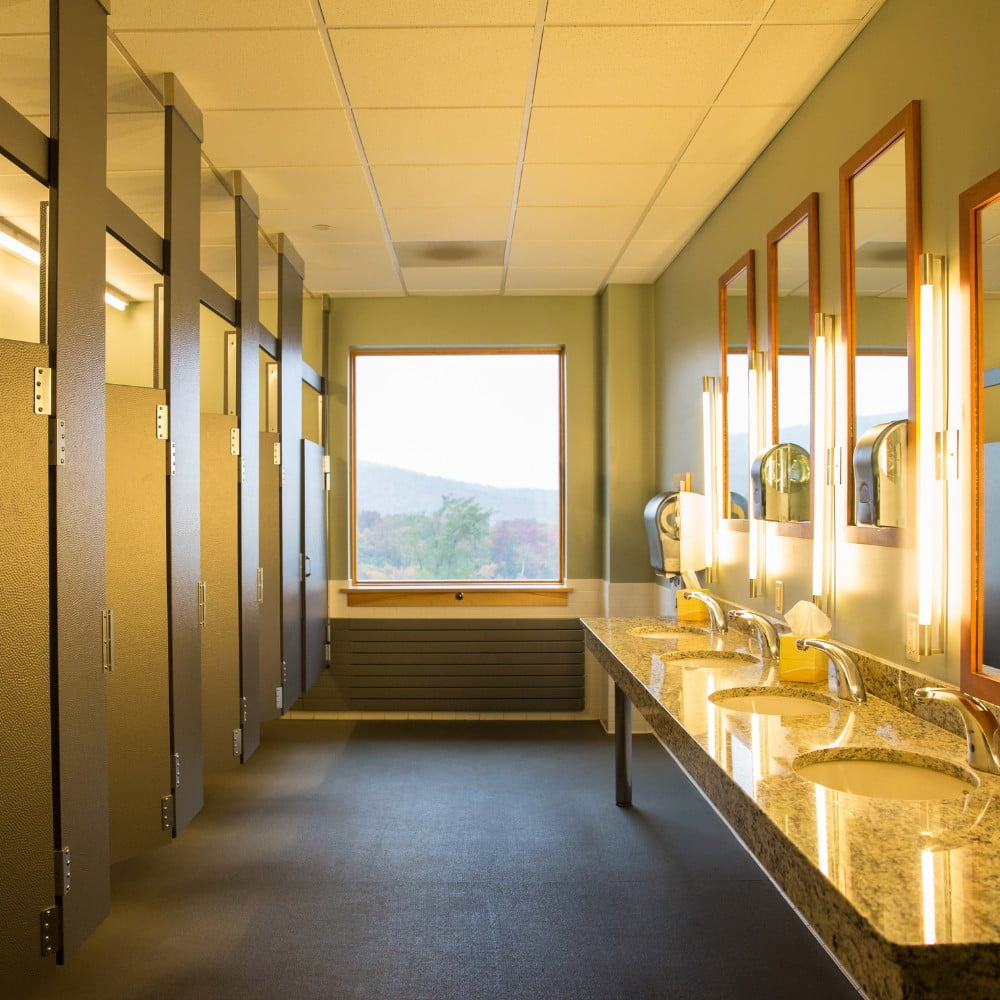
By following these guidelines, businesses can create an energy-efficient lighting control solution for restrooms that reduces energy waste, and lowers maintenance costs:
- Entrance Coverage: Install a wall occupancy sensor near the entrance to detect when someone enters the restroom. This sensor should be positioned high enough to avoid obstructions from the door and should not directly face the entrance to avoid false triggers from movement outside the restroom.
- Stall Coverage: Depending on customer preference for privacy, stalls can either be covered by a sensor or not. If stalls are not covered by a sensor, program a longer timeout (15 or 20 minutes) to prevent lights from turning off when someone is in the stall. If individual stall sensors are used, they should be installed in such a way that they do not detect movement outside the stall to avoid false triggers.
- Sink and Mirror Area: Install a ceiling occupancy sensor above the sink and mirror area. This sensor should be positioned to cover the entire area, ensuring that lights remain on when someone is using the sink or mirror.
- Avoidance of Air Vents: Do not mount sensors close to air vents, as the vibration and air flow can reduce the effectiveness of the sensor. PIR sensors should not be within 4ft of an air vent, and ultrasonic sensors should not be within 6ft of an air vent.
- Manual Control: Integrate manual control to turn ON/OFF all lighting with our occupancy/vacancy sensors. This allows for manual override of the lighting system if necessary.
Featured Products & Solutions
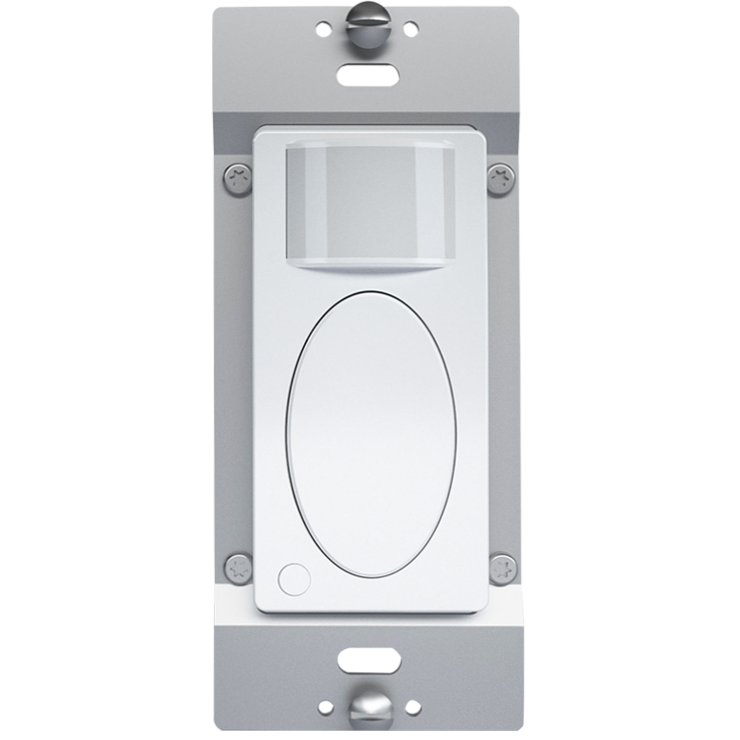
Wall Sensor Switches
RZ020/021 Motion Sensor Switches
- 2-wire, 3-wire, 4-wires wiring options
- Occupancy, Vacancy, Manual ON/OFF
- Adjustive time delay and ambient light control
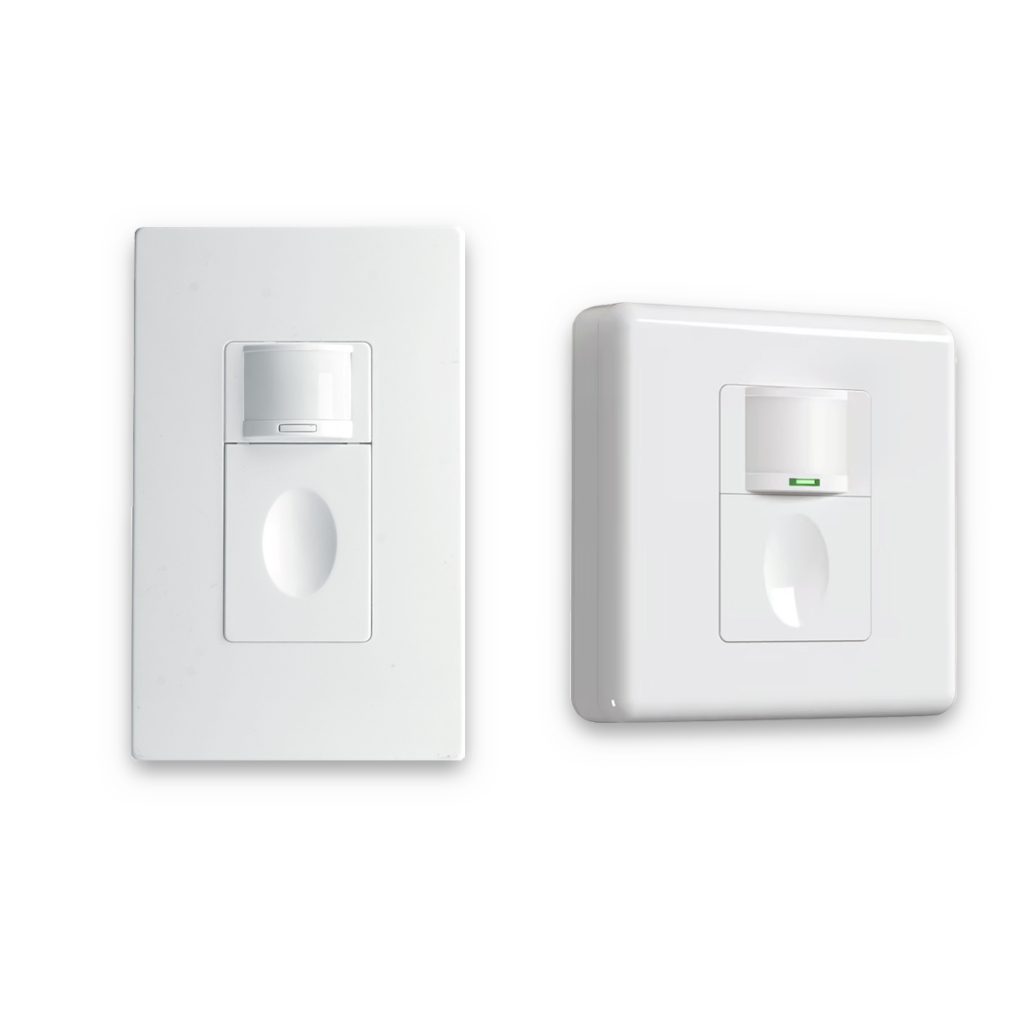
Multi-Location Wireless Wall Sensors
RZ020A/021A + RZ022W Kits
- Hardwired RZ021A/022A occupancy sensor switch
- Wireless companion switch (RZ022W) for multi-location control

Ceiling Occupancy Sensors
RZ036
- Hardwired occupancy sensors
- Auto ON, auto OFF
- Line voltage and Low voltage available
Core features included:
- Integrated manual ON/OFF control for all lighting
- Vacancy sensors (Manual ON only): Lights must be turned on manually only
- Adjustable time-delay, lighting is automatically turned full OFF after 15mins
- Additional: multi-location wireless kits to expand the control range without re-wring
- Additional: multiple wiring options available for both new constructions and retrofit projects.
Meets the Mandatory Provisions
IECC – 2011
C405.2.1 Occupant sensor controls
Occupant sensor controls shall be installed to control lights in the space.
C405.2.1.1 Occupant sensor control functions
- Manual on or partial on to no more than 50% power.
- Full off within 20 minutes after all occupants have left the space
- A manual control to turn off the lights.
**Full automatic-on controls with no manual control are permitted in restrooms where manual operation would endanger occupant safety or security.
ASHRAE 90.1 – 2022
Restrooms shall also be controlled by occupant sensors.
9.4.1.1 H Automatic full OFF control
All lighting in the space shall be automatically shut off within 20 minutes of all occupants leaving the space
Title 24 – 2022
130.1 (a) Manual area controls.
Each area enclosed by ceiling-height partitions shall provide lighting controls that allow the lighting in that area to be manually turned on and off.
** Restrooms having two or more stalls may use a manual control not accessible to unauthorized personnel.
130.1 (c) Shut-OFF Controls.
Lighting shall be controlled with occupant sensing controls to automatically shut OFF all of the lighting in 20 minutes or less after the control zone is unoccupied that shall function either as:
- A. Occupant sensing controls (if 130.1(b) not required to have multi-level lighting controls); or
- B. Partial-ON occupant sensing controls, or
- C. Vacancy sensing controls, where all lighting responds to a manual ON input only
Let us hear you.
Let Rayzeek help design and deliver a bespoke energy-saving lighting solution for you.