
廊下
Rayzeekの存在検知センサー設計ガイドで、廊下における省エネルギーの可能性を発見してください。商業ビルの通路における自動照明制御のパワーを明らかにします。
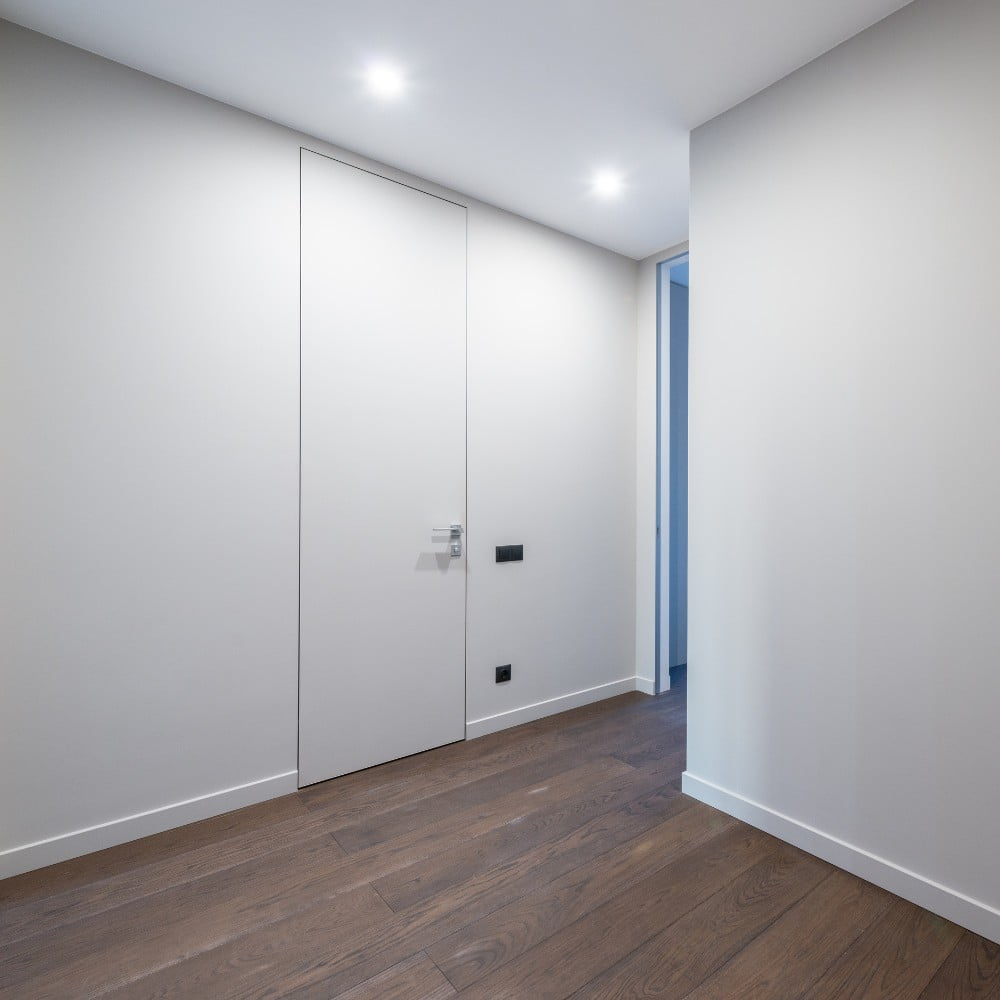
廊下におけるエネルギー効率向上への道筋
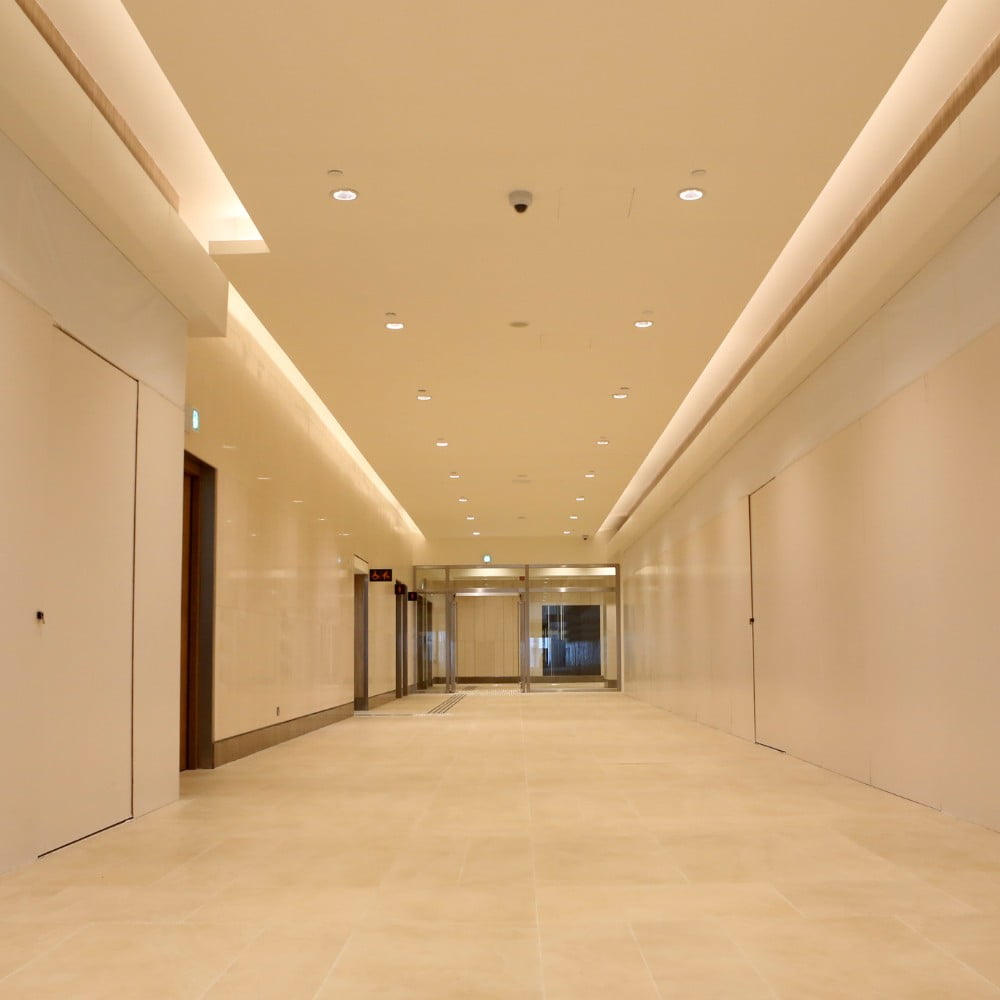
商業ビル、教育機関、医療施設などの廊下は通行量が多く、終日点灯したままになることが多いため、多大なエネルギー消費につながります。これらのスペースでは通常、蛍光灯やLED照明が使用されていますが、これらはエネルギー効率が良い一方で、不必要に点灯したままにすると高額なエネルギーコストの一因となります。
課題となるのは、廊下への出入りが断続的であり、人の往来が多い時間帯と無人の時間帯が混在している点です。従来の旧式な手動照明制御では、こうした無人の時間帯に照明が点灯したままになり、不要なエネルギーの無駄遣いにつながる可能性がありました。
廊下の照明システムに弊社の存在検知センサーを組み込むことで、必要なときのみ照明を点灯させることができ、省エネルギーとコスト削減を実現できます。壁面取り付け型や天井取り付け型のオプションを含む当社のセンサーは、米国エネルギー基準に適合するように設計されており、商業ビルのエネルギー効率要件を満たす上で不可欠なコンポーネントとなっています。
エネルギー基準(省エネコード)への適合

国際省エネルギー基準(IECC)は、建築物におけるエネルギー効率の最小設計・施工要件を確立するために、国際基準評価機構(ICC)によって策定されたモデル基準です。IECCは、最新の省エネルギー手法や技術を取り入れるため、3年ごとに改定されています。
IECCに準拠すべき理由
IECCは全米の州や自治体で広く採用されています。IECCは、建築外皮(壁、屋根、窓)、冷暖房システム、照明システムなど、エネルギー利用の多様な側面をカバーしています。
IECCでは、さまざまなエリアの不在空間におけるエネルギーの無駄を最小限に抑えるため、人感センサーなどの特定の照明制御の設置が義務付けられています。

ANSI/ASHRAE/IES Standard 90.1(低層住宅を除く敷地および建築物のためのエネルギー基準)は、米国暖房冷凍空調学会(ASHRAE)が発行している、広く認知されたエネルギー基準です。
ASHRAE 90.1に準拠すべき理由
ASHRAE 90.1は、全米における建築物エネルギー基準のベンチマークとして使用されており、IECC内の適合パスとしても機能しています。この基準は、建築外皮、HVACシステム、給湯システム、照明システムを含む、商業ビル構成要素の省エネルギー性能に関する最小要件を提示しています。
ASHRAE 90.1基準では、許容される最大照明電力密度の規定に加え、特定エリアにおける人感センサーの使用を含む、最小限の照明制御要件を規定しています。

カリフォルニア州建築基準法第24条第6部(正式名称:住宅および非住宅建築物のための建築エネルギー効率基準)は、カリフォルニア州エネルギー委員会(CEC)によって管理され、新しい省エネ技術や手法を反映するために定期的に改定されています。
Title 24に準拠すべき理由
Title 24はその厳格な要件で知られており、全米の他の多くのエネルギー基準よりも厳しいと評価されることがよくあります。Title 24は、暖房、換気、空調(HVAC)、給湯、照明など、建築物施工のあらゆる側面に対して厳しいエネルギー性能基準を義務付けています。
Title 24では、エネルギーの無駄を確実に防ぐため、商業ビルの特定エリアにおいて室内の占有状況に応じて照明を調整する人感センサーの設置が義務付けられています。
州別のエネルギー基準(省エネコード)採用状況
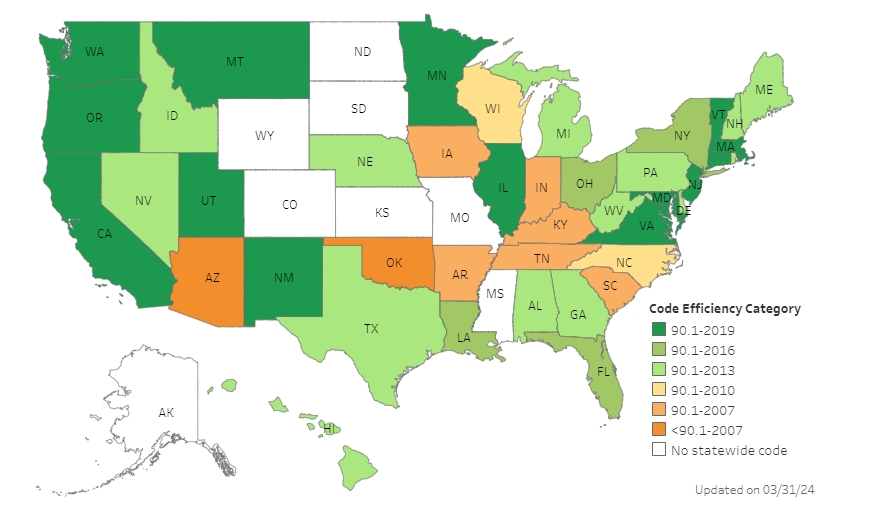
展開して詳細な表を表示 ↓
| 州名 | 現行の商業建築基準 | 商業建築基準のエネルギー効率区分 |
|---|---|---|
| アラバマ州 | 90.1-2013 | 90.1-2013 |
| アラスカ州 | 州全域での規定なし | 州全域での基準なし |
| アリゾナ州 | ホームルール(自治権) | <90.1-2007 |
| アーカンソー州 | 2009 IECC および 90.1-2007 | 90.1-2007 |
| カリフォルニア州 | 2022年 建築エネルギー効率基準 | 90.1-2019 |
| コロラド州 | ホームルール(自治権) | 州全域での基準なし |
| コネチカット州 | 2021 IECC および 90.1-2019 | 90.1-2019 |
| デラウェア州 | 2018 IECC および 90.1-2016 | 90.1-2013 |
| コロンビア特別区 | 90.1-2013^ | 90.1-2019 |
| フロリダ州 | 2021 IECC および 90.1-2019^ | 90.1-2016 |
| ジョージア州 | 2015 IECC および 90.1-2013^ | 90.1-2013 |
| ハワイ州 | ホームルール(自治権) | 90.1-2013 |
| アイダホ州 | 2018 IECC および 90.1-2016 | 90.1-2013 |
| イリノイ州 | 2021 IECC および 90.1-2019 | 90.1-2019 |
| インディアナ州 | 90.1-2007 | 90.1-2007 |
| アイオワ州 | 2012 IECC および 90.1-2010 | 90.1-2007 |
| カンザス州 | ホームルール(自治権) | 州全域での基準なし |
| ケンタッキー州 | 2012 IECC および 90.1-2010 | 90.1-2007 |
| ルイジアナ州 | 2021 IECC および 90.1-2019^ | 90.1-2016 |
| メイン州 | 2015 IECC および 90.1-2013 | 90.1-2013 |
| メリーランド州 | 2021 IECC および 90.1-2019^ | 90.1-2019 |
| マサチューセッツ州 | 2018 IECC および 90.1-2016^ | 90.1-2019 |
| ミシガン州 | 2015 IECC および 90.1-2013^ | 90.1-2013 |
| ミネソタ州 | 90.1-2019^ | 90.1-2019 |
| ミシシッピ州 | 州全域での規定なし | 州全域での基準なし |
| ミズーリ州 | ホームルール(自治権) | 州全域での基準なし |
| モンタナ州 | 2021 IECC および 90.1-2019 | 90.1-2019 |
| ネブラスカ州 | 2018 IECC および 90.1-2016 | 90.1-2013 |
| ネバダ州 | 2018 IECC および 90.1-2016 | 90.1-2013 |
| ニューハンプシャー州 | 2018 IECC および 90.1-2016^ | 90.1-2013 |
| ニュージャージー州 | 90.1-2019 | 90.1-2019 |
| ニューメキシコ州 | 2021 IECC および 90.1-2019^ | 90.1-2019 |
| ニューヨーク州 | 2018 IECC および 90.1-2016^ | 90.1-2016 |
| ノースカロライナ州 | 2015 IECC および 90.1-2013^ | 90.1-2010 |
| ノースダコタ州 | ホームルール(自治権) | 州全域での基準なし |
| オハイオ州 | 2021 IECC および 90.1-2019^ | 90.1-2016 |
| オクラホマ州 | 2006 IECC および 90.1-2004 | <90.1-2007 |
| オレゴン州 | 90.1-2019 | 90.1-2019 |
| ペンシルベニア州 | 2018 IECC および 90.1-2016 | 90.1-2013 |
| ロードアイランド州 | 2018 IECC および 90.1-2016^ | 90.1-2013 |
| サウスカロライナ州 | 2009 IECC および 90.1-2007 | 90.1-2007 |
| サウスダコタ州 | ホームルール(自治権) | 州全域での基準なし |
| テネシー州 | 2021 IECC および 90.1-2013 | 90.1-2007 |
| テキサス州 | 2015 IECC および 90.1-2013 | 90.1-2013 |
| ユタ州 | 2021 IECC および 90.1-2019^ | 90.1-2019 |
| バーモント州 | 2021 IECC および 90.1-2019^ | 90.1-2019 |
| バージニア州 | 2021 IECC および 90.1-2019^ | 90.1-2019 |
| ワシントン州 | 2018年ワシントン州エネルギーコード | 90.1-2019 |
| テネシー州 | 2012 IECC および 90.1-2010 | 90.1-2007 |
| テキサス州 | 2015 IECC および 90.1-2013 | 90.1-2013 |
| ユタ州 | 2021 IECC および 90.1-2019^ | 90.1-2019 |
| バーモント州 | 2018 IECC および 90.1-2016^ | 90.1-2019 |
| バージニア州 | 2021 IECC および 90.1-2019^ | 90.1-2019 |
| ワシントン州 | 2018年ワシントン州エネルギーコード | 90.1-2019 |
| ウェストバージニア州 | 90.1-2013 | 90.1-2013 |
| ウィスコンシン州 | 2015 IECC および 90.1-2013^ | 90.1-2010 |
| ワイオミング州 | ホームルール(自治権) | 州全域での基準なし |
- ^ エネルギー効率に影響を与える改正がDOEプロトタイプビルモデルを用いて定量化できる場合、それらは分析に含まれています。
- IECCと90.1の両方を採用している州において、本研究ではIECCへの大幅な改正がある州を除き、通常IECCコードを州の現行コードとして分析しています。
廊下向け設計ガイドの主要コンセプト
廊下向けのエネルギー効率に優れた照明制御ソリューションの設計には、空間を包括的にカバーできるように存在検知センサーを戦略的に配置することが含まれます。
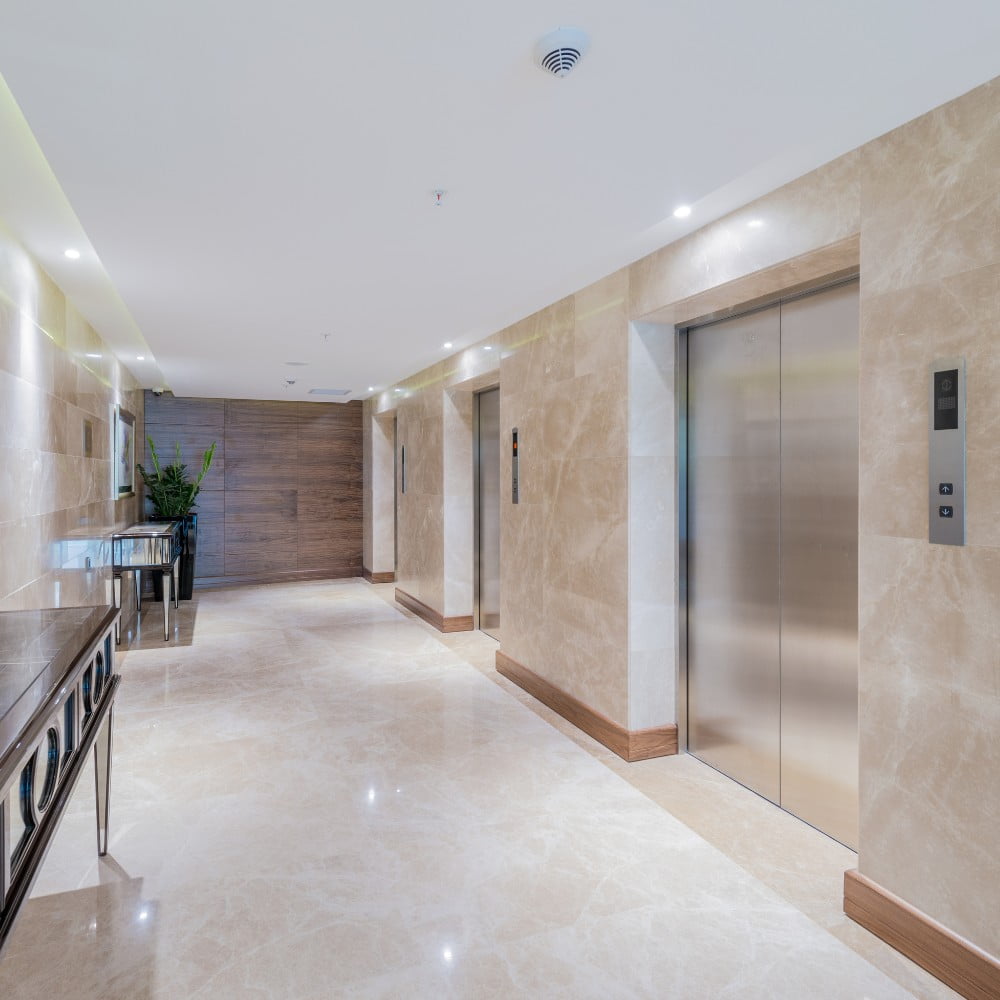
廊下における主な目的は、エネルギーの無駄を最小限に抑えながら利用者の安全で明るい通行を確保することであり、すべてのアクセスポイントおよび廊下の全長がセンサーによってカバーされるようにします。考慮すべき設計上のポイントは以下の通りです。
- センサーの配置: 長い廊下では、複数のセンサーが必要になる場合があります。天井取り付け型センサーを廊下に沿って一定の間隔で配置することで、包括的なカバーを実現できます。あるいは、壁面取り付け型センサーを廊下の両端に配置し、中央でそれぞれのカバーエリアを重ね合わせることで死角をなくすこともできます。また、廊下全体での動きをセンサーが確実に検出できるように、センサーの高さと検知範囲も考慮してください。
- センサータイプ: 天井の高さや障害物の有無に応じて、天井取り付け型または壁面取り付け型のセンサーを使用できます。Rayzeekの天井センサーは自動ONおよび完全OFF機能を提供し、壁面センサーは手動ONおよび完全OFF機能を提供します。
- 追加の手動制御: 存在検知センサーに加え、手動でのオーバーライドが必要な場合のために手動制御を統合できます。これらの制御装置は、出入り口付近の便利な場所に配置できます。
- 誤作動の回避: 隣接するスペースでの動きが検知された際に誤作動を引き起こす可能性があるため、センサーが他のスペースに通じるドア、外部の光源、空調の通気口に直接向かないように配置する必要があります。
注目の製品およびソリューション
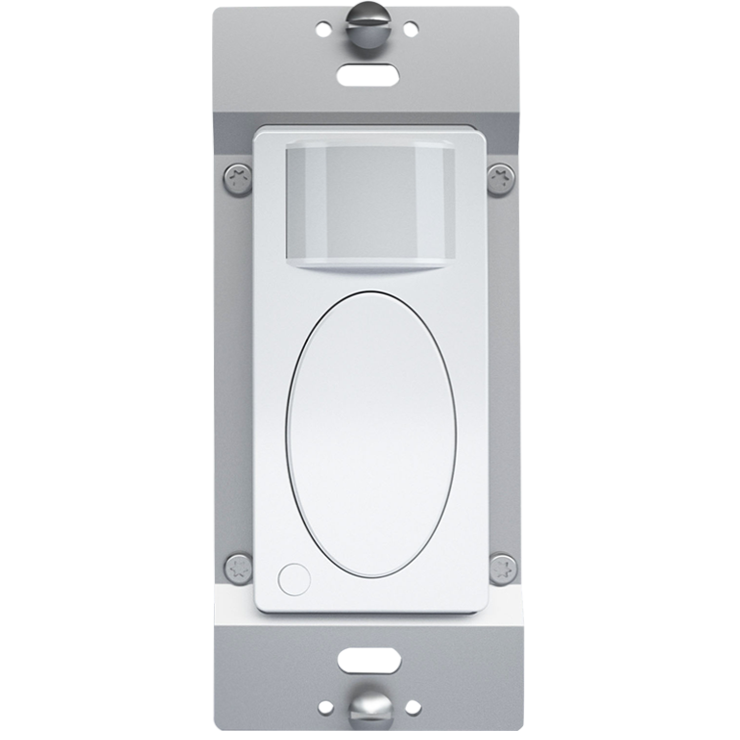
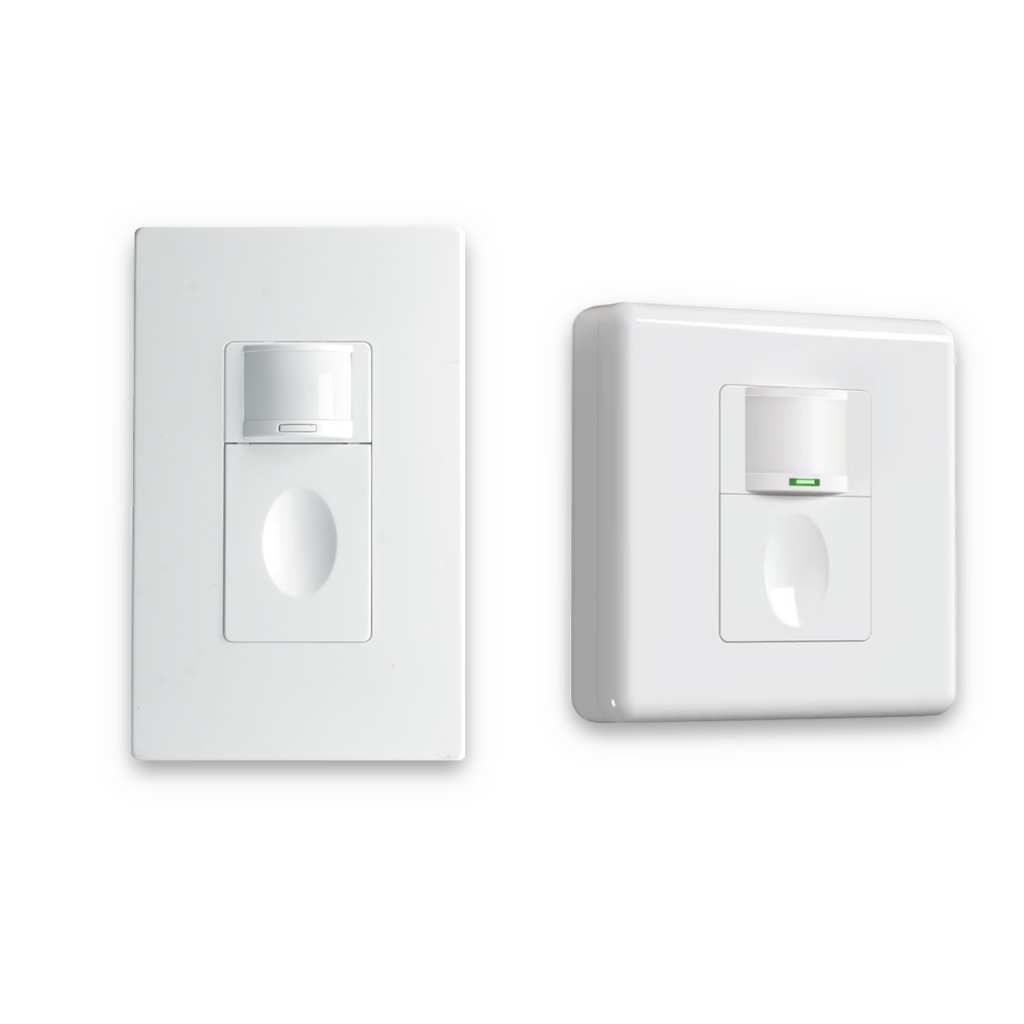
壁面センサースイッチ
RZ020/021 モーションセンサースイッチ
- 2線式、3線式、4線式の配線オプション
- オキュパンシー(自動点滅)、バカンシー(手動点灯・自動消灯)、手動ON/OFF
- 調整可能なタイムディレイおよび周囲光制御
マルチロケーション ワイヤレス壁面センサー
RZ020A/021A + RZ022W キット
- 有線式 RZ021A/022A 人感センサースイッチ
- マルチロケーション制御用ワイヤレスコンパニオンスイッチ (RZ022W)

天井取り付け型 人感センサー
RZ036
- ハードワイヤード人感センサー
- 自動ON、自動OFF
- ライン電圧および低電圧の両方に対応
主な機能:
- すべての照明に対する統合された手動ON/OFF制御
- 不在検知センサー(手動ONのみ):照明は手動でのみ点灯させる必要があります
- 調整可能な遅延時間、15分後に照明が自動的に完全OFFになります
- 補足:再配線なしで制御範囲を拡張できるマルチロケーションワイヤレスキット
- 補足:新築および改修プロジェクトの両方に対応する複数の配線オプションをご用意しています。
義務的規定に適合
IECC – 2011
C405.2.1 人感センサー制御
Occupant sensor controls shall be installed to control lights in the space.
C405.2.1.1 Occupant sensor control functions
- Manual on or partial on to no more than 50% power.
- Full off within 20 minutes after all occupants have left the space
- A manual control to turn off the lights.
Full automatic-on controls with no manual control are permitted in corridors where manual operation would endanger occupant safety or security.
C405.2.1.4 Occupant sensor control function in corridors.
Occupant sensor controls in corridors shall uniformly reduce lighting power to an occupied setpoint not more than 50 percent offull power within 20 minutes after all occupants have left the space.
Exception: Corridors provided with less than two footcandles of illumination on the floor at the darkest point with all lights on.
ASHRAE 90.1 – 2022
9.4.1.1 a Local control
There shall be one or more manual lighting control device that provides ON and OFF control
of all lighting in the space.
9.4.1.1 g Automatic reduction control
The general lighting power in the space shall be automatically reduced by at least 50% within 15 minutes of all occupants leaving the space.
9.4.1.1 h Automatic full OFF control
All lighting in the space shall be automatically shut off within 15 minutes of all occupants leaving the space.
9.4.1.1 i Scheduled shutoff
All lighting in the space shall be automatically shut off during periods when the space is scheduled to be unoccupied.
** NOTE: At least one 9.4.1.1 h or 9.4.1.1 i shall be implemented.
Title 24 – 2022
130.1 (a) Manual area controls.
Each area enclosed by ceiling-height partitions shall provide lighting controls that allow the lighting in that area to be manually turned on and off.
130.1 (c) Shut-OFF Controls.
In corridors, lighting shall be controlled by Full or partial-OFF occupant sensing controls that separately reduce the lighting power in each space by at least 50 percent when the space is unoccupied. The occupant sensing controls shall be capable of automatically turning the lighting fully ON only in the separately controlled space, and shall be automatically activated from all designed paths of egress.
Let us hear you.
Let Rayzeek help design and deliver a bespoke energy-saving lighting solution for you.