
Corridors
Discover the energy-saving potential of corridors with Rayzeek’s occupancy sensor design guide. Uncover the power of automated lighting control in your commercial building’s passageways.
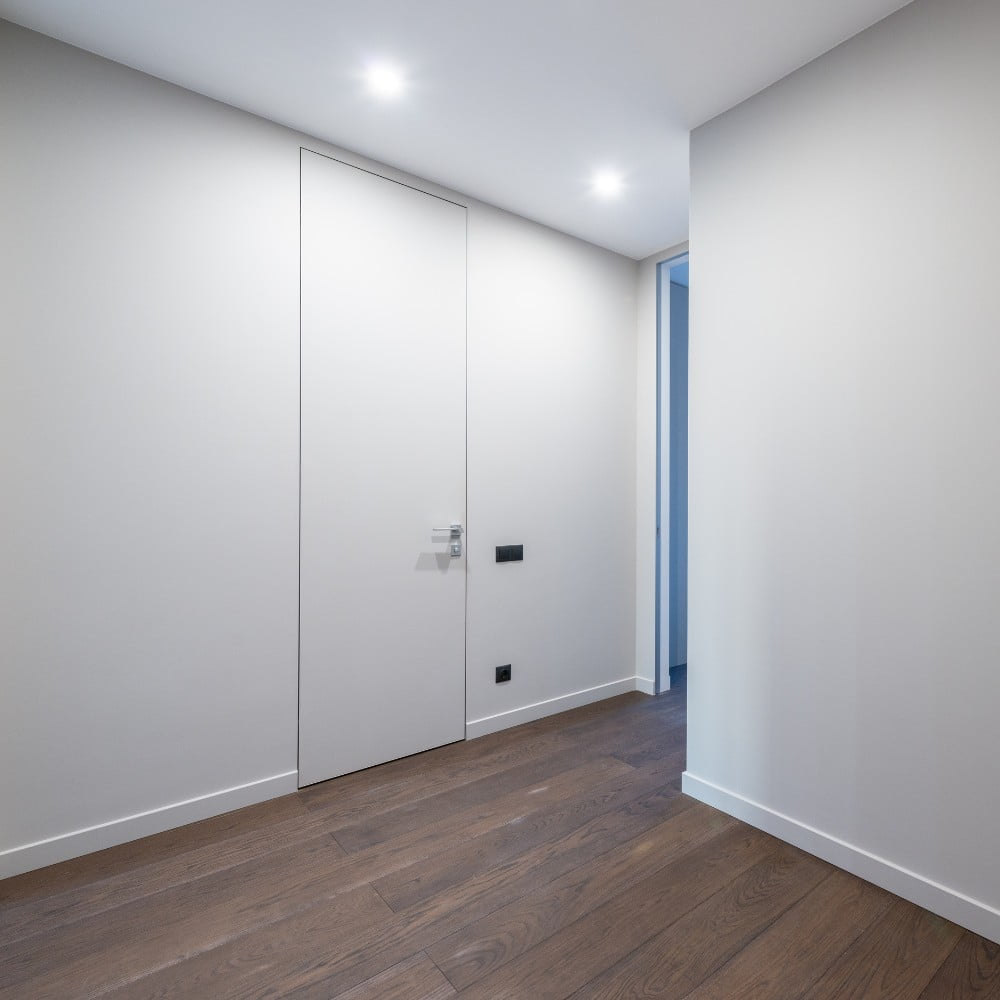
Lighting the Way to Energy Efficiency in Corridors
Corridors, whether in commercial buildings, educational institutions, or healthcare facilities, are high-traffic areas that often remain illuminated throughout the day, leading to significant energy consumption. These spaces typically use fluorescent or LED lighting, which, while energy-efficient, can still contribute to high energy costs when left on unnecessarily.
The challenge lies in the fact that corridors are intermittently occupied, with periods of high foot traffic interspersed with times of vacancy. Traditional manual lighting controls can lead to lights being left on during these vacant periods, resulting in unnecessary energy waste.
By integrating our occupancy sensors into your corridor lighting system, you can ensure that lights are only on when needed, saving energy and reducing costs. Our sensors, including wall and ceiling-mounted options, are designed to comply with US Energy Codes, making them an essential component in meeting energy efficiency requirements for commercial buildings.
Voldoe aan de energiecodes

De International Energy Conservation Code (IECC) is een modelcode die is ontwikkeld door de International Code Council (ICC) om minimale ontwerp- en bouwvereisten voor energie-efficiëntie in gebouwen vast te leggen. De IECC wordt elke drie jaar bijgewerkt om de nieuwste praktijken en technologieën op het gebied van energiebesparing op te nemen.
IECC: Waarom dit voor u van belang is
De IECC is op grote schaal overgenomen door staten en gemeenten in de gehele Verenigde Staten. De IECC omvat diverse aspecten van het energiegebruik, waaronder de gebouwschil (muren, daken en ramen), verwarmings- en koelsystemen en verlichtingssystemen.
De IECC schrijft specifieke verlichtingsregelingen voor, zoals aanwezigheidssensoren, om energieverspilling in onbezette ruimtes op verschillende locaties tot een minimum te beperken.

ANSI/ASHRAE/IES Standard 90.1, Energy Standard for Sites and Buildings Except Low-Rise Residential Buildings, is een breed erkende energienorm die wordt uitgegeven door de American Society of Heating, Refrigerating and Air-Conditioning Engineers (ASHRAE).
ASHRAE 90.1: Waarom dit voor u van belang is
ASHRAE 90.1 wordt gebruikt als referentiepunt voor energiecodes voor gebouwen in de gehele Verenigde Staten en dient als een nalevingsroute binnen de IECC. De norm schetst de minimale vereisten voor de energie-efficiënte prestaties van onderdelen van commerciële gebouwen, waaronder gebouwschillen, HVAC-systemen, waterverwarmingssystemen en verlichtingssystemen.
De norm ASHRAE 90.1 specificeert de maximaal toegestane verlichtingsvermogensdichtheden en minimale vereisten voor verlichtingsregeling, waaronder het gebruik van aanwezigheidssensoren in specifieke ruimtes.

Title 24, deel 6 van de California Building Standards Code, officieel bekend als de Building Energy Efficiency Standards for Residential and Nonresidential Buildings, wordt beheerd door de California Energy Commission en wordt periodiek bijgewerkt om nieuwe technologieën en methoden voor energie-efficiëntie te reflecteren.
Title 24: Waarom dit voor u van belang is
Title 24 staat bekend om zijn strenge vereisten, die vaak als strenger worden beschouwd dan die van vele andere energiecodes in de Verenigde Staten. Title 24 schrijft strenge energieprestatie-eisen voor voor alle aspecten van de gebouwconstructie, inclusief verwarming, ventilatie, airconditioning (HVAC), waterverwarming en verlichting.
Title 24 vereist de installatie van aanwezigheidssensoren die de verlichting aanpassen op basis van de bezetting van ruimtes in specifieke gedeelten van commerciële gebouwen om te garanderen dat er geen energie wordt verspild.
Koppeling van energiecodes per staat
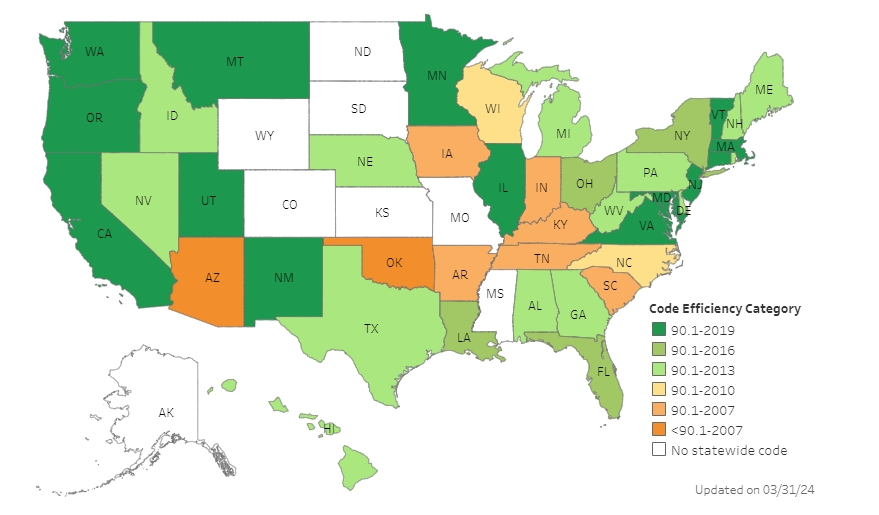
Expand to see the detailed table ↓
| State | Current Commercial Code | Commercial Code Efficiency Category |
|---|---|---|
| Alabama | 90.1-2013 | 90.1-2013 |
| Alaska | None statewide | No statewide code |
| Arizona | Home rule | <90.1-2007 |
| Arkansas | 2009 IECC and 90.1-2007 | 90.1-2007 |
| California | 2022 Building Energy Efficiency Standards | 90.1-2019 |
| Colorado | Home rule | No statewide code |
| Connecticut | 2021 IECC and 90.1-2019 | 90.1-2019 |
| Delaware | 2018 IECC and 90.1-2016 | 90.1-2013 |
| District of Columbia | 90.1-2013^ | 90.1-2019 |
| Florida | 2021 IECC and 90.1-2019^ | 90.1-2016 |
| Georgia | 2015 IECC and 90.1-2013^ | 90.1-2013 |
| Hawaii | Home rule | 90.1-2013 |
| Idaho | 2018 IECC and 90.1-2016 | 90.1-2013 |
| Illinois | 2021 IECC and 90.1-2019 | 90.1-2019 |
| Indiana | 90.1-2007 | 90.1-2007 |
| Iowa | 2012 IECC and 90.1-2010 | 90.1-2007 |
| Kansas | Home rule | No statewide code |
| Kentucky | 2012 IECC and 90.1-2010 | 90.1-2007 |
| Louisiana | 2021 IECC and 90.1-2019^ | 90.1-2016 |
| Maine | 2015 IECC and 90.1-2013 | 90.1-2013 |
| Maryland | 2021 IECC and 90.1-2019^ | 90.1-2019 |
| Massachusetts | 2018 IECC and 90.1-2016^ | 90.1-2019 |
| Michigan | 2015 IECC and 90.1-2013^ | 90.1-2013 |
| Minnesota | 90.1-2019^ | 90.1-2019 |
| Mississippi | None statewide | No statewide code |
| Missouri | Home rule | No statewide code |
| Montana | 2021 IECC and 90.1-2019 | 90.1-2019 |
| Nebraska | 2018 IECC and 90.1-2016 | 90.1-2013 |
| Nevada | 2018 IECC and 90.1-2016 | 90.1-2013 |
| New Hampshire | 2018 IECC and 90.1-2016^ | 90.1-2013 |
| New Jersey | 90.1-2019 | 90.1-2019 |
| New Mexico | 2021 IECC and 90.1-2019^ | 90.1-2019 |
| New York | 2018 IECC and 90.1-2016^ | 90.1-2016 |
| North Carolina | 2015 IECC and 90.1-2013^ | 90.1-2010 |
| North Dakota | Home rule | No statewide code |
| Ohio | 2021 IECC and 90.1-2019^ | 90.1-2016 |
| Oklahoma | 2006 IECC and 90.1-2004 | <90.1-2007 |
| Oregon | 90.1-2019 | 90.1-2019 |
| Pennsylvania | 2018 IECC and 90.1-2016 | 90.1-2013 |
| Rhode Island | 2018 IECC and 90.1-2016^ | 90.1-2013 |
| South Carolina | 2009 IECC and 90.1-2007 | 90.1-2007 |
| South Dakota | Home rule | No statewide code |
| Tennessee | 2021 IECC and 90.1-2013 | 90.1-2007 |
| Texas | 2015 IECC and 90.1-2013 | 90.1-2013 |
| Utah | 2021 IECC and 90.1-2019^ | 90.1-2019 |
| Vermont | 2021 IECC and 90.1-2019^ | 90.1-2019 |
| Virginia | 2021 IECC and 90.1-2019^ | 90.1-2019 |
| Washington | 2018 Washington State Energy Code | 90.1-2019 |
| Tennessee | 2012 IECC and 90.1-2010 | 90.1-2007 |
| Texas | 2015 IECC and 90.1-2013 | 90.1-2013 |
| Utah | 2021 IECC and 90.1-2019^ | 90.1-2019 |
| Vermont | 2018 IECC and 90.1-2016^ | 90.1-2019 |
| Virginia | 2021 IECC and 90.1-2019^ | 90.1-2019 |
| Washington | 2018 Washington State Energy Code | 90.1-2019 |
| West Virginia | 90.1-2013 | 90.1-2013 |
| Wisconsin | 2015 IECC and 90.1-2013^ | 90.1-2010 |
| Wyoming | Home rule | No statewide code |
- ^ When an amendment impacting energy efficiency can be quantified using DOE Prototype Building Models, they were captured in the analysis.
- For states adopting both IECC and 90.1, the IECC code is usually analyzed as the state current code in this study except for states with extensive amendments to the IECC.
Design Guide Key Concepts for Corridors
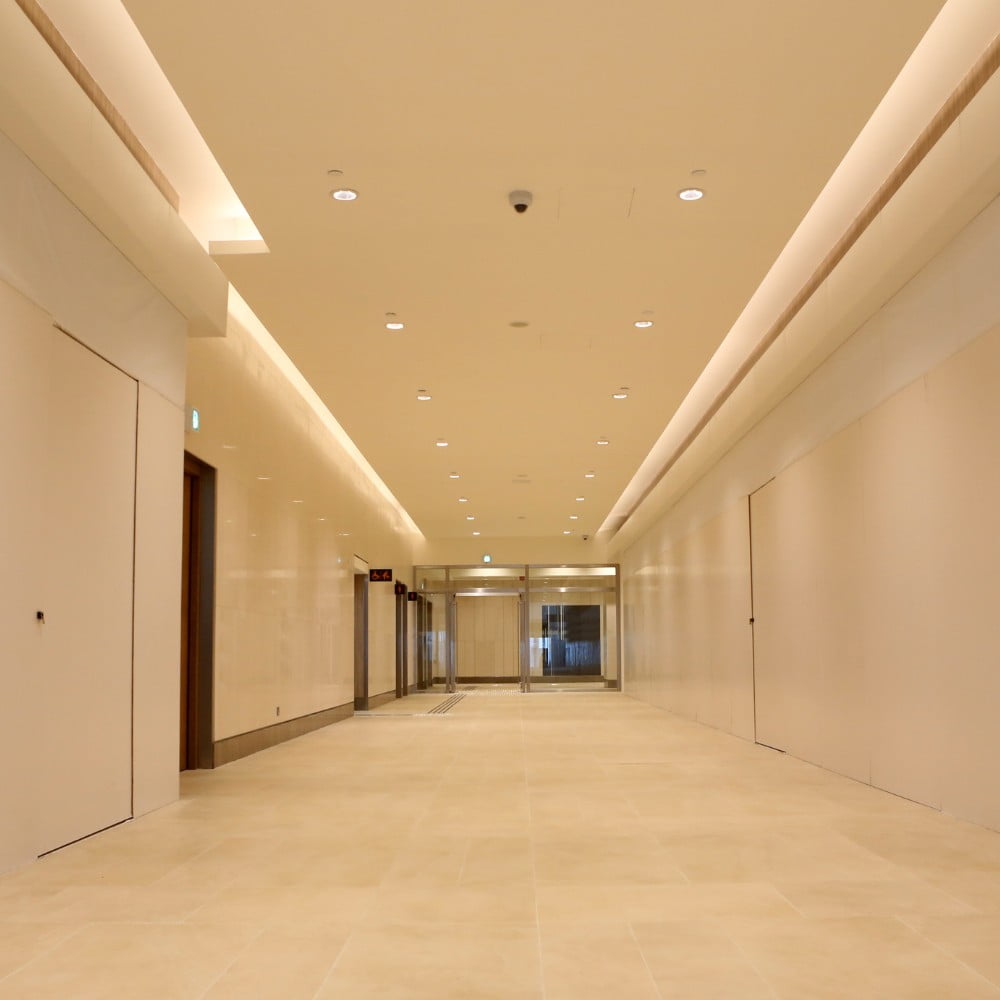
Designing an energy-efficient lighting control solution for corridors involves strategic placement of occupancy sensors to ensure comprehensive coverage of the space.
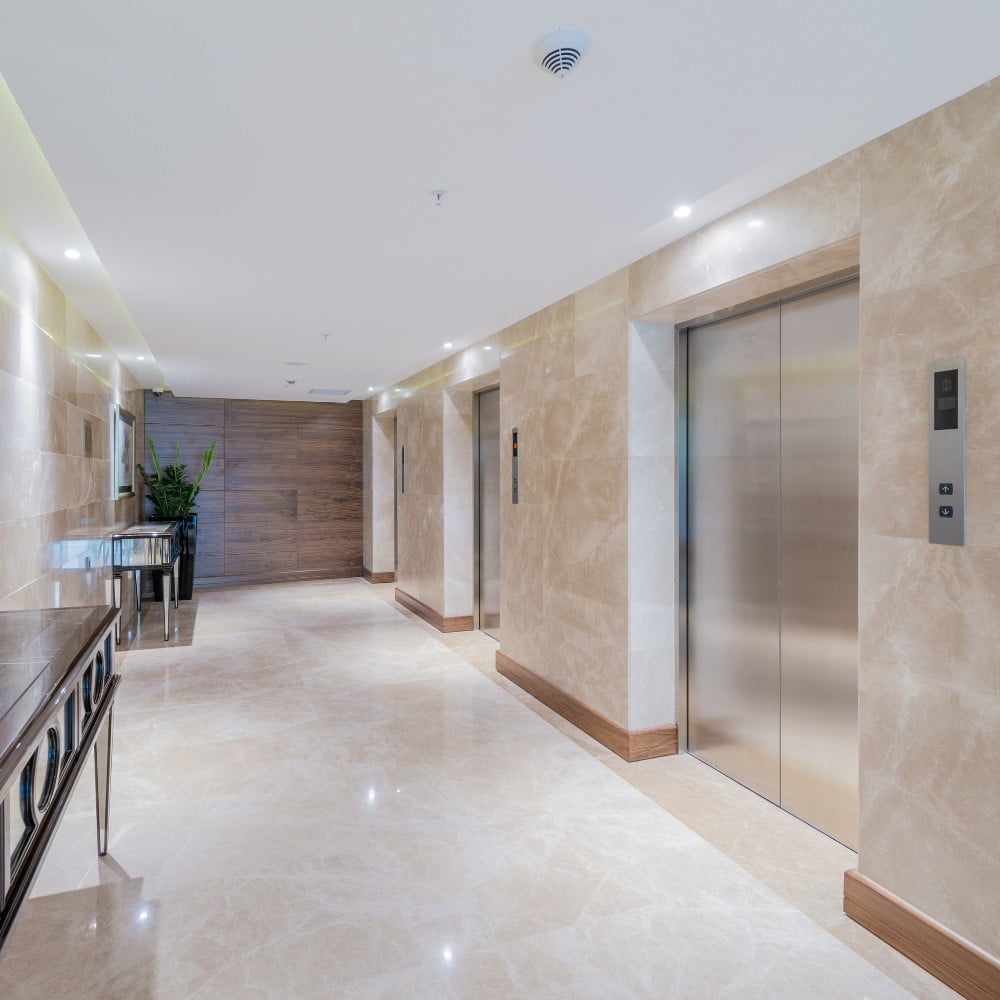
In a corridor, the primary goal is to ensure safe and well-lit passage for occupants while minimizing energy waste and all potential access points and the entire length of the corridor are covered by the sensors. Here are some design considerations:
- Plaatsing van de sensor: For long corridors, multiple sensors may be required. Ceiling-mounted sensors can be placed at regular intervals along the length of the corridor to ensure comprehensive coverage. Alternatively, wall-mounted sensors can be placed at both ends of the corridor, with their coverage areas overlapping in the middle to avoid any blind spots. Also, consider the height and range of the sensors to ensure they can effectively detect movement across the entire corridor.
- Sensortype: Depending on the ceiling height and the presence of any potential obstructions, either ceiling-mounted or wall-mounted sensors can be used. Rayzeek’s ceiling sensors offer automatic ON and full OFF functionality, while our wall sensors provide manual ON and full OFF functionality.
- Additional Manual Controls: In addition to occupancy sensors, manual controls can be integrated for instances where manual override is necessary. These controls can be conveniently located near entrances or exits.
- Avoiding False Triggers: Sensors should be placed such that they do not directly face doors leading to other spaces, external light sources and air vents, as this could lead to false triggers when movement is detected in these adjacent spaces.
Featured Products & Solutions
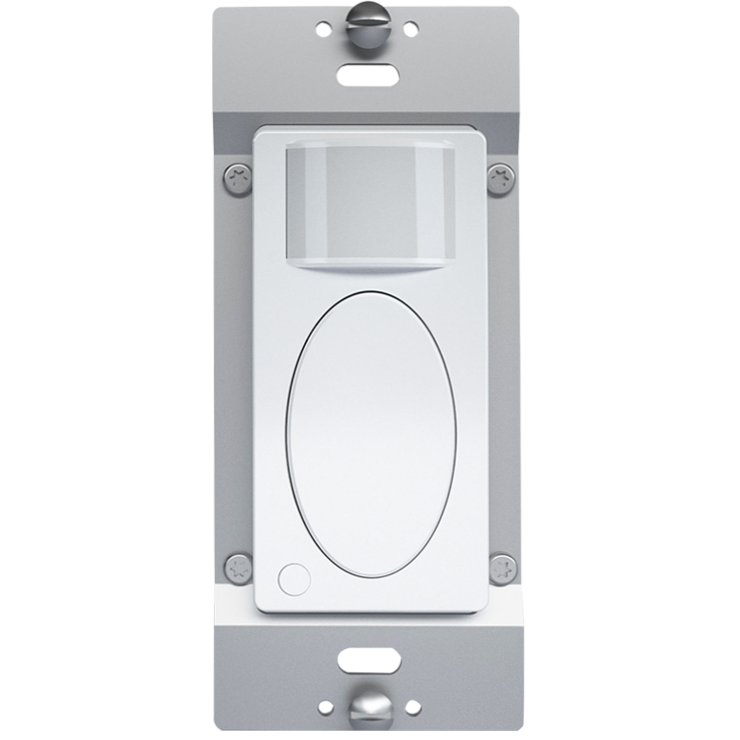
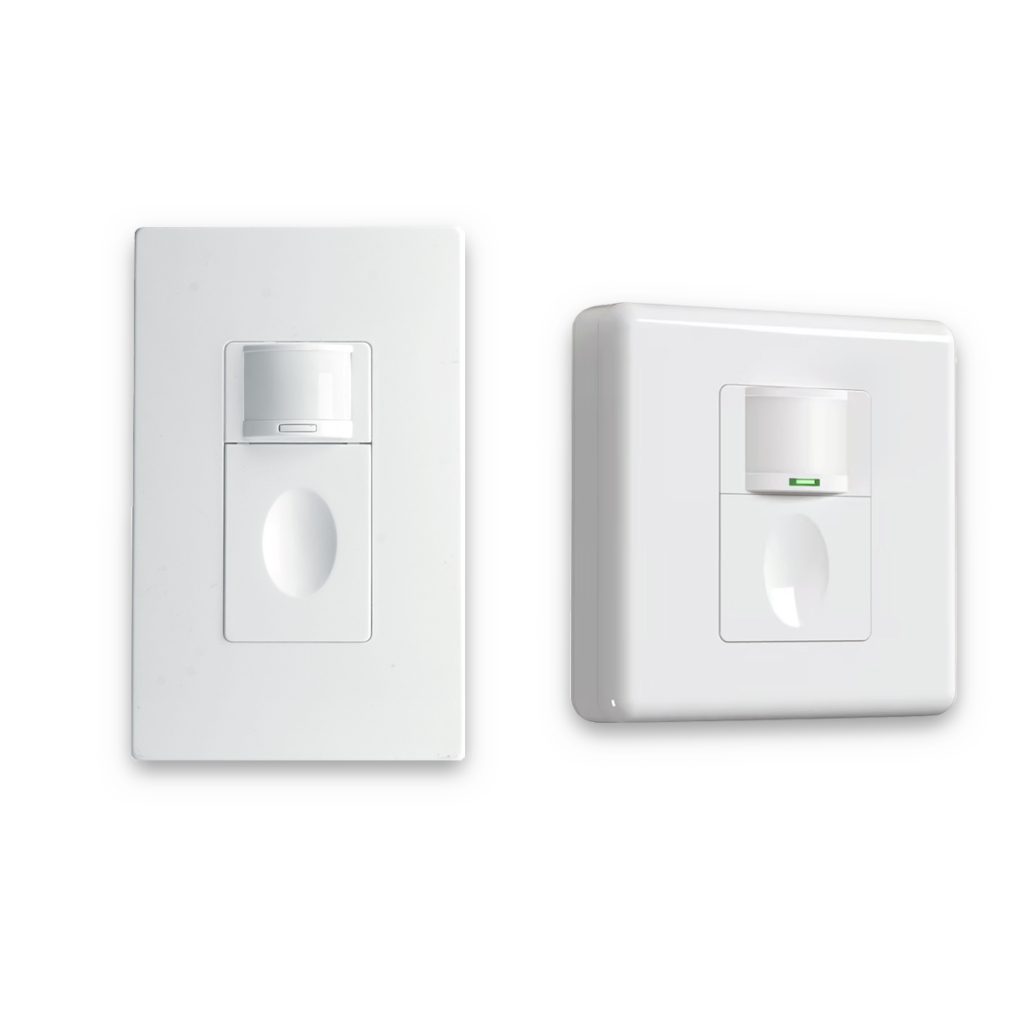
Wall Sensor Switches
RZ020/021 Motion Sensor Switches
- 2-wire, 3-wire, 4-wires wiring options
- Occupancy, Vacancy, Manual ON/OFF
- Adjustive time delay and ambient light control
Multi-Location Wireless Wall Sensors
RZ020A/021A + RZ022W Kits
- Hardwired RZ021A/022A occupancy sensor switch
- Wireless companion switch (RZ022W) for multi-location control

Ceiling Occupancy Sensors
RZ036
- Hardwired occupancy sensors
- Auto ON, auto OFF
- Line voltage and Low voltage available
Core features included:
- Integrated manual ON/OFF control for all lighting
- Vacancy sensors (Manual ON only): Lights must be turned on manually only
- Adjustable time-delay, lighting is automatically turned full OFF after 15mins
- Additional: multi-location wireless kits to expand the control range without re-wring
- Additional: multiple wiring options available for both new constructions and retrofit projects.
Meets the Mandatory Provisions
IECC – 2011
C405.2.1 Occupant sensor controls
Occupant sensor controls shall be installed to control lights in the space.
C405.2.1.1 Occupant sensor control functions
- Manual on or partial on to no more than 50% power.
- Full off within 20 minutes after all occupants have left the space
- A manual control to turn off the lights.
Full automatic-on controls with no manual control are permitted in corridors where manual operation would endanger occupant safety or security.
C405.2.1.4 Occupant sensor control function in corridors.
Occupant sensor controls in corridors shall uniformly reduce lighting power to an occupied setpoint not more than 50 percent offull power within 20 minutes after all occupants have left the space.
Exception: Corridors provided with less than two footcandles of illumination on the floor at the darkest point with all lights on.
ASHRAE 90.1 – 2022
9.4.1.1 a Local control
There shall be one or more manual lighting control device that provides ON and OFF control
of all lighting in the space.
9.4.1.1 g Automatic reduction control
The general lighting power in the space shall be automatically reduced by at least 50% within 15 minutes of all occupants leaving the space.
9.4.1.1 h Automatic full OFF control
All lighting in the space shall be automatically shut off within 15 minutes of all occupants leaving the space.
9.4.1.1 i Scheduled shutoff
All lighting in the space shall be automatically shut off during periods when the space is scheduled to be unoccupied.
** NOTE: At least one 9.4.1.1 h or 9.4.1.1 i shall be implemented.
Title 24 – 2022
130.1 (a) Manual area controls.
Each area enclosed by ceiling-height partitions shall provide lighting controls that allow the lighting in that area to be manually turned on and off.
130.1 (c) Shut-OFF Controls.
In corridors, lighting shall be controlled by Full or partial-OFF occupant sensing controls that separately reduce the lighting power in each space by at least 50 percent when the space is unoccupied. The occupant sensing controls shall be capable of automatically turning the lighting fully ON only in the separately controlled space, and shall be automatically activated from all designed paths of egress.
Let us hear you.
Let Rayzeek help design and deliver a bespoke energy-saving lighting solution for you.