
Corridors
Discover the energy-saving potential of corridors with Rayzeek’s occupancy sensor design guide. Uncover the power of automated lighting control in your commercial building’s passageways.
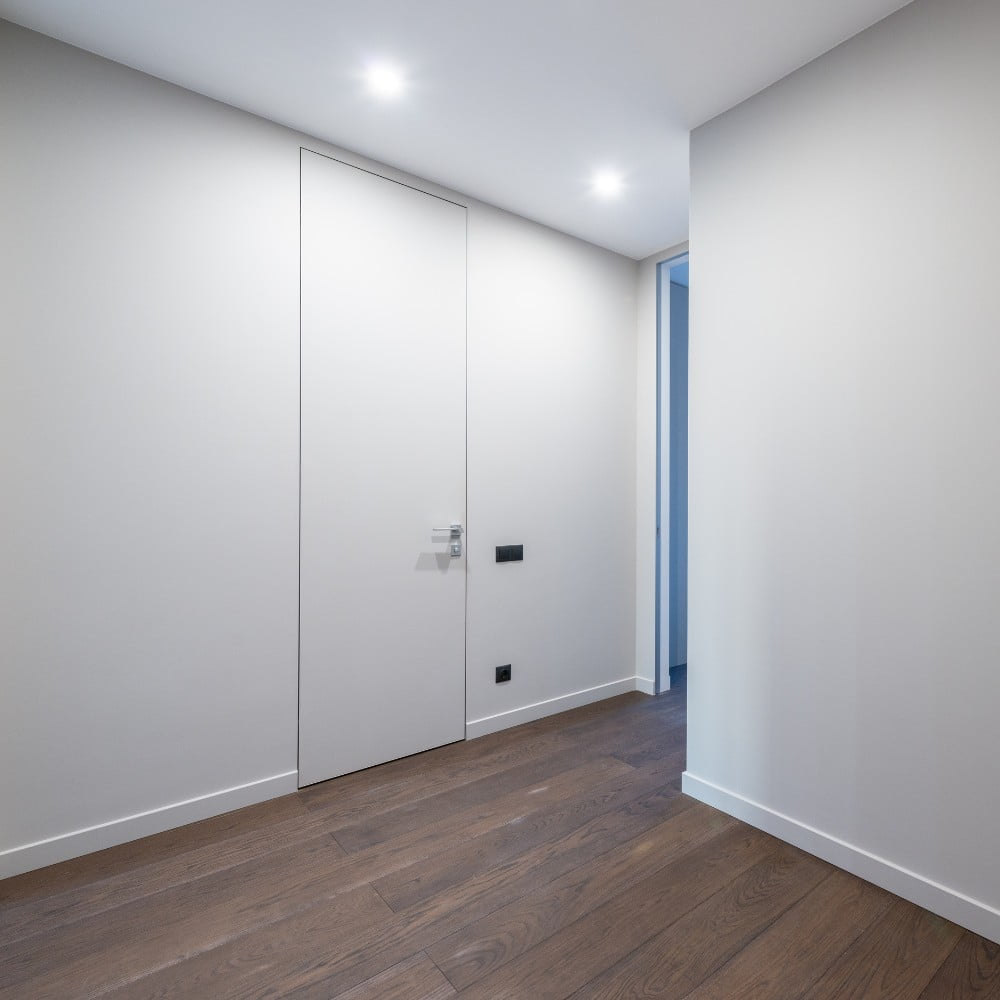
Lighting the Way to Energy Efficiency in Corridors
Corridors, whether in commercial buildings, educational institutions, or healthcare facilities, are high-traffic areas that often remain illuminated throughout the day, leading to significant energy consumption. These spaces typically use fluorescent or LED lighting, which, while energy-efficient, can still contribute to high energy costs when left on unnecessarily.
The challenge lies in the fact that corridors are intermittently occupied, with periods of high foot traffic interspersed with times of vacancy. Traditional manual lighting controls can lead to lights being left on during these vacant periods, resulting in unnecessary energy waste.
By integrating our occupancy sensors into your corridor lighting system, you can ensure that lights are only on when needed, saving energy and reducing costs. Our sensors, including wall and ceiling-mounted options, are designed to comply with US Energy Codes, making them an essential component in meeting energy efficiency requirements for commercial buildings.
Zgodność z normami energetycznymi

International Energy Conservation Code (IECC) to wzorcowy kodeks opracowany przez International Code Council (ICC) w celu ustalenia minimalnych wymagań projektowo-budowlanych dotyczących efektywności energetycznej budynków. Kodeks IECC jest aktualizowany co trzy lata, aby uwzględniać najnowsze praktyki i technologie z zakresu oszczędzania energii.
IECC – dlaczego warto się nim zainteresować
Kodeks IECC jest powszechnie przyjmowany przez stany i gminy w całych Stanach Zjednoczonych. Obejmuje on różne aspekty zużycia energii, w tym przegrody zewnętrzne budynku (ściany, dachy i okna), systemy ogrzewania i chłodzenia oraz systemy oświetleniowe.
IECC nakłada obowiązek stosowania określonych elementów sterowania oświetleniem, takich jak czujniki obecności, w celu minimalizacji strat energii w nieużywanych pomieszczeniach w różnych strefach.

Standard ANSI/ASHRAE/IES 90.1 (Energy Standard for Sites and Buildings Except Low-Rise Residential Buildings) to powszechnie uznana norma energetyczna publikowana przez American Society of Heating, Refrigerating and Air-Conditioning Engineers (ASHRAE).
ASHRAE 90.1 – dlaczego warto się nim zainteresować
Standard ASHRAE 90.1 służy jako punkt odniesienia dla budowlanych kodeksów energetycznych w całych Stanach Zjednoczonych i stanowi ścieżkę zgodności w ramach IECC, określającą minimalne wymagania dotyczące efektywności energetycznej komponentów budynków komercyjnych, w tym przegród zewnętrznych, systemów HVAC, systemów podgrzewania wody oraz systemów oświetleniowych.
Standard ASHRAE 90.1 określa maksymalne dopuszczalne gęstości mocy oświetleniowej oraz minimalne wymagania dotyczące sterowania oświetleniem, w tym stosowanie czujników obecności w określonych strefach.

Title 24, część 6 California Building Standards Code, oficjalnie znany jako Building Energy Efficiency Standards for Residential and Nonresidential Buildings, jest zarządzany przez California Energy Commission i okresowo aktualizowany w celu odzwierciedlenia nowych technologii i metod efektywności energetycznej.
Title 24 – dlaczego warto się nim zainteresować
Title 24 znany jest z rygorystycznych wymagań, często uważanych za bardziej surowe niż te zawarte w wielu innych kodeksach energetycznych w Stanach Zjednoczonych. Title 24 nakłada ścisłe normy wydajności energetycznej dla wszystkich aspektów konstrukcji budynków, w tym ogrzewania, wentylacji, klimatyzacji (HVAC), podgrzewania wody oraz oświetlenia.
Title 24 wymaga instalacji czujników obecności, które dostosowują oświetlenie w zależności od obecności osób w określonych strefach budynków komercyjnych, co zapobiega marnowaniu energii.
Przyjęcie przepisów energetycznych według stanów
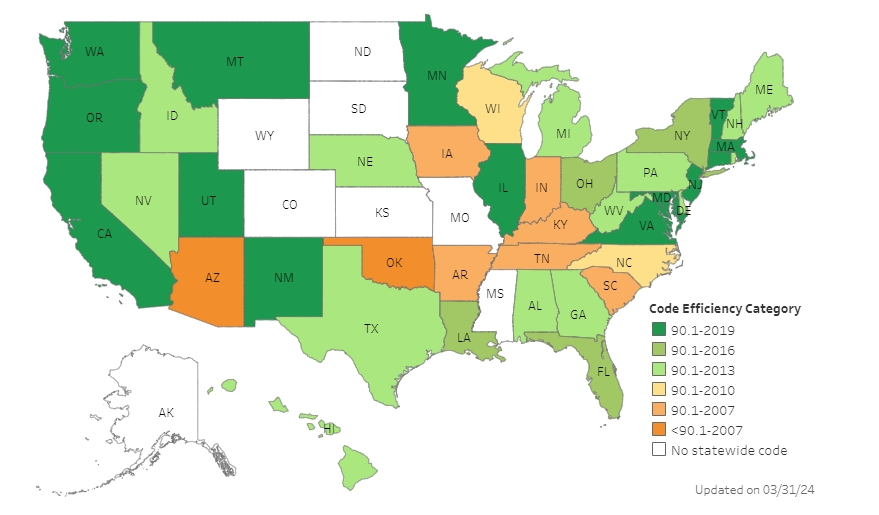
Rozwiń, aby zobaczyć szczegółową tabelę ↓
| Stan | Obowiązujący kodeks komercyjny | Kategoria efektywności kodeksu komercyjnego |
|---|---|---|
| Alabama | 90.1-2013 | 90.1-2013 |
| Alaska | Brak na poziomie stanowym | Brak kodeksu na poziomie stanowym |
| Arizona | Samorząd lokalny (Home Rule) | <90.1-2007 |
| Arkansas | 2009 IECC i 90.1-2007 | 90.1-2007 |
| Kwalifornia | 2022 Building Energy Efficiency Standards | 90.1-2019 |
| Kolorado | Samorząd lokalny (Home Rule) | Brak kodeksu na poziomie stanowym |
| Connecticut | 2021 IECC oraz 90.1-2019 | 90.1-2019 |
| Delaware | 2018 IECC oraz 90.1-2016 | 90.1-2013 |
| Dystrykt Kolumbii | 90.1-2013^ | 90.1-2019 |
| Floryda | 2021 IECC oraz 90.1-2019^ | 90.1-2016 |
| Georgia | 2015 IECC oraz 90.1-2013^ | 90.1-2013 |
| Hawaje | Samorząd lokalny (Home Rule) | 90.1-2013 |
| Idaho | 2018 IECC oraz 90.1-2016 | 90.1-2013 |
| Illinois | 2021 IECC oraz 90.1-2019 | 90.1-2019 |
| Indiana | 90.1-2007 | 90.1-2007 |
| Iowa | 2012 IECC and 90.1-2010 | 90.1-2007 |
| Kansas | Samorząd lokalny (Home Rule) | Brak kodeksu na poziomie stanowym |
| Kentucky | 2012 IECC and 90.1-2010 | 90.1-2007 |
| Louisiana | 2021 IECC oraz 90.1-2019^ | 90.1-2016 |
| Maine | 2015 IECC and 90.1-2013 | 90.1-2013 |
| Maryland | 2021 IECC oraz 90.1-2019^ | 90.1-2019 |
| Massachusetts | 2018 IECC and 90.1-2016^ | 90.1-2019 |
| Michigan | 2015 IECC oraz 90.1-2013^ | 90.1-2013 |
| Minnesota | 90.1-2019^ | 90.1-2019 |
| Mississippi | Brak na poziomie stanowym | Brak kodeksu na poziomie stanowym |
| Missouri | Samorząd lokalny (Home Rule) | Brak kodeksu na poziomie stanowym |
| Montana | 2021 IECC oraz 90.1-2019 | 90.1-2019 |
| Nebraska | 2018 IECC oraz 90.1-2016 | 90.1-2013 |
| Nevada | 2018 IECC oraz 90.1-2016 | 90.1-2013 |
| New Hampshire | 2018 IECC and 90.1-2016^ | 90.1-2013 |
| New Jersey | 90.1-2019 | 90.1-2019 |
| Nowy Meksyk | 2021 IECC oraz 90.1-2019^ | 90.1-2019 |
| Nowy Jork | 2018 IECC and 90.1-2016^ | 90.1-2016 |
| Karolina Północna | 2015 IECC oraz 90.1-2013^ | 90.1-2010 |
| Dakota Północna | Samorząd lokalny (Home Rule) | Brak kodeksu na poziomie stanowym |
| Ohio | 2021 IECC oraz 90.1-2019^ | 90.1-2016 |
| Oklahoma | 2006 IECC and 90.1-2004 | <90.1-2007 |
| Oregon | 90.1-2019 | 90.1-2019 |
| Pensylwania | 2018 IECC oraz 90.1-2016 | 90.1-2013 |
| Rhode Island | 2018 IECC and 90.1-2016^ | 90.1-2013 |
| Karolina Południowa | 2009 IECC i 90.1-2007 | 90.1-2007 |
| Dakota Południowa | Samorząd lokalny (Home Rule) | Brak kodeksu na poziomie stanowym |
| Tennessee | 2021 IECC and 90.1-2013 | 90.1-2007 |
| Teksas | 2015 IECC and 90.1-2013 | 90.1-2013 |
| Utah | 2021 IECC oraz 90.1-2019^ | 90.1-2019 |
| Vermont | 2021 IECC oraz 90.1-2019^ | 90.1-2019 |
| Wirginia | 2021 IECC oraz 90.1-2019^ | 90.1-2019 |
| Waszyngton | 2018 Washington State Energy Code | 90.1-2019 |
| Tennessee | 2012 IECC and 90.1-2010 | 90.1-2007 |
| Teksas | 2015 IECC and 90.1-2013 | 90.1-2013 |
| Utah | 2021 IECC oraz 90.1-2019^ | 90.1-2019 |
| Vermont | 2018 IECC and 90.1-2016^ | 90.1-2019 |
| Wirginia | 2021 IECC oraz 90.1-2019^ | 90.1-2019 |
| Waszyngton | 2018 Washington State Energy Code | 90.1-2019 |
| Wirginia Zachodnia | 90.1-2013 | 90.1-2013 |
| Wisconsin | 2015 IECC oraz 90.1-2013^ | 90.1-2010 |
| Wyoming | Samorząd lokalny (Home Rule) | Brak kodeksu na poziomie stanowym |
- ^ Gdy poprawkę mającą wpływ na efektywność energetyczną można było ilościowo określić za pomocą modeli budynków wzorcowych DOE (DOE Prototype Building Models), została ona uwzględniona w analizie.
- W przypadku stanów przyjmujących zarówno IECC, jak i 90.1, normę IECC analizuje się zazwyczaj w tym badaniu jako aktualną normę stanową, z wyjątkiem stanów ze znacznymi poprawkami do IECC.
Design Guide Key Concepts for Corridors
Designing an energy-efficient lighting control solution for corridors involves strategic placement of occupancy sensors to ensure comprehensive coverage of the space.
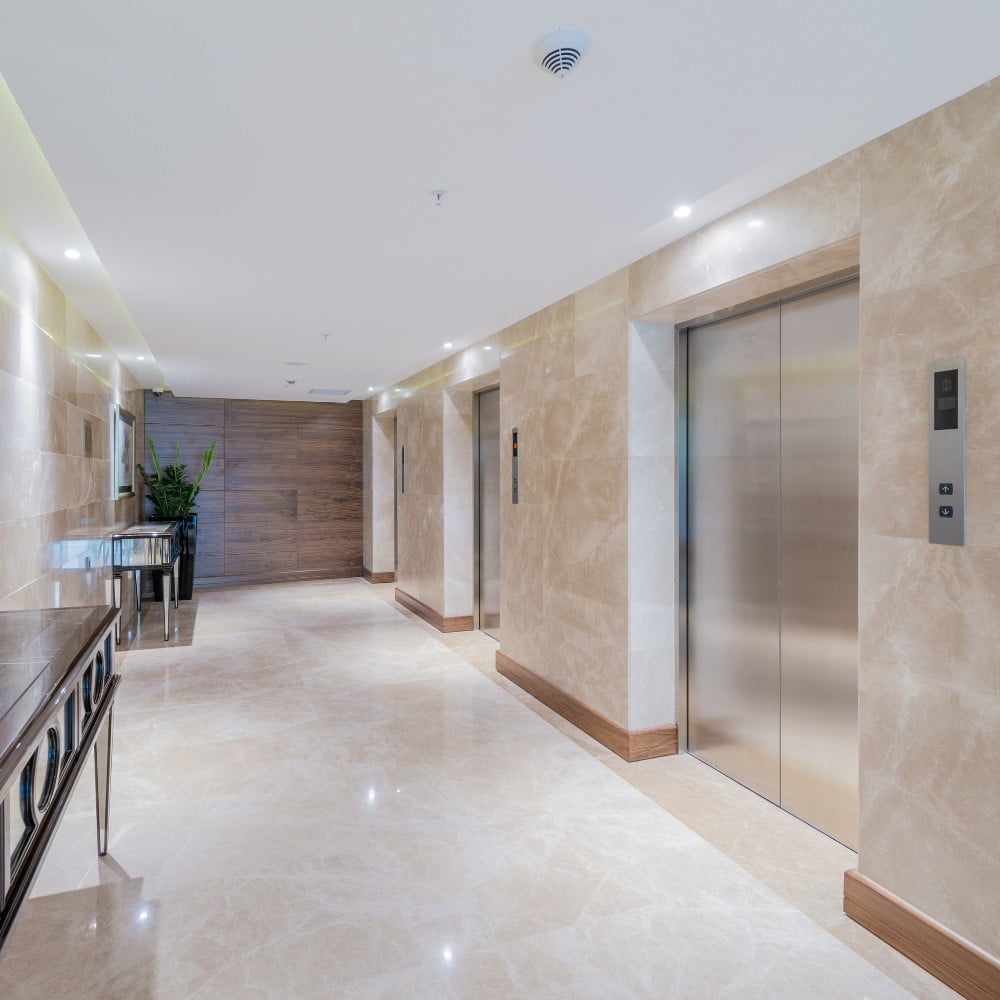
In a corridor, the primary goal is to ensure safe and well-lit passage for occupants while minimizing energy waste and all potential access points and the entire length of the corridor are covered by the sensors. Here are some design considerations:
- Lokalizacja czujnika: For long corridors, multiple sensors may be required. Ceiling-mounted sensors can be placed at regular intervals along the length of the corridor to ensure comprehensive coverage. Alternatively, wall-mounted sensors can be placed at both ends of the corridor, with their coverage areas overlapping in the middle to avoid any blind spots. Also, consider the height and range of the sensors to ensure they can effectively detect movement across the entire corridor.
- Typ czujnika: Depending on the ceiling height and the presence of any potential obstructions, either ceiling-mounted or wall-mounted sensors can be used. Rayzeek’s ceiling sensors offer automatic ON and full OFF functionality, while our wall sensors provide manual ON and full OFF functionality.
- Additional Manual Controls: In addition to occupancy sensors, manual controls can be integrated for instances where manual override is necessary. These controls can be conveniently located near entrances or exits.
- Avoiding False Triggers: Sensors should be placed such that they do not directly face doors leading to other spaces, external light sources and air vents, as this could lead to false triggers when movement is detected in these adjacent spaces.
Polecane produkty i rozwiązania
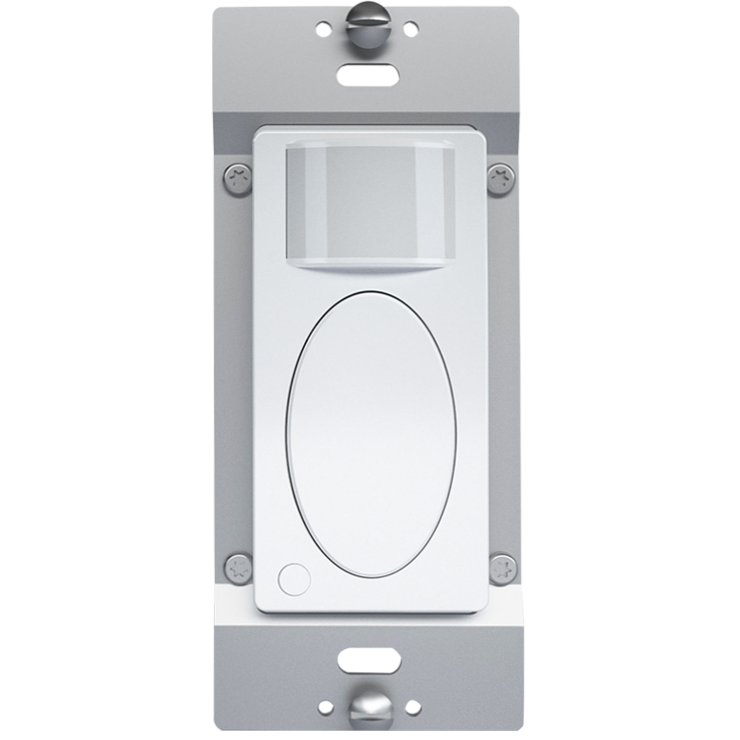
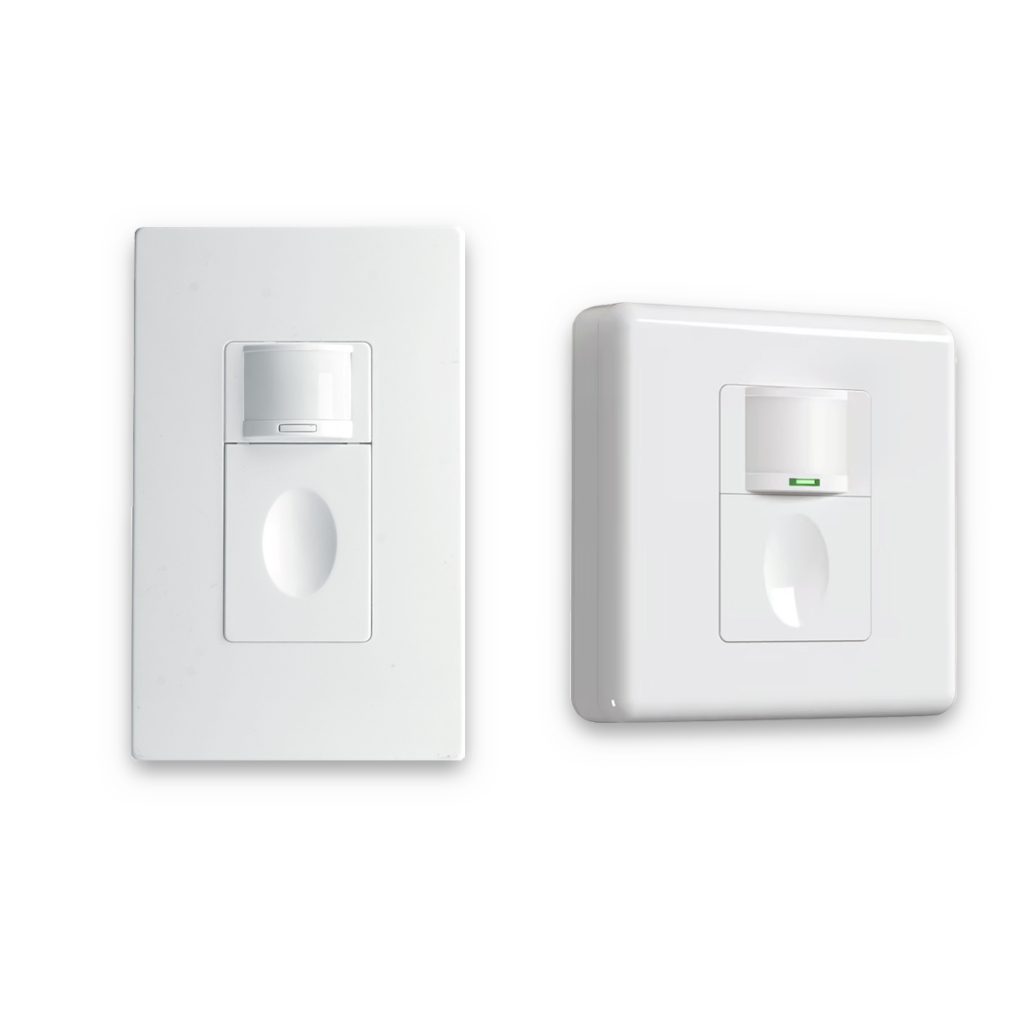
Ścienne włączniki z czujnikiem
Włączniki z czujnikiem ruchu RZ020/021
- Opcje okablowania 2-przewodowe, 3-przewodowe i 4-przewodowe
- Tryby pracy: wykrywanie obecności (Occupancy), tryb pustego pomieszczenia (Vacancy), ręczne włączanie/wyłączanie (Manual ON/OFF)
- Regulowane opóźnienie czasowe oraz kontrola światła otoczenia
Wielopunktowe bezprzewodowe czujniki ścienne
Zestawy RZ020A/021A + RZ022W
- Przewodowy przełącznik z czujnikiem obecności RZ021A/022A
- Bezprzewodowy przełącznik towarzyszący (RZ022W) do sterowania wielopunktowego

Sufitowe czujniki obecności
RZ036
- Przewodowe czujniki obecności
- Auto ON, auto OFF
- Line voltage and Low voltage available
Core features included:
- Integrated manual ON/OFF control for all lighting
- Vacancy sensors (Manual ON only): Lights must be turned on manually only
- Adjustable time-delay, lighting is automatically turned full OFF after 15mins
- Additional: multi-location wireless kits to expand the control range without re-wring
- Additional: multiple wiring options available for both new constructions and retrofit projects.
Meets the Mandatory Provisions
IECC – 2011
C405.2.1 Occupant sensor controls
Occupant sensor controls shall be installed to control lights in the space.
C405.2.1.1 Occupant sensor control functions
- Manual on or partial on to no more than 50% power.
- Full off within 20 minutes after all occupants have left the space
- A manual control to turn off the lights.
Full automatic-on controls with no manual control are permitted in corridors where manual operation would endanger occupant safety or security.
C405.2.1.4 Occupant sensor control function in corridors.
Occupant sensor controls in corridors shall uniformly reduce lighting power to an occupied setpoint not more than 50 percent offull power within 20 minutes after all occupants have left the space.
Exception: Corridors provided with less than two footcandles of illumination on the floor at the darkest point with all lights on.
ASHRAE 90.1 – 2022
9.4.1.1 a Local control
There shall be one or more manual lighting control device that provides ON and OFF control
of all lighting in the space.
9.4.1.1 g Automatic reduction control
The general lighting power in the space shall be automatically reduced by at least 50% within 15 minutes of all occupants leaving the space.
9.4.1.1 h Automatic full OFF control
All lighting in the space shall be automatically shut off within 15 minutes of all occupants leaving the space.
9.4.1.1 i Scheduled shutoff
All lighting in the space shall be automatically shut off during periods when the space is scheduled to be unoccupied.
** NOTE: At least one 9.4.1.1 h or 9.4.1.1 i shall be implemented.
Title 24 – 2022
130.1 (a) Manual area controls.
Each area enclosed by ceiling-height partitions shall provide lighting controls that allow the lighting in that area to be manually turned on and off.
130.1 (c) Shut-OFF Controls.
In corridors, lighting shall be controlled by Full or partial-OFF occupant sensing controls that separately reduce the lighting power in each space by at least 50 percent when the space is unoccupied. The occupant sensing controls shall be capable of automatically turning the lighting fully ON only in the separately controlled space, and shall be automatically activated from all designed paths of egress.
Let us hear you.
Let Rayzeek help design and deliver a bespoke energy-saving lighting solution for you.