
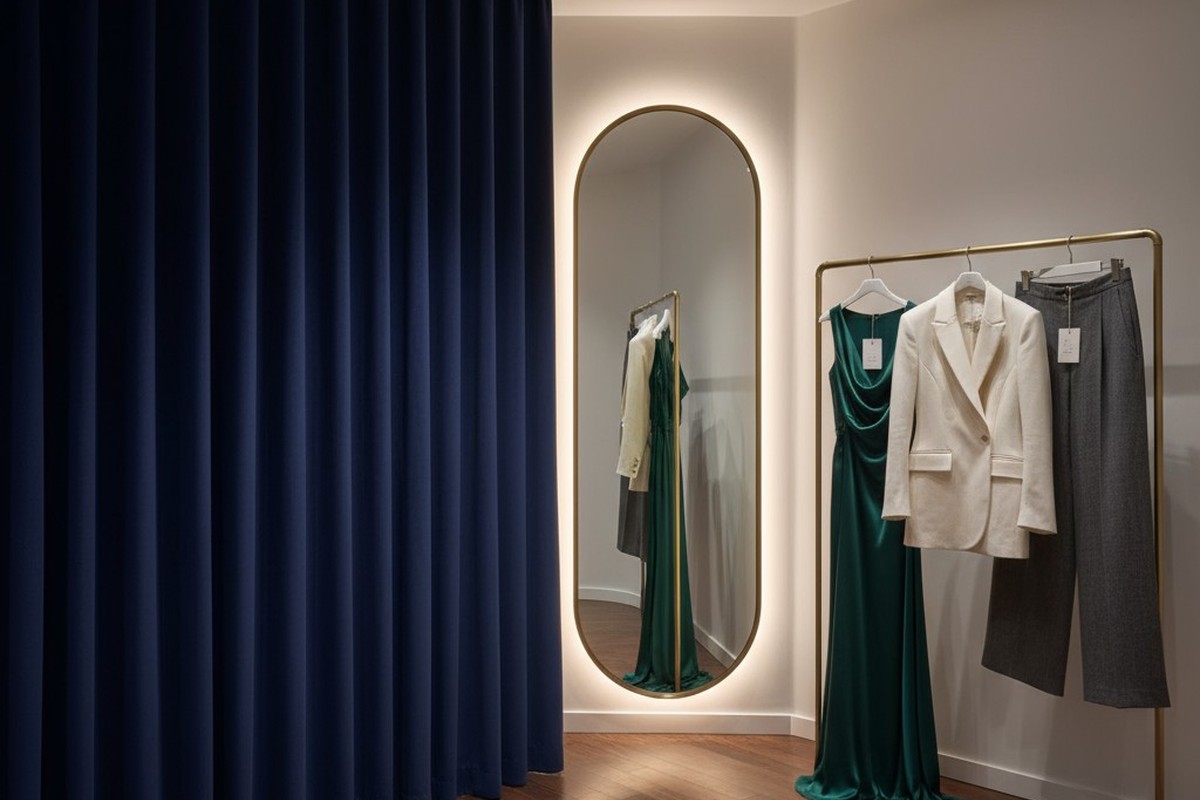
In a boutique, the fitting room is the final point of persuasion. It’s a private space where a customer decides to buy. The ambiance is everything. A stuffy, warm room feels neglected; a comfortably cool one feels luxurious. But achieving that consistent comfort comes at a steep, often invisible price.
For small, intermittently occupied spaces like these, air conditioning is a major operational expense. The conventional choice is difficult: either accept the financial drain of running the AC constantly or risk the customer’s experience with crude, disruptive cost-cutting. But there is a third option, one that replaces this binary choice with an intelligent system designed for both premium comfort and maximum efficiency.
The Invisible Expense of an Empty Room
Consider a single fitting room over a business day. A guest enters, tries on clothes for ten minutes, and leaves. The room then sits empty—perhaps for two minutes, perhaps for twenty. During that entire vacant period, the AC continues to run, cooling a space for no one.
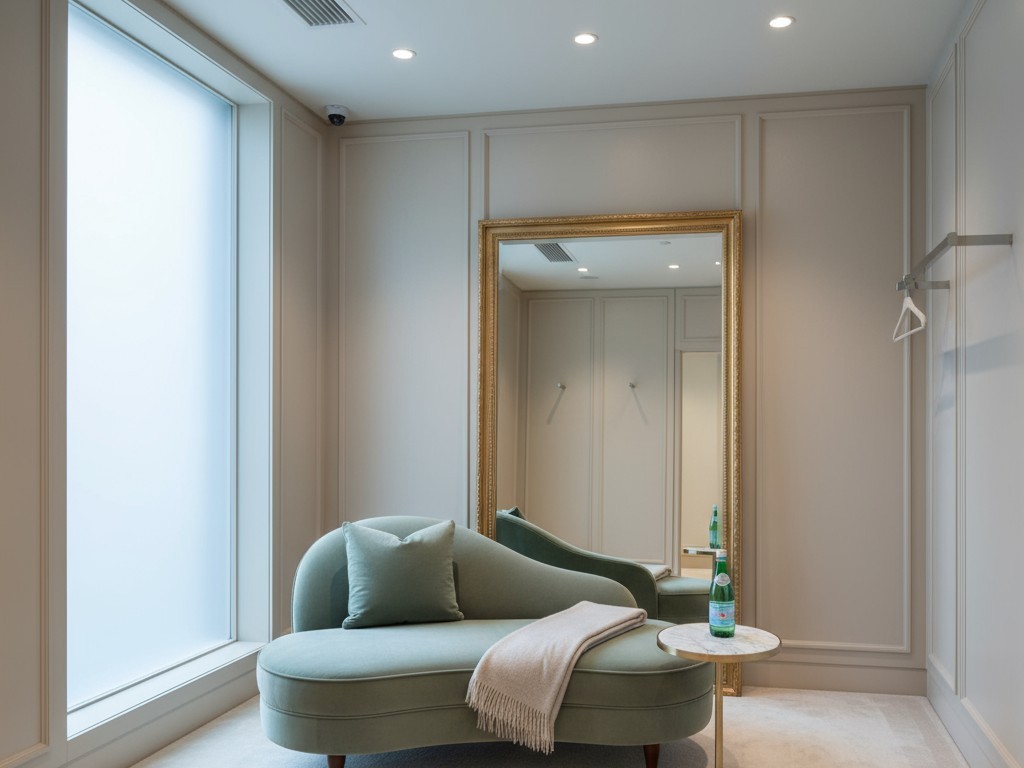
This cycle repeats dozens of times a day. While the energy cost for a single vacant period is negligible, the cumulative effect is a substantial drain on resources. The system operates without awareness, treating an empty room and an occupied one with the same priority. It’s a fundamental inefficiency born from a system that doesn’t understand its purpose.
The Flawed Compromise: Constant Waste vs. Punitive Savings
Faced with this challenge, businesses typically default to one of two flawed strategies. The first is to simply absorb the cost. The AC runs all day to ensure every guest is comfortable, institutionalizing waste as a fixed cost of doing business.
こちらの商品もおすすめです

- 電圧: 単4形乾電池 2本
- 昼/夜モード
- タイマー設定時間: 15分、30分、1時間(デフォルト)、2時間

- 無電圧接点リレー出力付き天井取り付け型PIR人感センサー
- 12/24VDCまたは12/24VAC低電圧電源
- EMS、HVAC、および建物制御入力用COM、NO、NC絶縁リレー接点

- 低電圧DC天井埋め込み型マイクロ波人感センサースイッチ
- 10~30 VDC範囲の12 VDC / 24 VDC入力
- 調整可能なタイムラグ、照度(Lux)閾値、感度を備えた最大動作電流10A仕様
- 高負荷対応型 埋込型天井取付けマイクロ波人感センサースイッチ
- 100-265 VAC 商用電源入力、10Aモデル
- 調整可能なタイムラグ、照度(Lux)閾値、感度を備えた5.8 GHzマイクロ波検知
- 埋込型天井取付けマイクロ波人感センサースイッチ
- 100-265 VAC商用電圧入力、5Aモデル
- 調整可能なタイムラグ、照度(Lux)閾値、感度を備えた5.8 GHzマイクロ波検知
- 220V電源対応 天井取付けRZ037 PIR(赤外線)人感センサー調光器
- 定格負荷660W、最大動作電流3A
- LUXボタンによる照度センサーのON/OFFおよびユーザー設定の調光明るさ制御
- 110V電源対応 天井取付けRZ037 PIR(赤外線)人感センサー調光器
- 定格負荷330W、最大動作電流3A
- LUXボタンによる照度センサーのON/OFFおよびユーザー設定の調光明るさ制御

- 低電圧DC対応 天井取付けマイクロ波人感センサースイッチ
- 10~30 VDC範囲の12 VDC / 24 VDC入力
- 調整可能なタイムラグ、照度(Lux)閾値、感度を備えた最大動作電流10A仕様
- 高負荷対応 天井取付型マイクロ波人感センサースイッチ
- 100-265 VAC 商用電源入力、10Aモデル
- 調整可能なタイムラグ、照度(Lux)閾値、感度を備えた5.8 GHzマイクロ波検知
- 天井取り付け型マイクロ波人感センサースイッチ
- 100-265 VAC商用電圧入力、5Aモデル
- 調整可能なタイムラグ、照度(Lux)閾値、感度を備えた5.8 GHzマイクロ波検知

- 低電圧DC埋込型天井PIR人感センサースイッチ
- 10~30 VDC範囲の12 VDC / 24 VDC入力
- 最大動作電流10A(調整可能なタイムラグ、照度閾値、感度設定付き)

- 高負荷対応 埋込型天井PIR人感センサースイッチ
- 100-265 VAC 商用電源入力、10Aモデル
- 360度検知(調整可能なタイムラグ、照度閾値、感度設定付き)
- 埋込型天井PIR人感センサースイッチ
- 100-265 VAC商用電圧入力、5Aモデル
- 360度検知(調整可能なタイムラグ、照度閾値、感度設定付き)

- 屋内用照明ON/OFF制御ワイヤレススイッチ&受信機キット
- 100-230VAC、50/60Hz、定格電流5A受信機
- 2.4GHz通信対応 CR2032電池駆動ワイヤレススイッチ
- Occupancy(自動点灯/自動消灯)
- 12–24V DC (10–30VDC)、最大10A
- 360°検知エリア、直径8–12m
- タイムラグ 15秒–30分
- 照度センサー オフ/15/25/35 Lux
- 高/低感度
- 自動点灯/自動消灯人感モード
- 100–265V AC, 10A(中性線必須)
- 360°検知範囲、検知直径8–12 m
- タイムデレイ15秒–30分、Lux OFF/15/25/35、感度 高/低
- 自動点灯/自動消灯人感モード
- 100–265V AC, 5A(中性線必須)
- 360°検知範囲、検知直径8–12 m
- タイムデレイ15秒–30分、Lux OFF/15/25/35、感度 高/低
The second strategy tries to curb costs through manual or simplistic automation. Staff are told to turn units on and off, or basic timers shut the system down abruptly. These methods are punitive. A customer plunged into a suddenly silent, stuffy room feels like a resource being managed, not a guest being catered to. The experience is jarring and cheap, directly undermining the premium atmosphere the business aims to cultivate.
A New Paradigm: Tying Climate to Presence
The solution is a system that is aware of its environment. Instead of running on a schedule or waiting for a staff member, climate control should be tied directly to its sole purpose: providing comfort for a human occupant. This is the principle of motion-based automation.
Using a motion sensor as the trigger, the HVAC system becomes an active participant in its own efficiency. It operates only when the room is occupied and enters a standby state when it’s vacant. This simple shift in logic fundamentally alters the energy consumption profile of the space, ensuring resources are allocated precisely when and where they are needed.
The Mechanics of Seamless Comfort
True intelligent control, however, is more than a simple on/off switch. A premium system must be nuanced, managing energy without the occupant ever noticing it at work. This requires a set of carefully calibrated rules that prioritize the perception of comfort.
The Grace Period: Gentle Delays Prevent Jarring Changes
When a guest leaves, the system shouldn’t shut off immediately. Human perception is more sensitive to abrupt changes than to gradual ones. A sudden stop in airflow and the click of a relay are noticeable. By incorporating a gentle time delay—a grace period of a few minutes after motion is no longer detected—the system creates a seamless transition. The guest is long gone before the AC powers down, and the experience remains uninterrupted.
The Door-Aware Timeout: Differentiating a Brief Exit from Final Departure
A person might step out for a moment to grab a different size. A basic motion sensor would register the room as empty and begin its shutdown countdown. A more intelligent system incorporates door awareness. By registering that the door has been opened and closed quickly, the system can initiate a much longer timeout period. It correctly interprets this pattern not as a final departure but as a temporary one, keeping the room comfortable for the guest’s imminent return.
人感センサーを活用した省エネソリューションをお探しですか?
PIR人感センサー、人感センサー搭載省エネ製品、人感センサースイッチ、商業施設向けOccupancy/Vacancy(在室/不在)ソリューションについては、お気軽にお問い合わせください。
Rethinking Sensitivity: Climate is Not Lighting
The logic for controlling climate is different from that for lighting. A person trying on clothes might stand still before a mirror for a minute or two. A highly sensitive lighting sensor might interpret this stillness as vacancy and plunge them into darkness. An HVAC system, however, can use a less sensitive setting. The thermal mass of a room means the temperature won’t change instantly. The system can be programmed to tolerate longer periods of stillness, preventing false “vacant” signals and aligning its behavior with the specific use of the space.
Rayzeek人感センサーのポートフォリオを見る.
お探しの製品が見つかりませんか?ご安心ください。課題を解決する手段は常に複数存在します。当社の製品ポートフォリオのいずれかがお役に立つかもしれません。
The Foundation of Reliability: Local Control Over Wi-Fi
In a commercial environment, reliability is paramount. Many “smart” devices depend on a constant connection to Wi-Fi and cloud servers, introducing multiple points of failure. A network hiccup or a server outage can render the system useless. For a core business function like climate control, this dependency is an unacceptable risk.
A professional-grade solution operates on local control. The sensor, logic, and switch are all part of a self-contained, robust system that doesn’t need an internet connection to function. It is inherently more secure and reliable, ensuring consistent performance independent of external network conditions. It is an engineered solution, not a consumer gadget.
The Tangible Return: Lower Costs, Better Experience
An intelligent, motion-based AC control system delivers two powerful returns. First is a direct, measurable reduction in energy consumption. By eliminating the hours spent cooling empty rooms, businesses see a significant drop in utility costs, allowing the system to pay for itself.
The second return is the enhancement of the guest experience. The automation is so seamless it becomes invisible. Customers enjoy a consistently comfortable environment without the jarring interruptions of a crude, cost-cutting system, reinforcing the brand’s commitment to quality. These principles—tying resource use to presence with reliable, local control—extend far beyond the fitting room, offering the same benefits to private offices, conference rooms, and hotels. It is a smarter, more sustainable approach to modern building management.







