
浴室のセンサー付きスイッチが廊下の交通で誤作動する場合、原因は通常、開いたドアによってセンサーの視界(ラインオブサイト)が一部開けていることです。簡単な動作確認テストを実施したうえで、センサーの向きを調整するかマスク処理を行い、室内への最初の一歩を検知しつつ通過者は無視するように設定してください。

 Horace He
浴室のセンサー付きスイッチが廊下の交通で誤作動する場合、原因は通常、開いたドアによってセンサーの視界(ラインオブサイト)が一部開けていることです。簡単な動作確認テストを実施したうえで、センサーの向きを調整するかマスク処理を行い、室内への最初の一歩を検知しつつ通過者は無視するように設定してください。

Older homes often lack a neutral in the wall box, and that wiring reality determines whether a PIR sensor switch will be stable or glitchy with LEDs. This guide explains what to check, why no-neutral switches misbehave, safer alternatives, and what to avoid.

Make multi-location stair lighting feel like a normal 3-way using Rayzeek PIR switches. Learn placement, the one-decider principle, safe timeout tuning, and a walk-test protocol that prevents flicker and mid-stair darkness.

LEDs that glow when off, flicker at timeout, or shut off “randomly” usually aren’t a bad switch. This field guide shows how to name the symptom, run one-change tests, and match the fix to drivers, heat, load, or false triggers.

Conference rooms can pass a walk test and still go dark mid-call when people sit still. Learn a practical control contract—often vacancy mode—plus validation steps for seated presence, sensor placement, and timeouts that keep video meetings reliable without making rooms always-on.

Fitting rooms fail in two ways: lights that shut off mid-change or never shut off at all. Learn a practical trigger-hold-release approach, plus a 10-minute per-room checklist and humane settings that prevent both outcomes.
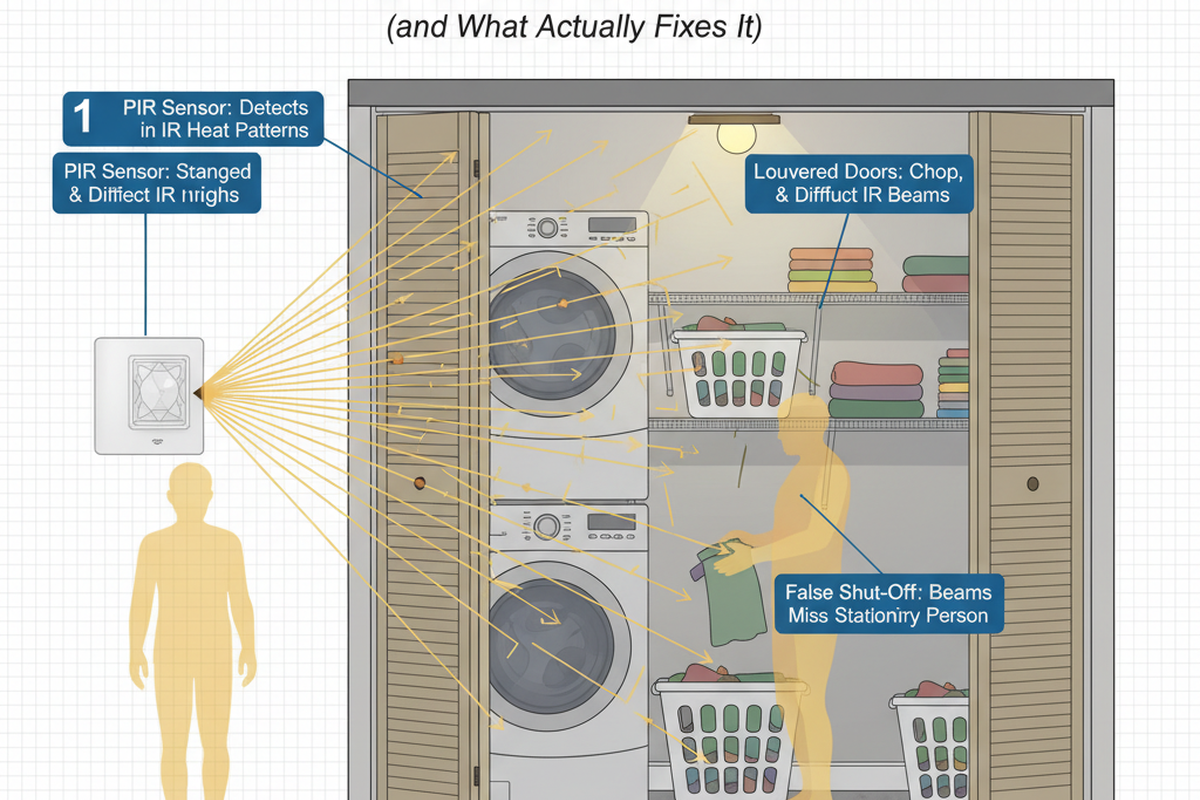
Louvered bifold doors can make a PIR sensor “see” hallway motion and airflow, causing false-ons and mid-task shut-offs. Learn a durable fix order: re-aim or relocate, mask the hallway sector, use vacancy mode, then fine-tune settings with real walk-tests.
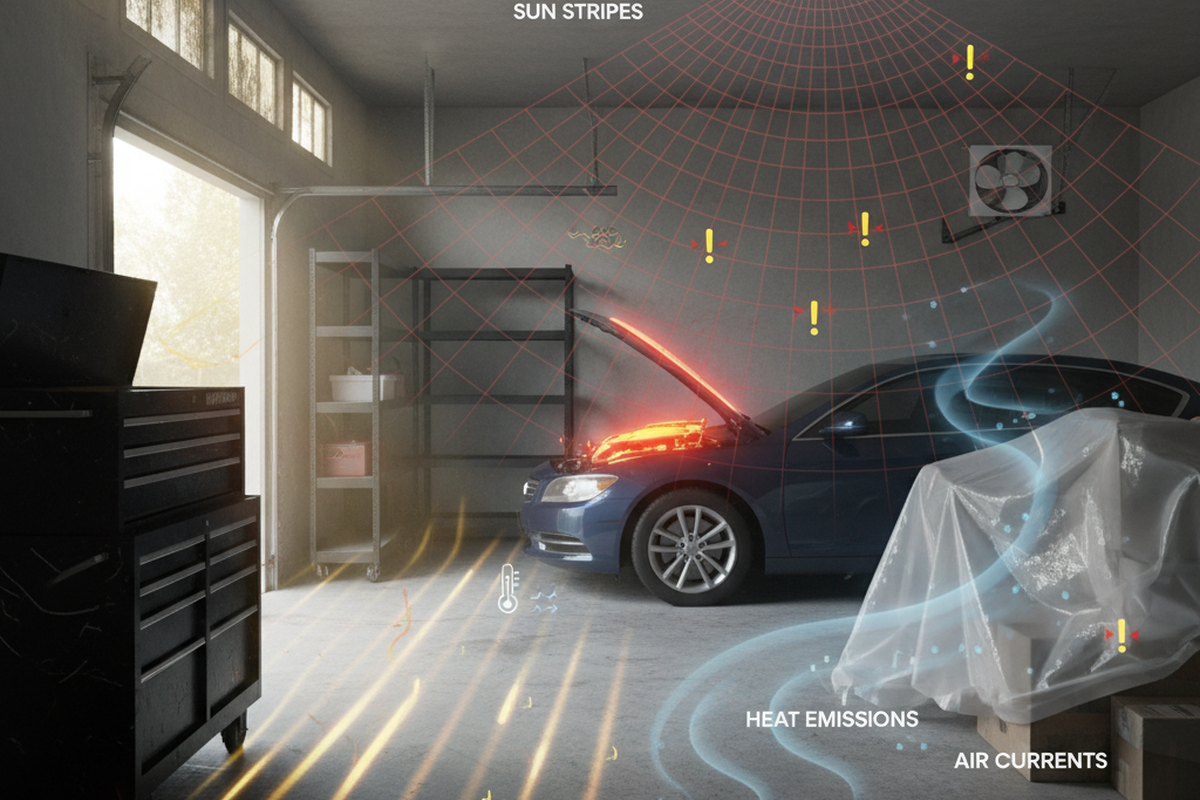
Garage PIR switches often aren’t broken—they’re reacting to sun stripes, hot car cool-down, and door-plane temperature swings. Fix false triggers by changing the sensor’s view first, then fine-tuning settings and adding daylight gating.
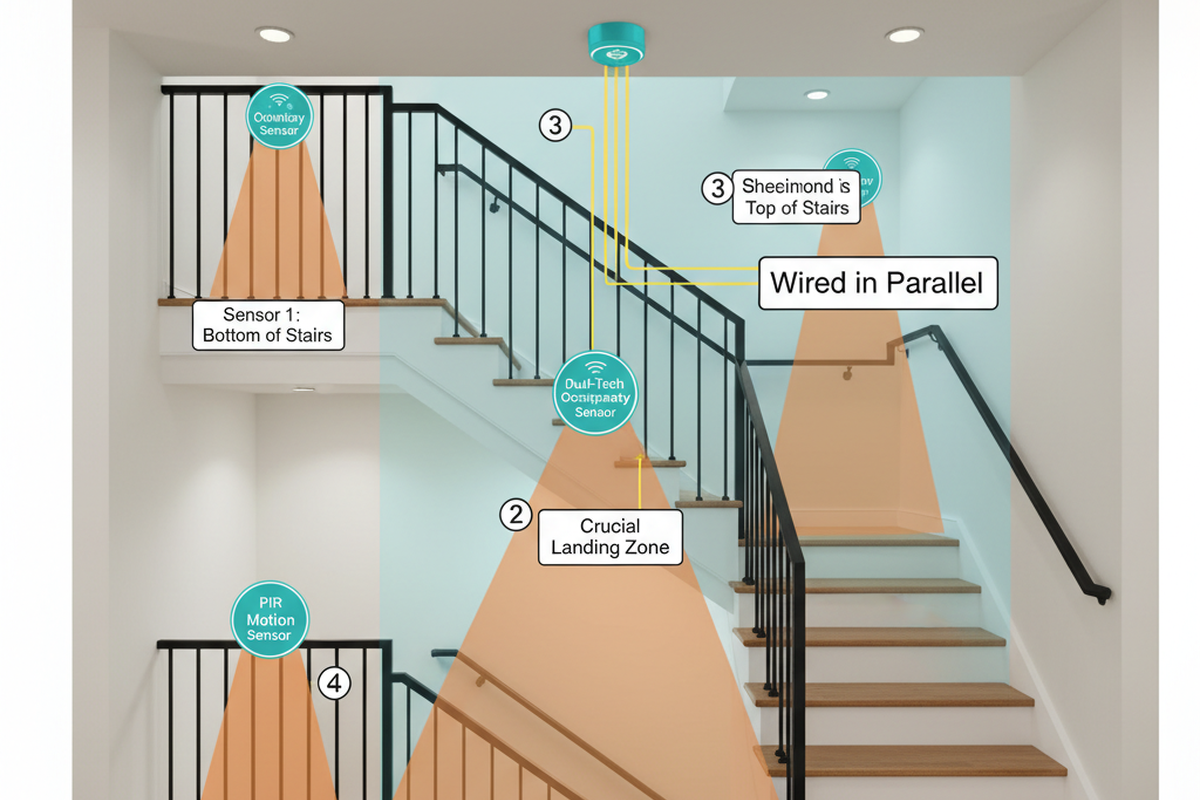
Split-level stair landings often cause motion lights to snap off and on because of short timeouts and poor line-of-sight during the pivot. Learn how to fix landing strobe by adjusting hold time, aiming for cross-traffic, and designing multi-location controls correctly.
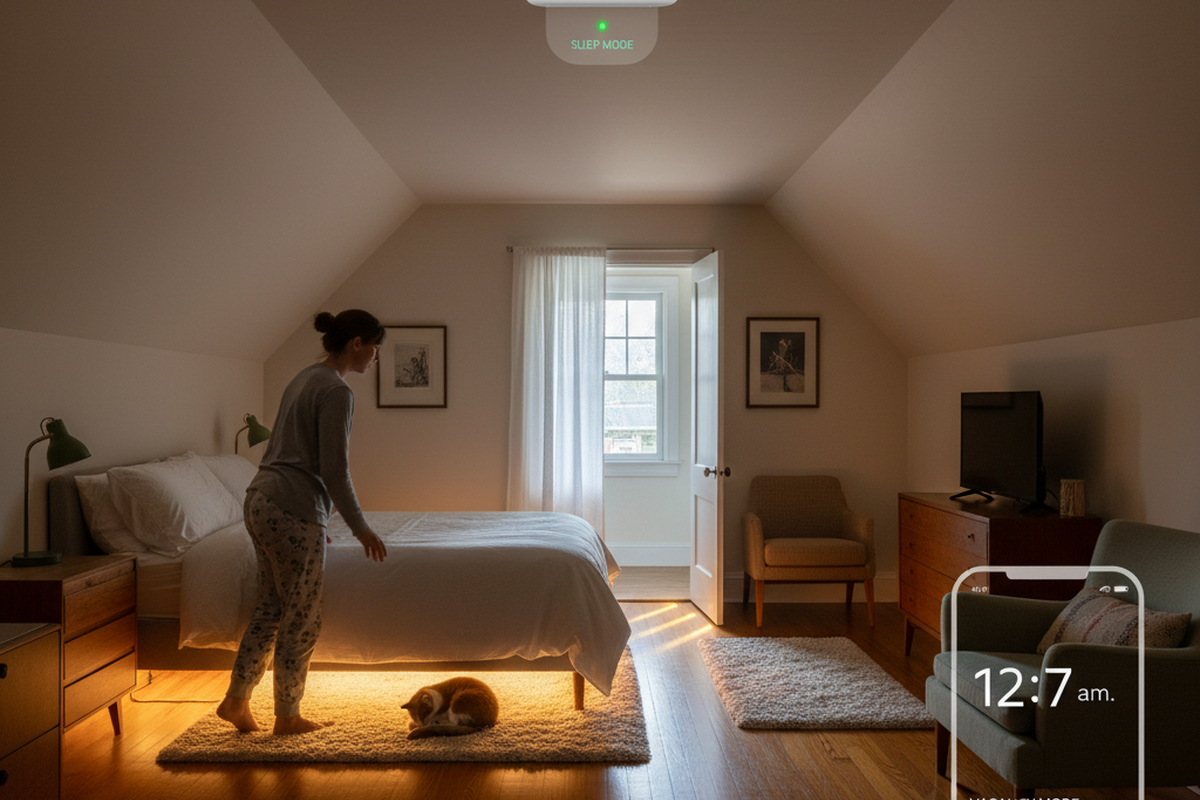
Bedroom motion lights fail when they surprise you at night. Vacancy mode keeps bedrooms manual-on for consent, while safety comes from a dim, warm, predictable path from bed to hall to bathroom.