
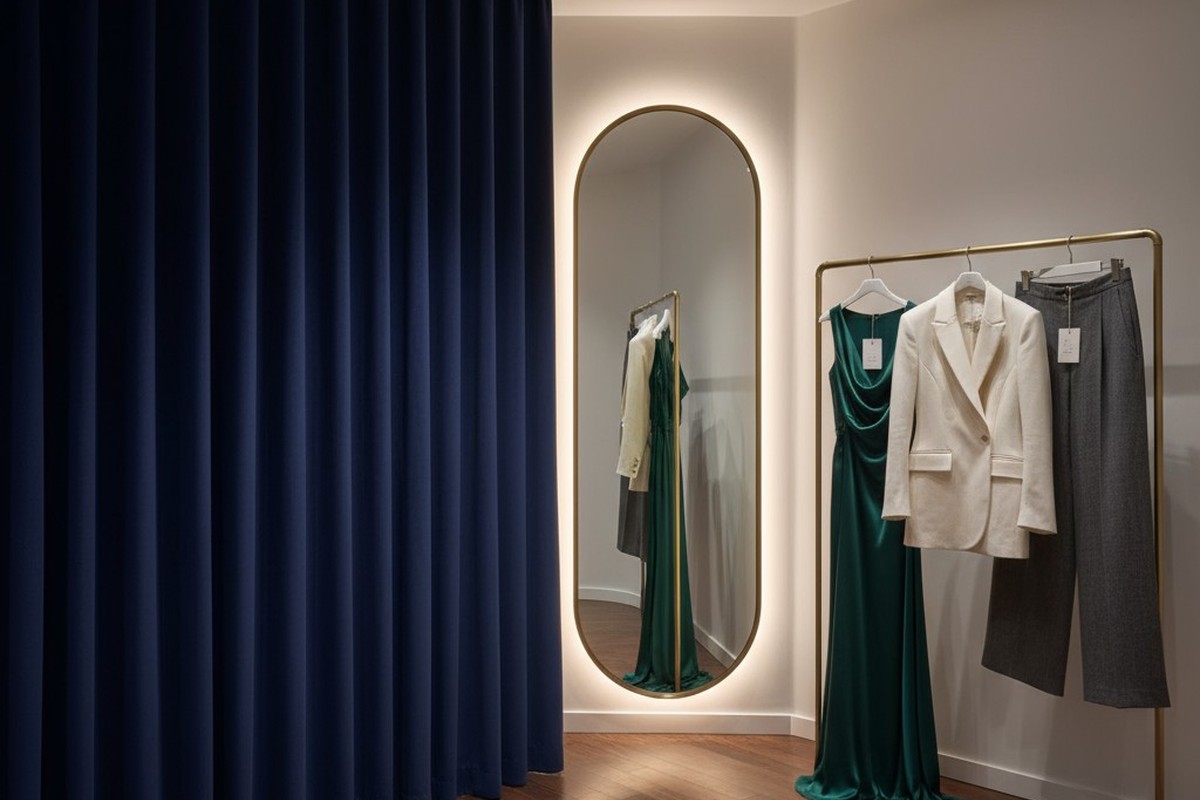
In a boutique, the fitting room is the final point of persuasion. It’s a private space where a customer decides to buy. The ambiance is everything. A stuffy, warm room feels neglected; a comfortably cool one feels luxurious. But achieving that consistent comfort comes at a steep, often invisible price.
For small, intermittently occupied spaces like these, air conditioning is a major operational expense. The conventional choice is difficult: either accept the financial drain of running the AC constantly or risk the customer’s experience with crude, disruptive cost-cutting. But there is a third option, one that replaces this binary choice with an intelligent system designed for both premium comfort and maximum efficiency.
The Invisible Expense of an Empty Room
Consider a single fitting room over a business day. A guest enters, tries on clothes for ten minutes, and leaves. The room then sits empty—perhaps for two minutes, perhaps for twenty. During that entire vacant period, the AC continues to run, cooling a space for no one.
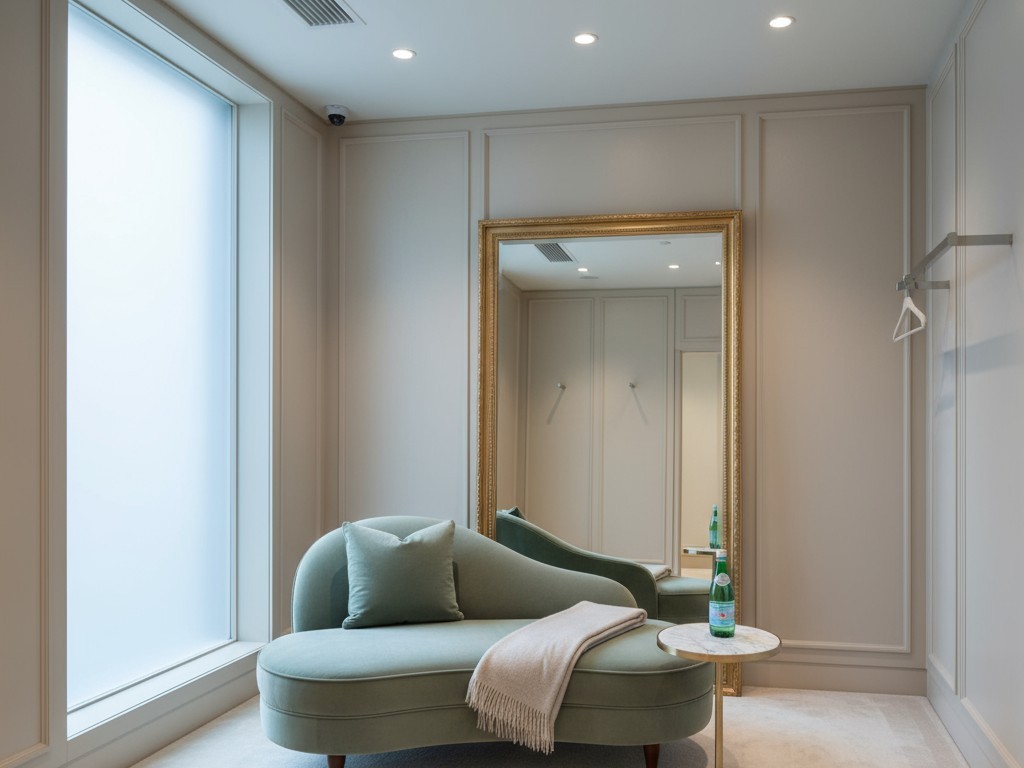
This cycle repeats dozens of times a day. While the energy cost for a single vacant period is negligible, the cumulative effect is a substantial drain on resources. The system operates without awareness, treating an empty room and an occupied one with the same priority. It’s a fundamental inefficiency born from a system that doesn’t understand its purpose.
The Flawed Compromise: Constant Waste vs. Punitive Savings
Faced with this challenge, businesses typically default to one of two flawed strategies. The first is to simply absorb the cost. The AC runs all day to ensure every guest is comfortable, institutionalizing waste as a fixed cost of doing business.
คุณอาจสนใจ

- แรงดันไฟฟ้า: ถ่าน AAA 2 ก้อน
- โหมดกลางวัน/กลางคืน
- การหน่วงเวลา: 15 นาที, 30 นาที, 1 ชั่วโมง (ค่าเริ่มต้น), 2 ชั่วโมง

- เซนเซอร์ตรวจจับการถือครองห้อง PIR ติดตั้งบนเพดาน พร้อมเอาต์พุตรีเลย์หน้าสัมผัสแห้ง
- ระบบจ่ายไฟแรงดันต่ำ 12/24VDC หรือ 12/24VAC
- หน้าสัมผัสรีเลย์แบบแยก COM, NO และ NC สำหรับสัญญาณอินพุตของระบบ EMS, HVAC และระบบควบคุมอาคาร

- สวิตช์เซนเซอร์ตรวจจับการเคลื่อนไหวด้วยไมโครเวฟแบบติดเพดานฝังฝ้า ไฟฟ้ากระแสตรงแรงดันต่ำ
- อินพุต 12 VDC / 24 VDC พร้อมช่วงรองรับ 10-30 VDC
- กระแสไฟฟ้าทำงานสูงสุด 10A พร้อมการปรับตั้งค่าเวลาหน่วง เกณฑ์ค่า Lux และความไวในการตรวจจับ
- สวิตช์เซนเซอร์ตรวจจับการเคลื่อนไหวด้วยไมโครเวฟแบบติดเพดานฝังฝ้า สำหรับโหลดสูง
- อินพุตแรงดันสาย 100-265 VAC รุ่น 10A
- ระบบตรวจจับด้วยไมโครเวฟความถี่ 5.8 GHz พร้อมการปรับตั้งค่าเวลาหน่วง เกณฑ์ค่า Lux และความไวในการตรวจจับ
- สวิตช์เซนเซอร์ตรวจจับการเคลื่อนไหวด้วยไมโครเวฟแบบติดเพดานฝังฝ้า
- อินพุตแรงดันสาย 100-265 VAC รุ่น 5A
- ระบบตรวจจับด้วยไมโครเวฟความถี่ 5.8 GHz พร้อมการปรับตั้งค่าเวลาหน่วง เกณฑ์ค่า Lux และความไวในการตรวจจับ
- สวิตช์หรี่ไฟเซนเซอร์ตรวจจับการเข้าใช้พื้นที่ระบบ PIR รุ่น RZ037 แบบติดเพดาน สำหรับระบบไฟฟ้า 220V
- กระแสไฟฟ้าทำงานสูงสุด 3A พร้อมโหลดพิกัด 660W
- ปุ่ม LUX ควบคุมการเปิด/ปิดเซนเซอร์แสง และความสว่างในการหรี่ไฟที่ผู้ใช้กำหนด
- สวิตช์หรี่ไฟเซนเซอร์ตรวจจับการเข้าใช้พื้นที่ระบบ PIR รุ่น RZ037 แบบติดเพดาน สำหรับระบบไฟฟ้า 110V
- กระแสไฟฟ้าทำงานสูงสุด 3A พร้อมโหลดพิกัด 330W
- ปุ่ม LUX ควบคุมการเปิด/ปิดเซนเซอร์แสง และความสว่างในการหรี่ไฟที่ผู้ใช้กำหนด

- สวิตช์เซนเซอร์ตรวจจับการเคลื่อนไหวด้วยไมโครเวฟแบบติดเพดาน ไฟฟ้ากระแสตรงแรงดันต่ำ
- อินพุต 12 VDC / 24 VDC พร้อมช่วงรองรับ 10-30 VDC
- กระแสไฟฟ้าทำงานสูงสุด 10A พร้อมการปรับตั้งค่าเวลาหน่วง เกณฑ์ค่า Lux และความไวในการตรวจจับ
- สวิตช์เซนเซอร์ตรวจจับความเคลื่อนไหวคลื่นไมโครเวฟแบบติดเพดาน รองรับโหลดสูง
- อินพุตแรงดันสาย 100-265 VAC รุ่น 10A
- ระบบตรวจจับด้วยไมโครเวฟความถี่ 5.8 GHz พร้อมการปรับตั้งค่าเวลาหน่วง เกณฑ์ค่า Lux และความไวในการตรวจจับ
- สวิตช์เซนเซอร์ตรวจจับความเคลื่อนไหวคลื่นไมโครเวฟแบบติดเพดาน
- อินพุตแรงดันสาย 100-265 VAC รุ่น 5A
- ระบบตรวจจับด้วยไมโครเวฟความถี่ 5.8 GHz พร้อมการปรับตั้งค่าเวลาหน่วง เกณฑ์ค่า Lux และความไวในการตรวจจับ

- สวิตช์เซนเซอร์ตรวจจับความเคลื่อนไหว PIR แบบฝังฝ้าเพดาน แรงดันไฟฟ้าต่ำ DC
- อินพุต 12 VDC / 24 VDC พร้อมช่วงรองรับ 10-30 VDC
- กระแสไฟฟ้าทำงานสูงสุด 10A พร้อมระบบปรับตั้งเวลาหน่วง ค่าความสว่าง Lux และความไวในการตรวจจับได้

- สวิตช์เซนเซอร์ตรวจจับความเคลื่อนไหว PIR แบบฝังฝ้าเพดาน รองรับโหลดสูง
- อินพุตแรงดันสาย 100-265 VAC รุ่น 10A
- ระบบตรวจจับ 360 องศา พร้อมระบบปรับตั้งเวลาหน่วง ค่าความสว่าง Lux และความไวในการตรวจจับได้
- สวิตช์เซนเซอร์ตรวจจับความเคลื่อนไหว PIR แบบฝังฝ้าเพดาน
- อินพุตแรงดันสาย 100-265 VAC รุ่น 5A
- ระบบตรวจจับ 360 องศา พร้อมระบบปรับตั้งเวลาหน่วง ค่าความสว่าง Lux และความไวในการตรวจจับได้

- ชุดสวิตช์ไร้สายและตัวรับสัญญาณสำหรับควบคุมการเปิด/ปิดไฟภายในอาคาร
- ตัวรับสัญญาณ 100-230VAC, 50/60Hz พิกัดกระแสไฟฟ้า 5A
- สวิตช์ไร้สายใช้พลังงานจากแบตเตอรี่ CR2032 พร้อมการสื่อสารผ่านความถี่ 2.4GHz
- ตรวจจับการใช้งาน (เปิดอัตโนมัติ/ปิดอัตโนมัติ)
- 12–24V DC (10–30VDC), สูงสุด 10A
- ครอบคลุม 360° เส้นผ่านศูนย์กลาง 8–12 ม.
- หน่วงเวลา 15 วินาที–30 นาที
- เซนเซอร์วัดแสง ปิด/15/25/35 Lux
- ความไวสูง/ต่ำ
- โหมดตรวจจับการใช้งาน เปิดอัตโนมัติ/ปิดอัตโนมัติ
- 100–265V AC, 10A (จำเป็นต้องมีสายสายนิวทรัล)
- ครอบคลุม 360°; เส้นผ่านศูนย์กลางการตรวจจับ 8–12 ม.
- หน่วงเวลา 15 วินาที–30 นาที; Lux ปิด/15/25/35; ความไวสูง/ต่ำ
- โหมดตรวจจับการใช้งาน เปิดอัตโนมัติ/ปิดอัตโนมัติ
- 100–265V AC, 5A (จำเป็นต้องมีสายสายนิวทรัล)
- ครอบคลุม 360°; เส้นผ่านศูนย์กลางการตรวจจับ 8–12 ม.
- หน่วงเวลา 15 วินาที–30 นาที; Lux ปิด/15/25/35; ความไวสูง/ต่ำ
The second strategy tries to curb costs through manual or simplistic automation. Staff are told to turn units on and off, or basic timers shut the system down abruptly. These methods are punitive. A customer plunged into a suddenly silent, stuffy room feels like a resource being managed, not a guest being catered to. The experience is jarring and cheap, directly undermining the premium atmosphere the business aims to cultivate.
A New Paradigm: Tying Climate to Presence
The solution is a system that is aware of its environment. Instead of running on a schedule or waiting for a staff member, climate control should be tied directly to its sole purpose: providing comfort for a human occupant. This is the principle of motion-based automation.
Using a motion sensor as the trigger, the HVAC system becomes an active participant in its own efficiency. It operates only when the room is occupied and enters a standby state when it’s vacant. This simple shift in logic fundamentally alters the energy consumption profile of the space, ensuring resources are allocated precisely when and where they are needed.
The Mechanics of Seamless Comfort
True intelligent control, however, is more than a simple on/off switch. A premium system must be nuanced, managing energy without the occupant ever noticing it at work. This requires a set of carefully calibrated rules that prioritize the perception of comfort.
The Grace Period: Gentle Delays Prevent Jarring Changes
When a guest leaves, the system shouldn’t shut off immediately. Human perception is more sensitive to abrupt changes than to gradual ones. A sudden stop in airflow and the click of a relay are noticeable. By incorporating a gentle time delay—a grace period of a few minutes after motion is no longer detected—the system creates a seamless transition. The guest is long gone before the AC powers down, and the experience remains uninterrupted.
The Door-Aware Timeout: Differentiating a Brief Exit from Final Departure
A person might step out for a moment to grab a different size. A basic motion sensor would register the room as empty and begin its shutdown countdown. A more intelligent system incorporates door awareness. By registering that the door has been opened and closed quickly, the system can initiate a much longer timeout period. It correctly interprets this pattern not as a final departure but as a temporary one, keeping the room comfortable for the guest’s imminent return.
กำลังมองหาโซลูชันประหยัดพลังงานทำงานตามการเคลื่อนไหวอยู่ใช่หรือไม่
ติดต่อเราเพื่อรับโซลูชันครบวงจรสำหรับ PIR motion sensor, ผลิตภัณฑ์ประหยัดพลังงานทำงานตามการเคลื่อนไหว, สวิตช์เซนเซอร์ตรวจจับการเคลื่อนไหว และโซลูชัน Occupancy/Vacancy สำหรับเชิงพาณิชย์.
Rethinking Sensitivity: Climate is Not Lighting
The logic for controlling climate is different from that for lighting. A person trying on clothes might stand still before a mirror for a minute or two. A highly sensitive lighting sensor might interpret this stillness as vacancy and plunge them into darkness. An HVAC system, however, can use a less sensitive setting. The thermal mass of a room means the temperature won’t change instantly. The system can be programmed to tolerate longer periods of stillness, preventing false “vacant” signals and aligning its behavior with the specific use of the space.
รับแรงบันดาลใจจากกลุ่มผลิตภัณฑ์เซนเซอร์ตรวจจับความเคลื่อนไหว Rayzeek.
ยังไม่พบสิ่งที่ต้องการใช่หรือไม่? ไม่ต้องกังวล เพราะยังมีแนวทางอื่นในการแก้ปัญหาของคุณเสมอ บางทีหนึ่งในกลุ่มผลิตภัณฑ์ของเราอาจช่วยคุณได้.
The Foundation of Reliability: Local Control Over Wi-Fi
In a commercial environment, reliability is paramount. Many “smart” devices depend on a constant connection to Wi-Fi and cloud servers, introducing multiple points of failure. A network hiccup or a server outage can render the system useless. For a core business function like climate control, this dependency is an unacceptable risk.
A professional-grade solution operates on local control. The sensor, logic, and switch are all part of a self-contained, robust system that doesn’t need an internet connection to function. It is inherently more secure and reliable, ensuring consistent performance independent of external network conditions. It is an engineered solution, not a consumer gadget.
The Tangible Return: Lower Costs, Better Experience
An intelligent, motion-based AC control system delivers two powerful returns. First is a direct, measurable reduction in energy consumption. By eliminating the hours spent cooling empty rooms, businesses see a significant drop in utility costs, allowing the system to pay for itself.
The second return is the enhancement of the guest experience. The automation is so seamless it becomes invisible. Customers enjoy a consistently comfortable environment without the jarring interruptions of a crude, cost-cutting system, reinforcing the brand’s commitment to quality. These principles—tying resource use to presence with reliable, local control—extend far beyond the fitting room, offering the same benefits to private offices, conference rooms, and hotels. It is a smarter, more sustainable approach to modern building management.







