
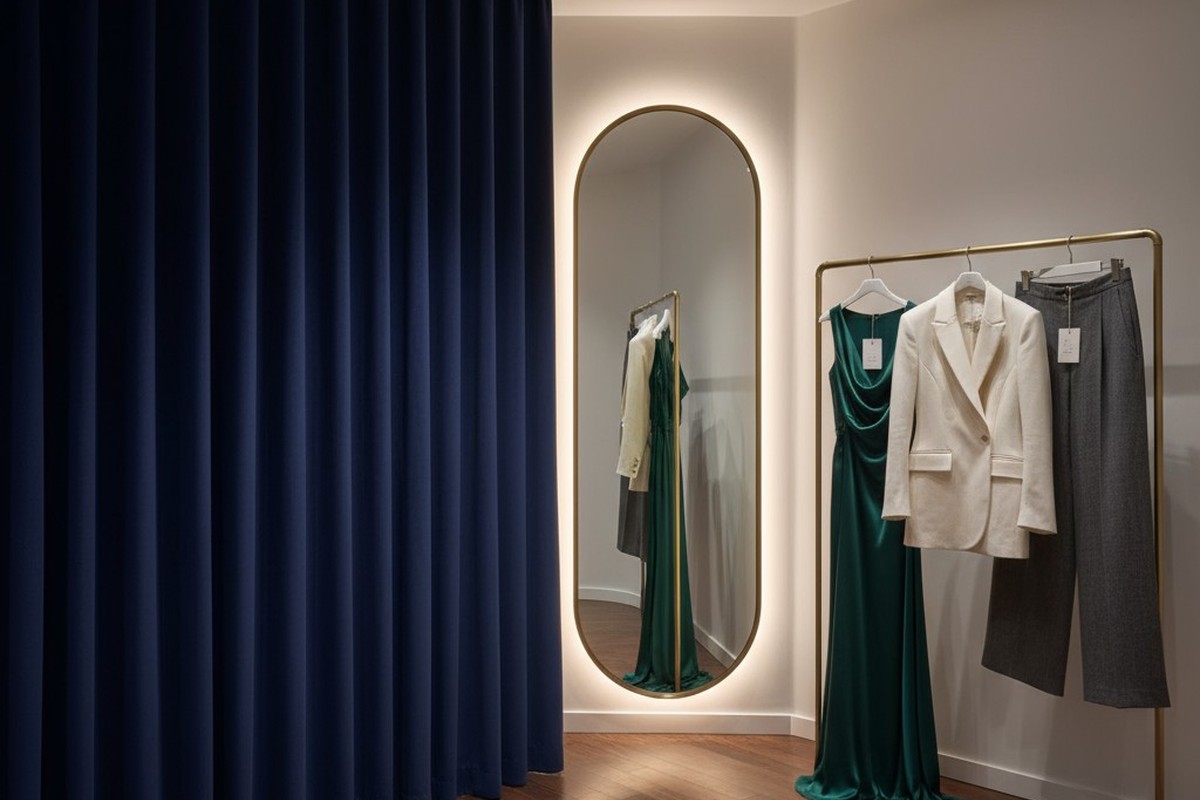
In a boutique, the fitting room is the final point of persuasion. It’s a private space where a customer decides to buy. The ambiance is everything. A stuffy, warm room feels neglected; a comfortably cool one feels luxurious. But achieving that consistent comfort comes at a steep, often invisible price.
For small, intermittently occupied spaces like these, air conditioning is a major operational expense. The conventional choice is difficult: either accept the financial drain of running the AC constantly or risk the customer’s experience with crude, disruptive cost-cutting. But there is a third option, one that replaces this binary choice with an intelligent system designed for both premium comfort and maximum efficiency.
The Invisible Expense of an Empty Room
Consider a single fitting room over a business day. A guest enters, tries on clothes for ten minutes, and leaves. The room then sits empty—perhaps for two minutes, perhaps for twenty. During that entire vacant period, the AC continues to run, cooling a space for no one.
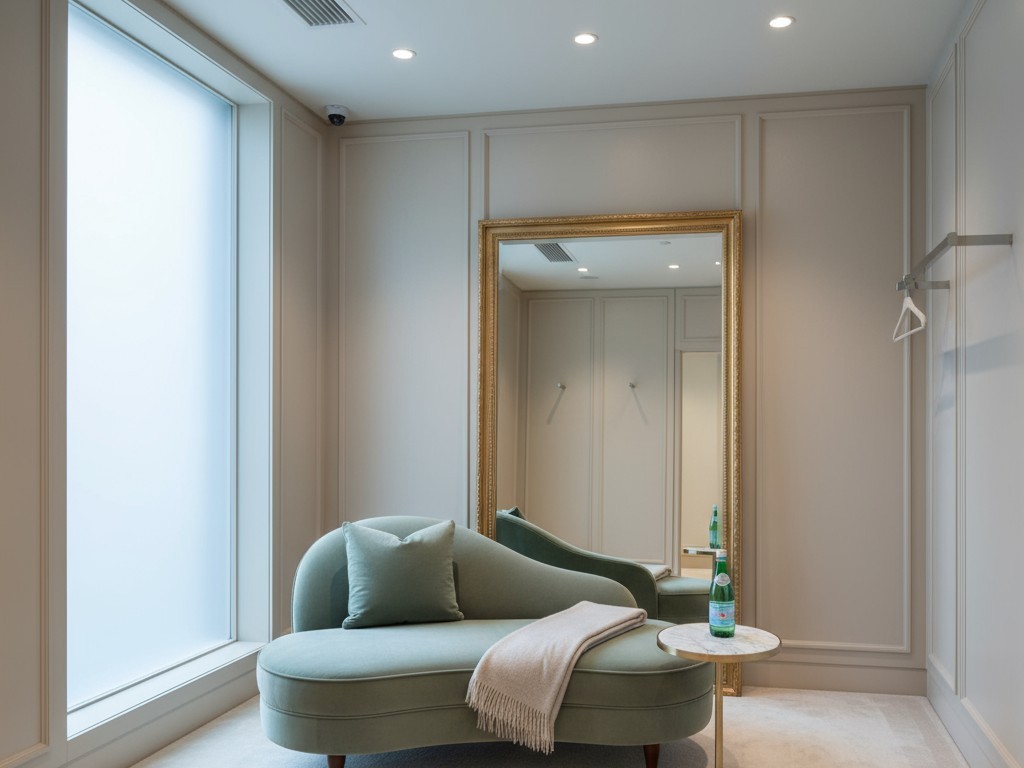
This cycle repeats dozens of times a day. While the energy cost for a single vacant period is negligible, the cumulative effect is a substantial drain on resources. The system operates without awareness, treating an empty room and an occupied one with the same priority. It’s a fundamental inefficiency born from a system that doesn’t understand its purpose.
The Flawed Compromise: Constant Waste vs. Punitive Savings
Faced with this challenge, businesses typically default to one of two flawed strategies. The first is to simply absorb the cost. The AC runs all day to ensure every guest is comfortable, institutionalizing waste as a fixed cost of doing business.
Ces produits pourraient vous intéresser

- Tension : 2 piles AAA
- Mode Jour/Nuit
- Temporisation : 15 min, 30 min, 1 h (par défaut), 2 h

- Détecteur de présence PIR pour montage au plafond avec sortie relais à contact sec
- Alimentation basse tension 12/24VDC ou 12/24VAC
- Contacts relais isolés COM, NO et NC pour les entrées de régulation CVC, GTC et de gestion de l'énergie

- Interrupteur détecteur de mouvement hyperfréquence encastré pour plafond basse tension continue
- Entrée 12 VDC / 24 VDC avec plage de 10-30 VDC
- Courant de fonctionnement maximal de 10A avec temporisation, seuil Lux et sensibilité réglables
- Interrupteur détecteur de mouvement à micro-ondes encastré au plafond pour charges plus élevées
- Entrée de tension secteur 100-265 VAC, modèle 10A
- Détection hyperfréquence (micro-ondes) 5,8 GHz avec temporisation, seuil Lux et sensibilité réglables
- Interrupteur détecteur de mouvement à micro-ondes encastré au plafond
- Entrée de tension secteur 100-265 VAC, modèle 5A
- Détection hyperfréquence (micro-ondes) 5,8 GHz avec temporisation, seuil Lux et sensibilité réglables
- Variateur détecteur de présence PIR RZ037 pour montage au plafond pour alimentation 220V
- Courant de fonctionnement maximal de 3A avec une charge nominale de 660W
- Le bouton LUX contrôle la marche/arrêt du capteur de lumière et la luminosité de variation réglée par l'utilisateur
- Variateur détecteur de présence PIR RZ037 pour montage au plafond pour alimentation 110V
- Courant de fonctionnement maximal de 3A avec une charge nominale de 330W
- Le bouton LUX contrôle la marche/arrêt du capteur de lumière et la luminosité de variation réglée par l'utilisateur

- Interrupteur détecteur de mouvement à micro-ondes basse tension CC pour montage au plafond
- Entrée 12 VDC / 24 VDC avec plage de 10-30 VDC
- Courant de fonctionnement maximal de 10A avec temporisation, seuil Lux et sensibilité réglables
- Interrupteur détecteur de mouvement à micro-ondes pour montage au plafond pour charges plus élevées
- Entrée de tension secteur 100-265 VAC, modèle 10A
- Détection hyperfréquence (micro-ondes) 5,8 GHz avec temporisation, seuil Lux et sensibilité réglables
- Interrupteur à détecteur de mouvement hyperfréquence pour montage au plafond
- Entrée de tension secteur 100-265 VAC, modèle 5A
- Détection hyperfréquence (micro-ondes) 5,8 GHz avec temporisation, seuil Lux et sensibilité réglables

- Interrupteur à détecteur de mouvement PIR encastré pour plafond à basse tension CC
- Entrée 12 VDC / 24 VDC avec plage de 10-30 VDC
- Courant de fonctionnement maximal de 10A avec temporisation, seuil Lux et sensibilité réglables

- Interrupteur à détecteur de mouvement PIR encastré pour plafond pour charges plus élevées
- Entrée de tension secteur 100-265 VAC, modèle 10A
- Détection à 360 degrés avec temporisation, seuil Lux et sensibilité réglables
- Interrupteur à détecteur de mouvement PIR encastré pour plafond
- Entrée de tension secteur 100-265 VAC, modèle 5A
- Détection à 360 degrés avec temporisation, seuil Lux et sensibilité réglables

- Kit d’interrupteur sans fil et récepteur pour le contrôle de l’éclairage intérieur MARCHE/ARRÊT
- Récepteur 100-230VAC, 50/60Hz avec courant nominal de 5A
- Interrupteur sans fil alimenté par pile CR2032 avec communication 2.4GHz
- Détection d'occupation (Auto-ON/Auto-OFF)
- 12–24V DC (10–30VDC), jusqu'à 10A
- Couverture 360°, diamètre de 8–12 m
- Temporisation 15 s–30 min
- Capteur de luminosité Désactivé/15/25/35 Lux
- Sensibilité Haute/Basse
- Mode d'occupation Auto-ON/Auto-OFF
- 100–265V AC, 10A (neutre requis)
- Couverture 360° ; diamètre de détection 8–12 m
- Temporisation 15 s–30 min ; Lux Désactivé/15/25/35 ; Sensibilité Haute/Basse
- Mode d'occupation Auto-ON/Auto-OFF
- 100–265V AC, 5A (neutre requis)
- Couverture 360° ; diamètre de détection 8–12 m
- Temporisation 15 s–30 min ; Lux Désactivé/15/25/35 ; Sensibilité Haute/Basse
The second strategy tries to curb costs through manual or simplistic automation. Staff are told to turn units on and off, or basic timers shut the system down abruptly. These methods are punitive. A customer plunged into a suddenly silent, stuffy room feels like a resource being managed, not a guest being catered to. The experience is jarring and cheap, directly undermining the premium atmosphere the business aims to cultivate.
A New Paradigm: Tying Climate to Presence
The solution is a system that is aware of its environment. Instead of running on a schedule or waiting for a staff member, climate control should be tied directly to its sole purpose: providing comfort for a human occupant. This is the principle of motion-based automation.
Using a motion sensor as the trigger, the HVAC system becomes an active participant in its own efficiency. It operates only when the room is occupied and enters a standby state when it’s vacant. This simple shift in logic fundamentally alters the energy consumption profile of the space, ensuring resources are allocated precisely when and where they are needed.
The Mechanics of Seamless Comfort
True intelligent control, however, is more than a simple on/off switch. A premium system must be nuanced, managing energy without the occupant ever noticing it at work. This requires a set of carefully calibrated rules that prioritize the perception of comfort.
The Grace Period: Gentle Delays Prevent Jarring Changes
When a guest leaves, the system shouldn’t shut off immediately. Human perception is more sensitive to abrupt changes than to gradual ones. A sudden stop in airflow and the click of a relay are noticeable. By incorporating a gentle time delay—a grace period of a few minutes after motion is no longer detected—the system creates a seamless transition. The guest is long gone before the AC powers down, and the experience remains uninterrupted.
The Door-Aware Timeout: Differentiating a Brief Exit from Final Departure
A person might step out for a moment to grab a different size. A basic motion sensor would register the room as empty and begin its shutdown countdown. A more intelligent system incorporates door awareness. By registering that the door has been opened and closed quickly, the system can initiate a much longer timeout period. It correctly interprets this pattern not as a final departure but as a temporary one, keeping the room comfortable for the guest’s imminent return.
Vous recherchez des solutions d’économie d’énergie activées par le mouvement ?
Contactez-nous pour obtenir une gamme complète de détecteurs de mouvement PIR, de produits d’économie d’énergie activés par le mouvement, d’interrupteurs à détecteur de mouvement et de solutions commerciales de présence/vacance.
Rethinking Sensitivity: Climate is Not Lighting
The logic for controlling climate is different from that for lighting. A person trying on clothes might stand still before a mirror for a minute or two. A highly sensitive lighting sensor might interpret this stillness as vacancy and plunge them into darkness. An HVAC system, however, can use a less sensitive setting. The thermal mass of a room means the temperature won’t change instantly. The system can be programmed to tolerate longer periods of stillness, preventing false “vacant” signals and aligning its behavior with the specific use of the space.
Laissez-vous inspirer par les portfolios de détecteurs de mouvement Rayzeek.
Vous ne trouvez pas ce que vous cherchez ? Ne vous inquiétez pas. Il existe toujours d'autres solutions à vos besoins. L'un de nos portfolios peut sans doute vous aider.
The Foundation of Reliability: Local Control Over Wi-Fi
In a commercial environment, reliability is paramount. Many “smart” devices depend on a constant connection to Wi-Fi and cloud servers, introducing multiple points of failure. A network hiccup or a server outage can render the system useless. For a core business function like climate control, this dependency is an unacceptable risk.
A professional-grade solution operates on local control. The sensor, logic, and switch are all part of a self-contained, robust system that doesn’t need an internet connection to function. It is inherently more secure and reliable, ensuring consistent performance independent of external network conditions. It is an engineered solution, not a consumer gadget.
The Tangible Return: Lower Costs, Better Experience
An intelligent, motion-based AC control system delivers two powerful returns. First is a direct, measurable reduction in energy consumption. By eliminating the hours spent cooling empty rooms, businesses see a significant drop in utility costs, allowing the system to pay for itself.
The second return is the enhancement of the guest experience. The automation is so seamless it becomes invisible. Customers enjoy a consistently comfortable environment without the jarring interruptions of a crude, cost-cutting system, reinforcing the brand’s commitment to quality. These principles—tying resource use to presence with reliable, local control—extend far beyond the fitting room, offering the same benefits to private offices, conference rooms, and hotels. It is a smarter, more sustainable approach to modern building management.







