
Private Offices
Discover energy-saving solutions for private offices with Rayzeek’s occupancy sensor design guide. Learn how to meet energy code requirements while optimizing lighting control for efficiency and comfort.
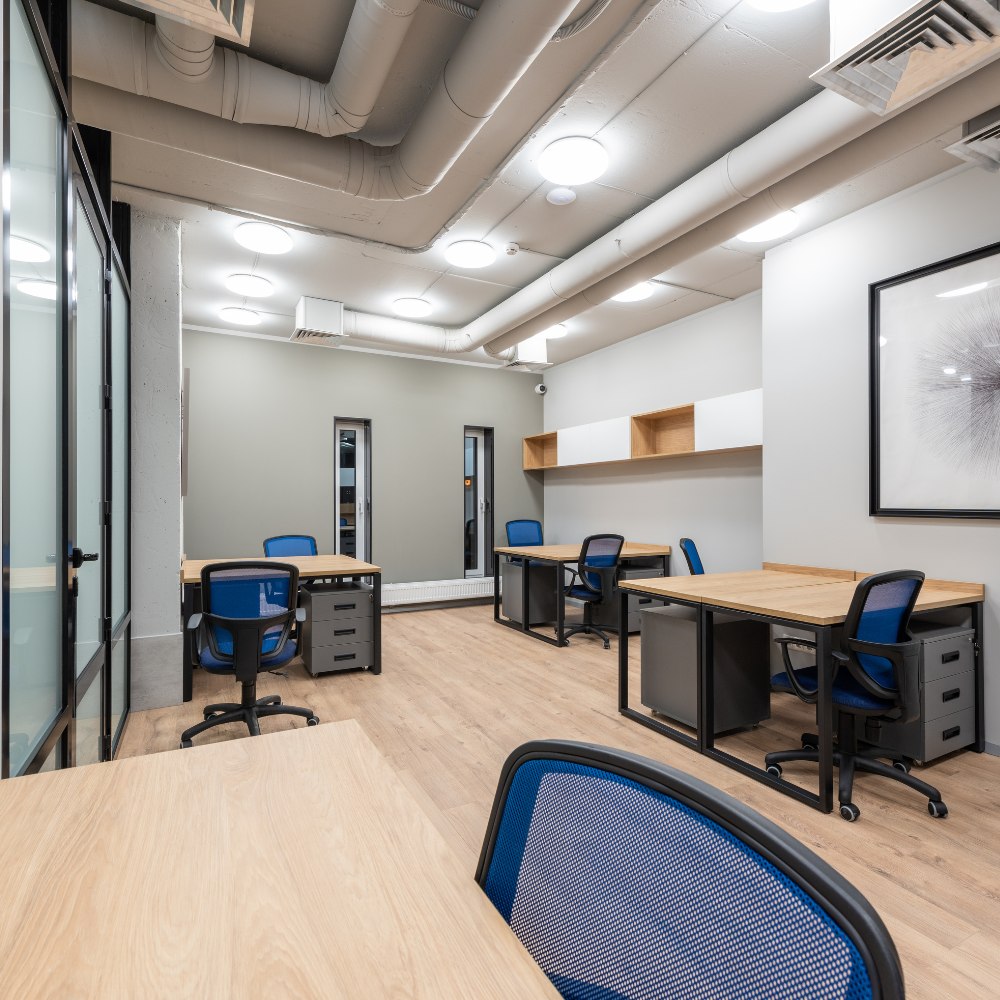
Optimize Energy Use in Private Offices with Smart Lighting Control
Private offices are individual workspaces, often enclosed by walls and a door, providing a quiet and focused environment for tasks that require concentration. These spaces are typically equipped with overhead lighting and task lighting, which can contribute significantly to the overall energy consumption of a commercial building.
Despite their benefits, private offices often face the issue of lights being left on when the space is unoccupied, leading to unnecessary energy waste. This is particularly problematic given that private offices are not continuously occupied throughout the day, with occupants often leaving for meetings, breaks, or other tasks.
To address this issue, occupancy sensors offer an effective solution. These devices can automatically turn off lights when the office is vacant, significantly reducing energy consumption. By integrating occupancy sensors into private offices, businesses can not only meet energy code requirements but also achieve substantial energy savings and improve their sustainability efforts.
Rispettare i codici energetici

L'International Energy Conservation Code (IECC) è un modello di codice sviluppato dall'International Code Council (ICC) per stabilire i requisiti minimi di progettazione e costruzione volti all'efficienza energetica degli edifici. L'IECC viene aggiornato ogni tre anni per integrare le più recenti prassi e tecnologie nel campo del risparmio energetico.
IECC: perché è importante
L'IECC è ampiamente adottato da stati e comuni negli Stati Uniti. Copre vari aspetti dell'uso dell'energia, tra cui l'involucro edilizio (pareti, tetti e finestre), gli impianti di riscaldamento e raffrescamento e i sistemi di illuminazione.
L'IECC impone controlli dell'illuminazione specifici, come i sensori di presenza, per ridurre al minimo lo spreco di energia negli spazi non occupati in diverse aree.

Lo standard ANSI/ASHRAE/IES 90.1, Energy Standard for Sites and Buildings Except Low-Rise Residential Buildings, è uno standard energetico ampiamente riconosciuto e pubblicato dall'American Society of Heating, Refrigerating and Air-Conditioning Engineers (ASHRAE).
ASHRAE 90.1: perché è importante
Lo standard ASHRAE 90.1 viene utilizzato come punto di riferimento per i codici energetici degli edifici in tutti gli Stati Uniti e funge da percorso di conformità all'interno dell'IECC; definisce i requisiti minimi per le prestazioni di efficienza energetica dei componenti degli edifici commerciali, inclusi involucri edilizi, sistemi HVAC, sistemi di riscaldamento dell'acqua e impianti di illuminazione.
Lo standard ASHRAE 90.1 specifica le densità di potenza massima consentite per l'illuminazione e i requisiti minimi di controllo dell'illuminazione, compreso l'uso di sensori di presenza in aree specifiche.

Il Title 24, parte 6 del California Building Standards Code, ufficialmente noto come Building Energy Efficiency Standards for Residential and Nonresidential Buildings, è amministrato dalla California Energy Commission e viene aggiornato periodicamente per riflettere le nuove tecnologie e metodologie di efficienza energetica.
Title 24: perché è importante
Il Title 24 è noto per i suoi requisiti rigorosi, spesso considerati più severi rispetto a quelli di molti altri codici energetici negli Stati Uniti. Il Title 24 impone severi standard di prestazione energetica per tutti gli aspetti della costruzione di un edificio, tra cui riscaldamento, ventilazione, aria condizionata (HVAC), riscaldamento dell'acqua e illuminazione.
Il Title 24 richiede l'installazione di sensori di presenza che regolino l'illuminazione in base all'occupazione della stanza in specifiche aree degli edifici commerciali, in modo da evitare sprechi di energia.
Adozione dei codici energetici per stato
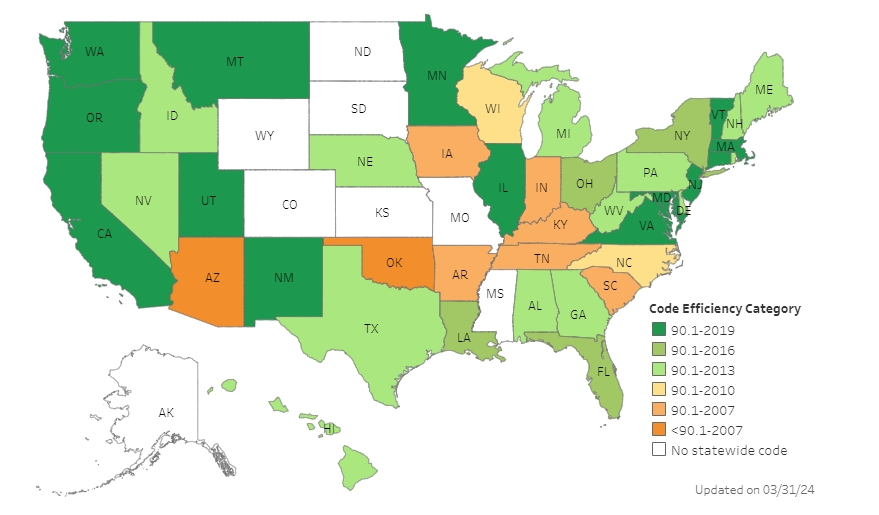
Espandere per visualizzare la tabella dettagliata ↓
| Stato | Codice commerciale attuale | Categoria di efficienza del codice commerciale |
|---|---|---|
| Alabama | 90.1-2013 | 90.1-2013 |
| Alaska | Nessuno a livello statale | Nessun codice a livello statale |
| Arizona | Autonomia locale | <90.1-2007 |
| Arkansas | 2009 IECC e 90.1-2007 | 90.1-2007 |
| California | 2022 Building Energy Efficiency Standards | 90.1-2019 |
| Colorado | Autonomia locale | Nessun codice a livello statale |
| Connecticut | 2021 IECC and 90.1-2019 | 90.1-2019 |
| Delaware | 2018 IECC and 90.1-2016 | 90.1-2013 |
| District of Columbia | 90.1-2013^ | 90.1-2019 |
| Florida | 2021 IECC and 90.1-2019^ | 90.1-2016 |
| Georgia | 2015 IECC and 90.1-2013^ | 90.1-2013 |
| Hawaii | Autonomia locale | 90.1-2013 |
| Idaho | 2018 IECC and 90.1-2016 | 90.1-2013 |
| Illinois | 2021 IECC and 90.1-2019 | 90.1-2019 |
| Indiana | 90.1-2007 | 90.1-2007 |
| Iowa | 2012 IECC e 90.1-2010 | 90.1-2007 |
| Kansas | Autonomia locale | Nessun codice a livello statale |
| Kentucky | 2012 IECC e 90.1-2010 | 90.1-2007 |
| Louisiana | 2021 IECC and 90.1-2019^ | 90.1-2016 |
| Maine | 2015 IECC e 90.1-2013 | 90.1-2013 |
| Maryland | 2021 IECC and 90.1-2019^ | 90.1-2019 |
| Massachusetts | 2018 IECC e 90.1-2016^ | 90.1-2019 |
| Michigan | 2015 IECC and 90.1-2013^ | 90.1-2013 |
| Minnesota | 90.1-2019^ | 90.1-2019 |
| Mississippi | Nessuno a livello statale | Nessun codice a livello statale |
| Missouri | Autonomia locale | Nessun codice a livello statale |
| Montana | 2021 IECC and 90.1-2019 | 90.1-2019 |
| Nebraska | 2018 IECC and 90.1-2016 | 90.1-2013 |
| Nevada | 2018 IECC and 90.1-2016 | 90.1-2013 |
| New Hampshire | 2018 IECC e 90.1-2016^ | 90.1-2013 |
| New Jersey | 90.1-2019 | 90.1-2019 |
| New Mexico | 2021 IECC and 90.1-2019^ | 90.1-2019 |
| New York | 2018 IECC e 90.1-2016^ | 90.1-2016 |
| North Carolina | 2015 IECC and 90.1-2013^ | 90.1-2010 |
| North Dakota | Autonomia locale | Nessun codice a livello statale |
| Ohio | 2021 IECC and 90.1-2019^ | 90.1-2016 |
| Oklahoma | 2006 IECC e 90.1-2004 | <90.1-2007 |
| Oregon | 90.1-2019 | 90.1-2019 |
| Pennsylvania | 2018 IECC and 90.1-2016 | 90.1-2013 |
| Rhode Island | 2018 IECC e 90.1-2016^ | 90.1-2013 |
| South Carolina | 2009 IECC e 90.1-2007 | 90.1-2007 |
| South Dakota | Autonomia locale | Nessun codice a livello statale |
| Tennessee | 2021 IECC e 90.1-2013 | 90.1-2007 |
| Texas | 2015 IECC e 90.1-2013 | 90.1-2013 |
| Utah | 2021 IECC and 90.1-2019^ | 90.1-2019 |
| Vermont | 2021 IECC and 90.1-2019^ | 90.1-2019 |
| Virginia | 2021 IECC and 90.1-2019^ | 90.1-2019 |
| Washington | Codice energetico dello Stato di Washington 2018 | 90.1-2019 |
| Tennessee | 2012 IECC e 90.1-2010 | 90.1-2007 |
| Texas | 2015 IECC e 90.1-2013 | 90.1-2013 |
| Utah | 2021 IECC and 90.1-2019^ | 90.1-2019 |
| Vermont | 2018 IECC e 90.1-2016^ | 90.1-2019 |
| Virginia | 2021 IECC and 90.1-2019^ | 90.1-2019 |
| Washington | Codice energetico dello Stato di Washington 2018 | 90.1-2019 |
| West Virginia | 90.1-2013 | 90.1-2013 |
| Wisconsin | 2015 IECC and 90.1-2013^ | 90.1-2010 |
| Wyoming | Autonomia locale | Nessun codice a livello statale |
- ^ Quando una modifica che influisce sull'efficienza energetica può essere quantificata utilizzando i modelli di edificio prototipo del DOE, questa è stata inclusa nell'analisi.
- Per gli Stati che adottano sia l'IECC che la norma 90.1, il codice IECC viene solitamente analizzato come codice statale vigente in questo studio, ad eccezione degli Stati con modifiche estese all'IECC.
Concetti chiave della guida alla progettazione per uffici privati
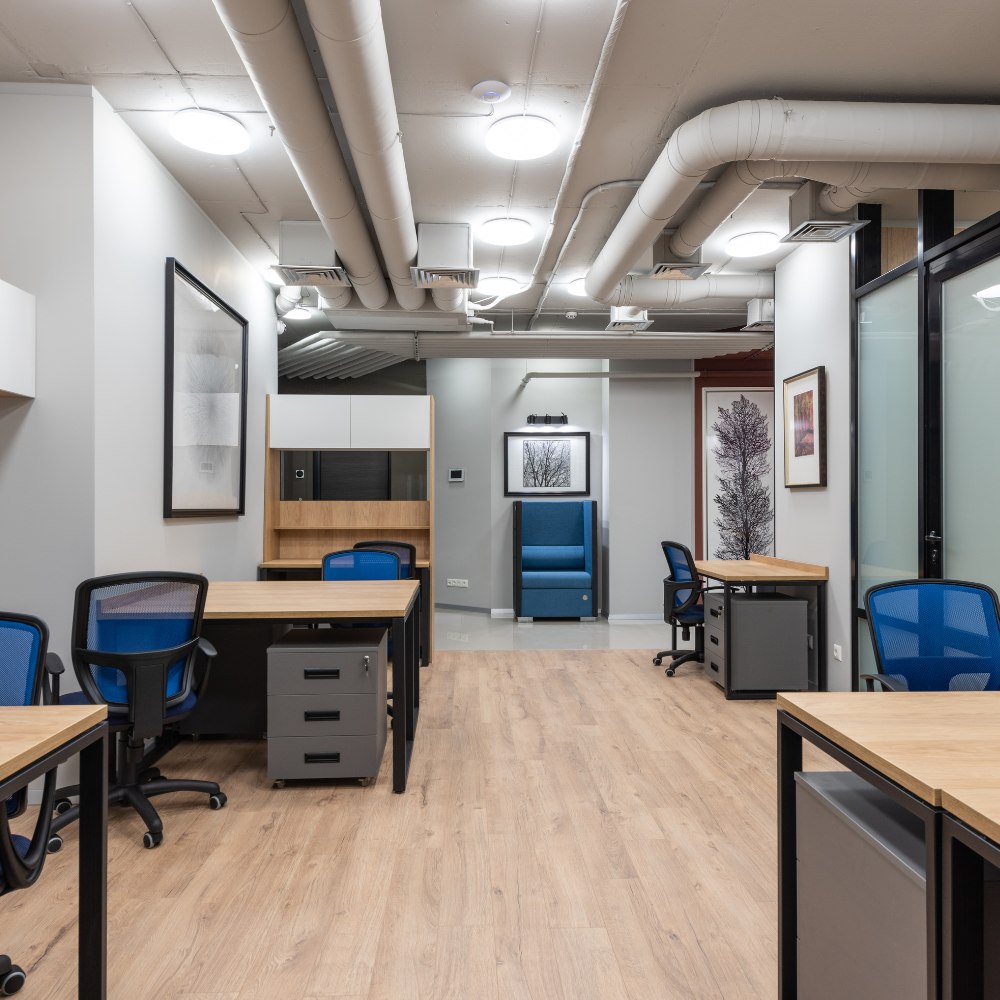
La progettazione di una soluzione di controllo dell'illuminazione ad alta efficienza energetica per uffici privati comporta il posizionamento strategico dei sensori di presenza per garantire la copertura completa dello spazio.
- Posizionamento del sensore: Position the sensor to cover the main areas of activity, such as the desk and the entrance. The sensor should have a clear line of sight to these areas, unobstructed by furniture or other objects. For private offices, wall-mounted sensors or ceiling-mounted sensors can be effective, depending on the room layout and furniture arrangement.
- Coverage of Minor Movements: Ensure that the desk area falls within the minor motion coverage area of the sensor. This means that even small movements, such as typing or turning pages in a book, should be detected by the sensor to prevent the lights from turning off while the space is occupied.
- Avoidance of Obstructions: If using wall-mounted sensors, ensure that tall furniture like bookcases does not block the sensor’s view of the room. Similarly, the sensor’s view should not be blocked by the door when it’s open.
- Entrance Coverage: The sensor should have a clear view of the entrance to detect occupancy as soon as someone enters the room. If the door blocks the sensor’s view when open, consider using an additional sensor to cover the entrance.
- Avoidance of Interference: Sensors should not be mounted close to air vents, as the vibration and air flow can reduce their effectiveness.
- Controllo manuale: Incorporate manual controls for occupants to turn the lights ON/OFF as needed. These controls should be conveniently located, often near the entrance.
Featured Products & Solutions
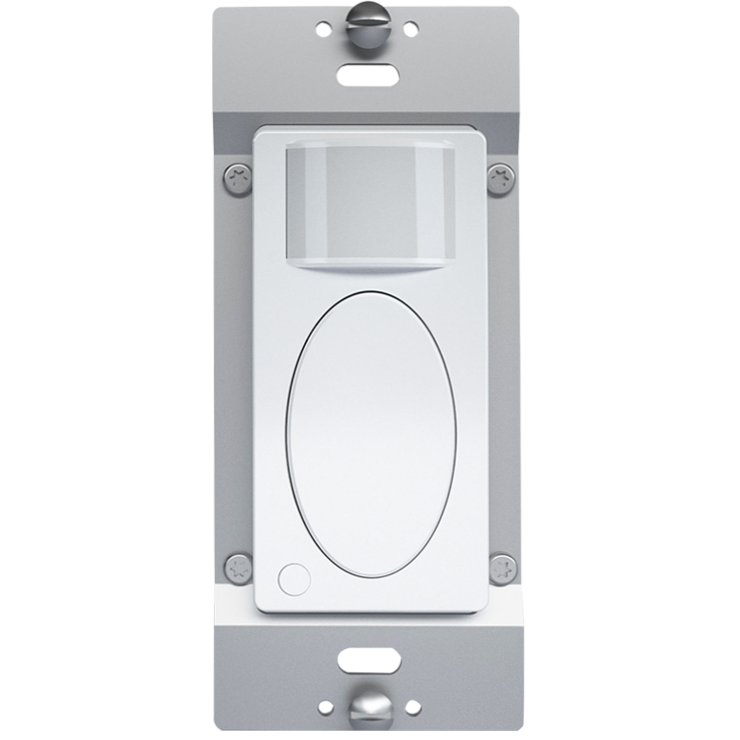
Wall Sensor Switches
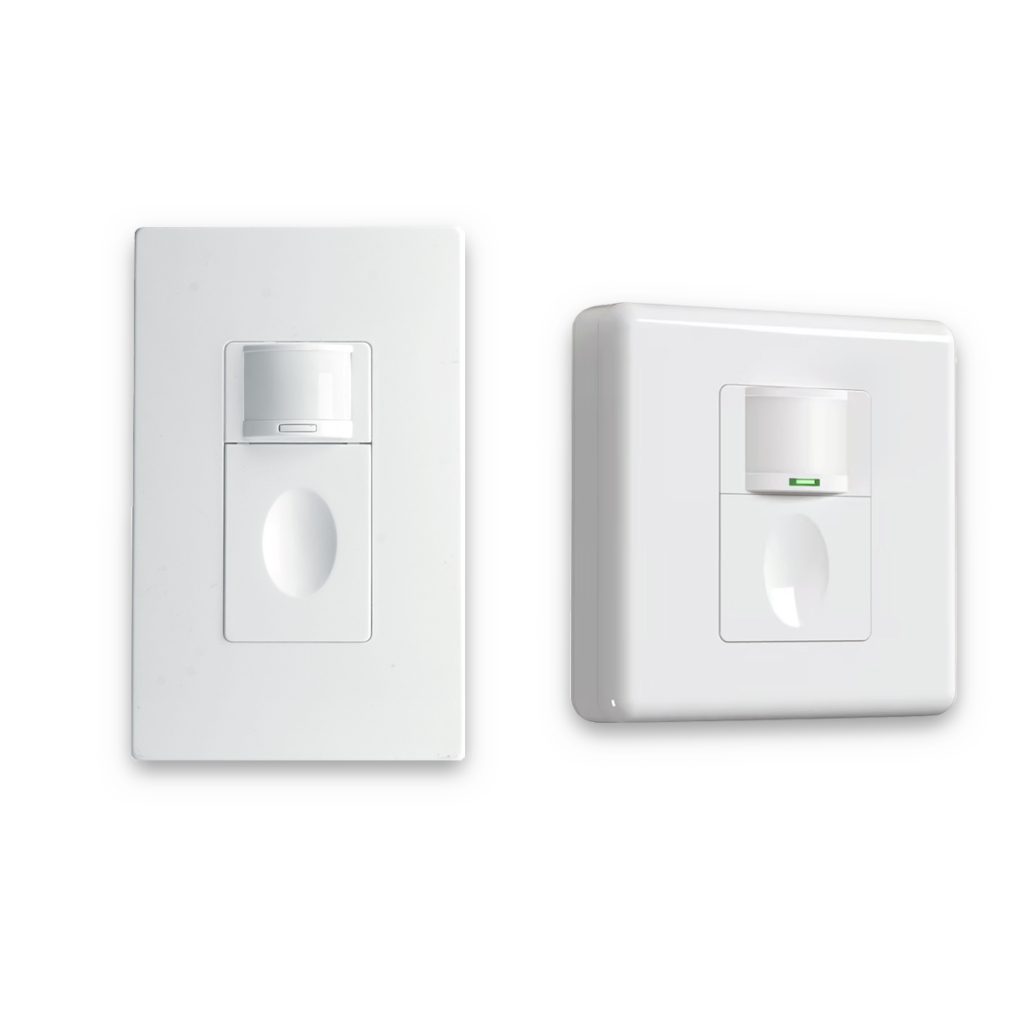
RZ020/021 Motion Sensor Switches
- 2-wire, 3-wire, 4-wires wiring options
- Occupancy, Vacancy, Manual ON/OFF
- Adjustive time delay and ambient light control
Multi-Location Wireless Wall Sensors
RZ020A/021A + RZ022W Kits
- Hardwired RZ021A/022A occupancy sensor switch
- Wireless companion switch (RZ022W) for multi-location control

Ceiling Occupancy Sensors
RZ036
- Hardwired occupancy sensors
- Auto ON, auto OFF
- Line voltage and Low voltage available
Core features included:
- Integrated manual ON/OFF control for all lighting
- Vacancy sensors (Manual ON only): Lights must be turned on manually only
- Adjustable time-delay, lighting is automatically turned full OFF after 15mins
- Additional: multi-location wireless kits to expand the control range without re-wring
- Additional: multiple wiring options available for both new constructions and retrofit projects.

Meets the Mandatory Provisions
IECC – 2011
C405.2.1 Occupant sensor controls
Occupant sensor controls shall be installed to control lights in the space.
For private/small offices <300 sq. ft:
C405.2.1.1 Occupant sensor control functions
- Manual on or partial on to no more than 50% power.
- Full off within 20 minutes after all occupants have left the space
- A manual control to turn off the lights.
ASHRAE 90.1 – 2022
For private/small/enclosed offices <300 sq. ft:
9.4.1.1 a Local control
There shall be one or more manual lighting control device that provides ON and OFF control
of all lighting in the space.
9.4.1.1 b Restricted to manual ON
None of the lighting shall be automatically turned on
9.4.1.1 c Restricted to partial automatic ON
No more than 50% of the lighting power for the general lighting shall be allowed to be automatically turned on
** NOTE: At least one 9.4.1.1 b or 9.4.1.1 c shall be implemented.
9.4.1.1 H Automatic full OFF control
All lighting in the space shall be automatically shut off within 20 minutes of all occupants leaving the space
Title 24 – 2022
For private/small offices <250 sq. ft:
130.1 (a) Manual area controls.
Each area enclosed by ceiling-height partitions shall provide lighting controls that allow the lighting in that area to be manually turned on and off.
130.1 (c) Shut-OFF Controls.
Lighting shall be controlled with occupant sensing controls to automatically shut OFF all of the lighting in 20 minutes or less after the control zone is unoccupied that shall function either as:
- A. Occupant sensing controls (if 130.1(b) not required to have multi-level lighting controls); or
- B. Partial-ON occupant sensing controls, or
- C. Vacancy sensing controls, where all lighting responds to a manual ON input only
Let us hear you.
Let Rayzeek help design and deliver a bespoke energy-saving lighting solution for you.