
Open Offices
גלו את היתרונות של בקרת תאורה אוטומטית לשיפור היעילות ולהפחתת בזבוז אנרגיה. למדו כיצד לייעל את בקרת התאורה במרחב העבודה שלכם ליצירת יעילות ונוחות מרביות.

Revolutionize Your Open Office Lighting with Smart Occupancy Sensors
Open offices, characterized by their large areas and cubicle partitions, are a common sight in many modern workplaces. These spaces are typically bustling with activity, filled with employees working, collaborating, and moving around. The expansive area requires ample illumination, often provided by high-intensity light fixtures. These lights, left on throughout the workday, consume a substantial amount of energy. Moreover, even when the office is vacant, during off-hours or lunch breaks, the lights often remain on, leading to unnecessary energy consumption.
The high energy consumption of lighting in open offices is a concern for both environmental and economic reasons. With the increasing emphasis on energy efficiency and sustainability, businesses are seeking ways to reduce their energy footprint. Moreover, energy costs can account for a significant portion of a company’s operating expenses, making energy-saving measures a smart financial decision as well.
To address this, the integration of occupancy sensors in open offices presents a compelling solution. Occupancy sensors can automatically control lighting based on the presence of individuals in the space, significantly reducing unnecessary energy consumption. When the office is vacant, the sensors can automatically switch off or dim the lights, thereby conserving energy. With our sensors seamlessly integrated into your open office layout, you can transform your open office into an energy-efficient workspace that meets the stringent requirements of US Energy Codes.
עמידה בתקני האנרגיה

התקן הבינלאומי לשימור אנרגיה (IECC) הוא תקן מודל שפותח על ידי מועצת התקנים הבינלאומית (ICC) כדי לקבוע דרישות תכנון ובנייה מינימליות ליעילות אנרגטית במבנים. ה-IECC מתעדכן מדי שלוש שנים כדי לשלב את שיטות העבודה והטכנולוגיות העדכניות ביותר בתחום שימור האנרגיה.
IECC, מדוע זה צריך לעניין אותך
תקן IECC מאומץ במידה רבה על ידי מדינות ורשויות מקומיות ברחבי ארצות הברית. IECC מכסה היבטים שונים של שימוש באנרגיה, לרבות מעטפת הבניין (קירות, גגות וחלונות), מערכות חימום וקירור, ומערכות תאורה.
תקן IECC מחייב בקרות תאורה ספציפיות, כגון חיישני תפוסה, כדי למזער בזבוז אנרגיה בחללים לא מאוכלסים באזורים שונים.

תקן ANSI/ASHRAE/IES 90.1, תקן אנרגיה לאתרים ולמבנים למעט מבני מגורים נמוכים, הוא תקן אנרגיה מוכר גלובלית המפורסם על ידי האגודה האמריקאית למהנדסי חימום, קירור ומזוג אוויר (ASHRAE).
ASHRAE 90.1, מדוע זה צריך לעניין אותך
תקן ASHRAE 90.1 משמש כנקודת התייחסות (מדד) לתקני אנרגיה בבנייה ברחבי ארצות הברית ומשמש כמסלול ציות במסגרת ה-IECC, המתווה דרישות מינימום לביצועים יעילים באנרגיה של רכיבי מבנים מסחריים, כולל מעטפת הבניין, מערכות מיזוג אוויר (HVAC), מערכות חימום מים ומערכות תאורה.
תקן ASHRAE 90.1 מגדיר צפיפות הספק תאורה מרבית מותרת ודרישות מינימום לבקרת תאורה, כולל שימוש בחיישני תפוסה באזורים ספציפיים.

Title 24, חלק 6 של קוד תקני הבנייה של קליפורניה, הידוע רשמית כתקני יעילות אנרגטית בבנייה למבני מגורים ושאינם למגורים, מנוהל על ידי נציבות האנרגיה של קליפורניה (CEC) ומתעדכן תקופתית כדי לשקף טכנולוגיות ושיטות חדשות ליעילות אנרגטית.
Title 24, מדוע זה צריך לעניין אותך
תקן Title 24 ידוע בדרישות המחמירות שלו, הנחשבות לרוב למחמירות יותר מאלו שנמצאות בתקני אנרגיה רבים אחרים ברחבי ארצות הברית. Title 24 מחייב תקני ביצועים אנרגטיים קפדניים לכל היבטי הבנייה, הכוללים חימום, אוורור, מיזוג אוויר (HVAC), חימום מים ותאורה.
תקן Title 24 מחייב התקנת חיישני תפוסה המתאימים את התאורה בהתבסס על תפוסת החדר באזורים ספציפיים של מבנים מסחריים כדי להבטיח שאנרגיה לא תתבזבז.
אימוץ תקני אנרגיה לפי מדינה
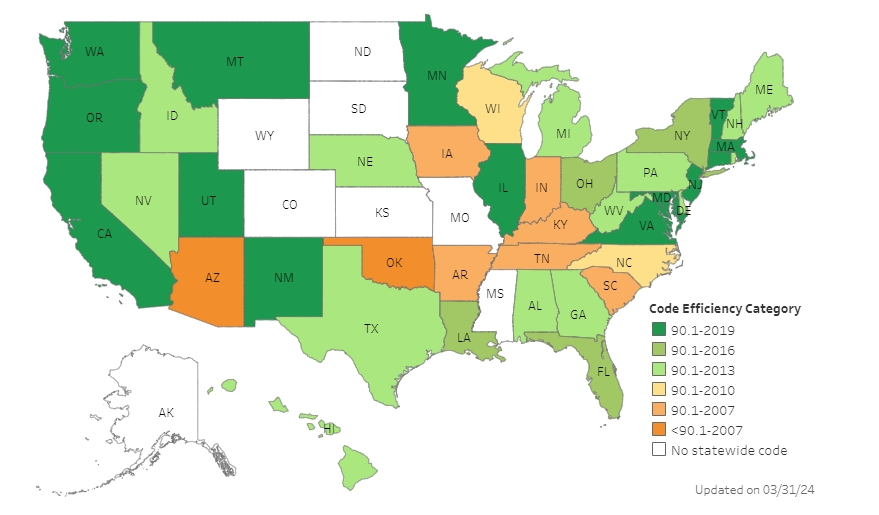
התרחבו כדי לצפות בטבלה המפורטת ↓
| מדינה | תקן מסחרי נוכחי | קטגוריית יעילות תקן מסחרי |
|---|---|---|
| אלבמה | 90.1-2013 | 90.1-2013 |
| אלסקה | אין תקן כלל-מדינתי | אין תקן כלל-מדינתי |
| אריזונה | שלטון מקומי (Home rule) | <90.1-2007 |
| ארקנסו | 2009 IECC ו-90.1-2007 | 90.1-2007 |
| קליפורניה | תקני יעילות אנרגטית לבנייה 2022 | 90.1-2019 |
| קולורדו | שלטון מקומי (Home rule) | אין תקן כלל-מדינתי |
| קונטיקט | 2021 IECC ו-90.1-2019 | 90.1-2019 |
| דלאוור | 2018 IECC ו-90.1-2016 | 90.1-2013 |
| מחוז קולומביה | 90.1-2013^ | 90.1-2019 |
| פלורידה | 2021 IECC ו-90.1-2019^ | 90.1-2016 |
| ג'ורג'יה | 2015 IECC ו-90.1-2013^ | 90.1-2013 |
| הוואי | שלטון מקומי (Home rule) | 90.1-2013 |
| איידהו | 2018 IECC ו-90.1-2016 | 90.1-2013 |
| אילינוי | 2021 IECC ו-90.1-2019 | 90.1-2019 |
| אינדיאנה | 90.1-2007 | 90.1-2007 |
| איווה | 2012 IECC ו-90.1-2010 | 90.1-2007 |
| קנזס | שלטון מקומי (Home rule) | אין תקן כלל-מדינתי |
| קנטקי | 2012 IECC ו-90.1-2010 | 90.1-2007 |
| לואיזיאנה | 2021 IECC ו-90.1-2019^ | 90.1-2016 |
| מיין | 2015 IECC ו-90.1-2013 | 90.1-2013 |
| מרילנד | 2021 IECC ו-90.1-2019^ | 90.1-2019 |
| מסצ'וסטס | 2018 IECC ו-90.1-2016^ | 90.1-2019 |
| מישיגן | 2015 IECC ו-90.1-2013^ | 90.1-2013 |
| מינסוטה | 90.1-2019^ | 90.1-2019 |
| מיסיסיפי | אין תקן כלל-מדינתי | אין תקן כלל-מדינתי |
| מיזורי | שלטון מקומי (Home rule) | אין תקן כלל-מדינתי |
| מונטנה | 2021 IECC ו-90.1-2019 | 90.1-2019 |
| נברסקה | 2018 IECC ו-90.1-2016 | 90.1-2013 |
| נבאדה | 2018 IECC ו-90.1-2016 | 90.1-2013 |
| ניו המפשייר | 2018 IECC ו-90.1-2016^ | 90.1-2013 |
| ניו ג'רזי | 90.1-2019 | 90.1-2019 |
| ניו מקסיקו | 2021 IECC ו-90.1-2019^ | 90.1-2019 |
| ניו יורק | 2018 IECC ו-90.1-2016^ | 90.1-2016 |
| צפון קרוליינה | 2015 IECC ו-90.1-2013^ | 90.1-2010 |
| צפון דקוטה | שלטון מקומי (Home rule) | אין תקן כלל-מדינתי |
| אוהיו | 2021 IECC ו-90.1-2019^ | 90.1-2016 |
| אוקלהומה | 2006 IECC and 90.1-2004 | <90.1-2007 |
| Oregon | 90.1-2019 | 90.1-2019 |
| Pennsylvania | 2018 IECC ו-90.1-2016 | 90.1-2013 |
| Rhode Island | 2018 IECC ו-90.1-2016^ | 90.1-2013 |
| South Carolina | 2009 IECC ו-90.1-2007 | 90.1-2007 |
| South Dakota | שלטון מקומי (Home rule) | אין תקן כלל-מדינתי |
| Tennessee | 2021 IECC and 90.1-2013 | 90.1-2007 |
| Texas | 2015 IECC ו-90.1-2013 | 90.1-2013 |
| Utah | 2021 IECC ו-90.1-2019^ | 90.1-2019 |
| Vermont | 2021 IECC ו-90.1-2019^ | 90.1-2019 |
| Virginia | 2021 IECC ו-90.1-2019^ | 90.1-2019 |
| Washington | 2018 Washington State Energy Code | 90.1-2019 |
| Tennessee | 2012 IECC ו-90.1-2010 | 90.1-2007 |
| Texas | 2015 IECC ו-90.1-2013 | 90.1-2013 |
| Utah | 2021 IECC ו-90.1-2019^ | 90.1-2019 |
| Vermont | 2018 IECC ו-90.1-2016^ | 90.1-2019 |
| Virginia | 2021 IECC ו-90.1-2019^ | 90.1-2019 |
| Washington | 2018 Washington State Energy Code | 90.1-2019 |
| West Virginia | 90.1-2013 | 90.1-2013 |
| Wisconsin | 2015 IECC ו-90.1-2013^ | 90.1-2010 |
| Wyoming | שלטון מקומי (Home rule) | אין תקן כלל-מדינתי |
- ^ When an amendment impacting energy efficiency can be quantified using DOE Prototype Building Models, they were captured in the analysis.
- For states adopting both IECC and 90.1, the IECC code is usually analyzed as the state current code in this study except for states with extensive amendments to the IECC.
מושגי מפתח במדריך התכנון עבור חללי עבודה פתוחים (Open Office)
תכנון פתרון בקרת תאורה חסכוני באנרגיה עבור חללי עבודה פתוחים כולל הצבה אסטרטגית של חיישני נוכחות, במטרה להבטיח כיסוי מקיף של המרחב.

In an open office setting, the primary areas to consider for sensor placement are the main walkways and areas with high foot traffic. These areas are crucial for sensor placement as they are the main areas of human traffic:
- Cover Main Walkways: The main walkways in an open office are the areas with the highest foot traffic. Therefore, these should be the primary focus when placing sensors. Ceiling-mounted sensors are ideal for these areas as they provide a wide coverage area and are strategically placed to cover the entire length.
- Overlap Coverage on Walkways: To avoid blind spots, ensure that the coverage patterns of the sensors overlap along the walkways. This ensures continuous detection as people move through the space, preventing any gaps in sensor coverage.
- Use a Long Timeout: Given the size and activity level in open offices, use a longer timeout setting (15 or 20 minutes) on the sensors. This prevents the lights from turning off too soon when there’s no movement detected for a brief period.
- Consider Wall-Mounted Sensors: If the cubicle walls are short, consider using wall-mounted sensors in addition to ceiling-mounted ones. These can provide additional coverage and ensure that all areas of the office are monitored.
- Avoid Air Vents: Don’t place sensors near air vents. The vibration and airflow can reduce the effectiveness of the sensors. PIR sensors should not be within 4ft of an air vent, and ultrasonic sensors should not be within 6ft of an air vent.
- Manual Control: Incorporate manual controls that are integrated with the occupancy sensors. This allows for manual override to turn ON/OFF all lighting when necessary.
Featured Products & Solutions
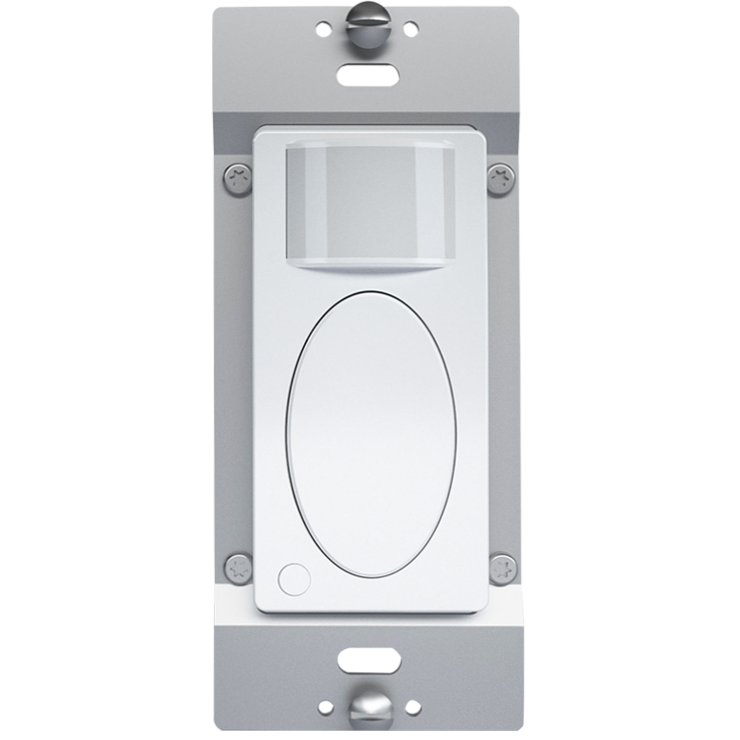
Wall Sensor Switches
RZ020/021 Motion Sensor Switches
- 2-wire, 3-wire, 4-wires wiring options
- Occupancy, Vacancy, Manual ON/OFF
- Adjustive time delay and ambient light control
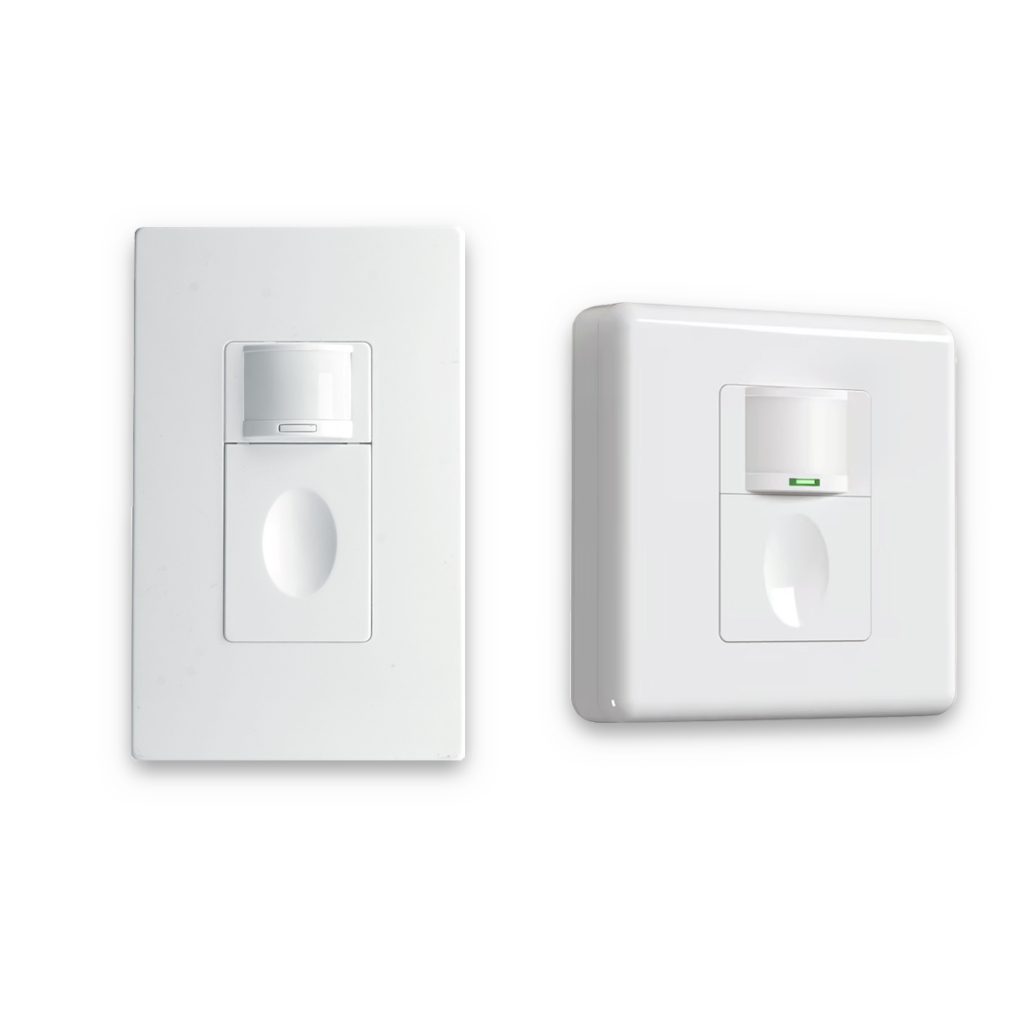
Multi-Location Wireless Wall Sensors
RZ020A/021A + RZ022W Kits
- Hardwired RZ021A/022A occupancy sensor switch
- Wireless companion switch (RZ022W) for multi-location control

Ceiling Occupancy Sensors
RZ036
- Hardwired occupancy sensors
- Auto ON, auto OFF
- Line voltage and Low voltage available
Core features included:
- Integrated manual ON/OFF control for all lighting
- Vacancy sensors (Manual ON only): Lights must be turned on manually only
- Adjustable time-delay, lighting is automatically turned full OFF after 15mins
- Additional: multi-location wireless kits to expand the control range without re-wring
- Additional: multiple wiring options available for both new constructions and retrofit projects.

Meets the Mandatory Provisions
IECC – 2011
C405.2.1 Occupant sensor controls
Occupant sensor controls shall be installed to control lights in the space.
For open offices < 300 sq. ft:
C405.2.1.1 Occupant sensor control functions
- Manual on or partial on to no more than 50% power.
- Full off within 20 minutes after all occupants have left the space
- A manual control to turn off the lights.
For open offices > 300 sq. ft:
- The general lighting shall be controlled separately in control zones with floor areas not greater than 600 sq. ft within the open plan office space.
- In each control zone, the general lighting shall be permitted to automatically turn on within the control zone. In other unoccupied zones, the general lighting shall be permitted to turn on to < 20% full power(or unaffected).
- Automatically turn off general lighting in all control zones within 20 minutes after all occupants have left the space.
- In each control zone, the general lighting shall turn off or uniformly reduce lighting power to an unoccupied setpoint of < 20% full power within 20 minutes after all occupants have left.
ASHRAE 90.1 – 2022
For open offices in any sizes:
9.4.1.1 a Local control
There shall be one or more manual lighting control device that provides ON and OFF control
of all lighting in the space.
9.4.1.1 b Restricted to manual ON
None of the lighting shall be automatically turned on
9.4.1.1 c Restricted to partial automatic ON
No more than 50% of the lighting power for the general lighting shall be allowed to be automatically turned on
** NOTE: At least one 9.4.1.1 b or 9.4.1.1 c shall be implemented.
9.4.1.1 H Automatic full OFF control
All lighting in the space shall be automatically shut off within 20 minutes of all occupants leaving the space
Additionally, for open offices > 300 sq. ft:
9.4.1.1 g Automatic reduction control
The general lighting power in the space shall be automatically reduced by at least 50% within 15 minutes of all occupants leaving the space.
Title 24 – 2022
For open offices in any sizes:
130.1 (a) Manual area controls.
Each area enclosed by ceiling-height partitions shall provide lighting controls that allow the lighting in that area to be manually turned on and off.
130.1 (c) Shut-OFF Controls.
Additionally, for open offices <250 sq. ft:
130.1 (c) 5. Occupant sensing controls are required for specified offices.
Lighting shall be controlled with occupant sensing controls to automatically shut OFF all of the lighting in 20 minutes or less after the control zone is unoccupied that shall function either as:
- A. Occupant sensing controls (if 130.1(b) not required to have multi-level lighting controls); or
- B. Partial-ON occupant sensing controls, or
- C. Vacancy sensing controls, where all lighting responds to a manual ON input only
Additionally, for open offices > 250 sq. ft:
130.1 (c) 6. Full or partial-OFF occupant sensing controls are required for offices greater than 250 square feet.
In office spaces greater than 250 square feet, general lighting shall be controlled with occupant sensing controls that meet all of the following:
- Lighting shall be controlled separately in control zones not greater than 600 square feet. For luminaires with an embedded occupant sensor that are capable of reducing power independently from other luminaires, each luminaire can be considered its own control zone
- The occupant sensing controls shall uniformly reduce lighting power in the control zone by at least 80% full power(or off) in 20 minutes or less after the control zone is unoccupied.
- The occupant sensing controls shall automatically turn off lighting in ALL control zones in 20 minutes or less after the entire office space is unoccupied
- When occupancy is detected:
- in each control zone, lighting shall be allowed to automatically turn on to any level up to full power.
- in other control zones that are unoccupied, lighting shall operate at no more than 20% full power.
Let us hear you.
Let Rayzeek help design and deliver a bespoke energy-saving lighting solution for you.