
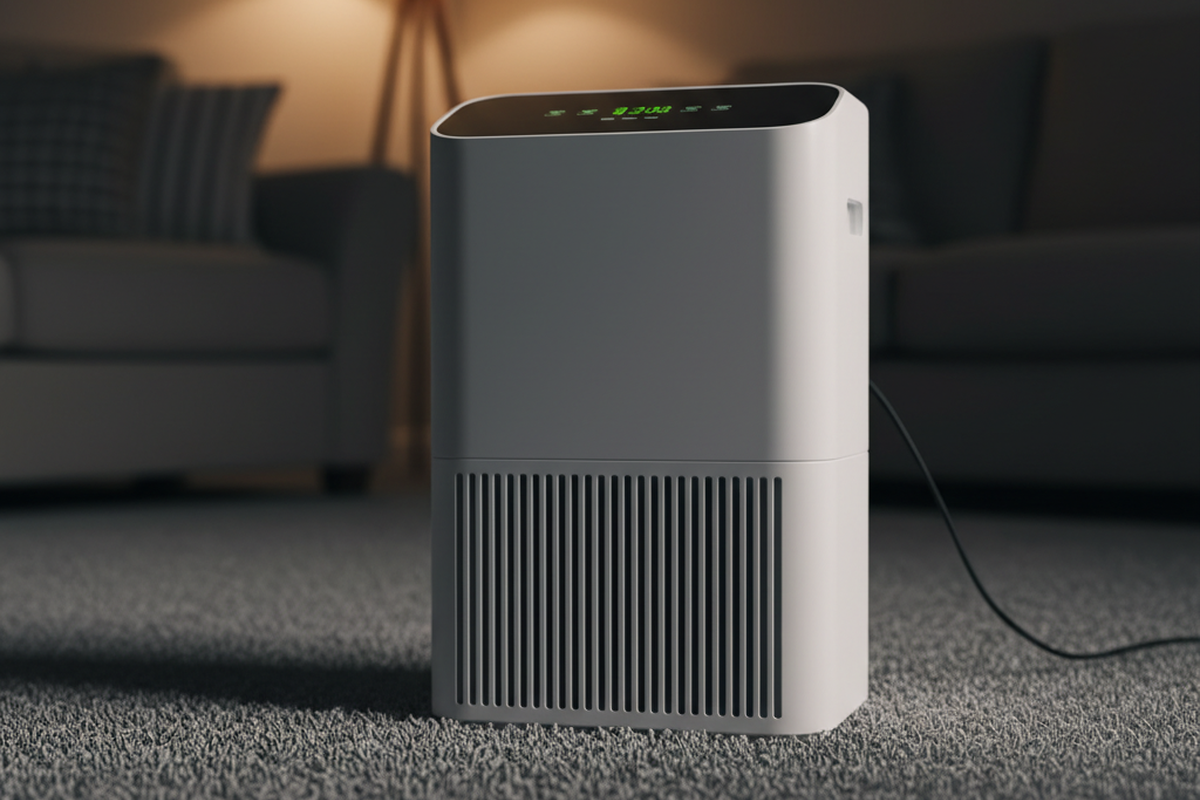
You know the sound. It’s the low-frequency drone of a 50-pint compressor vibrating against the concrete floor. It kicks on right when the movie gets quiet, or hums beneath the master bedroom floorboards all night long.
The instinct to walk over and pull the plug is overwhelming. You tell yourself you’ll plug it back in tomorrow morning. Then tomorrow becomes next Tuesday, and by the time you remember, the basement smells like wet cardboard and earth.
This is the cycle that leads to five-figure remediation bills.
To solve the noise problem without rotting the framing, homeowners often drift toward “smart” solutions. They buy Wi-Fi plugs that disconnect during storms, or they look at motion sensors like the Rayzeek RZ series to automate the process. The logic seems sound: If I’m not in the room, why does the machine need to run?
That logic is flawed. But if you are determined to use a motion sensor to control your dehumidifier—either to save electricity or save your sanity—you have to rig it with a very specific set of safeguards. Get the settings wrong, and you won’t just have a damp basement; you’ll burn out your compressor in less than a season.
The Problem: People vs. Water
Before you buy a Rayzeek or any other occupancy sensor, you have to understand the fundamental error in using one for climate control. A motion sensor (PIR) detects infrared heat signatures moving across its field of view. It sees people, not water.
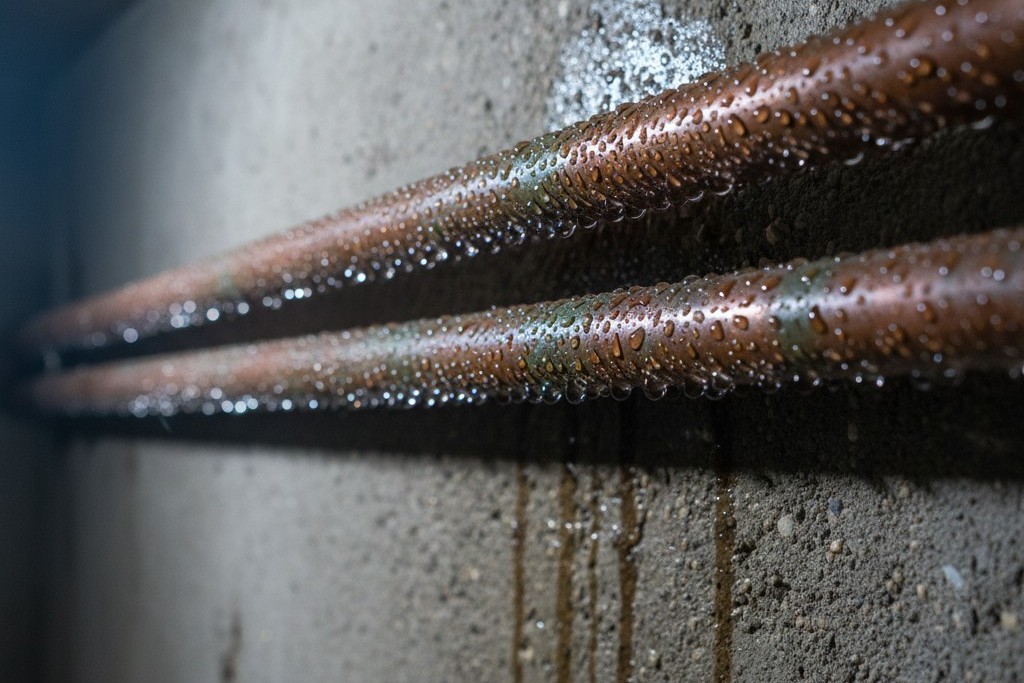
Water vapor does not care if you are in the room. In fact, in many basements, the humidity spikes exactly when you aren’t there—at night when the temperature drops and relative humidity climbs, or during a rainy week when you’re stuck at work.
If you plug a dehumidifier into a standard motion sensor, the default behavior is: No Motion = Power Cut. This is catastrophic for a general-purpose basement. You leave the room, the power cuts, and moisture begins to accumulate in the drywall and carpet pad. By the time you return three days later to do laundry, the fungal colonies have already had a head start.
The only valid use case for a motion-triggered dehumidifier is when the moisture load is activity-dependent. Think of a home gym where three people are sweating for an hour, or a workshop where you are gluing up wood and need to keep air movement high while you work. In those cases, your presence is the moisture event. For everything else, you are fighting physics.
The Hardware Handshake
If you decide the noise reduction is worth the risk, verify your equipment before spending $20 on a sensor. This setup relies on a “hard” power cut. The Rayzeek kills voltage to the outlet completely when it times out.
Walk down to your dehumidifier right now. With the unit running and the compressor engaged (listen for the deeper buzz, not just the fan), reach down and pull the plug. Wait ten seconds. Plug it back in.
Căutați soluții de economisire a energiei activate de mișcare?
Contactați-ne pentru senzori de mișcare PIR compleți, produse de economisire a energiei cu activare la mișcare, întrerupătoare cu senzor de mișcare și soluții comerciale de prezență/vacanță.
Does it turn back on automatically and resume dehumidifying?
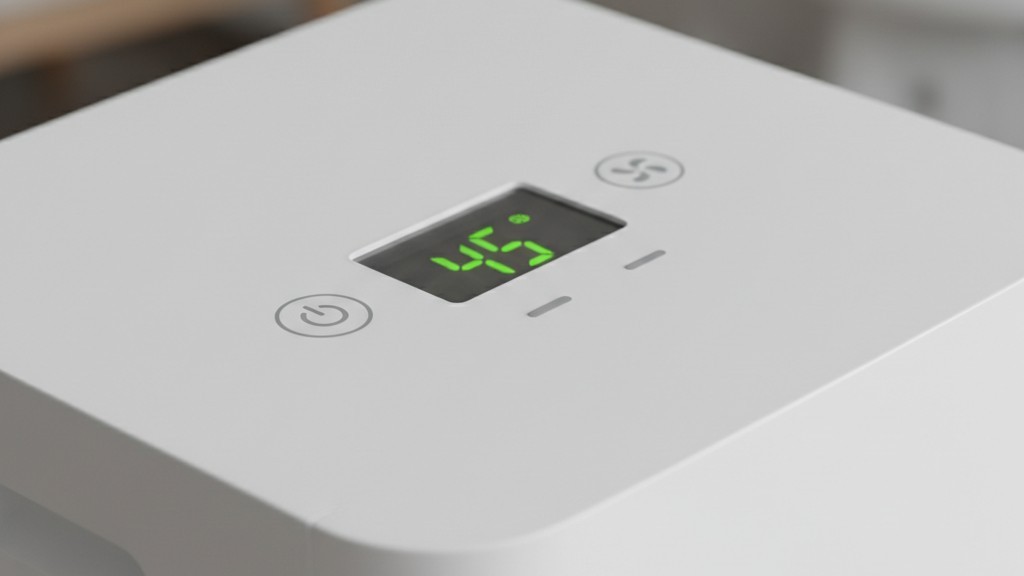
If it stays off, or goes into a “Standby” mode waiting for a button press, stop. This project is over. You cannot use an external sensor on a machine that requires a manual reset. Older mechanical units with physical dials work best for this. Many modern digital units—like certain Frigidaire Gallery or GE models—have a “memory” function that resumes the last setting, but cheaper units often revert to “Off.” If your unit doesn’t auto-restart, putting it on a motion sensor means it will turn off once and never turn on again.
Furthermore, ignore the internal humidistat on the dehumidifier itself. Set the target humidity to “Continuous” or as low as it will go (30-35%). You are moving the control logic to the motion sensor; if the internal humidistat satisfies and shuts off the compressor while you are still in the room, the motion sensor becomes irrelevant. You want the machine running hard whenever the circuit is live.
Lăsați-vă inspirat de portofoliile de senzori de mișcare Rayzeek.
Nu găsiți ceea ce căutați? Nu vă faceți griji. Există întotdeauna modalități alternative de a vă rezolva problemele. Poate vă poate ajuta unul dintre portofoliile noastre.
The Kill Switch (And How to Avoid It)
The Rayzeek RZ021 isn’t a smart plug. No app, no cloud. Just dip switches or small dials under the faceplate. This is where you save your compressor or kill it.
The most critical setting is the Temporizare.
Factory defaults on motion sensors are often set to 1 minute or 5 minutes. Fine for a light bulb; a death sentence for a refrigeration compressor.
Compressors need to run for a sustained period to reach operating temperature and effectively pull moisture. More importantly, once a compressor shuts off, the pressure in the system needs time to equalize before it starts again. If your sensor is set to a 1-minute delay, and you walk in and out of the laundry room three times in ten minutes to grab a basket, you are “short-cycling” the unit.
Short-cycling forces the compressor to try to start against high head pressure. It will overheat, draw massive current (Locked Rotor Amps), and eventually trip the thermal overload or seize permanently.
You must set the Rayzeek time delay to its maximum setting—usually 30 minutes.
This accomplishes two things:
- Compressor Safety: It ensures that once triggered, the unit runs for a meaningful cycle, preventing rapid on/off toggling.
- The “Run-On” Dry Out: When you leave the room (removing the noise source), the unit continues to run for half an hour. This pulls the latent moisture you generated (sweat, breath) out of the air and, crucially, dries off the evaporator coil so it doesn’t sit there wet and grow mold inside the machine.
Do not get cute with the sensitivity dial. Crank it to high. In a cluttered basement, line-of-sight is often blocked by ductwork or shelving. You want the unit to trigger if you so much as wave a hand near the doorway.
The Vacation Blind Spot
There is a massive hole in this plan: Vacancy.
If you go on vacation for two weeks in August, or simply don’t go down to the basement for a few days, the dehumidifier will never run. The sensor sees no motion, so it delivers no power. Meanwhile, a thunderstorm rolls through, humidity hits 75%, and you aren’t there to trigger the drying cycle.
This is why this setup is dangerous for general home health.
If you rely on this method, you need a fail-safe. The Rayzeek has a small slider switch on the front (usually labeled ON / OFF / AUTO).
- AUTO: Motion sensing mode (Daily use).
- ON: Bypass mode (Always on).
You must discipline yourself to flip that switch to ON every time you leave the house for more than 24 hours. If you rely on the motion sensor during a two-week trip, you will come home to a science experiment on your baseboards.
S-ar putea să vă intereseze și

- Tensiune: 2 baterii AAA
- Mod Zi/Noapte
- Temporizare: 15min, 30min, 1h (implicit), 2h

- Senzor de prezență PIR cu montaj pe tavan și ieșire de releu cu contact uscat
- Alimentare de joasă tensiune de 12/24VDC sau 12/24VAC
- Contacte de releu izolate COM, NO și NC pentru intrări de control al sistemelor EMS, HVAC și al clădirilor

- Întrerupător cu senzor de mișcare cu microunde încastrat în tavan, de joasă tensiune DC
- Intrare de 12 VDC / 24 VDC cu un interval cuprins între 10-30 VDC
- Curent de lucru maxim de 10A cu temporizare reglabilă, prag Lux și sensibilitate ajustabile
- Întrerupător cu senzor de mișcare cu microunde încastrat în tavan, pentru sarcini mai mari
- Intrare la tensiunea rețelei de 100-265 VAC, model de 10A
- Detectare cu microunde de 5.8 GHz cu temporizare reglabilă, prag Lux și sensibilitate ajustabile
- Întrerupător încastrat pentru plafon cu senzor de mișcare cu microunde
- Tensiune de intrare 100-265 VAC, model de 5A
- Detectare cu microunde de 5.8 GHz cu temporizare reglabilă, prag Lux și sensibilitate ajustabile
- Variator cu senzor de prezență PIR RZ037 pentru plafon, pentru alimentare la 220V
- Curent maxim de lucru de 3A cu sarcină nominală de 660W
- Butonul LUX controlează funcția ON/OFF a senzorului de lumină și luminozitatea setată de utilizator
- Variator cu senzor de prezență PIR RZ037 pentru plafon, pentru alimentare la 110V
- Curent maxim de lucru de 3A cu sarcină nominală de 330W
- Butonul LUX controlează funcția ON/OFF a senzorului de lumină și luminozitatea setată de utilizator

- Întrerupător cu senzor de mișcare cu microunde pentru plafon, de joasă tensiune C.C.
- Intrare de 12 VDC / 24 VDC cu un interval cuprins între 10-30 VDC
- Curent de lucru maxim de 10A cu temporizare reglabilă, prag Lux și sensibilitate ajustabile
- Întrerupător cu senzor de mișcare cu microunde pentru plafon, pentru sarcini mai mari
- Intrare la tensiunea rețelei de 100-265 VAC, model de 10A
- Detectare cu microunde de 5.8 GHz cu temporizare reglabilă, prag Lux și sensibilitate ajustabile
- Întrerupător cu senzor de mișcare cu microunde pentru plafon
- Tensiune de intrare 100-265 VAC, model de 5A
- Detectare cu microunde de 5.8 GHz cu temporizare reglabilă, prag Lux și sensibilitate ajustabile

- Întrerupător cu senzor de mișcare PIR încastrat în tavan, CC de joasă tensiune
- Intrare de 12 VDC / 24 VDC cu un interval cuprins între 10-30 VDC
- Curent maxim de lucru 10A cu temporizare reglabilă, prag Lux și sensibilitate

- Întrerupător cu senzor de mișcare PIR încastrat în tavan pentru sarcini mai mari
- Intrare la tensiunea rețelei de 100-265 VAC, model de 10A
- Detecție la 360 de grade cu temporizare reglabilă, prag Lux și sensibilitate
- Întrerupător cu senzor de mișcare PIR încastrat în tavan
- Tensiune de intrare 100-265 VAC, model de 5A
- Detecție la 360 de grade cu temporizare reglabilă, prag Lux și sensibilitate

- Kit de întrerupător și receptor wireless pentru controlul iluminatului de interior PORNIT/OPRIT
- Receptor 100-230VAC, 50/60Hz cu curent nominal de 5A
- Întrerupător wireless alimentat cu baterie CR2032 cu comunicare la 2.4GHz
- Prezență (PORNIRE automată/OPRIRE automată)
- 12–24V CC (10–30VCC), până la 10A
- Acoperire 360°, diametru 8–12 m
- Temporizare 15 s–30 min
- Senzor de lumină Oprit/15/25/35 Lux
- Sensibilitate ridicată/scăzută
- Mod de prezență Auto-ON/Auto-OFF
- 100–265V AC, 10A (necesită nul)
- Acoperire 360°; diametru de detecție 8–12 m
- Temporizare 15 s–30 min; Lux OFF/15/25/35; Sensibilitate ridicată/scăzută
- Mod de prezență Auto-ON/Auto-OFF
- 100–265V AC, 5A (necesită nul)
- Acoperire 360°; diametru de detecție 8–12 m
- Temporizare 15 s–30 min; Lux OFF/15/25/35; Sensibilitate ridicată/scăzută
The Verdict
Is it worth it?
If you are trying to save $15 a month on electricity, no. The cost of one mold remediation job—tearing out drywall and scrubbing studs—will wipe out twenty years of energy savings.
But if you are doing this for noise control in a finished space—using the sensor to ensure the unit is off during a movie and on after you go to bed—it can work. Just make sure your delay is set to 30 minutes, your unit auto-restarts, and you remember to bypass the sensor when you leave town. The goal is to make the machine invisible, not incompetent.







