
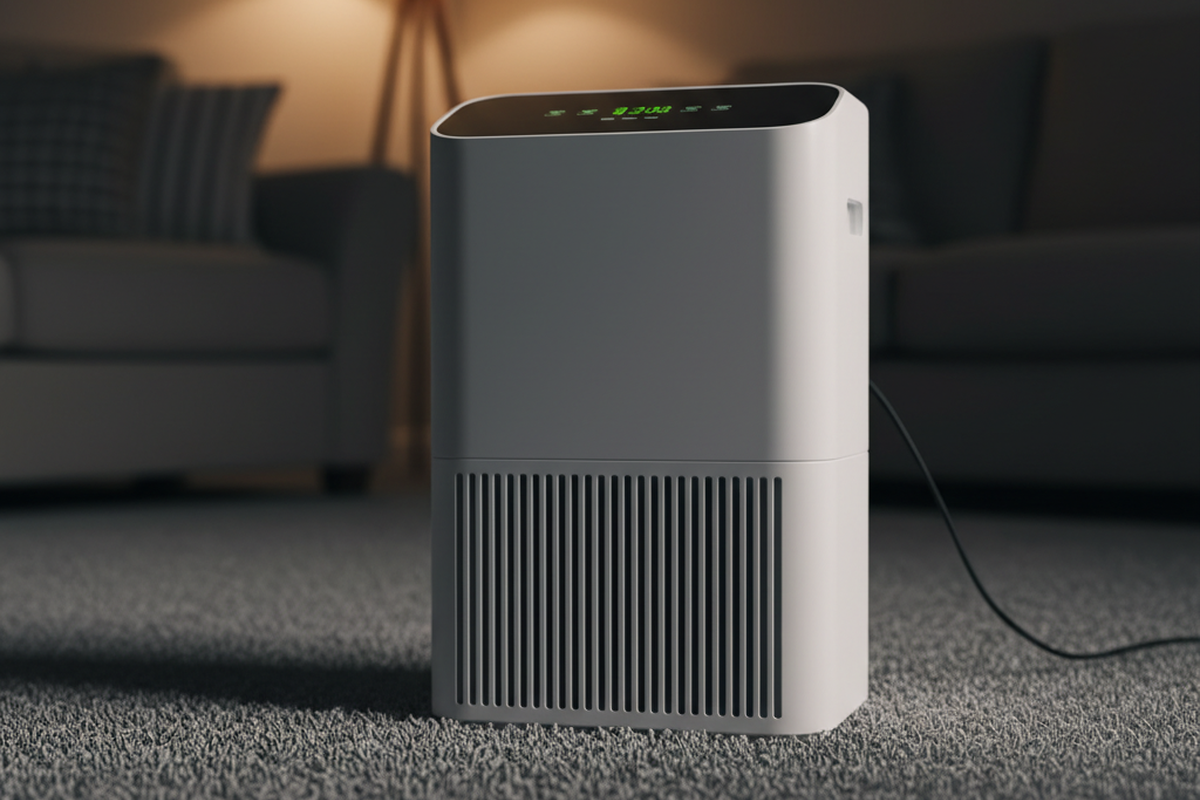
U kent het geluid wel. Het is het laagfrequente gebrom van een 50-pint compressor die trilt op de betonvloer. Hij slaat precies aan wanneer de film stil wordt, of hij zoemt de hele nacht onder de vloer van de hoofdslaapkamer.
De neiging om erheen te lopen en de stekker eruit te trekken is groot. U praat uzelf aan dat u hem morgenochtend wel weer insteekt. Vervolgens wordt morgen volgende week dinsdag, en tegen de tijd dat u het zich herinnert, ruikt de kelder naar nat karton en aarde.
Dit is de cyclus die leidt tot saneringsfacturen van vijf cijfers.
Om het geluidsprobleem op te lossen zonder het houtskelet te laten rotten, wijken huiseigenaren vaak uit naar “slimme” oplossingen. Ze kopen wifi-stekkers die tijdens stormen de verbinding verliezen, of ze kijken naar bewegingssensoren zoals de Rayzeek RZ-serie om het proces te automatiseren. De logica lijkt sound: Als ik niet in de kamer ben, waarom moet het apparaat dan draaien?
Die logica klopt niet. Maar als u vastberaden bent om een bewegingssensor te gebruiken om uw luchtontvochtiger te bedienen — om stroom te besparen of om uw gemoedsrust te bewaren — moet u deze uitrusten met een zeer specifieke set beveiligingen. Als u de instellingen verkeerd hebt, hebt u niet alleen een vochtige kelder, maar brandt u uw compressor ook binnen één seizoen door.
Het probleem: mensen versus water
Voordat u een Rayzeek of een andere aanwezigheidssensor koopt, moet u de fundamentele fout begrijpen van het gebruik ervan voor klimaatbeheersing. Een bewegingssensor (PIR) detecteert infrarode warmtehandtekeningen die door zijn gezichtsveld bewegen. Hij ziet mensen, geen water.
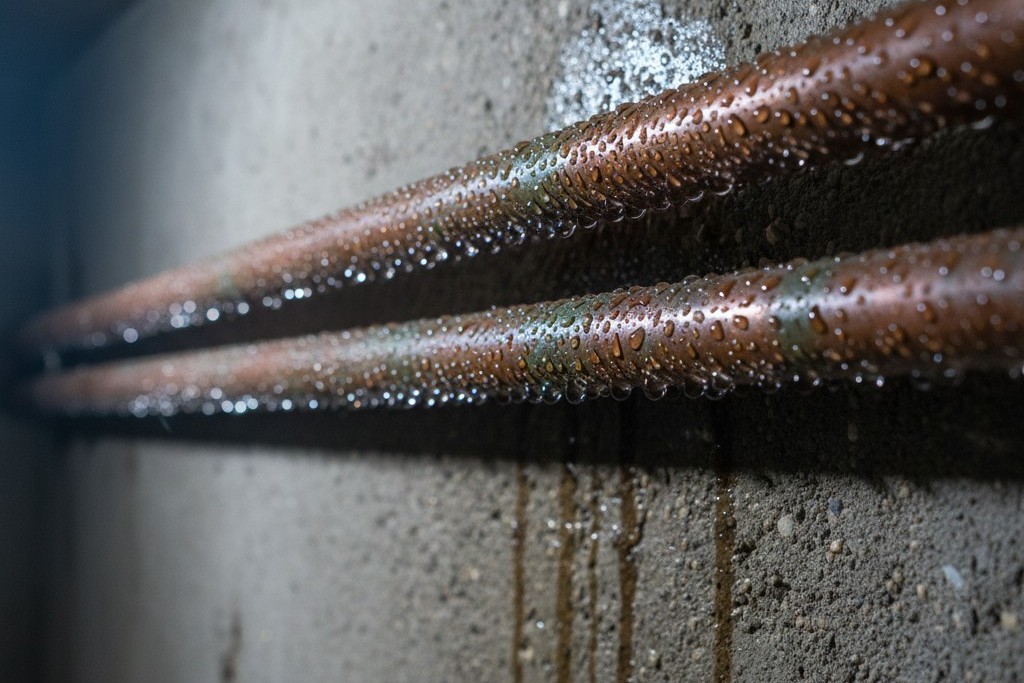
Waterdamp maalt er niet om of u in de ruimte bent. In veel kelders piekt de luchtvochtigheid juist wanneer u er niet bent — 's nachts wanneer de temperatuur daalt en de relatieve luchtvochtigheid stijgt, of tijdens een regenachtige week wanneer u op uw werk zit.
Als u een luchtontvochtiger aansluit op een standaard bewegingssensor, is het standaardgedrag: Geen beweging = Stroom onderbroken. Dit is fataal voor een algemene kelder. U verlaat de ruimte, de stroom valt uit en vocht begint zich op te hopen in de gipsplaat en het tapijtnederlaagje. Tegen de tijd dat u drie dagen later terugkomt om de was te doen, hebben de schimmelkolonies al een voorsprong gekregen.
De enige geldige toepassing voor een bewegingsgestuurde luchtontvochtiger is wanneer de vochtbelasting activity-dependent. Think of a home gym where three people are sweating for an hour, or a workshop where you are gluing up wood and need to keep air movement high while you work. In those cases, your presence energiebesparing the moisture event. For everything else, you are fighting physics.
The Hardware Handshake
If you decide the noise reduction is worth the risk, verify your equipment before spending $20 on a sensor. This setup relies on a “hard” power cut. The Rayzeek kills voltage to the outlet completely when it times out.
Walk down to your dehumidifier right now. With the unit running and the compressor engaged (listen for the deeper buzz, not just the fan), reach down and pull the plug. Wait ten seconds. Plug it back in.
Op zoek naar bewegingsgestuurde energiebesparende oplossingen?
Neem contact met ons op voor complete PIR-bewegingssensoren, bewegingsgestuurde energiebesparende producten, bewegingsschakelaars en commerciële oplossingen voor aanwezigheids- en afwezigheidsdetectie.
Does it turn back on automatically and resume dehumidifying?
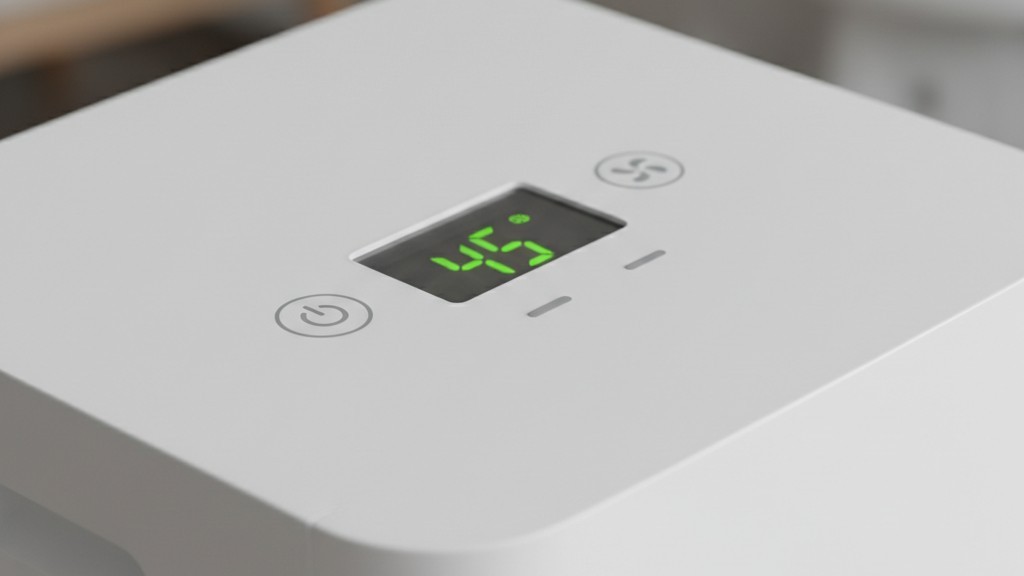
If it stays off, or goes into a “Standby” mode waiting for a button press, stop. This project is over. You cannot use an external sensor on a machine that requires a manual reset. Older mechanical units with physical dials work best for this. Many modern digital units—like certain Frigidaire Gallery or GE models—have a “memory” function that resumes the last setting, but cheaper units often revert to “Off.” If your unit doesn’t auto-restart, putting it on a motion sensor means it will turn off once and never turn on again.
Furthermore, ignore the internal humidistat on the dehumidifier itself. Set the target humidity to “Continuous” or as low as it will go (30-35%). You are moving the control logic to the motion sensor; if the internal humidistat satisfies and shuts off the compressor while you are still in the room, the motion sensor becomes irrelevant. You want the machine running hard whenever the circuit is live.
Laat u inspireren door Rayzeek bewegingssensor-portfolio's.
Vindt u niet wat u zoekt? Geen zorgen. Er zijn altijd alternatieve manieren om uw problemen op te lossen. Misschien kan een van onze portfolio's u helpen.
The Kill Switch (And How to Avoid It)
The Rayzeek RZ021 isn’t a smart plug. No app, no cloud. Just dip switches or small dials under the faceplate. This is where you save your compressor or kill it.
The most critical setting is the Tijdsvertraging.
Factory defaults on motion sensors are often set to 1 minute or 5 minutes. Fine for a light bulb; a death sentence for a refrigeration compressor.
Compressors need to run for a sustained period to reach operating temperature and effectively pull moisture. More importantly, once a compressor shuts off, the pressure in the system needs time to equalize before it starts again. If your sensor is set to a 1-minute delay, and you walk in and out of the laundry room three times in ten minutes to grab a basket, you are “short-cycling” the unit.
Short-cycling forces the compressor to try to start against high head pressure. It will overheat, draw massive current (Locked Rotor Amps), and eventually trip the thermal overload or seize permanently.
You must set the Rayzeek time delay to its maximum setting—usually 30 minutes.
This accomplishes two things:
- Compressor Safety: It ensures that once triggered, the unit runs for a meaningful cycle, preventing rapid on/off toggling.
- The “Run-On” Dry Out: When you leave the room (removing the noise source), the unit continues to run for half an hour. This pulls the latent moisture you generated (sweat, breath) out of the air and, crucially, dries off the evaporator coil so it doesn’t sit there wet and grow mold inside the machine.
Do not get cute with the sensitivity dial. Crank it to high. In a cluttered basement, line-of-sight is often blocked by ductwork or shelving. You want the unit to trigger if you so much as wave a hand near the doorway.
The Vacation Blind Spot
There is a massive hole in this plan: Vacancy.
If you go on vacation for two weeks in August, or simply don’t go down to the basement for a few days, the dehumidifier will never run. The sensor sees no motion, so it delivers no power. Meanwhile, a thunderstorm rolls through, humidity hits 75%, and you aren’t there to trigger the drying cycle.
This is why this setup is dangerous for general home health.
If you rely on this method, you need a fail-safe. The Rayzeek has a small slider switch on the front (usually labeled ON / OFF / AUTO).
- AUTO: Motion sensing mode (Daily use).
- ON: Bypass mode (Always on).
You must discipline yourself to flip that switch to ON every time you leave the house for more than 24 hours. If you rely on the motion sensor during a two-week trip, you will come home to a science experiment on your baseboards.
Mogelijk bent u ook geïnteresseerd in

- Spanning: 2 AAA-batterijen
- Dag/Nacht-modus
- Uitschakelvertraging: 15min, 30min, 1u (standaard), 2u

- Plafondgemonteerde PIR-aanwezigheidssensor met potentiaalvrije relaisuitgang
- 12/24VDC of 12/24VAC laagspanningsvoeding
- COM-, NO- en NC-geïsoleerde relaiscontacten voor EMS-, HVAC- en gebouwbeheersystemen

- Laagspanning DC inbouw-plafondgemonteerde microgolfbewegingssensorschakelaar
- 12 VDC / 24 VDC-ingang met een bereik van 10-30 VDC
- Max. 10A werkstroom met instelbare uitschakelvertraging, luxdrempelwaarde en gevoeligheid
- Inbouw-plafondgemonteerde microgolfbewegingssensorschakelaar voor hogere belasting
- 100-265 VAC netspanningsingang, 10A-model
- 5,8 GHz microgolfdetectie met instelbare uitschakelvertraging, Lux-drempelwaarde en gevoeligheid
- Plafondinbouw microgolf bewegingssensor-schakelaar
- 100-265 VAC netspanningsingang, 5A-model
- 5,8 GHz microgolfdetectie met instelbare uitschakelvertraging, Lux-drempelwaarde en gevoeligheid
- RZ037 PIR-aanwezigheidssensor-dimmer voor plafondmontage op 220V-voeding
- 3A maximale werkstroom met 660W nominaal vermogen
- LUX-knop regelt lichtsensor AAN/UIT en door de gebruiker ingestelde dimhelderheid
- RZ037 PIR-aanwezigheidssensor-dimmer voor plafondmontage op 110V-voeding
- 3A maximale werkstroom met 330W nominaal vermogen
- LUX-knop regelt lichtsensor AAN/UIT en door de gebruiker ingestelde dimhelderheid

- Laagspanning DC microgolf bewegingssensor-schakelaar voor het plafond
- 12 VDC / 24 VDC-ingang met een bereik van 10-30 VDC
- Max. 10A werkstroom met instelbare uitschakelvertraging, luxdrempelwaarde en gevoeligheid
- Microgolf bewegingssensor-schakelaar voor het plafond met hogere belasting
- 100-265 VAC netspanningsingang, 10A-model
- 5,8 GHz microgolfdetectie met instelbare uitschakelvertraging, Lux-drempelwaarde en gevoeligheid
- Plafondmontage microgolf bewegingssensorschakelaar
- 100-265 VAC netspanningsingang, 5A-model
- 5,8 GHz microgolfdetectie met instelbare uitschakelvertraging, Lux-drempelwaarde en gevoeligheid

- Laagspannings-DC inbouw plafond PIR bewegingssensorschakelaar
- 12 VDC / 24 VDC-ingang met een bereik van 10-30 VDC
- Maximale werkstroom 10A met instelbare uitschakelvertraging, Lux-drempelwaarde en gevoeligheid

- Inbouw plafond PIR bewegingssensorschakelaar voor hogere belastingen
- 100-265 VAC netspanningsingang, 10A-model
- 360-graden detectie met instelbare uitschakelvertraging, Lux-drempelwaarde en gevoeligheid
- Inbouw plafond PIR bewegingssensorschakelaar
- 100-265 VAC netspanningsingang, 5A-model
- 360-graden detectie met instelbare uitschakelvertraging, Lux-drempelwaarde en gevoeligheid

- Draadloze schakelaar- en ontvangerset voor AAN/UIT-lichtregeling binnenshuis
- 100-230VAC, 50/60Hz ontvanger met 5A nominale stroom
- CR2032-gevoede draadloze schakelaar met 2.4GHz-communicatie
- Aanwezigheidsdetectie (Auto-AAN/Auto-UIT)
- 12–24V DC (10–30VDC), tot 10A
- 360° dekking, 8–12 m diameter
- Uitschakelvertraging 15 s–30 min
- Lichtsensor Uit/15/25/35 Lux
- Hoge/Lage gevoeligheid
- Automatisch AAN/Automatisch UIT aanwezigheidsmodus
- 100–265V AC, 10A (nuldraad vereist)
- 360° dekking; 8–12 m detectiediameter
- Uitschakelvertraging 15 s–30 min; Lux UIT/15/25/35; Gevoeligheid Hoog/Laag
- Automatisch AAN/Automatisch UIT aanwezigheidsmodus
- 100–265V AC, 5A (nuldraad vereist)
- 360° dekking; 8–12 m detectiediameter
- Uitschakelvertraging 15 s–30 min; Lux UIT/15/25/35; Gevoeligheid Hoog/Laag
The Verdict
Is it worth it?
If you are trying to save $15 a month on electricity, no. The cost of one mold remediation job—tearing out drywall and scrubbing studs—will wipe out twenty years of energy savings.
But if you are doing this for noise control in a finished space—using the sensor to ensure the unit is off during a movie and on after you go to bed—it can work. Just make sure your delay is set to 30 minutes, your unit auto-restarts, and you remember to bypass the sensor when you leave town. The goal is to make the machine invisible, not incompetent.







