
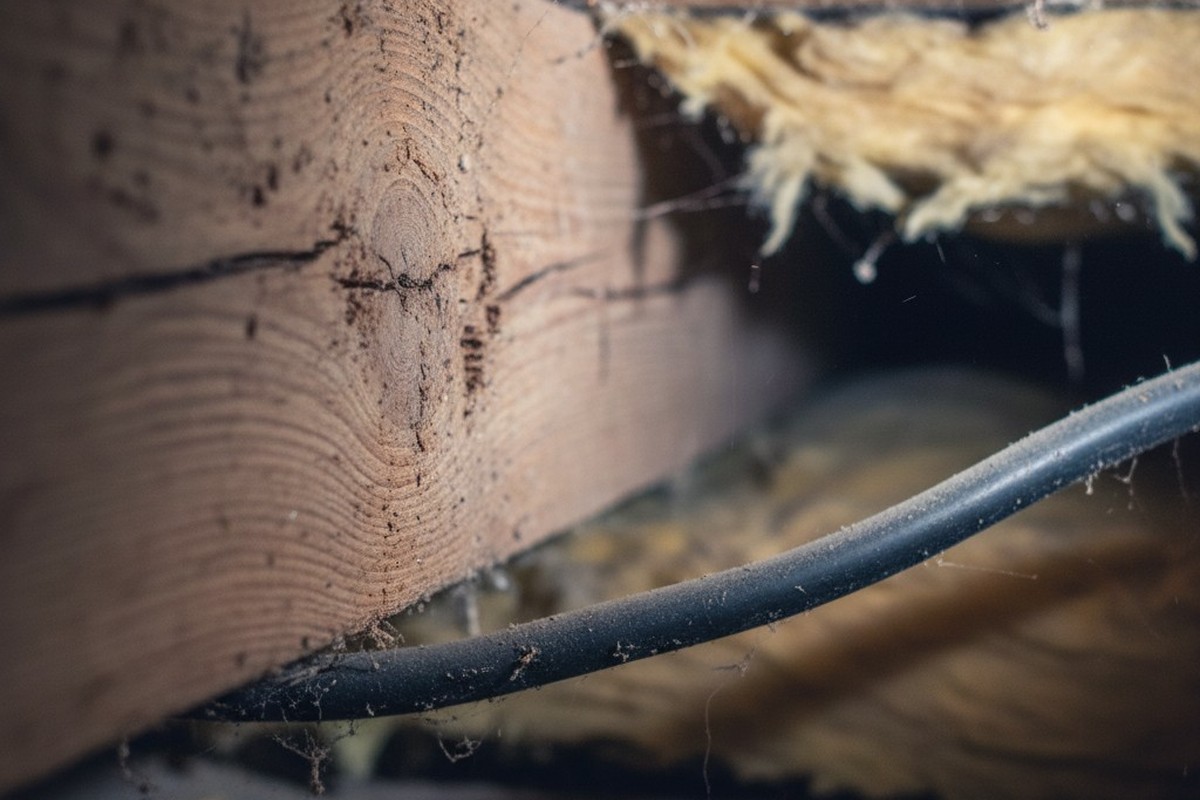
床下空間(クロールスペース)は単なる部屋ではありません。建材を積極的に劣化させる生物学的なゾーンです。点検口のラッチを外すと、通常、濡れた土の匂い、垂れ下がった断熱材の雑然とした光景、そして運が悪ければ完全な暗闇に遭遇することになります。
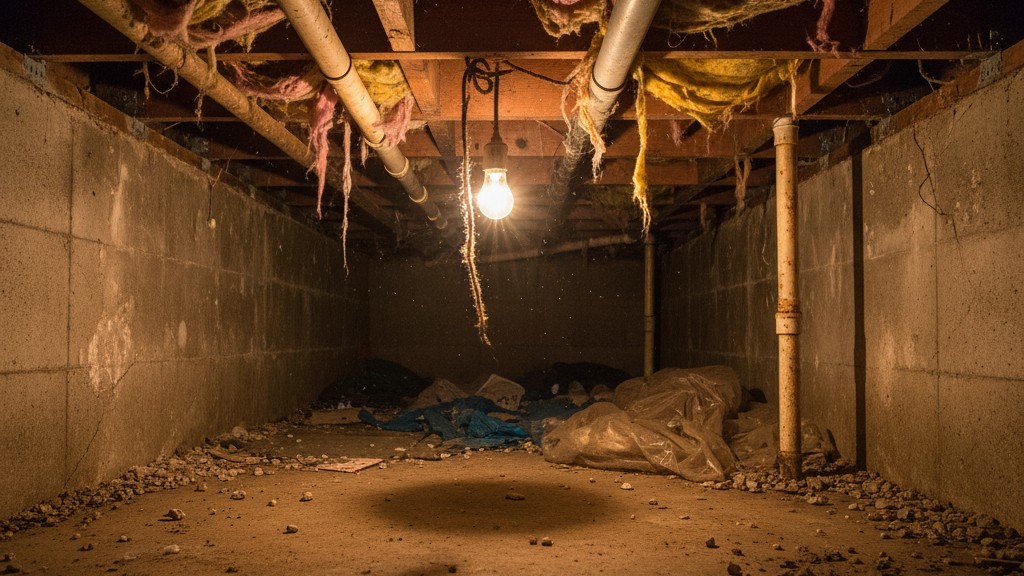
これらの空間には、特定された危険な故障モードが存在します。それは構造の崩壊や浸水ではなく、人間の記憶です。暗いコーナーや押し入れの中に設置された標準的なトグルスイッチは、床下空間を離れる人がそれをオフにするという規律に完全に依存しています。歴史が示すように、人間はこの点で失敗します。ポートランドの地下室では、100Wの白熱電球が何年間も点灯したまま放置され、その上にあるモミ材の根太を少しずつ木炭に変えていった事例が見られます。逆に、3年前に電球が切れ、水漏れが発生するまで誰も気づかなかったため、配管点検員が空間への進入を拒否した事例も確認されています。
解決策は、より優れたチェックリストを用意することではありません。人的要因を完全に排除することです。太平洋北西部の湿気があり放置されがちな床下空間の環境において、Rayzeek RZ021人感センサースイッチは改修(レトロフィット)の現実的な標準として浮上しています。市場で最も洗練された外観のデバイスではありませんが、ハイエンドの代替品よりも「コールバックの計算」を巧みに解決します。
ハードウェアの現実:「ダム」センサーが優れている理由
空調の効いた廊下であれば、Lutron Maestroや高機能なWi-Fi対応調光器を使用できます。それらのデバイスは安定した温度とクリーンな電源向けに調整されています。しかし、床下空間では高湿度、凍結から猛暑までの温度変動、そしてしばしば「ノイズの多い(ダーティな)」電源負荷に対処しなければなりません。
こちらの商品もおすすめです

- 電圧: 単4形乾電池 2本
- 昼/夜モード
- タイマー設定時間: 15分、30分、1時間(デフォルト)、2時間

- 無電圧接点リレー出力付き天井取り付け型PIR人感センサー
- 12/24VDCまたは12/24VAC低電圧電源
- EMS、HVAC、および建物制御入力用COM、NO、NC絶縁リレー接点

- 低電圧DC天井埋め込み型マイクロ波人感センサースイッチ
- 10~30 VDC範囲の12 VDC / 24 VDC入力
- 調整可能なタイムラグ、照度(Lux)閾値、感度を備えた最大動作電流10A仕様
- 高負荷対応型 埋込型天井取付けマイクロ波人感センサースイッチ
- 100-265 VAC 商用電源入力、10Aモデル
- 調整可能なタイムラグ、照度(Lux)閾値、感度を備えた5.8 GHzマイクロ波検知
- 埋込型天井取付けマイクロ波人感センサースイッチ
- 100-265 VAC商用電圧入力、5Aモデル
- 調整可能なタイムラグ、照度(Lux)閾値、感度を備えた5.8 GHzマイクロ波検知
- 220V電源対応 天井取付けRZ037 PIR(赤外線)人感センサー調光器
- 定格負荷660W、最大動作電流3A
- LUXボタンによる照度センサーのON/OFFおよびユーザー設定の調光明るさ制御
- 110V電源対応 天井取付けRZ037 PIR(赤外線)人感センサー調光器
- 定格負荷330W、最大動作電流3A
- LUXボタンによる照度センサーのON/OFFおよびユーザー設定の調光明るさ制御

- 低電圧DC対応 天井取付けマイクロ波人感センサースイッチ
- 10~30 VDC範囲の12 VDC / 24 VDC入力
- 調整可能なタイムラグ、照度(Lux)閾値、感度を備えた最大動作電流10A仕様
- 高負荷対応 天井取付型マイクロ波人感センサースイッチ
- 100-265 VAC 商用電源入力、10Aモデル
- 調整可能なタイムラグ、照度(Lux)閾値、感度を備えた5.8 GHzマイクロ波検知
- 天井取り付け型マイクロ波人感センサースイッチ
- 100-265 VAC商用電圧入力、5Aモデル
- 調整可能なタイムラグ、照度(Lux)閾値、感度を備えた5.8 GHzマイクロ波検知

- 低電圧DC埋込型天井PIR人感センサースイッチ
- 10~30 VDC範囲の12 VDC / 24 VDC入力
- 最大動作電流10A(調整可能なタイムラグ、照度閾値、感度設定付き)

- 高負荷対応 埋込型天井PIR人感センサースイッチ
- 100-265 VAC 商用電源入力、10Aモデル
- 360度検知(調整可能なタイムラグ、照度閾値、感度設定付き)
- 埋込型天井PIR人感センサースイッチ
- 100-265 VAC商用電圧入力、5Aモデル
- 360度検知(調整可能なタイムラグ、照度閾値、感度設定付き)

- 屋内用照明ON/OFF制御ワイヤレススイッチ&受信機キット
- 100-230VAC、50/60Hz、定格電流5A受信機
- 2.4GHz通信対応 CR2032電池駆動ワイヤレススイッチ
- Occupancy(自動点灯/自動消灯)
- 12–24V DC (10–30VDC)、最大10A
- 360°検知エリア、直径8–12m
- タイムラグ 15秒–30分
- 照度センサー オフ/15/25/35 Lux
- 高/低感度
- 自動点灯/自動消灯人感モード
- 100–265V AC, 10A(中性線必須)
- 360°検知範囲、検知直径8–12 m
- タイムデレイ15秒–30分、Lux OFF/15/25/35、感度 高/低
- 自動点灯/自動消灯人感モード
- 100–265V AC, 5A(中性線必須)
- 360°検知範囲、検知直径8–12 m
- タイムデレイ15秒–30分、Lux OFF/15/25/35、感度 高/低
The Rayzeek RZ021 stands out because it is remarkably load agnostic. Crawl spaces are often lit by a mishmash of fixtures—an old porcelain keyless fixture here, a cheap LED shop light there, maybe a fluorescent strip left over from 1990. Many modern sensors flicker or buzz when faced with inductive loads like old ballasts or cheap LED drivers. In bench tests and field retrofits, the Rayzeek tends to handle this electrical soup without the “ghost switching” that plagues more sensitive units.
Then there’s the “Pilot Light” switch—the ones with the little red neon glow when the light is on. Old-school sparkies love these. The theory is that the red light warns you the crawl space lights are burning. The reality? Homeowners ignore red lights just as easily as they ignore toggle switches. A motion sensor (PIR) does not ask for permission or attention. It simply detects heat signatures and shuts down when they leave.
The “Door Swing” Placement Strategy
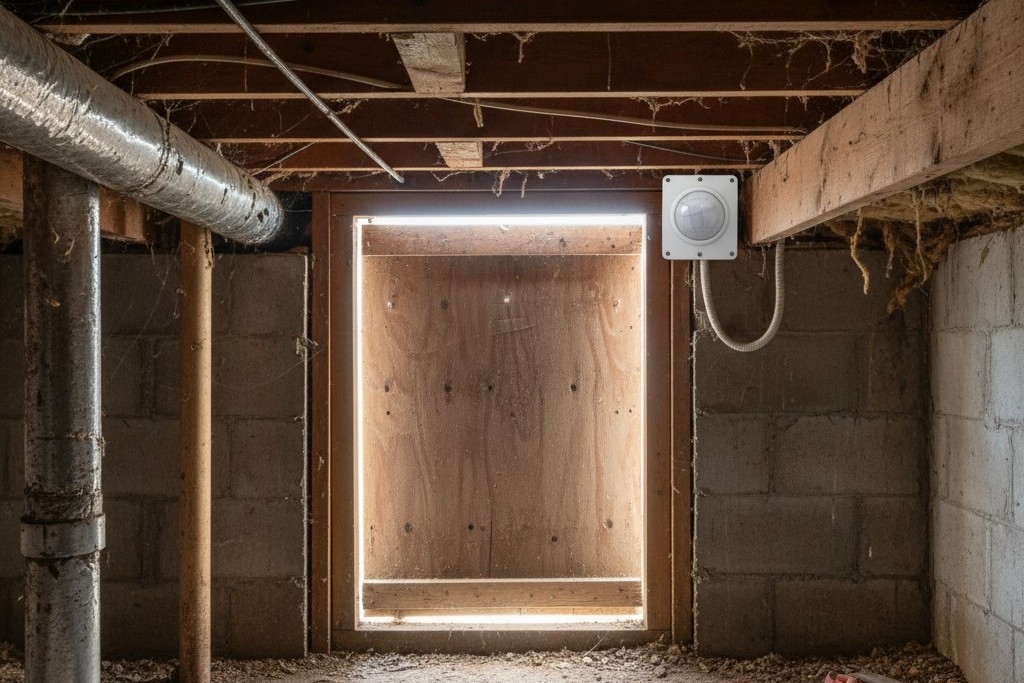
A motion sensor is only as good as its line of sight. Passive Infrared (PIR) technology works by detecting the temperature differential between a moving body and the background. If the sensor is mounted behind a stack of R-30 insulation or a foil-wrapped HVAC duct, it doesn’t exist.
The placement rule for crawl spaces is strict: The sensor must see the hatch open.
When you are crawling on your belly through mud, holding a channel lock in one hand and a flashlight in the other, you do not have a free hand to fumble for a switch. The light must trigger the moment the access door cracks open. This usually means mounting the switch box high on the rim joist, facing the opening directly.
If the crawl space is an L-shape or has massive obstructions like a furnace unit in the center, a single sensor at the door may not cover the back corners. In those cases, the sensor acts as the “entry/exit” safety, ensuring you can at least get in and out without relying on a battery-powered stick light.
Installation: The Neutral Wire Non-Negotiable
Before anyone strips a wire, the breaker must be off. That is the baseline. But the real hurdle in retrofitting a Rayzeek—or any modern occupancy sensor—is the wiring architecture.
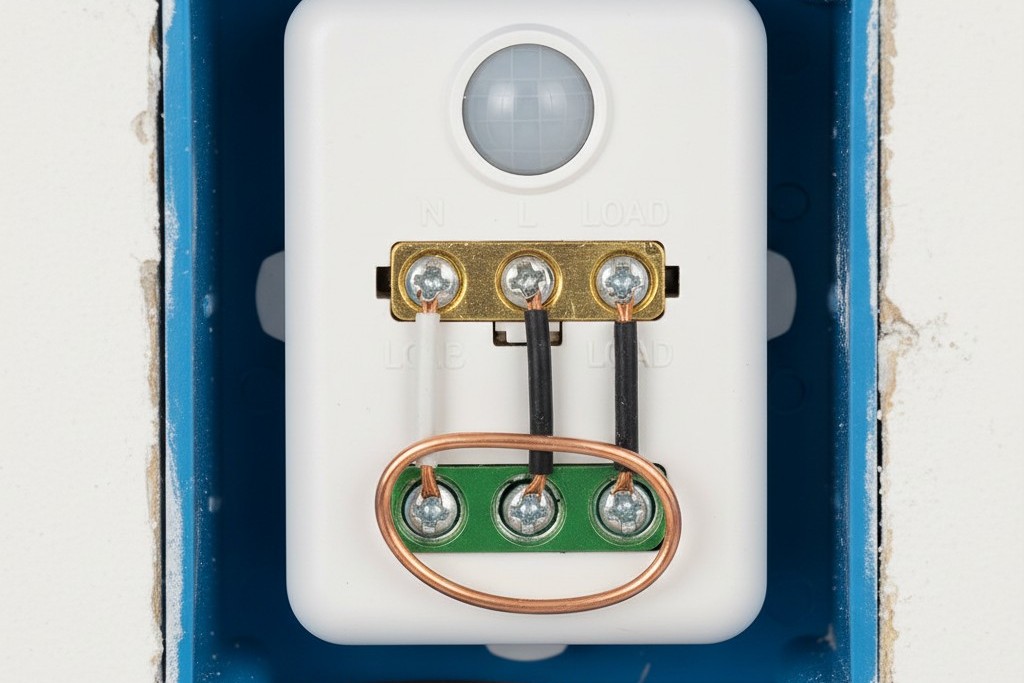
The RZ021 requires a Neutral wire (usually white). This is non-negotiable. The sensor is a small computer that needs a complete circuit to power its internal brain, even when the light is off.
In many homes built before the 1980s, electricians ran what is known as a “switch loop.” They sent power to the light fixture first, then dropped a single cable down to the switch. That cable has a hot and a switched leg, but no neutral. If you open your existing switch box and see only two wires (plus a bare copper ground), you cannot install this sensor without pulling new wire.
Do not try to cheat by tying the neutral screw to the ground wire. That creates a safety hazard and violates NEC 210.70 and about a dozen other code articles. If the neutral isn’t there, you are pulling new Romex.
We also see a lot of confusion regarding “Smart Home” integration here. People want to use a Philips Hue bulb or a Wi-Fi switch so they can check the status on their phone. This is a mistake. Wi-Fi signals struggle to penetrate subfloors, hardwood, and foil vapor barriers. You will end up with a “Device Offline” notification and a dark crawl space. The Rayzeek is “dumb”—it has no app, no Wi-Fi, and no firmware updates. That is exactly what you want in a dirt hole.
人感センサーを活用した省エネソリューションをお探しですか?
PIR人感センサー、人感センサー搭載省エネ製品、人感センサースイッチ、商業施設向けOccupancy/Vacancy(在室/不在)ソリューションについては、お気軽にお問い合わせください。
Configuration: The 15-Minute Rule
Out of the box, these sensors are often set to “Test” mode (5–15 seconds) or a very short duration. This is a trap.
Imagine you are a plumber repairing a cracked ABS stack in the back corner. You are lying still, gluing a fitting. You are not moving enough to trigger the PIR sensor. If the timer is set to 1 minute, the lights go out. Now you are in pitch blackness, surrounded by spiders and pipe glue, waving your arms to trigger the sensor 20 feet away.
Set the time delay dial to 30 minutes.
Rayzeek人感センサーのポートフォリオを見る.
お探しの製品が見つかりませんか?ご安心ください。課題を解決する手段は常に複数存在します。当社の製品ポートフォリオのいずれかがお役に立つかもしれません。
There is a small dial under the faceplate cover, usually adjustable with a precision flathead driver. Crank it up. You aren’t installing this device to save twelve cents of electricity while you are working; you’re doing it to ensure the lights turn off after you leave. If the light stays on for 29 minutes after you exit, that is acceptable. If it turns off while you are inspecting a foundation crack, that is a safety failure.
A Note on “Easy” Alternatives
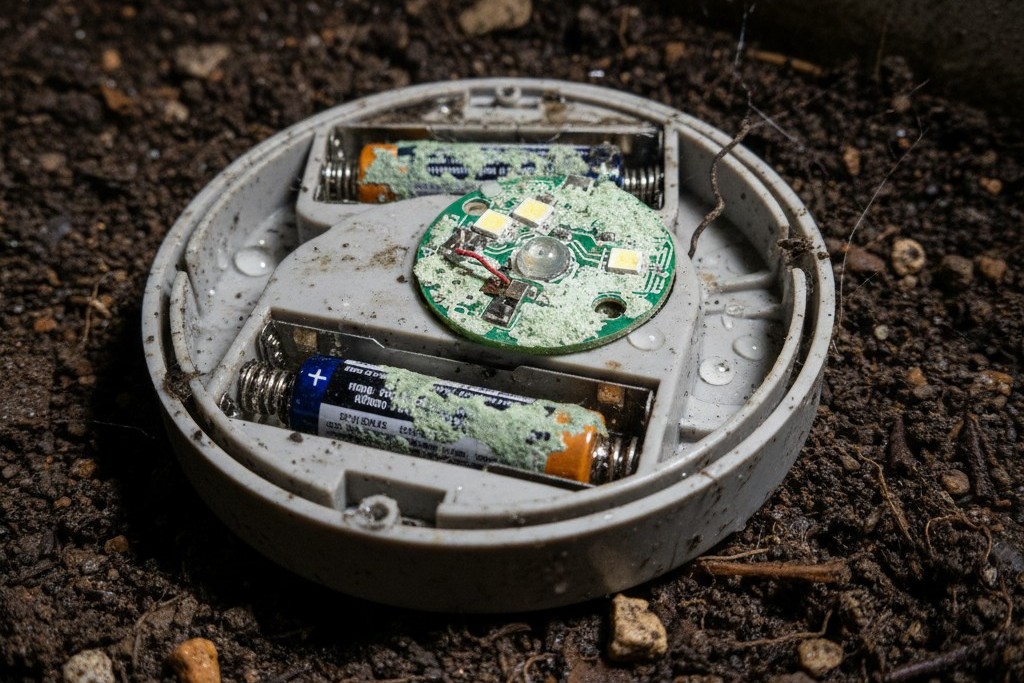
There is always a temptation to bypass wiring altogether. We see it constantly: homeowners sticking battery-powered “puck lights” or solar garden lights into the crawl space.
This is false economy. Batteries in a crawl space are subjected to damp, cold conditions that drain them rapidly. Alkaline batteries leak; lithium batteries die in the freeze. When you actually need to go down there—usually during a crisis like a leak or a freeze—the batteries will be dead. You will be left relying on a portable flashlight, which limits your peripheral vision and makes navigating over sewage pipes dangerous.
A hardwired fixture with a Rayzeek sensor uses the house’s power. It does not sleep, it does not corrode like a AA battery contact, and it does not care if it’s 20 degrees Fahrenheit. It is a permanent infrastructure upgrade, not a temporary patch.
The crawl space is a part of the house that demands respect. It doesn’t need to be pretty, but it must work. By removing the manual switch and replacing it with a properly placed, load-agnostic sensor, you remove the human error that leads to wasted energy and fire risks. You ensure that the next time someone has to crawl into the dark, the house is ready for them.







