
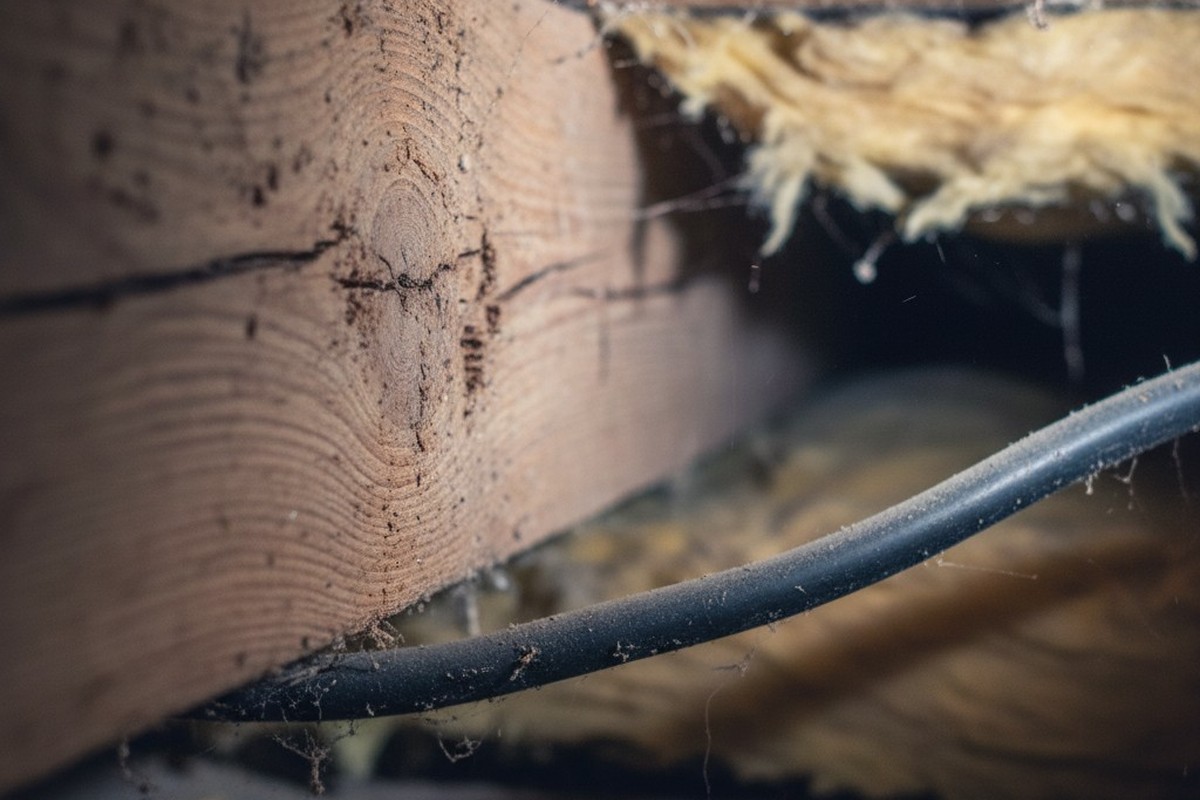
A crawl space isn’t a room. It is a biological zone that actively wants to degrade building materials. When you unlatch that access hatch, you are typically met with the smell of wet earth, the visual chaos of hanging insulation, and—if you are unlucky—absolute darkness.
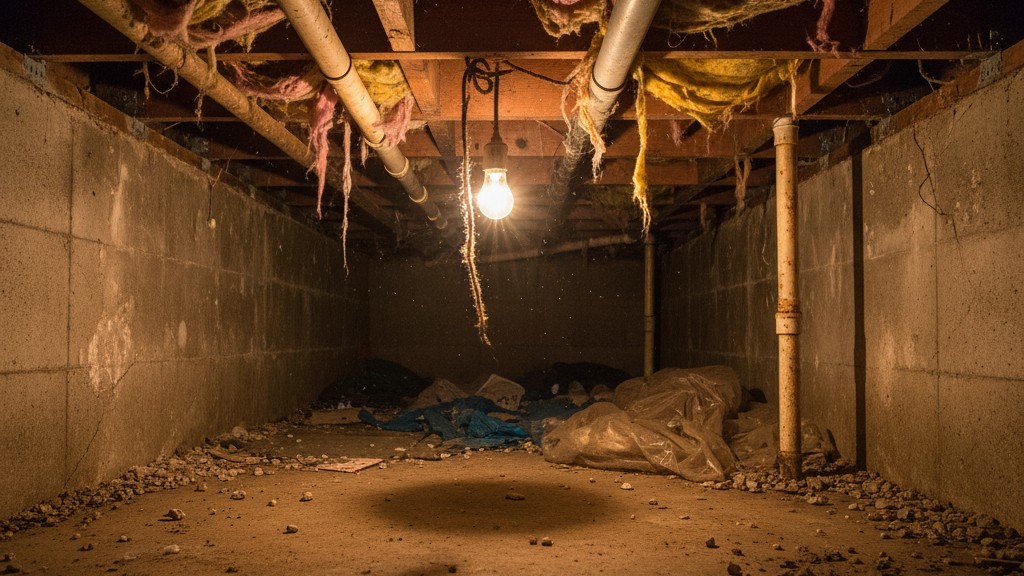
There is a specific, dangerous failure mode in these spaces. It isn’t structural collapse or flooding. It’s human memory. A standard toggle switch, mounted in a dark corner or inside a closet, relies entirely on the discipline of the person leaving the crawl space to flip it off. History shows that people fail at this. We have seen 100W incandescent bulbs left burning for years in Portland basements, slowly turning the fir joist above them into charcoal. Conversely, we see plumbing inspectors refuse to enter a space because the bulb burned out three years ago and nobody noticed until the leak started.
The solution isn’t a better checklist. It’s removing the human element entirely. For the damp, neglected environment of a Pacific Northwest crawl space, the Rayzeek RZ021 motion sensor switch has emerged as the pragmatic standard for retrofits. It isn’t the prettiest device on the market, but it solves the “Callback Calculus” better than high-end alternatives.
The Hardware Reality: Why “Dumb” Sensors Win
In a conditioned hallway, you can use a Lutron Maestro or a fancy Wi-Fi-enabled dimmer. Those devices are calibrated for stable temperatures and clean power. In a crawl space, you are dealing with high humidity, temperature swings from freezing to sweltering, and often “dirty” power loads.
Das könnte Sie auch interessieren

- Spannung: 2 AAA-Batterien
- Tag-/Nachtmodus
- Ausschaltverzögerung: 15min, 30min, 1h (Standard), 2h

- Deckenmontierter PIR-Präsenzmelder mit potenzielfreiem Relaisausgang
- 12/24VDC oder 12/24VAC Niederspannungsversorgung
- Isolierte Relaiskontakte (COM, NO und NC) für EMS-, HVAC- und Gebäudesteuerungs-Eingänge

- Niederspannungs-DC-Mikrowellen-Bewegungssensorschalter für den Deckeneinbau
- 12 VDC / 24 VDC Eingang mit 10–30 VDC Bereich
- 10A max. Arbeitsstrom mit einstellbarer Zeitverzögerung, Lux-Schwelle und Empfindlichkeit
- Decken-Mikrowellen-Bewegungssensorschalter für den Einbau für höhere Lasten
- 100–265 VAC Netzspannungseingang, 10A-Modell
- 5,8-GHz-Mikrowellenerfassung mit einstellbarer Zeitverzögerung, Lux-Schwelle und Empfindlichkeit
- Unterputz-Mikrowellen-Bewegungssensorschalter für die Deckenmontage
- 100–265 VAC Netzspannungseingang, 5A-Modell
- 5,8-GHz-Mikrowellenerfassung mit einstellbarer Zeitverzögerung, Lux-Schwelle und Empfindlichkeit
- PIR-Präsenzsensor-Dimmer RZ037 für Deckenmontage und 220V-Stromversorgung
- 3A maximaler Betriebsstrom mit 660W Nennlast
- LUX-Taste steuert Lichtsensor-EIN/AUS sowie benutzerdefinierte Dimmhelligkeit
- PIR-Präsenzsensor-Dimmer RZ037 für Deckenmontage und 110V-Stromversorgung
- 3A maximaler Betriebsstrom mit 330W Nennlast
- LUX-Taste steuert Lichtsensor-EIN/AUS sowie benutzerdefinierte Dimmhelligkeit

- Niederspannungs-DC-Mikrowellen-Bewegungssensorschalter für die Deckenmontage
- 12 VDC / 24 VDC Eingang mit 10–30 VDC Bereich
- 10A max. Arbeitsstrom mit einstellbarer Zeitverzögerung, Lux-Schwelle und Empfindlichkeit
- Decken-Mikrowellen-Bewegungssensorschalter für höhere Lasten
- 100–265 VAC Netzspannungseingang, 10A-Modell
- 5,8-GHz-Mikrowellenerfassung mit einstellbarer Zeitverzögerung, Lux-Schwelle und Empfindlichkeit
- Mikrowellen-Bewegungssensorschalter für die Deckenmontage
- 100–265 VAC Netzspannungseingang, 5A-Modell
- 5,8-GHz-Mikrowellenerfassung mit einstellbarer Zeitverzögerung, Lux-Schwelle und Empfindlichkeit

- Niederspannungs-DC-Unterputz-PIR-Bewegungssensorschalter für die Deckenmontage
- 12 VDC / 24 VDC Eingang mit 10–30 VDC Bereich
- Maximaler Betriebsstrom 10A mit einstellbarer Zeitverzögerung, Lux-Schwelle und Empfindlichkeit

- PIR-Bewegungssensorschalter für Deckeneinbau für höhere Lasten
- 100–265 VAC Netzspannungseingang, 10A-Modell
- 360-Grad-Erfassung mit einstellbarer Ausschaltverzögerung, Lux-Schwelle und Empfindlichkeit
- PIR-Bewegungssensorschalter für Deckeneinbau
- 100–265 VAC Netzspannungseingang, 5A-Modell
- 360-Grad-Erfassung mit einstellbarer Ausschaltverzögerung, Lux-Schwelle und Empfindlichkeit

- Funk-Schalter- und Empfänger-Set zur Ein/Aus-Lichtsteuerung im Innenbereich
- 100-230VAC, 50/60Hz Empfänger mit 5A Nennstrom
- CR2032-betriebener Funkschalter mit 2,4GHz-Kommunikation
- Präsenzmodus (Auto-EIN/Auto-AUS)
- 12–24V DC (10–30VDC), bis zu 10A
- 360°-Erfassungsbereich, 8–12 m Durchmesser
- Ausschaltverzögerung 15 s–30 Min.
- Lichtsensor Aus/15/25/35 Lux
- Hohe/Niedrige Empfindlichkeit
- Auto-EIN/Auto-AUS Präsenzmodus
- 100–265V AC, 10A (Neutralleiter erforderlich)
- 360°-Erfassungsbereich; 8–12 m Erfassungsdurchmesser
- Ausschaltverzögerung 15 s–30 min; Lux AUS/15/25/35; Empfindlichkeit Hoch/Niedrig
- Auto-EIN/Auto-AUS Präsenzmodus
- 100–265V AC, 5A (Neutralleiter erforderlich)
- 360°-Erfassungsbereich; 8–12 m Erfassungsdurchmesser
- Ausschaltverzögerung 15 s–30 min; Lux AUS/15/25/35; Empfindlichkeit Hoch/Niedrig
The Rayzeek RZ021 stands out because it is remarkably load agnostic. Crawl spaces are often lit by a mishmash of fixtures—an old porcelain keyless fixture here, a cheap LED shop light there, maybe a fluorescent strip left over from 1990. Many modern sensors flicker or buzz when faced with inductive loads like old ballasts or cheap LED drivers. In bench tests and field retrofits, the Rayzeek tends to handle this electrical soup without the “ghost switching” that plagues more sensitive units.
Then there’s the “Pilot Light” switch—the ones with the little red neon glow when the light is on. Old-school sparkies love these. The theory is that the red light warns you the crawl space lights are burning. The reality? Homeowners ignore red lights just as easily as they ignore toggle switches. A motion sensor (PIR) does not ask for permission or attention. It simply detects heat signatures and shuts down when they leave.
The “Door Swing” Placement Strategy
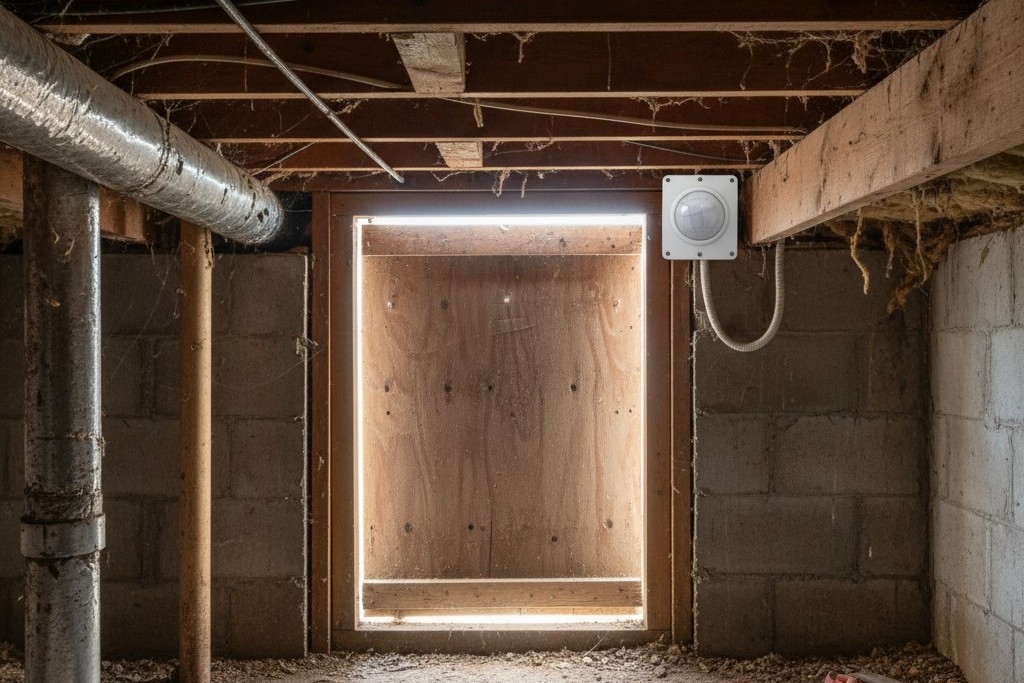
A motion sensor is only as good as its line of sight. Passive Infrared (PIR) technology works by detecting the temperature differential between a moving body and the background. If the sensor is mounted behind a stack of R-30 insulation or a foil-wrapped HVAC duct, it doesn’t exist.
The placement rule for crawl spaces is strict: The sensor must see the hatch open.
When you are crawling on your belly through mud, holding a channel lock in one hand and a flashlight in the other, you do not have a free hand to fumble for a switch. The light must trigger the moment the access door cracks open. This usually means mounting the switch box high on the rim joist, facing the opening directly.
If the crawl space is an L-shape or has massive obstructions like a furnace unit in the center, a single sensor at the door may not cover the back corners. In those cases, the sensor acts as the “entry/exit” safety, ensuring you can at least get in and out without relying on a battery-powered stick light.
Installation: The Neutral Wire Non-Negotiable
Before anyone strips a wire, the breaker must be off. That is the baseline. But the real hurdle in retrofitting a Rayzeek—or any modern occupancy sensor—is the wiring architecture.
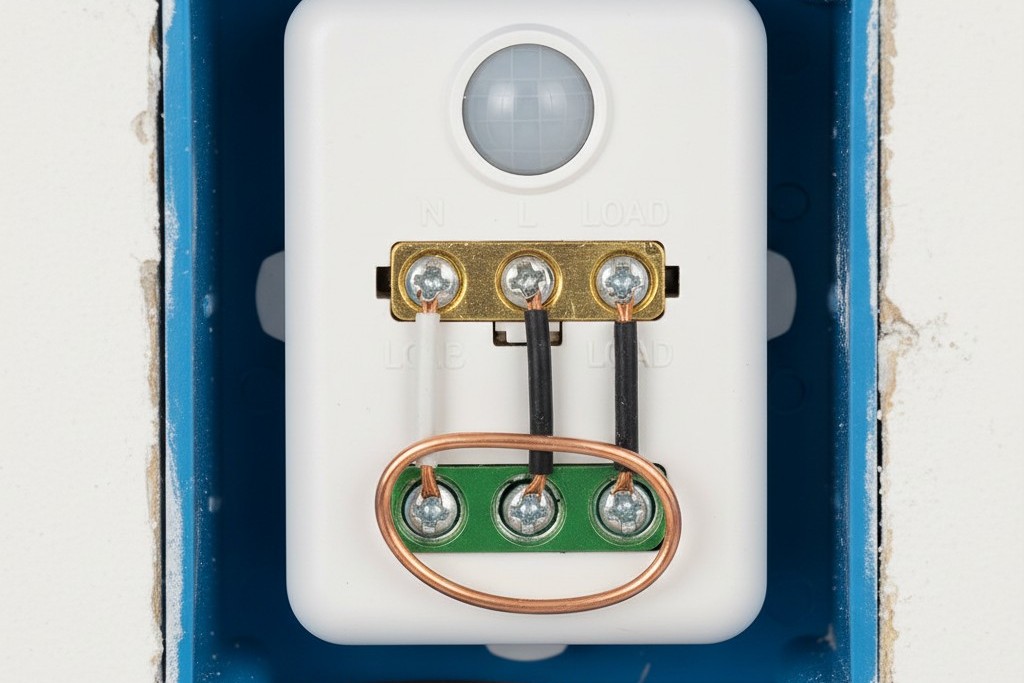
The RZ021 requires a Neutral wire (usually white). This is non-negotiable. The sensor is a small computer that needs a complete circuit to power its internal brain, even when the light is off.
In many homes built before the 1980s, electricians ran what is known as a “switch loop.” They sent power to the light fixture first, then dropped a single cable down to the switch. That cable has a hot and a switched leg, but no neutral. If you open your existing switch box and see only two wires (plus a bare copper ground), you cannot install this sensor without pulling new wire.
Do not try to cheat by tying the neutral screw to the ground wire. That creates a safety hazard and violates NEC 210.70 and about a dozen other code articles. If the neutral isn’t there, you are pulling new Romex.
We also see a lot of confusion regarding “Smart Home” integration here. People want to use a Philips Hue bulb or a Wi-Fi switch so they can check the status on their phone. This is a mistake. Wi-Fi signals struggle to penetrate subfloors, hardwood, and foil vapor barriers. You will end up with a “Device Offline” notification and a dark crawl space. The Rayzeek is “dumb”—it has no app, no Wi-Fi, and no firmware updates. That is exactly what you want in a dirt hole.
Suchen Sie nach bewegungsgesteuerten Energiesparlösungen?
Kontaktieren Sie uns für komplette PIR-Bewegungssensoren, bewegungsgesteuerte Energiesparprodukte, Bewegungsmelderschalter sowie gewerbliche Präsenz-/Präsenzabwesenheitslösungen.
Configuration: The 15-Minute Rule
Out of the box, these sensors are often set to “Test” mode (5–15 seconds) or a very short duration. This is a trap.
Imagine you are a plumber repairing a cracked ABS stack in the back corner. You are lying still, gluing a fitting. You are not moving enough to trigger the PIR sensor. If the timer is set to 1 minute, the lights go out. Now you are in pitch blackness, surrounded by spiders and pipe glue, waving your arms to trigger the sensor 20 feet away.
Set the time delay dial to 30 minutes.
Lassen Sie sich von den Rayzeek Bewegungssensor-Portfolios inspirieren.
Nicht das Richtige gefunden? Keine Sorge. Es gibt immer alternative Wege, Ihre Anforderungen zu erfüllen. Vielleicht kann eines unserer Portfolios helfen.
There is a small dial under the faceplate cover, usually adjustable with a precision flathead driver. Crank it up. You aren’t installing this device to save twelve cents of electricity while you are working; you’re doing it to ensure the lights turn off nach you leave. If the light stays on for 29 minutes after you exit, that is acceptable. If it turns off while you are inspecting a foundation crack, that is a safety failure.
A Note on “Easy” Alternatives
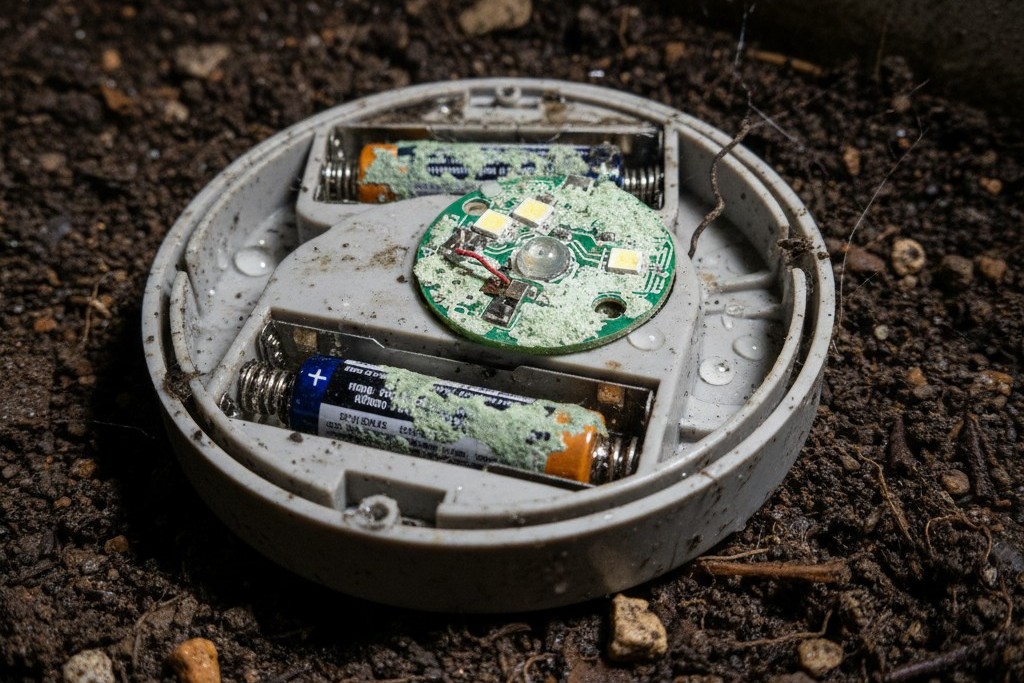
There is always a temptation to bypass wiring altogether. We see it constantly: homeowners sticking battery-powered “puck lights” or solar garden lights into the crawl space.
This is false economy. Batteries in a crawl space are subjected to damp, cold conditions that drain them rapidly. Alkaline batteries leak; lithium batteries die in the freeze. When you actually need to go down there—usually during a crisis like a leak or a freeze—the batteries will be dead. You will be left relying on a portable flashlight, which limits your peripheral vision and makes navigating over sewage pipes dangerous.
A hardwired fixture with a Rayzeek sensor uses the house’s power. It does not sleep, it does not corrode like a AA battery contact, and it does not care if it’s 20 degrees Fahrenheit. It is a permanent infrastructure upgrade, not a temporary patch.
The crawl space is a part of the house that demands respect. It doesn’t need to be pretty, but it must work. By removing the manual switch and replacing it with a properly placed, load-agnostic sensor, you remove the human error that leads to wasted energy and fire risks. You ensure that the next time someone has to crawl into the dark, the house is ready for them.







