
Le luci della sala si abbassano. Il silenzio cala sul pubblico. Sul palco, un interprete mantiene una posa finale e drammatica prima che la scena passi al buio. Il momento è perfetto, il culmine di settimane di prove. Poi, con un udibile clic, un gruppo di luci fluorescenti al soffitto si accende a intermittenza, frantumando l'oscurità accuratamente creata e strappando tutti dalla storia.
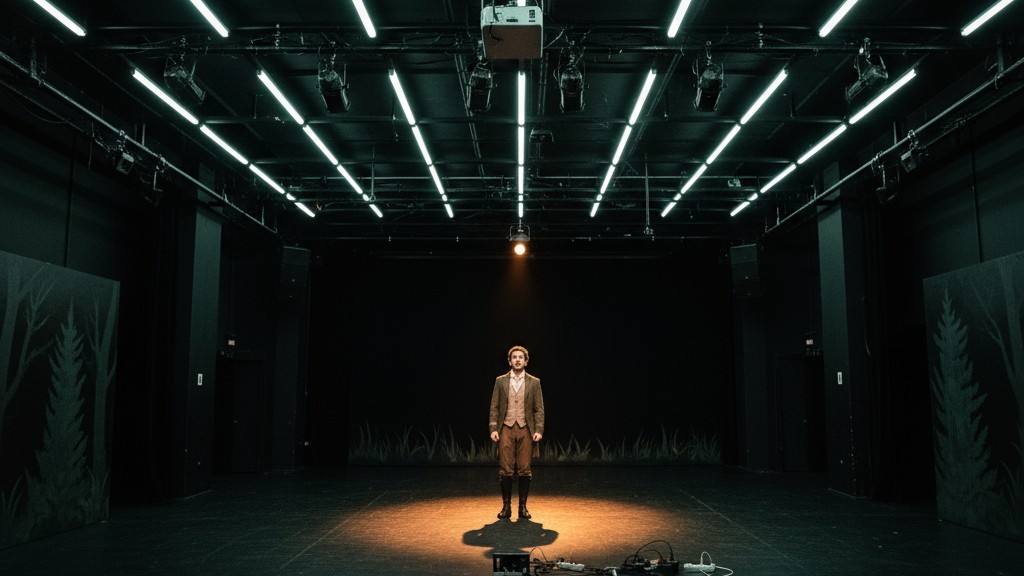
Il colpevole non è un segnale mancato dalla cabina luci. È un sensore di movimento, un dispositivo installato per risparmiare energia che ora agisce come un inconsapevole sabotatore. Questo disastro è dolorosamente familiare nei teatri black box, negli auditorium scolastici e nelle sale prove dove la tecnologia edilizia standard si scontra con le esigenze della rappresentazione. La soluzione non è abbandonare l'illuminazione automatizzata, ma implementarla con intelligenza. Richiede un passaggio da un'automazione aggressiva a un sistema che assista anziché imporre. Privilegiando il controllo manuale, impiegando ritardi di spegnimento pazienti e posizionando i sensori in modo strategico, è possibile ottenere l'efficienza energetica senza mai compromettere un blackout.
Il nemico della disciplina: perché i sensori di presenza standard falliscono nello spettacolo
Il fallimento della maggior parte dei sensori di movimento commerciali in un contesto teatrale deriva da un presupposto errato: che la mancanza di movimento equivalga all'assenza di persone. In un ufficio, questa è un'ipotesi sicura. In un teatro, è un errore di calcolo catastrofico.
L'imboscata dell'accensione automatica
I sensori di presenza standard sono progettati per la comodità. Rilevano l'ingresso di una persona in una stanza e accendono immediatamente le luci. Questa funzione di “accensione automatica” è la principale fonte di conflitto. Durante una rappresentazione, la luce è uno strumento narrativo. Un'improvvisa esplosione di luce, attivata da un attore che si muove dietro le quinte o da uno spettatore che si sposta sulla sedia, è un evento stridente e fuori copione che infrange la quarta parete. L'illuminazione per uno spettacolo deve essere intenzionale al 100%, dettata dal copione e dal light designer, non da un algoritmo.
Il problema dell'immobilità
Il secondo punto di fallimento è la funzione di “spegnimento automatico”. La maggior parte dei sensori comuni, in particolare i tipi a infrarossi passivi (PIR), non rileva la presenza; rileva la variazione causata da una sorgente di calore in movimento. Una persona che cammina crea una traccia termica dinamica che il sensore registra facilmente. Un attore che tiene una pausa drammatica, tuttavia, o un intero pubblico rapito da una scena silenziosa, presenta una traccia statica. Trascorso il periodo di temporizzazione, il sensore interpreta questa immobilità come una stanza vuota e interrompe l'alimentazione. Il risultato è un blackout prematuro che può deragliare una prova o rovinare uno spettacolo.
Il primo principio: adottare il controllo con accensione manuale
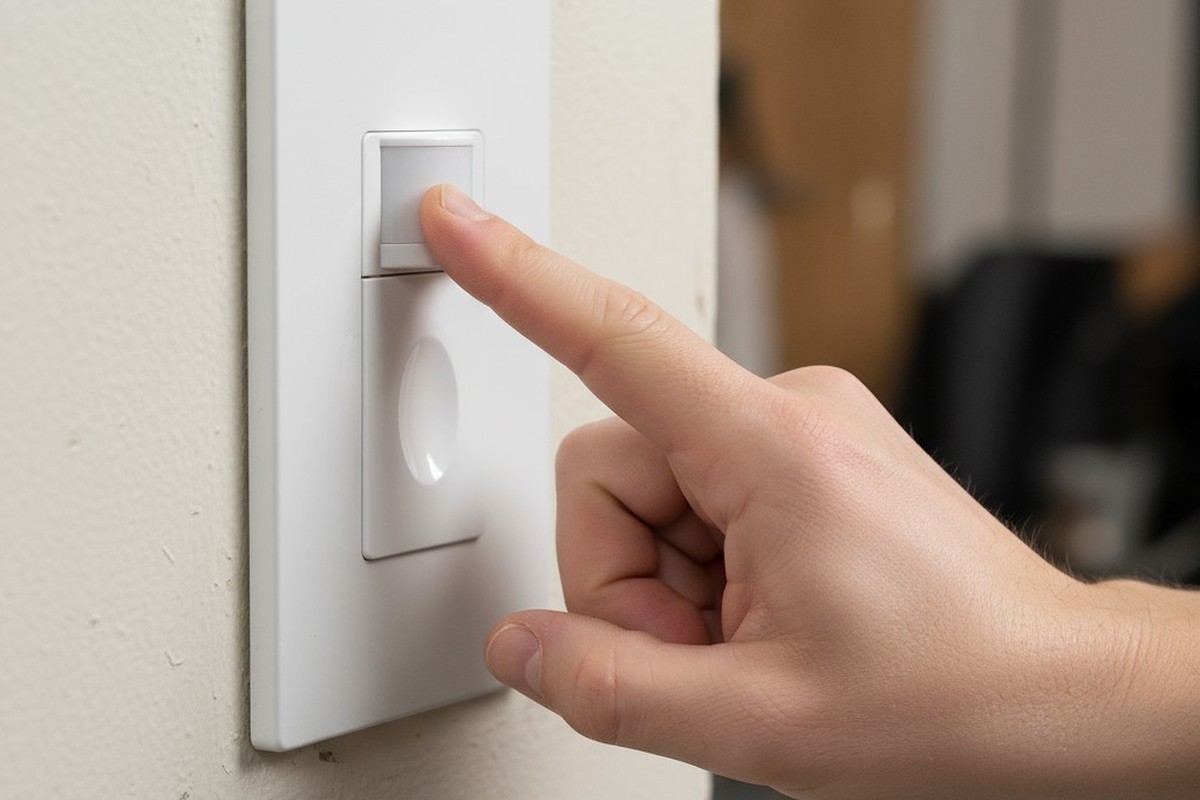
Il modo più efficace per prevenire questi guasti è invertire la logica del sensore. Uno spazio teatrale non ha bisogno di un sistema che presuma che le luci debbano essere accese; ha bisogno di un sistema che attenda un comando diretto. Questo è il compito di un sensore di vacanza.
Lasciati ispirare dai portafogli di sensori di movimento Rayzeek.
Non trovi quello che cerchi? Non preoccuparti. Esistono sempre modi alternativi per risolvere i tuoi problemi. Forse uno dei nostri portafogli prodotti può esserti d'aiuto.
Sebbene sembrino identici, i sensori di presenza e di vacanza funzionano su principi diversi. Un sensore di presenza è completamente autonomo, automatizzando sia l“”accensione“ che lo ”spegnimento“. Un sensore di vacanza automatizza solo lo ”spegnimento". Le luci devono essere accese manualmente con un interruttore a parete. L'unico compito del sensore è spegnere le luci dopo aver confermato che la stanza è rimasta vuota per un periodo stabilito.
Questa semplice distinzione è risolutiva. Richiedendo un comando di “accensione” manuale, un sensore di vacanza restituisce l'autorità al direttore di scena o al regista. Le luci da lavoro vengono accese all'inizio di una sessione e rimangono accese, indipendentemente dal movimento, fino a quando non vengono spente o la stanza rimane vuota per un tempo prolungato. Durante una rappresentazione, le luci da lavoro sono spente di default, quindi il sensore non fa nulla. Non può innescare un“”imboscata di accensione automatica" perché la funzione non esiste. Il sistema diventa un dispositivo di sicurezza passivo, non un partecipante attivo.
L'arte della pazienza: impostare i temporizzatori per l'immobilità teatrale
Affinche un sensore di vacanza funzioni, il suo temporizzatore deve rispettare il ritmo dell'ambiente teatrale. I brevi ritardi da 5 a 15 minuti comuni negli uffici sono inutili in questo contesto; innescheranno inevitabilmente il “problema dell'immobilità” durante le prove.
Una sala prove vede lunghi periodi di scarso movimento durante le sessioni di note, le letture a tavolino o le pause prolungate. Il temporizzatore del sensore deve essere sufficientemente lungo da coprire questi momenti. Un ritardo di 30 minuti è un buon punto di partenza, ma 45-60 minuti sono spesso più pratici. L'obiettivo è un ritardo superiore a qualsiasi periodo di inattività previsto.
Potrebbero Interessarti Anche

- Tensione: 2 batterie AAA
- Modalità Giorno/Notte
- Ritardo spegnimento: 15min, 30min, 1h(predefinito), 2h

- Sensore di presenza PIR da soffitto con uscita relè a contatto pulito
- Alimentazione a bassa tensione 12/24VDC o 12/24VAC
- Contatti relè isolati COM, NO e NC per ingressi EMS, HVAC e controllo edifici

- Interruttore con sensore di movimento a microonde da soffitto a incasso in Bassa Tensione CC
- Ingresso 12 VDC / 24 VDC con intervallo 10-30 VDC
- Corrente di lavoro max 10A con ritardo temporale, soglia Lux e sensibilità regolabili
- Interruttore con sensore di movimento a microonde da soffitto a incasso per carichi più elevati
- Ingresso tensione di linea 100-265 VAC, modello da 10A
- Rilevamento a microonde a 5.8 GHz con ritardo temporale, soglia Lux e sensibilità regolabili
- Interruttore con sensore di movimento a microonde da soffitto a incasso
- Ingresso tensione di linea 100-265 VAC, modello da 5A
- Rilevamento a microonde a 5.8 GHz con ritardo temporale, soglia Lux e sensibilità regolabili
- Dimmer con sensore di presenza PIR RZ037 da soffitto per alimentazione a 220V
- Corrente di lavoro massima 3A con carico nominale di 660W
- Il pulsante LUX controlla l'ON/OFF del sensore di luce e la luminosità di regolazione impostata dall'utente
- Dimmer con sensore di presenza PIR RZ037 da soffitto per alimentazione a 110V
- Corrente massima di esercizio di 3A con carico nominale di 330W
- Il pulsante LUX controlla l'ON/OFF del sensore di luce e la luminosità di regolazione impostata dall'utente

- Interruttore da soffitto con sensore di movimento a microonde a bassa tensione CC
- Ingresso 12 VDC / 24 VDC con intervallo 10-30 VDC
- Corrente di lavoro max 10A con ritardo temporale, soglia Lux e sensibilità regolabili
- Interruttore da soffitto con sensore di movimento a microonde per carichi più elevati
- Ingresso tensione di linea 100-265 VAC, modello da 10A
- Rilevamento a microonde a 5.8 GHz con ritardo temporale, soglia Lux e sensibilità regolabili
- Interruttore da soffitto con sensore di movimento a microonde
- Ingresso tensione di linea 100-265 VAC, modello da 5A
- Rilevamento a microonde a 5.8 GHz con ritardo temporale, soglia Lux e sensibilità regolabili

- Interruttore con sensore di movimento PIR da soffitto a incasso a bassa tensione CC
- Ingresso 12 VDC / 24 VDC con intervallo 10-30 VDC
- Corrente massima di esercizio di 10A con ritardo temporale, soglia Lux e sensibilità regolabili

- Interruttore con sensore di movimento PIR da soffitto a incasso per carichi più elevati
- Ingresso tensione di linea 100-265 VAC, modello da 10A
- Rilevamento a 360 gradi con ritardo temporale, soglia Lux e sensibilità regolabili
- Interruttore con sensore di movimento PIR da soffitto a incasso
- Ingresso tensione di linea 100-265 VAC, modello da 5A
- Rilevamento a 360 gradi con ritardo temporale, soglia Lux e sensibilità regolabili

- Kit interruttore e ricevitore wireless per il controllo dell'illuminazione ON/OFF da interno
- Ricevitore 100-230VAC, 50/60Hz con corrente nominale di 5A
- Interruttore wireless alimentato da batteria CR2032 con comunicazione a 2,4 GHz
- Rilevamento presenza (Auto-ON/Auto-OFF)
- 12–24V DC (10–30VDC), fino a 10A
- Copertura a 360°, diametro di rilevamento 8–12 m
- Ritardo di spegnimento 15 s–30 min
- Sensore crepuscolare Off/15/25/35 Lux
- Sensibilità Alta/Bassa
- Modalità presenza Auto-ON/Auto-OFF
- 100–265V AC, 10A (neutro richiesto)
- Copertura a 360°; diametro di rilevamento 8–12 m
- Ritardo di spegnimento 15 s–30 min; Lux OFF/15/25/35; Sensibilità Alta/Bassa
- Modalità presenza Auto-ON/Auto-OFF
- 100–265V AC, 5A (neutro richiesto)
- Copertura a 360°; diametro di rilevamento 8–12 m
- Ritardo di spegnimento 15 s–30 min; Lux OFF/15/25/35; Sensibilità Alta/Bassa
Questo lungo ritardo funge anche da cuscinetto fondamentale. Se le luci di servizio sono sullo stesso circuito della americana teatrale, un lungo ritardo assicura che non si spengano durante un blackout di scena. Il sensore non rileverà il movimento al buio, ma la temporizzazione prolungata sosterrà il sistema fino al rientro delle luci di scena. È un piccolo compromesso sull'efficienza energetica che offre enormi vantaggi in termini di affidabilità.
Strategic Sightlines: Watch the Doors, Not the Drama
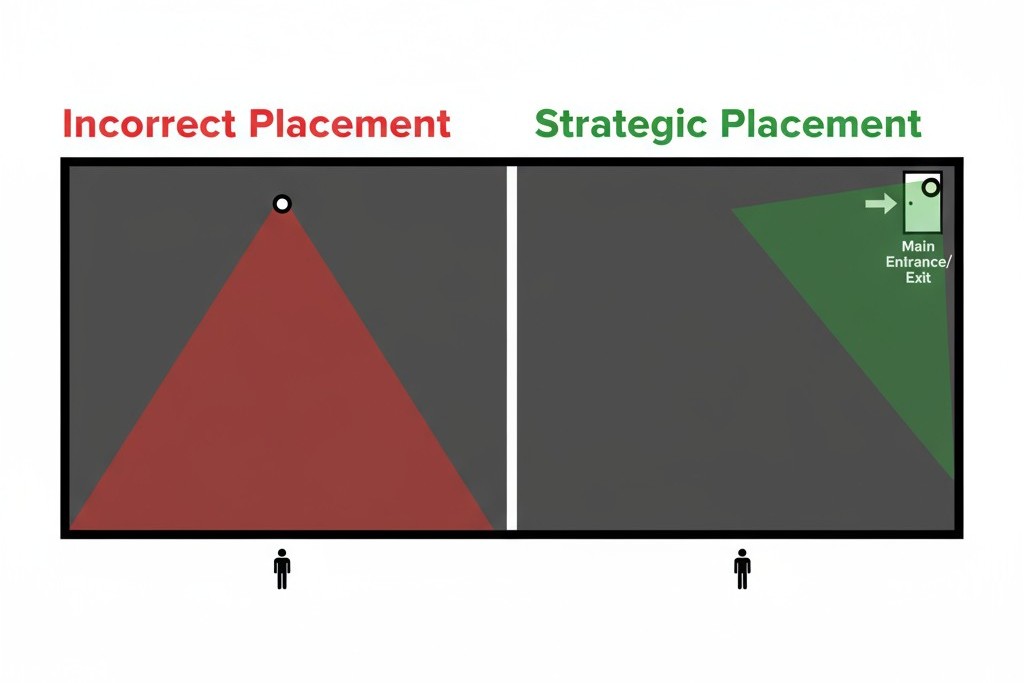
A sensor’s placement is as important as its programming. Its goal is not to track every person on stage, but simply to determine if the room is occupied. This requires targeted observation, not comprehensive coverage.
The most reliable placement is aimed at the main entry and exit points. A sensor with a clear view of the doorway can accurately register when people come and go. This provides the only information that matters—is the room in use?—without monitoring the performance area itself. This strategy narrows the sensor’s field of view to only what is necessary, minimizing the chance it will be affected by on-stage action.
Placing a sensor with a view of the stage or audience is a common mistake. A sensor pointed at the stage can be fooled by the rapid heating and cooling of theatrical lighting instruments, causing false triggers. More importantly, it creates a system that is trying to watch the very activity it should be ignoring. The sensor’s job is to be a simple gatekeeper, not a critic in the front row.
Cerchi Soluzioni per il Risparmio Energetico Attivate dal Movimento?
Contattaci per sensori di movimento PIR completi, prodotti per il risparmio energetico attivati dal movimento, interruttori con sensore di movimento e soluzioni commerciali di presenza/vacanza.
Adapting the Space: Solutions for Multi-Use Rooms
Many performance spaces double as rehearsal halls, classrooms, and event venues. In these environments, a single sensor configuration may not be ideal. The solution is an adaptable system.
Mode-Based Controls
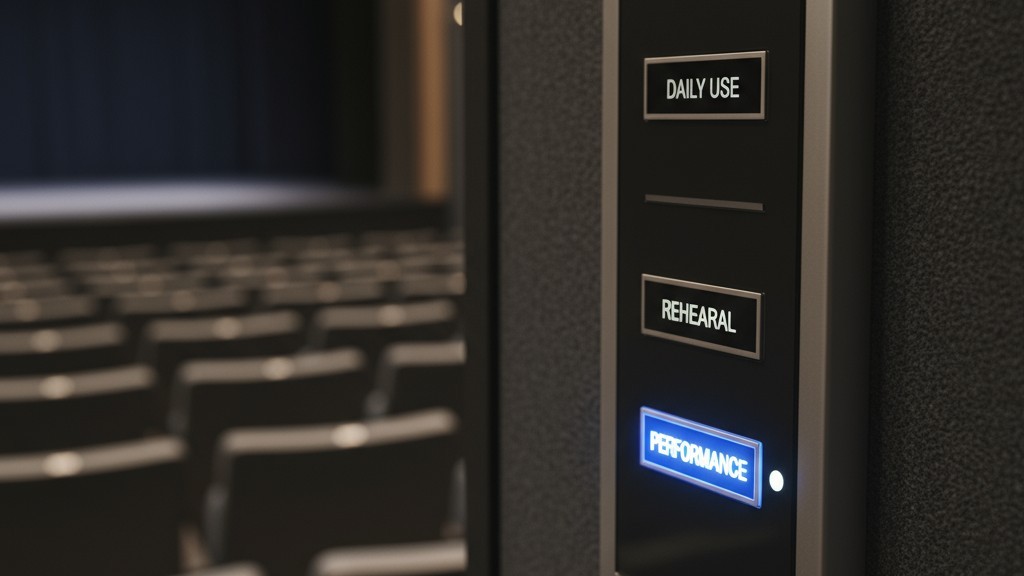
For a multi-use space, the ideal setup is a lighting control system with selectable modes. A wall-mounted keypad or a simple key switch can allow a user to choose the correct sensor profile for the day’s activity. A “Rehearsal” mode could engage the vacancy sensor with a 30-minute timeout. A “Performance” mode would disable the sensor’s auto-off capability entirely, putting the room’s lighting under the exclusive control of the lighting console. This offers the best of both worlds: automated efficiency for daily use and absolute manual control when it matters most.
Practical Workarounds
When a full system replacement isn’t an option, you can still mitigate the problems. If an existing occupancy sensor has an aggressive “auto-on” function, a simple workaround is to carefully apply opaque electrical tape to its lens, blocking its view of the stage and shrinking its effective zone to just the entryway. If a sensor’s timeout is too short and can’t be adjusted, the only reliable solution during a performance is to disable that circuit entirely. It’s a crude fix, but one that guarantees your show won’t be sabotaged by a flicker of unwanted light.







