
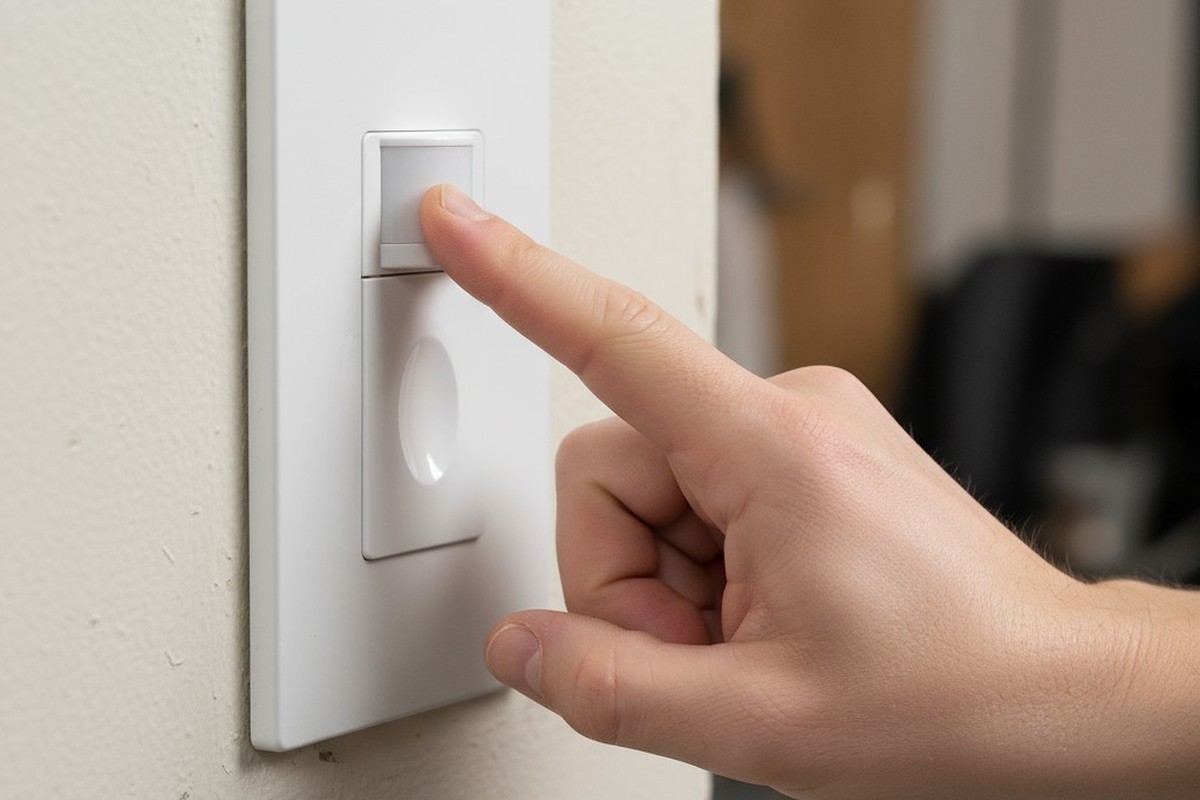
The house lights dim. A hush falls over the audience. On stage, a performer holds a final, dramatic pose before the scene cuts to black. The moment is perfect, the culmination of weeks of rehearsal. Then, with an audible click, a bank of fluorescent lights overhead flickers to life, shattering the carefully crafted darkness and yanking everyone out of the story.
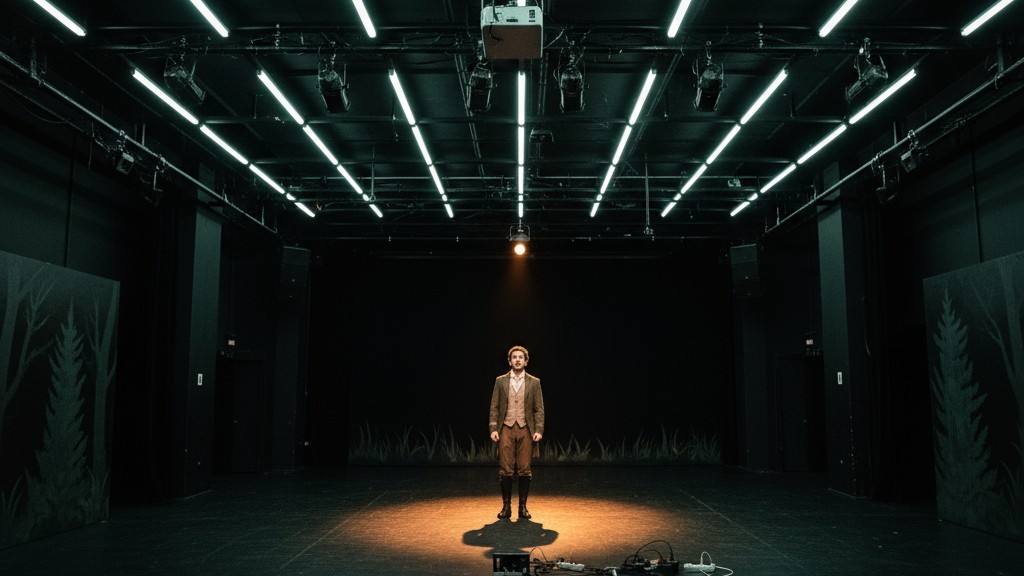
The culprit isn’t a missed cue from the lighting booth. It’s a motion sensor—a device installed to save energy, now acting as an unwitting saboteur. This disaster is painfully familiar in black box theaters, school auditoriums, and rehearsal rooms where standard building technology clashes with the demands of performance. The solution isn’t to abandon automated lighting, but to implement it with intelligence. It requires a shift from aggressive automation to a system that assists rather than dictates. By favoring manual control, employing patient timeouts, and placing sensors strategically, you can achieve energy efficiency without ever compromising a blackout.
The Enemy of Discipline: Why Standard Occupancy Sensors Fail in Performance
The failure of most off-the-shelf motion sensors in a theatrical setting stems from one flawed assumption: that a lack of motion means a lack of people. In an office, this is a safe bet. In a theater, it’s a catastrophic miscalculation.
The Auto-On Ambush
Standard occupancy sensors are built for convenience. They detect a person entering a room and immediately turn on the lights. This “auto-on” function is the primary source of conflict. During a performance, light is a narrative tool. An unexpected blast of light, triggered by an actor moving in the wings or an audience member shifting in their seat, is a jarring, unscripted event that shatters the fourth wall. Lighting for a performance must be 100% intentional, dictated by the script and the designer, not an algorithm.
The Stillness Problem
The second point of failure is the “auto-off” function. Most common sensors, particularly Passive Infrared (PIR) types, don’t detect presence; they detect the change caused by a moving heat source. A person walking creates a dynamic thermal signature the sensor easily registers. An actor holding a dramatic pause, however, or an entire audience rapt in a quiet scene, presents a static one. After its timeout period, the sensor interprets this stillness as an empty room and cuts the power. The result is a premature blackout that can derail a rehearsal or ruin a performance.
The First Principle: Embrace Manual-On Control
The most effective way to prevent these failures is to invert the sensor’s logic. A theatrical space doesn’t need a system that assumes the lights should be on; it needs one that waits for a direct command. This is the job of a vacancy sensor.
Rayzeek Hareket Sensörü Portföylerinden İlham Alın.
Aradığınızı bulamadınız mı? Endişelenmeyin. Sorunlarınızı çözmenin her zaman alternatif yolları vardır. Portföylerimizden biri size yardımcı olabilir.
While they look identical, occupancy and vacancy sensors operate on different principles. An occupancy sensor is fully autonomous, automating both “on” and “off.” A vacancy sensor only automates the “off.” The lights must be turned on manually with a wall switch. The sensor’s only job is to turn the lights off after confirming the room has been empty for a set period.
This simple distinction is transformative. By requiring a manual “on” command, a vacancy sensor returns authority to the stage manager or director. The work lights are turned on when a session begins and stay on, regardless of motion, until they are switched off or the room is empty for an extended time. During a performance, the work lights are off by default, so the sensor does nothing. It cannot trigger an “auto-on ambush” because the feature doesn’t exist. The system becomes a passive failsafe, not an active participant.
The Art of Patience: Set Timeouts for Theatrical Stillness
For a vacancy sensor to work, its timeout must respect the rhythm of a theatrical environment. The short, 5-to-15-minute delays common in offices are useless here; they will inevitably trigger the “stillness problem” during rehearsals.
A rehearsal room sees long periods of low motion during note sessions, table reads, or extended pauses. The sensor’s timeout must be long enough to bridge these moments. A 30-minute timeout is a good starting point, but 45 to 60 minutes is often more practical. The goal is a delay longer than any anticipated period of inactivity.
İlginizi Çekebilecek Diğer Ürünler

- Voltaj: 2 Adet AAA Pil
- Gündüz/Gece Modu
- Zaman gecikmesi: 15dk, 30dk, 1sa (varsayılan), 2sa

- Kuru kontak röle çıkışlı, tavan tipi PIR varlık sensörü
- 12/24VDC veya 12/24VAC düşük voltaj güç beslemesi
- EMS, HVAC ve bina kontrol girdileri için COM, NO ve NC izole röle kontakları

- Düşük voltaj DC sıva altı tavan tipi mikrodalga hareket sensörlü anahtar
- 10-30 VDC aralığına sahip 12 VDC / 24 VDC giriş
- Ayarlanabilir zaman gecikmesi, Lüks eşiği ve hassasiyet özelliklerine sahip maks. 10A çalışma akımı
- Yüksek yük kapasiteli sıva altı tavan tipi mikrodalga hareket sensörlü anahtar
- 100-265 VAC şebeke voltajı girişi, 10A model
- Ayarlanabilir zaman gecikmesi, Lüks eşiği ve hassasiyete sahip 5,8 GHz mikrodalga algılama
- Sıva altı tavana monte mikrodalga hareket sensörlü anahtar
- 100-265 VAC şebeke gerilimi girişi, 5A model
- Ayarlanabilir zaman gecikmesi, Lüks eşiği ve hassasiyete sahip 5,8 GHz mikrodalga algılama
- 220V güç için tavana monte RZ037 PIR varlık sensörlü dimmer
- 660W nominal yük ile 3A maksimum çalışma akımı
- LUX düğmesi, ışık sensörünün AÇIK/KAPALI konumunu ve kullanıcı tarafından ayarlanan dimmer parlaklığını kontrol eder
- 110V güç için tavana monte RZ037 PIR varlık sensörlü dimmer
- 330W nominal yük ile 3A maksimum çalışma akımı
- LUX düğmesi, ışık sensörünün AÇIK/KAPALI konumunu ve kullanıcı tarafından ayarlanan dimmer parlaklığını kontrol eder

- Düşük voltajlı DC tavan montajlı mikrodalga hareket sensörlü anahtar
- 10-30 VDC aralığına sahip 12 VDC / 24 VDC giriş
- Ayarlanabilir zaman gecikmesi, Lüks eşiği ve hassasiyet özelliklerine sahip maks. 10A çalışma akımı
- Yüksek yüklü tavan montajlı mikrodalga hareket sensörlü anahtar
- 100-265 VAC şebeke voltajı girişi, 10A model
- Ayarlanabilir zaman gecikmesi, Lüks eşiği ve hassasiyete sahip 5,8 GHz mikrodalga algılama
- Tavan montajlı mikrodalga hareket sensörlü anahtar
- 100-265 VAC şebeke gerilimi girişi, 5A model
- Ayarlanabilir zaman gecikmesi, Lüks eşiği ve hassasiyete sahip 5,8 GHz mikrodalga algılama

- Düşük voltajlı DC sıva altı tavan montajlı PIR hareket sensörlü anahtar
- 10-30 VDC aralığına sahip 12 VDC / 24 VDC giriş
- Ayarlanabilir zaman gecikmesi, Lüks eşiği ve hassasiyet ile maks. 10A çalışma akımı

- Yüksek yüklü sıva altı tavan montajlı PIR hareket sensörlü anahtar
- 100-265 VAC şebeke voltajı girişi, 10A model
- Ayarlanabilir zaman gecikmesi, Lüks eşiği ve hassasiyet ile 360 derece algılama
- Sıva altı tavan montajlı PIR hareket sensörlü anahtar
- 100-265 VAC şebeke gerilimi girişi, 5A model
- Ayarlanabilir zaman gecikmesi, Lüks eşiği ve hassasiyet ile 360 derece algılama

- İç mekan AÇMA/KAPAMA aydınlatma kontrolü için kablosuz anahtar ve alıcı seti
- 5A nominal akımlı 100-230VAC, 50/60Hz alıcı
- 2.4GHz haberleşmeli CR2032 pille çalışan kablosuz anahtar
- Varlık (Otomatik AÇMA/Otomatik KAPATMA)
- 12–24V DC (10–30VDC), 10A'e kadar
- 360° kapsama alanı, 8–12 m çap
- Zaman gecikmesi 15 sn–30 dk
- Işık sensörü Kapalı/15/25/35 Lux
- Yüksek/Düşük hassasiyet
- Otomatik AÇMA/Otomatik KAPATMA varlık modu
- 100–265V AC, 10A (nötr hattı gereklidir)
- 360° kapsama alanı; 8–12 m algılama çapı
- Zaman gecikmesi 15 sn–30 dk; Lux KAPALI/15/25/35; Hassasiyet Yüksek/Düşük
- Otomatik AÇMA/Otomatik KAPATMA varlık modu
- 100–265V AC, 5A (nötr hattı gereklidir)
- 360° kapsama alanı; 8–12 m algılama çapı
- Zaman gecikmesi 15 sn–30 dk; Lux KAPALI/15/25/35; Hassasiyet Yüksek/Düşük
This long timeout also serves as a crucial buffer. If the work lights are on the same circuit as the theatrical grid, a long delay ensures they don’t shut off during a performance blackout. The sensor won’t detect motion in the dark, but the extended timeout will carry the system through until the stage lights come back up. It’s a small compromise on energy efficiency that pays massive dividends in reliability.
Strategic Sightlines: Watch the Doors, Not the Drama
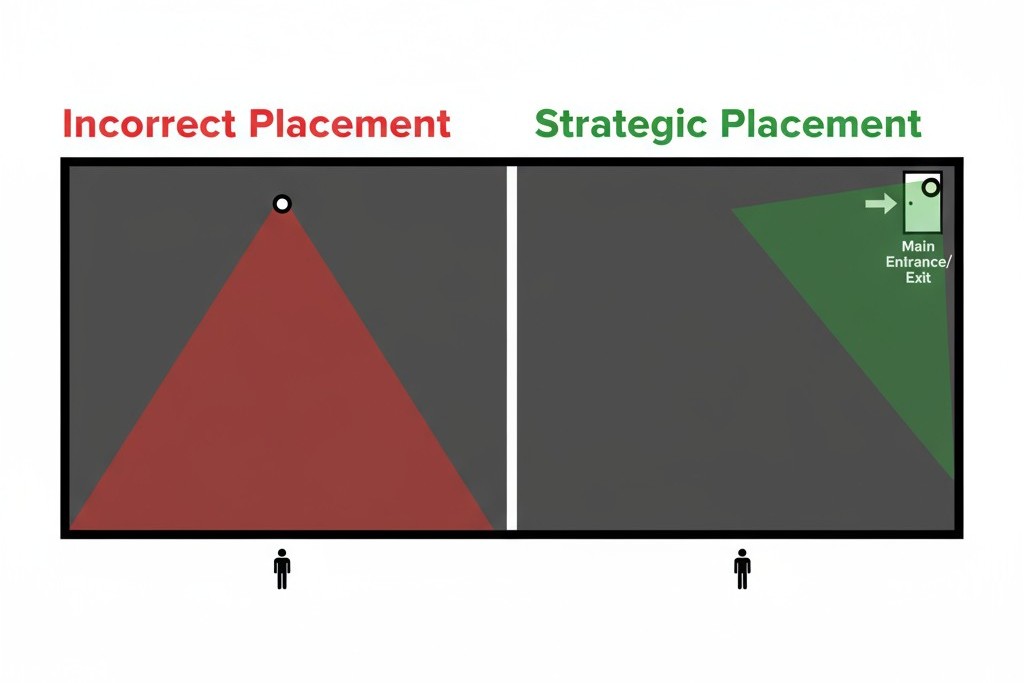
A sensor’s placement is as important as its programming. Its goal is not to track every person on stage, but simply to determine if the room is occupied. This requires targeted observation, not comprehensive coverage.
The most reliable placement is aimed at the main entry and exit points. A sensor with a clear view of the doorway can accurately register when people come and go. This provides the only information that matters—is the room in use?—without monitoring the performance area itself. This strategy narrows the sensor’s field of view to only what is necessary, minimizing the chance it will be affected by on-stage action.
Placing a sensor with a view of the stage or audience is a common mistake. A sensor pointed at the stage can be fooled by the rapid heating and cooling of theatrical lighting instruments, causing false triggers. More importantly, it creates a system that is trying to watch the very activity it should be ignoring. The sensor’s job is to be a simple gatekeeper, not a critic in the front row.
Hareket Algılamalı Enerji Tasarrufu Çözümleri Mi Arıyorsunuz?
Eksiksiz PIR hareket sensörleri, hareket algılamalı enerji tasarruflu ürünler, hareket sensörlü anahtarlar ve ticari Varlık/Yokluk (Occupancy/Vacancy) çözümleri için bizimle iletişime geçin.
Adapting the Space: Solutions for Multi-Use Rooms
Many performance spaces double as rehearsal halls, classrooms, and event venues. In these environments, a single sensor configuration may not be ideal. The solution is an adaptable system.
Mode-Based Controls
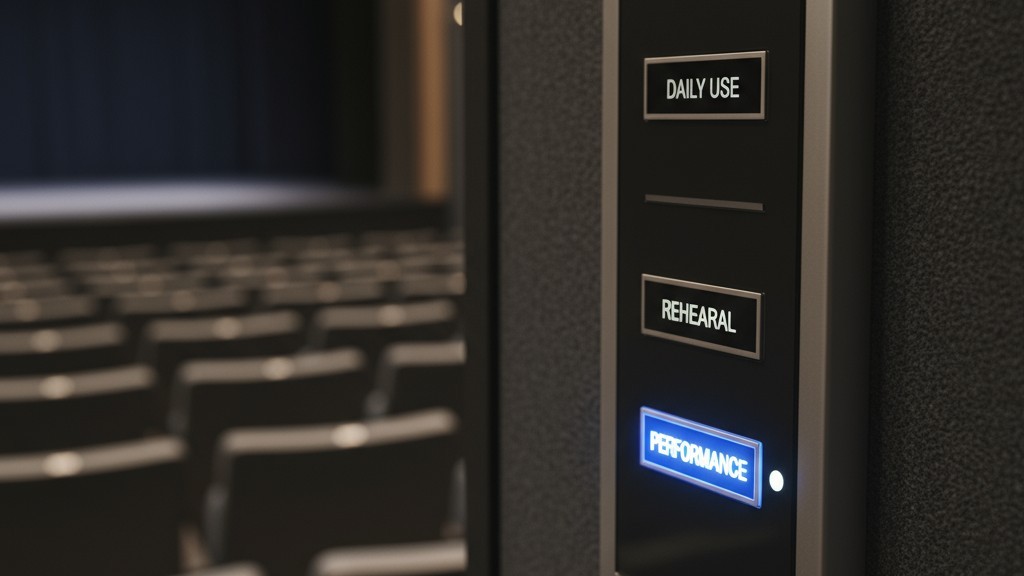
For a multi-use space, the ideal setup is a lighting control system with selectable modes. A wall-mounted keypad or a simple key switch can allow a user to choose the correct sensor profile for the day’s activity. A “Rehearsal” mode could engage the vacancy sensor with a 30-minute timeout. A “Performance” mode would disable the sensor’s auto-off capability entirely, putting the room’s lighting under the exclusive control of the lighting console. This offers the best of both worlds: automated efficiency for daily use and absolute manual control when it matters most.
Practical Workarounds
When a full system replacement isn’t an option, you can still mitigate the problems. If an existing occupancy sensor has an aggressive “auto-on” function, a simple workaround is to carefully apply opaque electrical tape to its lens, blocking its view of the stage and shrinking its effective zone to just the entryway. If a sensor’s timeout is too short and can’t be adjusted, the only reliable solution during a performance is to disable that circuit entirely. It’s a crude fix, but one that guarantees your show won’t be sabotaged by a flicker of unwanted light.







