
The house lights dim. A hush falls over the audience. On stage, a performer holds a final, dramatic pose before the scene cuts to black. The moment is perfect, the culmination of weeks of rehearsal. Then, with an audible 卡嗒聲, a bank of fluorescent lights overhead flickers to life, shattering the carefully crafted darkness and yanking everyone out of the story.
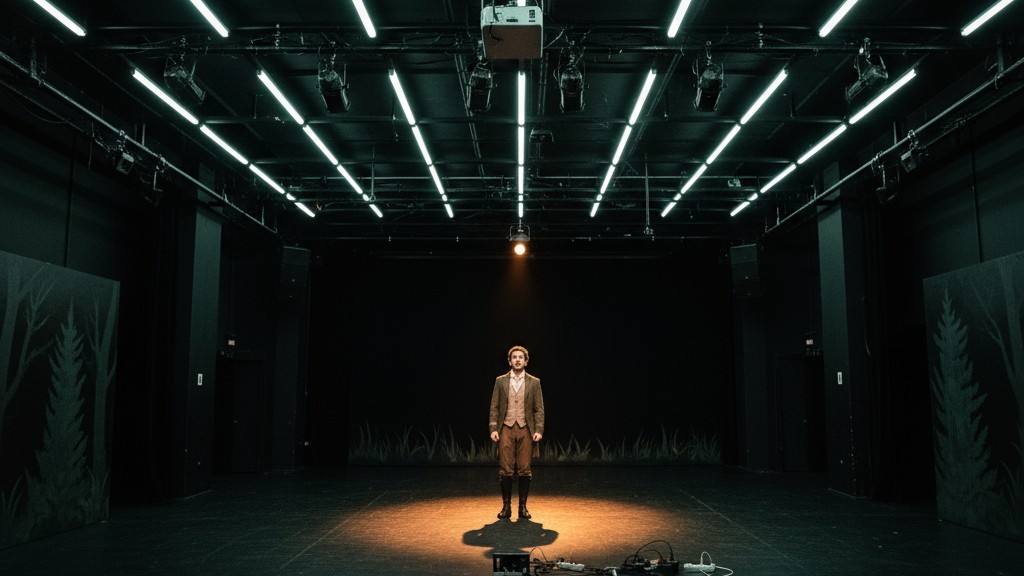
The culprit isn’t a missed cue from the lighting booth. It’s a motion sensor—a device installed to save energy, now acting as an unwitting saboteur. This disaster is painfully familiar in black box theaters, school auditoriums, and rehearsal rooms where standard building technology clashes with the demands of performance. The solution isn’t to abandon automated lighting, but to implement it with intelligence. It requires a shift from aggressive automation to a system that assists rather than dictates. By favoring manual control, employing patient timeouts, and placing sensors strategically, you can achieve energy efficiency without ever compromising a blackout.
The Enemy of Discipline: Why Standard Occupancy Sensors Fail in Performance
The failure of most off-the-shelf motion sensors in a theatrical setting stems from one flawed assumption: that a lack of motion means a lack of people. In an office, this is a safe bet. In a theater, it’s a catastrophic miscalculation.
The Auto-On Ambush
Standard occupancy sensors are built for convenience. They detect a person entering a room and immediately turn on the lights. This “auto-on” function is the primary source of conflict. During a performance, light is a narrative tool. An unexpected blast of light, triggered by an actor moving in the wings or an audience member shifting in their seat, is a jarring, unscripted event that shatters the fourth wall. Lighting for a performance must be 100% intentional, dictated by the script and the designer, not an algorithm.
The Stillness Problem
The second point of failure is the “auto-off” function. Most common sensors, particularly Passive Infrared (PIR) types, don’t detect presence; they detect the change caused by a moving heat source. A person walking creates a dynamic thermal signature the sensor easily registers. An actor holding a dramatic pause, however, or an entire audience rapt in a quiet scene, presents a static one. After its timeout period, the sensor interprets this stillness as an empty room and cuts the power. The result is a premature blackout that can derail a rehearsal or ruin a performance.
The First Principle: Embrace Manual-On Control
The most effective way to prevent these failures is to invert the sensor’s logic. A theatrical space doesn’t need a system that assumes the lights should be on; it needs one that waits for a direct command. This is the job of a vacancy sensor.
從 Rayzeek 動態感測器產品組合中獲得靈感。
找不到您想要的產品?別擔心。總有其他方法可以解決您的問題。也許我們的其中一個產品組合可以幫到您。
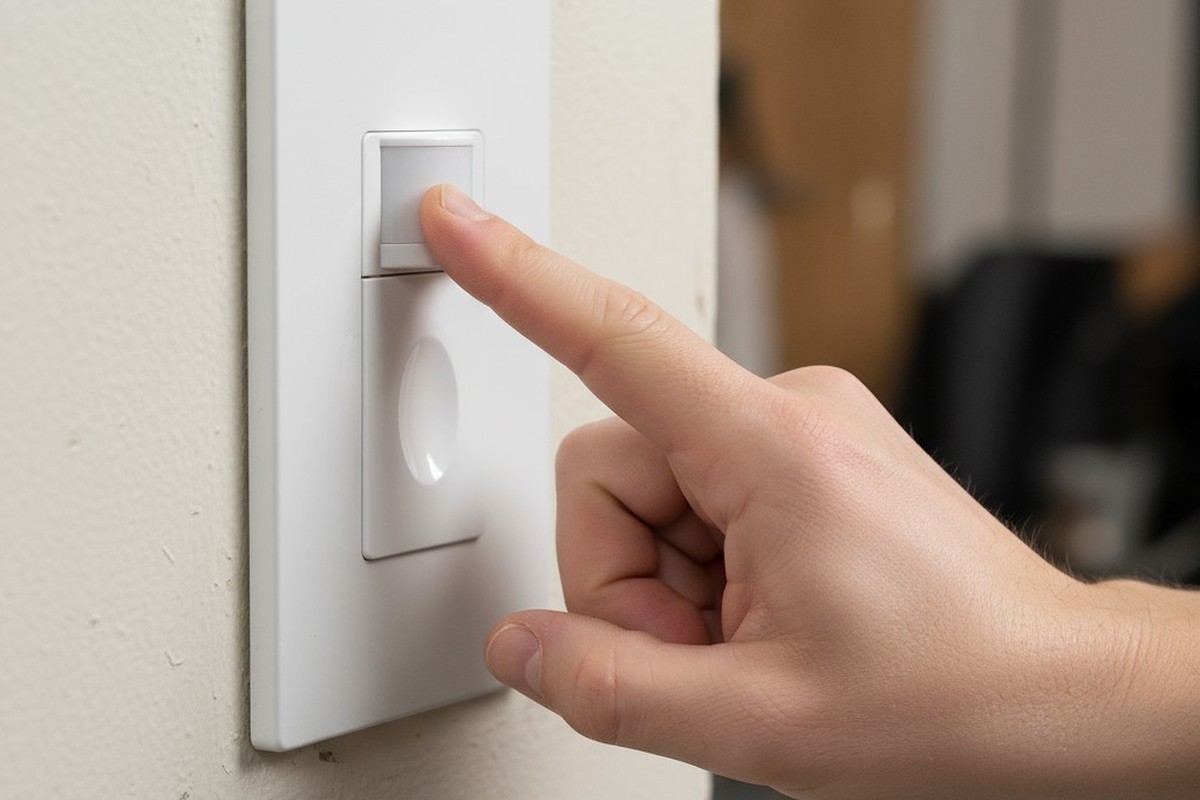
While they look identical, occupancy and vacancy sensors operate on different principles. An occupancy sensor is fully autonomous, automating both “on” and “off.” A vacancy sensor only automates the “off.” The lights must be turned on manually with a wall switch. The sensor’s only job is to turn the lights off after confirming the room has been empty for a set period.
This simple distinction is transformative. By requiring a manual “on” command, a vacancy sensor returns authority to the stage manager or director. The work lights are turned on when a session begins and stay on, regardless of motion, until they are switched off or the room is empty for an extended time. During a performance, the work lights are off by default, so the sensor does nothing. It cannot trigger an “auto-on ambush” because the feature doesn’t exist. The system becomes a passive failsafe, not an active participant.
The Art of Patience: Set Timeouts for Theatrical Stillness
For a vacancy sensor to work, its timeout must respect the rhythm of a theatrical environment. The short, 5-to-15-minute delays common in offices are useless here; they will inevitably trigger the “stillness problem” during rehearsals.
A rehearsal room sees long periods of low motion during note sessions, table reads, or extended pauses. The sensor’s timeout must be long enough to bridge these moments. A 30-minute timeout is a good starting point, but 45 to 60 minutes is often more practical. The goal is a delay longer than any anticipated period of inactivity.
您可能也會感興趣

- 電壓:2 粒 AAA 電池
- 日/夜模式
- 延遲時間:15 分鐘、30 分鐘、1 小時(預設)、2 小時

- 吸頂式 PIR 人體感應器,配備乾觸點繼電器輸出
- 12/24VDC 或 12/24VAC 低電壓供電
- 用於 EMS、HVAC 和建築控制輸入的 COM、NO 和 NC 隔離繼電器觸點

- 低壓直流嵌入式天花安裝微波人體感應開關
- 12 VDC / 24 VDC 輸入,支援 10-30 VDC 範圍
- 最大工作電流 10A,配備可調節延時、光感閾值及靈敏度
- 高負載嵌入式天花安裝微波人體感應開關
- 100-265 VAC 市電輸入,10A 型號
- 5.8 GHz 微波感應,配備可調節延時、光感閾值及靈敏度
- 嵌入式天花安裝微波人體感應開關
- 100-265 VAC 市電輸入,5A 型號
- 5.8 GHz 微波感應,配備可調節延時、光感閾值及靈敏度
- 適用於 220V 電源的天花安裝 RZ037 PIR 被動式紅外線佔空感應調光開關
- 最大工作電流 3A,額定負載 660W
- LUX 按鈕控制光線感應器開關及用戶設定之調光亮度
- 適用於 110V 電源的天花安裝 RZ037 PIR 被動式紅外線佔空感應調光開關
- 最大工作電流 3A,額定負載 330W
- LUX 按鈕控制光線感應器開關及用戶設定之調光亮度

- 低壓直流天花安裝微波人體感應開關
- 12 VDC / 24 VDC 輸入,支援 10-30 VDC 範圍
- 最大工作電流 10A,配備可調節延時、光感閾值及靈敏度
- 高負載吸頂式微波動態感應器開關
- 100-265 VAC 市電輸入,10A 型號
- 5.8 GHz 微波感應,配備可調節延時、光感閾值及靈敏度
- 吸頂式微波動態感應器開關
- 100-265 VAC 市電輸入,5A 型號
- 5.8 GHz 微波感應,配備可調節延時、光感閾值及靈敏度

- 低壓直流嵌頂式 PIR 動態感應器開關
- 12 VDC / 24 VDC 輸入,支援 10-30 VDC 範圍
- 最大工作電流 10A,具備可調式時間延遲、光照度閾值及靈敏度

- 高負載嵌頂式 PIR 動態感應器開關
- 100-265 VAC 市電輸入,10A 型號
- 360度偵測,具備可調式時間延遲、光照度閾值及靈敏度
- 嵌頂式 PIR 動態感應器開關
- 100-265 VAC 市電輸入,5A 型號
- 360度偵測,具備可調式時間延遲、光照度閾值及靈敏度

- 用於室內開關照明控制的無線開關及接收器套裝
- 100-230VAC,50/60Hz 接收器,額定電流 5A
- CR2032 電池供電無線開關,採用 2.4GHz 通訊
- 佔用感應(自動開啟/自動關閉)
- 12–24V DC (10–30VDC),最高 10A
- 360° 覆蓋,直徑 8–12 米
- 延遲時間 15 秒至 30 分鐘
- 光感應器 關閉/15/25/35 Lux
- 高/低靈敏度
- 自動開啟/自動關閉佔用模式
- 100–265V AC,10A(需接零線)
- 360° 全方位覆蓋;8–12 米偵測直徑
- 延遲時間 15 秒至 30 分鐘;Lux 關閉/15/25/35;靈敏度 高/低
- 自動開啟/自動關閉佔用模式
- 100–265V AC,5A(需接零線)
- 360° 全方位覆蓋;8–12 米偵測直徑
- 延遲時間 15 秒至 30 分鐘;Lux 關閉/15/25/35;靈敏度 高/低
This long timeout also serves as a crucial buffer. If the work lights are on the same circuit as the theatrical grid, a long delay ensures they don’t shut off during a performance blackout. The sensor won’t detect motion in the dark, but the extended timeout will carry the system through until the stage lights come back up. It’s a small compromise on energy efficiency that pays massive dividends in reliability.
Strategic Sightlines: Watch the Doors, Not the Drama
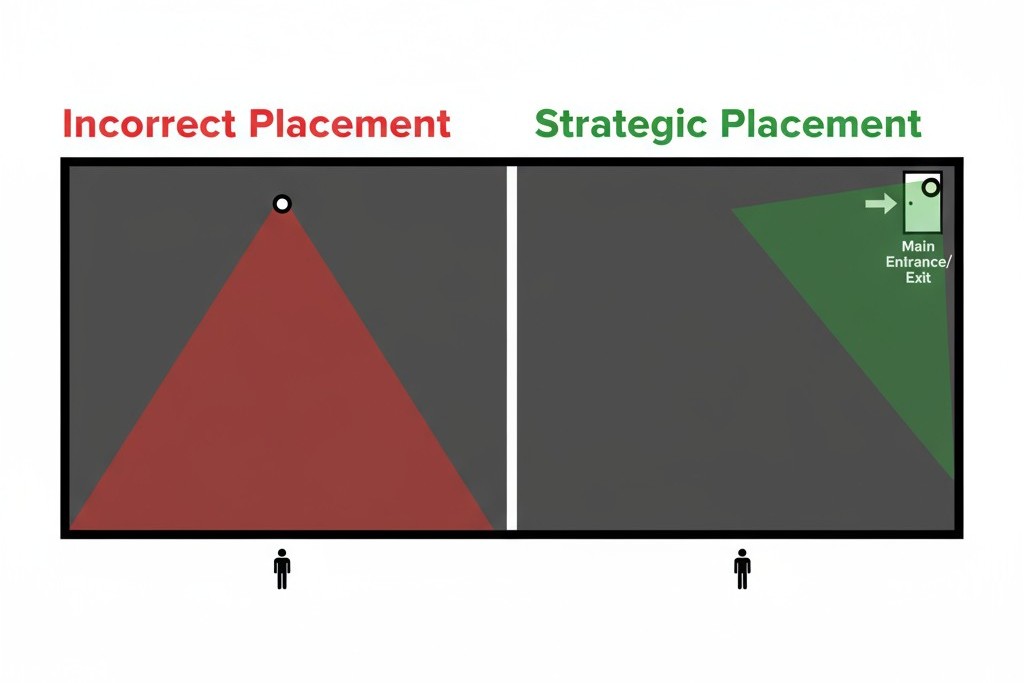
A sensor’s placement is as important as its programming. Its goal is not to track every person on stage, but simply to determine if the room is occupied. This requires targeted observation, not comprehensive coverage.
The most reliable placement is aimed at the main entry and exit points. A sensor with a clear view of the doorway can accurately register when people come and go. This provides the only information that matters—is the room in use?—without monitoring the performance area itself. This strategy narrows the sensor’s field of view to only what is necessary, minimizing the chance it will be affected by on-stage action.
Placing a sensor with a view of the stage or audience is a common mistake. A sensor pointed at the stage can be fooled by the rapid heating and cooling of theatrical lighting instruments, causing false triggers. More importantly, it creates a system that is trying to watch the very activity it should be ignoring. The sensor’s job is to be a simple gatekeeper, not a critic in the front row.
正在尋找動態感應節能解決方案?
歡迎聯絡我們以獲取完整的 PIR 動態感應器、動態感應節能產品、動態感應器開關以及人體感應/無人感應商業解決方案。
Adapting the Space: Solutions for Multi-Use Rooms
Many performance spaces double as rehearsal halls, classrooms, and event venues. In these environments, a single sensor configuration may not be ideal. The solution is an adaptable system.
Mode-Based Controls
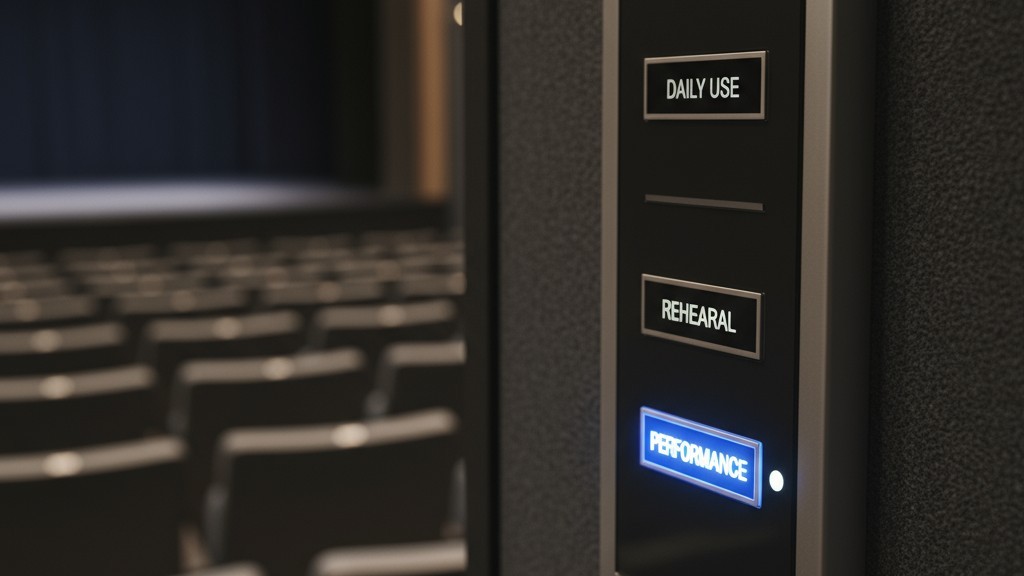
For a multi-use space, the ideal setup is a lighting control system with selectable modes. A wall-mounted keypad or a simple key switch can allow a user to choose the correct sensor profile for the day’s activity. A “Rehearsal” mode could engage the vacancy sensor with a 30-minute timeout. A “Performance” mode would disable the sensor’s auto-off capability entirely, putting the room’s lighting under the exclusive control of the lighting console. This offers the best of both worlds: automated efficiency for daily use and absolute manual control when it matters most.
Practical Workarounds
When a full system replacement isn’t an option, you can still mitigate the problems. If an existing occupancy sensor has an aggressive “auto-on” function, a simple workaround is to carefully apply opaque electrical tape to its lens, blocking its view of the stage and shrinking its effective zone to just the entryway. If a sensor’s timeout is too short and can’t be adjusted, the only reliable solution during a performance is to disable that circuit entirely. It’s a crude fix, but one that guarantees your show won’t be sabotaged by a flicker of unwanted light.







