
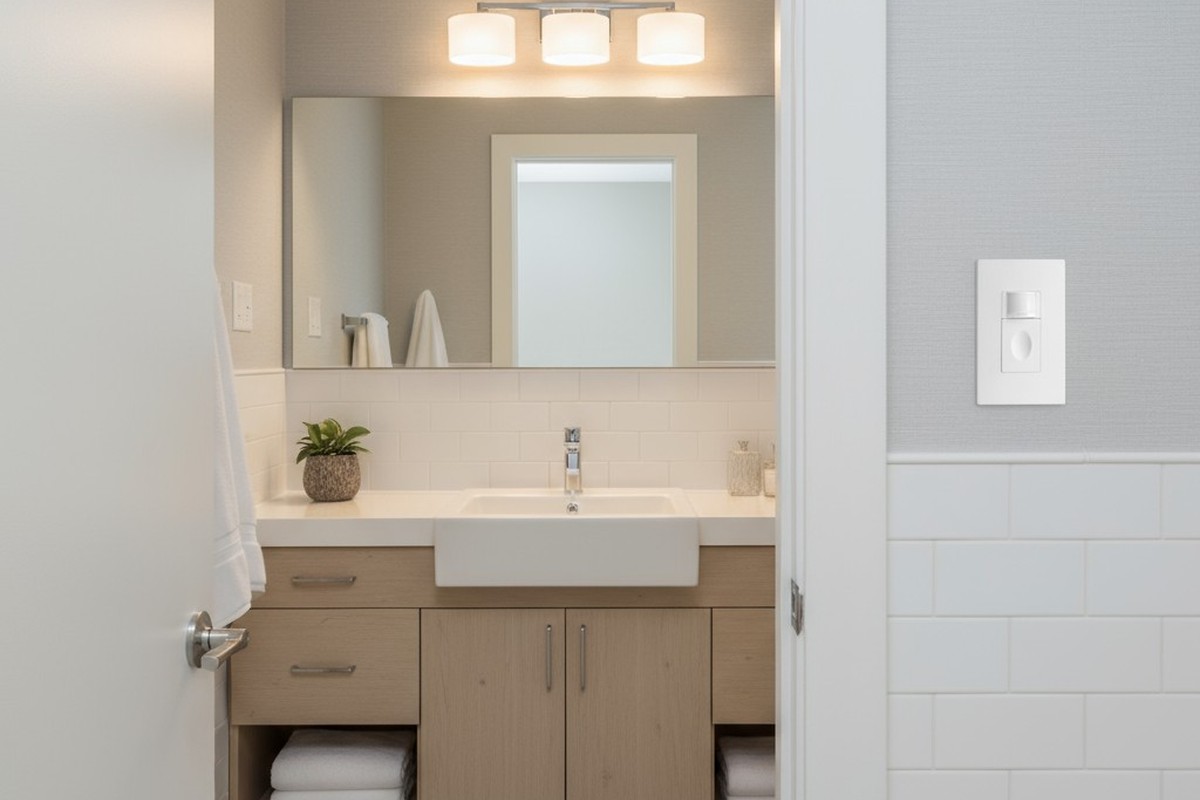
Un aspiratore da bagno con sensore di umidità sembra la soluzione perfetta. Promette di attivarsi esattamente quando si fa la doccia, di funzionare solo per il tempo necessario a eliminare il vapore e poi di spegnersi automaticamente. La logica non fa una piega: la doccia crea umidità, i sensori la rilevano e l'aspiratore la rimuove. È un ciclo automatizzato ed elegante.

Tranne per il fatto che spesso non funziona. Nel mondo reale, i controlli basati sull'umidità sono sorprendentemente inaffidabili. Le ventole rimangono silenziose durante l'uso del bagno per soli odori. Non si attivano dopo una doccia calda in un clima secco. Si spengono troppo rapidamente in un piccolo bagno di servizio. L'ideale di una ventola perfettamente calibrata e sensibile all'umidità fallisce sistematicamente la prova della vita quotidiana, imponendo una riconsiderazione di ciò che rende davvero efficace un sistema di ventilazione.
Per la maggior parte delle abitazioni, un approccio più semplice è di gran lunga più affidabile: il controllo basato sulla presenza con un temporizzatore post-utilizzo. Questa strategia scambia la precisione teorica di un sensore con la certezza pratica della presenza umana. Quando qualcuno entra in bagno, l'aspiratore si avvia. Quando esce, un temporizzatore lo mantiene in funzione per un periodo di tempo impostato. È un sistema prevedibile, indipendente dal clima e in grado di gestire sia l'umidità che gli odori senza dover misurare né l'una né gli altri. Sebbene il rilevamento dell'umidità abbia una sua nicchia, il controllo di presenza rappresenta la strategia predefinita superiore.
Come funzionano le due strategie
I due approcci operano su attivazioni e presupposti completamente diversi. Uno reagisce ai cambiamenti ambientali, mentre l'altro risponde all'azione umana.
Lasciati ispirare dai portafogli di sensori di movimento Rayzeek.
Non trovi quello che cerchi? Non preoccuparti. Esistono sempre modi alternativi per risolvere i tuoi problemi. Forse uno dei nostri portafogli prodotti può esserti d'aiuto.
Rilevamento dell'umidità: una stima reattiva
Un sensore di umidità misura l'umidità relativa (UR) nell'aria circostante, ovvero la quantità di vapore acqueo presente rispetto al massimo che l'aria potrebbe contenere a quella temperatura. L'aspiratore viene attivato in uno dei due modi seguenti. Attivazione a soglia attiva l'aspiratore quando l'UR supera un livello preimpostato, in genere 50-70%. Attivazione a variazione (Delta) risponde a una rapida velocità di variazione, come un aumento del 10% di UR in cinque minuti.
In entrambe le modalità, il sistema è puramente reattivo. Attende un picco di umidità significativo dovuto a una doccia o a un bagno, rimane in funzione finché l'umidità non scende al di sotto della soglia e poi si spegne. Presuppone che una variazione misurabile dell'umidità sia l'unica ragione valida per la ventilazione.
Controllo di presenza: una certezza basata sugli eventi
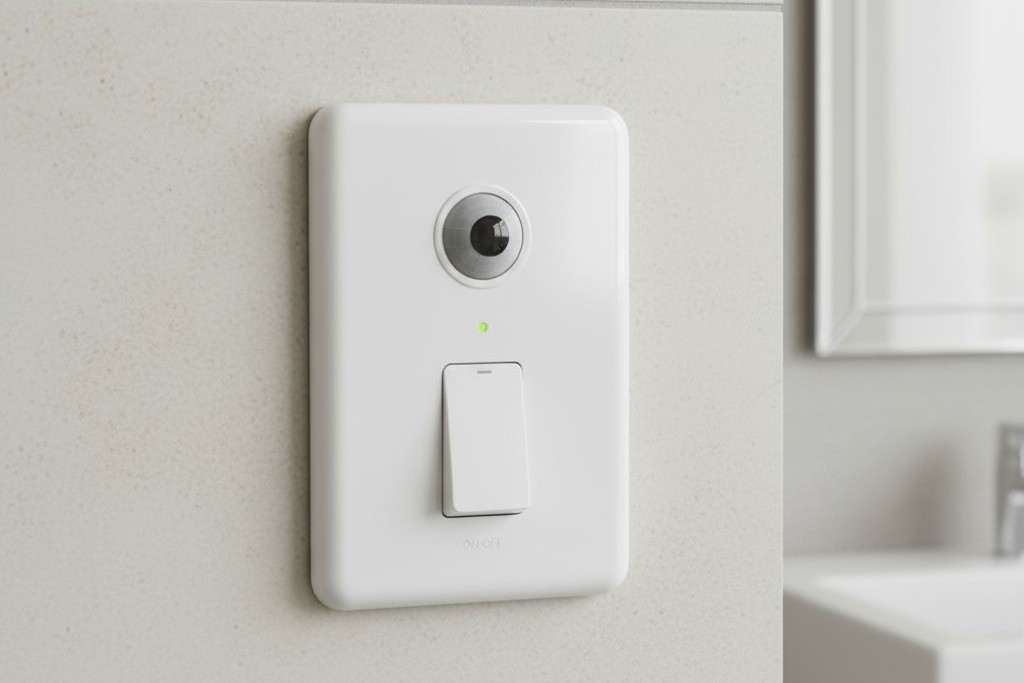
Il controllo di presenza si affida a un sensore di movimento o di presenza. Quando si entra in bagno, l'aspiratore si accende immediatamente e rimane in funzione per tutto il tempo in cui si rimane all'interno. Il componente critico è il temporizzatore post-presenza. Quando si esce, il sensore rileva l'assenza e avvia un conto alla rovescia, in genere da 10 a 20 minuti. L'aspiratore continua a funzionare per tutta questa durata, garantendo un ricambio d'aria completo che rimuove sia l'umidità che gli odori.
This behavior is deterministic. Presence guarantees activation; departure guarantees a thorough post-run. The system doesn’t interpret environmental data. It assumes every bathroom visit warrants ventilation and delivers it with mechanical consistency.
Where Humidity Sensing Breaks Down
The clean logic of humidity sensing conceals common failure modes. These aren’t rare malfunctions but predictable outcomes rooted in the physics of air and the patterns of daily life.
The Dry Climate Trap
Relative humidity is just that—relative. In an arid climate where baseline indoor humidity might be just 15%, a steamy shower can fog the mirror without ever pushing the RH past the sensor’s 50% trigger threshold. The bathroom might feel damp, but the absolute humidity change isn’t enough to register. Even a delta-based sensor might miss the event if the rise is too gradual. In climates where the ambient humidity rarely exceeds 40%, a standard humidity sensor becomes little more than a ceiling ornament.
The Small Bathroom Problem
In a small powder room, the limited air volume means moisture from handwashing or a quick shower can cause a rapid humidity spike. But that small volume also means the room equilibrates just as quickly. Air exchanges with the hallway under the door, and moisture diffuses into wall surfaces. The humidity spike can rise and fall before a sensor with conservative settings even registers it as an event worth addressing. The result is inconsistent performance, eroding any trust in the system.
Odor Is Not Moisture
The most fundamental flaw is categorical: a humidity sensor cannot detect odor. A bathroom visit that generates no steam produces no meaningful change in relative humidity. The sensor sees nothing, the fan stays off, and the odor lingers. Since odor control is a primary reason people want a bathroom fan, a system that is blind to this problem is fundamentally inadequate.
Cerchi Soluzioni per il Risparmio Energetico Attivate dal Movimento?
Contattaci per sensori di movimento PIR completi, prodotti per il risparmio energetico attivati dal movimento, interruttori con sensore di movimento e soluzioni commerciali di presenza/vacanza.
Why Occupancy Control Is More Reliable
Occupancy control sidesteps these issues by abandoning environmental measurement altogether. Its logic is simple and sound: if someone used the bathroom, ventilation is necessary.
This approach just works, everywhere. A home in Phoenix with 12% baseline humidity gets the same reliable fan operation as one in New Orleans with 65% humidity. The system is immune to climate because it responds only to a universal constant: human presence. It covers both moisture and odor comprehensively, because the post-run timer is set long enough to cycle the room’s air multiple times. A 15-minute run in a standard bathroom with an 80 CFM fan will exchange the entire volume of air three times over—more than enough to clear steam and smells.
The key is setting the timer correctly. A small powder room might only need 10 minutes, while a standard bathroom benefits from 15-20 minutes. Most occupancy controls have adjustable timers, allowing you to tune the run time to your specific needs.
Finally, the system is predictable. You know what it will do every time. It turns on when you enter and runs for a set time after you leave. There’s no mystery, no second-guessing if the conditions were “right.” This consistency builds trust and lets you forget about the fan entirely, because it behaves the same way every time.
When Humidity Sensing Still Makes Sense
Despite its flaws, humidity sensing excels in a few specific scenarios where its adaptive nature becomes an advantage.
Chronically Humid Climates

In coastal regions or areas with high annual rainfall, indoor humidity can consistently hover above 50-60%. Here, the low-baseline problem inverts. A shower will easily push the RH past a 70% threshold, making the sensor highly reliable. In this environment, a fixed 15-minute timer from an occupancy sensor might not be enough to bring the elevated humidity back to a safe level, increasing mold risk. A humidity sensor, however, will continue running until the job is done, providing a crucial adaptive response.
Shared or Commercial Bathrooms
In a multi-stall public restroom or a gym locker room, occupancy sensing is impractical. A motion sensor might never detect a true vacancy, causing the fan to run nonstop, or it might shut off while someone is in a stall outside its view. Here, humidity sensing or simple continuous ventilation is a better fit, as it can respond to the aggregate moisture load from multiple users.
Choosing the Right Strategy
For the vast majority of homes, the choice is clear.
For most residential bathrooms: Occupancy control with an adjustable 15-20 minute timer is the most reliable choice. It works consistently in any climate, handles both odor and moisture, and is completely predictable. This is especially true for homes in arid or moderate climates and for any small-to-medium-sized bathroom.
Potrebbero Interessarti Anche

- Tensione: 2 batterie AAA
- Modalità Giorno/Notte
- Ritardo spegnimento: 15min, 30min, 1h(predefinito), 2h

- Sensore di presenza PIR da soffitto con uscita relè a contatto pulito
- Alimentazione a bassa tensione 12/24VDC o 12/24VAC
- Contatti relè isolati COM, NO e NC per ingressi EMS, HVAC e controllo edifici

- Interruttore con sensore di movimento a microonde da soffitto a incasso in Bassa Tensione CC
- Ingresso 12 VDC / 24 VDC con intervallo 10-30 VDC
- Corrente di lavoro max 10A con ritardo temporale, soglia Lux e sensibilità regolabili
- Interruttore con sensore di movimento a microonde da soffitto a incasso per carichi più elevati
- Ingresso tensione di linea 100-265 VAC, modello da 10A
- Rilevamento a microonde a 5.8 GHz con ritardo temporale, soglia Lux e sensibilità regolabili
- Interruttore con sensore di movimento a microonde da soffitto a incasso
- Ingresso tensione di linea 100-265 VAC, modello da 5A
- Rilevamento a microonde a 5.8 GHz con ritardo temporale, soglia Lux e sensibilità regolabili
- Dimmer con sensore di presenza PIR RZ037 da soffitto per alimentazione a 220V
- Corrente di lavoro massima 3A con carico nominale di 660W
- Il pulsante LUX controlla l'ON/OFF del sensore di luce e la luminosità di regolazione impostata dall'utente
- Dimmer con sensore di presenza PIR RZ037 da soffitto per alimentazione a 110V
- Corrente massima di esercizio di 3A con carico nominale di 330W
- Il pulsante LUX controlla l'ON/OFF del sensore di luce e la luminosità di regolazione impostata dall'utente

- Interruttore da soffitto con sensore di movimento a microonde a bassa tensione CC
- Ingresso 12 VDC / 24 VDC con intervallo 10-30 VDC
- Corrente di lavoro max 10A con ritardo temporale, soglia Lux e sensibilità regolabili
- Interruttore da soffitto con sensore di movimento a microonde per carichi più elevati
- Ingresso tensione di linea 100-265 VAC, modello da 10A
- Rilevamento a microonde a 5.8 GHz con ritardo temporale, soglia Lux e sensibilità regolabili
- Interruttore da soffitto con sensore di movimento a microonde
- Ingresso tensione di linea 100-265 VAC, modello da 5A
- Rilevamento a microonde a 5.8 GHz con ritardo temporale, soglia Lux e sensibilità regolabili

- Interruttore con sensore di movimento PIR da soffitto a incasso a bassa tensione CC
- Ingresso 12 VDC / 24 VDC con intervallo 10-30 VDC
- Corrente massima di esercizio di 10A con ritardo temporale, soglia Lux e sensibilità regolabili

- Interruttore con sensore di movimento PIR da soffitto a incasso per carichi più elevati
- Ingresso tensione di linea 100-265 VAC, modello da 10A
- Rilevamento a 360 gradi con ritardo temporale, soglia Lux e sensibilità regolabili
- Interruttore con sensore di movimento PIR da soffitto a incasso
- Ingresso tensione di linea 100-265 VAC, modello da 5A
- Rilevamento a 360 gradi con ritardo temporale, soglia Lux e sensibilità regolabili

- Kit interruttore e ricevitore wireless per il controllo dell'illuminazione ON/OFF da interno
- Ricevitore 100-230VAC, 50/60Hz con corrente nominale di 5A
- Interruttore wireless alimentato da batteria CR2032 con comunicazione a 2,4 GHz
- Rilevamento presenza (Auto-ON/Auto-OFF)
- 12–24V DC (10–30VDC), fino a 10A
- Copertura a 360°, diametro di rilevamento 8–12 m
- Ritardo di spegnimento 15 s–30 min
- Sensore crepuscolare Off/15/25/35 Lux
- Sensibilità Alta/Bassa
- Modalità presenza Auto-ON/Auto-OFF
- 100–265V AC, 10A (neutro richiesto)
- Copertura a 360°; diametro di rilevamento 8–12 m
- Ritardo di spegnimento 15 s–30 min; Lux OFF/15/25/35; Sensibilità Alta/Bassa
- Modalità presenza Auto-ON/Auto-OFF
- 100–265V AC, 5A (neutro richiesto)
- Copertura a 360°; diametro di rilevamento 8–12 m
- Ritardo di spegnimento 15 s–30 min; Lux OFF/15/25/35; Sensibilità Alta/Bassa
For bathrooms in chronically humid climates: If your indoor RH is regularly above 50%, humidity sensing is a strong contender. The elevated baseline makes the sensor reliable, and its ability to run until the moisture is truly gone is a key advantage in preventing mold. A dual-mode system—triggering on occupancy but continuing to run based on humidity—offers the best of both worlds.
For large, complex bathrooms: A master bath over 100 square feet may benefit from a longer post-run timer (20-25 minutes) on an occupancy sensor, or a more sophisticated dual-mode controller.
The goal is to align the control strategy with the real-world conditions of the space. While humidity sensing offers a sophisticated, data-driven approach, it is a specialized tool that performs well only under specific conditions. Occupancy control is a general-purpose solution that sacrifices theoretical precision for practical reliability. In most bathrooms, reliability wins.







