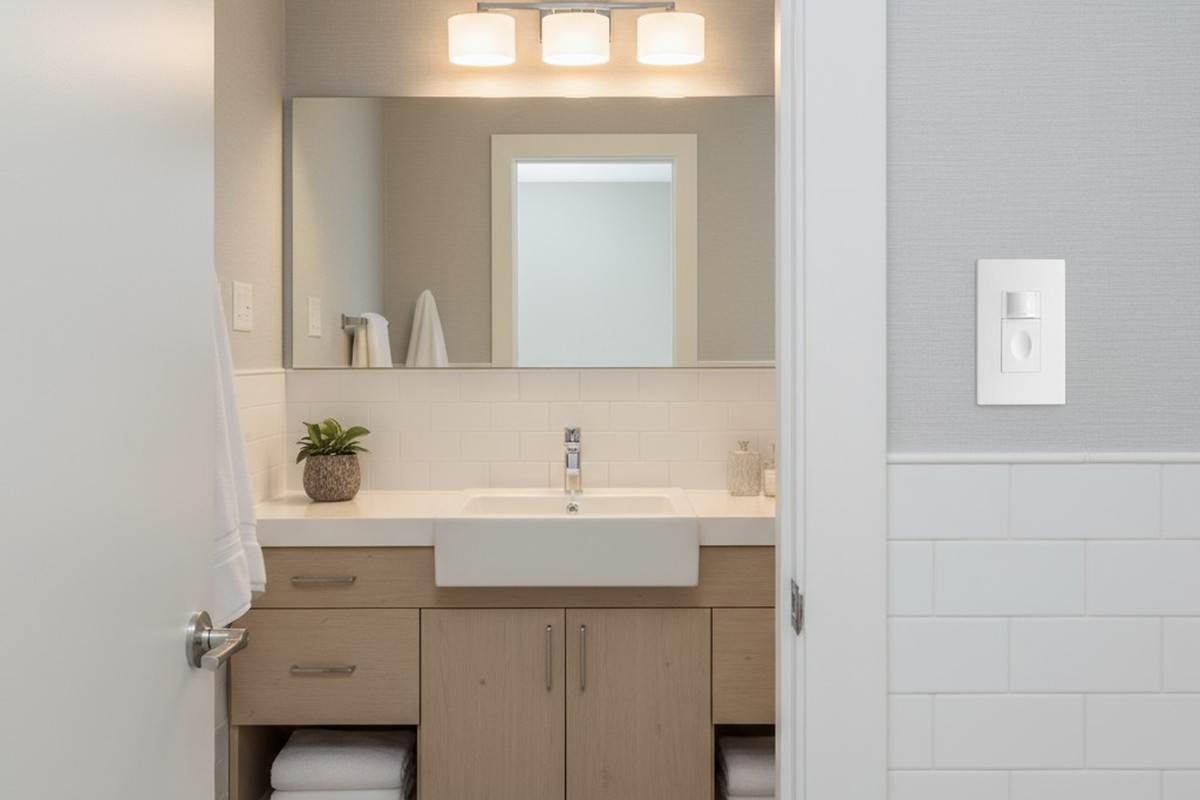
Un extractor de baño con sensor de humedad parece la solución perfecta. Promete activarse precisamente cuando usted se ducha, funcionar solo el tiempo suficiente para eliminar el vapor y luego apagarse automáticamente. La lógica es irrebatible: las duchas generan humedad, los sensores la detectan y el extractor la elimina. Es un ciclo automatizado y elegante.

Salvo que, a menudo, no funciona. En el mundo real, los controles basados en la humedad son sorprendentemente poco fiables. Los extractores permanecen en silencio durante las visitas al baño en las que solo hay olores. No se activan tras una ducha caliente en un clima seco. Se apagan demasiado rápido en un aseo pequeño. El ideal de un extractor perfectamente calibrado y sensible a la humedad falla sistemáticamente la prueba de la vida cotidiana, lo que obliga a reconsiderar qué hace que un sistema de ventilación sea verdaderamente eficaz.
Para la mayoría de los hogares, un enfoque más sencillo es mucho más fiable: el control basado en la presencia con un temporizador de post-funcionamiento. Esta estrategia cambia la precisión teórica de un sensor por la certeza práctica de la presencia humana. Cuando alguien entra en el baño, el extractor funciona. Cuando sale, un temporizador lo mantiene en marcha durante un período determinado. Es predecible, independiente del clima y gestiona tanto la humedad como los olores sin tener que medir ninguno de los dos. Aunque la detección de humedad tiene su nicho, el control de presencia es la estrategia predeterminada superior.
Cómo funcionan las dos estrategias
Los dos enfoques operan con activadores y premisas totalmente diferentes. Uno reacciona ante los cambios ambientales, mientras que el otro responde a la acción humana.
Inspírese con los portafolios de sensores de movimiento Rayzeek.
¿No encuentra lo que busca? No se preocupe. Siempre existen formas alternativas de resolver sus problemas. Quizá alguno de nuestros portafolios pueda ayudarle.
Detección de humedad: una conjetura reactiva
Un sensor de humedad mide la humedad relativa (HR) en el aire circundante: la cantidad de vapor de agua presente en comparación con la máxima que el aire podría contener a esa temperatura. El extractor se activa de una de las dos formas siguientes. Activación por umbral activa el extractor cuando la HR supera un nivel preestablecido, normalmente del 50-70%. Activación por diferencial responde a una rápida tasa de cambio, como un aumento del 10% de HR en cinco minutos.
En cualquiera de los modos, el sistema es puramente reactivo. Espera a que se produzca un pico significativo de humedad procedente de una ducha o un baño, funciona hasta que la humedad vuelve a estar por debajo del umbral y se apaga. Presupone que un cambio medible en la humedad es la única razón válida para la ventilación.
Control de presencia: una certeza basada en eventos
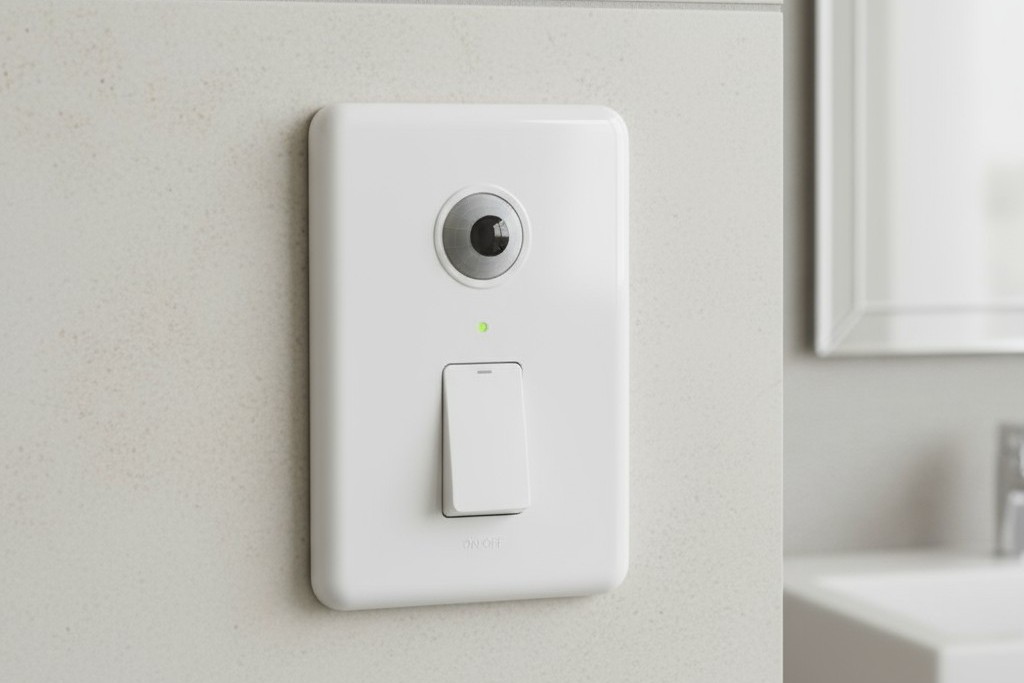
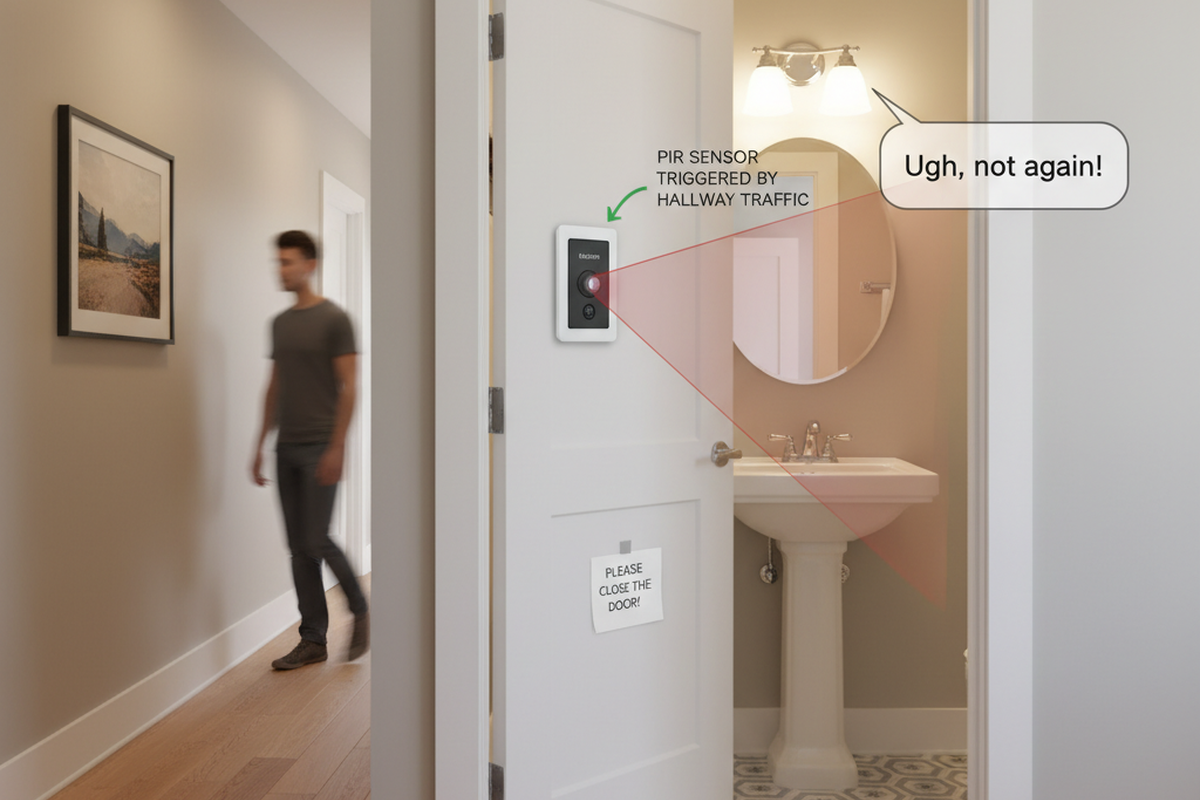
El control de presencia se basa en un sensor de movimiento o de presencia. Cuando usted entra en el baño, el extractor se enciende inmediatamente y funciona mientras permanezca allí. El componente crítico es el temporizador posterior a la ocupación. Cuando usted sale, el sensor detecta su ausencia e inicia una cuenta atrás, normalmente de 10 a 20 minutos. El extractor continúa funcionando durante todo este tiempo, lo que garantiza una renovación completa del aire que elimina tanto la humedad como los olores.
Este comportamiento es determinista. La presencia garantiza la activación; la salida garantiza un funcionamiento posterior exhaustivo. El sistema no interpreta datos ambientales. Presupone que cada visita al baño justifica la ventilación y la proporciona con consistencia mecánica.
Where Humidity Sensing Breaks Down
The clean logic of humidity sensing conceals common failure modes. These aren’t rare malfunctions but predictable outcomes rooted in the physics of air and the patterns of daily life.
The Dry Climate Trap
Relative humidity is just that—relative. In an arid climate where baseline indoor humidity might be just 15%, a steamy shower can fog the mirror without ever pushing the RH past the sensor’s 50% trigger threshold. The bathroom might feel damp, but the absolute humidity change isn’t enough to register. Even a delta-based sensor might miss the event if the rise is too gradual. In climates where the ambient humidity rarely exceeds 40%, a standard humidity sensor becomes little more than a ceiling ornament.
The Small Bathroom Problem
In a small powder room, the limited air volume means moisture from handwashing or a quick shower can cause a rapid humidity spike. But that small volume also means the room equilibrates just as quickly. Air exchanges with the hallway under the door, and moisture diffuses into wall surfaces. The humidity spike can rise and fall before a sensor with conservative settings even registers it as an event worth addressing. The result is inconsistent performance, eroding any trust in the system.
Odor Is Not Moisture
The most fundamental flaw is categorical: a humidity sensor cannot detect odor. A bathroom visit that generates no steam produces no meaningful change in relative humidity. The sensor sees nothing, the fan stays off, and the odor lingers. Since odor control is a primary reason people want a bathroom fan, a system that is blind to this problem is fundamentally inadequate.
¿Busca soluciones de ahorro de energía activadas por movimiento?
Póngase en contacto con nosotros para obtener sensores de movimiento PIR completos, productos de ahorro de energía activados por movimiento, interruptores con sensor de movimiento y soluciones comerciales de presencia/vacancia.
Why Occupancy Control Is More Reliable
Occupancy control sidesteps these issues by abandoning environmental measurement altogether. Its logic is simple and sound: if someone used the bathroom, ventilation is necessary.
This approach just works, everywhere. A home in Phoenix with 12% baseline humidity gets the same reliable fan operation as one in New Orleans with 65% humidity. The system is immune to climate because it responds only to a universal constant: human presence. It covers both moisture and odor comprehensively, because the post-run timer is set long enough to cycle the room’s air multiple times. A 15-minute run in a standard bathroom with an 80 CFM fan will exchange the entire volume of air three times over—more than enough to clear steam and smells.
The key is setting the timer correctly. A small powder room might only need 10 minutes, while a standard bathroom benefits from 15-20 minutes. Most occupancy controls have adjustable timers, allowing you to tune the run time to your specific needs.
Finally, the system is predictable. You know what it will do every time. It turns on when you enter and runs for a set time after you leave. There’s no mystery, no second-guessing if the conditions were “right.” This consistency builds trust and lets you forget about the fan entirely, because it behaves the same way every time.
When Humidity Sensing Still Makes Sense
Despite its flaws, humidity sensing excels in a few specific scenarios where its adaptive nature becomes an advantage.
Chronically Humid Climates

In coastal regions or areas with high annual rainfall, indoor humidity can consistently hover above 50-60%. Here, the low-baseline problem inverts. A shower will easily push the RH past a 70% threshold, making the sensor highly reliable. In this environment, a fixed 15-minute timer from an occupancy sensor might not be enough to bring the elevated humidity back to a safe level, increasing mold risk. A humidity sensor, however, will continue running until the job is done, providing a crucial adaptive response.
Shared or Commercial Bathrooms
In a multi-stall public restroom or a gym locker room, occupancy sensing is impractical. A motion sensor might never detect a true vacancy, causing the fan to run nonstop, or it might shut off while someone is in a stall outside its view. Here, humidity sensing or simple continuous ventilation is a better fit, as it can respond to the aggregate moisture load from multiple users.
Choosing the Right Strategy
For the vast majority of homes, the choice is clear.
For most residential bathrooms: Occupancy control with an adjustable 15-20 minute timer is the most reliable choice. It works consistently in any climate, handles both odor and moisture, and is completely predictable. This is especially true for homes in arid or moderate climates and for any small-to-medium-sized bathroom.
Quizás le interese

- Tensión: 2 pilas AAA
- Modo Día/Noche
- Temporización: 15 min, 30 min, 1 h (por defecto), 2 h
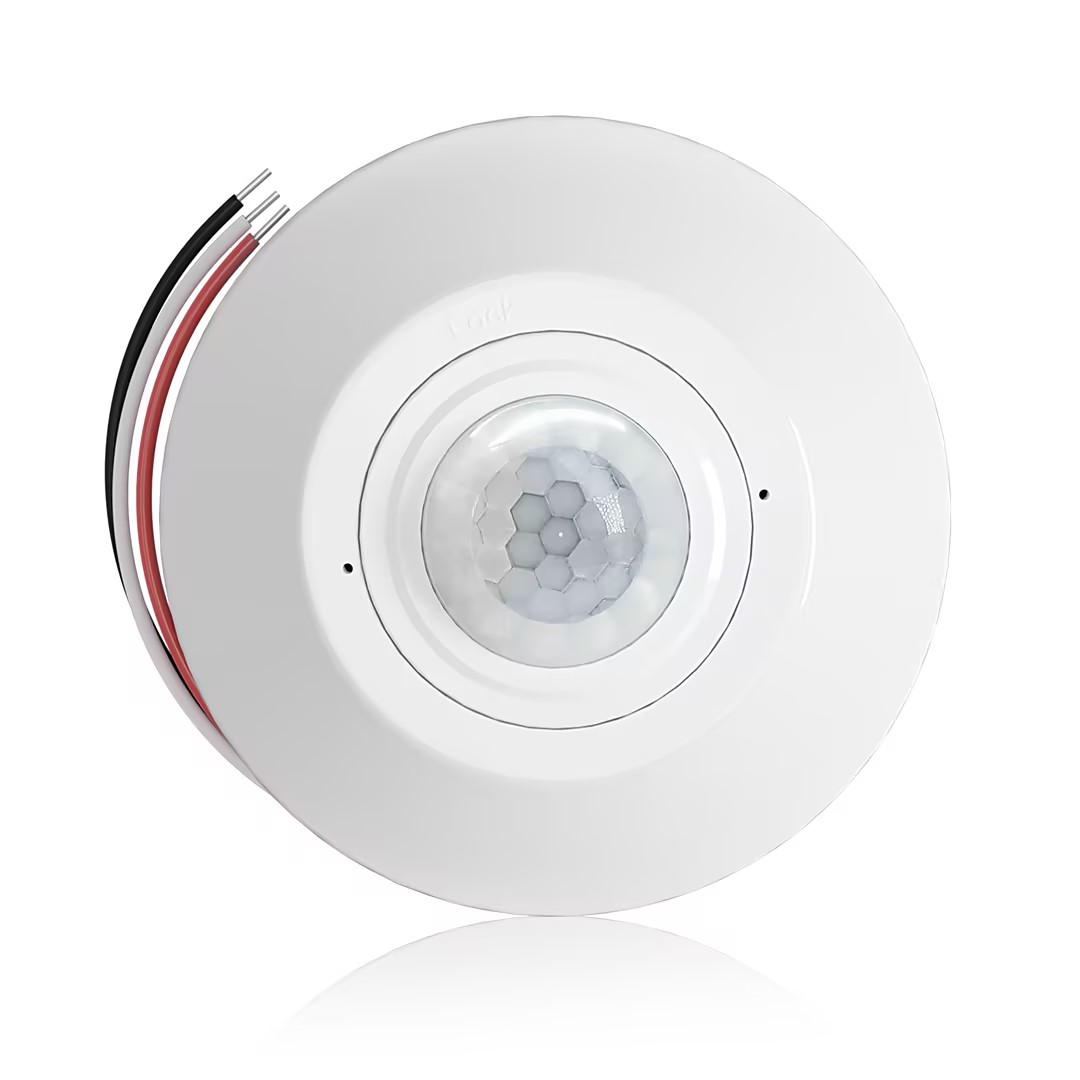
- Sensor de presencia PIR para montaje en techo con salida de relé de contacto seco
- Alimentación de baja tensión de 12/24VDC o 12/24VAC
- Contactos de relé aislados COM, NO y NC para entradas de EMS, HVAC y control de edificios
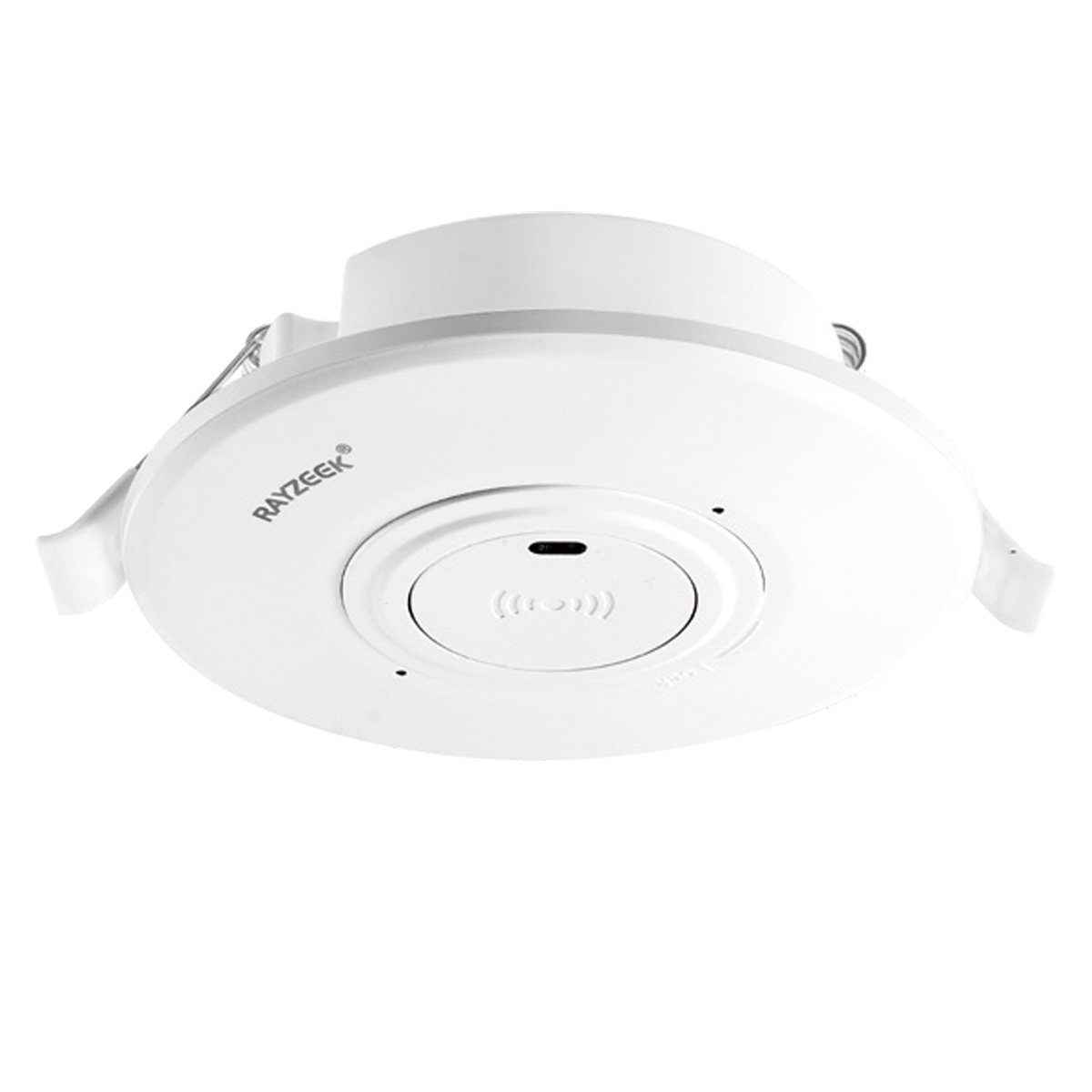
- Interruptor con sensor de movimiento por microondas empotrable en techo de baja tensión DC
- Entrada de 12 VDC / 24 VDC con rango de 10-30 VDC
- Corriente de funcionamiento máxima de 10A con retardo de tiempo, umbral de Lux y sensibilidad ajustables
- Interruptor con sensor de movimiento por microondas empotrable en techo para cargas más elevadas
- Entrada de tensión de red de 100-265 VAC, modelo de 10A
- Detección por microondas de 5,8 GHz con temporizador, umbral Lux y sensibilidad ajustables
- Interruptor con sensor de movimiento por microondas empotrable para techo
- Entrada de tensión de red de 100-265 VAC, modelo de 5A
- Detección por microondas de 5,8 GHz con temporizador, umbral Lux y sensibilidad ajustables
- Regulador con sensor de presencia PIR RZ037 de techo para alimentación de 220V
- Corriente de funcionamiento máxima de 3A con carga nominal de 660W
- El botón LUX controla el encendido/apagado del sensor de luz y la regulación de brillo ajustada por el usuario
- Regulador con sensor de presencia PIR RZ037 de techo para alimentación de 110V
- Corriente de funcionamiento máxima de 3A con carga nominal de 330W
- El botón LUX controla el encendido/apagado del sensor de luz y la regulación de brillo ajustada por el usuario
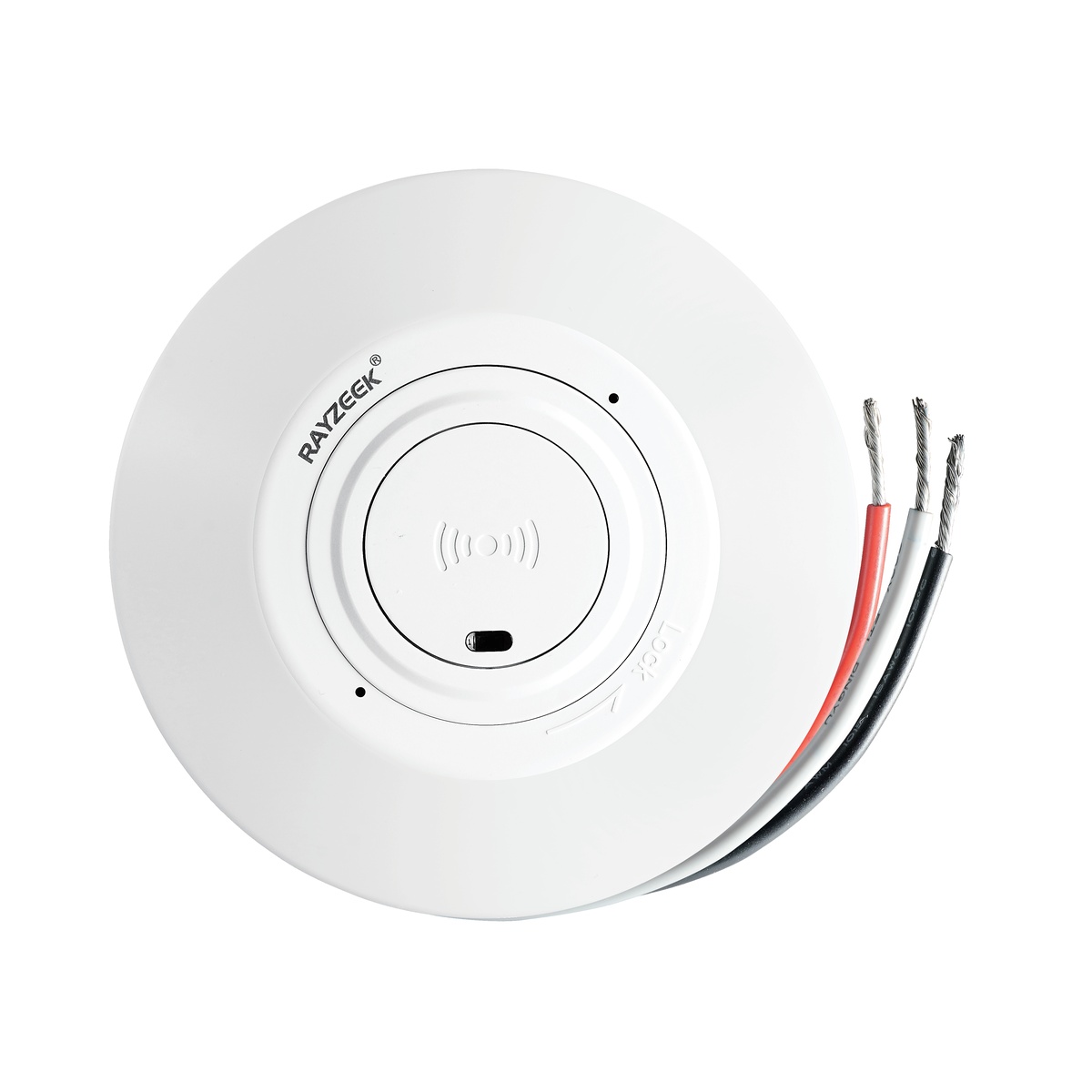
- Interruptor con sensor de movimiento por microondas de techo para CC de bajo voltaje
- Entrada de 12 VDC / 24 VDC con rango de 10-30 VDC
- Corriente de funcionamiento máxima de 10A con retardo de tiempo, umbral de Lux y sensibilidad ajustables
- Interruptor con sensor de movimiento por microondas de techo para mayor carga
- Entrada de tensión de red de 100-265 VAC, modelo de 10A
- Detección por microondas de 5,8 GHz con temporizador, umbral Lux y sensibilidad ajustables
- Interruptor con sensor de movimiento por microondas de techo
- Entrada de tensión de red de 100-265 VAC, modelo de 5A
- Detección por microondas de 5,8 GHz con temporizador, umbral Lux y sensibilidad ajustables
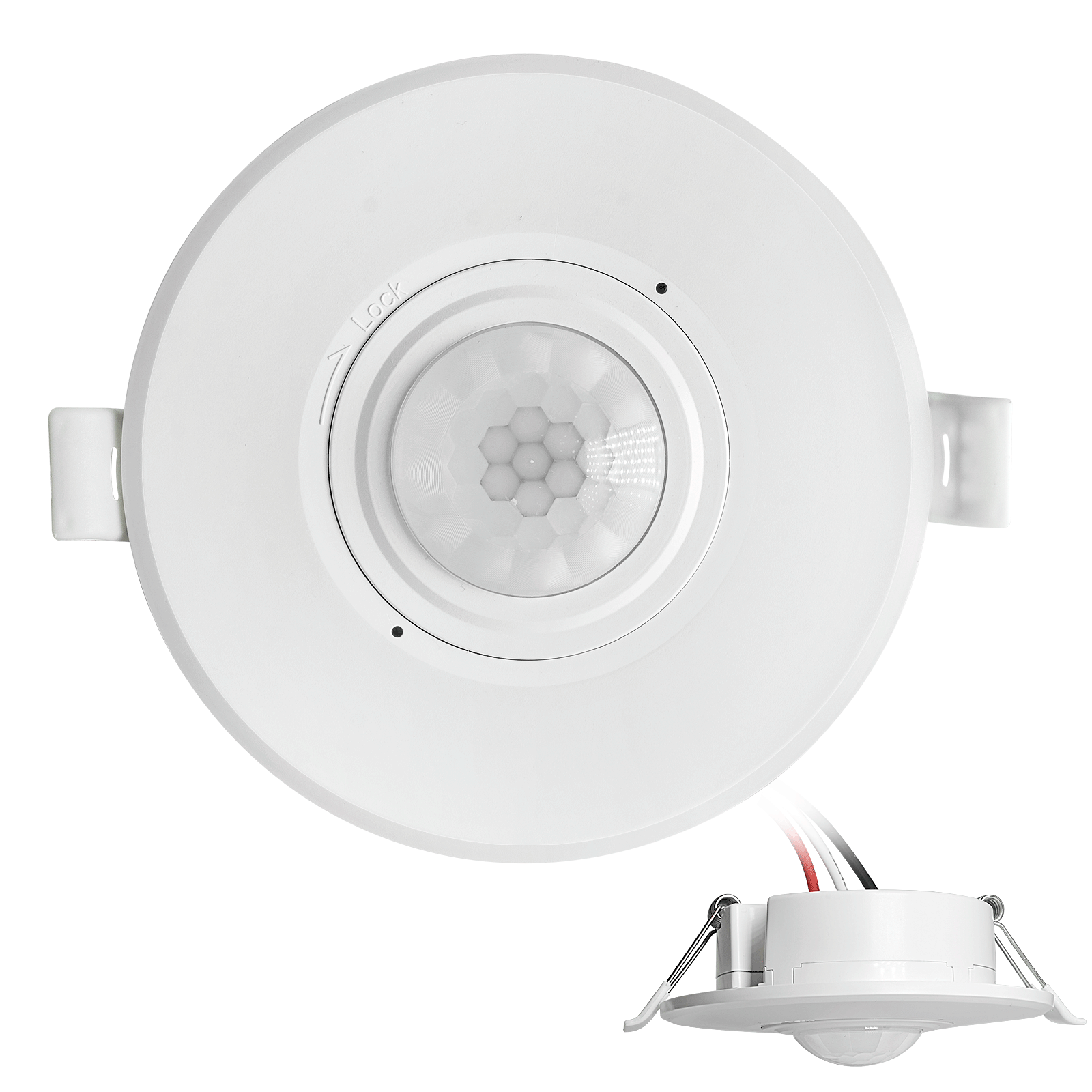
- Interruptor con sensor de movimiento PIR para montaje empotrable en techo de CC de bajo voltaje
- Entrada de 12 VDC / 24 VDC con rango de 10-30 VDC
- Corriente máxima de trabajo de 10 A con tiempo de retardo, umbral de luxes y sensibilidad ajustables
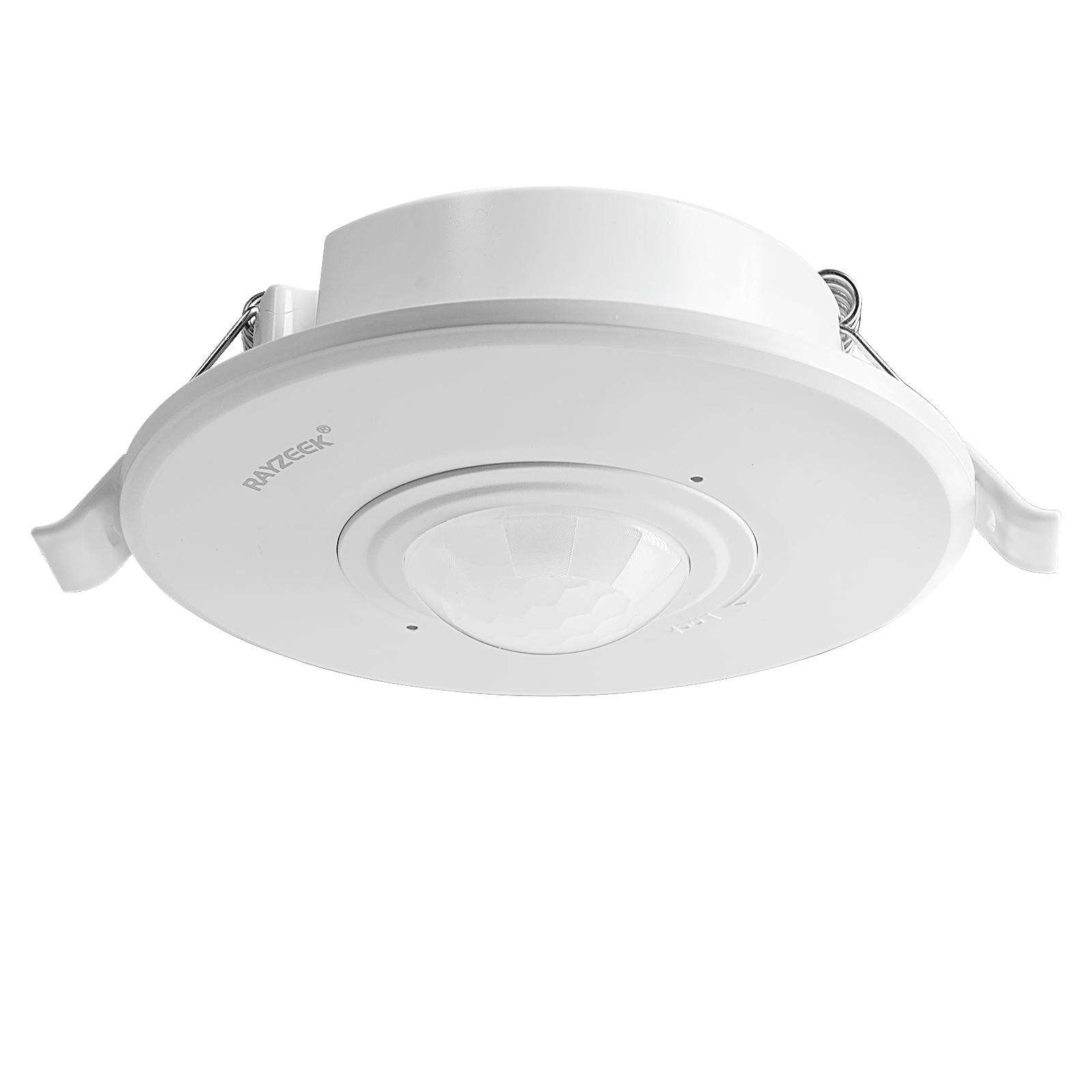
- Interruptor con sensor de movimiento PIR empotrable en techo para mayor carga
- Entrada de tensión de red de 100-265 VAC, modelo de 10A
- Detección de 360 grados con tiempo de retardo, umbral de luxes y sensibilidad ajustables
- Interruptor con sensor de movimiento PIR empotrable en techo
- Entrada de tensión de red de 100-265 VAC, modelo de 5A
- Detección de 360 grados con tiempo de retardo, umbral de luxes y sensibilidad ajustables
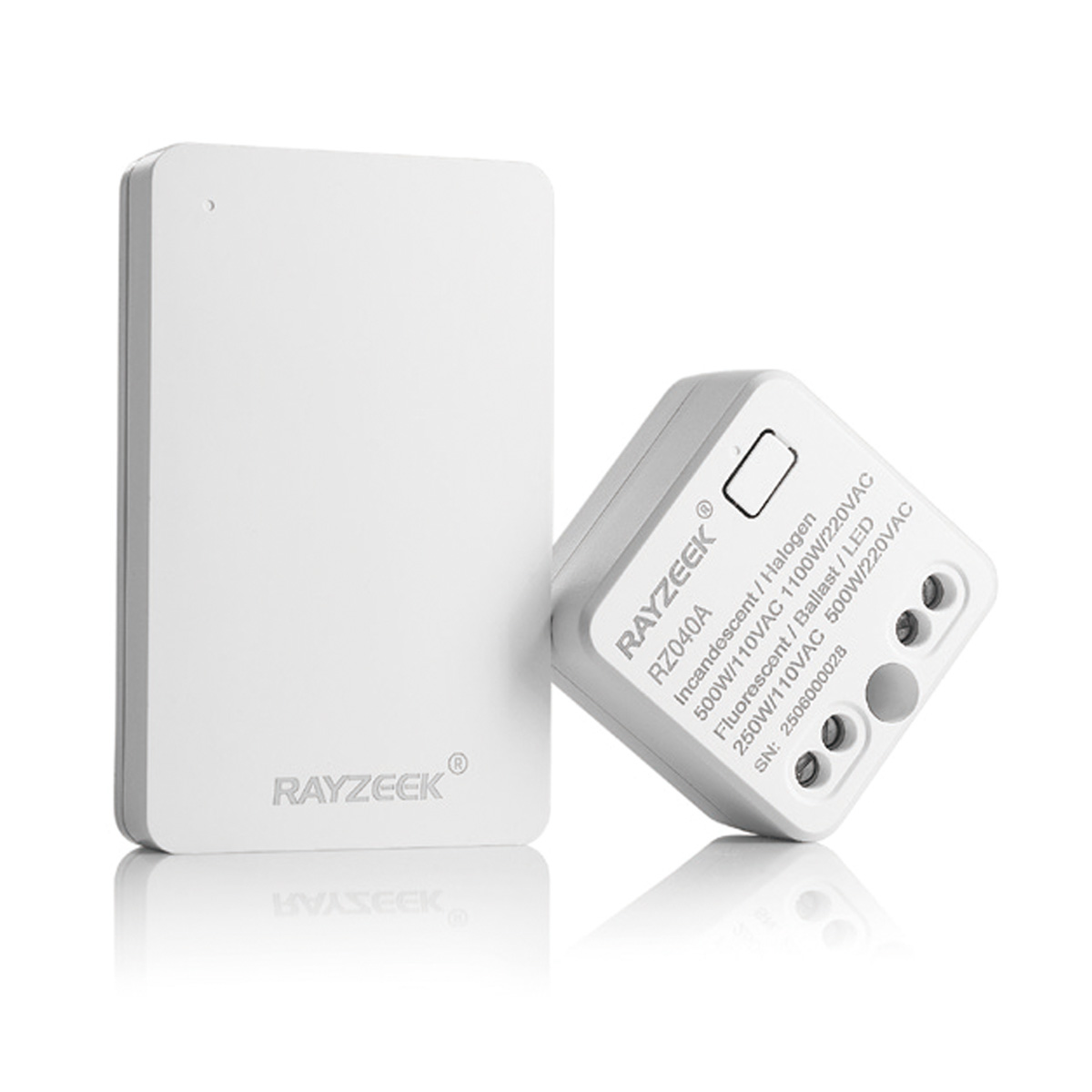
- Kit de emisor inalámbrico y receptor para el control de iluminación de encendido/apagado en interiores
- Receptor de 100-230 V CA, 50/60 Hz con corriente nominal de 5 A
- Interruptor inalámbrico alimentado por CR2032 con comunicación de 2,4 GHz
- Presencia (encendido automático/apagado automático)
- 12–24 V CC (10–30 V CC), hasta 10 A
- Cobertura de 360°, 8–12 m de diámetro
- Tiempo de retardo de 15 s a 30 min
- Sensor de luz Desactivado/15/25/35 Lux
- Sensibilidad alta/baja
- Modo de presencia con encendido/apagado automático
- 100–265V CA, 10A (requiere neutro)
- Cobertura de 360°; diámetro de detección de 8–12 m
- Temporización: 15 s–30 min; Lux OFF/15/25/35; Sensibilidad Alta/Baja
- Modo de presencia con encendido/apagado automático
- 100–265V CA, 5A (requiere neutro)
- Cobertura de 360°; diámetro de detección de 8–12 m
- Temporización: 15 s–30 min; Lux OFF/15/25/35; Sensibilidad Alta/Baja
For bathrooms in chronically humid climates: If your indoor RH is regularly above 50%, humidity sensing is a strong contender. The elevated baseline makes the sensor reliable, and its ability to run until the moisture is truly gone is a key advantage in preventing mold. A dual-mode system—triggering on occupancy but continuing to run based on humidity—offers the best of both worlds.
For large, complex bathrooms: A master bath over 100 square feet may benefit from a longer post-run timer (20-25 minutes) on an occupancy sensor, or a more sophisticated dual-mode controller.
The goal is to align the control strategy with the real-world conditions of the space. While humidity sensing offers a sophisticated, data-driven approach, it is a specialized tool that performs well only under specific conditions. Occupancy control is a general-purpose solution that sacrifices theoretical precision for practical reliability. In most bathrooms, reliability wins.