
如果您的浴室感應開關因走廊的通行人流而誤啟動,問題通常是由於開門形成了直線視線的隙縫。請進行快速步態測試,然後調整感應器的方向或遮蔽部分感應區域,使其能偵測到進入浴室的第一步,同時忽略經過的人流。

 Horace He
如果您的浴室感應開關因走廊的通行人流而誤啟動,問題通常是由於開門形成了直線視線的隙縫。請進行快速步態測試,然後調整感應器的方向或遮蔽部分感應區域,使其能偵測到進入浴室的第一步,同時忽略經過的人流。

較舊的房屋在牆內電線盒中往往缺乏零線(Neutral wire),而這種配線狀況決定了 PIR 感應器開關搭配 LED 燈具時會穩定運行還是出現故障。本指南將說明需要檢查的項目、無零線開關運作異常的原因、更安全的替代方案以及應避免的事項。

使用 Rayzeek PIR 開關,讓多位置的樓梯照明具備標準 3-Way 開關的操作體驗。了解安裝位置、單一決策者原則、安全的延時調整,以及能防止燈光閃爍和梯間中途變暗的行走測試協定。

LED 燈具在關閉時發光、延時結束時閃爍或「隨機」關閉,通常並非開關本身故障。本實用指南展示如何識別症狀、進行單一變數測試,並針對驅動器、過熱、負載或誤觸發等問題尋找對應的解決方案。

Conference rooms can pass a walk test and still go dark mid-call when people sit still. Learn a practical control contract—often vacancy mode—plus validation steps for seated presence, sensor placement, and timeouts that keep video meetings reliable without making rooms always-on.

Fitting rooms fail in two ways: lights that shut off mid-change or never shut off at all. Learn a practical trigger-hold-release approach, plus a 10-minute per-room checklist and humane settings that prevent both outcomes.
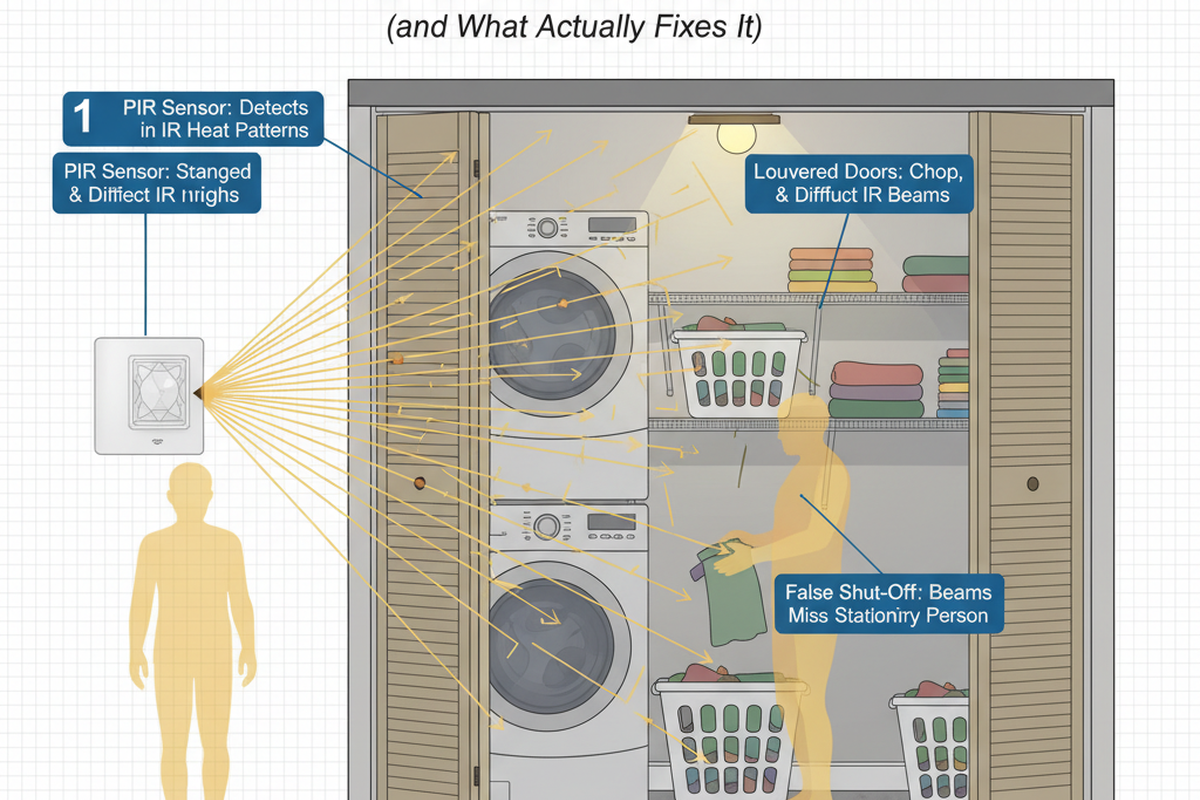
Louvered bifold doors can make a PIR sensor “see” hallway motion and airflow, causing false-ons and mid-task shut-offs. Learn a durable fix order: re-aim or relocate, mask the hallway sector, use vacancy mode, then fine-tune settings with real walk-tests.
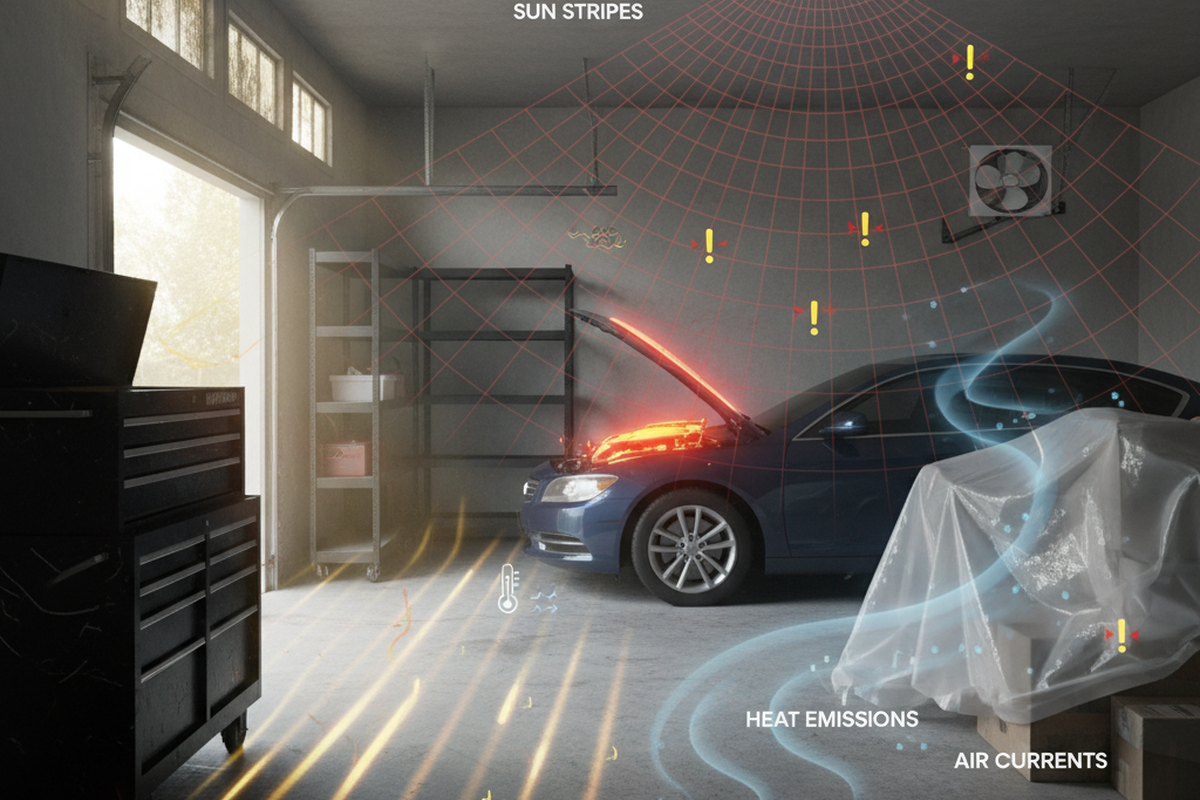
Garage PIR switches often aren’t broken—they’re reacting to sun stripes, hot car cool-down, and door-plane temperature swings. Fix false triggers by changing the sensor’s view first, then fine-tuning settings and adding daylight gating.
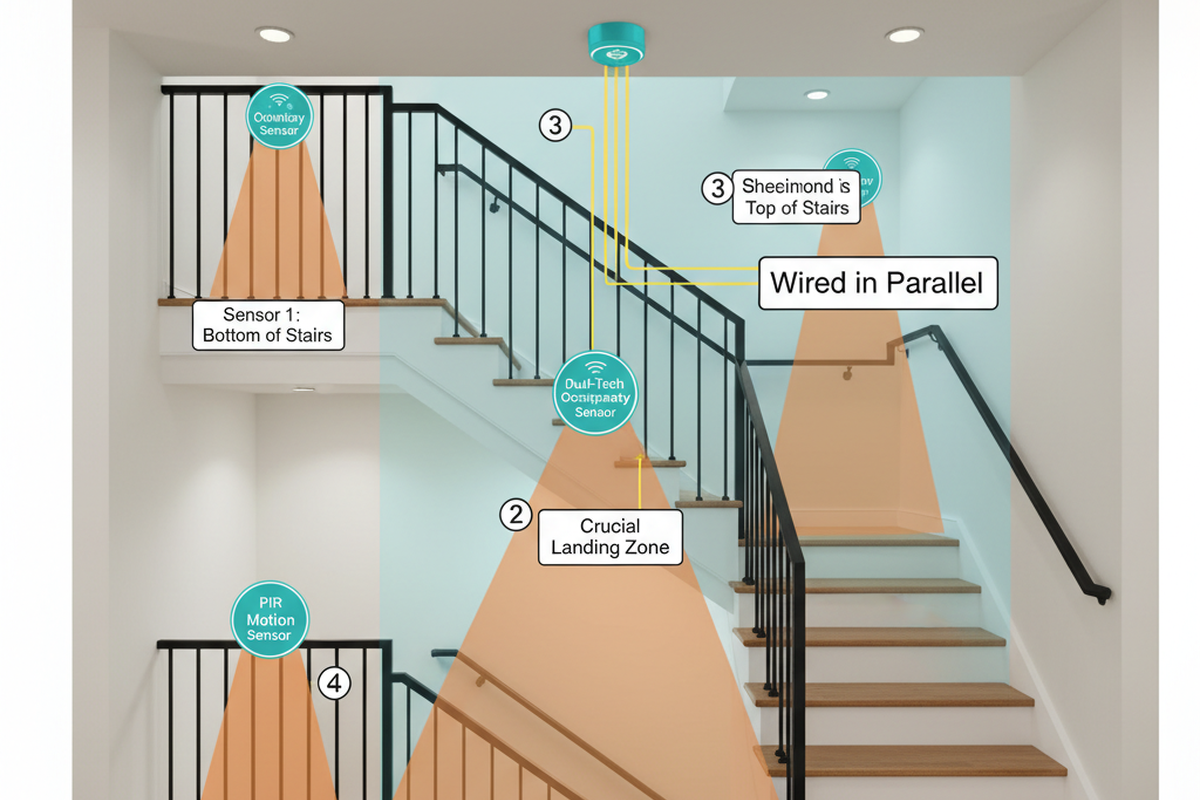
Split-level stair landings often cause motion lights to snap off and on because of short timeouts and poor line-of-sight during the pivot. Learn how to fix landing strobe by adjusting hold time, aiming for cross-traffic, and designing multi-location controls correctly.
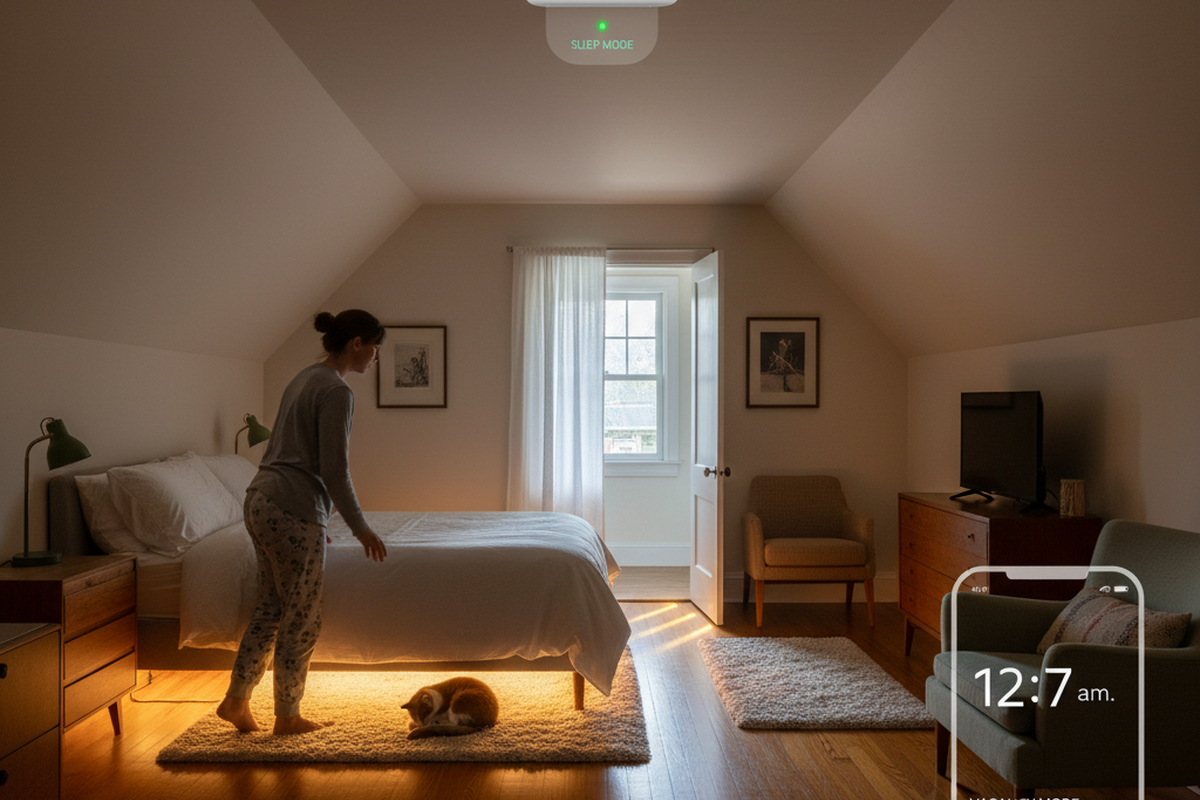
Bedroom motion lights fail when they surprise you at night. Vacancy mode keeps bedrooms manual-on for consent, while safety comes from a dim, warm, predictable path from bed to hall to bathroom.