Lobi
Lobinizin enerji tasarrufu potansiyelini keşfedin. Özelleştirilmiş çözümlerimizle enerji yönetmeliklerine nasıl uyacağınızı ve enerji israfını nasıl azaltacağınızı öğrenin.
Lobinize Enerji Tasarruflu Bir Alana Dönüştürün
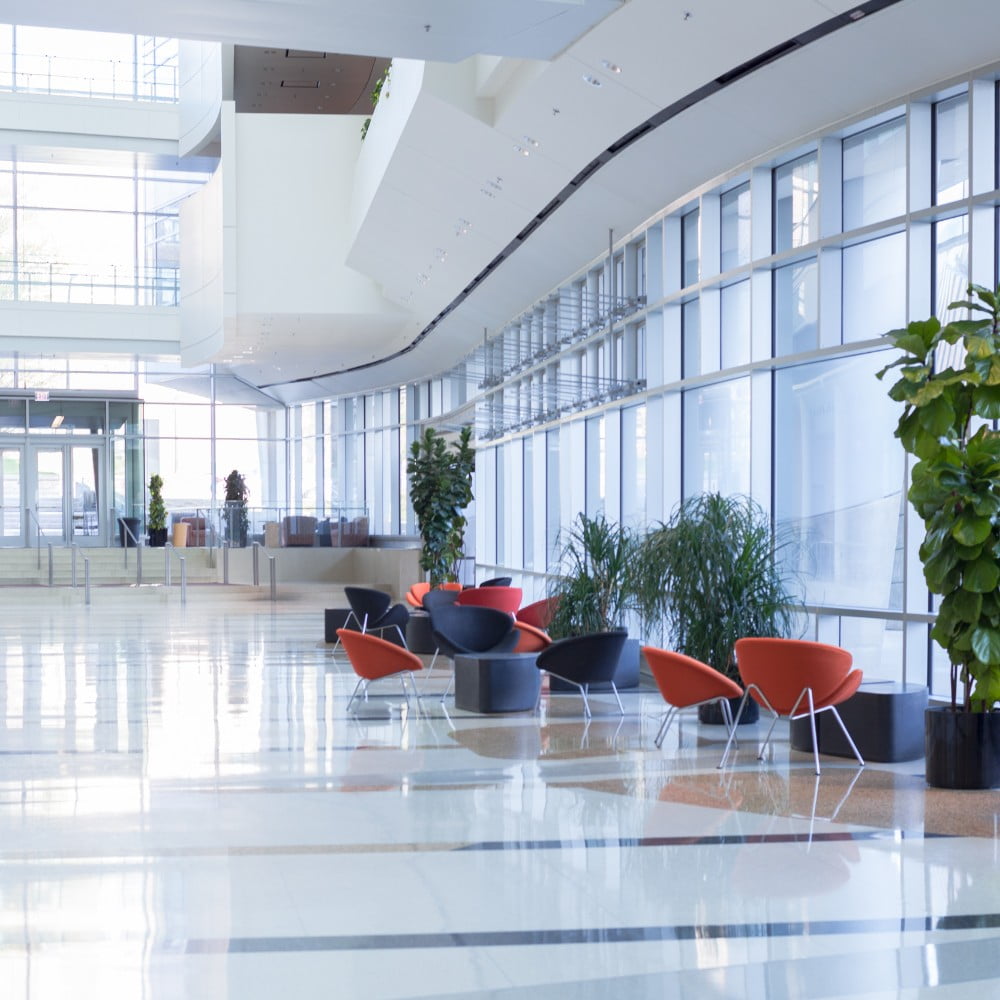
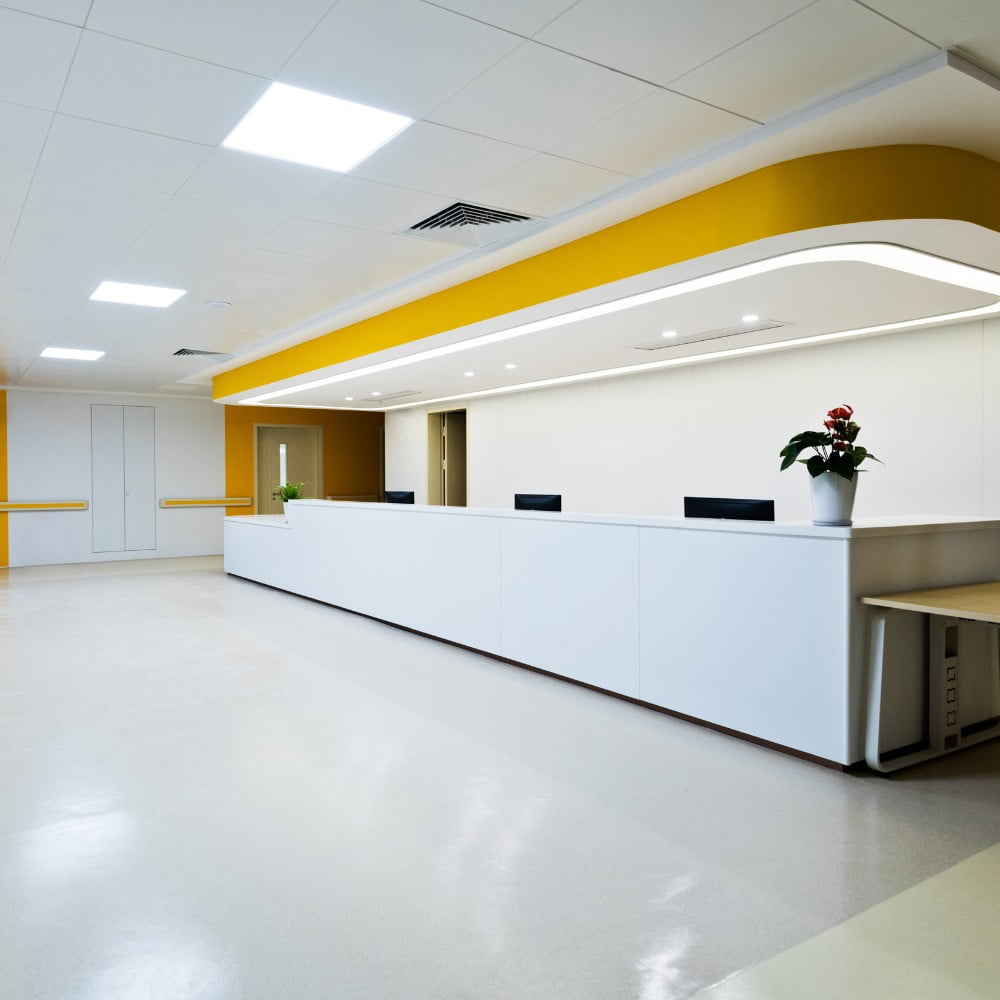
Lobi, ticari binalarda ziyaretçiler ve çalışanlar için genellikle ilk temas noktasıdır. Her zaman iyi aydınlatılmış ve davetkar olması gereken bir alandır. Günün her saatinde girip çıkan insanlarla dolu, hareketli bir mekandır. Bu alanlardaki aydınlatma genellikle yüksek yoğunlukludur ve uzun süre açık bırakılır; bu da ciddi miktarda enerji tüketimine yol açar.
Lobilerdeki geleneksel aydınlatma sistemleri genellikle manuel olarak kontrol edilir; bu durum, alan boşken ışıkların gereksiz yere açık kalmasına ve yüksek enerji israfına neden olur. Dahası, lobilerdeki çeşitli faaliyetler ve değişen doluluk seviyeleri, aydınlatmanın verimli bir şekilde yönetilmesini zorlaştırır. Bu durum yalnızca işletme maliyetlerini artırmakla kalmaz, aynı zamanda karbon ayak izinin büyümesine de katkıda bulunur.
Bu sorunları çözmek için varlık sensörleri etkili bir çözüm sunar. Bu cihazlar, lobi boş olduğunda ışıkları otomatik olarak kapatabilir veya kısabilir; böylece enerji tüketimini önemli ölçüde azaltır. Rayzeek’nin duvara ve tavana monte edilebilen seçenekleri içeren varlık sensörü serisi, konfor veya güvenlikten ödün vermeden verimli aydınlatma kontrolü sağlayarak lobiler için özel çözümler sunar.
Enerji Kodları ile Tanışın

Uluslararası Enerji Tasarrufu Kodu (IECC), binalarda enerji verimliliği için minimum tasarım ve inşaat gereksinimlerini belirlemek amacıyla Uluslararası Kod Konseyi (ICC) tarafından geliştirilmiş örnek bir koddur. IECC, en son enerji tasarrufu uygulamalarını ve teknolojilerini kapsayacak şekilde her üç yılda bir güncellenir.
IECC: Neden Önemsemelisiniz?
IECC, Amerika Birleşik Devletleri genelindeki eyaletler ve belediyeler tarafından yaygın olarak kabul edilmektedir. IECC; bina kabuğu (duvarlar, çatılar ve pencereler), ısıtma ve soğutma sistemleri ve aydınlatma sistemleri dahil olmak üzere enerji kullanımının çeşitli yönlerini kapsar.
IECC, çeşitli alanlarda kullanılmayan mekanlardaki enerji israfını en aza indirmek için varlık sensörleri gibi belirli aydınlatma kontrollerini zorunlu kılar.

ANSI/ASHRAE/IES Standart 90.1, Alçak Katlı Konutlar Dışındaki Sahalar ve Binalar İçin Enerji Standardı, Amerikan Isıtma, Soğutma ve İklimlendirme Mühendisleri Derneği (ASHRAE) tarafından yayınlanan ve yaygın kabul gören bir enerji standardıdır.
ASHRAE 90.1: Neden Önemsemelisiniz?
ASHRAE 90.1, Amerika Birleşik Devletleri genelindeki bina enerji kodları için bir referans noktası olarak kullanılır ve bina kabukları, HVAC sistemleri, su ısıtma sistemleri ile aydınlatma sistemleri dahil olmak üzere ticari binaların bileşenlerinin enerji verimli performansı için minimum gereksinimleri taslak haline getiren IECC kapsamında bir uyum yolu sunar.
ASHRAE 90.1 standardı, izin verilen maksimum aydınlatma güç yoğunluklarını ve belirli alanlarda varlık sensörlerinin kullanımı da dahil olmak üzere minimum aydınlatma kontrolü gereksinimlerini belirler.

Resmi olarak Konut ve Konut Dışı Binalar İçin Bina Enerji Verimliliği Standartları olarak bilinen Kaliforniya Bina Standartları Kodu'nun Bölüm 6'sındaki Title 24, Kaliforniya Enerji Komisyonu tarafından yönetilir ve yeni enerji verimliliği teknolojilerini ve yöntemlerini yansıtmak üzere periyodik olarak güncellenir.
Title 24: Neden Önemsemelisiniz?
Title 24, katı gereksinimleriyle tanınır ve genellikle Amerika Birleşik Devletleri'ndeki diğer birçok enerji kodunda bulunanlardan daha katı kabul edilir. Title 24; ısıtma, havalandırma, iklimlendirme (HVAC), su ısıtma ve aydınlatmayı içeren bina inşaatının tüm yönleri için katı enerji performansı standartlarını zorunlu kılar.
Title 24, enerjinin boşa harcanmamasını sağlamak amacıyla ticari binaların belirli alanlarında oda doluluğuna göre aydınlatmayı ayarlayan varlık sensörlerinin kurulmasını gerektirir.
Eyaletlere Göre Enerji Kodu Uygulaması
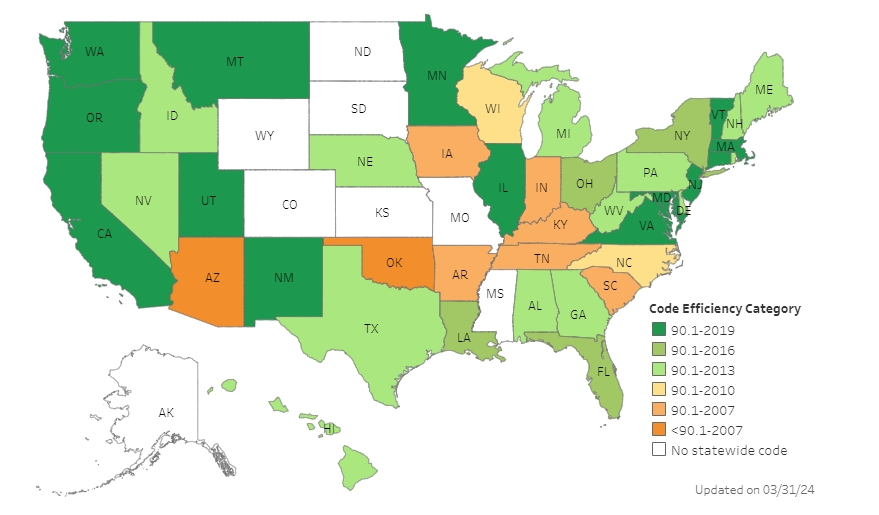
Detaylı tabloyu görmek için genişletin ↓
| Eyalet | Mevcut Ticari Bino Kodu | Ticari Bina Kodu Verimlilik Kategorisi |
|---|---|---|
| Alabama | 90.1-2013 | 90.1-2013 |
| Alaska | Eyalet genelinde yok | Eyalet genelinde geçerli bir kod yok |
| Arizona | Özerk yönetim | <90.1-2007 |
| Arkansas | 2009 IECC ve 90.1-2007 | 90.1-2007 |
| Kaliforniya | 2022 Bina Enerji Verimliliği Standartları | 90.1-2019 |
| Colorado | Özerk yönetim | Eyalet genelinde geçerli bir kod yok |
| Connecticut | 2021 IECC and 90.1-2019 | 90.1-2019 |
| Delaware | 2018 IECC and 90.1-2016 | 90.1-2013 |
| District of Columbia | 90.1-2013^ | 90.1-2019 |
| Florida | 2021 IECC and 90.1-2019^ | 90.1-2016 |
| Georgia | 2015 IECC and 90.1-2013^ | 90.1-2013 |
| Hawaii | Özerk yönetim | 90.1-2013 |
| Idaho | 2018 IECC and 90.1-2016 | 90.1-2013 |
| Illinois | 2021 IECC and 90.1-2019 | 90.1-2019 |
| Indiana | 90.1-2007 | 90.1-2007 |
| Iowa | 2012 IECC and 90.1-2010 | 90.1-2007 |
| Kansas | Özerk yönetim | Eyalet genelinde geçerli bir kod yok |
| Kentucky | 2012 IECC and 90.1-2010 | 90.1-2007 |
| Louisiana | 2021 IECC and 90.1-2019^ | 90.1-2016 |
| Maine | 2015 IECC and 90.1-2013 | 90.1-2013 |
| Maryland | 2021 IECC and 90.1-2019^ | 90.1-2019 |
| Massachusetts | 2018 IECC and 90.1-2016^ | 90.1-2019 |
| Michigan | 2015 IECC and 90.1-2013^ | 90.1-2013 |
| Minnesota | 90.1-2019^ | 90.1-2019 |
| Mississippi | Eyalet genelinde yok | Eyalet genelinde geçerli bir kod yok |
| Missouri | Özerk yönetim | Eyalet genelinde geçerli bir kod yok |
| Montana | 2021 IECC and 90.1-2019 | 90.1-2019 |
| Nebraska | 2018 IECC and 90.1-2016 | 90.1-2013 |
| Nevada | 2018 IECC and 90.1-2016 | 90.1-2013 |
| New Hampshire | 2018 IECC and 90.1-2016^ | 90.1-2013 |
| New Jersey | 90.1-2019 | 90.1-2019 |
| New Mexico | 2021 IECC and 90.1-2019^ | 90.1-2019 |
| New York | 2018 IECC and 90.1-2016^ | 90.1-2016 |
| North Carolina | 2015 IECC and 90.1-2013^ | 90.1-2010 |
| North Dakota | Özerk yönetim | Eyalet genelinde geçerli bir kod yok |
| Ohio | 2021 IECC and 90.1-2019^ | 90.1-2016 |
| Oklahoma | 2006 IECC and 90.1-2004 | <90.1-2007 |
| Oregon | 90.1-2019 | 90.1-2019 |
| Pennsylvania | 2018 IECC and 90.1-2016 | 90.1-2013 |
| Rhode Island | 2018 IECC and 90.1-2016^ | 90.1-2013 |
| South Carolina | 2009 IECC ve 90.1-2007 | 90.1-2007 |
| South Dakota | Özerk yönetim | Eyalet genelinde geçerli bir kod yok |
| Tennessee | 2021 IECC and 90.1-2013 | 90.1-2007 |
| Texas | 2015 IECC and 90.1-2013 | 90.1-2013 |
| Utah | 2021 IECC and 90.1-2019^ | 90.1-2019 |
| Vermont | 2021 IECC and 90.1-2019^ | 90.1-2019 |
| Virginia | 2021 IECC and 90.1-2019^ | 90.1-2019 |
| Washington | 2018 Washington State Energy Code | 90.1-2019 |
| Tennessee | 2012 IECC and 90.1-2010 | 90.1-2007 |
| Texas | 2015 IECC and 90.1-2013 | 90.1-2013 |
| Utah | 2021 IECC and 90.1-2019^ | 90.1-2019 |
| Vermont | 2018 IECC and 90.1-2016^ | 90.1-2019 |
| Virginia | 2021 IECC and 90.1-2019^ | 90.1-2019 |
| Washington | 2018 Washington State Energy Code | 90.1-2019 |
| West Virginia | 90.1-2013 | 90.1-2013 |
| Wisconsin | 2015 IECC and 90.1-2013^ | 90.1-2010 |
| Wyoming | Özerk yönetim | Eyalet genelinde geçerli bir kod yok |
- ^ When an amendment impacting energy efficiency can be quantified using DOE Prototype Building Models, they were captured in the analysis.
- For states adopting both IECC and 90.1, the IECC code is usually analyzed as the state current code in this study except for states with extensive amendments to the IECC.
Design Guide Key Concepts for Lobby
Designing an energy-efficient lighting control solution for lobby involves strategic placement of occupancy sensors to ensure comprehensive coverage of the space.
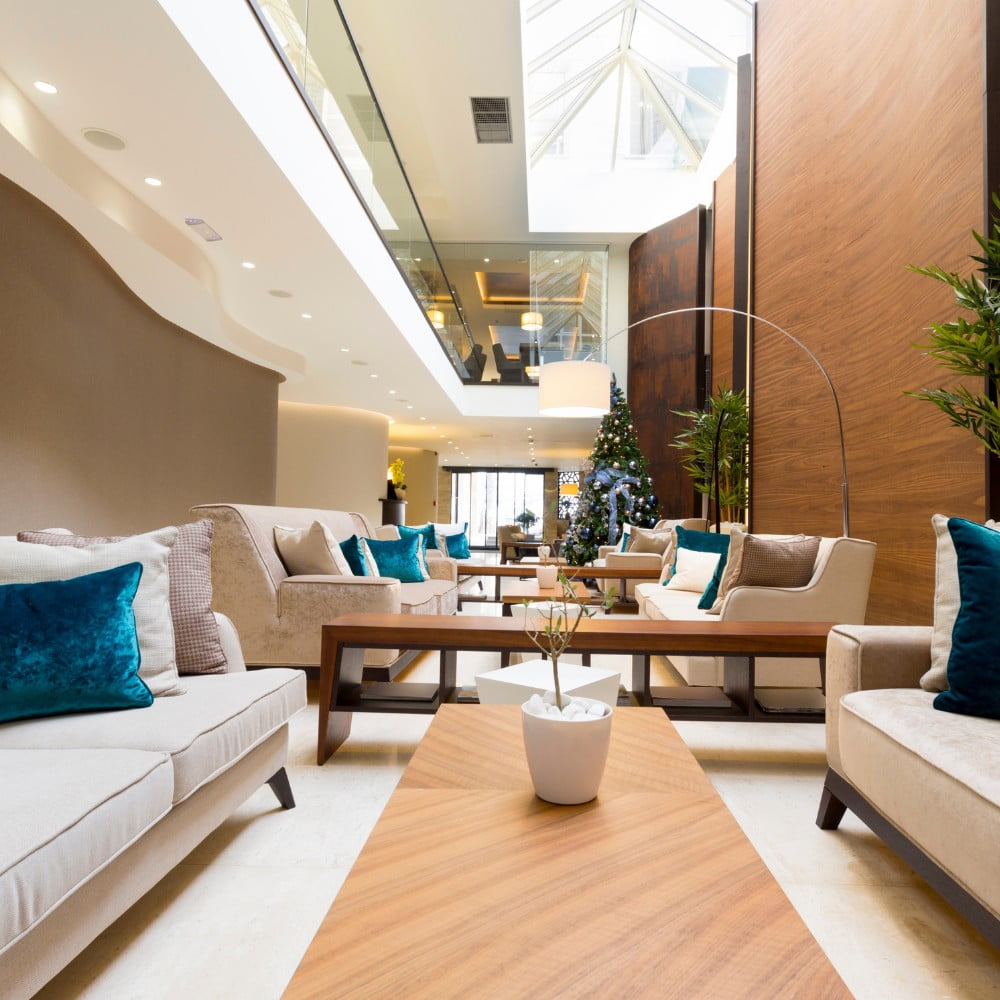
In a lobby, the primary areas that need to be covered by occupancy sensors are the entrance, the reception desk, and any seating or waiting areas. Here’s a possible design guide for a lobby:
- Entrance Area: Install a ceiling occupancy sensor near the entrance. This sensor will detect the movement of people entering or exiting the lobby, ensuring the lights are activated when needed. Our ceiling sensors offer Auto ON and Full OFF functionality, providing automatic control of lighting based on occupancy.
- Main Lobby Area: For larger lobbies, additional ceiling sensors may be required to cover the entire space. These sensors should be strategically placed to cover high-traffic areas, such as near the reception desk or waiting areas. The overlapping coverage of multiple sensors ensures there are no blind spots.
- Reception Desk: Place a wall-mounted sensor near the reception desk. This sensor will detect the presence of the receptionist and any visitors at the desk, keeping the lights on in this area during occupied periods.
- Seating/Waiting Areas: Install additional ceiling-mounted sensors in any seating or waiting areas. These sensors will detect when these areas are occupied and adjust the lighting accordingly.
- Manual Control: Install a manual control near the entrance or reception desk. This allows for manual override of the lighting system when necessary.
- Corridors Leading to Other Areas: Corridors leading to elevators, staircases, or other parts of the building should have their own wall or ceiling-mounted sensors. This ensures that lights in these areas are only activated when someone is passing through.
Featured Products & Solutions
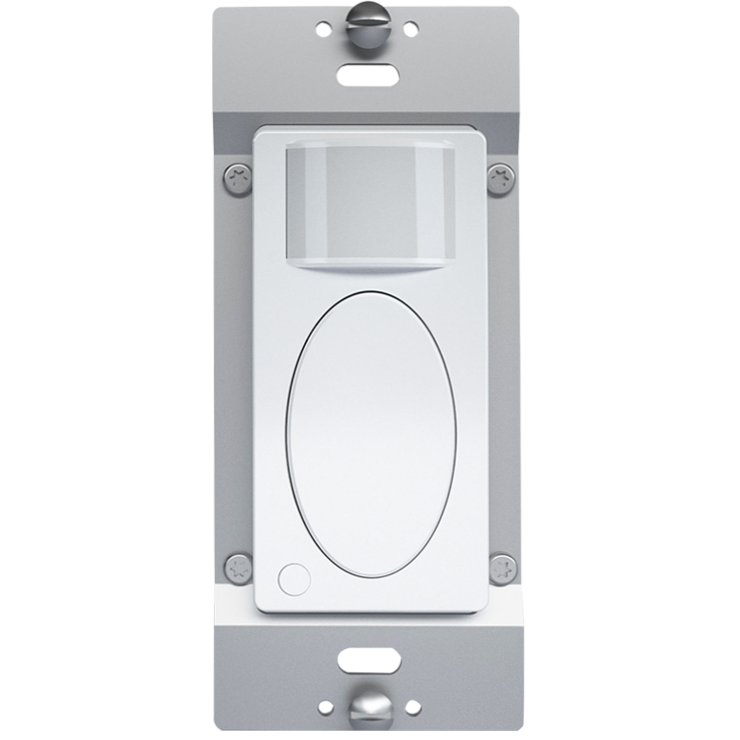
Wall Sensor Switches
RZ020/021 Motion Sensor Switches
- 2-wire, 3-wire, 4-wires wiring options
- Occupancy, Vacancy, Manual ON/OFF
- Adjustive time delay and ambient light control
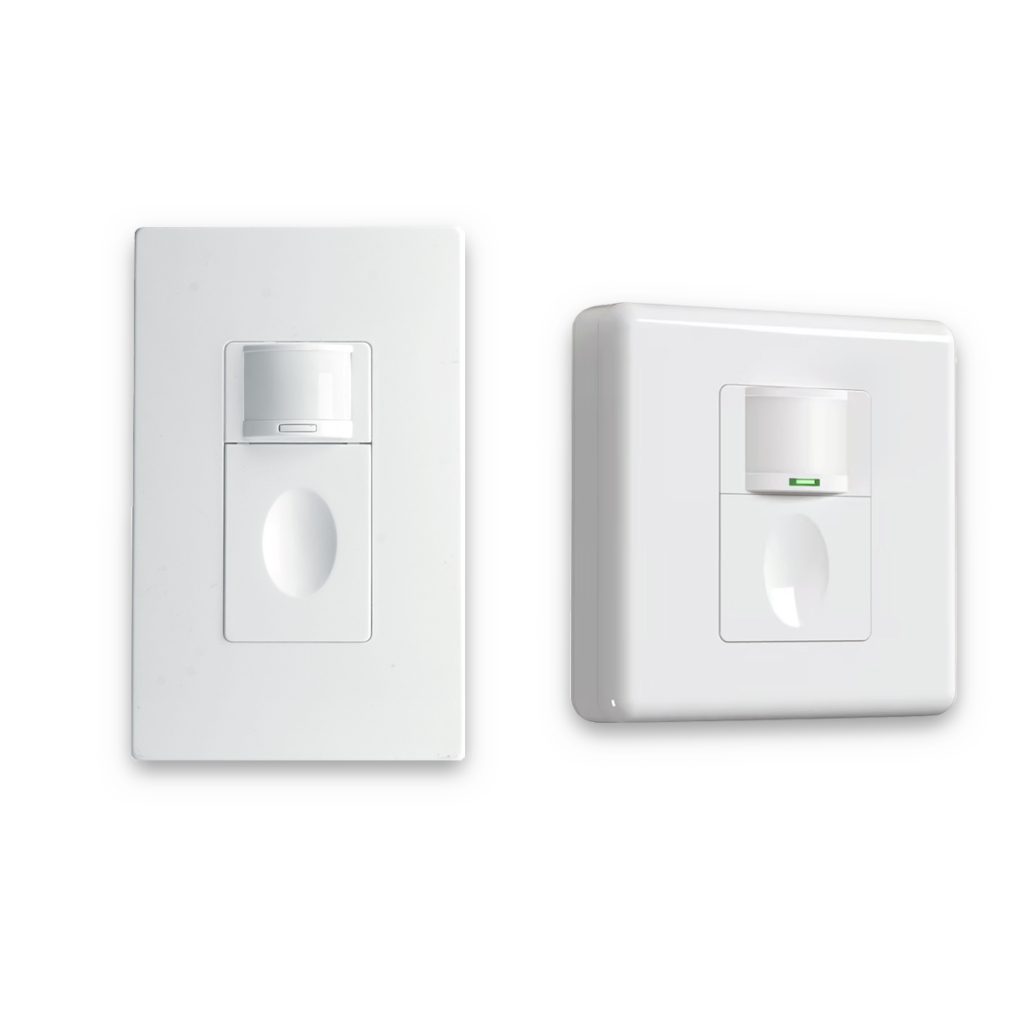
Multi-Location Wireless Wall Sensors
RZ020A/021A + RZ022W Kits
- Hardwired RZ021A/022A occupancy sensor switch
- Wireless companion switch (RZ022W) for multi-location control

Ceiling Occupancy Sensors
RZ036
- Hardwired occupancy sensors
- Auto ON, auto OFF
- Line voltage and Low voltage available
Core features included:
- Integrated manual ON/OFF control for all lighting
- Vacancy sensors (Manual ON only): Lights must be turned on manually only
- Adjustable time-delay, lighting is automatically turned full OFF after 15mins
- Additional: multi-location wireless kits to expand the control range without re-wring
- Additional: multiple wiring options available for both new constructions and retrofit projects.
Meets the Mandatory Provisions
IECC – 2011
C405.2.1 Occupant sensor controls
Occupant sensor controls shall be installed to control lights in the space.
C405.2.1.1 Occupant sensor control functions
- Manual on or partial on to no more than 50% power.
- Full off within 20 minutes after all occupants have left the space
- A manual control to turn off the lights.
Full automatic-on controls with no manual control are permitted in lobbies where manual operation would endanger occupant safety or security.
ASHRAE 90.1 – 2022
9.4.1.1 a Local control
There shall be one or more manual lighting control device that provides ON and OFF control
of all lighting in the space.
9.4.1.1 g Automatic reduction control
The general lighting power in the space shall be automatically reduced by at least 50% within 15 minutes of all occupants leaving the space.
** NOTE: 9.4.1.1 g is required in all other lobbies except (Elevator, Hotel, Motion picture theater, Performing arts theater)
9.4.1.1 h Automatic full OFF control
All lighting in the space shall be automatically shut off within 15 minutes of all occupants leaving the space.
9.4.1.1 i Scheduled shutoff
All lighting in the space shall be automatically shut off during periods when the space is scheduled to be unoccupied.
** NOTE: At least one 9.4.1.1 h or 9.4.1.1 i shall be implemented.
Title 24 – 2022
130.1 (a) Manual area controls.
Each area enclosed by ceiling-height partitions shall provide lighting controls that allow the lighting in that area to be manually turned on and off.
130.1 (c) Shut-OFF Controls.
Lighting shall be controlled with occupant sensing controls to automatically shut OFF all of the lighting in 20 minutes or less after the control zone is unoccupied that shall function either as:
- A. Occupant sensing controls (if 130.1(b) not required to have multi-level lighting controls); or
- B. Partial-ON occupant sensing controls, or
- C. Vacancy sensing controls, where all lighting responds to a manual ON input only
Let us hear you.
Let Rayzeek help design and deliver a bespoke energy-saving lighting solution for you.