
Adevărata amenințare a sterilizării cu ultraviolete nu este radiația în sine. Știm exact ce face lumina de 254 nm țesutului organic: distruge ADN-ul și oprește replicarea celulară. Problema este că face acest lucru corneei dumneavoastră la fel de eficient cum o face sporilor de mucegai dintr-o vasă Petri, și o face în mod tăcut.
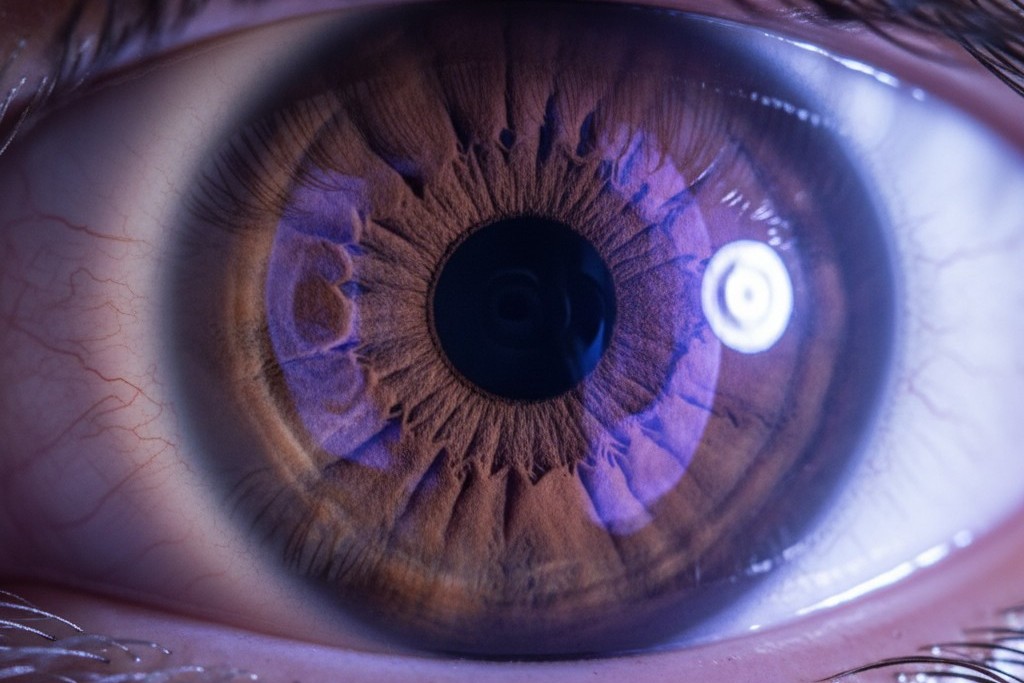
Nu există nicio avertizare de căldură. Nu există nicio durere imediată. Un amator ar putea introduce mâna într-o cameră de polimerizare pentru a ajusta o probă, bazându-se pe un comutator basculant manual pe care era sigur că l-a oprit. Două minute de expunere mai târziu, termină treaba și se duce la culcare. Patru ore mai târziu, se trezește țipând pentru că pleoapele i se par pline cu nisip fierbinte. Aceasta este fotokeratita. Dauna este deja făcută, iar singurul remediu este timpul, întunericul și poate o sticlă de picături de tetracaină dacă cei de la urgențe sunt generoși.
Memoria nu este o caracteristică de siguranță. Oamenii sunt piesa slabă din orice sistem de izolare. Dacă construiți o stație de polimerizare UV-C, o hotă cu flux laminar sau o cameră de sterilizare, aveți nevoie de un sistem care presupune că veți fi neglijent. Aveți nevoie de un întrerupător de urgență care să funcționeze mai rapid decât puteți gândi.
Capcana latenței senzorilor “inteligenți”
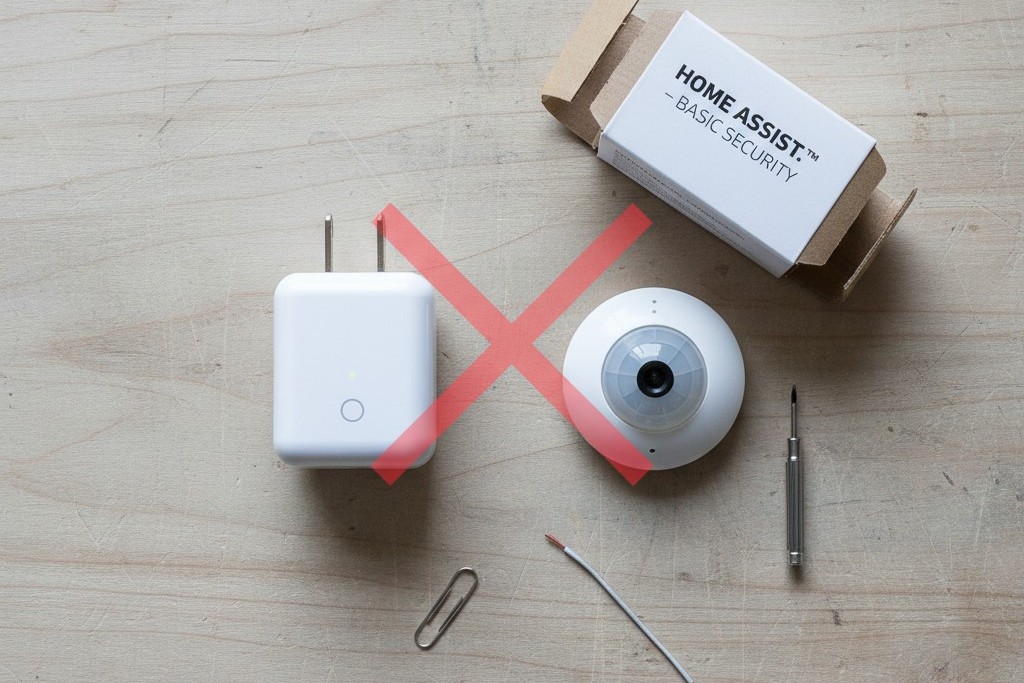
Instinctul pasionatului modern de DIY este să ia un senzor smart home de rezervă și să-l conecteze la o priză inteligentă. Luați un senzor de mișcare Zigbee, îl asociați cu un hub și scrieți o automatizare simplă: “Dacă se detectează mișcare, oprește priza inteligentă.”
Nu faceți acest lucru.
Această logică este nepotrivită pentru siguranța vieții. Luați în considerare calea semnalului: senzorul detectează mișcarea, se trezește dintr-o stare de consum redus de energie și negociază o conexiune cu hub-ul dumneavoastră. Hub-ul procesează logica — sau mai rău, trimite un apel API către un server cloud din AWS East. Comanda este redirecționată înapoi către priza inteligentă, care în cele din urmă întrerupe alimentarea.
Am cronometrat această secvență pe hardware de consum. Chiar și pe o rețea locală, latența poate varia între 800 de milisecunde și 1,5 secunde. Dacă este implicat cloud-ul sau dacă routerul Wi-Fi negociază o schimbare de canal, acea întârziere poate crește până la cinci secunde. În contextul intensității UV-C, o întârziere de o secundă reprezintă o eternitate de expunere. Practic, vă pariați vederea pe timpul de funcționare al unui server din Virginia.
Maim mult, echipamentele smart de consum eșuează în starea “periculoasă”. Dacă Wi-Fi-ul pică, automatizarea eșuează și lampa rămâne aprinsă. Dacă bateria senzorului se descarcă, lampa rămâne aprinsă. Dacă hub-ul blochează în timpul unei actualizări de firmware, lampa rămâne aprinsă. Aveți nevoie de un sistem în care defectarea oricărei componente să aibă ca rezultat oprirea imediată a lămpii.
Lăsați-vă inspirat de portofoliile de senzori de mișcare Rayzeek.
Nu găsiți ceea ce căutați? Nu vă faceți griji. Există întotdeauna modalități alternative de a vă rezolva problemele. Poate vă poate ajuta unul dintre portofoliile noastre.
Gravitația, cuprul și logica de tip Normal Închis
Standardul industrial pentru această problemă este logica “Normal Închis” (NC). Este singura arhitectură acceptabilă pentru un interblocaj de siguranță.
Într-un sistem Normal Închis, circuitul de siguranță este o buclă continuă de energie electrică ce trebuie menținută activ pentru ca mașina să funcționeze. Senzorul sau comutatorul este închis (conduce energie electrică) numai atunci când este în siguranță. În momentul în care acea buclă este întreruptă — prin deschiderea unei uși, întreruperea unui fascicul sau tăierea unui fir — gravitația sau un arc forțează releul de putere să se deschidă, oprirea luminii.
S-ar putea să vă intereseze și

- Tensiune: 2 baterii AAA
- Mod Zi/Noapte
- Temporizare: 15min, 30min, 1h (implicit), 2h

- Senzor de prezență PIR cu montaj pe tavan și ieșire de releu cu contact uscat
- Alimentare de joasă tensiune de 12/24VDC sau 12/24VAC
- Contacte de releu izolate COM, NO și NC pentru intrări de control al sistemelor EMS, HVAC și al clădirilor

- Întrerupător cu senzor de mișcare cu microunde încastrat în tavan, de joasă tensiune DC
- Intrare de 12 VDC / 24 VDC cu un interval cuprins între 10-30 VDC
- Curent de lucru maxim de 10A cu temporizare reglabilă, prag Lux și sensibilitate ajustabile
- Întrerupător cu senzor de mișcare cu microunde încastrat în tavan, pentru sarcini mai mari
- Intrare la tensiunea rețelei de 100-265 VAC, model de 10A
- Detectare cu microunde de 5.8 GHz cu temporizare reglabilă, prag Lux și sensibilitate ajustabile
- Întrerupător încastrat pentru plafon cu senzor de mișcare cu microunde
- Tensiune de intrare 100-265 VAC, model de 5A
- Detectare cu microunde de 5.8 GHz cu temporizare reglabilă, prag Lux și sensibilitate ajustabile
- Variator cu senzor de prezență PIR RZ037 pentru plafon, pentru alimentare la 220V
- Curent maxim de lucru de 3A cu sarcină nominală de 660W
- Butonul LUX controlează funcția ON/OFF a senzorului de lumină și luminozitatea setată de utilizator
- Variator cu senzor de prezență PIR RZ037 pentru plafon, pentru alimentare la 110V
- Curent maxim de lucru de 3A cu sarcină nominală de 330W
- Butonul LUX controlează funcția ON/OFF a senzorului de lumină și luminozitatea setată de utilizator

- Întrerupător cu senzor de mișcare cu microunde pentru plafon, de joasă tensiune C.C.
- Intrare de 12 VDC / 24 VDC cu un interval cuprins între 10-30 VDC
- Curent de lucru maxim de 10A cu temporizare reglabilă, prag Lux și sensibilitate ajustabile
- Întrerupător cu senzor de mișcare cu microunde pentru plafon, pentru sarcini mai mari
- Intrare la tensiunea rețelei de 100-265 VAC, model de 10A
- Detectare cu microunde de 5.8 GHz cu temporizare reglabilă, prag Lux și sensibilitate ajustabile
- Întrerupător cu senzor de mișcare cu microunde pentru plafon
- Tensiune de intrare 100-265 VAC, model de 5A
- Detectare cu microunde de 5.8 GHz cu temporizare reglabilă, prag Lux și sensibilitate ajustabile

- Întrerupător cu senzor de mișcare PIR încastrat în tavan, CC de joasă tensiune
- Intrare de 12 VDC / 24 VDC cu un interval cuprins între 10-30 VDC
- Curent maxim de lucru 10A cu temporizare reglabilă, prag Lux și sensibilitate

- Întrerupător cu senzor de mișcare PIR încastrat în tavan pentru sarcini mai mari
- Intrare la tensiunea rețelei de 100-265 VAC, model de 10A
- Detecție la 360 de grade cu temporizare reglabilă, prag Lux și sensibilitate
- Întrerupător cu senzor de mișcare PIR încastrat în tavan
- Tensiune de intrare 100-265 VAC, model de 5A
- Detecție la 360 de grade cu temporizare reglabilă, prag Lux și sensibilitate

- Kit de întrerupător și receptor wireless pentru controlul iluminatului de interior PORNIT/OPRIT
- Receptor 100-230VAC, 50/60Hz cu curent nominal de 5A
- Întrerupător wireless alimentat cu baterie CR2032 cu comunicare la 2.4GHz
- Prezență (PORNIRE automată/OPRIRE automată)
- 12–24V CC (10–30VCC), până la 10A
- Acoperire 360°, diametru 8–12 m
- Temporizare 15 s–30 min
- Senzor de lumină Oprit/15/25/35 Lux
- Sensibilitate ridicată/scăzută
- Mod de prezență Auto-ON/Auto-OFF
- 100–265V AC, 10A (necesită nul)
- Acoperire 360°; diametru de detecție 8–12 m
- Temporizare 15 s–30 min; Lux OFF/15/25/35; Sensibilitate ridicată/scăzută
- Mod de prezență Auto-ON/Auto-OFF
- 100–265V AC, 5A (necesită nul)
- Acoperire 360°; diametru de detecție 8–12 m
- Temporizare 15 s–30 min; Lux OFF/15/25/35; Sensibilitate ridicată/scăzută
Gândiți-vă la frâna unui lift. Nu este ținută open by a lock; it’s held open by power. If the power fails, the brake clamps down instantly. Your UV setup must work the same way. You aren’t sending a signal to “turn off” the light. You are physically interrupting the power that allows the light to exist.
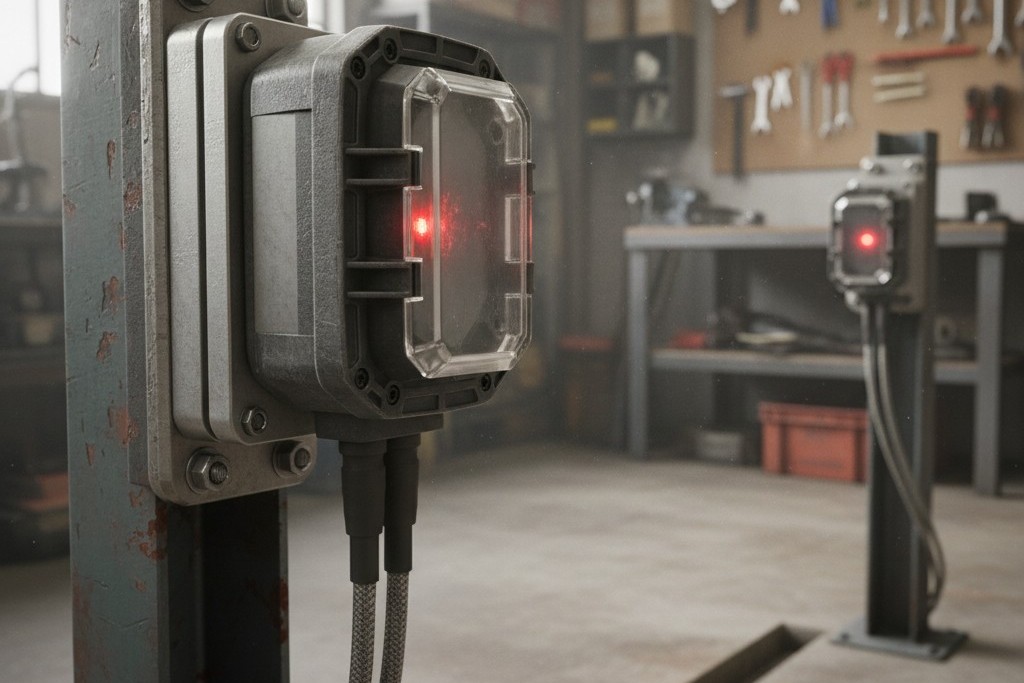
This is why simple perimeter beams—like the safety sensors at the bottom of a garage door—are often superior to complex digital sensors. A set of Chamberlain or Genie safety beams creates an invisible tripwire. The receiving eye expects a constant signal from the sending eye. If you walk through it, you physically block the photons. The circuit opens. The relay drops. There is no software to interpret the event. The physics of the circuit dictates that the power must cut.
Seeing What Humans Can’t
If you must use volumetric sensing (detecting motion inside a room rather than just a perimeter tripwire), you run into the problem of “blind time.” Standard Passive Infrared (PIR) sensors—the kind used for porch lights—are designed to detect large, lateral movements across their field of view. They are terrible at detecting micro-movements.
If you walk into a room and stand still to inspect a print, a cheap PIR sensor will decide the room is empty and allow the UV lamp to strike. This is the difference between “Occupancy” (turning lights on for convenience) and “Safety” (keeping lights off for survival). You aren’t trying to save electricity here; you are trying to prevent burns.
For a true safety curtain, you want “Dual Technology” sensors. These units, like the Bosch Blue Line Gen2 series, combine PIR with Microwave Doppler radar. The microwave element actively floods the space with energy and looks for the frequency shift caused by moving objects. It is far more sensitive to small movements, like breathing or shifting weight.
Microwave sensors have a dangerous quirk, though: they can see through drywall, glass, and plastic. If you build a curing box out of acrylic, a microwave sensor inside might detect you walking past the box and kill the cycle unnecessarily. Conversely, PIR cannot see through glass. You must match the sensor physics to your containment material. If you are using a glass enclosure, PIR is safe. If you are guarding an open room, Dual Tech wired in series is the standard.
The Click of Safety: Isolating Voltage
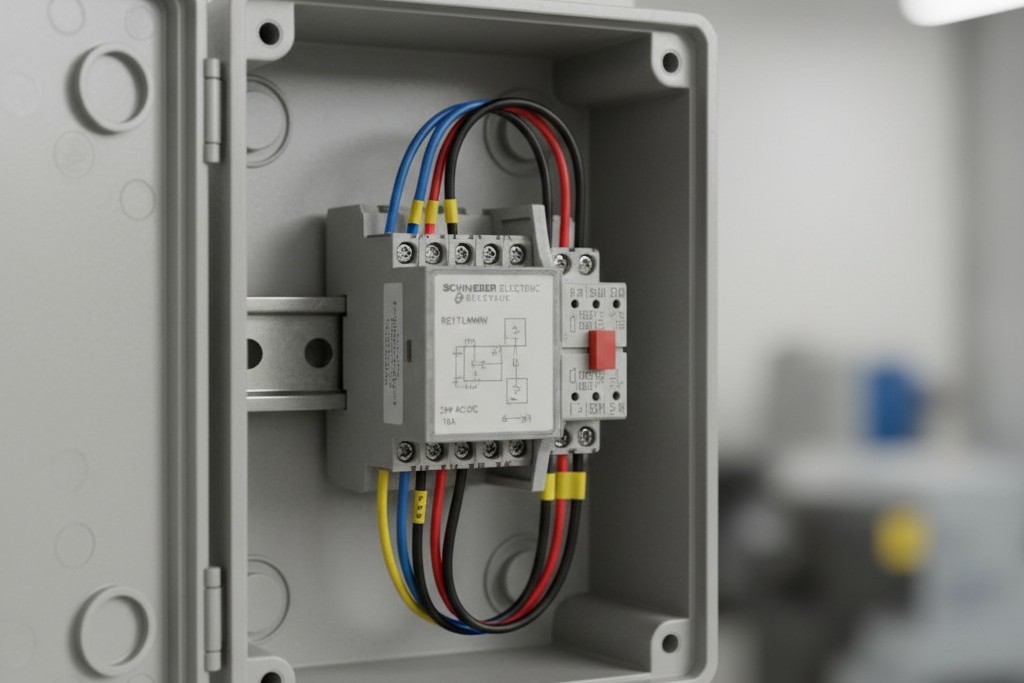
You can’t wire these low-voltage sensors directly to your 120V or 240V UV ballast. You will let the magic smoke out of the sensor, and likely yourself. You need a physical interface that separates the logic voltage (usually 12V or 24VAC) from the load voltage.
This is where the “RIB” (Relay in a Box) or a dedicated contactor comes in. A device like the RIBU1C allows you to run a safe, low-voltage control loop through your sensors and door switches. When that loop is closed, the RIB’s electromagnet pulls the high-voltage contacts together with a distinct, mechanical clack.
Căutați soluții de economisire a energiei activate de mișcare?
Contactați-ne pentru senzori de mișcare PIR compleți, produse de economisire a energiei cu activare la mișcare, întrerupătoare cu senzor de mișcare și soluții comerciale de prezență/vacanță.
That sound is important. It is the sound of a physical air gap closing. When the safety loop is broken, a spring forces those contacts apart. It doesn’t matter if the microcontroller crashes or the Wi-Fi is down. The spring does not care. It obeys the laws of physics, snapping the circuit open and severing the power to the ballast.
The Walk Test Ritual
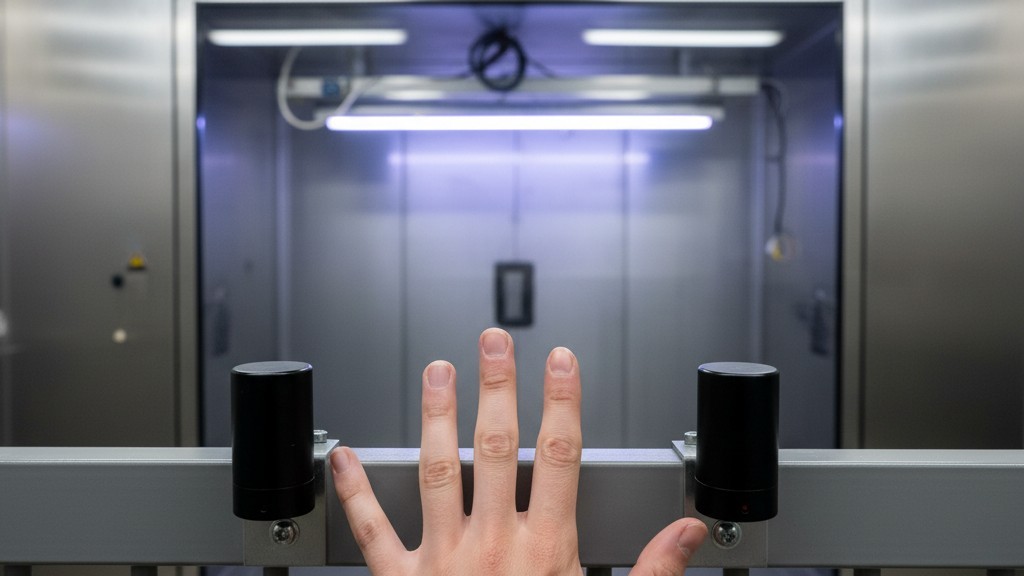
Once you build this, don’t trust it. Test it.
Every time you set up a new run, perform a functional check. Start the cycle, then trigger the safety—open the door, wave a hand past the beam, cut the power to the sensor. You should hear the relay click off instantly. There should be no hesitation.
If you are working with Far-UVC (222nm), you will read marketing claims that it is safe for human skin and eyes. Treat those claims with extreme skepticism. Regulations lag behind technology, and manufacturing tolerances vary. Treat every UV source as if it is a loaded weapon. Trust the interlock, not the wavelength.
The goal is a system that protects you from your own complacency. When you are tired, rushing, or distracted, the machine must be smarter than you. It must fail into safety, every single time.







