El problema del “pasillo embrujado” (y por qué suele tener solución)
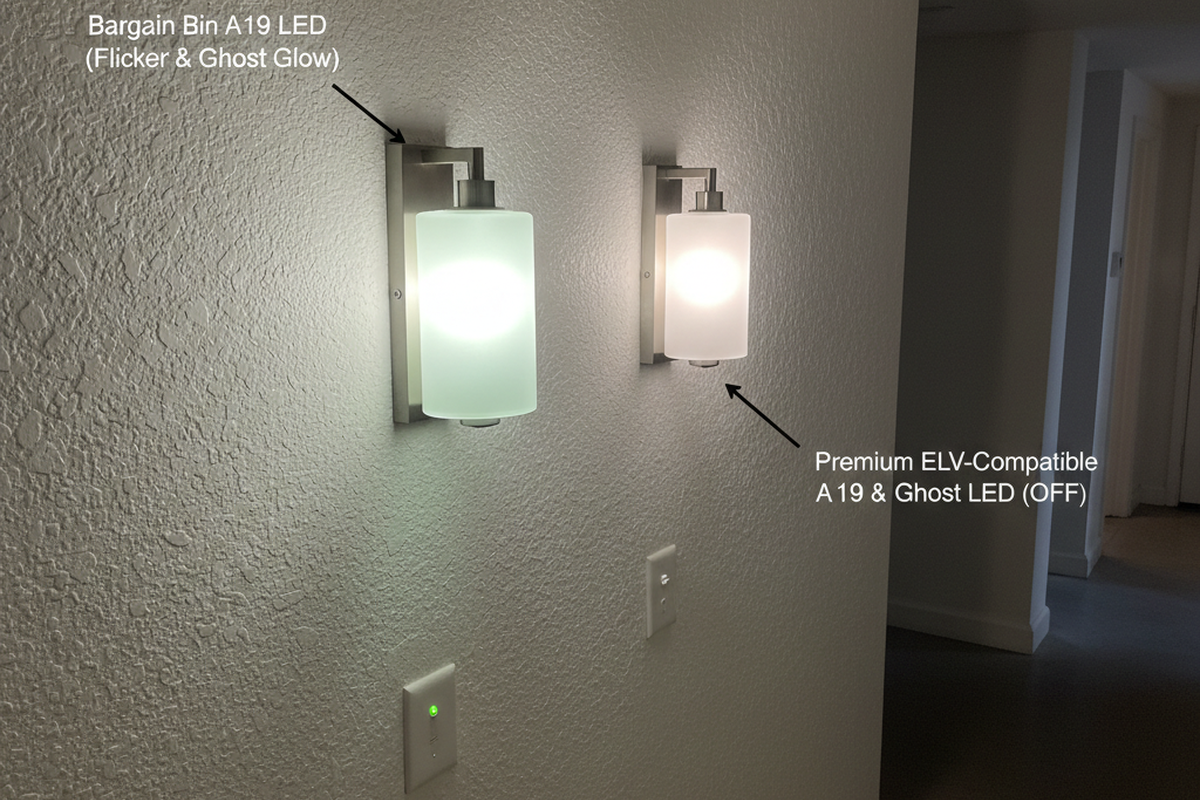
En el invierno de 2022, el pasillo de un condominio en Tempe, AZ, se convirtió en el escenario de una discusión nocturna sobre si los nuevos interruptores de pared con sensor de movimiento estaban “desperdiciando energía”. Las luces estaban apagadas, pero los apliques aún emitían un tenue resplandor a las 2 a. m. Los residentes lo consideraban una prueba de que los sensores estaban defectuosos.
La solución comenzó con una medida que parece insultantemente simple: se cambió una lámpara. Un aplique mantuvo la bombilla LED A19 de oferta. El siguiente aplique recibió una A19 de estabilidad comprobada tomada de la caja de repuestos del furgón, normalmente una Philips o Cree. Estas líneas de lámparas “convencionales” tienden a comportarse mejor en condiciones anómalas de reposo. Una vez transcurrido el tiempo del sensor, la luminaria cambiada se apagó por completo, mientras que las demás continuaron emitiendo resplandor. Sin cablear de nuevo. Sin cambiar de interruptor. La discusión finalizó porque el mecanismo quedó a la vista.
Ese patrón —“funciona en la teoría, pero falla en las viviendas reales”— es el motivo por el cual el síntoma importa más que las suposiciones. El “parpadeo”, el “resplandor fantasma” y los “apagados aleatorios” pueden parecer un mismo problema cuando alguien está molesto. En realidad, son modos de fallo distintos con soluciones diferentes. La resolución eficaz de problemas se orienta según lo que hace realmente la luz, no según lo que se desearía que sucediera.
Identifique el síntoma antes de comprar nada
Gran parte de los diagnósticos erróneos se deben a una clasificación incorrecta. Cuando alguien habla de “parpadeo”, puede referirse a un destello rápido. O a un tenue centelleo que solo se produce cuando el sensor está en modo de espera. O a un encendido y apagado periódico cada 30-60 segundos provocado en realidad por la activación del sensor ante una rejilla de climatización. No se trata del mismo problema con distintos niveles de molestia; son mecanismos independientes.
Esta taxonomía de síntomas suele ahorrar la mayor parte del tiempo en los interruptores con sensor de movimiento de clase Rayzeek:
- Resplandor fantasma: El LED está “apagado”, pero emite un tenue resplandor en la oscuridad. Se aprecia con mayor frecuencia en dormitorios, pasillos, habitaciones infantiles y corredores de condominios. Se trata de la queja del pasillo de Tempe en su forma pura: “las luces nunca se apagan por completo”.”
- Parpadeo o centelleo: Inestabilidad visible durante el encendido, un pulso justo cuando el sensor agota su tiempo de espera o un ligero centelleo únicamente cuando el interruptor está inactivo. Aparece a menudo en cargas de baja potencia, como regletas de baño de 1 a 3 globos (las reformas en Scottsdale están llenas de este caso).
- Apagados aleatorios (por tiempo): Todo parece normal, pero las lámparas se apagan tras 5–10 minutos, vuelven a encenderse y se apagan de nuevo. Durante el calor estival de Mesa, AZ, este patrón tiene una explicación común: una luminaria de techo cerrada que sobrecalienta las bombillas LED hasta activar su ciclo de protección térmica.
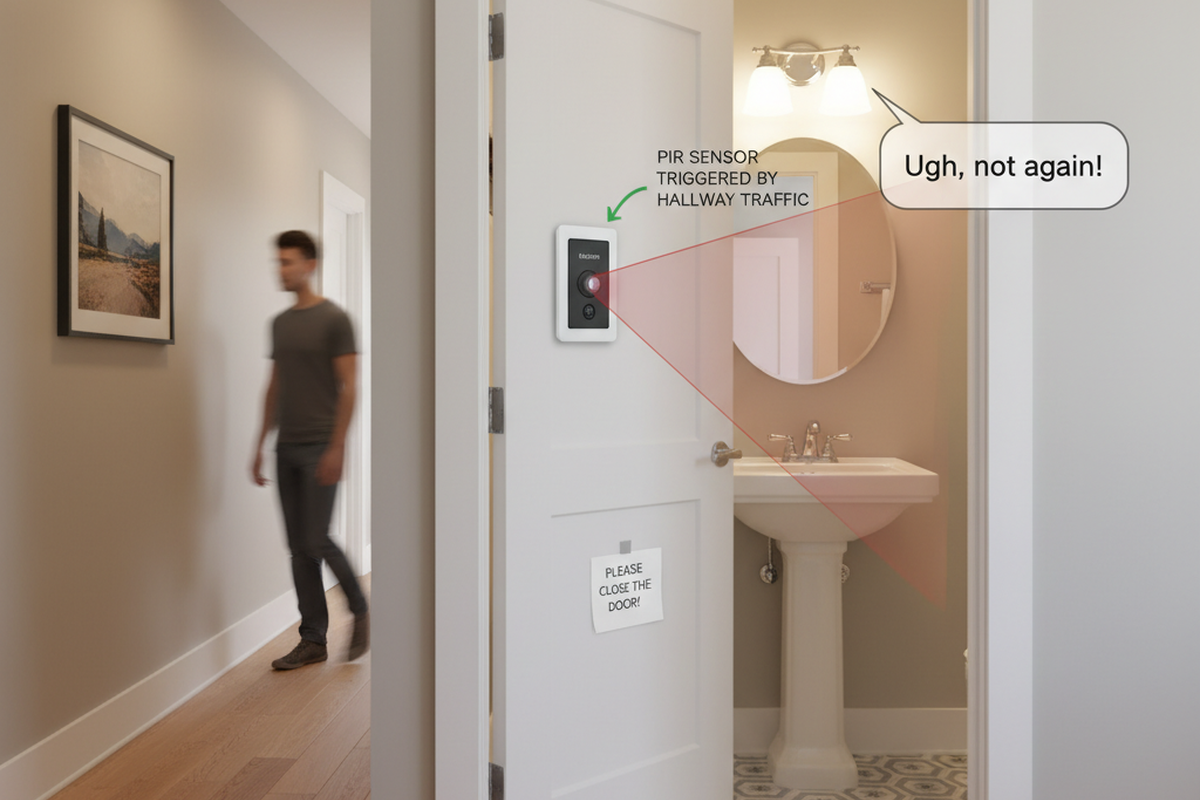
- Encendidos aleatorios (por el entorno): La luz se enciende “sola” y se empieza a culpar al ruido eléctrico del cableado. En una cocina de diseño abierto en Chandler, situada cerca de una rejilla de impulsión, la prueba de correlación fue sencilla: activar el aire acondicionado y observar cómo el sensor se activaba con el flujo de aire.
La pregunta de clasificación más rápida suele ser: ¿Ocurre cuando la luz debería estar apagada, cuando está encendida o después de haber estado encendida un tiempo? Esa única respuesta reduce la búsqueda de una docena de posibilidades a solo unas pocas.
Existe también el mito que lleva a invertir dinero a ciegas: “Basta con cambiar la marca del interruptor” o “Los LED baratos son todos iguales hoy en día”. La realidad del mostrador de devoluciones en Phoenix durante 2020 y 2021 no respaldaba esa afirmación. Los paquetes múltiples con la mayor tasa de devolución eran aquellos con números de modelo variables y códigos de fábrica en letra pequeña. Misma caja, “misma bombilla”, diferente comportamiento del driver. Las reclamaciones se concentraban en sensores y reguladores: resplandor al estar apagados, parpadeo, zumbido y fallo prematuro. Si el driver de la lámpara cambia constantemente, el diagnóstico se convierte en un problema de la cadena de suministro, no del electricista.
La regla para el resto de esta guía es tajante: identifique el síntoma y, a continuación, realice una prueba de aislamiento. Solo después de eso, efectúe el gasto.
What a Motion Sensor Switch Is Doing When You Think It’s Off
A motion sensor wall switch isn’t a dumb mechanical disconnect. Even when the light is “off,” the switch may still be powering its own electronics—standby draw, sensing, logic—depending on the model and wiring. This creates a tiny current path even when the human thinks the circuit is open.
This is where ghost glow comes from in a lot of Rayzeek + LED setups: that standby trickle current has to go somewhere. Some LED drivers behave like a little bucket (input capacitance) that can charge and discharge at micro-current levels. Some drivers interpret the trickle as a partial wake-up. The result is what the human sees at the lamp: a faint glow, an occasional pulse, or a shimmer only after timeout. In the Tempe condo hallway, the “proof” wasn’t an argument about leakage current. It was one A19 swap showing that one driver design ignored the trickle while the bargain driver lit up on it.
Minimum load is the cousin of that story. Some electronic switches and controls behave better when the load has enough real draw to stabilize the control’s electronics and the current path. Ultra-low wattage LED loads—single lamps, 1–2 globe fixtures, vanity bars with tiny globes—can sit right on the edge where the switch and driver can’t agree on what “off” means.
In a Scottsdale bathroom remodel with a three-globe vanity bar, the problem showed up like a parting wink: a flash when the motion sensor timed out, and occasional shimmer in standby. A temporary resistive load added at the fixture stabilized the behavior instantly. That’s not magic. That is a knob you can turn: load.
Two constraints matter here:
- Minimum-load thresholds vary by model and revision. A number copied from a forum post isn’t a guarantee. The reliable approach is to check the specific Rayzeek manual for the exact model and treat the behavior—glow, shimmer, flash—as the evidence.
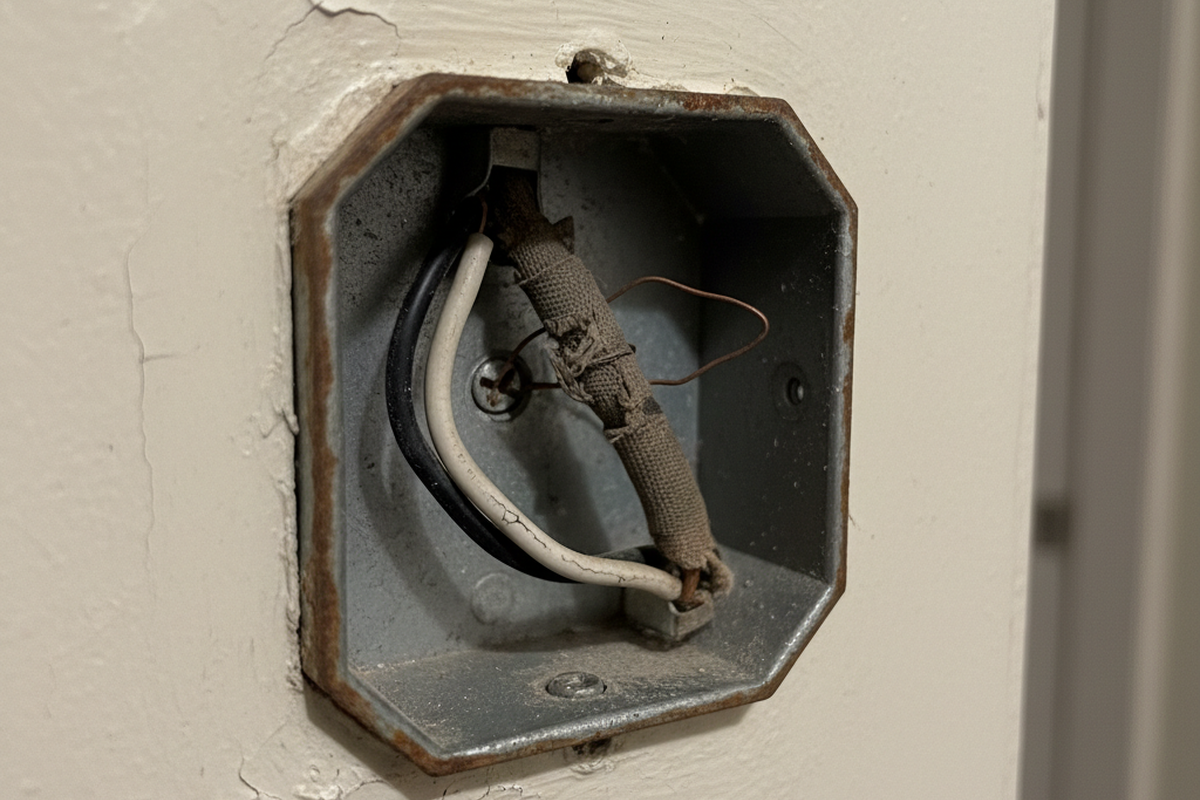
- Wiring realities can be a hard gate. If a location is a no-neutral switch box (classic 1960s ranch switch loop in Central Phoenix), some devices simply don’t belong there. The most dangerous “fix” that keeps circulating is using the equipment ground as a neutral “just to test.” That isn’t clever. It’s how people end up energizing metal parts in old homes with questionable grounds.
There’s a popular explanation that tries to flatten all of this into “it’s always the neutral.” Neutral problems are real, but ghost glow can occur even when a neutral exists and is properly connected—because the switch is still doing something when it’s “off,” and the LED driver is responding. The neutral story becomes relevant when symptoms cross circuits, change with other loads, or show up as heat, odor, or arcing. Those are stop-and-escalate signs, not “try a new bulb” signs.
Quizás le interese

- Tensión: 2 pilas AAA
- Modo Día/Noche
- Temporización: 15 min, 30 min, 1 h (por defecto), 2 h
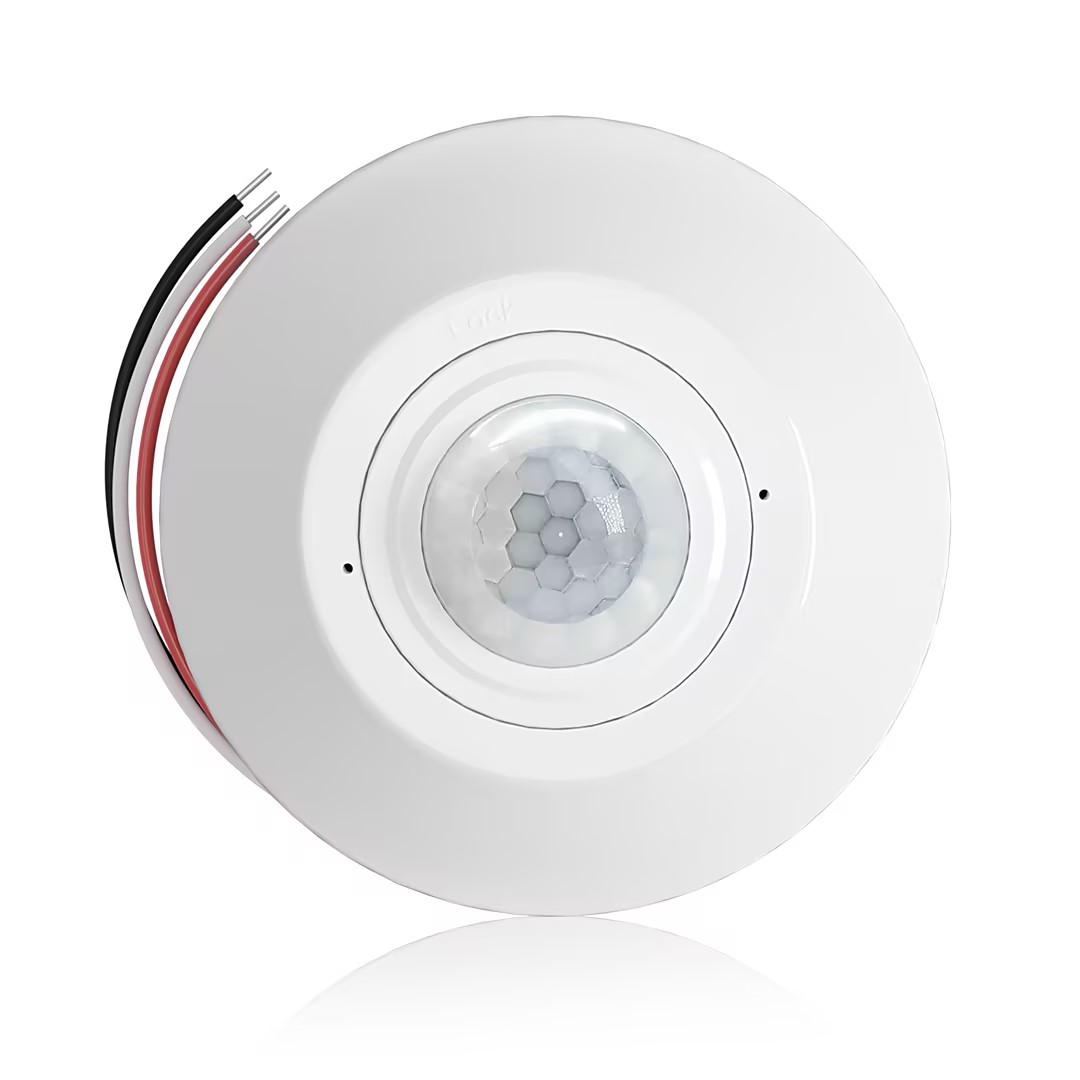
- Sensor de presencia PIR para montaje en techo con salida de relé de contacto seco
- Alimentación de baja tensión de 12/24VDC o 12/24VAC
- Contactos de relé aislados COM, NO y NC para entradas de EMS, HVAC y control de edificios
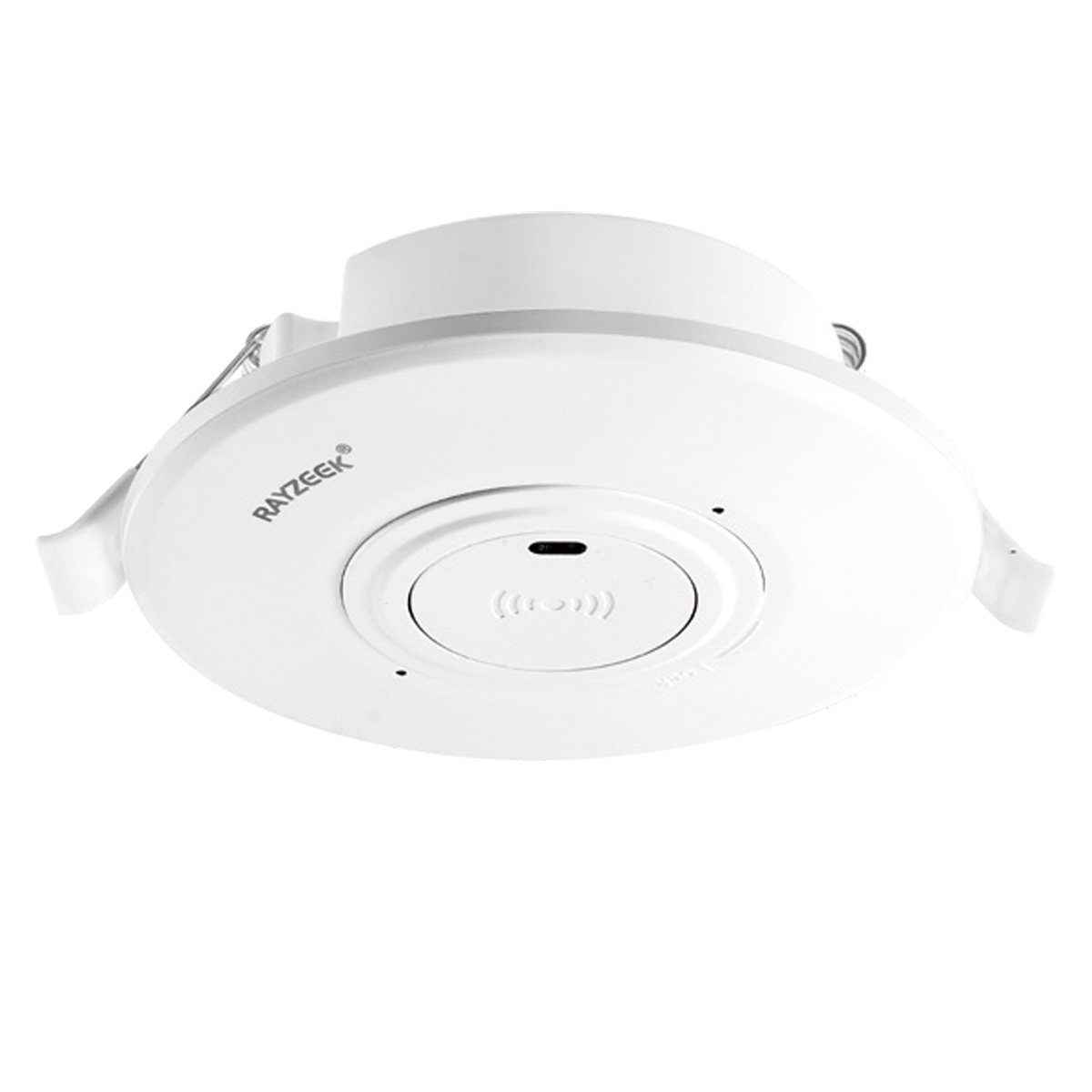
- Interruptor con sensor de movimiento por microondas empotrable en techo de baja tensión DC
- Entrada de 12 VDC / 24 VDC con rango de 10-30 VDC
- Corriente de funcionamiento máxima de 10A con retardo de tiempo, umbral de Lux y sensibilidad ajustables
- Interruptor con sensor de movimiento por microondas empotrable en techo para cargas más elevadas
- Entrada de tensión de red de 100-265 VAC, modelo de 10A
- Detección por microondas de 5,8 GHz con temporizador, umbral Lux y sensibilidad ajustables
- Interruptor con sensor de movimiento por microondas empotrable para techo
- Entrada de tensión de red de 100-265 VAC, modelo de 5A
- Detección por microondas de 5,8 GHz con temporizador, umbral Lux y sensibilidad ajustables
- Regulador con sensor de presencia PIR RZ037 de techo para alimentación de 220V
- Corriente de funcionamiento máxima de 3A con carga nominal de 660W
- El botón LUX controla el encendido/apagado del sensor de luz y la regulación de brillo ajustada por el usuario
- Regulador con sensor de presencia PIR RZ037 de techo para alimentación de 110V
- Corriente de funcionamiento máxima de 3A con carga nominal de 330W
- El botón LUX controla el encendido/apagado del sensor de luz y la regulación de brillo ajustada por el usuario
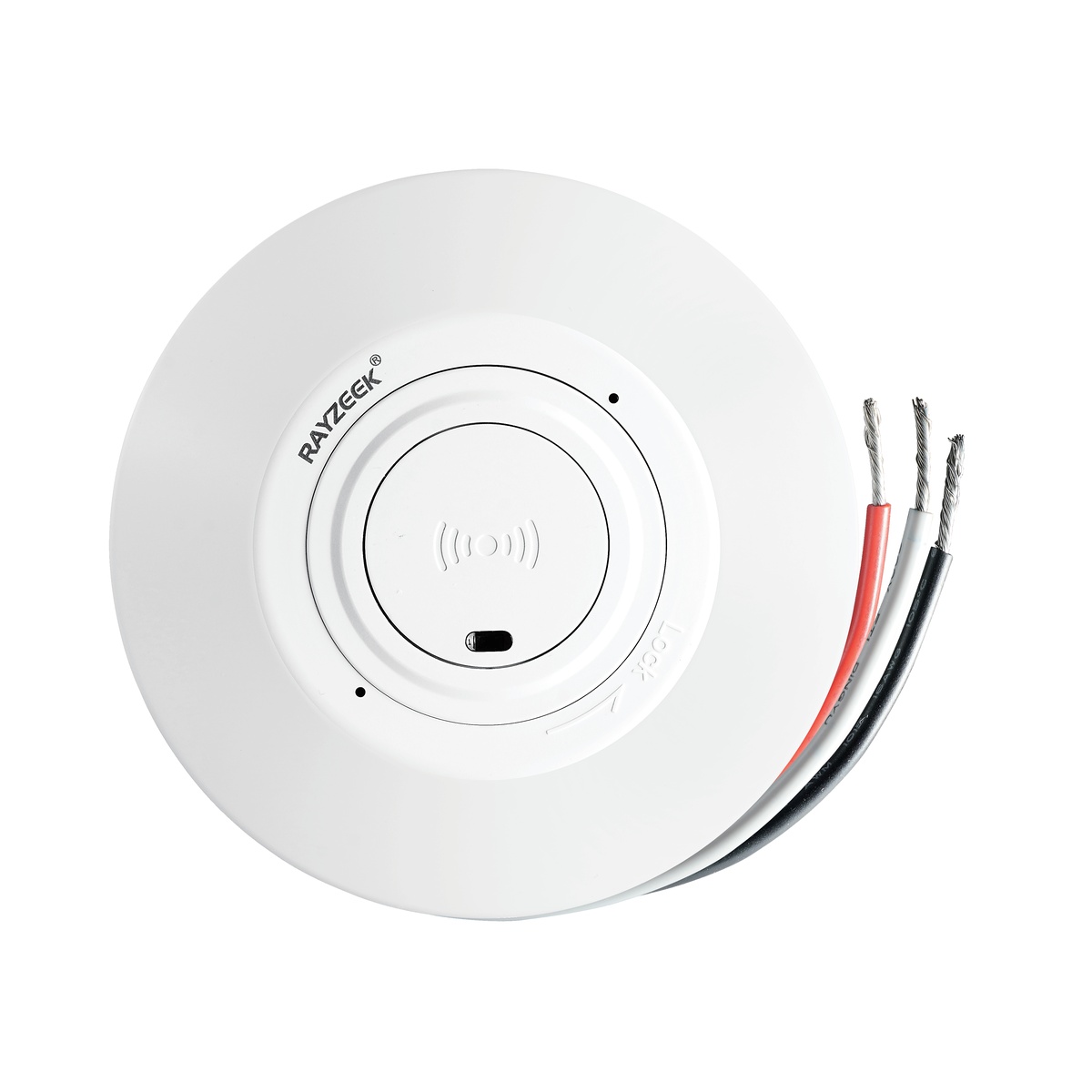
- Interruptor con sensor de movimiento por microondas de techo para CC de bajo voltaje
- Entrada de 12 VDC / 24 VDC con rango de 10-30 VDC
- Corriente de funcionamiento máxima de 10A con retardo de tiempo, umbral de Lux y sensibilidad ajustables
- Interruptor con sensor de movimiento por microondas de techo para mayor carga
- Entrada de tensión de red de 100-265 VAC, modelo de 10A
- Detección por microondas de 5,8 GHz con temporizador, umbral Lux y sensibilidad ajustables
- Interruptor con sensor de movimiento por microondas de techo
- Entrada de tensión de red de 100-265 VAC, modelo de 5A
- Detección por microondas de 5,8 GHz con temporizador, umbral Lux y sensibilidad ajustables
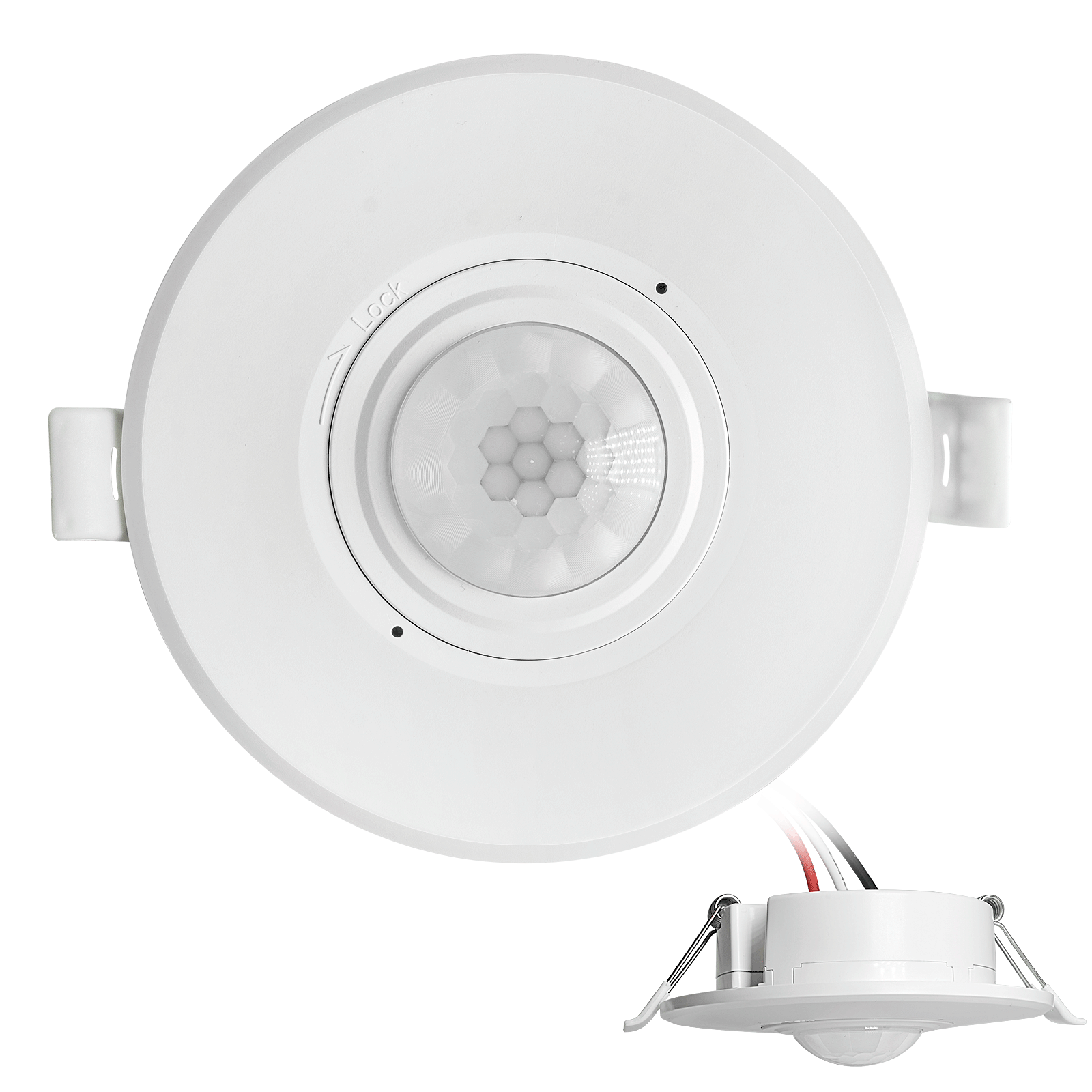
- Interruptor con sensor de movimiento PIR para montaje empotrable en techo de CC de bajo voltaje
- Entrada de 12 VDC / 24 VDC con rango de 10-30 VDC
- Corriente máxima de trabajo de 10 A con tiempo de retardo, umbral de luxes y sensibilidad ajustables
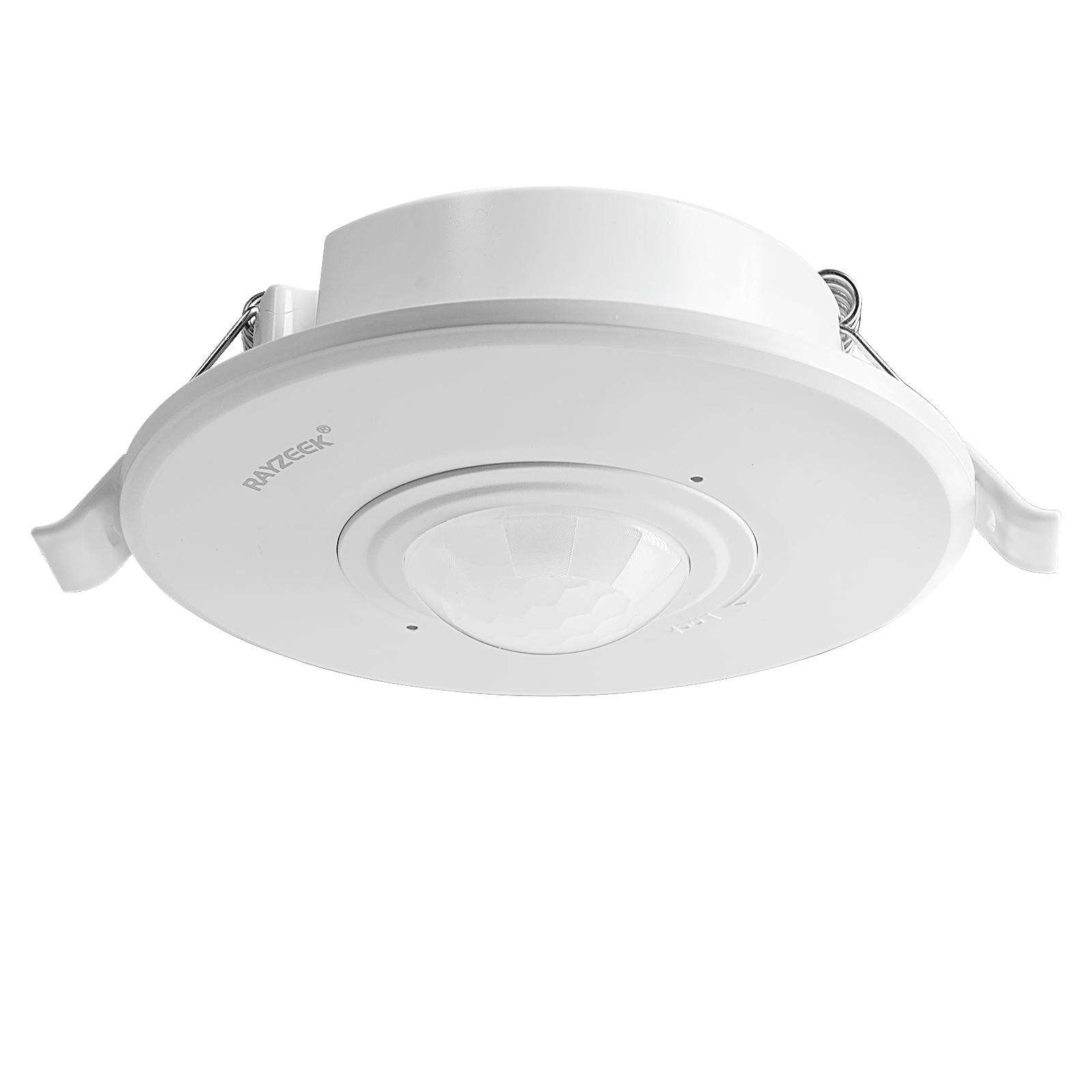
- Interruptor con sensor de movimiento PIR empotrable en techo para mayor carga
- Entrada de tensión de red de 100-265 VAC, modelo de 10A
- Detección de 360 grados con tiempo de retardo, umbral de luxes y sensibilidad ajustables
- Interruptor con sensor de movimiento PIR empotrable en techo
- Entrada de tensión de red de 100-265 VAC, modelo de 5A
- Detección de 360 grados con tiempo de retardo, umbral de luxes y sensibilidad ajustables
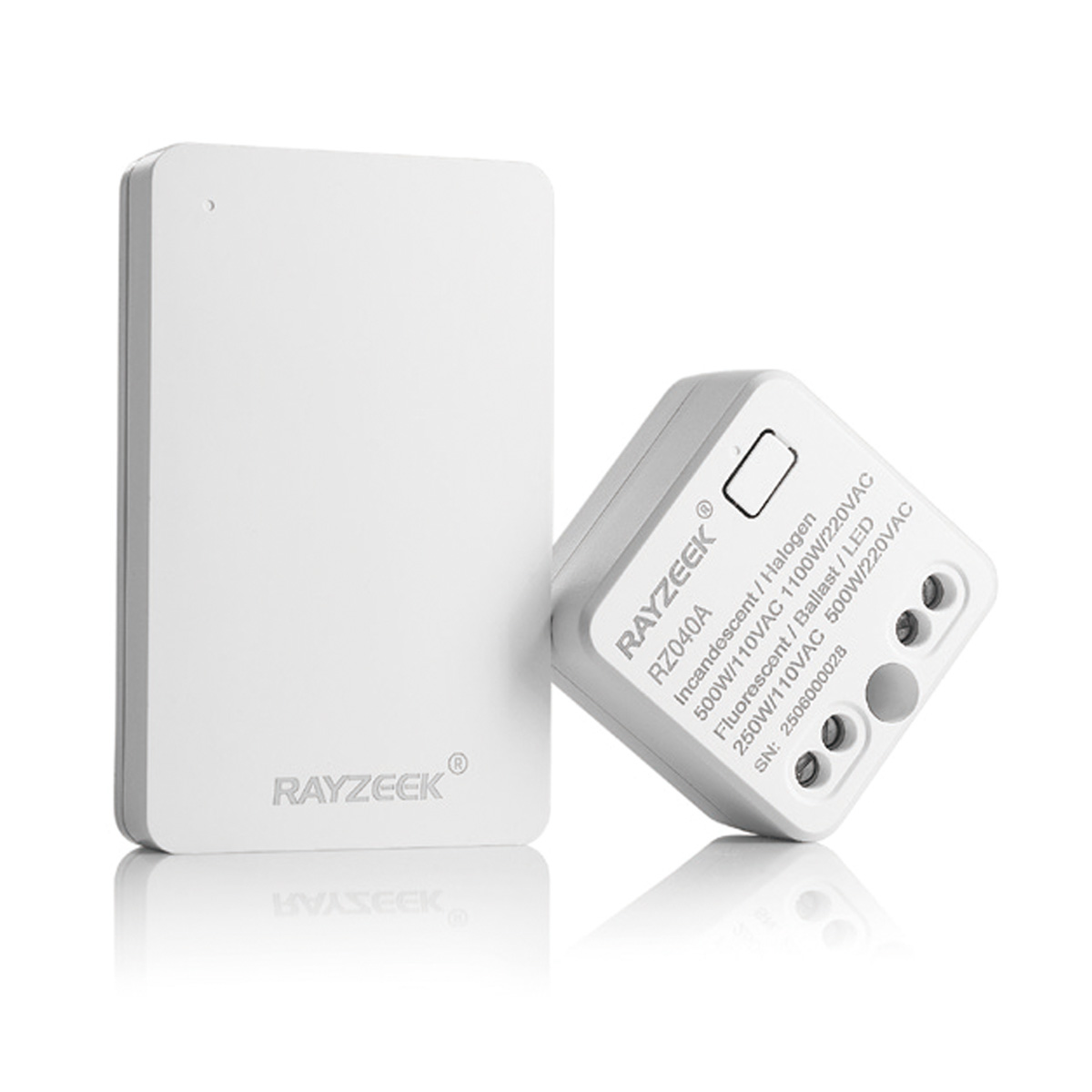
- Kit de emisor inalámbrico y receptor para el control de iluminación de encendido/apagado en interiores
- Receptor de 100-230 V CA, 50/60 Hz con corriente nominal de 5 A
- Interruptor inalámbrico alimentado por CR2032 con comunicación de 2,4 GHz
- Presencia (encendido automático/apagado automático)
- 12–24 V CC (10–30 V CC), hasta 10 A
- Cobertura de 360°, 8–12 m de diámetro
- Tiempo de retardo de 15 s a 30 min
- Sensor de luz Desactivado/15/25/35 Lux
- Sensibilidad alta/baja
- Modo de presencia con encendido/apagado automático
- 100–265V CA, 10A (requiere neutro)
- Cobertura de 360°; diámetro de detección de 8–12 m
- Temporización: 15 s–30 min; Lux OFF/15/25/35; Sensibilidad Alta/Baja
- Modo de presencia con encendido/apagado automático
- 100–265V CA, 5A (requiere neutro)
- Cobertura de 360°; diámetro de detección de 8–12 m
- Temporización: 15 s–30 min; Lux OFF/15/25/35; Sensibilidad Alta/Baja
Omit the waveform lecture. Omit the oscilloscope screenshots. The only reason to learn the mechanism is to choose the right test and avoid random swapping.
The mechanism chooses the test.
The One-Change Tests That Isolate the Culprit
The fastest troubleshooting looks boring on paper. It’s controlled. It changes one variable. It watches for a repeatable result. And it writes down what happened so the fix can survive the next random bulb replacement.
Test rule zero: change one thing at a time—one bulb, one fixture, one setting—then observe for a short, defined window (often 10 minutes after timeout, or one HVAC cycle).
Test 1: The “Known-Good Lamp” Swap (Driver Mismatch Proof)
If the symptom is ghost glow or shimmer that shows up in standby, the cleanest test is to swap one LED lamp on the circuit to a known-stable line (not an unknown multipack with shifting SKUs). Brand loyalty doesn’t matter here; driver predictability does.
- Swap one A19 in a multi-lamp fixture, or one sconce in a hallway.
- Let the Rayzeek-class motion sensor time out and go to standby.
- Observe in the dark. Don’t stare for 30 seconds and declare victory; give it a few minutes.
If the swapped lamp goes truly dark while the others keep glowing, that’s a diagnosis: the switch is not “broken”; the driver mismatch is the problem. At that point, the fastest fix is usually lamp selection or a compatible fixture/driver choice, not a switch swap.
This is also the moment to defuse the “wasted power” fear. Ghost glow is usually a driver response to micro-current, not the fixture running at full power. People hate that answer, but it keeps them from tearing out working switches because the light “looks on.”
Test 2: The Time-and-Heat Check (Thermal Cycling vs. Control Failure)
If the symptom is “random shutoffs” that happen after a predictable time window—5–10 minutes is common—treat heat as the first suspect, especially in hot climates and enclosed fixtures.
The Mesa garage case was textbook: an enclosed ceiling “boob light” fixture, brutal summer heat, LEDs too hot to touch, and cycling that looked like a control malfunction. The motion sensor switch got blamed because it was the new part. But the sensor indicator looked normal while the lamps went dark and came back. Changing the bulb type to one with better thermal behavior stopped the cycling without touching the switch.
The one-change version of that test is simple and low-risk:
- If safe and accessible, swap one bulb for a different type rated for enclosed fixtures (or temporarily open the fixture if designed to be opened normally).
- Run the light continuously and time the failure window.
- If the cycling disappears, it wasn’t the sensor deciding to turn off; it was the bulb protecting itself from heat.
A bypass will not fix a bulb overheating in a sealed globe. A new switch will not fix a lamp that can’t survive the fixture and the climate.
Test 3: The Minimum-Load Differentiator (Does Load Stabilize It?)
If the symptom is a flash at timeout or shimmer in standby on a low-watt setup—vanity bars, a single LED in a closet—minimum-load behavior moves to the top of the list.
In the Scottsdale three-globe vanity case, a temporary resistive load at the fixture stabilized the system instantly. That’s the diagnostic value: it tells you whether the circuit needs a more robust load path to behave predictably.
To avoid unsafe modifications, frame the test carefully: use the load change as a diagnostic signal. If the behavior clearly changes, choose a compliant fix (often a purpose-built bypass installed at the fixture by someone qualified, or a lamp/fixture change that increases effective load).
The important observation is repeatability: if adding load makes the shimmer/flash stop, it confirms the mechanism. If adding load does nothing, stop pushing the bypass idea and look elsewhere.
Inspírese con los portafolios de sensores de movimiento Rayzeek.
¿No encuentra lo que busca? No se preocupe. Siempre existen formas alternativas de resolver sus problemas. Quizá alguno de nuestros portafolios pueda ayudarle.
Test 4: The HVAC Correlation (False Triggers That Look Like “Electrical Noise”)
If the complaint is “it turns on by itself,” treat the environment as part of the circuit. In Chandler, a motion sensor switch near a supply register was triggering with AC airflow and temperature gradients. The homeowner wanted an electrical explanation; the useful move was correlation: does it happen when the AC runs?
One-change protocol:
- Run the HVAC and watch for triggering.
- Temporarily reduce sensitivity and adjust timeout (settings vary by device; the concept doesn’t).
- If the false triggers drop or stop, the device isn’t haunted and the wiring isn’t failing. The sensor is in a bad spot or set too aggressively.
This is also where many people accidentally diagnose a “flicker problem” that is actually a “re-trigger problem.” The light turning on repeatedly can look like instability if someone is not watching the room and the air movement.
The documentation habit that prevents repeat complaints
At the end of any of these tests, the fix should be written down like a service note: bulb line/model family if known, fixture type (open vs enclosed), whether the switch box has a neutral, sensor mode (occupancy/vacancy), timeout, sensitivity, and whether a bypass was installed. This isn’t just bureaucracy. It prevents the next bulb swap from undoing the solution.
Now the map is straightforward: once the test points at the mechanism, the fix should match that mechanism.
Match the Fix to the Mechanism (Not to the Vibe)
There are two broad styles of fixing Rayzeek + LED complaints. One is expensive: swap parts until the customer stops texting. The other is boring: pick a stable lamp/fixture and a configuration that behaves on standby, at low load, and in the real environment.
The boring approach wins in fleets and rentals because of what the returns desk showed in 2020–2021: “same bulb” isn’t always the same driver. A property manager can save $2 per lamp across 120 lamps and still lose money if it generates nine after-hours tickets in the first month. That’s not an abstract moral about quality; it’s callback economics. The labor is the expensive component.
So the fix mapping tends to look like this:
- Ghost glow confirmed by one-lamp swap → choose a different lamp/driver line that ignores standby trickle, or (in low-load cases) add a proper bypass at the fixture so the trickle current has a benign path.
- Flash/shimmer at timeout that changes with load → treat minimum load as the issue; a bypass or a different lamp/fixture class is more coherent than a switch-brand swap.
- Shutoff after minutes that tracks heat → lamps/fixture ventilation, enclosed-fixture ratings, and thermal behavior; do not chase switch features.
- False triggers tied to HVAC, pets, sightlines → settings and placement decisions; do not treat it like a wiring defect until correlation fails.
This is also the place to stop people from accidentally creating a second problem: multi-way circuits.
A Gilbert, AZ stairwell with a 3-way setup is a classic trap. Someone upgrades one location to a motion sensor switch and leaves the other as a standard switch, expecting both ends to behave like “dumb switches.” Then the lights flicker, or the off behavior depends on which switch was last used, and the homeowner repeats, “but it worked before.”
In a multi-way circuit, topology isn’t optional. Introducing electronics changes what combinations are valid. The fix isn’t a mood. It’s either correct device pairing for the 3-way arrangement or a different sensor strategy (sometimes moving sensing to a different location or using a fixture-side control method).
A shorter detour that saves a lot of confusion: smart bulbs. If someone is trying to use a motion sensor wall switch to control smart bulbs (Hue-class, Wi‑Fi lamps), the system is fighting itself. Smart bulbs want constant power; the wall switch is designed to cut power. The coherent choice is: either use dumb LEDs with the sensor switch, or keep the bulbs always powered and do motion sensing through the smart system. Mixing those two control hierarchies is how people end up diagnosing “flicker” that is actually a device rebooting.
One last red-team point because it matters: “Just add a bypass, it fixes everything” is as lazy as “it’s always the neutral.” A bypass is the right tool for minimum-load/leakage behavior. It is irrelevant for thermal cycling, false triggers, and multi-way topology mismatches. Treating bypass as a universal cure just adds parts while leaving the real cause untouched.
Safety Gates and “Call a Pro” Triggers
Some problems are genuinely electrical safety issues, and it’s important to put a gate here so readers don’t improvise into danger.
¿Busca soluciones de ahorro de energía activadas por movimiento?
Póngase en contacto con nosotros para obtener sensores de movimiento PIR completos, productos de ahorro de energía activados por movimiento, interruptores con sensor de movimiento y soluciones comerciales de presencia/vacancia.
The hard line is simple: don’t invent a neutral. In a Central Phoenix 1960s ranch, the no-neutral switch box was a wiring architecture problem. A homeowner tried ground-as-neutral “just to test,” and it created weird glow on a nearby lamp by energizing conductors in ways that didn’t match expectations. Backing that out to safe wiring took longer than the original install would have.
If a Rayzeek-class device requires a neutral and the box doesn’t have one, the safe options are limited: run a proper neutral (real work), choose a different device type or sensor location that doesn’t require that wiring at that point, or involve a qualified electrician to design a compliant approach. Anything else is gambling with old houses.
There are also “stop and inspect basics” triggers that should override the urge to keep swapping bulbs:
- Symptoms across multiple circuits at the same time (not just one hallway) can point to loose neutrals, shared neutrals, or service issues.
- Heat, burning smell, sizzling, discoloration, or a warm switch/fixture is not an LED compatibility puzzle; it’s an immediate safety concern.
- Loose connections and backstabs can mimic flicker in ways that no lamp swap will cure.
Power quality and neighborhood voltage swings exist, but they’re a later branch. The practical sanity check is: if multiple circuits are doing the same thing simultaneously, stop treating it as a single switch + bulb issue and get qualified measurement. Blaming “dirty power” first is just outsourcing responsibility to a vague culprit.
Invoice-Grade Summary: A “Boring but Works” Configuration
For a landlord, HOA, or anyone who wants this to be maintainable, the goal is not just “fixed today.” The goal is a configuration that will still behave after the next turnover when someone replaces one bulb.
A repeatable template looks like a service note, because that’s exactly what it is:
- Load class: Note whether the circuit is a low-watt load (one lamp, 1–3 globe vanity bar) or a higher, stable load (multiple lamps, robust fixture).
- Fixture class: Note enclosed vs. open fixtures (garages and enclosed globes behave differently in Phoenix summers).
- Lamp strategy: Standardize on a known-stable LED line for sensor-controlled circuits; avoid mystery multipacks with shifting SKUs for these locations.
- Control settings: Record mode (occupancy/vacancy), timeout, sensitivity, and any ambient light threshold used, especially in open-plan areas near HVAC registers.
- Hardware notes: Record neutral present/absent, and whether a bypass was installed at the fixture (Y/N) for minimum-load/leakage behavior.
A warning belongs on the same page, based on the 2020–2021 returns pattern: compatibility can drift. Packaging can look identical while driver behavior changes. For bulk purchases, buy a small test batch first and record the line name and any packaging codes that help identify a consistent run.
The boring win condition is simple: observe the symptom, confirm the mechanism with one change, apply the fix that matches that mechanism, and document the configuration so the fix survives the next “helpful” bulb replacement.