
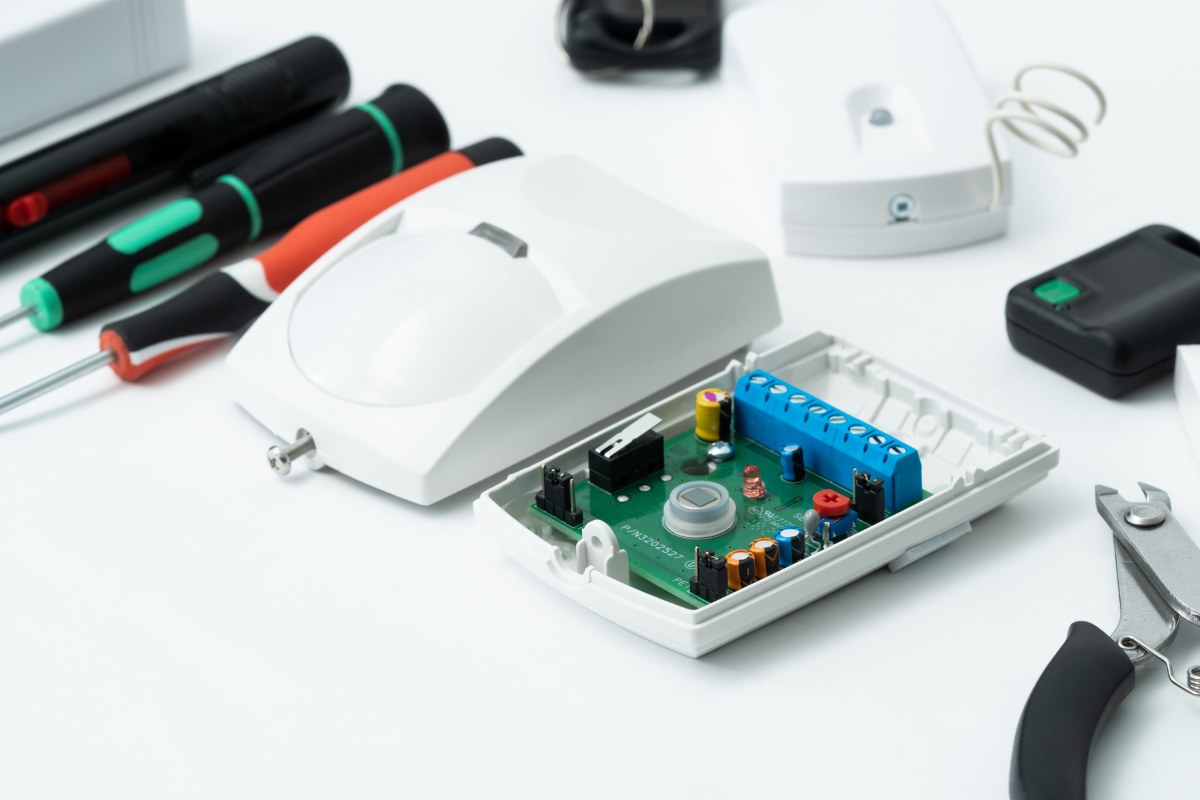
人感センサー(モーションセンサー)と存在センサー(プレゼンスセンサー)は、それぞれ固有の機能と用途を持っていますが、どのような違いがあるのでしょうか。そして何より、お客様の特定のニーズに最適なのはどちらでしょうか。本記事では、それぞれの動作原理、主な違い、多様な応用例について詳しく解説します。また、両者を選択する際に考慮すべき重要なポイントについてもご紹介します。
目次
- 人感センサー(モーションセンサー)とは
- 人感センサーの動作原理
- 存在センサー(プレゼンスセンサー)とは
- 存在センサーの動作原理
- 人感センサーと存在センサーの違い
- 人感センサーおよび存在センサーの用途
- Considerations When Choosing Between Motion and Presence Sensors
人感センサー(モーションセンサー)とは
A motion sensor, often referred to as an infrared sensor, is an electronic device that serves as a cornerstone in home security systems, automation systems, and energy-saving technologies. It’s designed to detect physical movement within a designated area by emitting or sensing various forms of energy, such as infrared radiation, radar waves, or sound waves.
The primary role of a motion sensor is to detect any form of movement in its vicinity, including people, animals, and objects. It accomplishes this by employing different technologies to identify changes in the environment. For instance, some motion sensors use infrared technology to measure the heat changes caused by moving bodies, while others use microwave or ultrasonic technology to detect changes in sound or radio waves.
Upon detecting movement, a motion sensor can also send a signal to the connected control panel of your security system or other connected devices. This can trigger a variety of responses, such as setting off an alarm, turning on lights, or adjusting the thermostat, making motion sensors a vital part of home security setups and energy-saving applications.
While motion sensors are proficient at detecting movement, they don’t necessarily identify what or who is moving. This means they can’t differentiate between a human, a pet, or a moving object, which can sometimes lead to false alarms. To counteract this, some advanced motion sensors come equipped with features like pet immunity.
人感センサーの動作原理
The inner workings of motion sensors are intriguing and vary based on the type of sensor. There are several types of motion sensors, each employing a unique method to detect movement. The most common types include Passive Infrared (PIR), Microwave, Ultrasonic, and Dual Technology sensors.
パッシブ赤外線(PIR)
PIR sensors are the most frequently used type of motion sensor. They function by identifying the heat emitted by an object, typically a human body. When a warm body like a human or animal passes in the detection field, it detects the change in infrared energy levels and triggers the sensor.
マイクロ波
Microwave sensors emit microwave pulses and then measure the reflection of a moving object. They cover a larger area than PIR sensors, but they are more expensive and can be prone to electrical interference. The sensor is activated when the echo-response of the microwave pulses is shortened due to the movement of an object.
こちらの商品もおすすめです

- 電圧: 単4形乾電池 2本
- 昼/夜モード
- タイマー設定時間: 15分、30分、1時間(デフォルト)、2時間

- 無電圧接点リレー出力付き天井取り付け型PIR人感センサー
- 12/24VDCまたは12/24VAC低電圧電源
- EMS、HVAC、および建物制御入力用COM、NO、NC絶縁リレー接点

- 低電圧DC天井埋め込み型マイクロ波人感センサースイッチ
- 10~30 VDC範囲の12 VDC / 24 VDC入力
- 調整可能なタイムラグ、照度(Lux)閾値、感度を備えた最大動作電流10A仕様
- 高負荷対応型 埋込型天井取付けマイクロ波人感センサースイッチ
- 100-265 VAC 商用電源入力、10Aモデル
- 調整可能なタイムラグ、照度(Lux)閾値、感度を備えた5.8 GHzマイクロ波検知
- 埋込型天井取付けマイクロ波人感センサースイッチ
- 100-265 VAC商用電圧入力、5Aモデル
- 調整可能なタイムラグ、照度(Lux)閾値、感度を備えた5.8 GHzマイクロ波検知
- 220V電源対応 天井取付けRZ037 PIR(赤外線)人感センサー調光器
- 定格負荷660W、最大動作電流3A
- LUXボタンによる照度センサーのON/OFFおよびユーザー設定の調光明るさ制御
- 110V電源対応 天井取付けRZ037 PIR(赤外線)人感センサー調光器
- 定格負荷330W、最大動作電流3A
- LUXボタンによる照度センサーのON/OFFおよびユーザー設定の調光明るさ制御

- 低電圧DC対応 天井取付けマイクロ波人感センサースイッチ
- 10~30 VDC範囲の12 VDC / 24 VDC入力
- 調整可能なタイムラグ、照度(Lux)閾値、感度を備えた最大動作電流10A仕様
- 高負荷対応 天井取付型マイクロ波人感センサースイッチ
- 100-265 VAC 商用電源入力、10Aモデル
- 調整可能なタイムラグ、照度(Lux)閾値、感度を備えた5.8 GHzマイクロ波検知
- 天井取り付け型マイクロ波人感センサースイッチ
- 100-265 VAC商用電圧入力、5Aモデル
- 調整可能なタイムラグ、照度(Lux)閾値、感度を備えた5.8 GHzマイクロ波検知

- 低電圧DC埋込型天井PIR人感センサースイッチ
- 10~30 VDC範囲の12 VDC / 24 VDC入力
- 最大動作電流10A(調整可能なタイムラグ、照度閾値、感度設定付き)

- 高負荷対応 埋込型天井PIR人感センサースイッチ
- 100-265 VAC 商用電源入力、10Aモデル
- 360度検知(調整可能なタイムラグ、照度閾値、感度設定付き)
- 埋込型天井PIR人感センサースイッチ
- 100-265 VAC商用電圧入力、5Aモデル
- 360度検知(調整可能なタイムラグ、照度閾値、感度設定付き)

- 屋内用照明ON/OFF制御ワイヤレススイッチ&受信機キット
- 100-230VAC、50/60Hz、定格電流5A受信機
- 2.4GHz通信対応 CR2032電池駆動ワイヤレススイッチ
- Occupancy(自動点灯/自動消灯)
- 12–24V DC (10–30VDC)、最大10A
- 360°検知エリア、直径8–12m
- タイムラグ 15秒–30分
- 照度センサー オフ/15/25/35 Lux
- 高/低感度
- 自動点灯/自動消灯人感モード
- 100–265V AC, 10A(中性線必須)
- 360°検知範囲、検知直径8–12 m
- タイムデレイ15秒–30分、Lux OFF/15/25/35、感度 高/低
- 自動点灯/自動消灯人感モード
- 100–265V AC, 5A(中性線必須)
- 360°検知範囲、検知直径8–12 m
- タイムデレイ15秒–30分、Lux OFF/15/25/35、感度 高/低
超音波
Ultrasonic sensors emit ultrasonic sound waves, which bounce off objects and return to the sensor. When a moving object disrupts these waves, the sensor is triggered.
デュアルテクノロジー
These sensors combine two different types of technologies, usually PIR and microwave. The sensor is only triggered when both sensors detect motion, which helps to reduce false alarms.
ビーム・光電センサー
Another type of motion sensor is the beam and photoelectric sensor. This type relies on a focused beam of energy transmitting between a sensor and an emitter. If an object interrupts the energy beam, breaking it, the sensor triggers a reaction.
Once the sensor is triggered, it sends a signal to the control panel, which then performs the pre-determined action, such as turning on a light, sounding an alarm, or sending a notification to your smartphone.
Motion sensors don’t “see” motion the way humans do. Instead, they detect changes in the environment, such as changes in heat or sound waves, to determine if there’s movement. This is why they can sometimes be triggered by things like changes in temperature or air currents.
存在センサー(プレゼンスセンサー)とは
A presence sensor, often referred to as an occupancy sensor, is a sophisticated device engineered to detect the presence of individuals within a designated area. Its capabilities extend beyond merely detecting movement, as it can ascertain if a person is present in a room, even if they are stationary.
These sensors utilize a variety of technologies to detect human presence. The most prevalent types include Passive Infrared (PIR), Ultrasonic, and Dual-technology sensors. PIR sensors detect the heat emitted by a human body, Ultrasonic sensors use sound waves, and Dual-technology sensors combine both methods for increased accuracy. Additionally, contemporary presence sensors rely on millimeter-wave (mmWave) technology, a form of radar technology that sends out signals and looks for reflections.
Presence sensors are crucial in smart home systems and commercial buildings, where they efficiently manage lighting, heating, and cooling systems. Upon detecting a person in a room, a presence sensor can trigger the lights to turn on, adjust the temperature, or even activate security systems. When the person leaves, the sensor can then turn off or adjust these systems, thereby saving energy and enhancing security.
These sensors are also integral components of a building’s Internet of Things (IoT) network, providing valuable information to key systems. The data from these sensors can be used to understand employee habits and behavior, detect workspace usage and occupancy, and monitor and control air quality, heating, and cooling. This information aids leadership teams in making building management more efficient and the employee experience more seamless.
存在センサーの動作原理
Presence sensors utilize a blend of technologies, primarily Passive Infrared (PIR) and Ultrasonic, and in some instances, millimeter-wave (mmWave) technology.
パッシブ赤外線(PIR)
PIR-based presence sensors are designed to detect the heat emitted by humans. Given that every human body emits infrared radiation, these sensors pick up changes in this radiation when an individual enters or exits a room, thereby determining their presence or absence. Certain PIR sensors are tailored for specific applications, such as desk sensors that monitor desk usage in real-time, or door-counting sensors that track the usage of a particular room. They are particularly effective in smaller spaces and can even be utilized to manage hygiene in facilities like bathrooms by tracking usage frequency.
超音波
Ultrasonic presence sensors function by emitting ultrasonic waves. When an individual enters the room, these waves bounce back to the sensor at a different frequency due to the Doppler effect. The sensor detects this change in frequency, identifying the presence of an individual. Ultrasonic sensors are often employed for security purposes and can serve as an alternative to PIR sensors in the workplace.
ミリ波(mmWave)
Some contemporary presence sensors utilize mmWave technology, which is based on radar technology. These sensors send out signals and look for reflections, providing another method of detecting the presence of people.
Presence sensors can be configured with weight and size parameters to prevent unnecessary activation, making them more efficient than motion sensors in certain applications. For instance, a simple movement of a chair would trigger a motion sensor, but a presence sensor would only be activated by the presence of a person.
Once a presence sensor detects an individual, it sends a signal to the control system. This signal can trigger various actions, such as turning on lights, adjusting the thermostat, or activating security systems.
Presence sensors are designed to detect even the slightest movement, including activities like typing or reading, which might not be picked up by a standard motion sensor. This makes them ideal for situations where people may be stationary for extended periods, such as in an office or a library.
In addition to PIR and Ultrasonic sensors, there are also Bluetooth Low Energy (BLE) Beacons and Optical Sensors. BLE Beacons transmit a universally unique identifier to nearby devices with a compatible app, making them useful for marketing purposes. Optical Sensors, on the other hand, use computer vision technology and artificial intelligence to provide detailed insights into person count, active occupancy, and passive occupancy, offering invaluable data for decision-making processes.
人感センサーを活用した省エネソリューションをお探しですか?
PIR人感センサー、人感センサー搭載省エネ製品、人感センサースイッチ、商業施設向けOccupancy/Vacancy(在室/不在)ソリューションについては、お気軽にお問い合わせください。
人感センサーと存在センサーの違い
While motion sensors and presence sensors share similarities, they possess distinct differences that make them suitable for different applications.
検知メカニズム
Motion sensors are designed to detect significant movement within their field of view. They respond to changes in the environment, such as a person entering a room. In contrast, presence sensors are more sensitive, capable of detecting even the slightest movements or changes in body temperature. They can sense if someone is sitting still in a room, a scenario that motion sensors might miss.
感度
Presence sensors operate with higher image resolutions, making them more sensitive than motion sensors. They can detect subtle changes in the environment, such as the heat emitted by a human body, providing a more accurate reading of the situation. On the other hand, motion sensors require more substantial movement to be triggered and may not detect small or slow movements.
誤検知・誤報
Presence sensors, due to their high sensitivity, may trigger more false alarms compared to motion sensors. They could be activated by a pet or even changes in temperature. Motion sensors, focusing on larger movements, are less likely to give false alarms.
エネルギー効率
Presence sensors contribute to greater energy efficiency. Since they can detect even a stationary person, lights or HVAC systems can remain on as needed, avoiding unnecessary energy usage. In contrast, motion sensors might turn off systems when a person is still in the room but not moving, leading to potential discomfort and energy waste when systems are restarted.
用途
Motion sensors are commonly used in security systems to detect intruders moving around. Presence sensors, with their ability to detect stationary individuals, are more suited for occupancy monitoring and energy management systems, such as smart lighting or HVAC control.
技術・方式
Both motion and presence sensors utilize a variety of technologies. Motion sensors often use infrared, microwave, or ultrasonic technology to detect moving objects. Presence sensors, on the other hand, may use technologies like pressure sensors, proximity sensors, photoelectric sensors, and video sensors to detect the presence of people, even when they are stationary.
人感センサーおよび存在センサーの用途
Motion and presence sensors, with their diverse functionalities, find applications across a multitude of sectors. Their use can be customized to cater to the specific needs of a space or situation. Let’s delve into some of the key uses of these sensors.
ホームセキュリティ
Motion sensors are a cornerstone of home security systems. They detect movement and set off alarms or send notifications when they pick up unusual activity. On the other hand, presence sensors can keep track of family members, sending alerts when children or elderly relatives move in or out of certain areas of the home.
エネルギー効率
Both types of sensors contribute significantly to energy conservation. Motion sensors control lighting, activating lights when movement is detected and deactivating them when a room is unoccupied. Presence sensors, on the other hand, maintain lighting as long as someone is present in the room, even if they’re stationary, preventing unnecessary energy usage.
Healthcare
Presence sensors are particularly beneficial in healthcare settings, where they can monitor patients, especially those with mobility issues or dementia. They can alert healthcare providers if a patient leaves a designated area or if there’s no movement over an extended period, indicating a potential health concern.
Retail and Business
In retail environments, motion sensors can track customer movement, providing valuable data on customer behavior and store layout effectiveness. Presence sensors can monitor and manage occupancy levels in real-time, which is useful in maintaining social distancing guidelines.
Rayzeek人感センサーのポートフォリオを見る.
お探しの製品が見つかりませんか?ご安心ください。課題を解決する手段は常に複数存在します。当社の製品ポートフォリオのいずれかがお役に立つかもしれません。
Smart Homes
In smart home setups, motion and presence sensors can automate various tasks. For example, motion sensors can trigger actions like opening a garage door or turning on outdoor lights. Presence sensors can adjust the thermostat based on whether anyone is home, enhancing comfort while optimizing energy use.
Industrial Applications
In industrial settings, motion sensors can enhance safety by detecting movement in hazardous areas and triggering alarms. Presence sensors can monitor employee presence in specific zones, aiding in access control and time and attendance tracking.
In addition to these applications, the choice between motion and presence sensors can be influenced by the layout of your home and your lifestyle. For instance, motion sensors are ideal for areas with more movement, such as hallways or staircases. In contrast, presence sensors are better suited for areas where you’re likely to be stationary, such as a home office, living room, or bedroom.
These sensors can also be used to control room functions, such as lowering the temperature of unused rooms, adding another layer of energy efficiency. In essence, the integration of motion and presence sensors can significantly enhance the functionality and comfort of your smart home setup, adapting to the way you and your family move through your home.
Considerations When Choosing Between Motion and Presence Sensors
When deciding between motion and presence sensors, several key factors should be taken into account to ensure the best fit for your specific needs. Here’s a more comprehensive look at these considerations:
Sensor Purpose
The primary factor is the intended use of the sensor. If your goal is to detect significant movement, such as for security or lighting control in high-traffic areas like hallways or staircases, a motion sensor would be the optimal choice. Conversely, if you need to detect subtle movements or occupancy in a room, such as people working at their desks or watching a movie, a presence sensor would be more suitable.
Sensitivity and Range
Motion sensors generally have a higher sensitivity and a wider range, enabling them to detect movement from a greater distance. Yet, this high sensitivity can sometimes lead to false alarms. Presence sensors, in contrast, are designed to detect more subtle movements within a smaller range, making them ideal for enclosed spaces.
エネルギー効率
Presence sensors can significantly contribute to energy efficiency by ensuring that lights and HVAC systems are only active when a space is occupied. While motion sensors can also contribute to energy efficiency, they are typically less effective because they can’t differentiate between an occupied and an unoccupied space.
Cost
Motion sensors are usually less expensive than presence sensors. But, the cost can vary depending on the specific features of the sensor, such as its range, sensitivity, and the technology it uses. It’s crucial to consider both the upfront cost of the sensor and the potential long-term savings, particularly in terms of energy efficiency.
Installation and Maintenance
Both types of sensors require installation and may need occasional maintenance or calibration. The complexity of installation and the level of maintenance required should be considered when choosing between the two.







