Bewegingssensoren en aanwezigheidssensoren hebben allebei hun eigen unieke functionaliteiten en toepassingen, maar wat is het verschil? En nog belangrijker: welke is de juiste keuze voor uw specifieke behoeften? In dit artikel leggen we uit hoe ze werken, wat de belangrijkste verschillen zijn en welke toepassingen ze hebben. Ook bieden we u essentiële overwegingen waar u rekening mee moet houden bij de keuze tussen beide.
Inhoudsopgave
- Wat is een bewegingssensor
- Hoe bewegingssensoren werken
- Wat is een aanwezigheidssensor
- Hoe aanwezigheidssensoren werken
- Verschil tussen bewegings- en aanwezigheidssensoren
- Toepassingen van bewegings- en aanwezigheidssensoren
- Overwegingen bij de keuze tussen bewegings- en aanwezigheidssensoren
Wat is een bewegingssensor
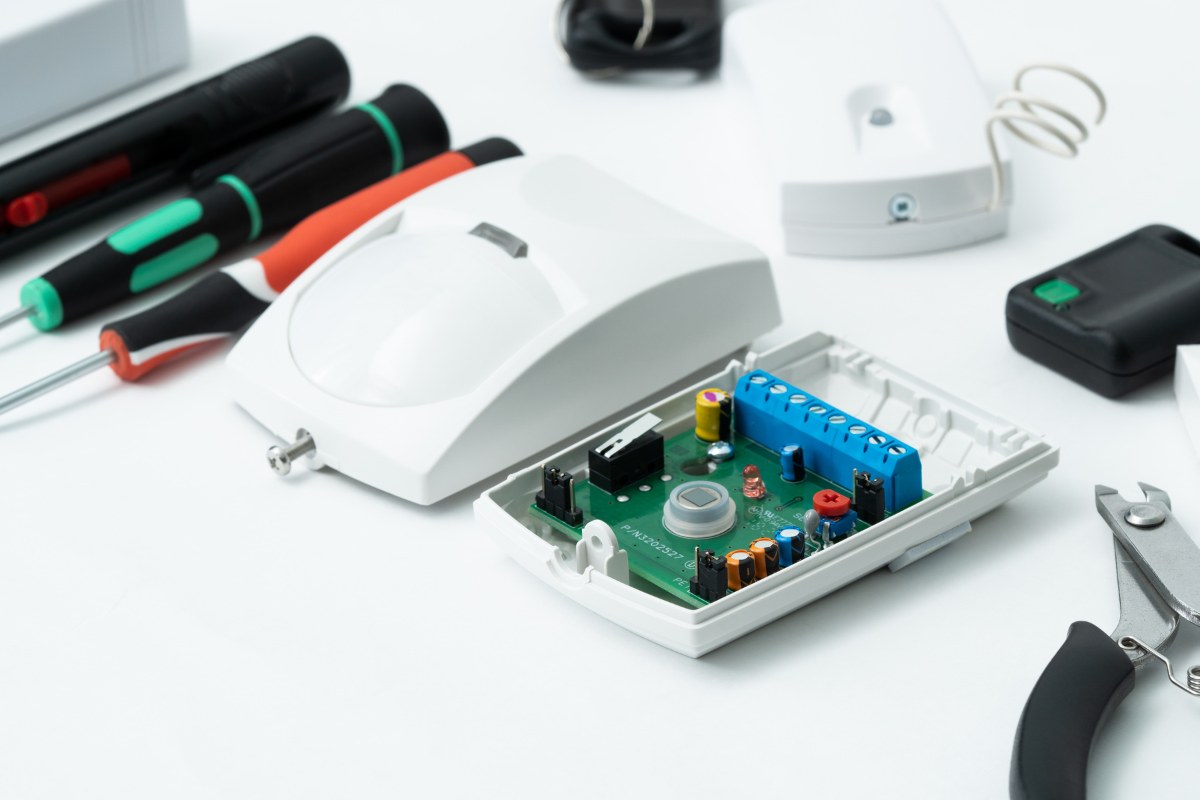
Een bewegingssensor, vaak aangeduid als een infraroodsensor, is een elektronisch apparaat dat een essentieel onderdeel vormt van beveilingssystemen voor woningen, automatiseringssystemen en energiebesparende technologieën. Het is ontworpen om fysieke beweging binnen een aangewezen gebied te detecteren door verschillende vormen van energie, zoals infraroodstraling, radargolven of geluidsgolven, uit te zenden of waar te nemen.
De primaire taak van een bewegingssensor is het detecteren van elke vorm van beweging in de omgeving, inclusief personen, dieren en objecten. De sensor gebruikt hiervoor verschillende technologieën om veranderingen in de omgeving te identificeren. Zo gebruiken sommige bewegingssensoren infraroodtechnologie om de warmteveranderingen te meten die worden veroorzaakt door bewegende lichamen, terwijl andere microgolf- of ultrasone technologie toepassen om veranderingen in geluids- of radiogolven te detecteren.
Bij het detecteren van beweging kan een bewegingssensor ook een signaal sturen naar het aangesloten controlepaneel van uw beveiligingssysteem of naar andere gekoppelde apparaten. Dit kan diverse acties activeren, zoals het afgaan van een alarm, het inschakelen van verlichting of het aanpassen van de thermostaat, waardoor bewegingssensoren een cruciaal onderdeel zijn van beveiligingsinstallaties en energiebesparende toepassingen.
Hoewel bewegingssensoren uitstekend in staat zijn om beweging te detecteren, identificeren ze niet noodzakelijkerwijs wat of wie er beweegt. Dit betekent dat ze geen onderscheid kunnen maken tussen een mens, een huisdier of een bewegend object, wat soms tot valse alarmen kan leiden. Om dit te voorkomen, zijn sommige geavanceerde bewegingssensoren uitgerust met functies zoals huisdierimmuniteit.
Hoe bewegingssensoren werken
De interne werking van bewegingssensoren is fascinerend en varieert afhankelijk van het type sensor. Er zijn verschillende typen bewegingssensoren, die elk een unieke methode gebruiken om beweging te detecteren. De meest voorkomende typen zijn passief infrarood (PIR), microgolf, ultrasoon en dual-technologiesensoren.
Passief infrarood (PIR)
PIR-sensoren zijn het meest gebruikte type bewegingssensor. Ze werken door het identificeren van de warmte die door een object wordt uitgestraald, doorgaans een menselijk lichaam. Wanneer een warm lichaam, zoals een mens of dier, het detectieveld passeert, neemt de sensor de verandering in infraroodenergie waar en wordt deze geactiveerd.
Microgolf
Microgolfsensoren zenden microgolfpulsen uit en meten vervolgens de reflectie van een bewegend object. Ze bestrijken een groter gebied dan PIR-sensoren, maar zijn duurder en gevoeliger voor elektrische storingen. De sensor wordt geactiveerd wanneer de echorespons van de microgolfpulsen wordt verkort door de beweging van een object.
Mogelijk bent u ook geïnteresseerd in

- Spanning: 2 AAA-batterijen
- Dag/Nacht-modus
- Uitschakelvertraging: 15min, 30min, 1u (standaard), 2u
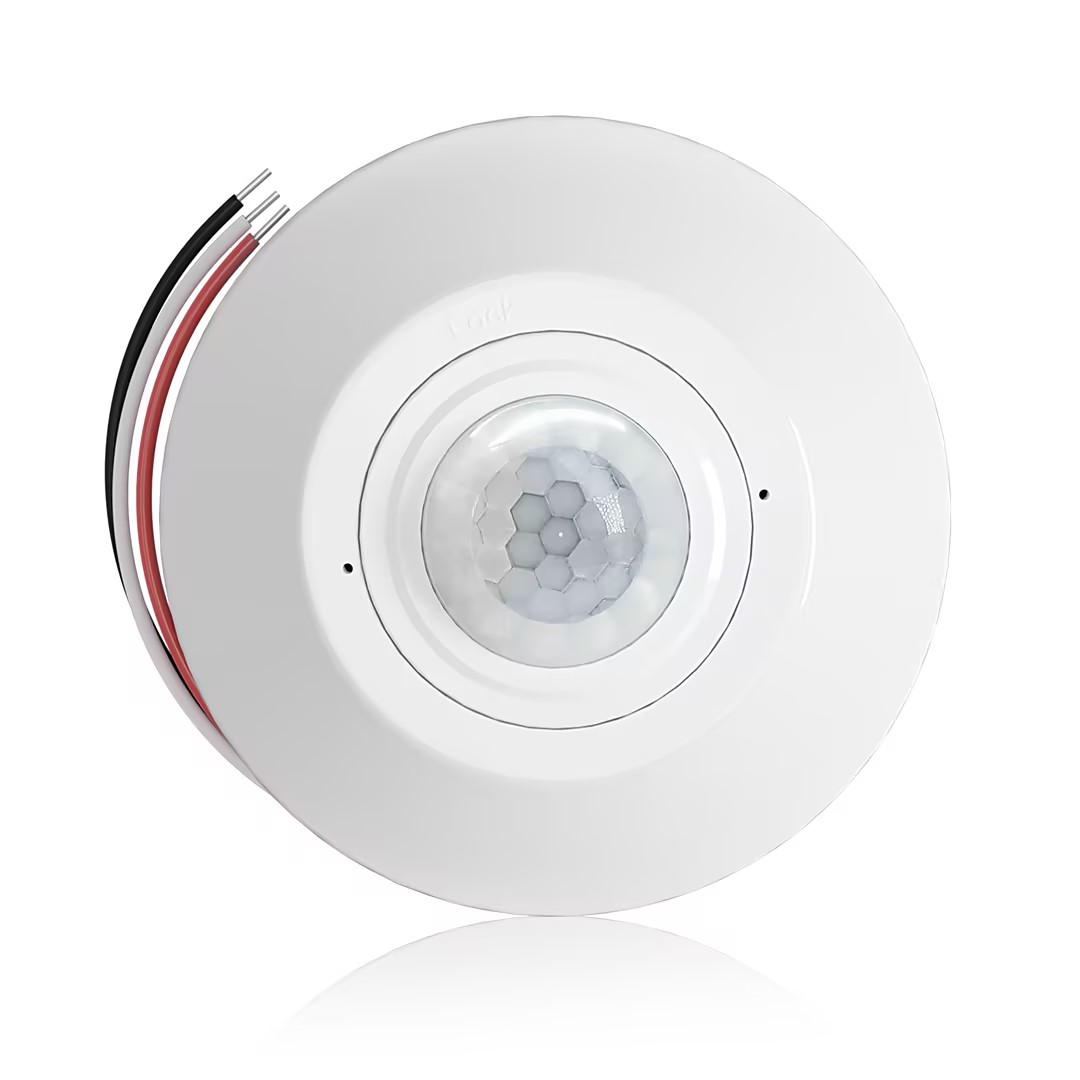
- Plafondgemonteerde PIR-aanwezigheidssensor met potentiaalvrije relaisuitgang
- 12/24VDC of 12/24VAC laagspanningsvoeding
- COM-, NO- en NC-geïsoleerde relaiscontacten voor EMS-, HVAC- en gebouwbeheersystemen
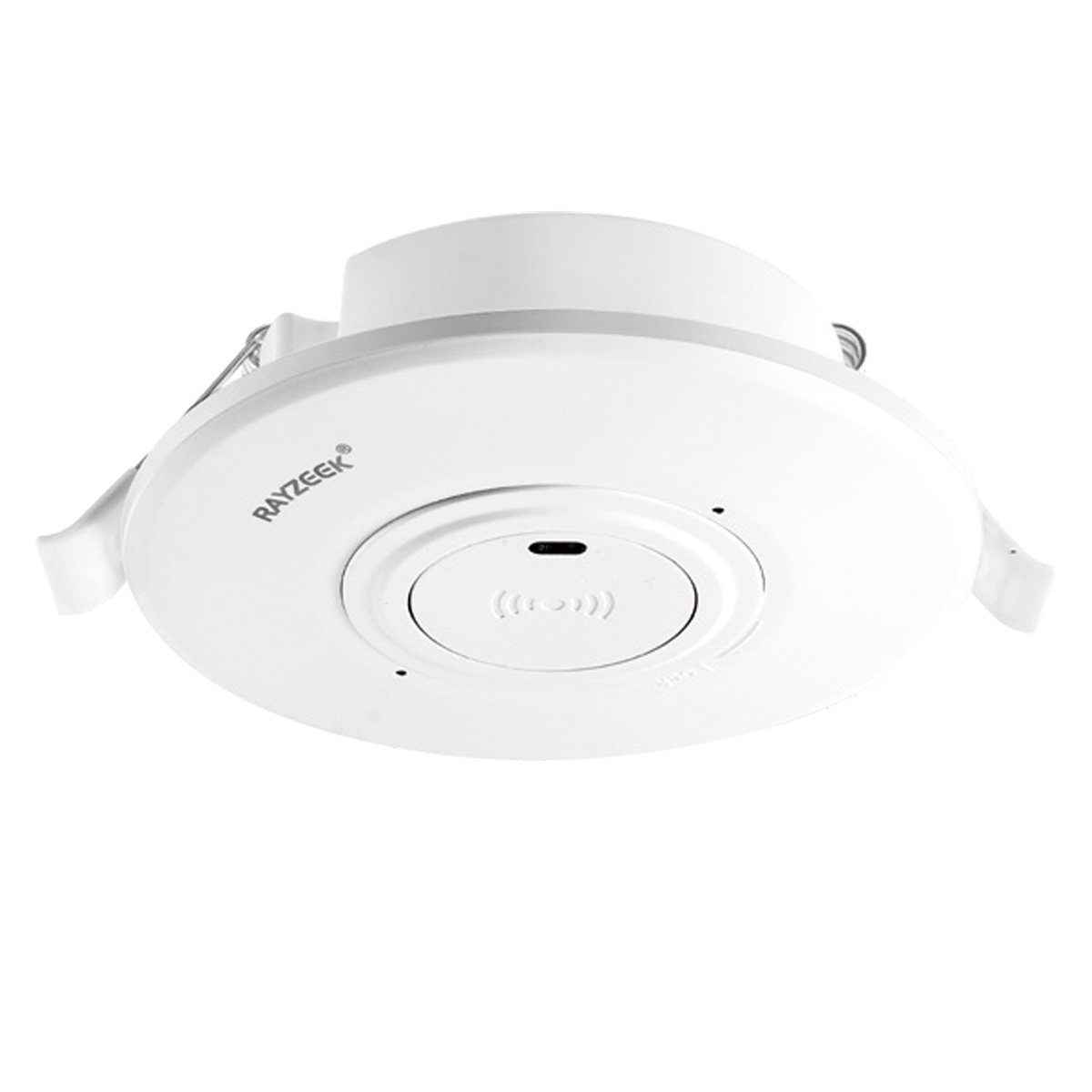
- Laagspanning DC inbouw-plafondgemonteerde microgolfbewegingssensorschakelaar
- 12 VDC / 24 VDC-ingang met een bereik van 10-30 VDC
- Max. 10A werkstroom met instelbare uitschakelvertraging, luxdrempelwaarde en gevoeligheid
- Inbouw-plafondgemonteerde microgolfbewegingssensorschakelaar voor hogere belasting
- 100-265 VAC netspanningsingang, 10A-model
- 5,8 GHz microgolfdetectie met instelbare uitschakelvertraging, Lux-drempelwaarde en gevoeligheid
- Plafondinbouw microgolf bewegingssensor-schakelaar
- 100-265 VAC netspanningsingang, 5A-model
- 5,8 GHz microgolfdetectie met instelbare uitschakelvertraging, Lux-drempelwaarde en gevoeligheid
- RZ037 PIR-aanwezigheidssensor-dimmer voor plafondmontage op 220V-voeding
- 3A maximale werkstroom met 660W nominaal vermogen
- LUX-knop regelt lichtsensor AAN/UIT en door de gebruiker ingestelde dimhelderheid
- RZ037 PIR-aanwezigheidssensor-dimmer voor plafondmontage op 110V-voeding
- 3A maximale werkstroom met 330W nominaal vermogen
- LUX-knop regelt lichtsensor AAN/UIT en door de gebruiker ingestelde dimhelderheid
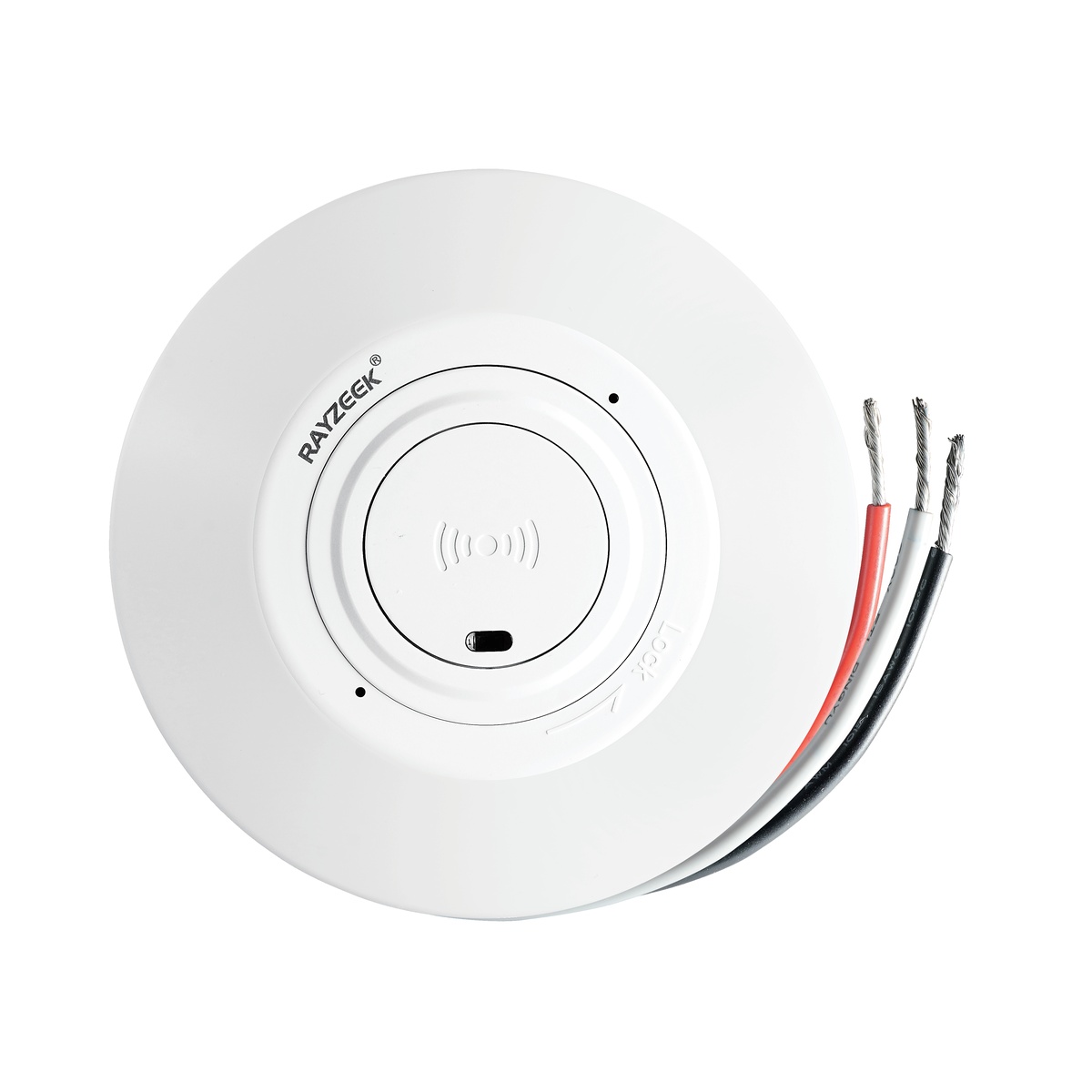
- Laagspanning DC microgolf bewegingssensor-schakelaar voor het plafond
- 12 VDC / 24 VDC-ingang met een bereik van 10-30 VDC
- Max. 10A werkstroom met instelbare uitschakelvertraging, luxdrempelwaarde en gevoeligheid
- Microgolf bewegingssensor-schakelaar voor het plafond met hogere belasting
- 100-265 VAC netspanningsingang, 10A-model
- 5,8 GHz microgolfdetectie met instelbare uitschakelvertraging, Lux-drempelwaarde en gevoeligheid
- Plafondmontage microgolf bewegingssensorschakelaar
- 100-265 VAC netspanningsingang, 5A-model
- 5,8 GHz microgolfdetectie met instelbare uitschakelvertraging, Lux-drempelwaarde en gevoeligheid
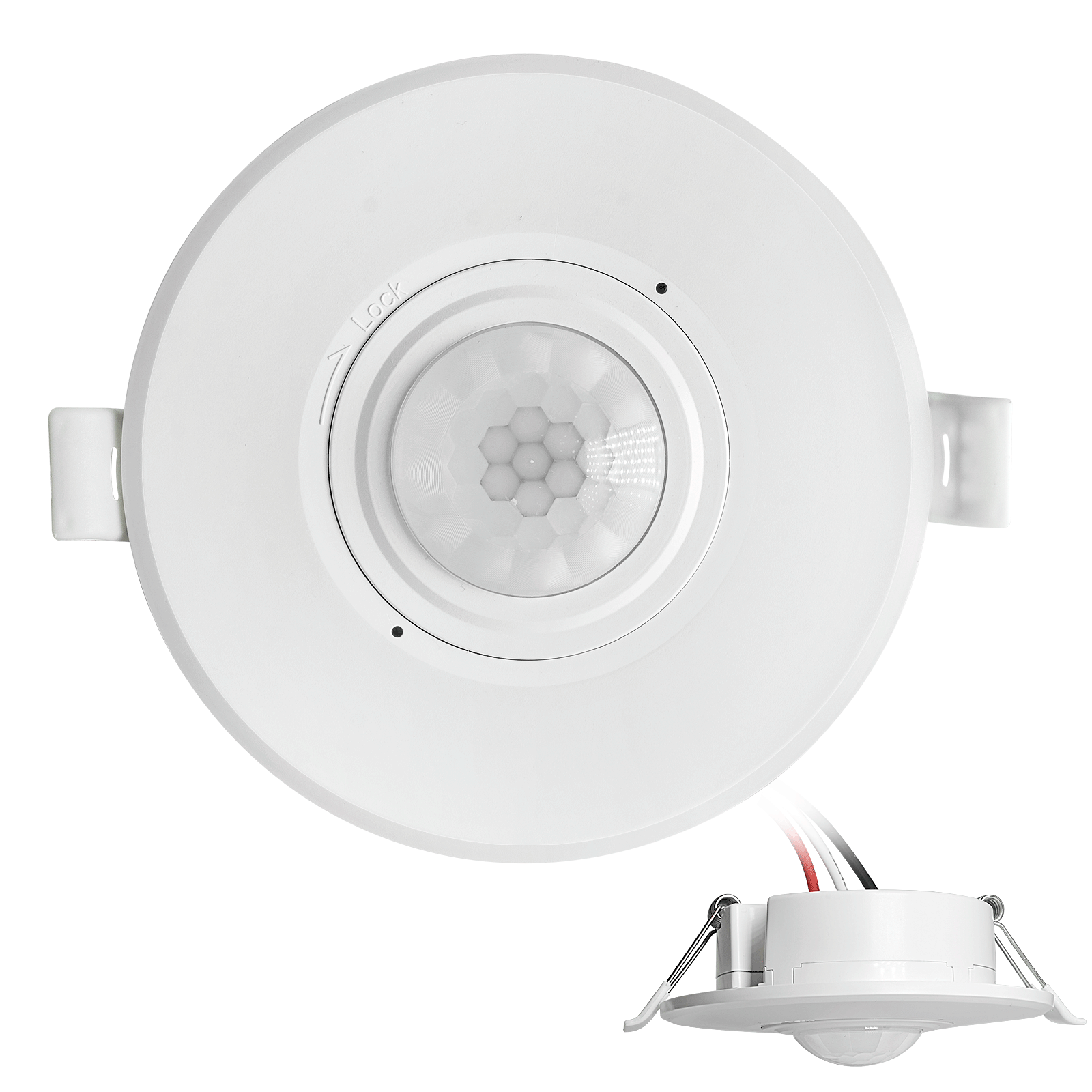
- Laagspannings-DC inbouw plafond PIR bewegingssensorschakelaar
- 12 VDC / 24 VDC-ingang met een bereik van 10-30 VDC
- Maximale werkstroom 10A met instelbare uitschakelvertraging, Lux-drempelwaarde en gevoeligheid
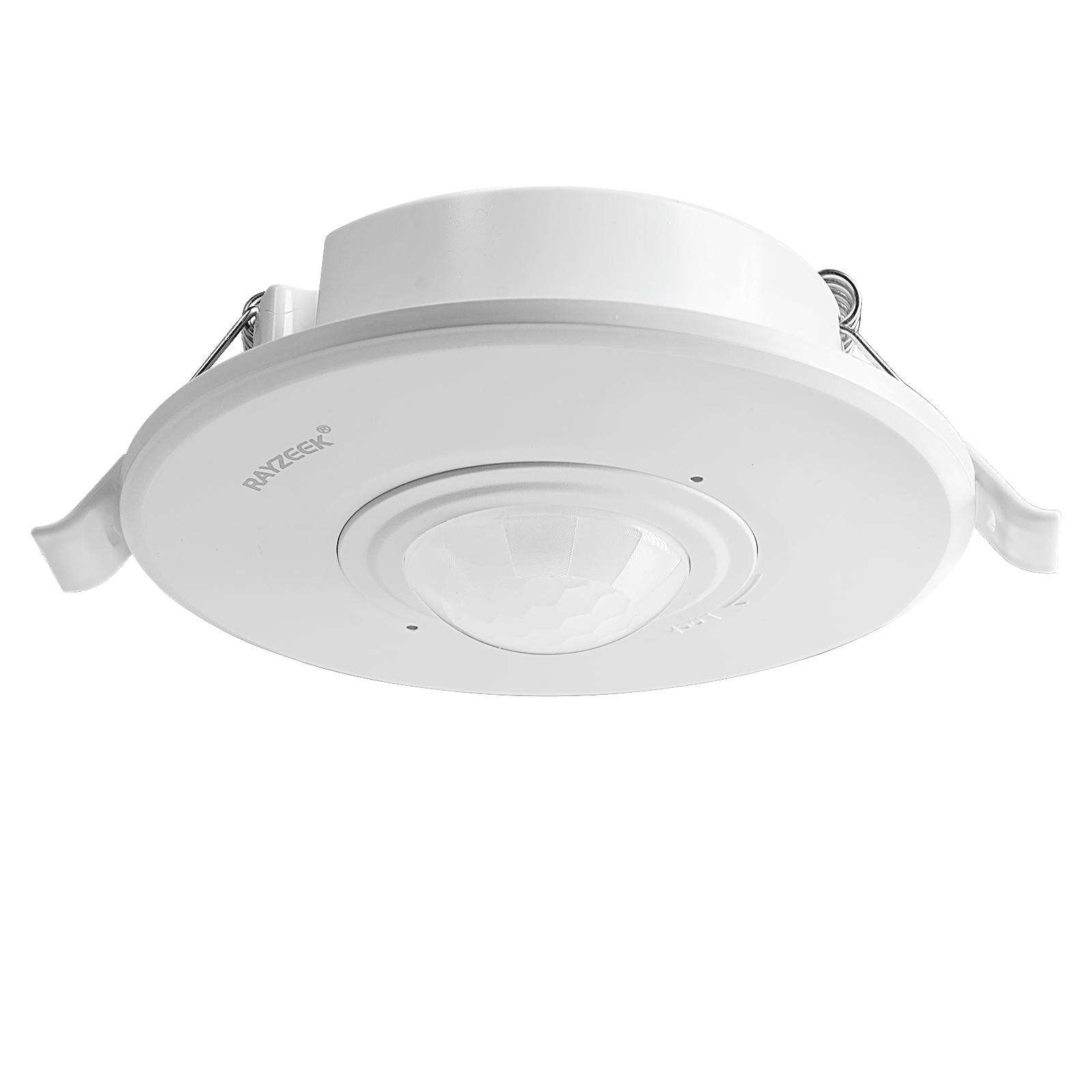
- Inbouw plafond PIR bewegingssensorschakelaar voor hogere belastingen
- 100-265 VAC netspanningsingang, 10A-model
- 360-graden detectie met instelbare uitschakelvertraging, Lux-drempelwaarde en gevoeligheid
- Inbouw plafond PIR bewegingssensorschakelaar
- 100-265 VAC netspanningsingang, 5A-model
- 360-graden detectie met instelbare uitschakelvertraging, Lux-drempelwaarde en gevoeligheid
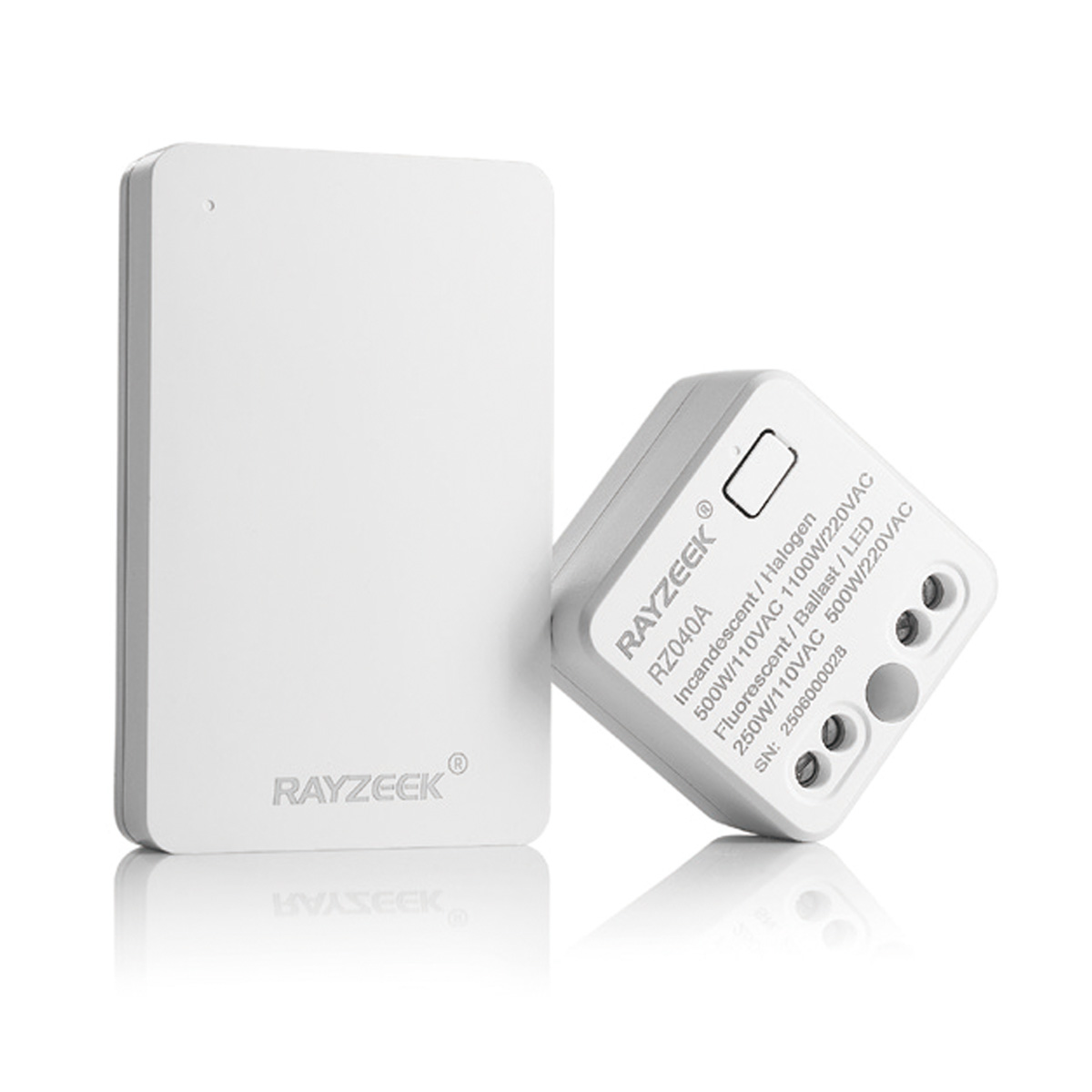
- Draadloze schakelaar- en ontvangerset voor AAN/UIT-lichtregeling binnenshuis
- 100-230VAC, 50/60Hz ontvanger met 5A nominale stroom
- CR2032-gevoede draadloze schakelaar met 2.4GHz-communicatie
- Aanwezigheidsdetectie (Auto-AAN/Auto-UIT)
- 12–24V DC (10–30VDC), tot 10A
- 360° dekking, 8–12 m diameter
- Uitschakelvertraging 15 s–30 min
- Lichtsensor Uit/15/25/35 Lux
- Hoge/Lage gevoeligheid
- Automatisch AAN/Automatisch UIT aanwezigheidsmodus
- 100–265V AC, 10A (nuldraad vereist)
- 360° dekking; 8–12 m detectiediameter
- Uitschakelvertraging 15 s–30 min; Lux UIT/15/25/35; Gevoeligheid Hoog/Laag
- Automatisch AAN/Automatisch UIT aanwezigheidsmodus
- 100–265V AC, 5A (nuldraad vereist)
- 360° dekking; 8–12 m detectiediameter
- Uitschakelvertraging 15 s–30 min; Lux UIT/15/25/35; Gevoeligheid Hoog/Laag
Ultrasoon
Ultrasone sensoren zenden ultrasone geluidsgolven uit, die op objecten afkaatsen en terugkeren naar de sensor. Wanneer een bewegend object deze golven verstoort, wordt de sensor geactiveerd.
Duo-technologie
Deze sensoren combineren twee verschillende technologieën, meestal PIR en microgolf. De sensor wordt alleen geactiveerd wanneer beide sensoren beweging detecteren, wat helpt om valse alarmen te verminderen.
Lichtsluis- en foto-elektrische sensor
Another type of motion sensor is the beam and photoelectric sensor. This type relies on a focused beam of energy transmitting between a sensor and an emitter. If an object interrupts the energy beam, breaking it, the sensor triggers a reaction.
Once the sensor is triggered, it sends a signal to the control panel, which then performs the pre-determined action, such as turning on a light, sounding an alarm, or sending a notification to your smartphone.
Motion sensors don’t “see” motion the way humans do. Instead, they detect changes in the environment, such as changes in heat or sound waves, to determine if there’s movement. This is why they can sometimes be triggered by things like changes in temperature or air currents.
Wat is een aanwezigheidssensor
A presence sensor, often referred to as an occupancy sensor, is a sophisticated device engineered to detect the presence of individuals within a designated area. Its capabilities extend beyond merely detecting movement, as it can ascertain if a person is present in a room, even if they are stationary.
These sensors utilize a variety of technologies to detect human presence. The most prevalent types include Passive Infrared (PIR), Ultrasonic, and Dual-technology sensors. PIR sensors detect the heat emitted by a human body, Ultrasonic sensors use sound waves, and Dual-technology sensors combine both methods for increased accuracy. Additionally, contemporary presence sensors rely on millimeter-wave (mmWave) technology, a form of radar technology that sends out signals and looks for reflections.
Presence sensors are crucial in smart home systems and commercial buildings, where they efficiently manage lighting, heating, and cooling systems. Upon detecting a person in a room, a presence sensor can trigger the lights to turn on, adjust the temperature, or even activate security systems. When the person leaves, the sensor can then turn off or adjust these systems, thereby saving energy and enhancing security.
These sensors are also integral components of a building’s Internet of Things (IoT) network, providing valuable information to key systems. The data from these sensors can be used to understand employee habits and behavior, detect workspace usage and occupancy, and monitor and control air quality, heating, and cooling. This information aids leadership teams in making building management more efficient and the employee experience more seamless.
Hoe aanwezigheidssensoren werken
Presence sensors utilize a blend of technologies, primarily Passive Infrared (PIR) and Ultrasonic, and in some instances, millimeter-wave (mmWave) technology.
Passief infrarood (PIR)
PIR-based presence sensors are designed to detect the heat emitted by humans. Given that every human body emits infrared radiation, these sensors pick up changes in this radiation when an individual enters or exits a room, thereby determining their presence or absence. Certain PIR sensors are tailored for specific applications, such as desk sensors that monitor desk usage in real-time, or door-counting sensors that track the usage of a particular room. They are particularly effective in smaller spaces and can even be utilized to manage hygiene in facilities like bathrooms by tracking usage frequency.
Ultrasoon
Ultrasonic presence sensors function by emitting ultrasonic waves. When an individual enters the room, these waves bounce back to the sensor at a different frequency due to the Doppler effect. The sensor detects this change in frequency, identifying the presence of an individual. Ultrasonic sensors are often employed for security purposes and can serve as an alternative to PIR sensors in the workplace.
Millimetergolf (mmWave)
Some contemporary presence sensors utilize mmWave technology, which is based on radar technology. These sensors send out signals and look for reflections, providing another method of detecting the presence of people.
Presence sensors can be configured with weight and size parameters to prevent unnecessary activation, making them more efficient than motion sensors in certain applications. For instance, a simple movement of a chair would trigger a motion sensor, but a presence sensor would only be activated by the presence of a person.
Once a presence sensor detects an individual, it sends a signal to the control system. This signal can trigger various actions, such as turning on lights, adjusting the thermostat, or activating security systems.
Presence sensors are designed to detect even the slightest movement, including activities like typing or reading, which might not be picked up by a standard motion sensor. This makes them ideal for situations where people may be stationary for extended periods, such as in an office or a library.
In addition to PIR and Ultrasonic sensors, there are also Bluetooth Low Energy (BLE) Beacons and Optical Sensors. BLE Beacons transmit a universally unique identifier to nearby devices with a compatible app, making them useful for marketing purposes. Optical Sensors, on the other hand, use computer vision technology and artificial intelligence to provide detailed insights into person count, active occupancy, and passive occupancy, offering invaluable data for decision-making processes.
Op zoek naar bewegingsgestuurde energiebesparende oplossingen?
Neem contact met ons op voor complete PIR-bewegingssensoren, bewegingsgestuurde energiebesparende producten, bewegingsschakelaars en commerciële oplossingen voor aanwezigheids- en afwezigheidsdetectie.
Verschil tussen bewegings- en aanwezigheidssensoren
While motion sensors and presence sensors share similarities, they possess distinct differences that make them suitable for different applications.
Detectiemechanisme
Motion sensors are designed to detect significant movement within their field of view. They respond to changes in the environment, such as a person entering a room. In contrast, presence sensors are more sensitive, capable of detecting even the slightest movements or changes in body temperature. They can sense if someone is sitting still in a room, a scenario that motion sensors might miss.
Gevoeligheid
Presence sensors operate with higher image resolutions, making them more sensitive than motion sensors. They can detect subtle changes in the environment, such as the heat emitted by a human body, providing a more accurate reading of the situation. On the other hand, motion sensors require more substantial movement to be triggered and may not detect small or slow movements.
Vals alarm
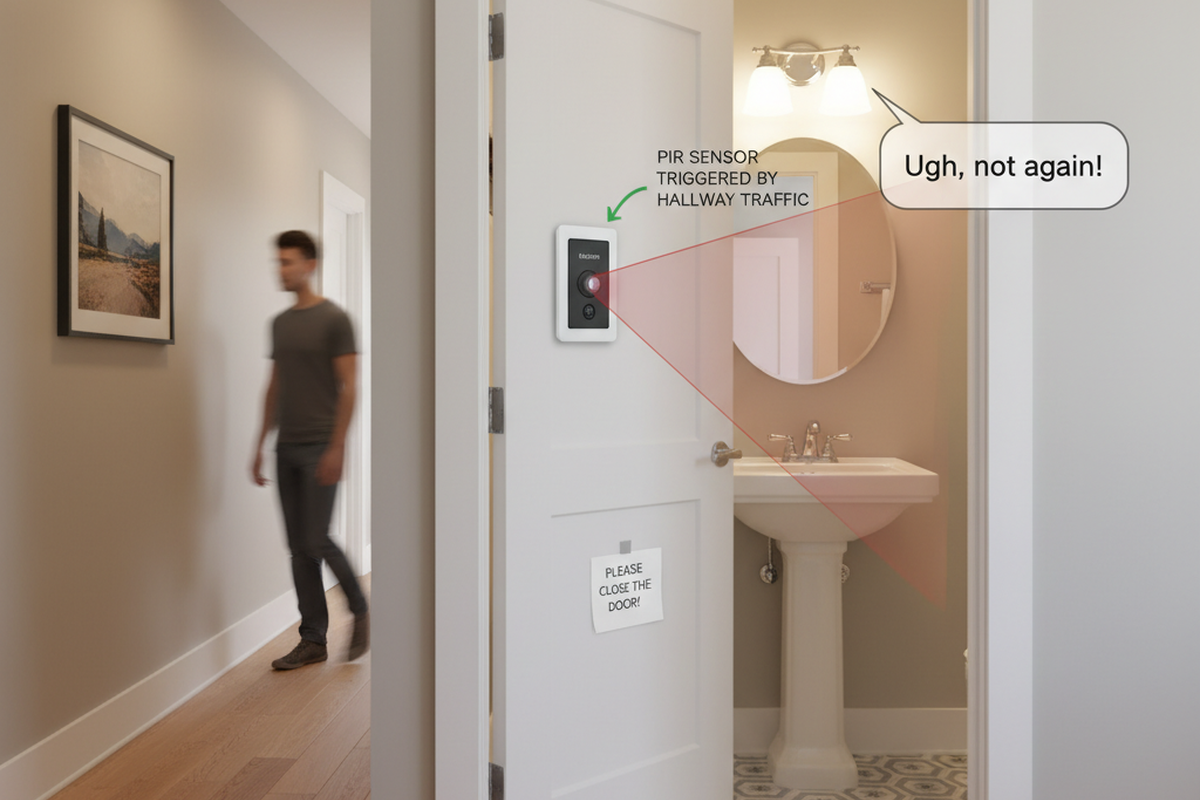
Presence sensors, due to their high sensitivity, may trigger more false alarms compared to motion sensors. They could be activated by a pet or even changes in temperature. Motion sensors, focusing on larger movements, are less likely to give false alarms.
Energie-efficiëntie
Presence sensors contribute to greater energy efficiency. Since they can detect even a stationary person, lights or HVAC systems can remain on as needed, avoiding unnecessary energy usage. In contrast, motion sensors might turn off systems when a person is still in the room but not moving, leading to potential discomfort and energy waste when systems are restarted.
Toepassing
Motion sensors are commonly used in security systems to detect intruders moving around. Presence sensors, with their ability to detect stationary individuals, are more suited for occupancy monitoring and energy management systems, such as smart lighting or HVAC control.
Technologie
Both motion and presence sensors utilize a variety of technologies. Motion sensors often use infrared, microwave, or ultrasonic technology to detect moving objects. Presence sensors, on the other hand, may use technologies like pressure sensors, proximity sensors, photoelectric sensors, and video sensors to detect the presence of people, even when they are stationary.
Toepassingen van bewegings- en aanwezigheidssensoren
Motion and presence sensors, with their diverse functionalities, find applications across a multitude of sectors. Their use can be customized to cater to the specific needs of a space or situation. Let’s delve into some of the key uses of these sensors.
Woningbeveiliging
Motion sensors are a cornerstone of home security systems. They detect movement and set off alarms or send notifications when they pick up unusual activity. On the other hand, presence sensors can keep track of family members, sending alerts when children or elderly relatives move in or out of certain areas of the home.
Energie-efficiëntie
Both types of sensors contribute significantly to energy conservation. Motion sensors control lighting, activating lights when movement is detected and deactivating them when a room is unoccupied. Presence sensors, on the other hand, maintain lighting as long as someone is present in the room, even if they’re stationary, preventing unnecessary energy usage.
Gezondheidszorg
Presence sensors are particularly beneficial in healthcare settings, where they can monitor patients, especially those with mobility issues or dementia. They can alert healthcare providers if a patient leaves a designated area or if there’s no movement over an extended period, indicating a potential health concern.
Detailhandel en bedrijfsleven
In retail environments, motion sensors can track customer movement, providing valuable data on customer behavior and store layout effectiveness. Presence sensors can monitor and manage occupancy levels in real-time, which is useful in maintaining social distancing guidelines.
Laat u inspireren door Rayzeek bewegingssensor-portfolio's.
Vindt u niet wat u zoekt? Geen zorgen. Er zijn altijd alternatieve manieren om uw problemen op te lossen. Misschien kan een van onze portfolio's u helpen.
Smart homes
In smart home setups, motion and presence sensors can automate various tasks. For example, motion sensors can trigger actions like opening a garage door or turning on outdoor lights. Presence sensors can adjust the thermostat based on whether anyone is home, enhancing comfort while optimizing energy use.
Industriële toepassingen
In industrial settings, motion sensors can enhance safety by detecting movement in hazardous areas and triggering alarms. Presence sensors can monitor employee presence in specific zones, aiding in access control and time and attendance tracking.
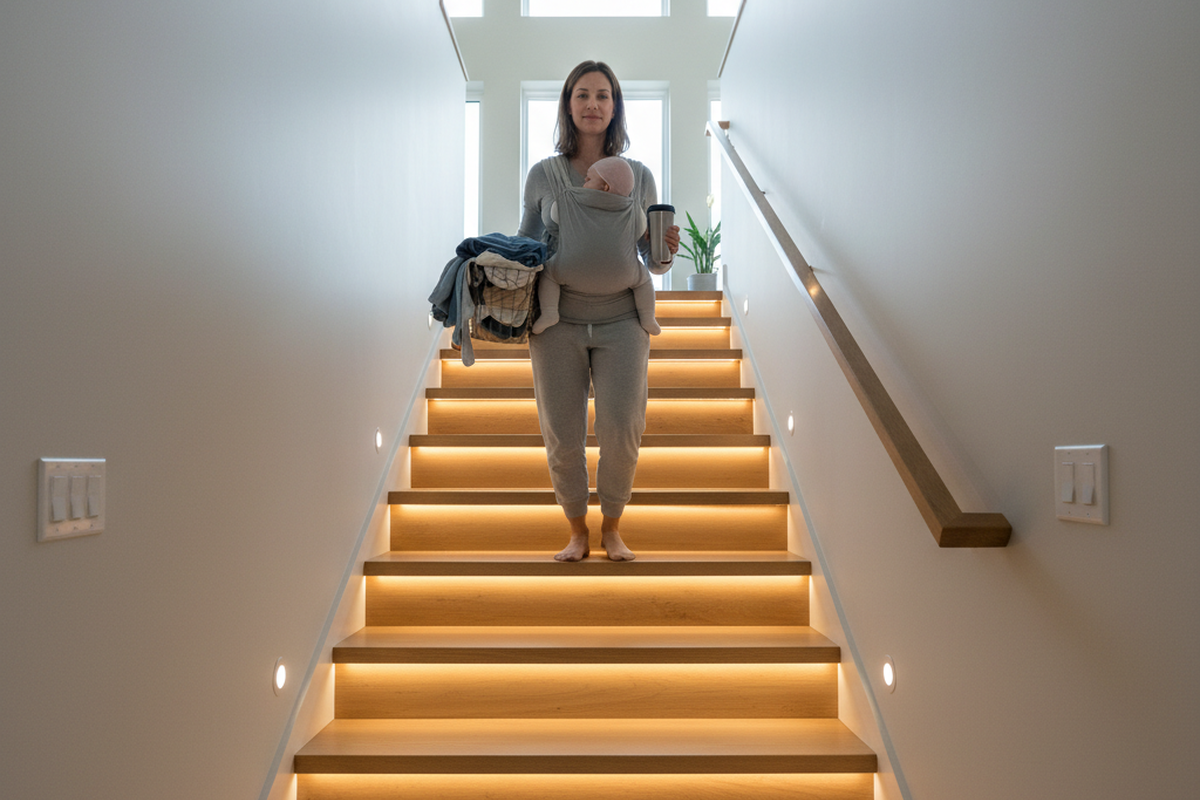
In addition to these applications, the choice between motion and presence sensors can be influenced by the layout of your home and your lifestyle. For instance, motion sensors are ideal for areas with more movement, such as hallways or staircases. In contrast, presence sensors are better suited for areas where you’re likely to be stationary, such as a home office, living room, or bedroom.
These sensors can also be used to control room functions, such as lowering the temperature of unused rooms, adding another layer of energy efficiency. In essence, the integration of motion and presence sensors can significantly enhance the functionality and comfort of your smart home setup, adapting to the way you and your family move through your home.
Overwegingen bij de keuze tussen bewegings- en aanwezigheidssensoren
When deciding between motion and presence sensors, several key factors should be taken into account to ensure the best fit for your specific needs. Here’s a more comprehensive look at these considerations:
Doel van de sensor
The primary factor is the intended use of the sensor. If your goal is to detect significant movement, such as for security or lighting control in high-traffic areas like hallways or staircases, a motion sensor would be the optimal choice. Conversely, if you need to detect subtle movements or occupancy in a room, such as people working at their desks or watching a movie, a presence sensor would be more suitable.
Gevoeligheid en bereik
Motion sensors generally have a higher sensitivity and a wider range, enabling them to detect movement from a greater distance. Yet, this high sensitivity can sometimes lead to false alarms. Presence sensors, in contrast, are designed to detect more subtle movements within a smaller range, making them ideal for enclosed spaces.
Energie-efficiëntie
Presence sensors can significantly contribute to energy efficiency by ensuring that lights and HVAC systems are only active when a space is occupied. While motion sensors can also contribute to energy efficiency, they are typically less effective because they can’t differentiate between an occupied and an unoccupied space.
Kosten
Motion sensors are usually less expensive than presence sensors. But, the cost can vary depending on the specific features of the sensor, such as its range, sensitivity, and the technology it uses. It’s crucial to consider both the upfront cost of the sensor and the potential long-term savings, particularly in terms of energy efficiency.
Installatie en onderhoud
Both types of sensors require installation and may need occasional maintenance or calibration. The complexity of installation and the level of maintenance required should be considered when choosing between the two.