Горацій Хе працює в індустрії датчиків руху вже 12 років. Він є генеральним директором Rayzeek — комплексної виробничої компанії, що випускає вимикачі з датчиками руху, датчики присутності, датчики освітленості, світлорегулятори (димери) та світильники з датчиками руху. Горацій допомагає своїм клієнтам зменшити витрати електроенергії та насолоджуватися розумнішим, екологічнішим і зручнішим способом життя. У вільний час Горацій любить ходити в походи, подорожувати та рибалити з родиною.
If your bathroom occupancy switch turns on from hallway traffic, the problem is usually an open door creating a line-of-sight slice. Use a quick walk test, then aim or mask the sensor so it catches the first step in but ignores pass-bys.
Older homes often lack a neutral in the wall box, and that wiring reality determines whether a PIR sensor switch will be stable or glitchy with LEDs. This guide explains what to check, why no-neutral switches misbehave, safer alternatives, and what to avoid.
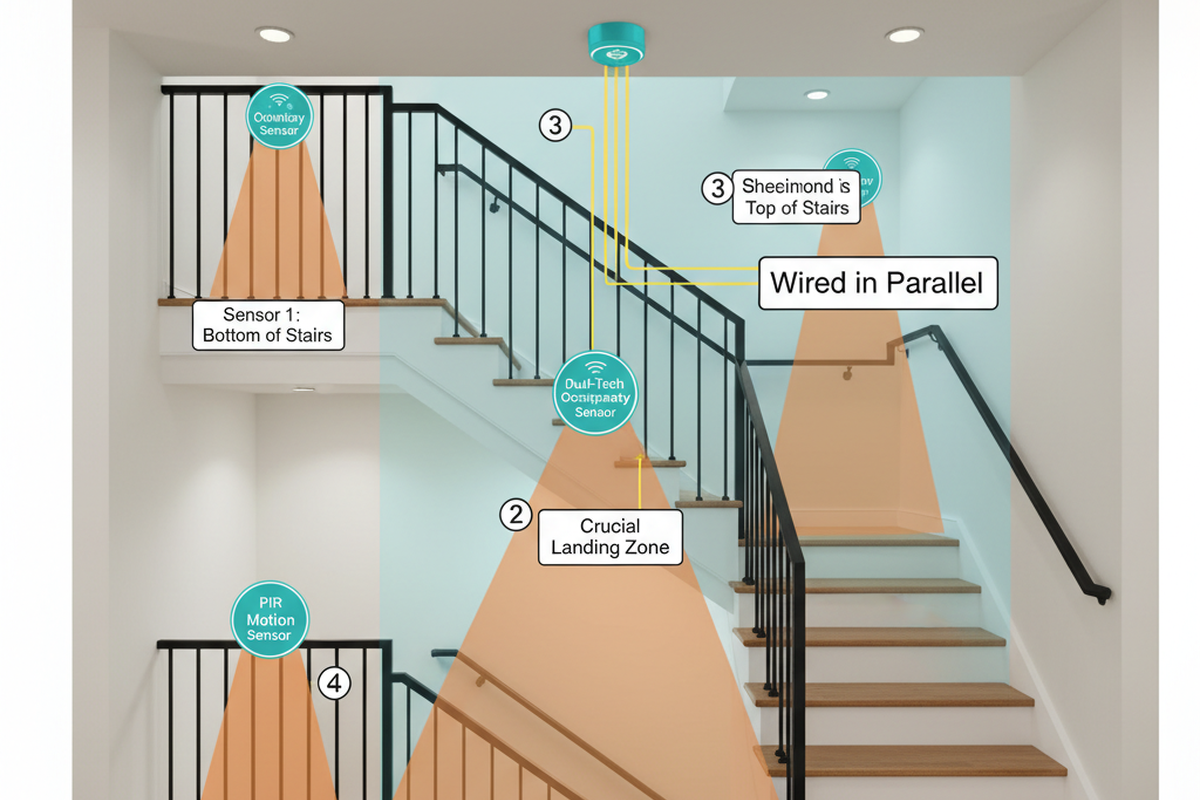
Make multi-location stair lighting feel like a normal 3-way using Rayzeek PIR switches. Learn placement, the one-decider principle, safe timeout tuning, and a walk-test protocol that prevents flicker and mid-stair darkness.
LEDs that glow when off, flicker at timeout, or shut off “randomly” usually aren’t a bad switch. This field guide shows how to name the symptom, run one-change tests, and match the fix to drivers, heat, load, or false triggers.
Conference rooms can pass a walk test and still go dark mid-call when people sit still. Learn a practical control contract—often vacancy mode—plus validation steps for seated presence, sensor placement, and timeouts that keep video meetings reliable without making rooms always-on.
Fitting rooms fail in two ways: lights that shut off mid-change or never shut off at all. Learn a practical trigger-hold-release approach, plus a 10-minute per-room checklist and humane settings that prevent both outcomes.
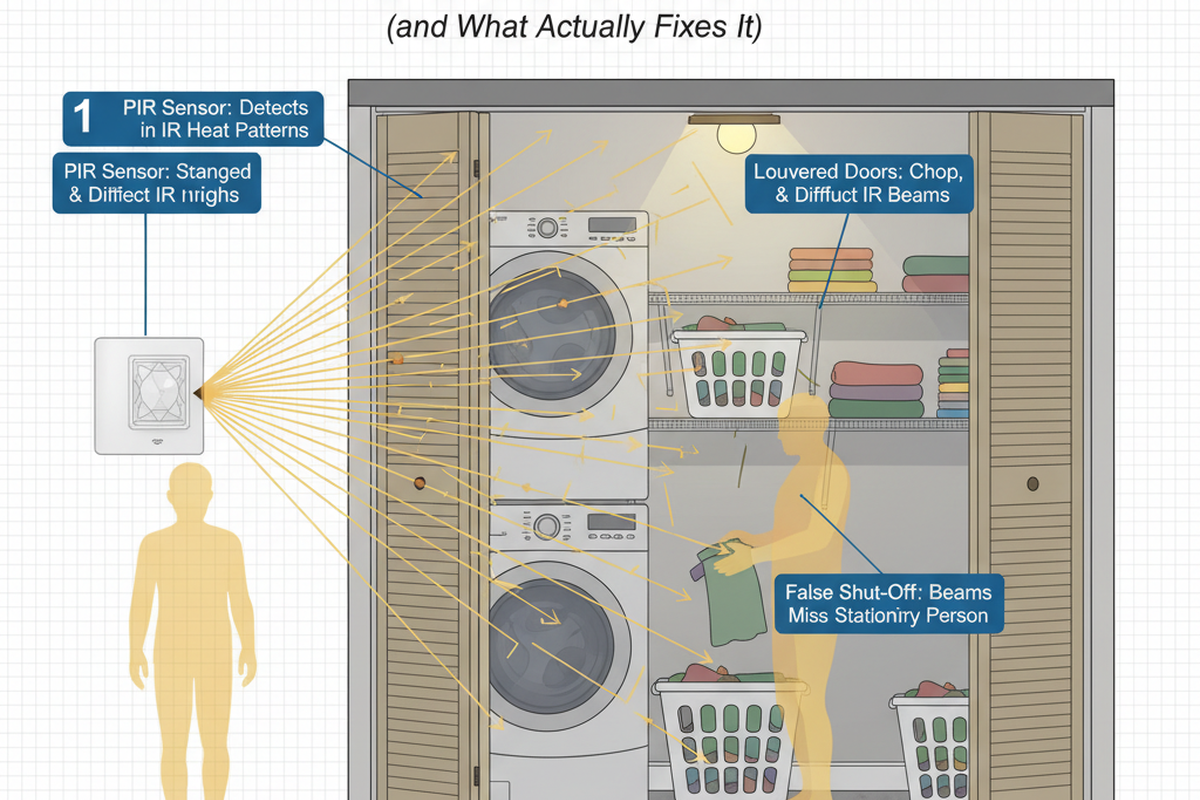
Louvered bifold doors can make a PIR sensor “see” hallway motion and airflow, causing false-ons and mid-task shut-offs. Learn a durable fix order: re-aim or relocate, mask the hallway sector, use vacancy mode, then fine-tune settings with real walk-tests.
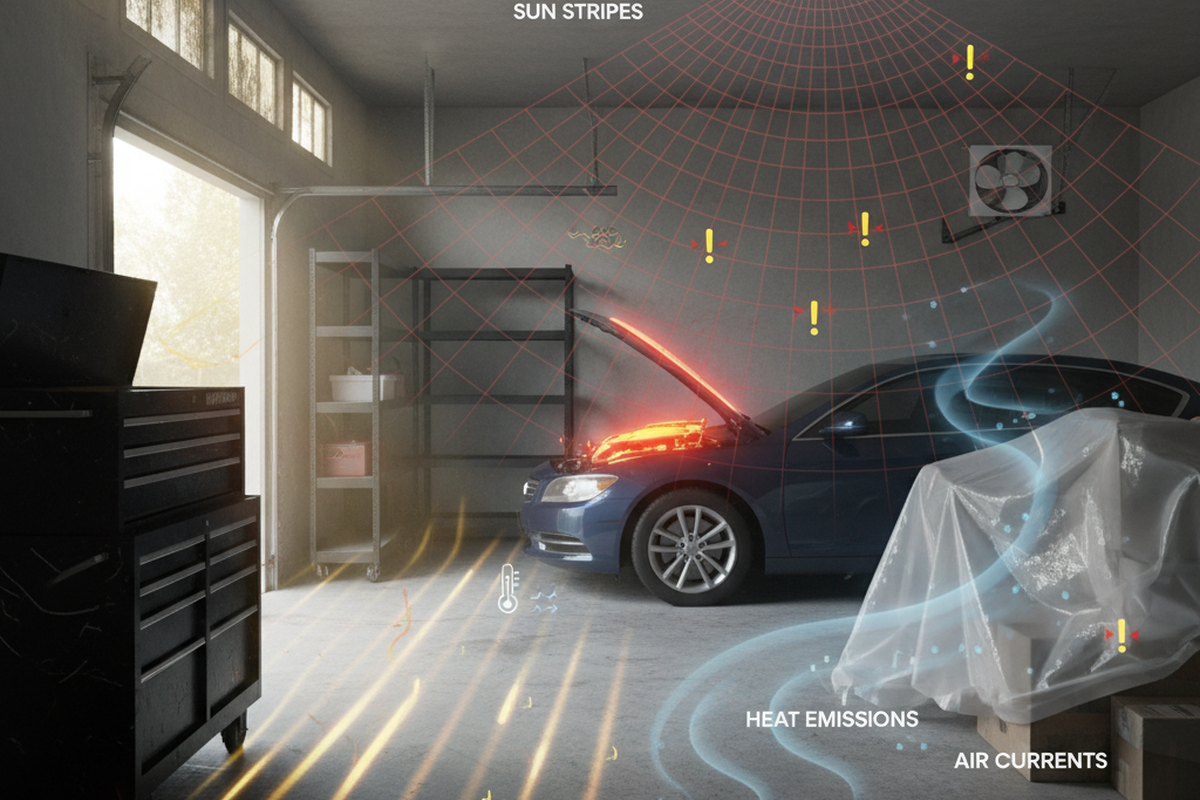
Garage PIR switches often aren’t broken—they’re reacting to sun stripes, hot car cool-down, and door-plane temperature swings. Fix false triggers by changing the sensor’s view first, then fine-tuning settings and adding daylight gating.
Split-level stair landings often cause motion lights to snap off and on because of short timeouts and poor line-of-sight during the pivot. Learn how to fix landing strobe by adjusting hold time, aiming for cross-traffic, and designing multi-location controls correctly.
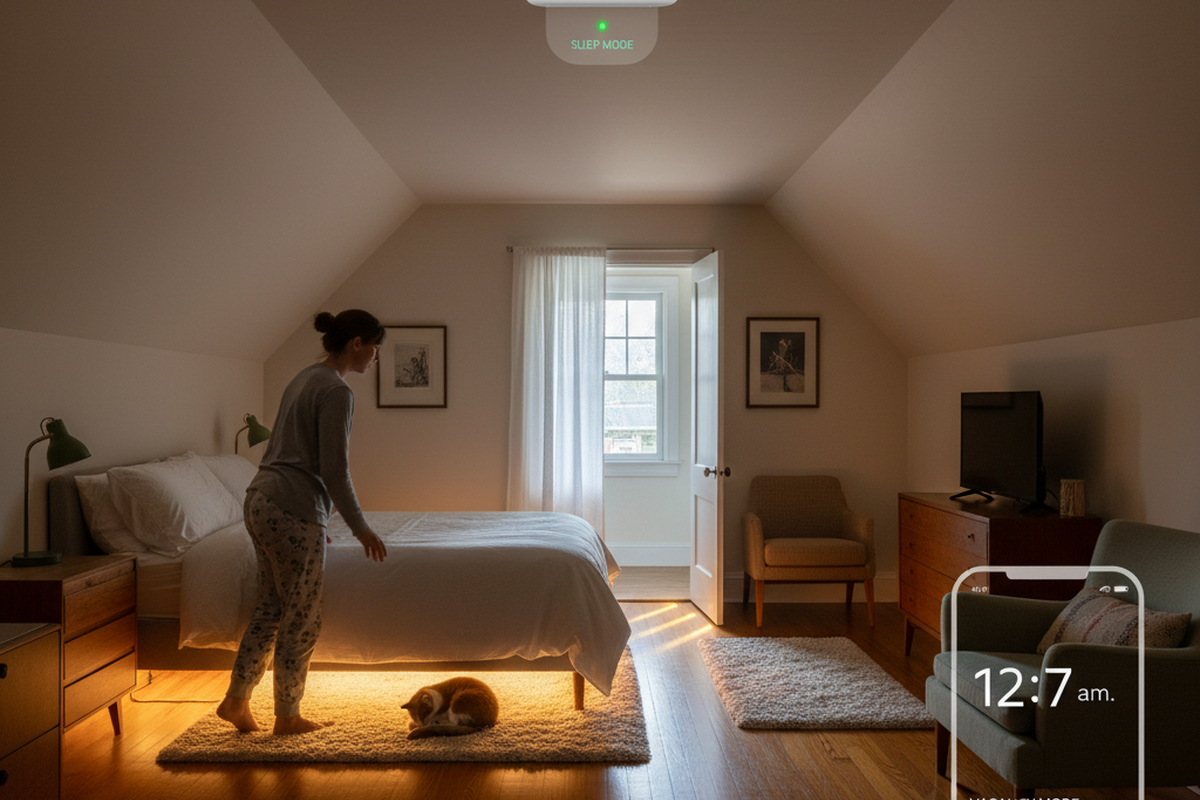
Bedroom motion lights fail when they surprise you at night. Vacancy mode keeps bedrooms manual-on for consent, while safety comes from a dim, warm, predictable path from bed to hall to bathroom.