
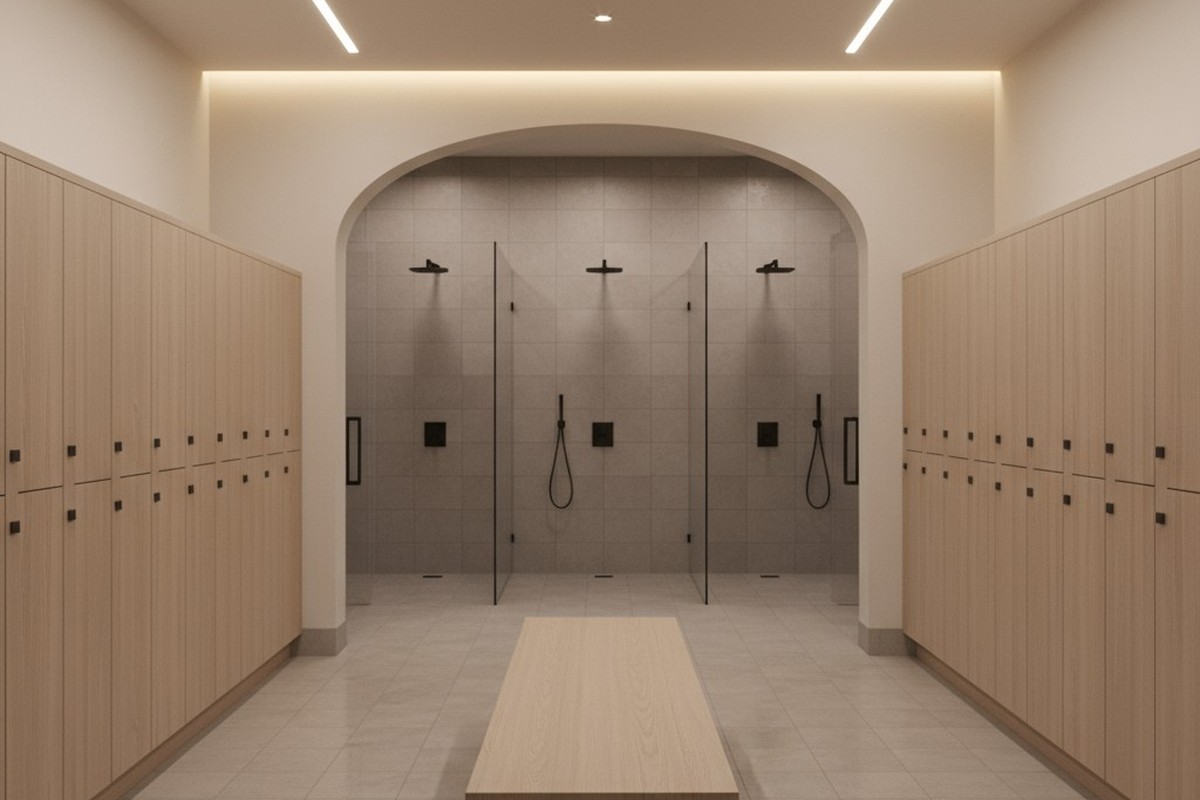
實現商業更衣室自動化需要取得平衡。對能源效益的追求往往與個人私隱和使用者舒適度等不可妥協的需求發生衝突。設計不佳的佔用系統會營造惡劣的環境,例如在淋浴途中突然關燈,或讓使用者產生被監控的不安感。然而,在這些間歇使用的空間中讓照明和通風系統 24 小時全天候運行,會造成極大的營運浪費。
智能解決方案絕不會為了節省成本而犧牲尊嚴,而是突破單純的動態偵測,轉向更細致且以人為本的設計,以同時實現兩者。透過為感應器佈局、區域管理和系統時間設定建立清晰的原則,您可以打造一個尊重使用者、可預測且高效能的自動化環境。
更衣室的兩難:平衡能源效益與使用者尊嚴
更衣室是一個進行更衣且隱密性高的場所。與辦公室或走廊不同,其佔用模式極不規則,且經常出現長時間缺乏大幅度動作的情況,特別是在淋浴間和更衣區內。配備短延時設定的標準佔用感應器在此必定會失效,因為它會將淋浴時的靜止狀態誤判為無人,從而切斷電源,引致不滿和驚慌。
這種失效會導致使用者不信任系統並改為手動控制,從而使自動化的目的徒勞無功。設施管理者往往面臨兩種不良選擇:要麼恢復「常亮」狀態以致浪費金錢,要麼不斷處理有關系統故障和侵犯私隱的投訴。
因此,需要一個更完善的架構。
保密基礎:劃分區域以實現可預測的控制
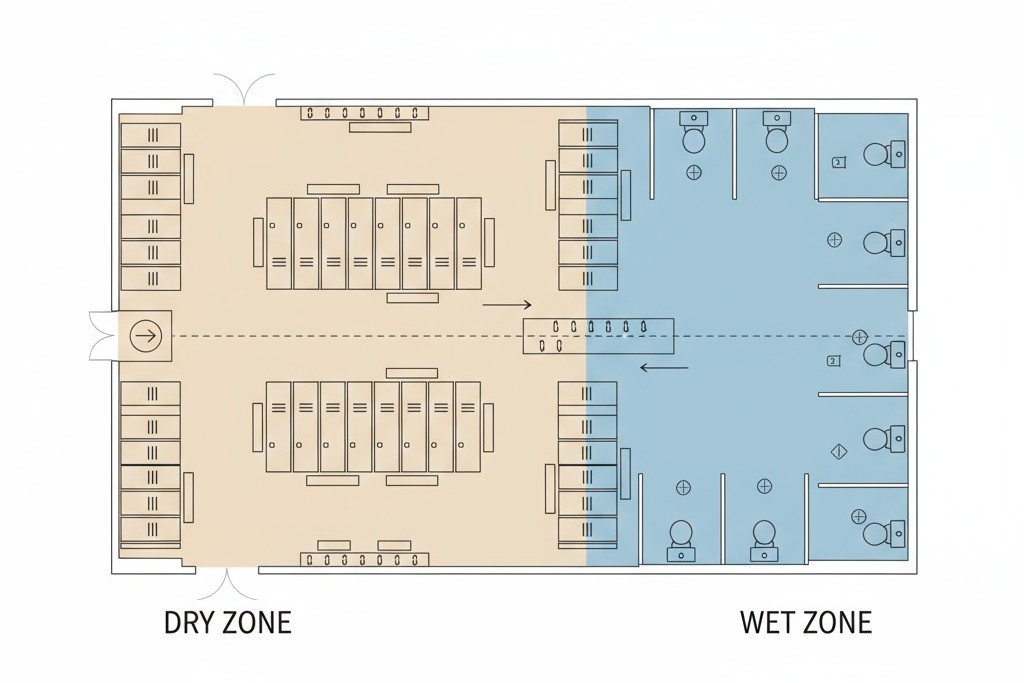
成功的系統始於根據功能和使用者行為,將更衣室劃分為不同的邏輯區域。這種策略性分隔允許對各個區域套用不同的控制規則,奠定了隱密且高效系統的基礎。
第一個區域是 乾區,涵蓋主要通行路徑、入口、儲物櫃組和長椅。當人們行走、開啟儲物櫃或進行準備時,此區域會出現相對持續的動態。由於此處缺乏動態是無人的可靠指標,因此控制邏輯可以更為積極,採用較短的延時設定。
第二個區域是 濕區,包括淋浴間、獨立廁所及相鄰擦乾區等所有私密的多隔間區域。該區域的特點是肢體動作極少,且對私隱有極高要求。套用與乾區相同的邏輯必定會失敗。該區域需要一種截然不同的方法,優先採用較長且經過周詳考慮的延時設定,並採用無法直接觀測內部的感應器佈局。
您可能也會感興趣

- 電壓:2 粒 AAA 電池
- 日/夜模式
- 延遲時間:15 分鐘、30 分鐘、1 小時(預設)、2 小時

- 吸頂式 PIR 人體感應器,配備乾觸點繼電器輸出
- 12/24VDC 或 12/24VAC 低電壓供電
- 用於 EMS、HVAC 和建築控制輸入的 COM、NO 和 NC 隔離繼電器觸點

- 低壓直流嵌入式天花安裝微波人體感應開關
- 12 VDC / 24 VDC 輸入,支援 10-30 VDC 範圍
- 最大工作電流 10A,配備可調節延時、光感閾值及靈敏度
- 高負載嵌入式天花安裝微波人體感應開關
- 100-265 VAC 市電輸入,10A 型號
- 5.8 GHz 微波感應,配備可調節延時、光感閾值及靈敏度
- 嵌入式天花安裝微波人體感應開關
- 100-265 VAC 市電輸入,5A 型號
- 5.8 GHz 微波感應,配備可調節延時、光感閾值及靈敏度
- 適用於 220V 電源的天花安裝 RZ037 PIR 被動式紅外線佔空感應調光開關
- 最大工作電流 3A,額定負載 660W
- LUX 按鈕控制光線感應器開關及用戶設定之調光亮度
- 適用於 110V 電源的天花安裝 RZ037 PIR 被動式紅外線佔空感應調光開關
- 最大工作電流 3A,額定負載 330W
- LUX 按鈕控制光線感應器開關及用戶設定之調光亮度

- 低壓直流天花安裝微波人體感應開關
- 12 VDC / 24 VDC 輸入,支援 10-30 VDC 範圍
- 最大工作電流 10A,配備可調節延時、光感閾值及靈敏度
- 高負載吸頂式微波動態感應器開關
- 100-265 VAC 市電輸入,10A 型號
- 5.8 GHz 微波感應,配備可調節延時、光感閾值及靈敏度
- 吸頂式微波動態感應器開關
- 100-265 VAC 市電輸入,5A 型號
- 5.8 GHz 微波感應,配備可調節延時、光感閾值及靈敏度

- 低壓直流嵌頂式 PIR 動態感應器開關
- 12 VDC / 24 VDC 輸入,支援 10-30 VDC 範圍
- 最大工作電流 10A,具備可調式時間延遲、光照度閾值及靈敏度

- 高負載嵌頂式 PIR 動態感應器開關
- 100-265 VAC 市電輸入,10A 型號
- 360度偵測,具備可調式時間延遲、光照度閾值及靈敏度
- 嵌頂式 PIR 動態感應器開關
- 100-265 VAC 市電輸入,5A 型號
- 360度偵測,具備可調式時間延遲、光照度閾值及靈敏度

- 用於室內開關照明控制的無線開關及接收器套裝
- 100-230VAC,50/60Hz 接收器,額定電流 5A
- CR2032 電池供電無線開關,採用 2.4GHz 通訊
- 佔用感應(自動開啟/自動關閉)
- 12–24V DC (10–30VDC),最高 10A
- 360° 覆蓋,直徑 8–12 米
- 延遲時間 15 秒至 30 分鐘
- 光感應器 關閉/15/25/35 Lux
- 高/低靈敏度
- 自動開啟/自動關閉佔用模式
- 100–265V AC,10A(需接零線)
- 360° 全方位覆蓋;8–12 米偵測直徑
- 延遲時間 15 秒至 30 分鐘;Lux 關閉/15/25/35;靈敏度 高/低
- 自動開啟/自動關閉佔用模式
- 100–265V AC,5A(需接零線)
- 360° 全方位覆蓋;8–12 米偵測直徑
- 延遲時間 15 秒至 30 分鐘;Lux 關閉/15/25/35;靈敏度 高/低
策略性感應器佈局:如何確認存在而非窺探人員
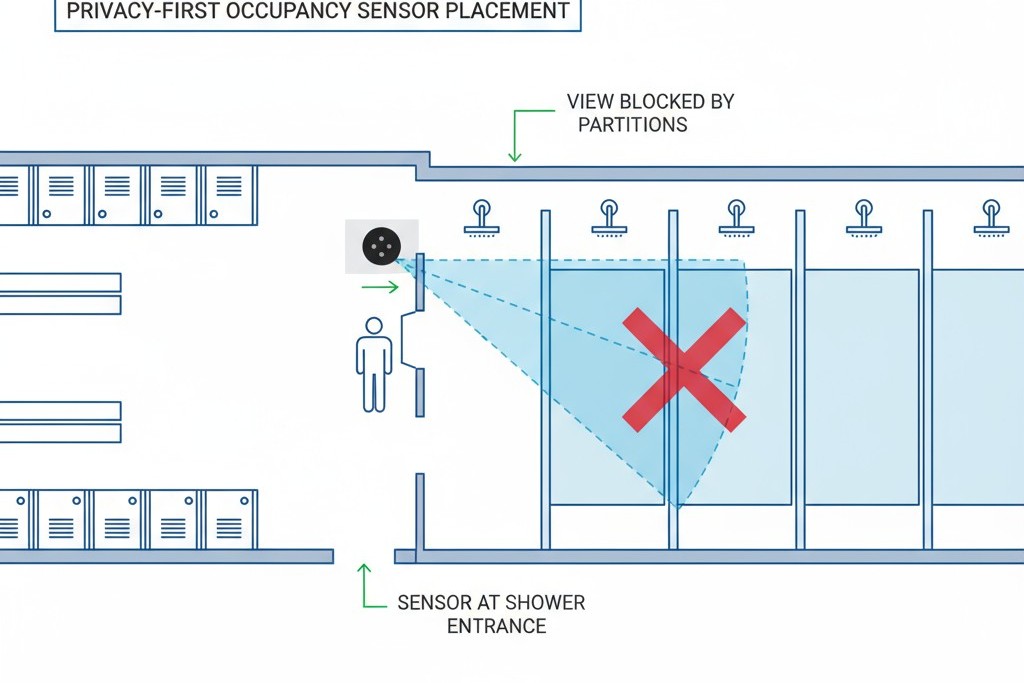
建立明確的區域後,感應器佈局的目标有所轉變:系統必須確認有人存在,而非監控人員。感應器充當空間資源的無聲守護者,利用精心規劃視線,在完全不損害私隱的前提下執行功能。
Before installing any hardware, a sightline analysis is critical. From any proposed sensor location, it must be physically impossible for its field of view to extend into a shower stall, over a partition, or around a privacy screen. This often means mounting sensors lower on walls instead of high on ceilings, or using architectural features like soffits and alcoves to block unwanted views. The sensor should only confirm that a person has entered the general wet zone, not what they are doing inside it.
The most effective placement locations are the natural “choke points” of the space. The entryway to the main locker room and the threshold leading into the wet zone are ideal spots. A sensor positioned here reliably detects every person entering or leaving a zone. This trigger starts the clock on a zone-specific timeout, keeping the space activated for a predictable period without needing continuous monitoring.
從 Rayzeek 動態感測器產品組合中獲得靈感。
找不到您想要的產品?別擔心。總有其他方法可以解決您的問題。也許我們的其中一個產品組合可以幫到您。
Intelligent Timeouts: The Key to a Seamless User Experience
The perceived intelligence of an occupancy system is determined almost entirely by its timeout logic. A predictable system builds user trust; a random one erodes it. In a locker room, a one-size-fits-all approach is the primary source of frustration. A short timeout of 5 to 10 minutes, perfectly acceptable in an office, is unworkable here. It fails to account for the long periods of inactivity common in a shower, inevitably assuming vacancy and deactivating the utilities.
The solution is a layered timeout strategy tied to the zones. When a sensor at the dry zone entrance detects someone, it activates the lights in that area with a moderate timeout of perhaps 15 minutes. When a sensor at the wet zone entrance is triggered, it activates the lights and ventilation for that specific area with a much longer, more generous timeout of 30 minutes or more. This duration acts as a grace period, ensuring facilities remain active for the entire expected use time, regardless of how little the occupant moves. The system becomes reliable by design.
Choosing the Right Sensing Technology
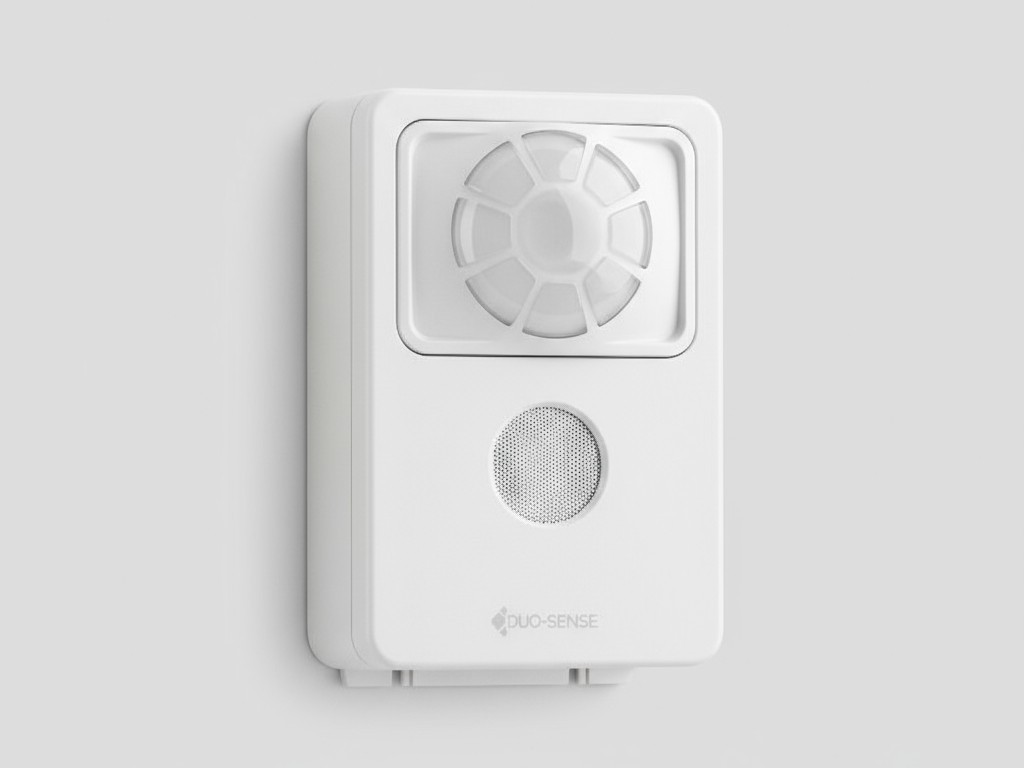
The right hardware prevents false alarms. For a complex space like a locker room, dual-technology sensors are the superior choice. These devices combine two methods: passive infrared (PIR) to detect body heat and ultrasonic waves to detect motion by bouncing sound off objects. This combination provides excellent coverage, picking up both major movements (a person walking) and minor ones (the slight shift of an arm in a stall), dramatically reducing the chance of a false vacancy detection.
Humidity-based controls, however, should be avoided for primary occupancy logic. A plume of steam from a single shower can trigger a humidity sensor, turning on lights and ventilation for the entire room even if it is otherwise empty. This leads to significant energy waste and makes the system’s behavior chaotic and disconnected from actual human presence.
Beyond Lighting: Integrating Ventilation for Health and Efficiency
The same occupancy logic that controls the lights should also control the ventilation. High-powered exhaust fans are significant energy consumers, and tying their activation to the wet zone’s sensor ensures they run only when needed to manage moisture and maintain air quality. This can be refined by adding a delay, so fans activate only after the wet zone has been occupied for a few minutes, preventing them from cycling on and off for someone just passing through.
正在尋找動態感應節能解決方案?
歡迎聯絡我們以獲取完整的 PIR 動態感應器、動態感應節能產品、動態感應器開關以及人體感應/無人感應商業解決方案。
Designing for Reliability and Accessibility
A well-designed system is reliable because it anticipates user behavior. By implementing zones, strategic placement, and layered timeouts, the most common failure modes are designed out from the start. This approach also supports broader building requirements. A system that provides consistent illumination without requiring a user to wave their arms is inherently more accessible, supporting goals outlined by the Americans with Disabilities Act (ADA). By focusing on dignity and predictability, you create an environment that works seamlessly for everyone, ensuring that privacy and efficiency are never mutually exclusive.







