Tall metal bookshelves line both sides of a long, carpeted aisle in a library. A continuous strip of overhead lighting extends down the center of the ceiling, illuminating the colorful spines of the books.

Lighting library stacks requires focusing on vertical surfaces, not floor brightness. The piece explains how batwing optics, proper sensor strategies, and dim-to-warm controls improve visibility, reduce glare, and protect archival materials while saving energy.

A narrow room features a wall of gray digital lockers on the left and metal shelving units filled with parcels on the right. Cardboard boxes are stacked haphazardly on the floor in the center aisle under cool, dim ceiling lights.

Rayzeek explains why typical package room sensors leave residents in the dark, and how Dual-Technology (PIR plus Ultrasonic) sensing keeps lights on when lockers block sight. The approach avoids cloud dependence and aligns safety with energy efficiency in obstructed spaces.

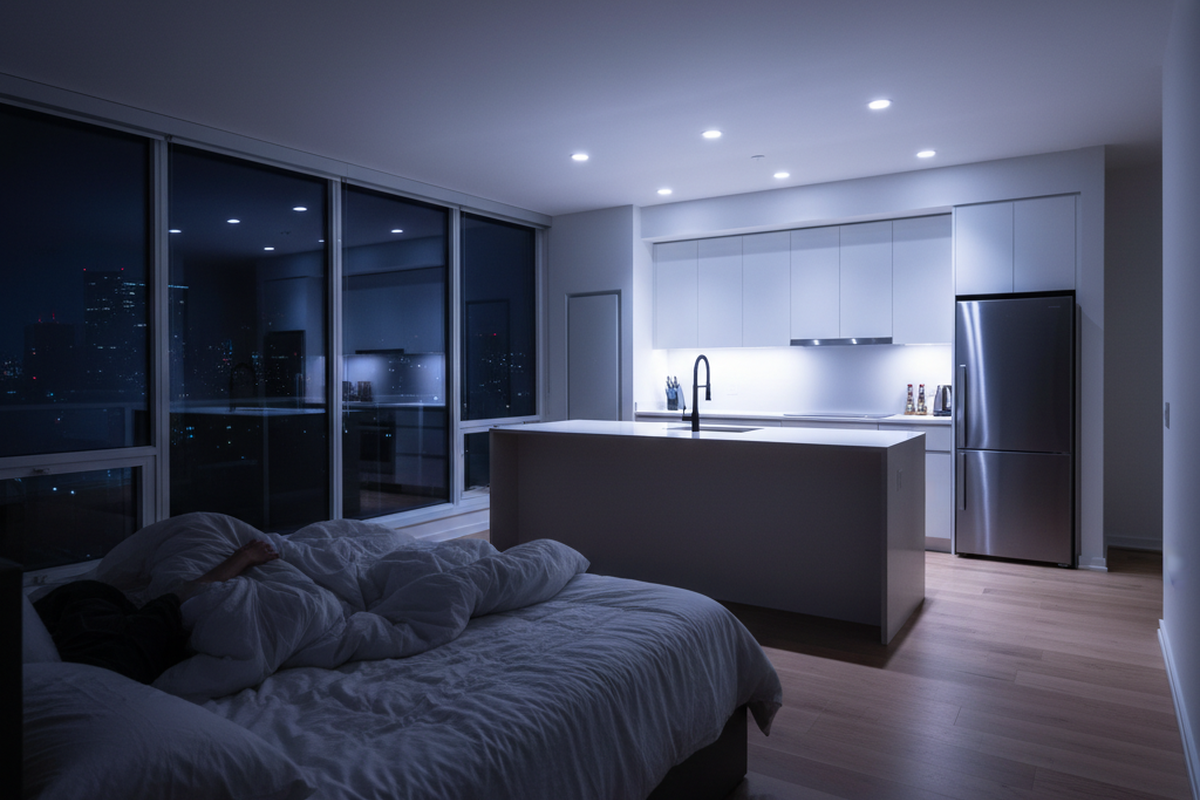
Une personne dort dans un lit dans l'ombre au premier plan tandis que des plafonniers d'un blanc froid et éclatant éclairent la cuisine adjacente à aire ouverte. L'éblouissement provenant de l'espace culinaire se répercute sur le parquet en bois et atteint la zone de sommeil, soulignant l'absence de séparations physiques.

Un éclairage digne d'un stade dans les studios à aire ouverte perturbe le sommeil en inondant l'espace d'éblouissement. La solution est pratique : passer en mode vacance, masquer la zone de détection du détecteur et privilégier un éclairage à variation chaude (warm-dim) pour retrouver l'obscurité et des nuits paisibles.

Une femme médecin en blouse blanche discute avec un patient masculin assis sur une table d'examen dans une salle médicale bien éclairée. Un rideau d'intimité beige et des armoires médicales blanches sont visibles en arrière-plan.

Rayzeek explique comment les capteurs d'énergie standard peuvent plonger les chambres de patients dans l'obscurité, ce qui nuit à la confiance accordée aux soins. Les capteurs à double technologie avec contrôle en mode vacance maintiennent l'éclairage lorsque c'est nécessaire, préservant ainsi l'intimité et le confort des patients.

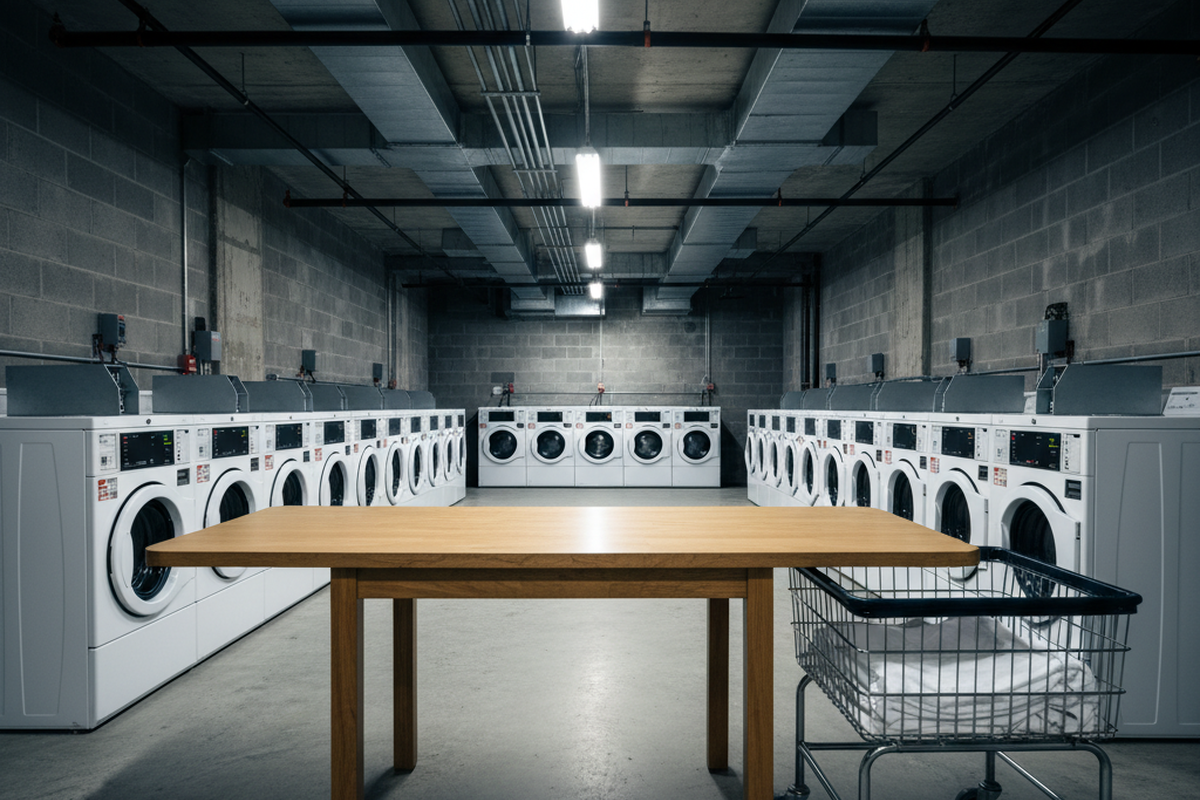
A simple wooden table stands centrally in a concrete basement laundry room flanked by rows of white washing machines. To the right, a wire cart holds folded linens beneath industrial fluorescent ceiling fixtures.

Rayzeek révèle pourquoi l'éclairage de la buanderie s'éteint pendant le pliage du linge et comment les détecteurs à double technologie montés en angle maintiennent l'espace éclairé et sécurisé. Les détecteurs PIR bon marché manquent les micro-mouvements et interprètent mal l'activité dans la pièce, tandis qu'une installation adéquate permet d'économiser de l'énergie et de réduire le taux de rotation des locataires.

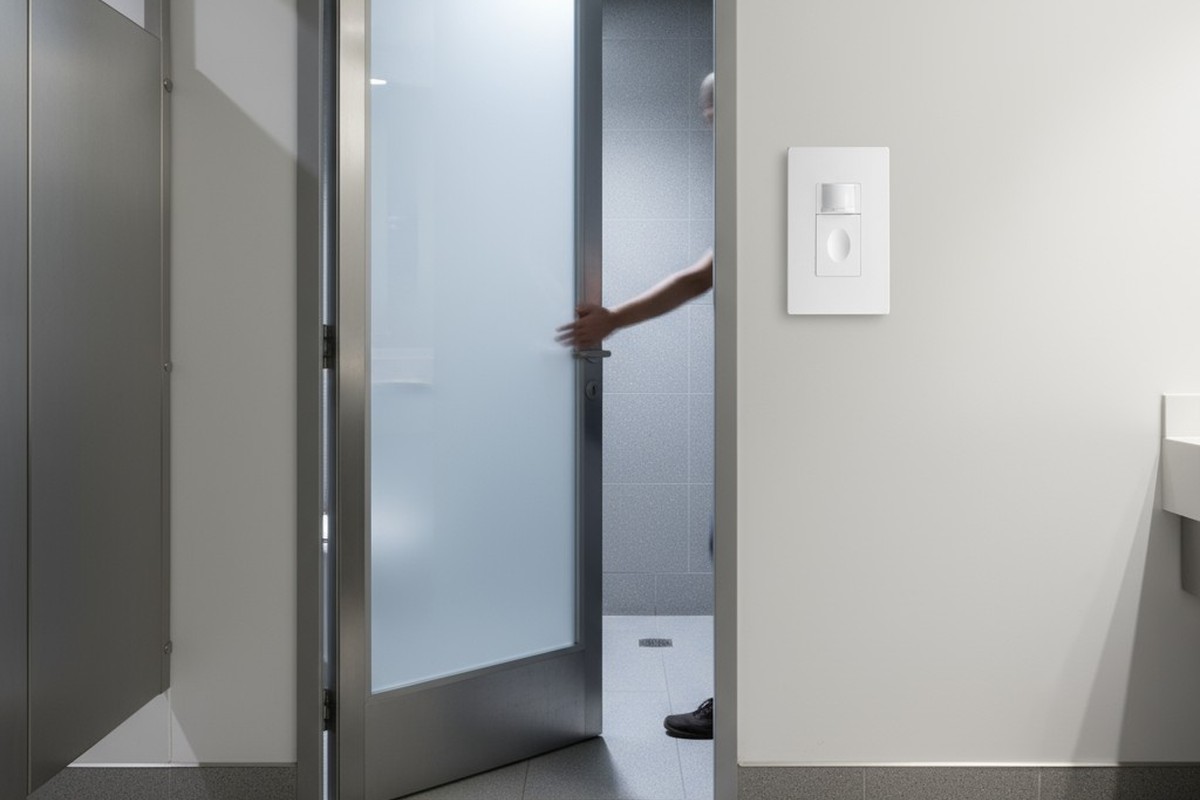
A person's hand opens a restroom door, and a motion sensor on the adjacent wall has just activated the overhead light, illuminating the tiled room.

La temporisation d'un détecteur de mouvement est un réglage essentiel qui équilibre l'efficacité énergétique et le confort de l'utilisateur. Comprendre comment calibrer cette période de grâce évite les extinctions intempestives frustrantes tout en veillant à ce que l'éclairage et les systèmes CVC ne gaspillent pas d'énergie dans les pièces vides.

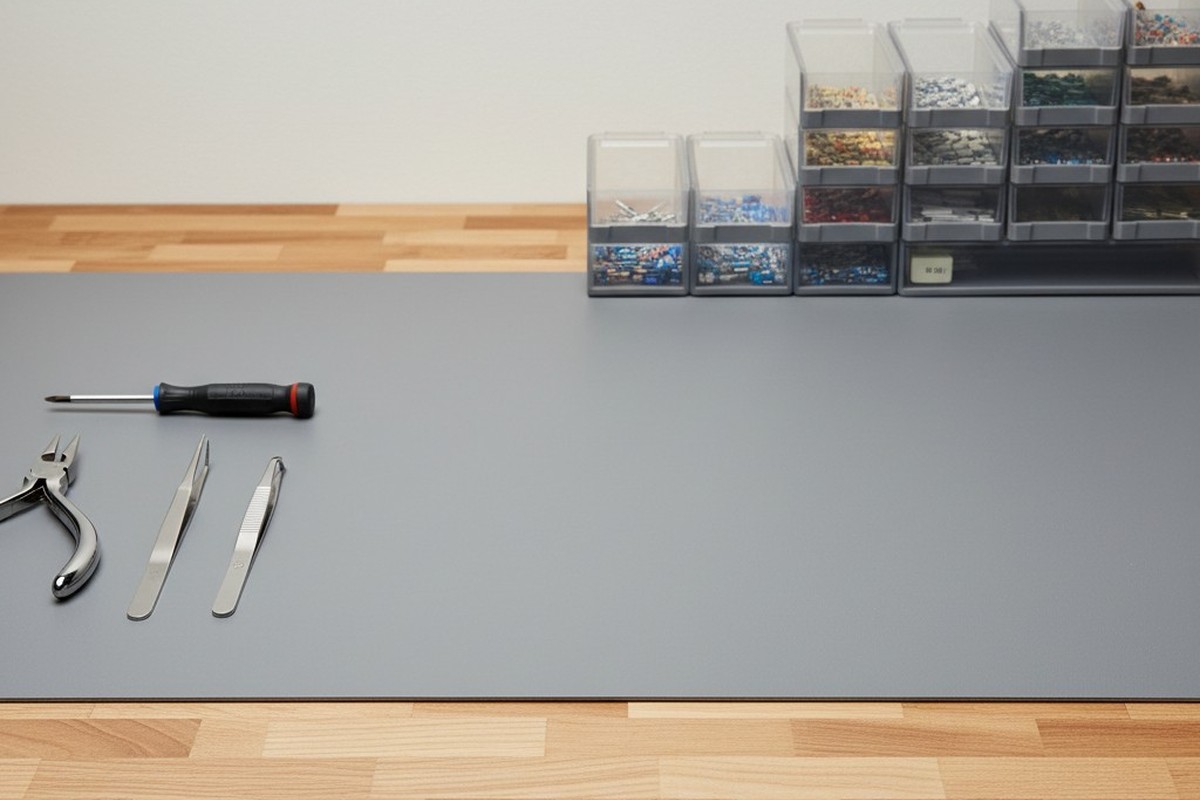
A straight-on view of a clean electronics workbench with a grey anti-static mat, neatly arranged tools to the side, and out-of-focus storage bins in the background.

Relying on memory to turn off an 850°F soldering iron is a gamble you will eventually lose. The human brain is a poor safety device, prone to distraction. Instead of relying on fallible smart plugs or routines, the most robust solution is a simple, hard-wired motion sensor that defaults to safety, creating a true ‘dead-man’s bench’ for your workshop.

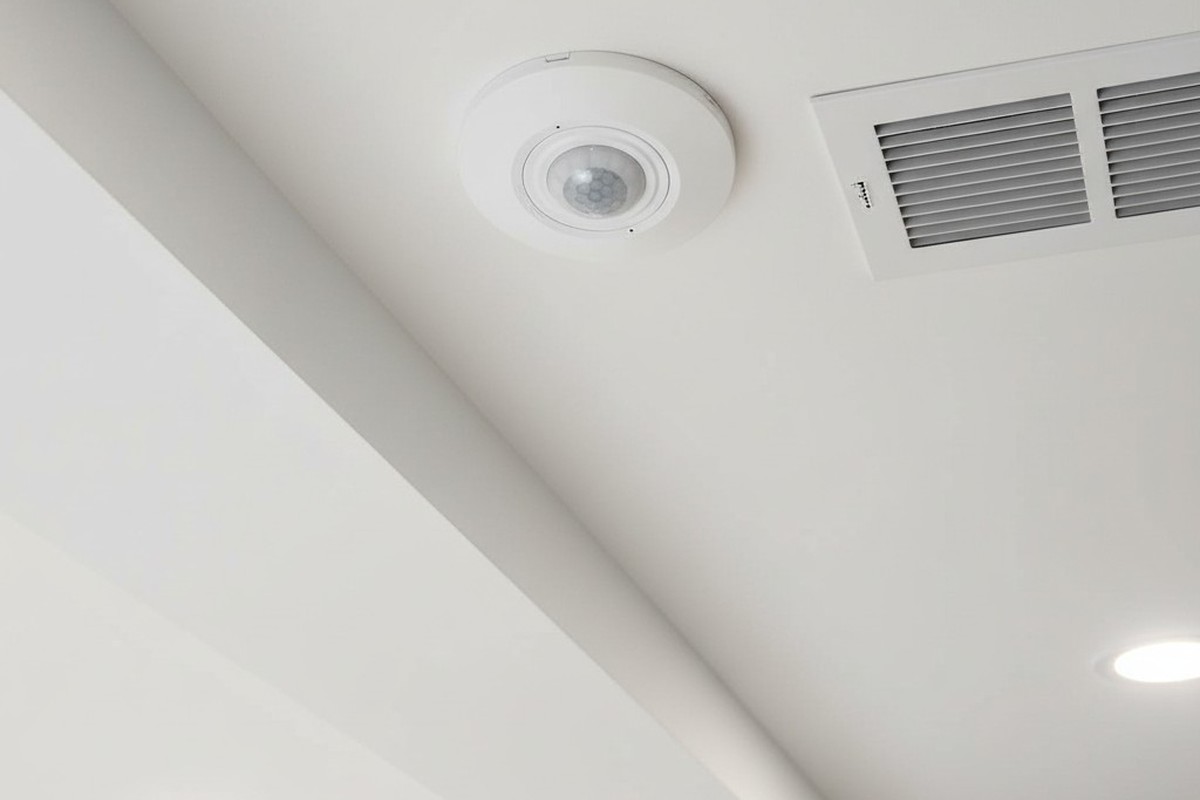
A low-angle shot looking up at a small, round, white motion sensor flush-mounted on a drywall ceiling bulkhead, positioned next to a square metal air register.

Placing motion switches on the walls of an open basement is a common design flaw. Structural columns and furniture create blind spots, causing lights to turn off unexpectedly. The solution is to move the sensor to the ceiling, providing a top-down, 360-degree view that eliminates these ‘shadow cones’ and offers a more reliable, hands-free lighting experience.

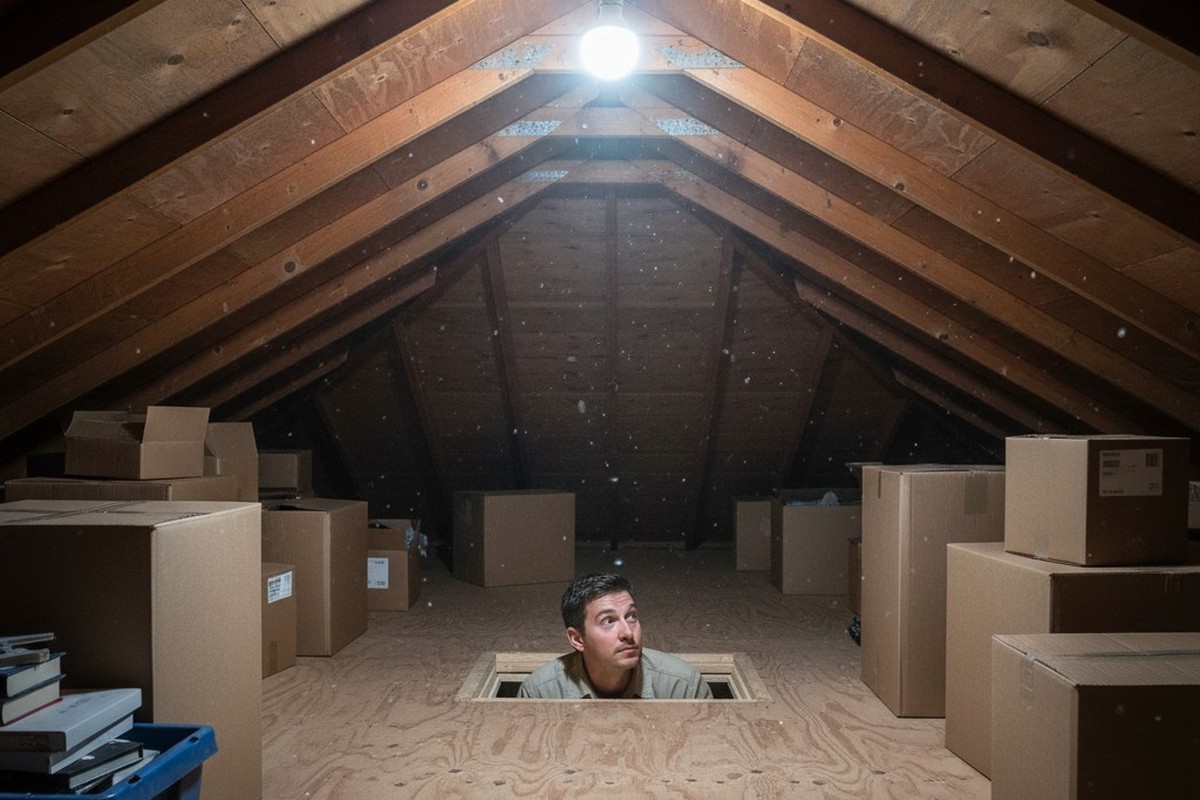
A person climbs a ladder through a hatch into a residential attic, which is already fully illuminated by an overhead light with a motion sensor.

Relying on a pull-string light in your attic is a dangerous and outdated practice. The transition from a ladder to the attic floor is a critical fall risk, made worse by darkness. A simple, screw-in motion sensor adapter provides a passive safety upgrade, automatically lighting the space before you enter and eliminating the hazard without complex wiring or unreliable batteries.

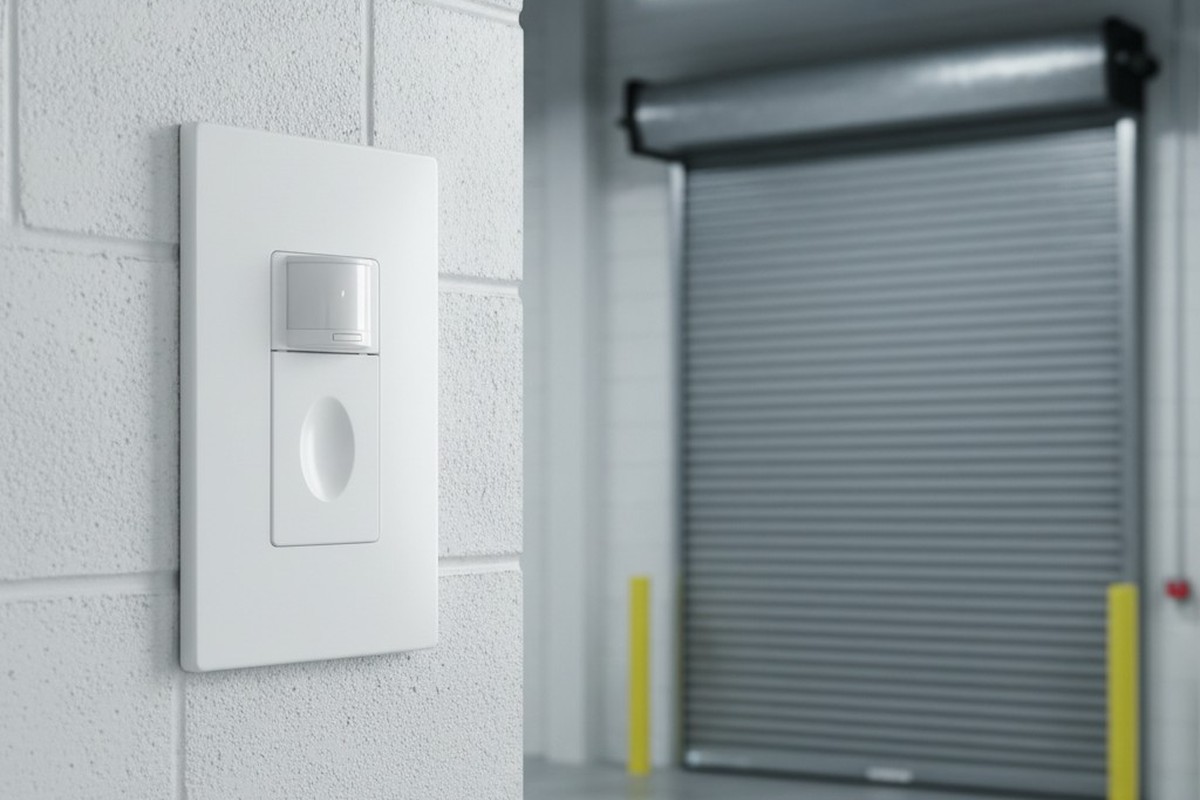
A white motion sensor is mounted on a cinder block wall inside a warehouse, aimed directly at a large, closed, corrugated metal loading dock door in the background.

False alarms at your loading dock are often caused by standard sensors reacting to wind drafts and swirling debris. These environments create thermal and physical disturbances that trick PIR and Microwave detectors. The only reliable solution is installing Dual-Technology sensors that require both a heat signature and physical motion to be detected simultaneously, preventing costly and frustrating false dispatches.

French