Tall metal bookshelves line both sides of a long, carpeted aisle in a library. A continuous strip of overhead lighting extends down the center of the ceiling, illuminating the colorful spines of the books.

Lighting library stacks requires focusing on vertical surfaces, not floor brightness. The piece explains how batwing optics, proper sensor strategies, and dim-to-warm controls improve visibility, reduce glare, and protect archival materials while saving energy.

A narrow room features a wall of gray digital lockers on the left and metal shelving units filled with parcels on the right. Cardboard boxes are stacked haphazardly on the floor in the center aisle under cool, dim ceiling lights.

Rayzeek explains why typical package room sensors leave residents in the dark, and how Dual-Technology (PIR plus Ultrasonic) sensing keeps lights on when lockers block sight. The approach avoids cloud dependence and aligns safety with energy efficiency in obstructed spaces.

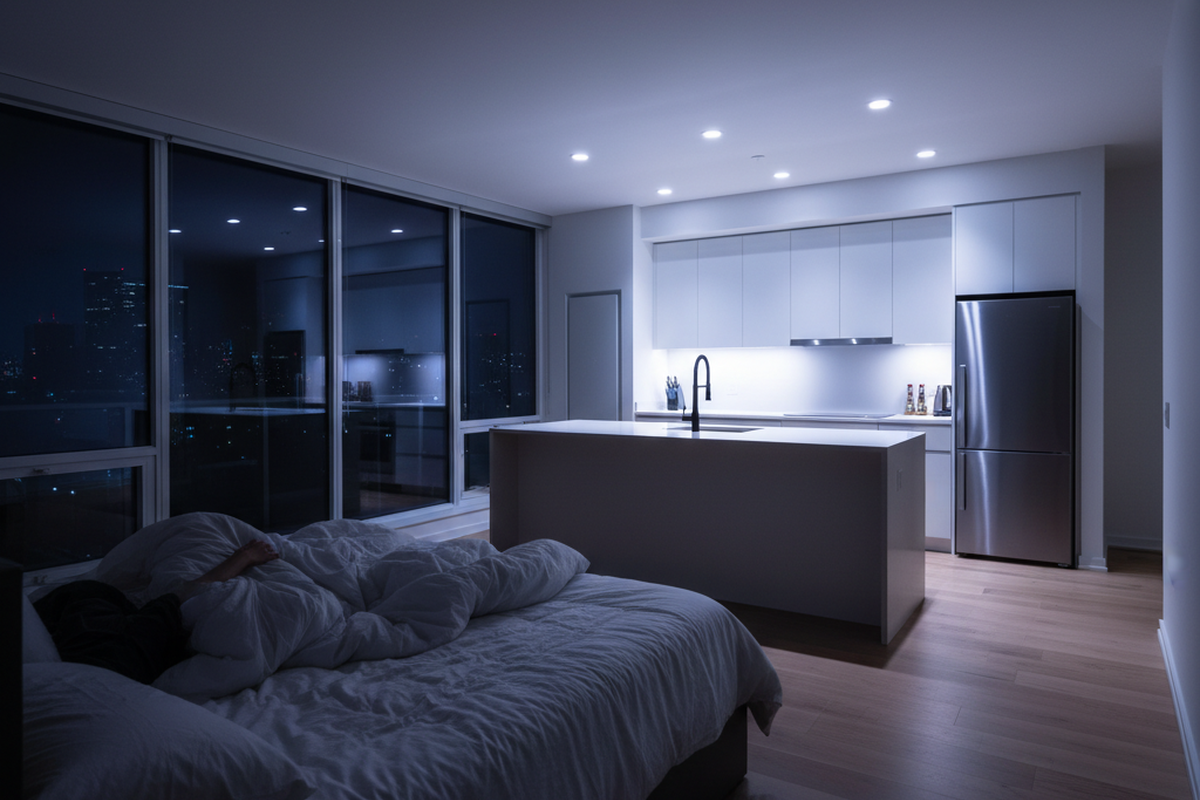
A person sleeps in a shadowed bed in the foreground while bright, cool-white overhead lights illuminate the adjacent open-plan kitchen. The glare from the culinary space spills across the wooden floor and reaches the sleeping area, highlighting the lack of physical dividers.

Stadium-level lighting in open-plan studios disrupts sleep by flooding the space with glare. The remedy is practical: switch to vacancy mode, mask the sensor’s view, and favor warm-dim lighting to reclaim darkness and calm nights.

A female doctor in a white coat converses with a male patient sitting on an exam table in a brightly lit medical room. A beige privacy curtain and white medical cabinets are visible in the background.

O Rayzeek explica como os sensores de energia padrão podem mergulhar os quartos dos doentes na escuridão, desgastando a confiança nos cuidados. Os sensores de Tecnologia Dupla com controlo em modo de vacância mantêm as luzes acesas quando necessário, preservando a privacidade e o conforto do doente.

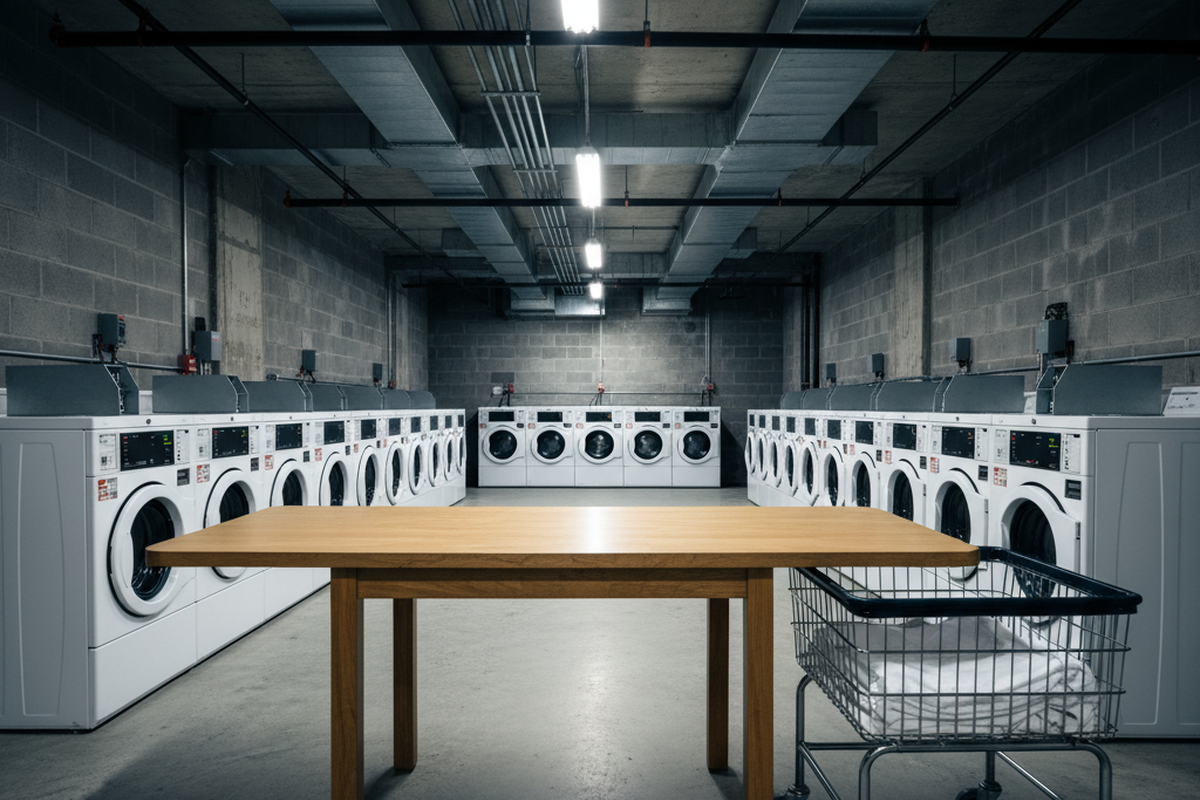
A simple wooden table stands centrally in a concrete basement laundry room flanked by rows of white washing machines. To the right, a wire cart holds folded linens beneath industrial fluorescent ceiling fixtures.

O Rayzeek revela por que as luzes da lavandaria se apagam durante a dobragem de roupa e como os sensores de Tecnologia Dupla montados num canto mantêm o espaço iluminado e seguro. Os PIRs económicos não detetam micromovimentos e interpretam mal a atividade na divisão, mas uma instalação adequada economiza energia e reduz a rotatividade de inquilinos.

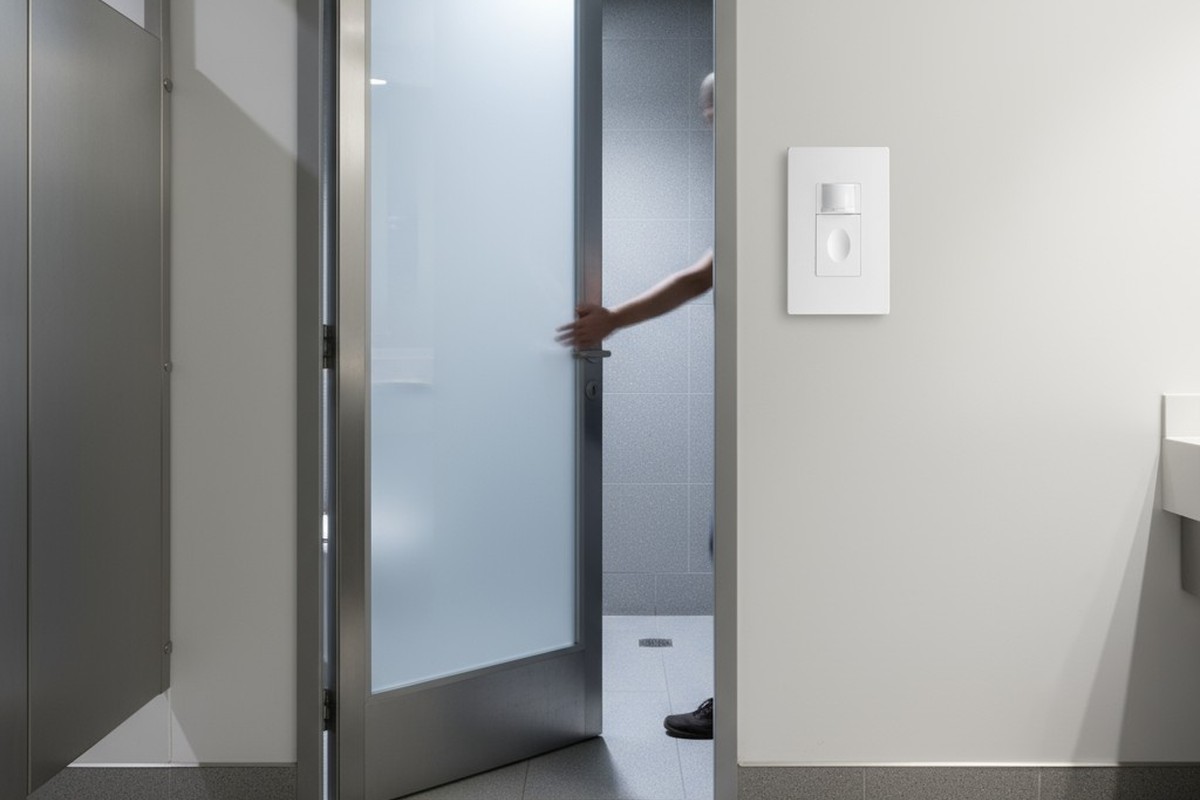
A person's hand opens a restroom door, and a motion sensor on the adjacent wall has just activated the overhead light, illuminating the tiled room.

O temporizador de um sensor de movimento é uma configuração crítica que equilibra a eficiência energética com o conforto do utilizador. Compreender como calibrar este período de tolerância evita o desligamento acidental frustrante, garantindo ao mesmo tempo que as luzes e os sistemas AVAC não desperdiçam energia em divisões vazias.

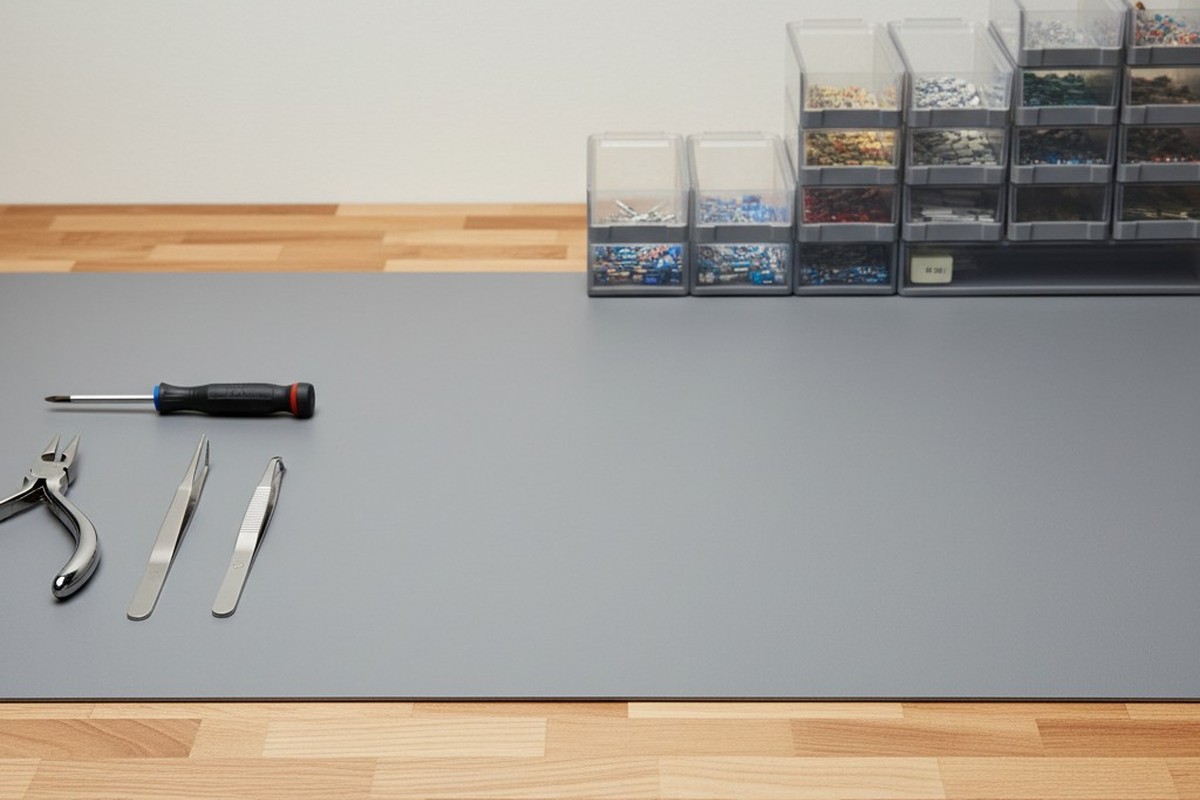
A straight-on view of a clean electronics workbench with a grey anti-static mat, neatly arranged tools to the side, and out-of-focus storage bins in the background.

Relying on memory to turn off an 850°F soldering iron is a gamble you will eventually lose. The human brain is a poor safety device, prone to distraction. Instead of relying on fallible smart plugs or routines, the most robust solution is a simple, hard-wired motion sensor that defaults to safety, creating a true ‘dead-man’s bench’ for your workshop.

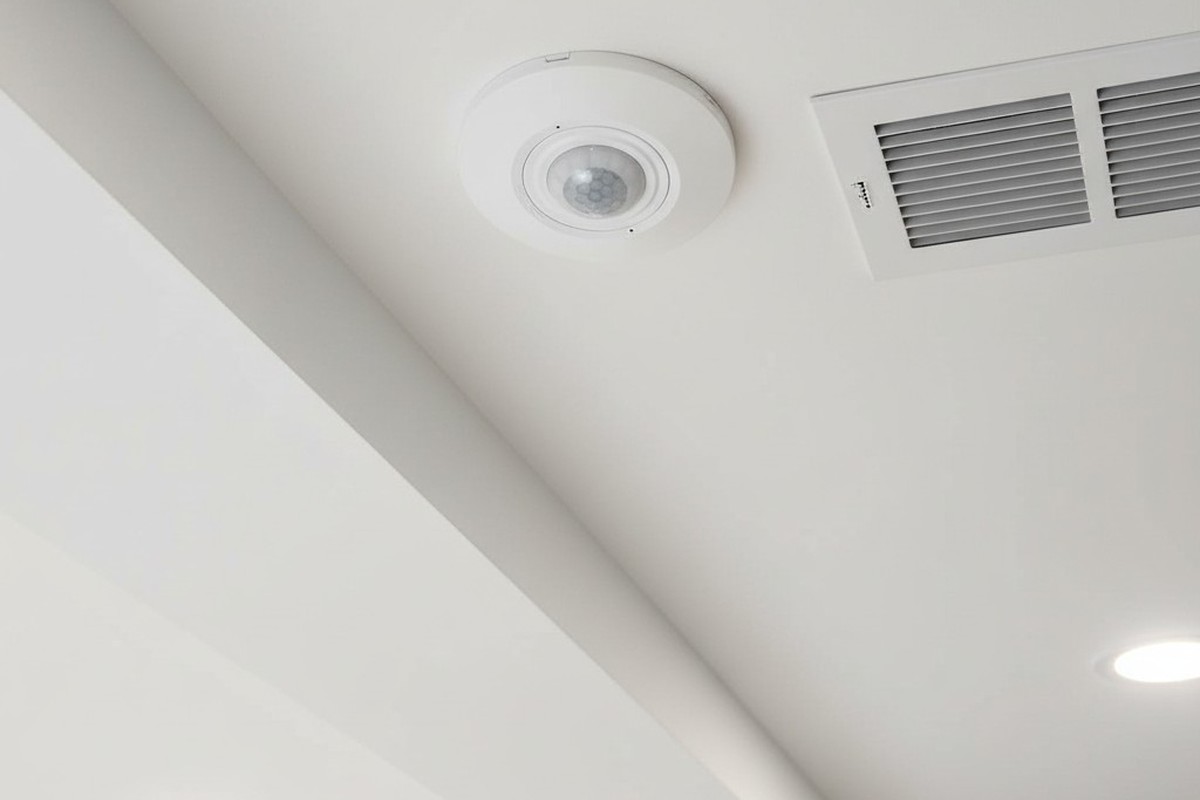
A low-angle shot looking up at a small, round, white motion sensor flush-mounted on a drywall ceiling bulkhead, positioned next to a square metal air register.

Placing motion switches on the walls of an open basement is a common design flaw. Structural columns and furniture create blind spots, causing lights to turn off unexpectedly. The solution is to move the sensor to the ceiling, providing a top-down, 360-degree view that eliminates these ‘shadow cones’ and offers a more reliable, hands-free lighting experience.

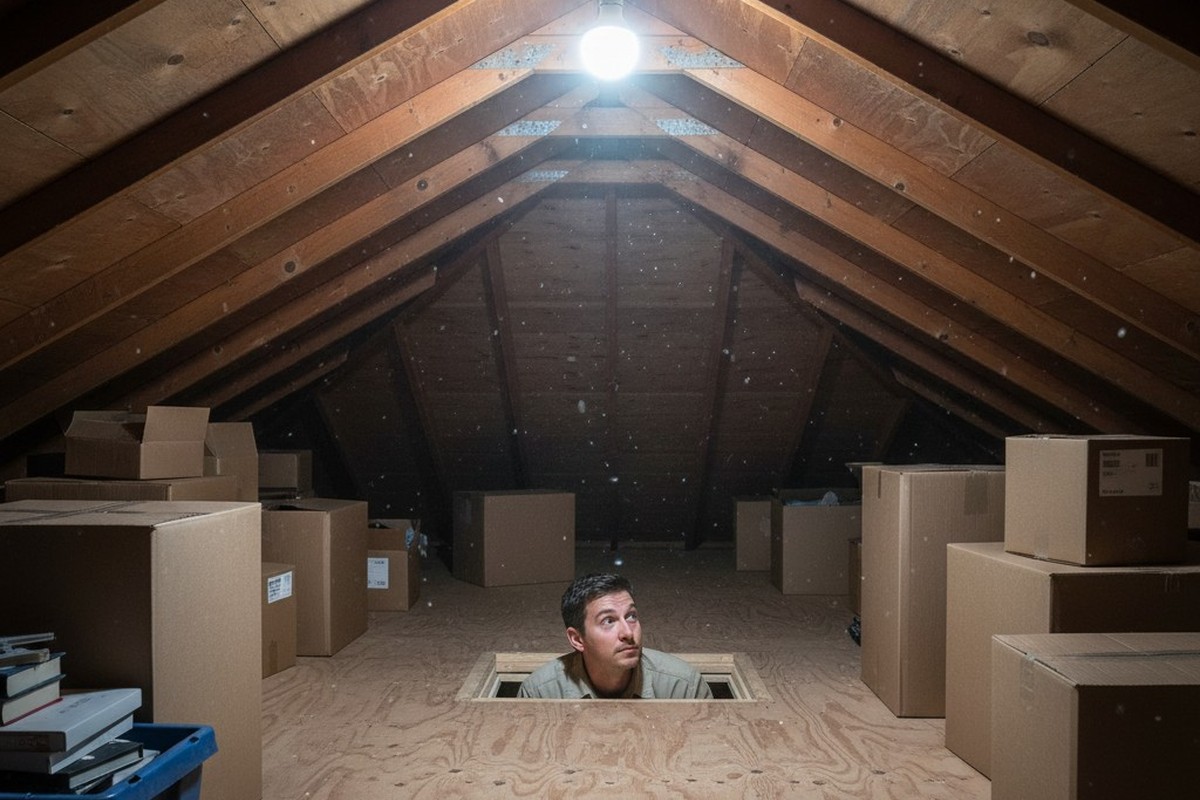
A person climbs a ladder through a hatch into a residential attic, which is already fully illuminated by an overhead light with a motion sensor.

Relying on a pull-string light in your attic is a dangerous and outdated practice. The transition from a ladder to the attic floor is a critical fall risk, made worse by darkness. A simple, screw-in motion sensor adapter provides a passive safety upgrade, automatically lighting the space before you enter and eliminating the hazard without complex wiring or unreliable batteries.

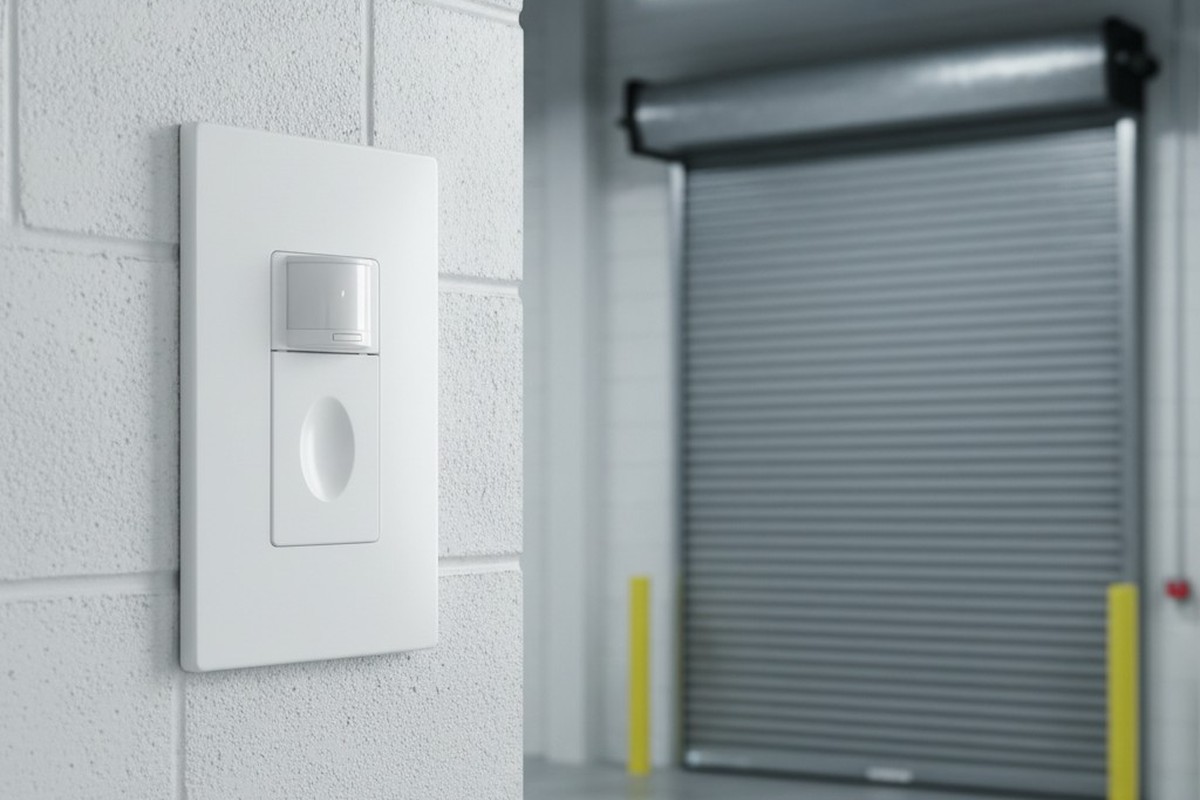
A white motion sensor is mounted on a cinder block wall inside a warehouse, aimed directly at a large, closed, corrugated metal loading dock door in the background.

False alarms at your loading dock are often caused by standard sensors reacting to wind drafts and swirling debris. These environments create thermal and physical disturbances that trick PIR and Microwave detectors. The only reliable solution is installing Dual-Technology sensors that require both a heat signature and physical motion to be detected simultaneously, preventing costly and frustrating false dispatches.

Portuguese (Portugal)