
Conference Rooms
Discover the energy-saving potential of your conference room with Rayzeek’s occupancy sensor design guide.

Maximize Energy Efficiency in Conference Rooms with Occupancy Sensors
Conference rooms are integral to the functioning of any commercial building, serving as the hub for meetings, presentations, and brainstorming sessions. These rooms are often equipped with high-intensity lighting to ensure visibility during presentations and discussions. However, due to their intermittent usage, they are prone to high energy wastage. Lights are often left on when the room is vacant, leading to unnecessary energy consumption.
Moreover, the sporadic usage of conference rooms means that they often remain vacant for extended periods, leading to unnecessary energy consumption if the lights are left on. This wastage not only impacts the building’s energy efficiency but also contributes to higher operational costs.
With Rayzeek’s occupancy sensors, you can transform your conference room into an energy-efficient space, meeting the requirements of energy codes and contributing to a greener environment.
Uppfyll energireglerna

International Energy Conservation Code (IECC) är en modellkod framtagen av International Code Council (ICC) för att fastställa minimikrav för utformning och konstruktion avseende energieffektivitet i byggnader. IECC uppdateras vart tredje år för att inkludera de senaste metoderna och teknikerna inom energibesparing.
IECC – Varför du bör bry dig
IECC har antagits i stor utsträckning av delstater och kommuner över hela USA. IECC omfattar olika aspekter av energianvändning, inklusive byggnadsskalet (väggar, tak och fönster), värme- och kylsystem samt belysningssystem.
IECC föreskriver specifik belysningsstyrning, såsom närvarosensorer, för att minimera energislöseri i outnyttjade utrymmen i olika områden.

ANSI/ASHRAE/IES Standard 90.1, Energy Standard for Sites and Buildings Except Low-Rise Residential Buildings, är en allmänt erkänd energistandard som publiceras av American Society of Heating, Refrigerating and Air-Conditioning Engineers (ASHRAE).
ASHRAE 90.1 – Varför du bör bry dig
ASHRAE 90.1 används som riktmärke för energikoder för byggnader i hela USA och fungerar som en efterlevnadsväg inom IECC, vilken anger minimikrav för energieffektiva prestanda hos komponenter i kommersiella byggnader, inklusive byggnadsskal, VVS-system, varmvattensystem och belysningssystem.
Standarden ASHRAE 90.1 anger maximalt tillåtna belysningseffekttätheter och minimikrav på belysningsstyrning, inklusive användning av närvarosensorer inom specifika områden.

Title 24, del 6 i California Building Standards Code, officiellt känd som Building Energy Efficiency Standards for Residential and Nonresidential Buildings, administreras av California Energy Commission och uppdateras regelbundet för att återspegla ny teknik och nya metoder för energieffektivitet.
Title 24 – Varför du bör bry dig
Title 24 är känd för sina stränga krav, vilka ofta anses vara striktare än de som finns i många andra energikoder i USA. Title 24 föreskriver strikta energiprestandastandarder för alla aspekter av byggnadskonstruktion, vilket inkluderar uppvärmning, ventilation, luftkonditionering (VVS), varmvatten och belysning.
Title 24 kräver installation av närvarosensorer som anpassar belysningen baserat på rumsutnyttjande i specifika utrymmen i kommersiella byggnader för att säkerställa att energi inte slösas bort.
Införande av energikoder per delstat
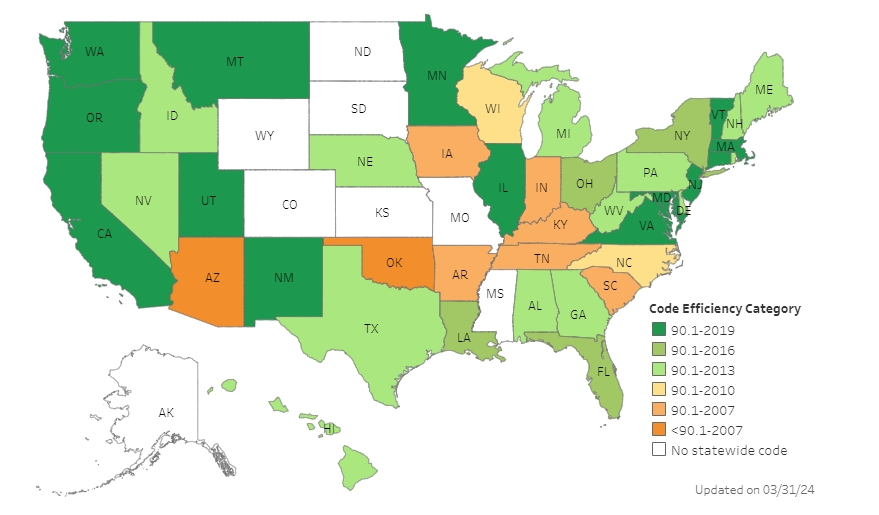
Expandera för att se den utförliga tabellen ↓
| Delstat | Gällande kommersiella föreskrifter | Effektivitetskategori för kommersiella föreskrifter |
|---|---|---|
| Alabama | 90.1-2013 | 90.1-2013 |
| Alaska | Inga delstatsövergripande | Inga delstatsövergripande föreskrifter |
| Arizona | Lokal självstyre | <90.1-2007 |
| Arkansas | 2009 IECC och 90.1-2007 | 90.1-2007 |
| Kalifornien | 2022 Building Energy Efficiency Standards | 90.1-2019 |
| Colorado | Lokal självstyre | Inga delstatsövergripande föreskrifter |
| Connecticut | 2021 IECC och 90.1-2019 | 90.1-2019 |
| Delaware | 2018 IECC och 90.1-2016 | 90.1-2013 |
| District of Columbia | 90.1-2013^ | 90.1-2019 |
| Florida | 2021 IECC and 90.1-2019^ | 90.1-2016 |
| Georgia | 2015 IECC and 90.1-2013^ | 90.1-2013 |
| Hawaii | Lokal självstyre | 90.1-2013 |
| Idaho | 2018 IECC och 90.1-2016 | 90.1-2013 |
| Illinois | 2021 IECC och 90.1-2019 | 90.1-2019 |
| Indiana | 90.1-2007 | 90.1-2007 |
| Iowa | 2012 IECC and 90.1-2010 | 90.1-2007 |
| Kansas | Lokal självstyre | Inga delstatsövergripande föreskrifter |
| Kentucky | 2012 IECC and 90.1-2010 | 90.1-2007 |
| Louisiana | 2021 IECC and 90.1-2019^ | 90.1-2016 |
| Maine | 2015 IECC och 90.1-2013 | 90.1-2013 |
| Maryland | 2021 IECC and 90.1-2019^ | 90.1-2019 |
| Massachusetts | 2018 IECC och 90.1-2016^ | 90.1-2019 |
| Michigan | 2015 IECC and 90.1-2013^ | 90.1-2013 |
| Minnesota | 90.1-2019^ | 90.1-2019 |
| Mississippi | Inga delstatsövergripande | Inga delstatsövergripande föreskrifter |
| Missouri | Lokal självstyre | Inga delstatsövergripande föreskrifter |
| Montana | 2021 IECC och 90.1-2019 | 90.1-2019 |
| Nebraska | 2018 IECC och 90.1-2016 | 90.1-2013 |
| Nevada | 2018 IECC och 90.1-2016 | 90.1-2013 |
| New Hampshire | 2018 IECC och 90.1-2016^ | 90.1-2013 |
| New Jersey | 90.1-2019 | 90.1-2019 |
| New Mexico | 2021 IECC and 90.1-2019^ | 90.1-2019 |
| New York | 2018 IECC och 90.1-2016^ | 90.1-2016 |
| North Carolina | 2015 IECC and 90.1-2013^ | 90.1-2010 |
| North Dakota | Lokal självstyre | Inga delstatsövergripande föreskrifter |
| Ohio | 2021 IECC and 90.1-2019^ | 90.1-2016 |
| Oklahoma | 2006 IECC och 90.1-2004 | <90.1-2007 |
| Oregon | 90.1-2019 | 90.1-2019 |
| Pennsylvania | 2018 IECC och 90.1-2016 | 90.1-2013 |
| Rhode Island | 2018 IECC och 90.1-2016^ | 90.1-2013 |
| South Carolina | 2009 IECC och 90.1-2007 | 90.1-2007 |
| South Dakota | Lokal självstyre | Inga delstatsövergripande föreskrifter |
| Tennessee | 2021 IECC and 90.1-2013 | 90.1-2007 |
| Texas | 2015 IECC och 90.1-2013 | 90.1-2013 |
| Utah | 2021 IECC and 90.1-2019^ | 90.1-2019 |
| Vermont | 2021 IECC and 90.1-2019^ | 90.1-2019 |
| Virginia | 2021 IECC and 90.1-2019^ | 90.1-2019 |
| Washington | 2018 Washington State Energy Code | 90.1-2019 |
| Tennessee | 2012 IECC and 90.1-2010 | 90.1-2007 |
| Texas | 2015 IECC och 90.1-2013 | 90.1-2013 |
| Utah | 2021 IECC and 90.1-2019^ | 90.1-2019 |
| Vermont | 2018 IECC och 90.1-2016^ | 90.1-2019 |
| Virginia | 2021 IECC and 90.1-2019^ | 90.1-2019 |
| Washington | 2018 Washington State Energy Code | 90.1-2019 |
| West Virginia | 90.1-2013 | 90.1-2013 |
| Wisconsin | 2015 IECC and 90.1-2013^ | 90.1-2010 |
| Wyoming | Lokal självstyre | Inga delstatsövergripande föreskrifter |
- ^ When an amendment impacting energy efficiency can be quantified using DOE Prototype Building Models, they were captured in the analysis.
- For states adopting both IECC and 90.1, the IECC code is usually analyzed as the state current code in this study except for states with extensive amendments to the IECC.
Design Guide Key Concepts for Conference Rooms
Designing an energy-efficient lighting control solution for conference rooms involves strategic placement of occupancy sensors to ensure comprehensive coverage of the space.
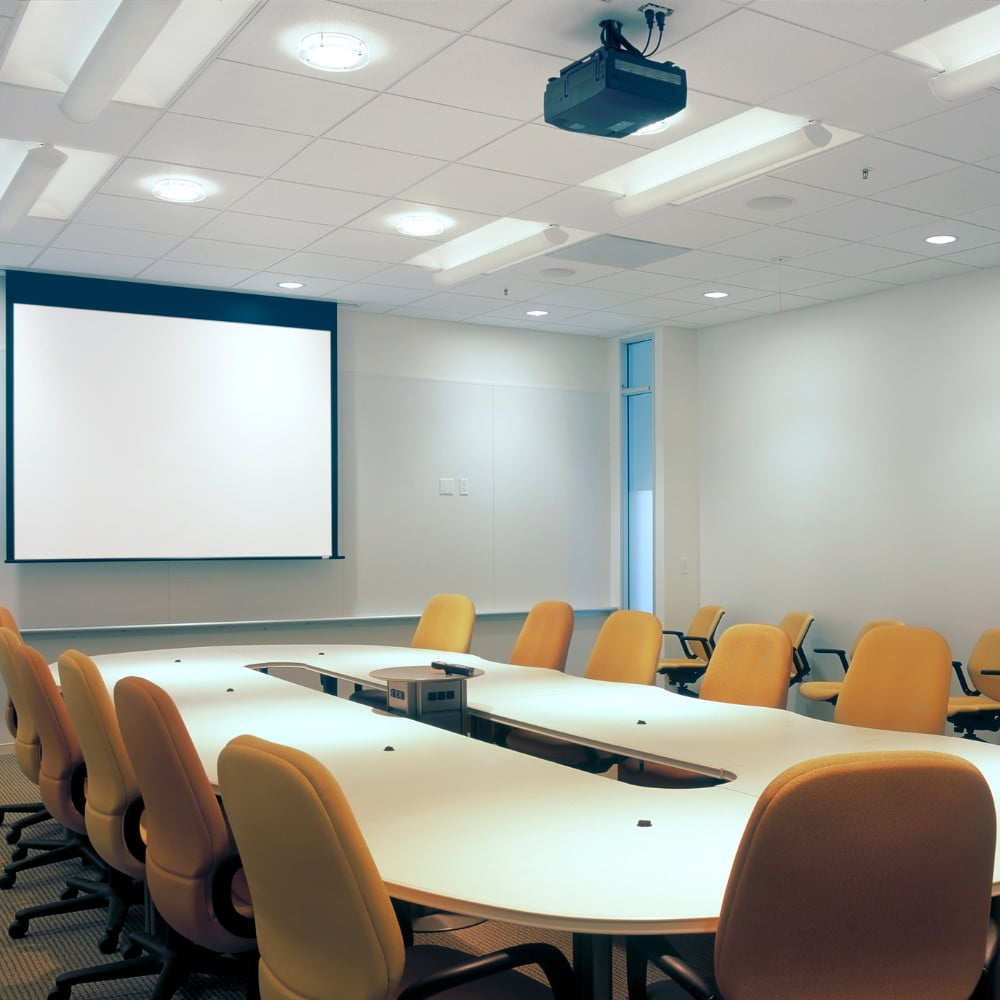
Designing an energy-efficient lighting system for a conference room involves strategic placement of occupancy sensors to ensure comprehensive coverage. Here are some guidelines to consider:
- Entrance Coverage: Install a wall-mounted sensor near the entrance to detect when someone enters or exits the room. This sensor should be positioned high enough to avoid obstruction from the open door and should not directly face the entrance to avoid false triggers from movement outside the room.
- Table Coverage: Place a ceiling-mounted sensor above the conference table to detect occupancy in the main area of the room. This sensor should be positioned centrally to ensure comprehensive coverage.
- Presentation Area Coverage: If your conference room has a dedicated presentation area, consider installing an additional wall-mounted sensor to cover this space. This sensor should be positioned to avoid any potential obstructions, such as screens or projectors.
- Wall Control: Install a wall control unit near the entrance for manual override or adjustments of the lighting settings. This control should be easily accessible upon entering or exiting the room.
- Avoidance of Obstructions and Interference: Ensure that sensors are not placed near air vents to prevent interference from air flow or vibrations. Also, consider the height and placement of furniture to avoid blocking the sensor’s field of view.
- Integration with Existing Systems: Our occupancy sensors can be integrated with existing lighting systems for seamless operation. They can also be programmed to turn off all lights after a certain period of inactivity, further enhancing energy efficiency.
Featured Products & Solutions
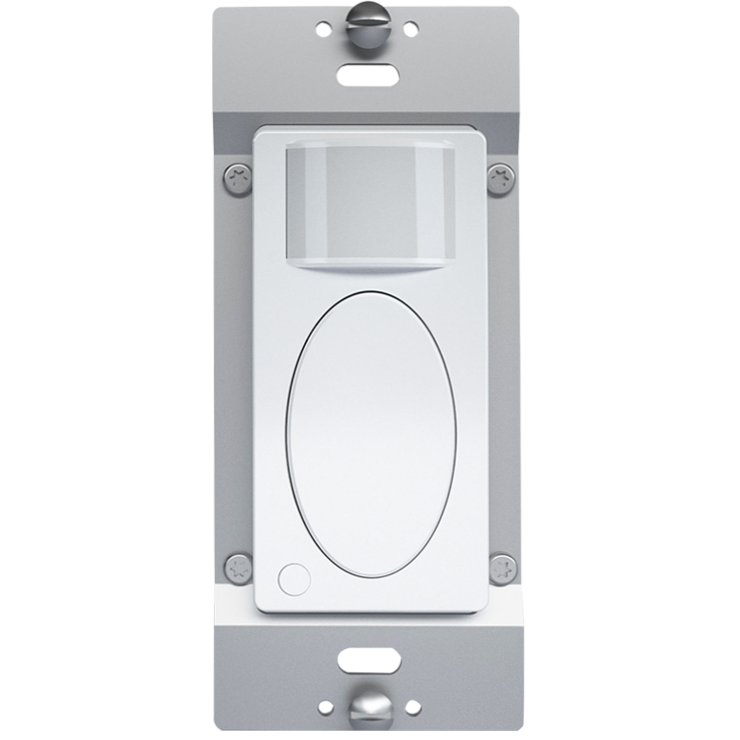
Wall Sensor Switches
RZ020/021 Motion Sensor Switches
- 2-wire, 3-wire, 4-wires wiring options
- Occupancy, Vacancy, Manual ON/OFF
- Adjustive time delay and ambient light control
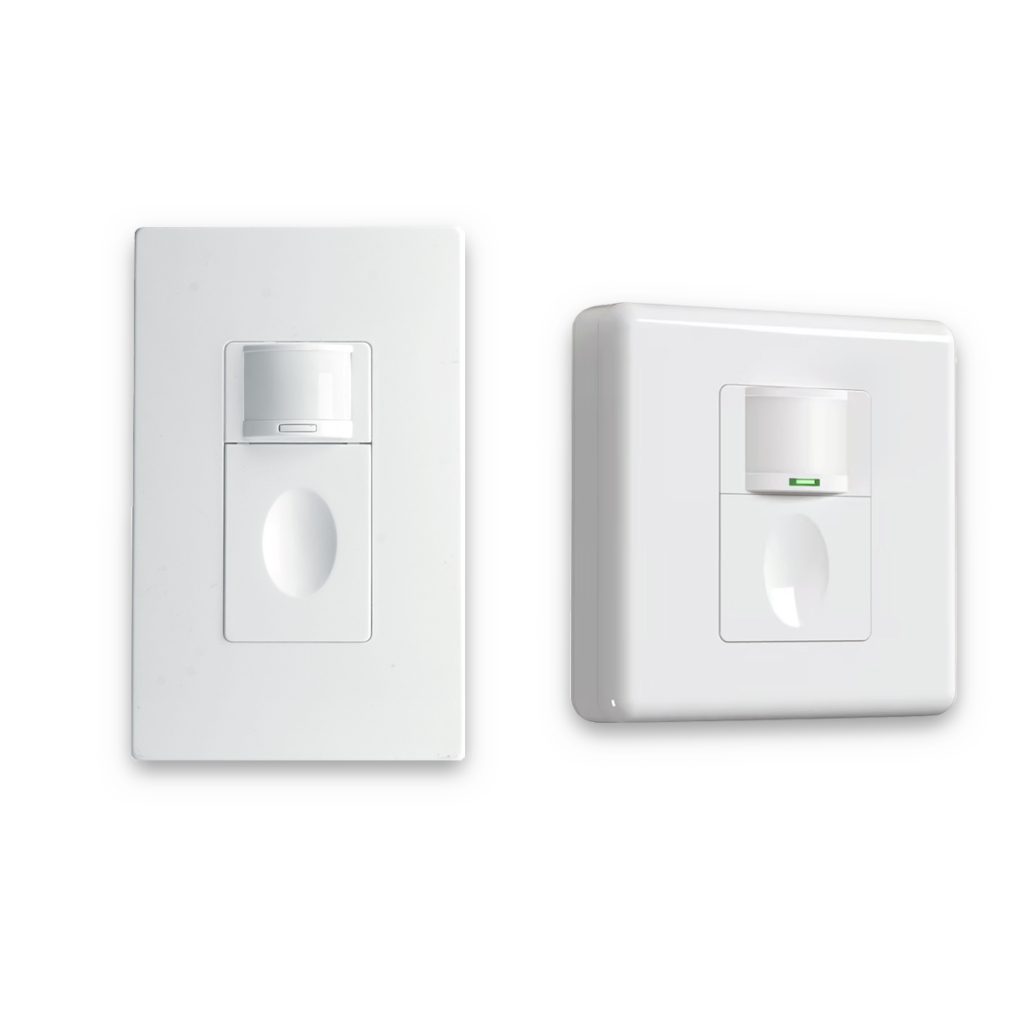
Multi-Location Wireless Wall Sensors
RZ020A/021A + RZ022W Kits
- Hardwired RZ021A/022A occupancy sensor switch
- Wireless companion switch (RZ022W) for multi-location control

Ceiling Occupancy Sensors
RZ036
- Hardwired occupancy sensors
- Auto ON, auto OFF
- Line voltage and Low voltage available
Core features included:
- Integrated manual ON/OFF control for all lighting
- Vacancy sensors (Manual ON only): Lights must be turned on manually only
- Adjustable time-delay, lighting is automatically turned full OFF after 15mins
- Additional: multi-location wireless kits to expand the control range without re-wring
- Additional: multiple wiring options available for both new constructions and retrofit projects.

Meets the Mandatory Provisions
IECC – 2011
C405.2.1 Occupant sensor controls
Occupant sensor controls shall be installed to control lights in the space.
C405.2.1.1 Occupant sensor control functions
- Manual on or partial on to no more than 50% power.
- Full off within 20 minutes after all occupants have left the space
- A manual control to turn off the lights.
ASHRAE 90.1 – 2022
9.4.1.1 a Local control
There shall be one or more manual lighting control device that provides ON and OFF control
of all lighting in the space.
9.4.1.1 b Restricted to manual ON
None of the lighting shall be automatically turned on
9.4.1.1 c Restricted to partial automatic ON
No more than 50% of the lighting power for the general lighting shall be allowed to be automatically turned on
** NOTE: At least one 9.4.1.1 b or 9.4.1.1 c shall be implemented.
9.4.1.1 h Automatic full OFF control
All lighting in the space shall be automatically shut off within 20 minutes of all occupants leaving the space
Title 24 – 2022
130.1 (a) Manual area controls.
Each area enclosed by ceiling-height partitions shall provide lighting controls that allow the lighting in that area to be manually turned on and off.
130.1 (c) Shut-OFF Controls.
Lighting shall be controlled with occupant sensing controls to automatically shut OFF all of the lighting in 20 minutes or less after the control zone is unoccupied that shall function either as:
- A. Occupant sensing controls (if 130.1(b) not required to have multi-level lighting controls); or
- B. Partial-ON occupant sensing controls, or
- C. Vacancy sensing controls, where all lighting responds to a manual ON input only
Let us hear you.
Let Rayzeek help design and deliver a bespoke energy-saving lighting solution for you.