Sensor teknologi ganda (dual-technology) telah menjadi pilihan refleksif untuk deteksi okupansi. Penentu spesifikasi memilihnya secara otomatis, dengan mengasumsikan bahwa dua metode deteksi pasti lebih baik daripada satu dan bahwa redundansi menjamin keandalan.
Dalam sebagian besar kasus, asumsi ini salah.
Untuk mayoritas ruangan—kantor, rumah, koridor, toko ritel—sensor passive infrared (PIR) yang disesuaikan dengan benar mengungguli alternatif teknologi gandanya. PIR menghasilkan lebih sedikit pemicu palsu, pengoperasian yang lebih stabil, dan total biaya yang lebih rendah. Refleks industri terhadap dual-tech adalah solusi yang mencari masalah yang jarang terjadi. Memahami alasan kesalahpahaman ini bertahan, dan di mana PIR benar-benar unggul, adalah kunci untuk membuat keputusan spesifikasi yang lebih cerdas.
Alasan Teknologi Ganda Menjadi Pilihan Utama
Preferensi terhadap sensor teknologi ganda berakar pada penghindaran risiko, bukan bukti. Manajer fasilitas dan kontraktor percaya bahwa lebih banyak mekanisme deteksi memberikan perlindungan terhadap kegagalan deteksi okupansi. Jika sensor inframerah gagal, menurut penalaran tersebut, komponen ultrasonik atau gelombang mikro akan memberikan cadangan. Logika ini menarik bagi budaya over-spesifikasi, di mana perkiraan biaya dari satu kegagalan, seperti lampu yang mati saat ada penghuni, melebihi biaya nyata dari kompleksitas tambahan.
Naratif pemasaran telah memperkuat refleks ini dengan memposisikan teknologi ganda sebagai solusi premium kelas profesional, yang mengisyaratkan bahwa sensor teknologi tunggal adalah suatu kompromi. Pengotakan ini mengabaikan realitas operasional yang krusial: sistem teknologi ganda memerlukan koordinasi yang presisi antara dua metode independen yang merespons variabel lingkungan yang berbeda. Ketika keduanya harus setuju untuk memicu tindakan (logika AND), sistem menjadi lambat. Ketika salah satu dapat memicu secara independen (logika OR), sistem menjadi hipersensitif, bereaksi terhadap aliran udara HVAC atau tirai yang bergeser.
Sensor yang dihasilkan menjadi lebih mahal untuk dibeli, dipasang, dan disetel. Sensor tersebut memerlukan penyesuaian canggih untuk menyeimbangkan dua lapisan deteksi, yang sering kali memerlukan beberapa kali kunjungan lapangan. Dalam lingkungan dengan aliran udara yang bervariasi, gradien suhu, atau permukaan reflektif, komponen ultrasonik atau gelombang mikro menghasilkan pemicu positif palsu yang mengikis kepercayaan pengguna. Hasilnya adalah sistem yang biayanya lebih mahal, berkinerja tidak konsisten, dan mengganggu penghuni. Alternatifnya bukanlah meninggalkan penginderaan canggih, melainkan menyesuaikan sensor dengan tantangan deteksi yang sebenarnya.
Cara Sensor PIR Mendeteksi Okupansi
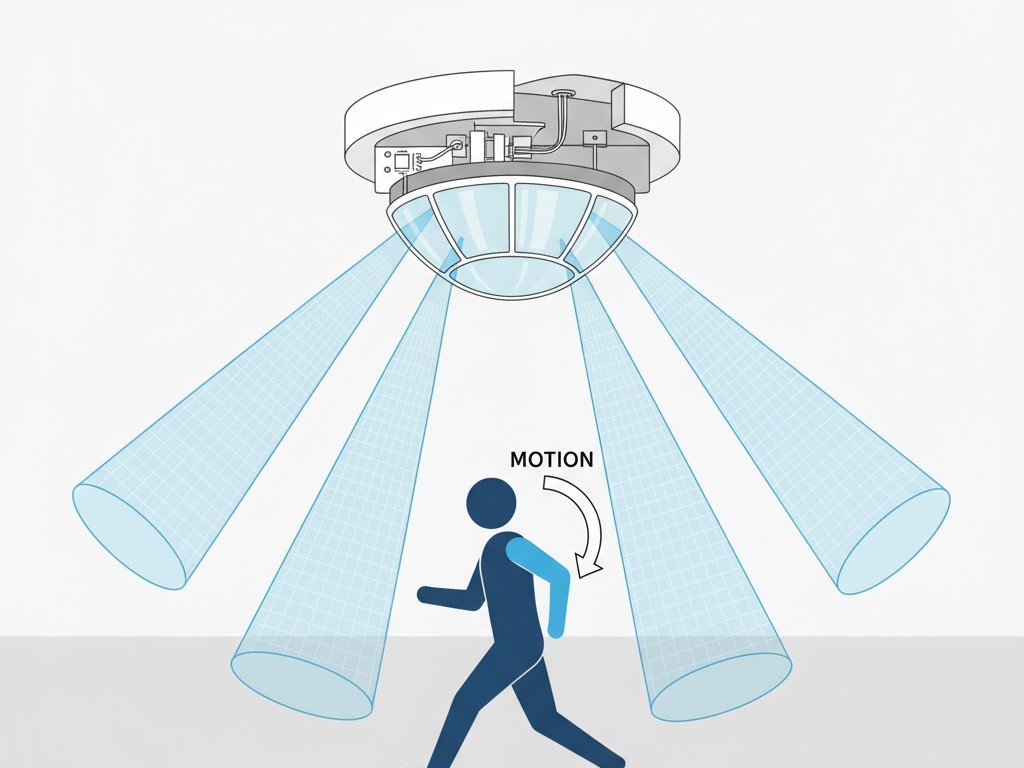
Sensor passive infrared beroperasi berdasarkan prinsip mendasar: semua objek yang lebih hangat dari nol mutlak memancarkan radiasi inframerah. Tubuh manusia, pada suhu sekitar 98,6°F, memiliki pola inframerah konsisten yang berbeda dari permukaan ruangan pada umumnya. Sensor PIR tidak melihat gerakan seperti kamera; sensor ini mendeteksi perubahan energi inframerah di dalam bidang pandangnya.
Inti dari sensor ini adalah elemen piroelektrik, suatu bahan yang menghasilkan muatan listrik ketika paparannya terhadap radiasi inframerah berubah. Elemen ini dipasangkan dengan lensa Fresnel tersegmentasi yang membagi area cakupan menjadi beberapa zona deteksi. Ketika seseorang bergerak dari satu zona ke zona lain, pergeseran energi inframerah menciptakan pola listrik terpisah yang ditafsirkan oleh sensor sebagai okupansi. Sensor dirancang untuk mengabaikan sumber panas statis, dan hanya berfokus pada pola dinamis dari pemancar panas yang bergerak.
Desain ini secara langsung membentuk cakupan sensor. Lensa membentuk pola deteksi berbentuk kerucut atau persegi panjang, dengan sensitivitas tertinggi berada pada zona yang sejajar langsung dengan elemen piroelektrik. Meskipun jangkauan efektifnya biasanya membentang 15 hingga 30 kaki, sensitivitas berkurang seiring dengan jarak karena sinyal inframerah menyebar. Namun, di dalam jangkauan efektifnya, unit kelas komersial dapat mendeteksi gerakan di seluruh sudut yang luas, sering kali melebihi 90 derajat.
Mencari Solusi Hemat Energi Berbasis Gerakan?
Hubungi kami untuk sensor gerak PIR lengkap, produk hemat energi yang diaktifkan oleh gerakan, sakelar sensor gerak, serta solusi komersial Okupansi/Vakansi.
Apa yang Dilihat Sensor PIR—dan Apa yang Terlewatkan
Sensor PIR sangat unggul dalam mendeteksi jenis gerakan paling umum di ruang terisi: orang yang berjalan, bergeser posisi, atau melakukan tugas. Teknologi ini sangat efektif di ruangan dengan penghuni yang aktif karena merespons perbedaan suhu antara tubuh manusia dan latar belakang saat bergerak melintasi zona deteksi.
Keterbatasan PIR bukanlah kegagalan dalam mendeteksi orang, melainkan ketidakmampuan untuk melihat sumber panas yang diam setelah gerakan berhenti. Jika seseorang memasuki ruangan lalu tetap diam sepenuhnya dalam jangka waktu lama, waktu sensor dapat habis (time out). Dalam praktiknya, skenario ini jarang terjadi. Pekerja kantor bergeser di kursi dan mengetik di papan ketik. Penghuni berpindah antar tugas. Peserta ruang rapat bergestur dan condong ke depan. Ambang batas untuk memicu kembali sensor PIR cukup rendah; bahkan gerakan mikro yang tidak terlihat oleh pengamat luar sering kali cukup untuk mempertahankan deteksi.
Lingkungan di mana aktivitas diam tanpa gerak dalam waktu lama menjadi masalah nyata adalah pengecualian, bukan aturan umum.
How Dual-Technology Sensors Complicate the Picture
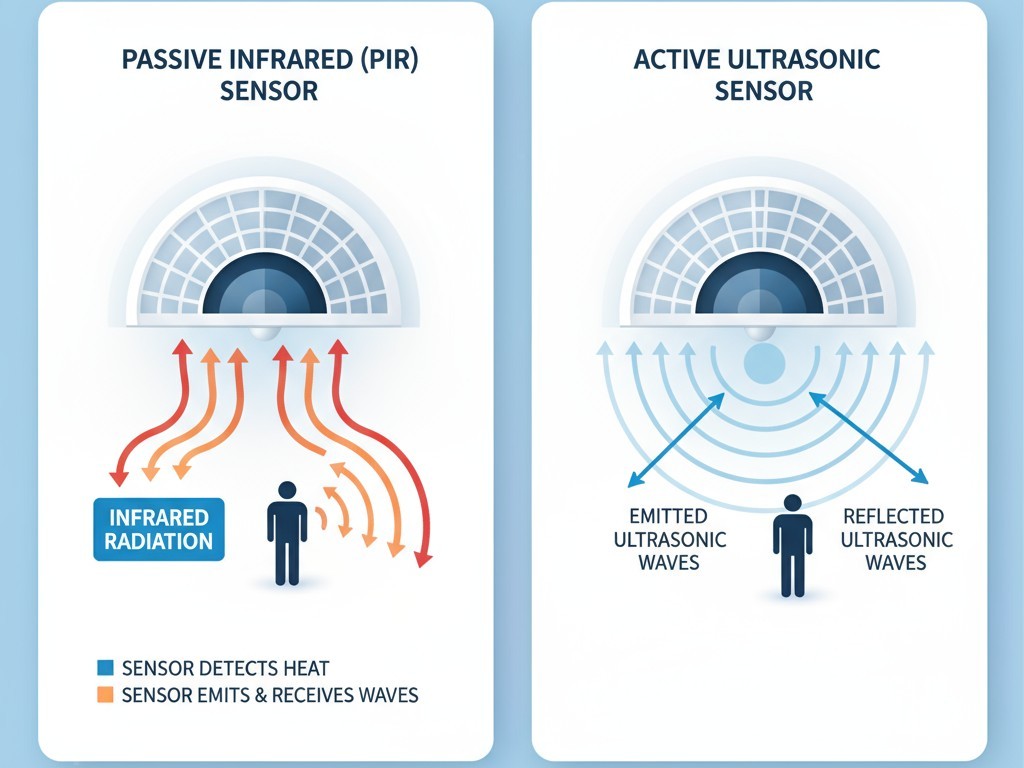
Dual-technology sensors combine passive infrared with a second, active sensing method—usually ultrasonic or microwave. The active component emits a signal (sound or radio waves) and measures the reflections. When an object moves, it changes the reflected signal’s frequency via the Doppler effect, allowing the sensor to detect motion without relying on heat.
The intended benefit is to catch stationary occupants who are still breathing or fidgeting in ways that don’t cross PIR detection zones. This redundancy, in theory, addresses PIR’s primary limitation. In practice, however, it introduces complexity that often outweighs the benefit. Most dual-tech sensors are set to AND logic to avoid nuisance activations from either sensor firing alone, which negates much of the supposed responsiveness.
The False Promise of Redundancy
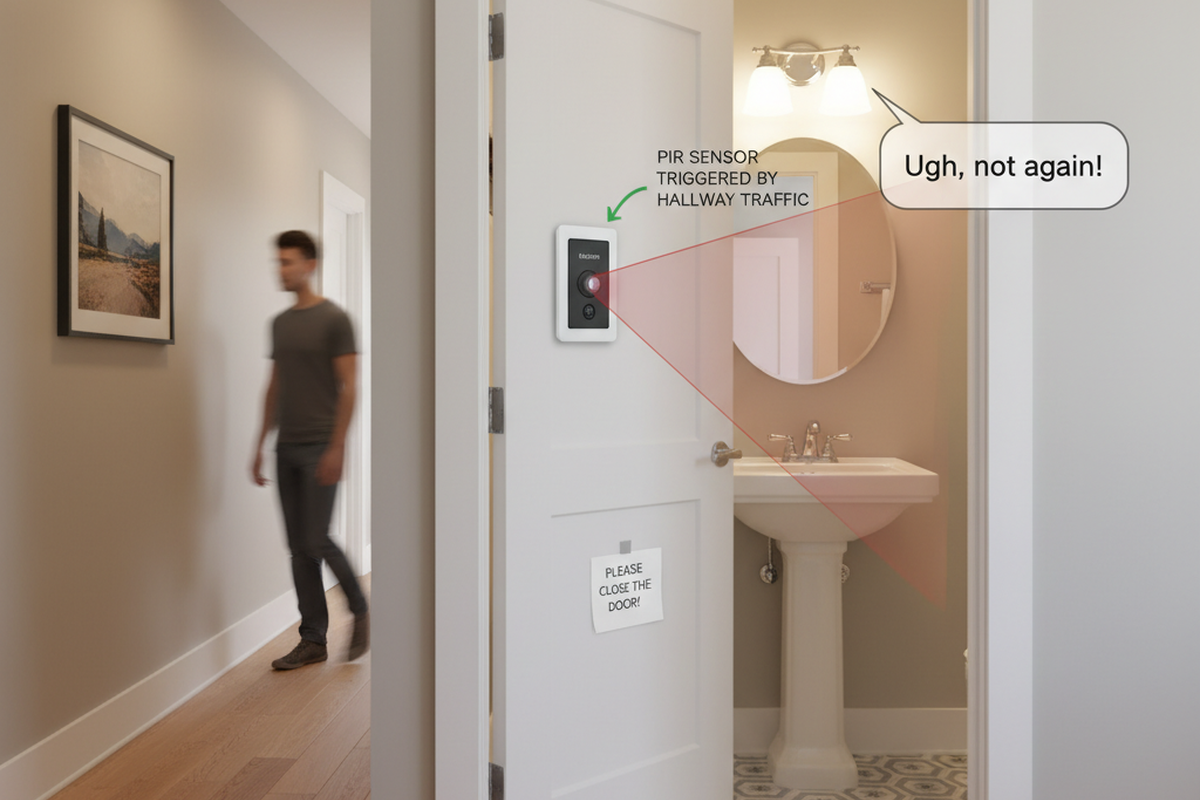
Redundancy does not inherently improve reliability. Each sensing method is vulnerable to different environmental factors. Ultrasonic sensors are notoriously sensitive to air turbulence from HVAC vents and ceiling fans. Microwave sensors can penetrate walls and trigger on movement in adjacent rooms.
Tuning a dual-technology sensor means balancing two independent systems, each with its own coverage pattern and susceptibility to interference. Increase ultrasonic sensitivity to catch subtle movements, and you invite false trips from environmental noise. Decrease it, and the component adds no functional value beyond what the PIR already provides. Field reports from facility managers consistently show higher callback rates for dual-technology installations. They struggle in real-world spaces, while the simpler PIR sensor, which responds only to heat and motion, delivers predictable performance.
Where PIR Sensors Deliver Superior Performance
In most commercial and residential spaces, occupants are rarely stationary for long. When they are still, the duration is brief enough that a properly configured time delay is all that’s needed. PIR sensors thrive in these environments because the detection challenge aligns perfectly with the technology’s design.
Offices and Conference Rooms

In a typical office, the case for PIR is self-evident. Workers at desks are in continuous micro-motion: typing, reaching for phones, shifting posture. A ceiling-mounted PIR with overlapping detection zones easily covers these workspaces. In conference rooms, participants gesture, take notes, and adjust their seating. A PIR sensor with a 10- to 15-minute time delay easily accommodates brief lulls in motion without timing out. A dual-tech sensor in the same room might trigger on HVAC airflow, creating false-on events that undermine trust in the system.
Residential Spaces
Homes are spaces of constant activity when occupied. Kitchens, living rooms, and bathrooms see frequent movement. PIR excels here by design. Its advantage also extends to the user experience. PIR sensors are passive; they emit no sound or radio waves, eliminating any potential for audible noise or electromagnetic interference. Their simplicity translates to reliability, with fewer components providing fewer points of failure.
Hallways and Transition Zones
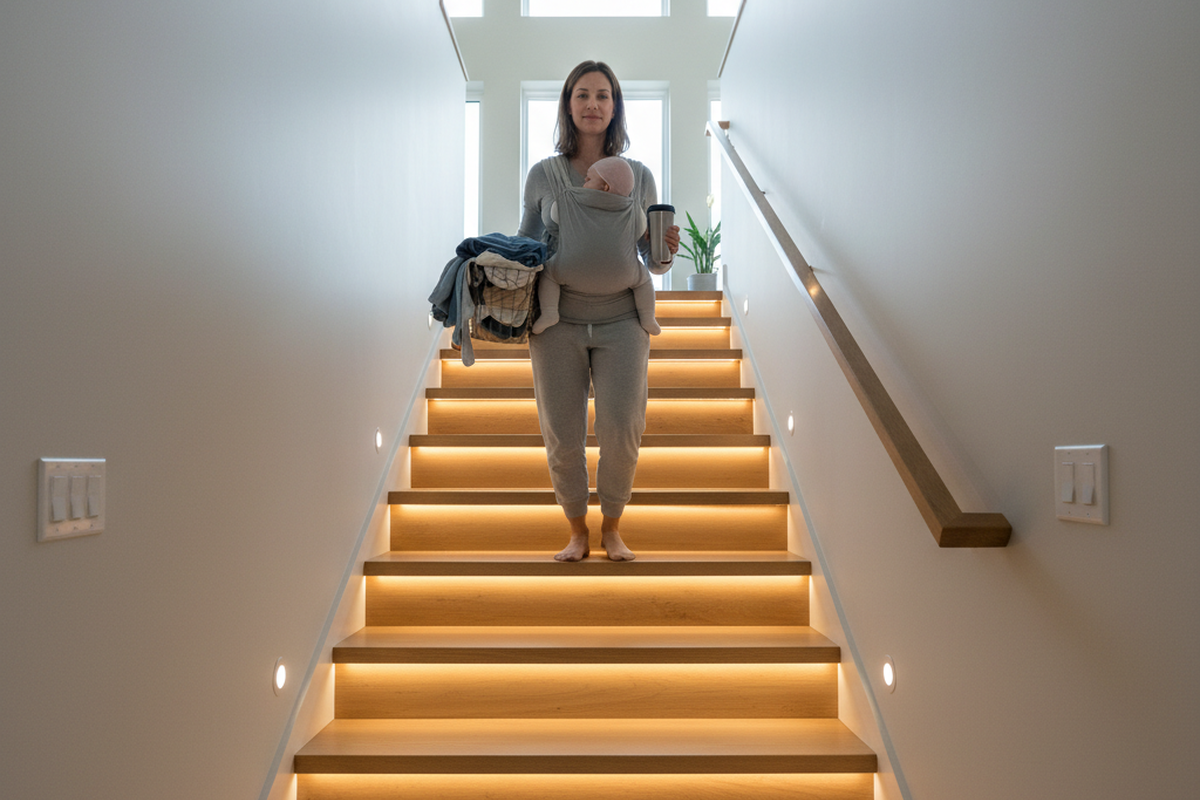
Hallways, stairwells, and lobbies are among the easiest applications for PIR. Occupancy is defined by high motion and brief duration. A person walking through generates a strong signal, triggering the sensor immediately. A short time delay of 30 seconds to two minutes ensures energy savings without compromising convenience. Dual-technology offers no advantage here and can introduce activation delays.
Retail and Commercial Interiors
Retail spaces benefit from PIR’s ability to track the constant motion of customers and staff. Shoppers browse aisles and staff restock shelves, generating continuous motion signatures. These environments often have active HVAC systems whose airflow can easily fool an ultrasonic sensor, leading to wasted energy. PIR ignores air movement and focuses solely on the heat signatures of people, providing stable, reliable operation.
The Critical Role of Tuning
A PIR sensor’s performance depends less on its core mechanism and more on its configuration. Proper tuning—the adjustment of sensitivity, time delay, and coverage—transforms a generic device into a tailored solution.
Sensitivity controls how much infrared change is needed for a trigger; higher settings detect smaller movements at greater distances but risk false activations from minor temperature fluctuations. The time delay determines how long the sensor waits after the last detected motion before signaling vacancy; it must be long enough to prevent nuisance shutoffs but short enough to save energy. Finally, the sensor’s physical placement and lens orientation shape its coverage pattern, ensuring that high-traffic areas fall within its most sensitive range.
Dapatkan Inspirasi dari Portofolio Sensor Gerak Rayzeek.
Tidak menemukan yang Anda cari? Jangan khawatir. Selalu ada cara alternatif untuk menyelesaikan masalah Anda. Mungkin salah satu portofolio kami dapat membantu.
Well-designed sensors simplify this process with pre-calibrated sensitivity levels and adaptive algorithms that adjust time delays based on learned occupancy patterns. This proves the ceiling for PIR performance isn’t the technology, but the intelligence behind its deployment. A well-tuned PIR sensor will outperform a poorly configured dual-technology sensor in accuracy, stability, and user satisfaction.
The Rare Cases for Dual-Technology

Dual-technology sensors are not obsolete, but they are specialized tools. They serve a purpose in a small subset of applications where PIR’s limitations become operationally significant. By most estimates, fewer than one in five commercial or residential applications justify the switch.
High-Ceiling Warehouses and Industrial Spaces: PIR effectiveness drops as distance increases. In warehouses with ceilings over 30 feet, a PIR sensor may struggle to detect motion at floor level. Here, the active signal of an ultrasonic or microwave sensor offers more reliable long-range detection.
Extreme Temperature Uniformity: PIR relies on the temperature contrast between a person and their surroundings. In spaces where the ambient temperature is maintained close to human body temperature, such as certain climate-controlled labs, this contrast diminishes. Dual-technology, which detects motion rather than heat, is a more robust solution.
Prolonged Stillness with Critical Needs: In some environments, like patient recovery rooms or security monitoring stations, an occupant may be motionless for long periods where a missed detection has serious consequences. The active component of a dual-technology sensor provides continuous verification of presence, justifying its complexity. These applications are clear exceptions, not the rule.
Choosing the Right Sensor
The choice between PIR and dual-technology isn’t subjective; it’s a technical decision based on room characteristics and occupant behavior. The principle is to match the sensor to the challenge.
Start with ceiling height. For ceilings under 25 feet, PIR provides reliable coverage. Next, consider temperature. Rooms with normal HVAC operation are ideal for PIR. If the ambient temperature is consistently within 15 degrees of body temperature, dual-technology is the safer bet. Finally, analyze motion patterns. If occupants are stationary for less than 10-15 minutes at a time, a PIR sensor with an appropriate time delay is sufficient.
Use this checklist as a guide:
Mungkin Anda Tertarik Dengan

- Tegangan: 2 Baterai AAA
- Mode Siang/Malam
- Penundaan waktu: 15 menit, 30 menit, 1 jam (default), 2 jam
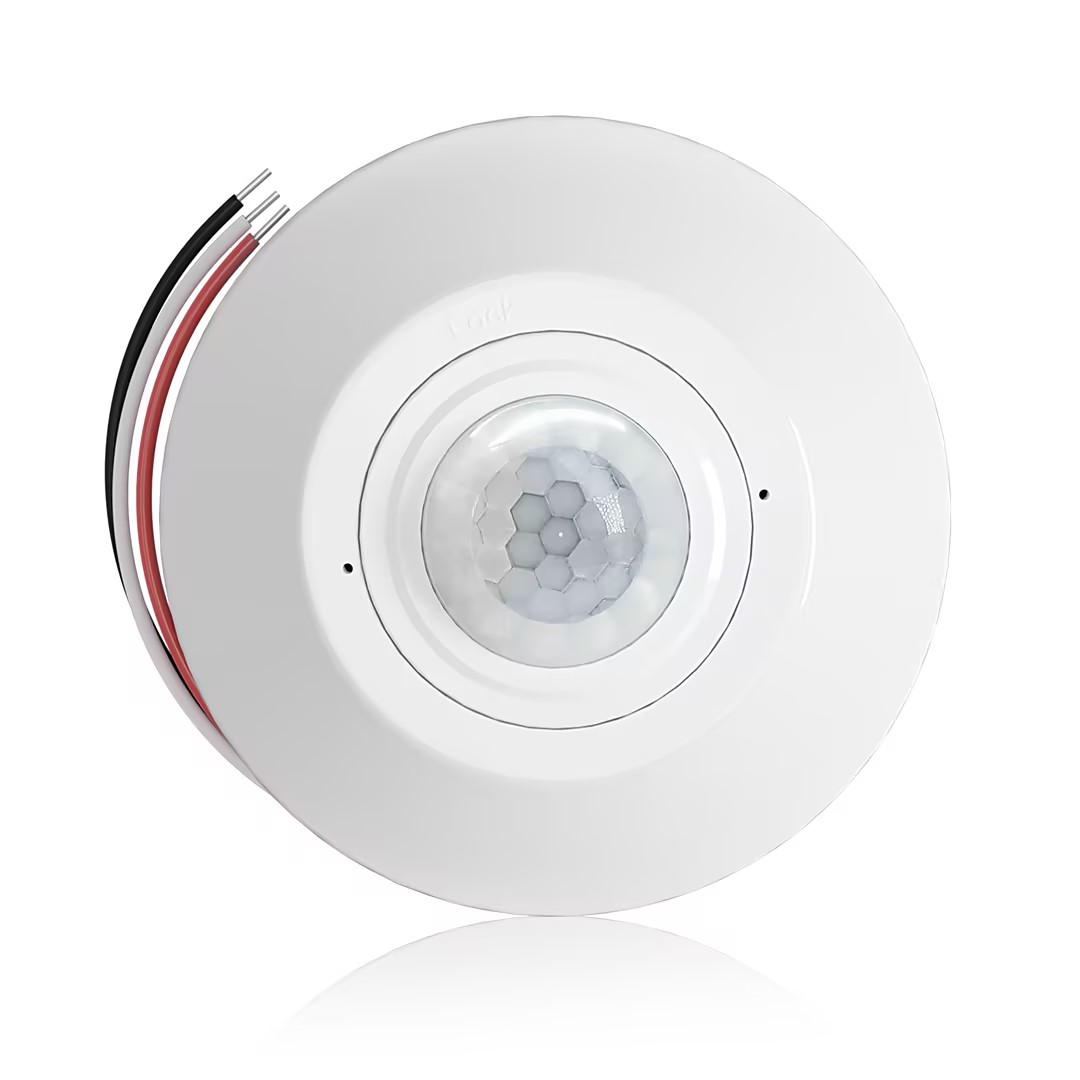
- Sensor keterhunian PIR pemasangan di langit-langit dengan output relai kontak kering
- Suplai tegangan rendah 12/24VDC atau 12/24VAC
- Kontak relai terisolasi COM, NO, dan NC untuk input EMS, HVAC, dan kontrol bangunan
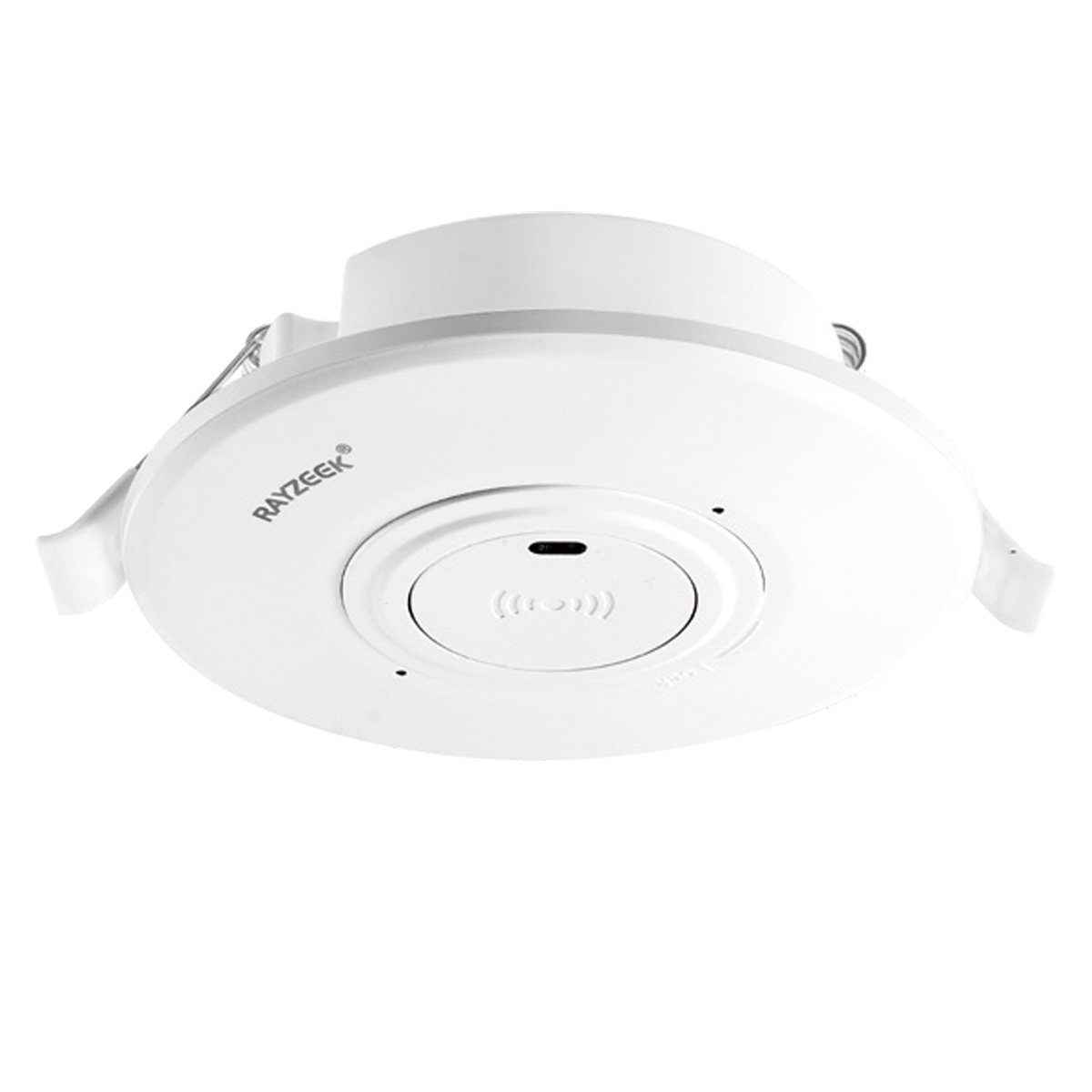
- Sakelar sensor gerak gelombang mikro pemasangan tanam di langit-langit bertegangan rendah DC
- Input 12 VDC / 24 VDC dengan rentang 10-30 VDC
- Arus kerja maksimum 10A dengan penundaan waktu, ambang batas Lux, dan sensitivitas yang dapat disesuaikan
- Sakelar sensor gerak gelombang mikro pemasangan tanam di langit-langit untuk beban lebih tinggi
- Input tegangan saluran 100-265 VAC, model 10A
- Deteksi gelombang mikro 5,8 GHz dengan penundaan waktu, ambang batas Lux, dan sensitivitas yang dapat disesuaikan
- Sakelar sensor gerak gelombang mikro terpasang rata (recessed) pada langit-langit
- Input tegangan saluran 100-265 VAC, model 5A
- Deteksi gelombang mikro 5,8 GHz dengan penundaan waktu, ambang batas Lux, dan sensitivitas yang dapat disesuaikan
- Dimmer sensor keberadaan PIR RZ037 pasang langit-langit untuk daya 220V
- Arus kerja maksimum 3A dengan beban terukur 660W
- Tombol LUX mengontrol ON/OFF sensor cahaya dan kecerahan redup yang diatur pengguna
- Dimmer sensor keberadaan PIR RZ037 pasang langit-langit untuk daya 110V
- Arus kerja maksimum 3A dengan beban terukur 330W
- Tombol LUX mengontrol ON/OFF sensor cahaya dan kecerahan redup yang diatur pengguna
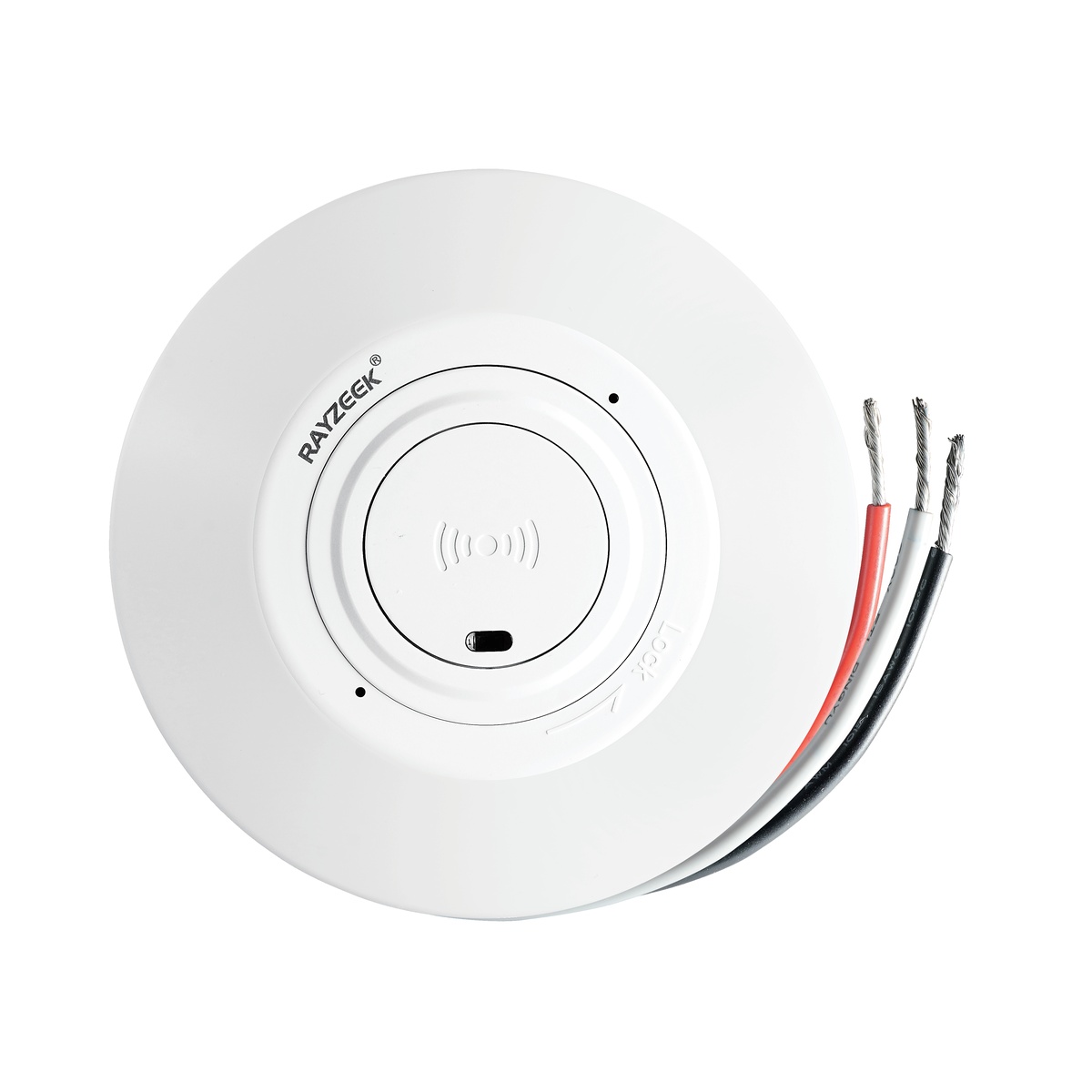
- Sakelar sensor gerak gelombang mikro pasang langit-langit DC tegangan rendah
- Input 12 VDC / 24 VDC dengan rentang 10-30 VDC
- Arus kerja maksimum 10A dengan penundaan waktu, ambang batas Lux, dan sensitivitas yang dapat disesuaikan
- Sakelar sensor gerak gelombang mikro pasang langit-langit untuk beban lebih tinggi
- Input tegangan saluran 100-265 VAC, model 10A
- Deteksi gelombang mikro 5,8 GHz dengan penundaan waktu, ambang batas Lux, dan sensitivitas yang dapat disesuaikan
- Sakelar sensor gerak gelombang mikro pasang langit-langit
- Input tegangan saluran 100-265 VAC, model 5A
- Deteksi gelombang mikro 5,8 GHz dengan penundaan waktu, ambang batas Lux, dan sensitivitas yang dapat disesuaikan
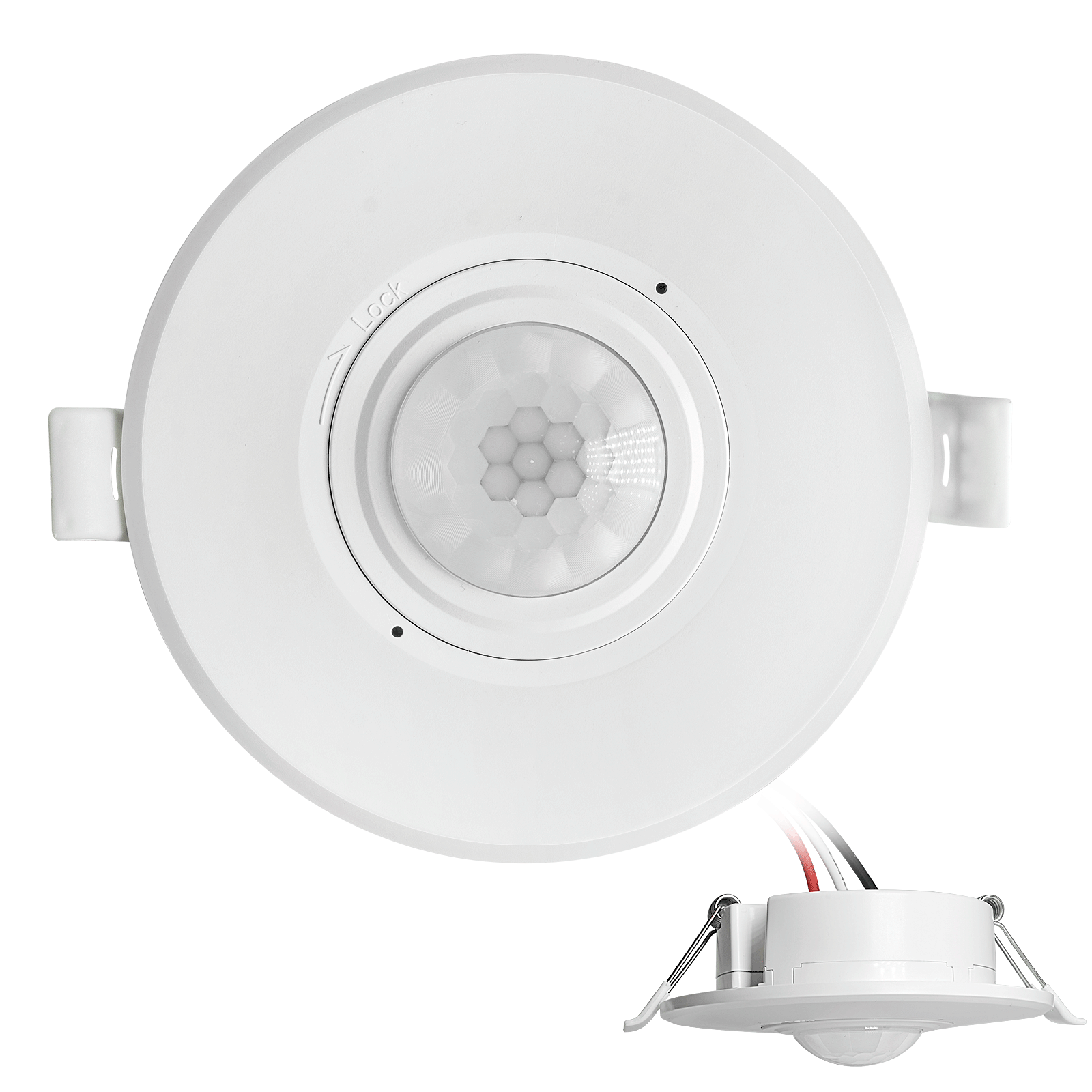
- Sakelar sensor gerak PIR terpasang rata (recessed) pada langit-langit DC tegangan rendah
- Input 12 VDC / 24 VDC dengan rentang 10-30 VDC
- Arus kerja maks 10A dengan penundaan waktu, ambang batas Lux, dan sensitivitas yang dapat disesuaikan
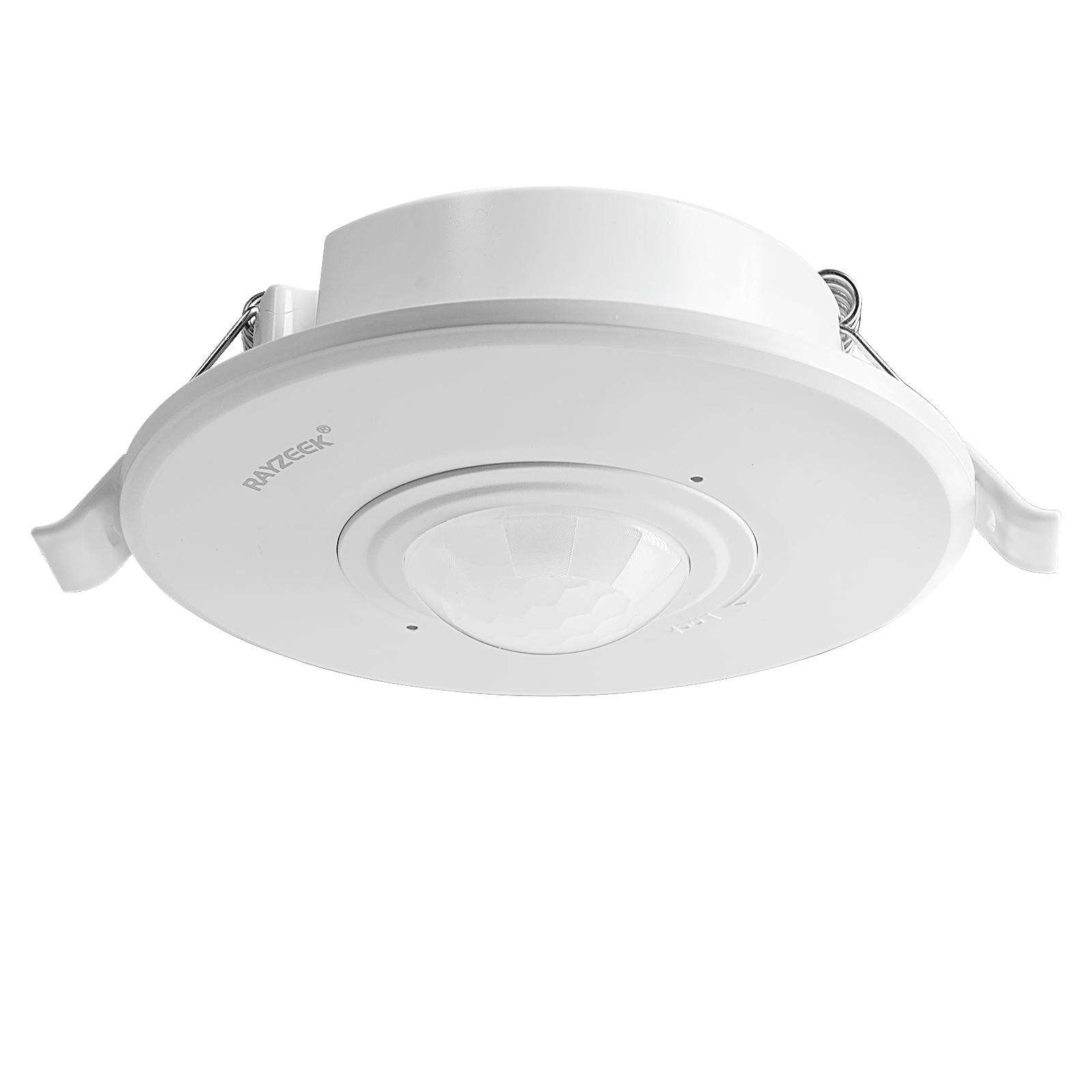
- Sakelar sensor gerak PIR pemasangan plafon tanam beban lebih tinggi
- Input tegangan saluran 100-265 VAC, model 10A
- Deteksi 360 derajat dengan penundaan waktu, ambang batas Lux, dan sensitivitas yang dapat disesuaikan
- Sakelar sensor gerak PIR pemasangan plafon tanam
- Input tegangan saluran 100-265 VAC, model 5A
- Deteksi 360 derajat dengan penundaan waktu, ambang batas Lux, dan sensitivitas yang dapat disesuaikan
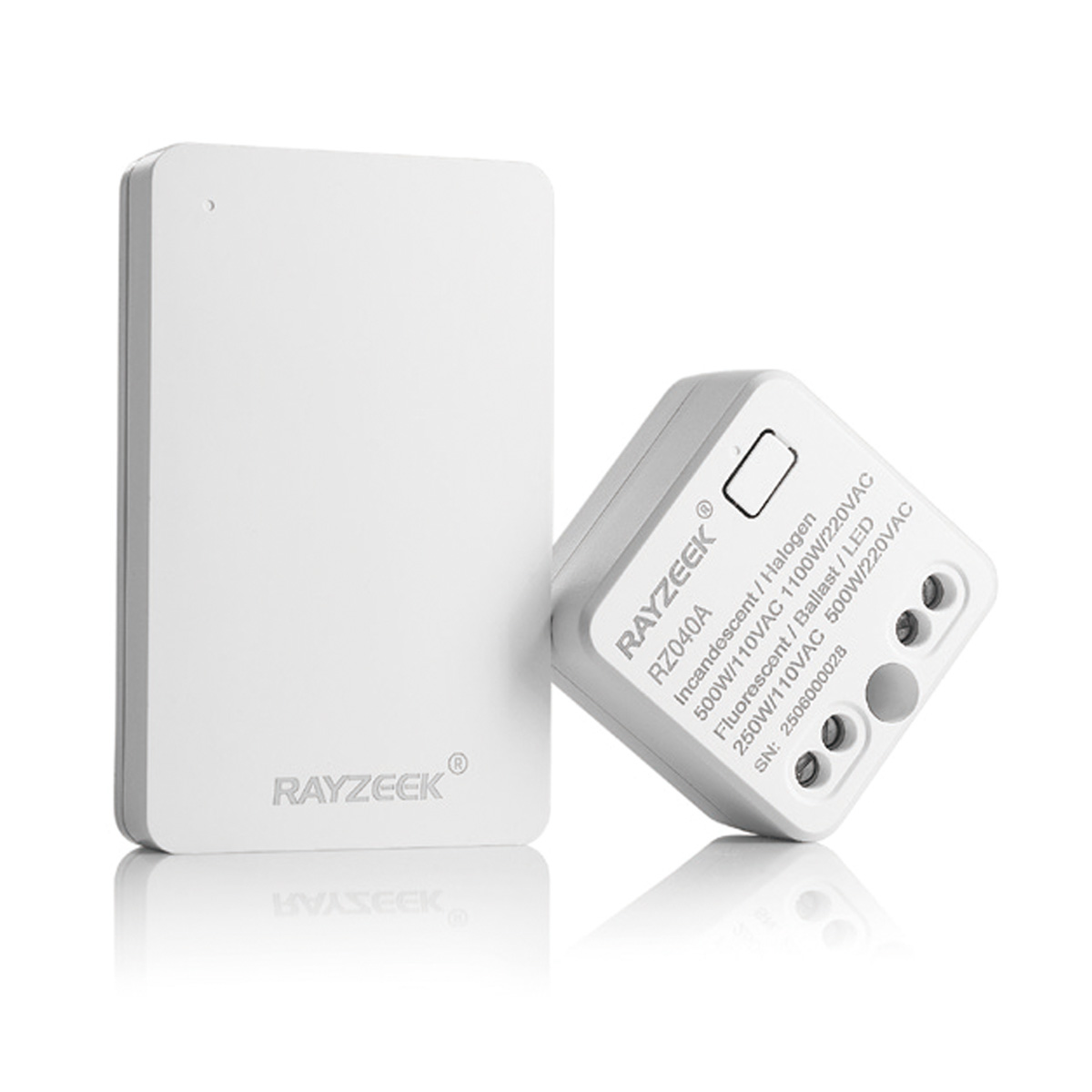
- Kit sakelar dan penerima nirkabel untuk kontrol pencahayaan ON/OFF dalam ruangan
- Penerima 100-230VAC, 50/60Hz dengan arus pengenal 5A
- Sakelar nirkabel berdaya baterai CR2032 dengan komunikasi 2,4GHz
- Okupansi (Auto-ON/Auto-OFF)
- 12–24V DC (10–30VDC), hingga 10A
- Cakupan 360°, diameter 8–12 m
- Penundaan waktu 15 dtk–30 mnt
- Sensor cahaya Mati/15/25/35 Lux
- Sensitivitas Tinggi/Rendah
- Mode okupansi Auto-ON/Auto-OFF
- 100–265V AC, 10A (memerlukan netral)
- Cakupan 360°; diameter deteksi 8–12 m
- Penundaan waktu 15 dtk–30 mnt; Lux NONAKTIF/15/25/35; Sensitivitas Tinggi/Rendah
- Mode okupansi Auto-ON/Auto-OFF
- 100–265V AC, 5A (memerlukan netral)
- Cakupan 360°; diameter deteksi 8–12 m
- Penundaan waktu 15 dtk–30 mnt; Lux NONAKTIF/15/25/35; Sensitivitas Tinggi/Rendah
- Default to PIR in hallways, homes, standard offices, and retail spaces where motion is frequent and conditions are normal.
- Use PIR if the ceiling is under 25 feet, the room has normal temperature swings, and occupants move at least every 10 minutes.
- Consider dual-technology only if the ceiling exceeds 30 feet, the ambient temperature mirrors body temperature, or occupants remain motionless for long periods where detection is critical.
The vast majority of rooms fall into the PIR-compatible categories. The industry’s reflex toward dual-tech is a legacy of outdated assumptions. The evidence supports a simpler approach: specify PIR first.