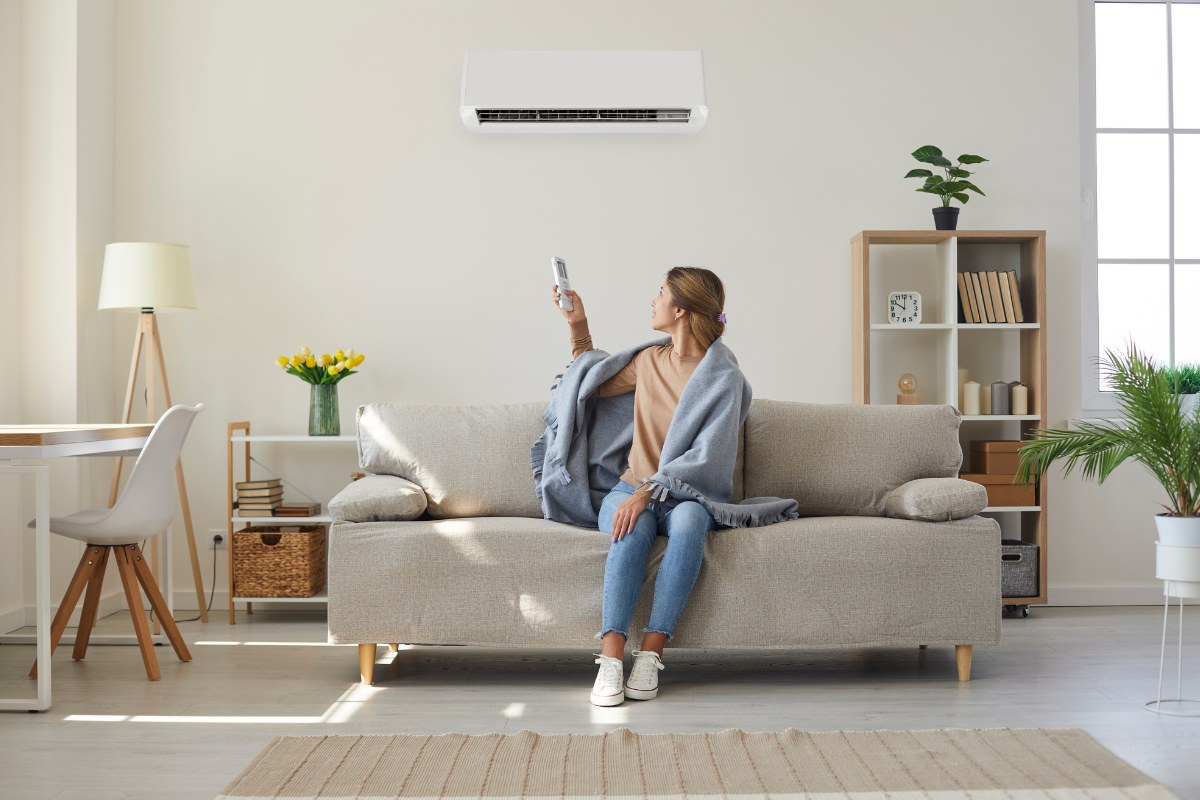
Trouver le bon équilibre entre confort et efficacité énergétique en matière de climatisation n'est-il pas essentiel pour réduire les factures d'électricité et l'impact environnemental ? Ce guide explore les réglages de température idéaux pour la climatisation, les technologies de thermostat avancées, les stratégies complémentaires d'économie d'énergie ainsi que l'importance d'un entretien régulier. En appliquant ces approches, vous pouvez réduire considérablement votre consommation d'énergie tout en conservant un espace de vie confortable.
Réglages de température de climatisation recommandés pour des économies d'énergie maximales
Régler votre climatiseur pour une efficacité énergétique optimale implique de trouver le juste équilibre entre confort et préservation des ressources. Des réglages de température idéaux peuvent faire une réelle différence.
Réglages optimaux en journée
D'après des recherches approfondies, le ministère américain de l'Énergie (U.S. Department of Energy) recommande une température de 78 °F (25,5 °C) lorsque vous êtes à la maison et éveillé. Cette température est considérée comme le point d'équilibre idéal pour l'efficacité énergétique, sans compromettre significativement le confort. Il s'agit toutefois d'une directive générale et les préférences individuelles peuvent varier.
Pourquoi 78 °F ? Cette température maintient un environnement intérieur confortable tout en minimisant la consommation d'énergie. Avec ce réglage, l'écart de température entre l'intérieur et l'extérieur est généralement suffisamment faible pour réduire la charge sur votre unité de climatisation, tout en fournissant un rafraîchissement perceptible.
Réglages en cas d'absence
Lorsque vous vous absentez pendant de longues périodes, l'ajustement de votre thermostat peut générer des économies d'énergie considérables. Le ministère de l'Énergie suggère d'augmenter la température de 7 à 10 degrés Fahrenheit — jusqu'à 85 °F (29,4 °C) — pendant votre absence. Cet ajustement permet d'économiser une quantité substantielle d'énergie. Votre domicile ne surchauffera pas.
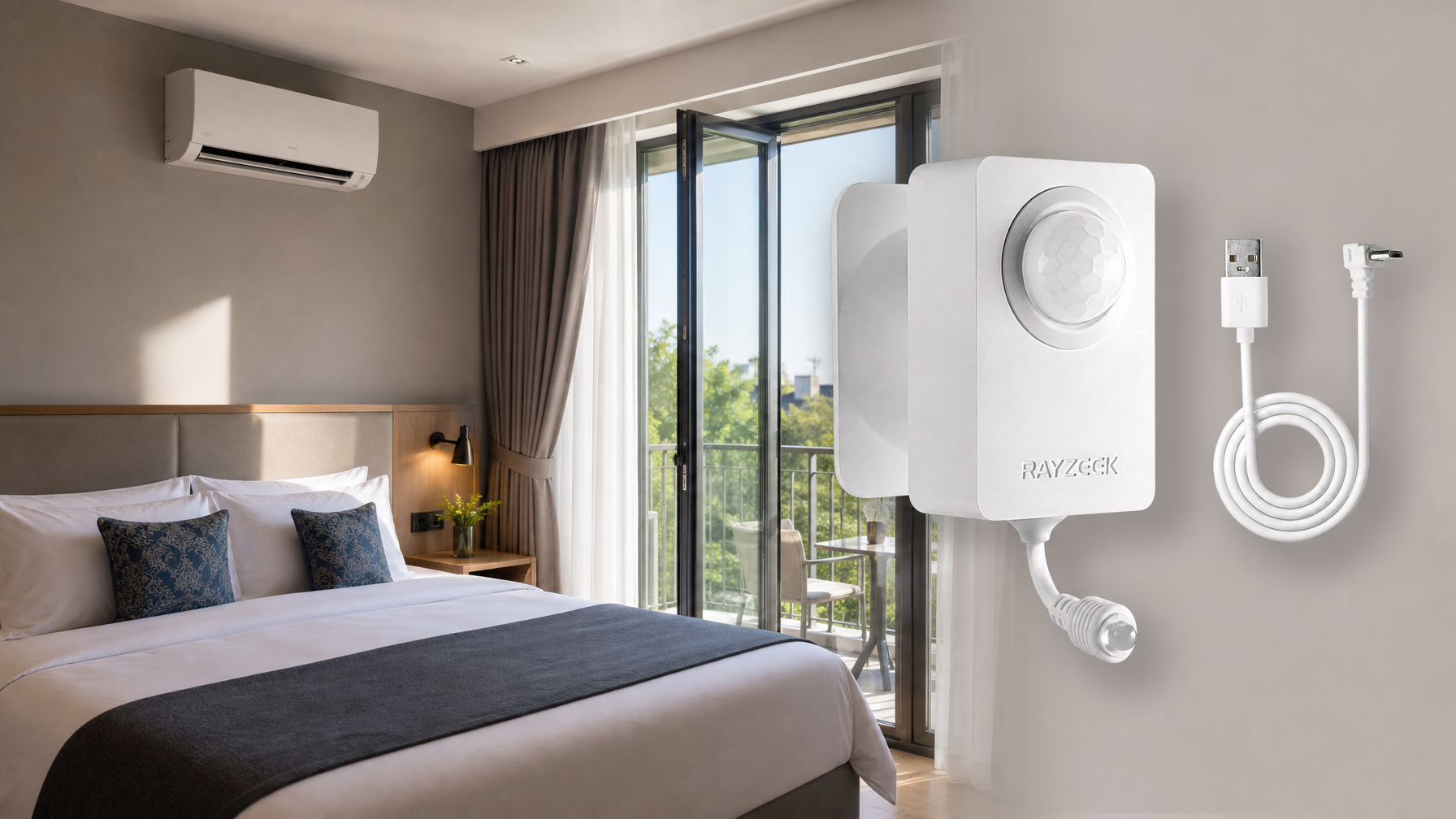
Cela ne consommera-t-il pas plus d'énergie pour refroidir mon domicile à mon retour ? Votre climatiseur fonctionnera plus intensément au départ, mais l'énergie économisée pendant la période prolongée d'arrêt l'emporte généralement sur cette surconsommation temporaire. Pour des économies encore plus importantes pendant vos absences, envisagez une solution intelligente comme le Rayzeek RZ050 AC motion sensor. Il apprend le signal d'arrêt (OFF) de la télécommande de votre climatiseur et éteint automatiquement votre appareil lorsque la maison est vide, évitant ainsi le gaspillage d'énergie en votre absence. Vous retrouverez une température confortable sans la culpabilité d'une facture d'énergie gonflée.
Recommandations pour la nuit
Pour un sommeil optimal et des économies d'énergie, la température nocturne doit se situer entre 70 et 72 °F, soit 21 à 22 °C. Cette température légèrement plus fraîche s'aligne sur les rythmes circadiens naturels du corps, améliorant potentiellement la qualité du sommeil tout en maintenant l'efficacité énergétique.
L'impact des ajustements de température
Même de petits ajustements de température peuvent avoir un impact remarquablement significatif sur la consommation d'énergie. Chaque degré supplémentaire peut entraîner de 1 à 3% d'économies d'énergie. Augmenter votre thermostat de 72 °F à 78 °F pourrait permettre d'économiser jusqu'à 18% sur les coûts de climatisation.
Stratégies d'adaptation aux réglages écoénergétiques
Bien que la transition vers des réglages écoénergétiques puisse nécessiter un temps d'adaptation, les bénéfices à long terme sont substantiels. Essayez donc une approche progressive en augmentant votre température habituelle de 1 degré chaque semaine. Cela permet à votre corps de s'acclimater au fil du temps. Utilisez les ventilateurs de manière stratégique pour créer un effet de refroidissement éolien, donnant l'impression qu'une pièce est plus fraîche de 4 °F. Adapter vos vêtements et votre literie pour des options plus légères et respirantes peut également aider. Une bonne hydratation aide votre corps à réguler sa température. Enfin, profitez des températures plus fraîches du matin et du soir en ouvrant les fenêtres pour une ventilation naturelle. Au-delà de ces stratégies, l'automatisation de l'utilisation de votre climatisation avec un appareil tel que le Rayzeek RZ050 can further enhance your savings. This motion sensor ensures your AC isn’t running in empty rooms, maximizing your energy efficiency efforts. Its adjustable time delay and light sensor allow personalized control, ensuring comfort without compromising efficiency.
Implementing these recommended temperature settings and adaptation strategies can considerably reduce energy consumption without sacrificing comfort. The goal is to find the balance that works best for your household while prioritizing energy efficiency.
Leveraging Programmable and Smart Thermostats for Energy Efficiency
Programmable and smart thermostats are powerful tools for optimal energy efficiency. How do these devices contribute to energy savings, and what makes them so effective?
Introduction to Programmable Thermostats
Programmable thermostats are a significant upgrade from traditional manual thermostats. They allow you to set specific temperature schedules based on your daily routines, ensuring efficient AC operation without constant manual adjustments.
Custom Temperature Schedules
Program different temperatures for various times of day and week. For example, set a higher temperature during work hours and a cooler temperature before you return home.
Multiple Programming Periods
Most offer at least four programming periods per day, allowing precise temperature control.
Override Function
Easily override programmed settings without disrupting the overall schedule if plans change.
Energy Usage Reports
Some models provide energy usage reports, helping you identify patterns and savings opportunities.
Advanced Capabilities of Smart Thermostats
Smart thermostats dramatically enhance energy efficiency with advanced technologies and connectivity. These devices learn from your behaviors, allow remote access, and can integrate with other smart home systems.
Wi-Fi Connectivity
Connect to your home’s Wi-Fi to control your HVAC system from anywhere using a smartphone app or web interface.
Learning Capabilities
Many learn your preferences and routines, automatically adjusting temperatures for optimal comfort and efficiency.
Occupancy Detection
Some use sensors or geofencing to detect when you’re home or away, adjusting temperatures accordingly.
Integration with Smart Home Ecosystems
Integrate with other smart home devices, such as voice assistants or smart lighting systems, for comprehensive home energy management.
Energy Usage Insights
Advanced analytics provide detailed energy consumption insights, often with suggestions for improvement.
Setting Up Energy-Saving Schedules
Creating custom schedules is a powerful feature of both programmable and smart thermostats. Here’s a general guide:
Weekday Schedule:
- Wake-up time: 78°F about 30 minutes before you wake up.
- Work hours: Increase to 85°F if the house is empty.
- Evening: Return to 78°F about 30 minutes before you arrive home.
- Sleep: 70-72°F about an hour before bedtime.
Weekend Schedule:
Adjust to match your weekend routines.
Now, these are just general guidelines. Adjust the schedule to fit your routines and preferences.
Remote Access and Control Features
Remote thermostat control is a game-changer for energy efficiency. With smart thermostats:
- Adjust settings on-the-go. Plans change. Smart thermostats adapt.
- Monitor your home’s temperature and energy use from anywhere.
- Receive alerts about unusual temperature changes or system issues.
- Use geofencing to automatically adjust temperatures based on your location.
Learning Capabilities and Automation
Perhaps the most impressive feature of smart thermostats is their ability to learn and adapt. Over time, these devices can:
- Learn your temperature preferences.
- Understand your home’s heating and cooling patterns.
- Factor in local weather to optimize settings.
- Provide energy-saving suggestions.
Potential Energy Savings
Although the exact savings vary depending on individual usage and local energy costs, both programmable and smart thermostats can significantly reduce energy consumption. The EPA estimates that a programmable thermostat could save about $180 annually on energy costs.
Smart thermostats may offer even greater savings. Some manufacturers claim savings of up to 10-15% on heating and cooling costs. These savings depend on various factors, including your previous thermostat settings and habits, local climate, the efficiency of your HVAC system, your home’s size and insulation, and your willingness to adapt to recommended temperature settings.
Complementary Strategies to Maximize AC Energy Savings
Optimizing your thermostat settings is essential for energy efficiency, but numerous complementary strategies can further enhance your AC’s performance and reduce energy consumption. Let’s explore these methods.
Ces produits pourraient vous intéresser

- Tension : 2 piles AAA
- Mode Jour/Nuit
- Temporisation : 15 min, 30 min, 1 h (par défaut), 2 h
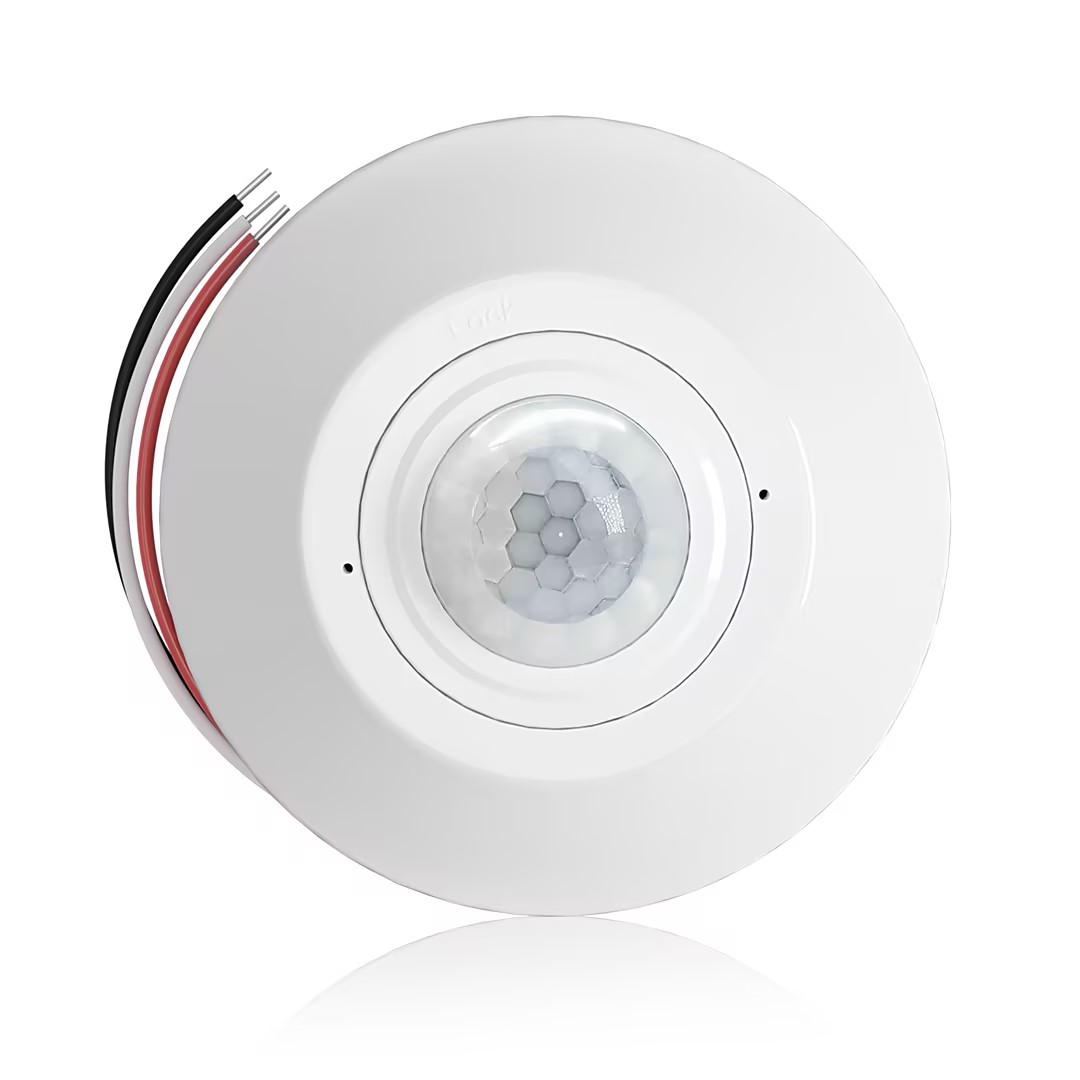
- Détecteur de présence PIR pour montage au plafond avec sortie relais à contact sec
- Alimentation basse tension 12/24VDC ou 12/24VAC
- Contacts relais isolés COM, NO et NC pour les entrées de régulation CVC, GTC et de gestion de l'énergie
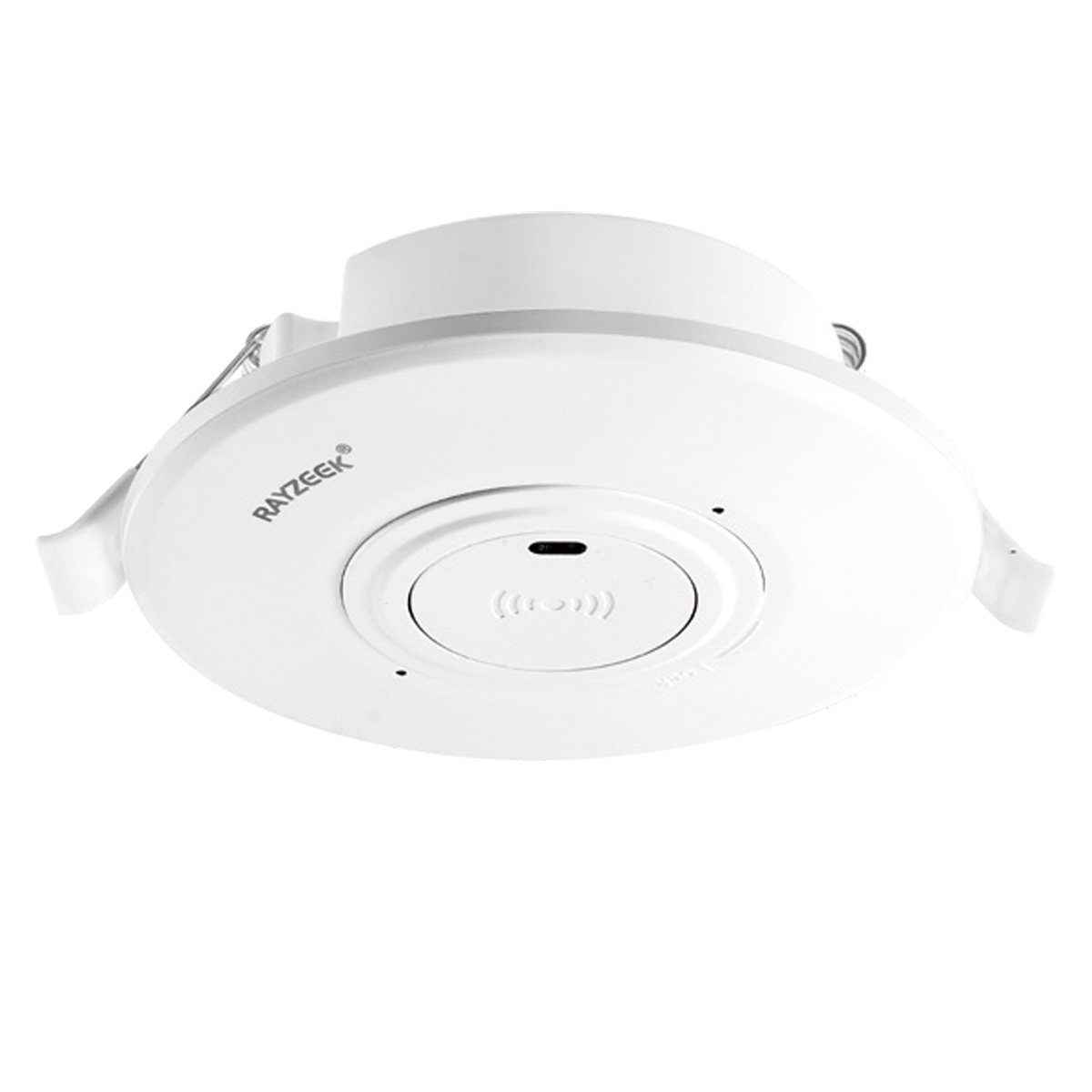
- Interrupteur détecteur de mouvement hyperfréquence encastré pour plafond basse tension continue
- Entrée 12 VDC / 24 VDC avec plage de 10-30 VDC
- Courant de fonctionnement maximal de 10A avec temporisation, seuil Lux et sensibilité réglables
- Interrupteur détecteur de mouvement à micro-ondes encastré au plafond pour charges plus élevées
- Entrée de tension secteur 100-265 VAC, modèle 10A
- Détection hyperfréquence (micro-ondes) 5,8 GHz avec temporisation, seuil Lux et sensibilité réglables
- Interrupteur détecteur de mouvement à micro-ondes encastré au plafond
- Entrée de tension secteur 100-265 VAC, modèle 5A
- Détection hyperfréquence (micro-ondes) 5,8 GHz avec temporisation, seuil Lux et sensibilité réglables
- Variateur détecteur de présence PIR RZ037 pour montage au plafond pour alimentation 220V
- Courant de fonctionnement maximal de 3A avec une charge nominale de 660W
- Le bouton LUX contrôle la marche/arrêt du capteur de lumière et la luminosité de variation réglée par l'utilisateur
- Variateur détecteur de présence PIR RZ037 pour montage au plafond pour alimentation 110V
- Courant de fonctionnement maximal de 3A avec une charge nominale de 330W
- Le bouton LUX contrôle la marche/arrêt du capteur de lumière et la luminosité de variation réglée par l'utilisateur
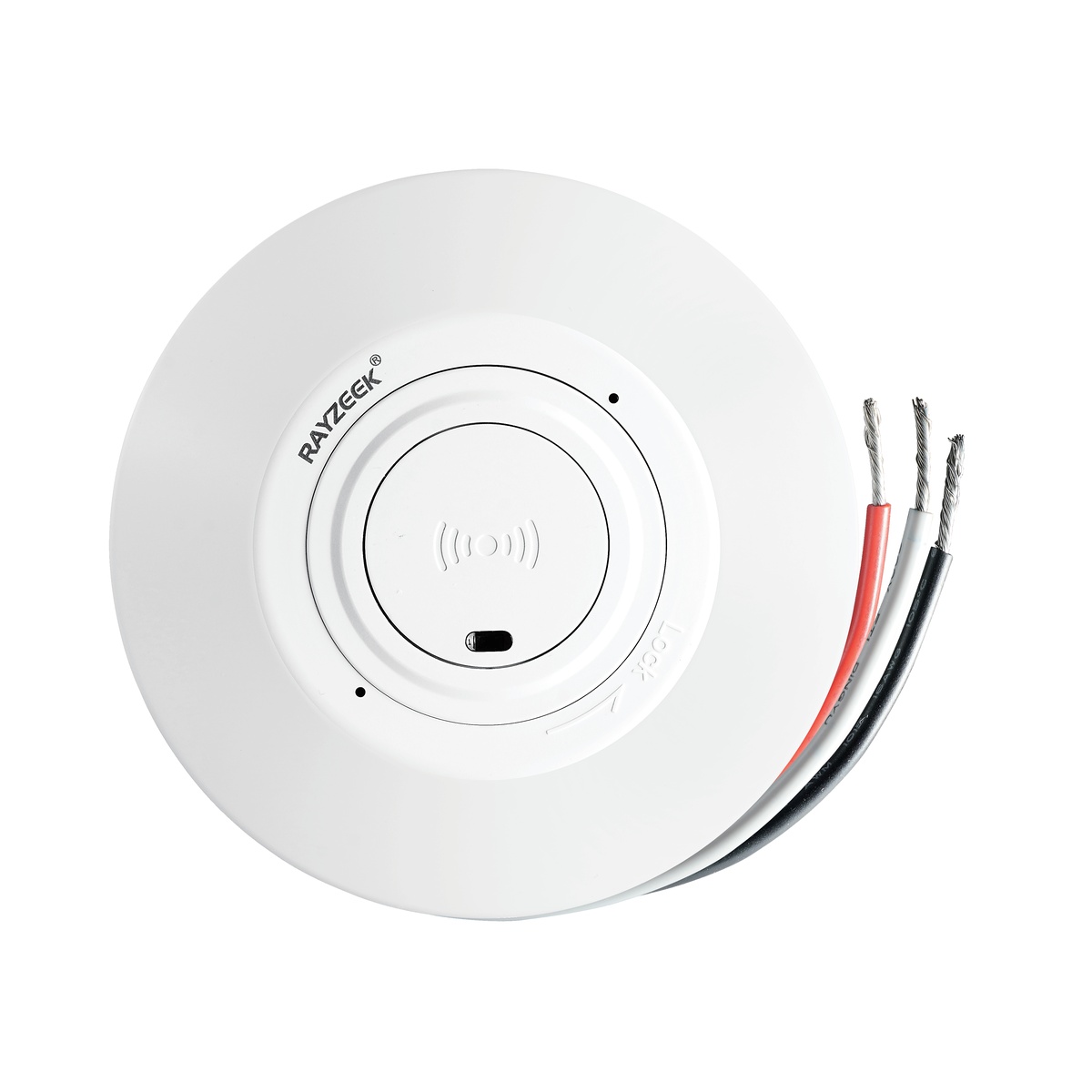
- Interrupteur détecteur de mouvement à micro-ondes basse tension CC pour montage au plafond
- Entrée 12 VDC / 24 VDC avec plage de 10-30 VDC
- Courant de fonctionnement maximal de 10A avec temporisation, seuil Lux et sensibilité réglables
- Interrupteur détecteur de mouvement à micro-ondes pour montage au plafond pour charges plus élevées
- Entrée de tension secteur 100-265 VAC, modèle 10A
- Détection hyperfréquence (micro-ondes) 5,8 GHz avec temporisation, seuil Lux et sensibilité réglables
- Interrupteur à détecteur de mouvement hyperfréquence pour montage au plafond
- Entrée de tension secteur 100-265 VAC, modèle 5A
- Détection hyperfréquence (micro-ondes) 5,8 GHz avec temporisation, seuil Lux et sensibilité réglables
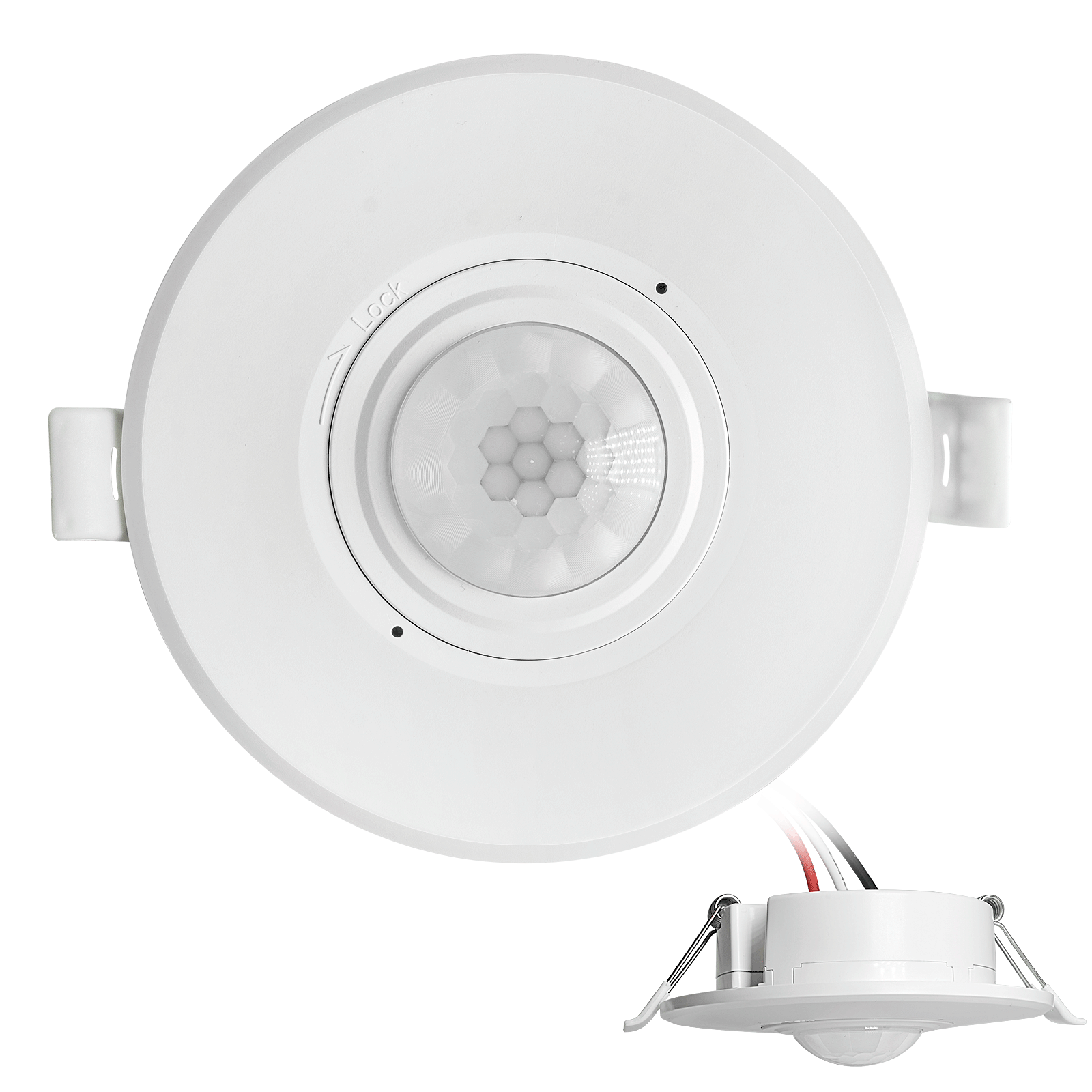
- Interrupteur à détecteur de mouvement PIR encastré pour plafond à basse tension CC
- Entrée 12 VDC / 24 VDC avec plage de 10-30 VDC
- Courant de fonctionnement maximal de 10A avec temporisation, seuil Lux et sensibilité réglables
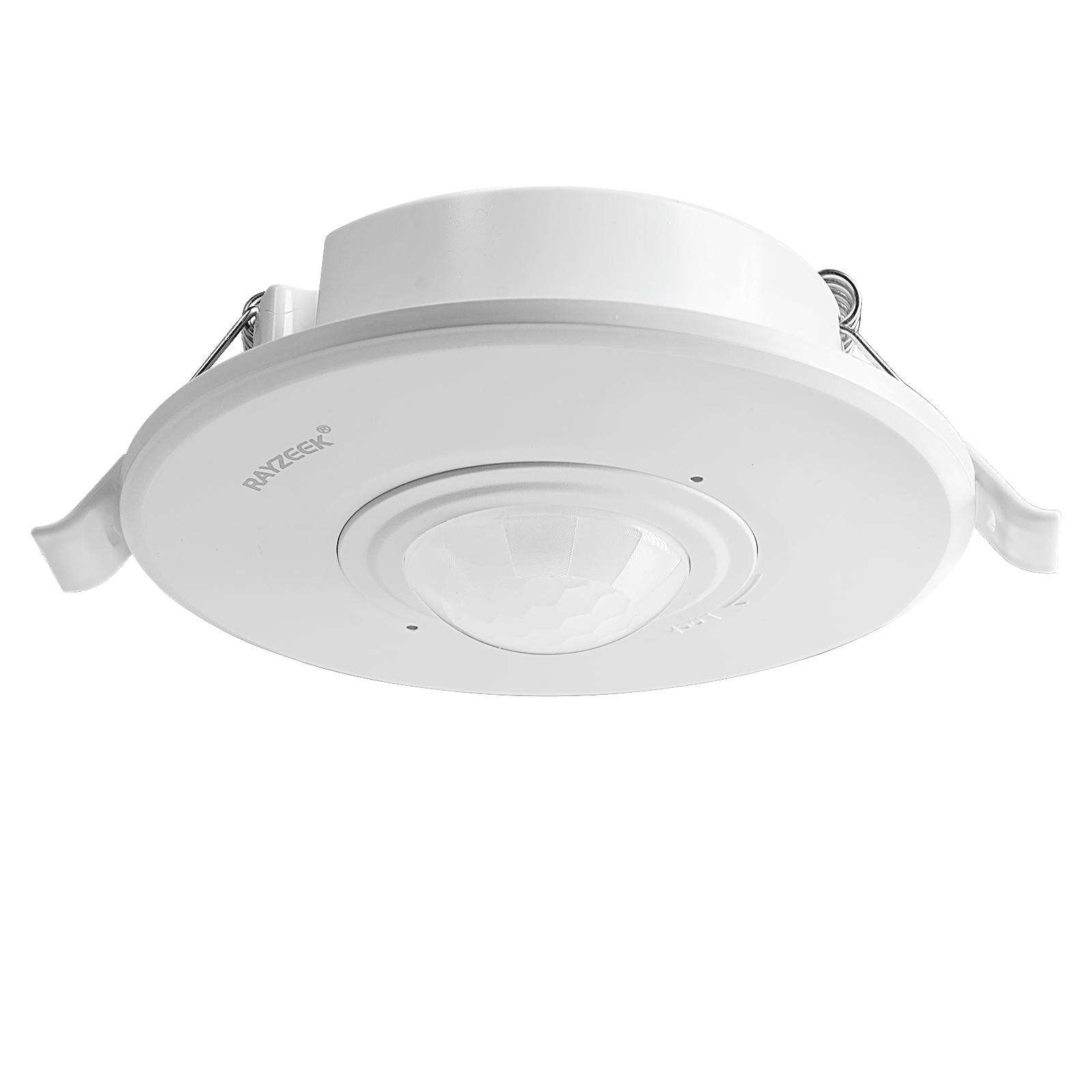
- Interrupteur à détecteur de mouvement PIR encastré pour plafond pour charges plus élevées
- Entrée de tension secteur 100-265 VAC, modèle 10A
- Détection à 360 degrés avec temporisation, seuil Lux et sensibilité réglables
- Interrupteur à détecteur de mouvement PIR encastré pour plafond
- Entrée de tension secteur 100-265 VAC, modèle 5A
- Détection à 360 degrés avec temporisation, seuil Lux et sensibilité réglables
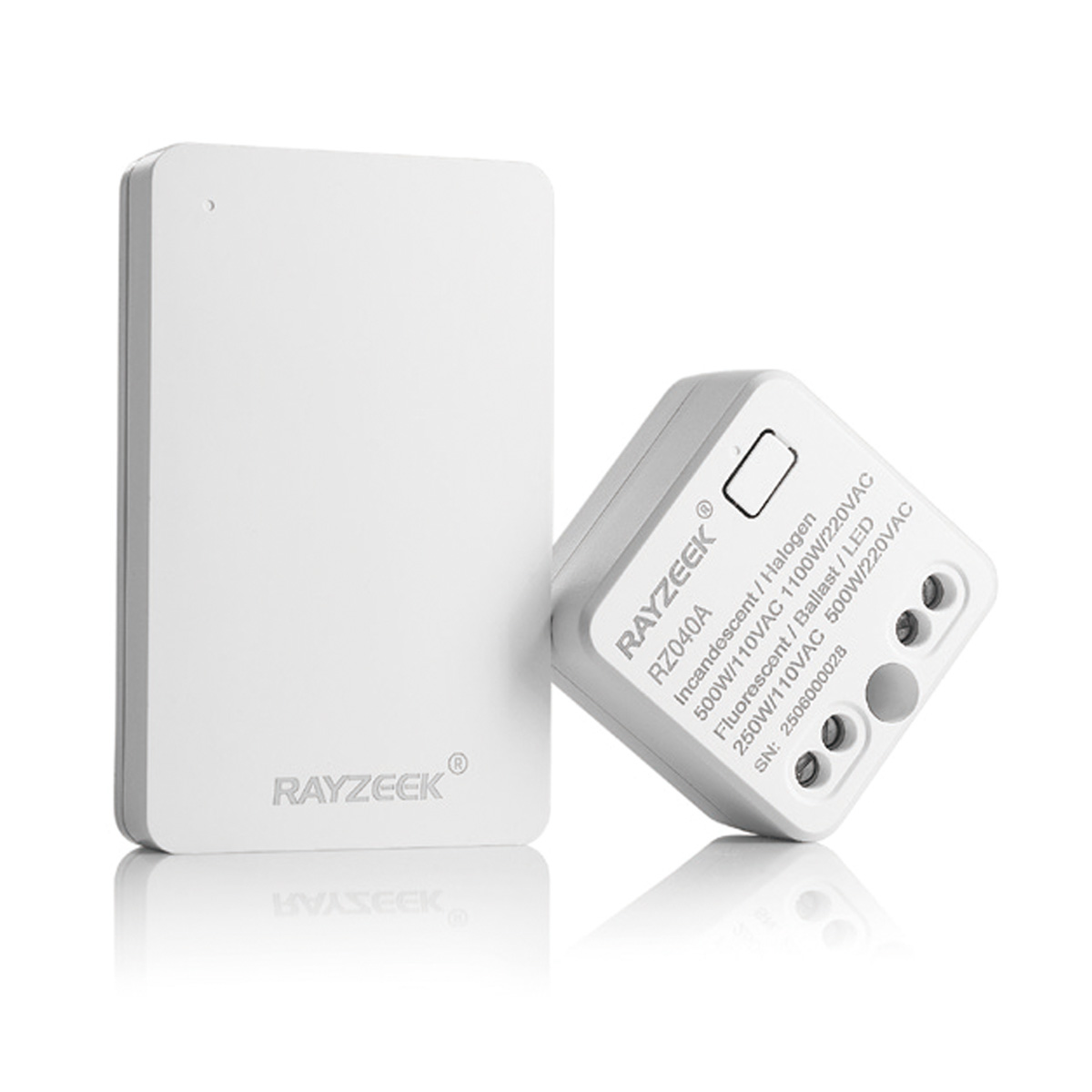
- Kit d’interrupteur sans fil et récepteur pour le contrôle de l’éclairage intérieur MARCHE/ARRÊT
- Récepteur 100-230VAC, 50/60Hz avec courant nominal de 5A
- Interrupteur sans fil alimenté par pile CR2032 avec communication 2.4GHz
- Détection d'occupation (Auto-ON/Auto-OFF)
- 12–24V DC (10–30VDC), jusqu'à 10A
- Couverture 360°, diamètre de 8–12 m
- Temporisation 15 s–30 min
- Capteur de luminosité Désactivé/15/25/35 Lux
- Sensibilité Haute/Basse
- Mode d'occupation Auto-ON/Auto-OFF
- 100–265V AC, 10A (neutre requis)
- Couverture 360° ; diamètre de détection 8–12 m
- Temporisation 15 s–30 min ; Lux Désactivé/15/25/35 ; Sensibilité Haute/Basse
- Mode d'occupation Auto-ON/Auto-OFF
- 100–265V AC, 5A (neutre requis)
- Couverture 360° ; diamètre de détection 8–12 m
- Temporisation 15 s–30 min ; Lux Désactivé/15/25/35 ; Sensibilité Haute/Basse
Enhancing Cooling Efficiency with Fans
Fans are a powerful ally in your quest for energy efficiency. How do they contribute to cooling, and what’s the best way to use them?
Ceiling Fans
Ceiling fans create a wind-chill effect, making a room feel up to 4°F cooler. In summer, ensure your ceiling fans rotate counterclockwise to push air downward.
Portable Fans
Strategically placed portable fans circulate cool air throughout your home. Consider placing a fan across from a window to draw in cooler air during the evening or early morning.
Whole House Fans
These powerful fans, typically installed in the attic, quickly pull cool air in through open windows and expel hot air through the attic. They are particularly effective during cooler evenings.
Fans cool people, not the air itself. Turn them off when you leave a room.
Managing Sunlight and Heat Gain
Sunlight significantly impacts your home’s temperature. How can you manage sunlight to your advantage?
Window Treatments
Use blinds, curtains, or shades to block sunlight during the hottest parts of the day. Light-colored backings on curtains can reflect heat back outside.
Reflective Window Films
These films can block up to 70% of solar heat gain while still allowing natural light in.
External Shading
Awnings, solar screens, or even strategically planted trees can provide shade and reduce heat gain.
Smart Glass
Consider smart glass or electrochromic windows that automatically change their tint based on sunlight intensity.
Leveraging Natural Ventilation
Though it may seem counterintuitive, opening windows strategically can indeed improve energy efficiency.
Cross-Ventilation
Open windows on opposite sides of your home to create natural airflow. This works best during cooler periods.
Stack Effect
In multi-story homes, open windows on the lowest and highest floors to create a chimney effect, drawing cool air in and expelling warm air.
Night Flushing
Open windows at night when it’s cooler, then close them and draw shades in the morning to trap the cool air.
Minimizing Internal Heat Generation
Many everyday activities generate heat inside your home, making your AC work harder. How can you reduce this?
Appliance Usage
Use heat-generating appliances like ovens, dryers, and dishwashers during cooler parts of the day, preferably in the evening.
Energy-Efficient Lighting
Switch to LED bulbs, which generate less heat.
Electronics Management
Turn off and unplug electronics when not in use, as they generate heat even in standby mode.
Cooking Alternatives
Use outdoor grills or microwave ovens when possible.
Improving Home Insulation and Sealing
A well-insulated and sealed home can demonstrably reduce the workload on your AC. What areas should you focus on?
Attic Insulation
Ensure your attic is properly insulated to prevent heat from radiating down.
Wall Insulation
If possible, add insulation to your walls, especially in older homes.
Air Sealing
Seal air leaks around windows, doors, and utility entry points. Even small leaks can significantly impact efficiency.
Duct Sealing
Ensure your HVAC ducts are properly sealed to prevent cooled air from escaping.
Enhancing Humidity Control
Humidity plays a crucial role in how we perceive temperature. How can you manage humidity levels?
Dehumidifiers
In humid climates, a dehumidifier used with your AC can allow you to set your thermostat a few degrees higher while maintaining comfort.
Bathroom and Kitchen Ventilation
Use exhaust fans in these high-humidity areas.
Indoor Plants
Plants can add humidity, but they also absorb heat. Place them strategically.
Implementing Landscaping Strategies
Your home’s surroundings can significantly impact its temperature. How can you use landscaping to your advantage?
Shade Trees
Plant deciduous trees on the south and west sides of your home for summer shade.
Green Roofs or Reflective Roofing
These can significantly reduce heat absorption through your roof.
Windbreaks
Strategically planted trees or shrubs can create windbreaks.
Ground Cover
Replace heat-absorbing pavement near your home with ground cover plants or light-colored gravel.
Maintaining Your AC System for Optimal Energy Efficiency
Of course, regular maintenance is crucial for peak AC efficiency. What does proper maintenance entail, and how does it contribute to energy savings?
Regular Air Filter Maintenance
Air filters are vital for your AC’s efficiency. How often should you change them, and why is this so important?
Laissez-vous inspirer par les portfolios de détecteurs de mouvement Rayzeek.
Vous ne trouvez pas ce que vous cherchez ? Ne vous inquiétez pas. Il existe toujours d'autres solutions à vos besoins. L'un de nos portfolios peut sans doute vous aider.
Frequency
Check your air filter monthly and replace it every 1-3 months, or more often if needed.
Impact on Efficiency
Clean filters mean better airflow. Less strain on your AC. 5-15% energy savings.
DIY Maintenance
Replacing air filters is a simple DIY task. Ensure you use the correct size and type.
Professional Annual Maintenance
While many maintenance tasks are DIY, an annual professional inspection is essential. What does this typically involve?
Comprehensive Inspection
A technician will check all system components.
Refrigerant Check
Proper refrigerant levels are crucial for efficiency. Low levels can increase energy consumption by 20% or more.
Calibration
The technician will ensure accurate thermostat calibration.
Cleaning
Professional cleaning can significantly improve efficiency.
Ensuring Proper Airflow
Adequate airflow is essential for your AC’s performance. How can you maintain it?
Clear Obstructions
Ensure vents and registers are not blocked.
Outdoor Unit Clearance
Keep the area around your outdoor unit clear.
Duct Inspection
Have your ducts inspected for blockages or leaks.
Cleaning Critical Components
Certain AC components require regular cleaning. What should you focus on?
Evaporator and Condenser Coils
These should be cleaned annually. Dirty coils can reduce efficiency by up to 30%.
Condensate Drain
Clean the condensate drain annually or as needed.
Fan Blades
Clean fan blades ensure proper air circulation.
Refrigerant Level Management
Proper refrigerant levels are crucial for your AC’s efficiency. What should you know?
Professional Check
Only certified technicians should handle refrigerant.
Signs of Low Refrigerant
If your AC is running constantly but not cooling effectively, or if you notice ice on the refrigerant lines, you may have a leak.
Environmental Considerations
Proper refrigerant management is environmentally important.
Ductwork Inspection and Sealing
Your ductwork can be a significant source of energy loss. How can you address this?
Professional Inspection
Have your ducts inspected.
Sealing
Properly sealed ducts can improve efficiency by 20% or more.
Insulation
Insulating ducts in unconditioned spaces can further improve efficiency.
Considering System Upgrades
If your system is over 10-15 years old, consider upgrading. Newer models often offer significant efficiency improvements.
Age
Consider upgrading if your system is over 10-15 years old.
SEER Rating
Look for systems with higher SEER ratings. The minimum is 13, but some high-efficiency models have ratings of 20 or higher.
Smart Features
Consider a system compatible with smart thermostats.
Long-term Benefits of Regular Maintenance
What are the long-term advantages for you?
Energy Savings
Regular maintenance can reduce your cooling costs by 15-20% or more.
Extended Lifespan
A well-maintained system can last 15-20 years, compared to 10-12 years for a neglected system.
Improved Air Quality
Regular filter changes and cleaning improve air quality.
Vous recherchez des solutions d’économie d’énergie activées par le mouvement ?
Contactez-nous pour obtenir une gamme complète de détecteurs de mouvement PIR, de produits d’économie d’énergie activés par le mouvement, d’interrupteurs à détecteur de mouvement et de solutions commerciales de présence/vacance.
Reduced Repair Costs
Catching small issues early prevents costly breakdowns later.
Consistent Comfort
A well-maintained system provides more consistent cooling and better humidity control.