Este artículo explora si un aire acondicionado se clasifica como un sistema térmico. Examinaremos el funcionamiento interno de los aires acondicionados, los principios termodinámicos tras su funcionamiento, los distintos tipos de sistemas de aire acondicionado y su eficiencia. Tanto si simplemente tiene curiosidad por saber cómo funciona su aire acondicionado como si es un investigador experimentado, este análisis detallado le resultará de interés.
¿Qué es exactamente un sistema térmico?
Un sistema térmico se ocupa de la transferencia o conversión de energía térmica. Estos sistemas se fundamentan en los principios de la termodinámica, la rama de la física que explora las relaciones entre el calor, el trabajo, la temperatura y la energía. Ejemplos cotidianos de sistemas térmicos incluyen motores, refrigeradores y bombas de calor. Como veremos, los aires acondicionados encajan perfectamente en esta categoría.
Los sistemas térmicos se clasifican a grandes rasgos como abiertos o cerrados. Los sistemas abiertos intercambian tanto materia como energía con su entorno. Imagine una olla de agua hirviendo en una cocina: absorbe calor y libera vapor al aire. Los sistemas cerrados, en cambio, intercambian energía pero no materia. Una olla a presión sellada sirve como buena ilustración de un sistema cerrado.
Definición de un aire acondicionado
Un aire acondicionado es un dispositivo diseñado para enfriar y deshumidificar el aire interior. Esto se logra extrayendo calor del espacio interior y expulsándolo al exterior. Aunque se utiliza principalmente para la climatización de confort en hogares, oficinas y vehículos, el aire acondicionado también desempeña un papel en la refrigeración de procesos industriales.
El funcionamiento interno: componentes clave de un aire acondicionado
Analicemos las partes esenciales que permiten a un aire acondicionado realizar su función:
Refrigerante
Es el fluido de trabajo, una sustancia especial que alterna entre los estados líquido y gaseoso, absorbiendo y liberando calor durante el proceso de refrigeración. Los refrigerantes habituales, como el R-410A y el R-32, poseen propiedades termodinámicas específicas, como el punto de ebullición y la capacidad calorífica, que los hacen idóneos para esta tarea.
Compresor
Considerado con frecuencia el corazón del sistema, la función del compresor es comprimir el gas refrigerante, aumentando de forma significativa su presión y temperatura. Este proceso de gran consumo energético, impulsado habitualmente por un motor eléctrico, es crucial para que el refrigerante libere posteriormente calor en el condensador. El proceso de compresión se puede modelar mediante ecuaciones complejas como la ecuación de compresión isentrópica, que relaciona la presión, el volumen y el coeficiente de dilatación adiabática. Estas ecuaciones ayudan a determinar el trabajo realizado por el compresor.
Condensador
Este componente actúa como un intercambiador de calor, donde el gas refrigerante caliente a alta presión libera su calor al entorno exterior. A medida que desprende calor, el refrigerante pasa a estado líquido. El condensador suele contar con serpentines de tubos y aletas diseñados para maximizar la transferencia de calor. La cantidad de calor liberada por el condensador está directamente relacionada con el caudal másico del refrigerante y la variación de su entalpía al condensarse.
Evaporador
Ubicado en el interior, el evaporador es otro intercambiador de calor. Aquí, el refrigerante líquido absorbe el calor del aire interior, haciendo que se evapore de nuevo a gas. Esta absorción de calor es lo que enfría el aire que circula a través de los serpentines del evaporador. Aquí se aplican los mismos principios utilizados para calcular la transferencia de calor en el condensador, pero la variación de entalpía se corresponde con el proceso de evaporación.
Válvula de expansión
Este dispositivo de dosificación regula el flujo de refrigerante hacia el evaporador. Reduce la presión del refrigerante líquido, haciendo que se vaporice parcialmente y se enfríe significativamente. Esta caída de presión es esencial para que el refrigerante absorba calor de manera eficaz en el evaporador. El proceso de expansión se considera habitualmente isentálpico, lo que significa que la entalpía del refrigerante se mantiene constante antes y después de pasar por la válvula.
How an Air Conditioner Works: The Refrigeration Cycle
The refrigeration cycle is a continuous loop involving four key stages: compression, condensation, expansion, and evaporation. Here’s a simplified breakdown:
- The compressor pressurizes and heats the refrigerant gas.
- In the condenser, the hot gas releases heat outdoors and liquefies.
- The expansion valve lowers the refrigerant’s pressure, causing it to cool.
- In the evaporator, the cold refrigerant absorbs indoor heat, cools the air, and reverts to a gas.
This cycle repeats continuously to maintain the desired indoor temperature.
Types of Air Conditioning Systems
Several types of air conditioning systems cater to different needs and preferences:
Split systems have an outdoor unit (housing the compressor and condenser) and an indoor unit (containing the evaporator). They are popular for cooling individual rooms or zones and are known for their quiet operation and flexible installation options.
Window units are self-contained units designed to be installed in a window opening. They are typically used for cooling single rooms and offer a budget-friendly option with relatively easy installation.
Inspírese con los portafolios de sensores de movimiento Rayzeek.
¿No encuentra lo que busca? No se preocupe. Siempre existen formas alternativas de resolver sus problemas. Quizá alguno de nuestros portafolios pueda ayudarle.
Central air conditioning systems are designed to cool entire buildings using a network of ducts. They feature a single outdoor unit and a central indoor unit connected to ductwork, providing even cooling distribution and the ability to cool large spaces effectively.
Ductless mini-splits are similar to split systems but eliminate the need for ductwork. They have multiple indoor units connected to a single outdoor unit, offering individual zone control and simplifying installation in existing buildings.
Portable air conditioners are self-contained, movable units. They are often used for temporary or supplemental cooling and offer the advantages of portability and no permanent installation.
Air Conditioners as Thermal Systems: A Clear Connection
So, do air conditioners qualify as thermal systems? Absolutely! They transfer heat from one location (indoors) to another (outdoors) and rely on the principles of thermodynamics, specifically the refrigeration cycle. The refrigeration cycle is a practical application of the fundamental laws of thermodynamics.
Thermodynamic Principles in Air Conditioning: A Deeper Dive
Let’s explore the thermodynamic principles that govern the operation of air conditioners:
The First Law: Energy Conservation
The First Law of Thermodynamics, also known as the law of energy conservation, states that energy cannot be created or destroyed, only transferred or changed in form. In an air conditioner, the electrical energy supplied to the compressor is converted into work performed on the refrigerant. This energy is ultimately transferred as heat to the outdoor environment. The energy balance can be expressed as: Electrical Energy Input equals Heat Rejected to Outdoors minus Heat Absorbed from Indoors.
The Second Law: Entropy and the Flow of Heat
The Second Law of Thermodynamics dictates that the entropy of an isolated system always increases over time. In simpler terms, heat cannot spontaneously flow from a colder body to a hotter one. Air conditioners use work (provided by the compressor) to move heat from a colder space (indoors) to a hotter space (outdoors), a process that aligns with the Second Law. The refrigeration cycle is carefully designed to minimize entropy generation, thereby maximizing efficiency.
Entropy: A Measure of Disorder
Entropy is a measure of disorder or randomness within a system. The Second Law states that the total entropy of a system and its surroundings must always increase for any real process. In an air conditioner, the refrigerant’s entropy decreases as it releases heat in the condenser. However, the entropy of the surroundings increases by a larger amount, resulting in a net increase in overall entropy.
Analyzing the Compressor’s Performance
A compressor’s performance is often analyzed using its isentropic efficiency, which compares the actual work input to the ideal (isentropic) work input for the same pressure ratio. Well-designed compressors typically have isentropic efficiencies between 70-85%. The actual work input can be determined by dividing the isentropic work by the isentropic efficiency. Compressor performance curves, provided by manufacturers, illustrate the relationship between pressure ratio, mass flow rate, and power consumption.
Analyzing the Condenser’s Heat Transfer
The condenser’s heat transfer effectiveness can be analyzed using the Number of Transfer Units (NTU) method. NTU is a dimensionless parameter that represents the heat transfer size of the heat exchanger. The effectiveness of the condenser can be calculated using equations specific to the heat exchanger’s geometry. For instance, a simple counterflow heat exchanger’s effectiveness can be approximated as 1 minus the exponential of negative NTU. Higher effectiveness translates to better heat transfer and improved system efficiency.
Analyzing the Evaporator’s Performance
Similar to the condenser, the evaporator’s performance can also be analyzed using the NTU method. Factors like airflow rate, refrigerant flow rate, and heat exchanger design influence the evaporator’s effectiveness. Optimizing evaporator design can enhance heat transfer and reduce the temperature difference between the refrigerant and the indoor air, leading to better overall system performance.
Analyzing the Expansion Valve’s Role
The expansion valve’s performance is characterized by its ability to maintain a constant superheat at the evaporator outlet. Superheat is the difference between the refrigerant’s actual temperature and its saturation temperature at the evaporator pressure. Proper superheat control ensures that the evaporator is fully utilized and that no liquid refrigerant enters the compressor, which could cause damage. Thermostatic expansion valves (TXVs) use a feedback mechanism to adjust refrigerant flow and maintain a constant superheat.
Heat Transfer in Air Conditioners: A Closer Look
Heat transfer is a fundamental aspect of air conditioning. Let’s examine the three modes of heat transfer involved:
¿Busca soluciones de ahorro de energía activadas por movimiento?
Póngase en contacto con nosotros para obtener sensores de movimiento PIR completos, productos de ahorro de energía activados por movimiento, interruptores con sensor de movimiento y soluciones comerciales de presencia/vacancia.
Conduction: Heat Transfer Through Direct Contact
Conduction is the transfer of heat through direct contact between molecules. In air conditioners, conduction occurs within the refrigerant, the metal walls of the tubing, and the fins of the heat exchangers. The rate of heat conduction is governed by Fourier’s Law, which relates the heat transfer rate to the material’s thermal conductivity, the cross-sectional area, and the temperature gradient.
Convection: Heat Transfer Through Fluid Motion
Convection is the transfer of heat through the movement of fluids (liquids or gases). In air conditioners, convection occurs between the refrigerant and the inner walls of the tubing, and between the air and the outer surfaces of the heat exchangers. Forced convection, driven by fans or pumps, significantly enhances heat transfer rates. Newton’s Law of Cooling describes the rate of heat convection, relating it to the convective heat transfer coefficient, the surface area, and the temperature difference between the surface and the fluid.
Radiation: Heat Transfer Through Electromagnetic Waves
Radiation is the transfer of heat through electromagnetic waves. While less prominent than conduction and convection in typical air conditioning operation, radiation can still play a role, particularly in the condenser. The condenser can radiate heat to the surrounding environment, especially if exposed to direct sunlight. The Stefan-Boltzmann Law governs the rate of heat radiation, relating it to the surface’s emissivity, the Stefan-Boltzmann constant, the surface area, and the absolute temperatures of the radiating surface and the surroundings.
Air Conditioner Efficiency and Performance Metrics: Understanding the Ratings
Several metrics are used to evaluate the efficiency and performance of air conditioners:
SEER (Seasonal Energy Efficiency Ratio)
SEER measures an air conditioner’s cooling output over a typical cooling season, divided by the total electric energy input during the same period. Higher SEER ratings signify greater energy efficiency. SEER is determined through standardized testing procedures that simulate a range of operating conditions.
EER (Energy Efficiency Ratio)
EER measures an air conditioner’s cooling output at a specific operating condition (95°F outdoor temperature, 80°F indoor temperature, and 50% relative humidity), divided by the electric power input at that condition. Higher EER ratings indicate better efficiency at that specific condition.
Coefficient of Performance (COP)
COP measures the efficiency of a heat pump or refrigeration system. It is the ratio of the desired output (heating or cooling) to the required work input. For cooling, COP is the Cooling Output divided by the Work Input. For heating, COP is the Heating Output divided by the Work Input. Higher COP values indicate greater efficiency.
Energy Efficiency Ratio (EER) – A Specific Type of COP
EER is a specific type of COP that applies to cooling systems. It is calculated as the cooling output (in Btu/h) divided by the power input (in watts) at a specific operating condition.
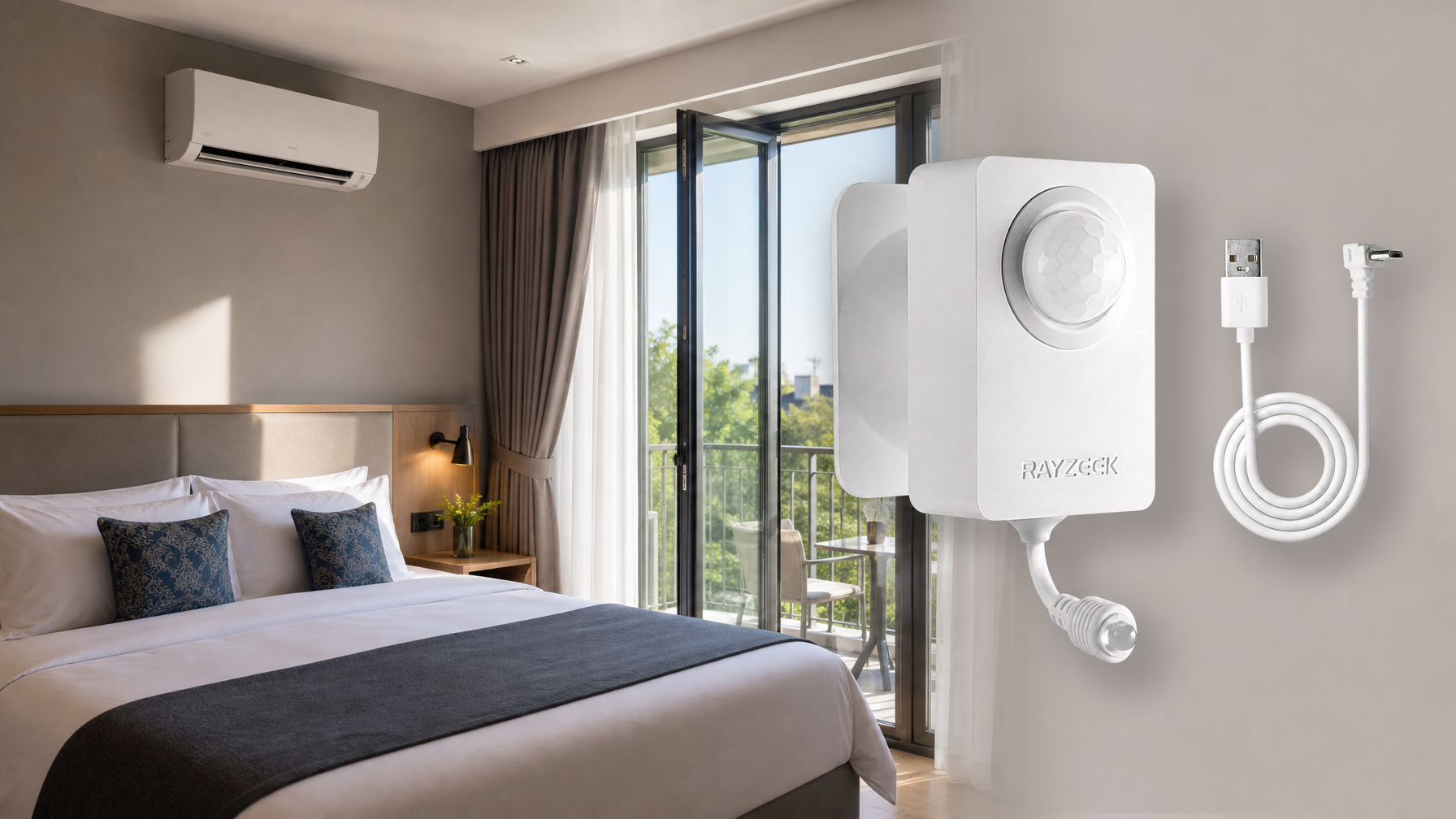
While SEER and EER ratings provide valuable insights into an air conditioner’s efficiency, real-world energy consumption often depends on usage patterns. For instance, leaving the AC running in an empty room drastically reduces its effective efficiency. The Rayzeek RZ050 Air Conditioner Motion Sensor addresses this issue directly by automating the AC’s operation based on occupancy.

Rayzeek RZ050: Maximize Your AC’s Efficiency
Intelligently automates your AC to boost its effective SEER and EER ratings.
- Reduces energy bills by up to 50% by turning off the AC in unoccupied rooms.
- Night mode ensures uninterrupted sleep while still saving energy during the day.
- Helps you achieve optimal energy efficiency beyond the standard ratings.
Is an Air Conditioner a Closed or Open Thermal System?
An air conditioner can be considered a closed thermal system concerning the refrigerant. The refrigerant remains contained within a sealed loop, never mixing with the external environment. However, the air conditioner itself is part of a larger open system, as it exchanges energy (heat) with both the indoor and outdoor environments. It takes in electrical energy and interacts with the air in the room, which is not a closed system.
Advanced Concepts in Air Conditioning Thermodynamics
Let’s explore some more advanced concepts:
Psychrometrics: Understanding Moist Air
Psychrometrics is the study of the thermodynamic properties of moist air. It’s crucial for understanding and designing air conditioning systems. Key psychrometric properties include dry-bulb temperature, wet-bulb temperature, relative humidity, humidity ratio, and enthalpy. Psychrometric charts are graphical tools used to visualize and analyze these properties. Air conditioners not only cool the air but also affect its humidity, making psychrometrics essential for proper system design and operation.
Enthalpy: The Total Heat Content
Enthalpy is a thermodynamic property that represents the total heat content of a system. In air conditioning, enthalpy quantifies the heat content of the refrigerant and the moist air. The change in the refrigerant’s enthalpy during evaporation and condensation determines the system’s cooling capacity. The enthalpy of moist air depends on its temperature and humidity ratio. Enthalpy calculations are essential for determining the cooling load and sizing air conditioning equipment.
Real-World Air Conditioner System Design and Optimization: Beyond the Basics
Designing an efficient air conditioning system involves considering various factors, including:
Quizás le interese
- Tensión: 2 pilas AAA
- Modo Día/Noche
- Temporización: 15 min, 30 min, 1 h (por defecto), 2 h
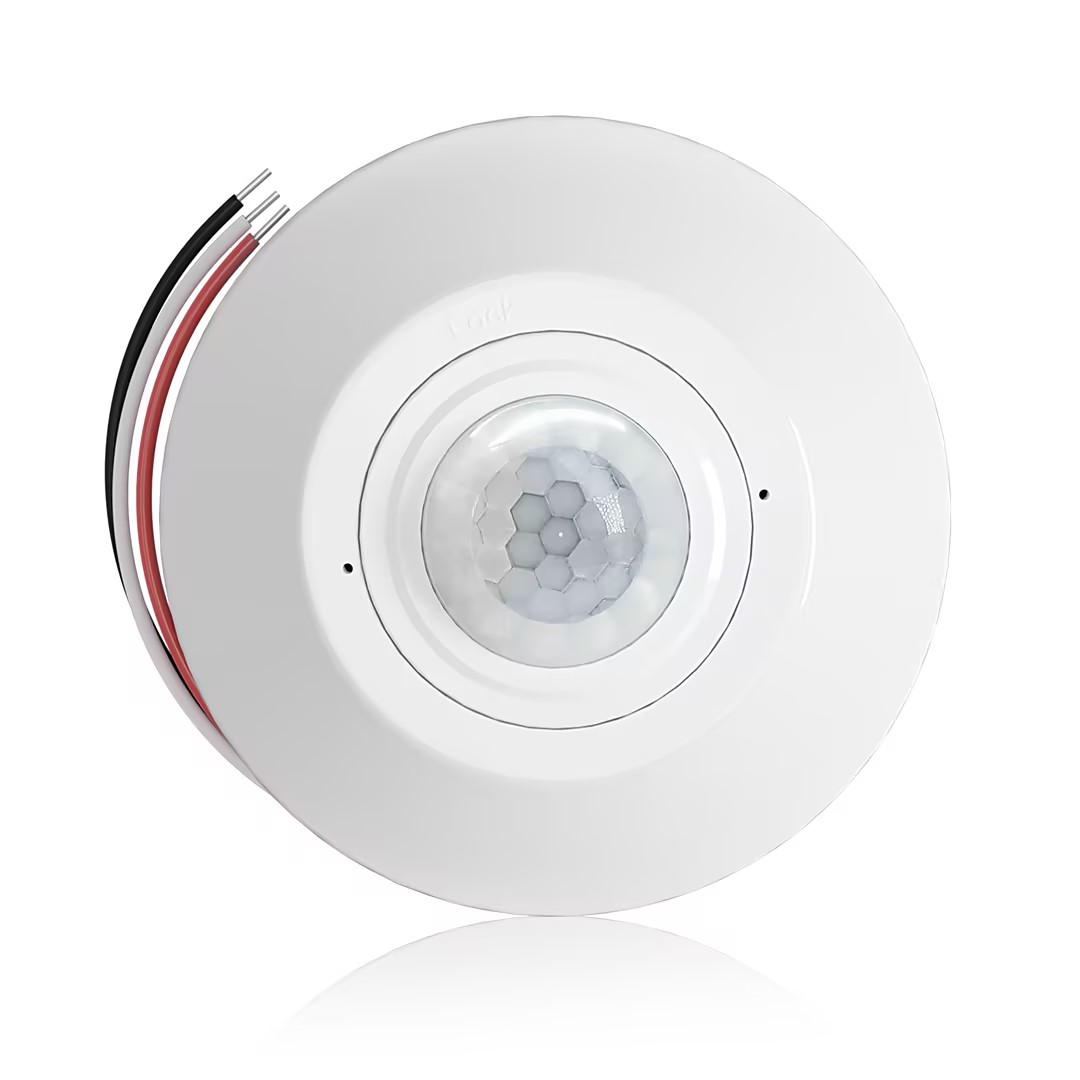
- Sensor de presencia PIR para montaje en techo con salida de relé de contacto seco
- Alimentación de baja tensión de 12/24VDC o 12/24VAC
- Contactos de relé aislados COM, NO y NC para entradas de EMS, HVAC y control de edificios
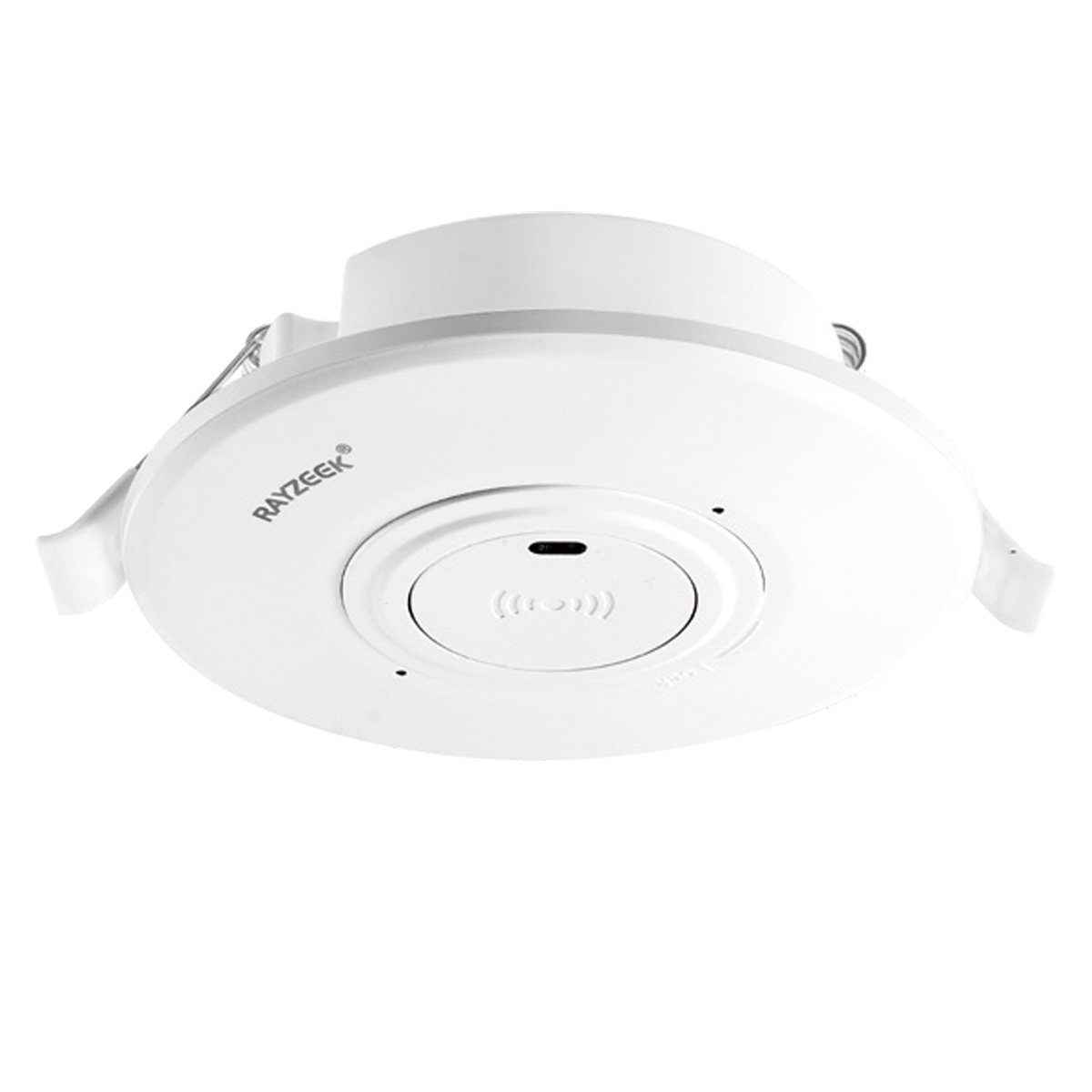
- Interruptor con sensor de movimiento por microondas empotrable en techo de baja tensión DC
- Entrada de 12 VDC / 24 VDC con rango de 10-30 VDC
- Corriente de funcionamiento máxima de 10A con retardo de tiempo, umbral de Lux y sensibilidad ajustables
- Interruptor con sensor de movimiento por microondas empotrable en techo para cargas más elevadas
- Entrada de tensión de red de 100-265 VAC, modelo de 10A
- Detección por microondas de 5,8 GHz con temporizador, umbral Lux y sensibilidad ajustables
- Interruptor con sensor de movimiento por microondas empotrable para techo
- Entrada de tensión de red de 100-265 VAC, modelo de 5A
- Detección por microondas de 5,8 GHz con temporizador, umbral Lux y sensibilidad ajustables
- Regulador con sensor de presencia PIR RZ037 de techo para alimentación de 220V
- Corriente de funcionamiento máxima de 3A con carga nominal de 660W
- El botón LUX controla el encendido/apagado del sensor de luz y la regulación de brillo ajustada por el usuario
- Regulador con sensor de presencia PIR RZ037 de techo para alimentación de 110V
- Corriente de funcionamiento máxima de 3A con carga nominal de 330W
- El botón LUX controla el encendido/apagado del sensor de luz y la regulación de brillo ajustada por el usuario
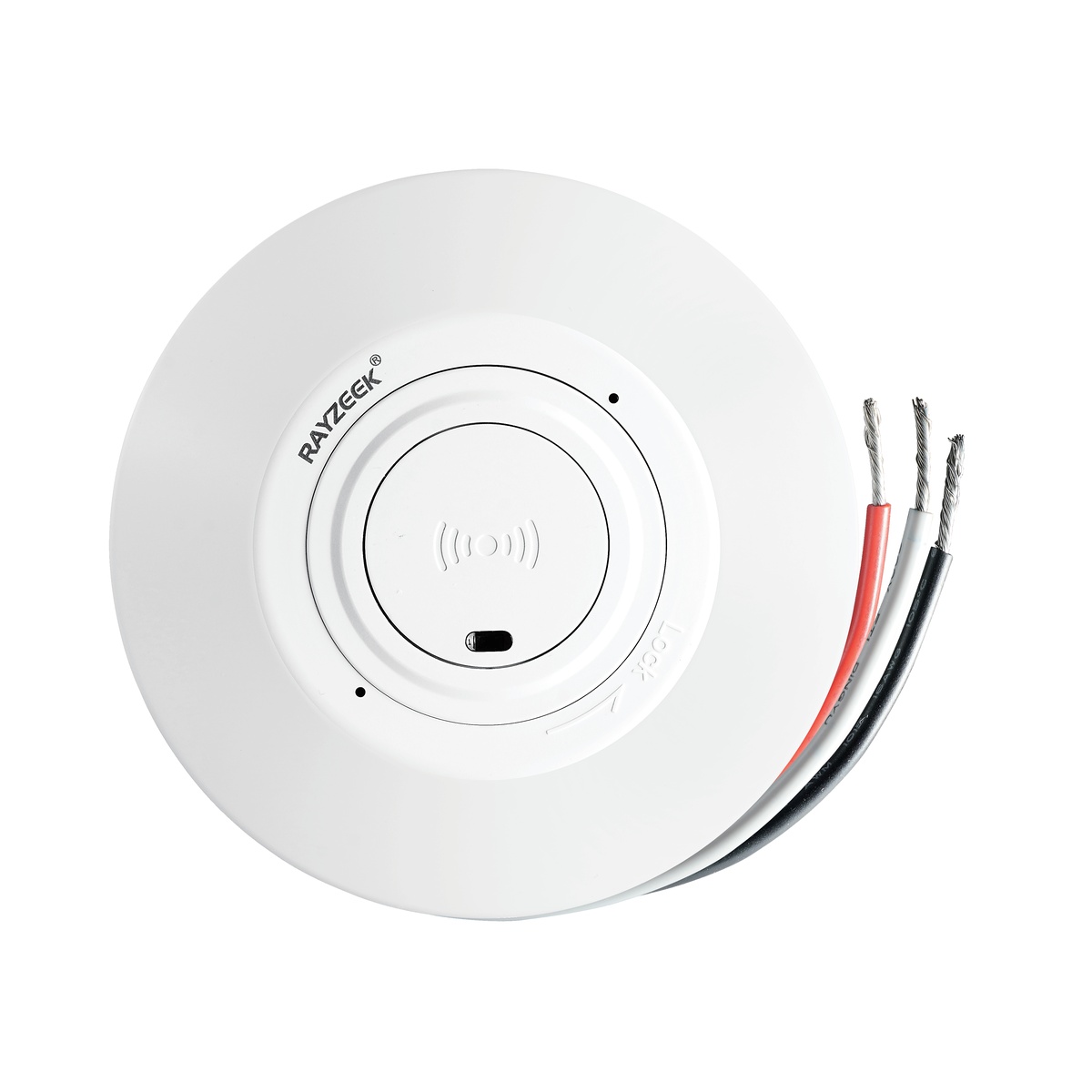
- Interruptor con sensor de movimiento por microondas de techo para CC de bajo voltaje
- Entrada de 12 VDC / 24 VDC con rango de 10-30 VDC
- Corriente de funcionamiento máxima de 10A con retardo de tiempo, umbral de Lux y sensibilidad ajustables
- Interruptor con sensor de movimiento por microondas de techo para mayor carga
- Entrada de tensión de red de 100-265 VAC, modelo de 10A
- Detección por microondas de 5,8 GHz con temporizador, umbral Lux y sensibilidad ajustables
- Interruptor con sensor de movimiento por microondas de techo
- Entrada de tensión de red de 100-265 VAC, modelo de 5A
- Detección por microondas de 5,8 GHz con temporizador, umbral Lux y sensibilidad ajustables
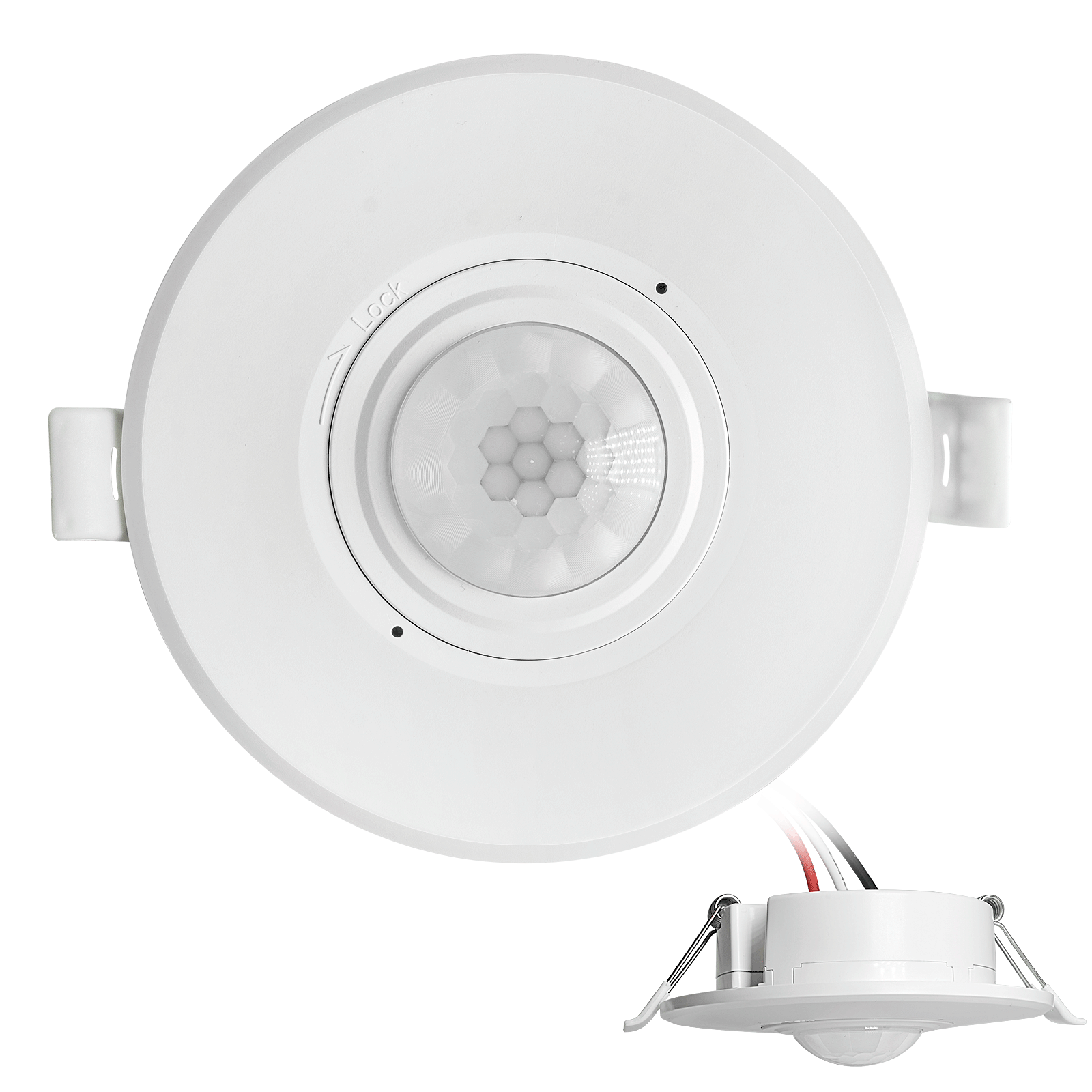
- Interruptor con sensor de movimiento PIR para montaje empotrable en techo de CC de bajo voltaje
- Entrada de 12 VDC / 24 VDC con rango de 10-30 VDC
- Corriente máxima de trabajo de 10 A con tiempo de retardo, umbral de luxes y sensibilidad ajustables
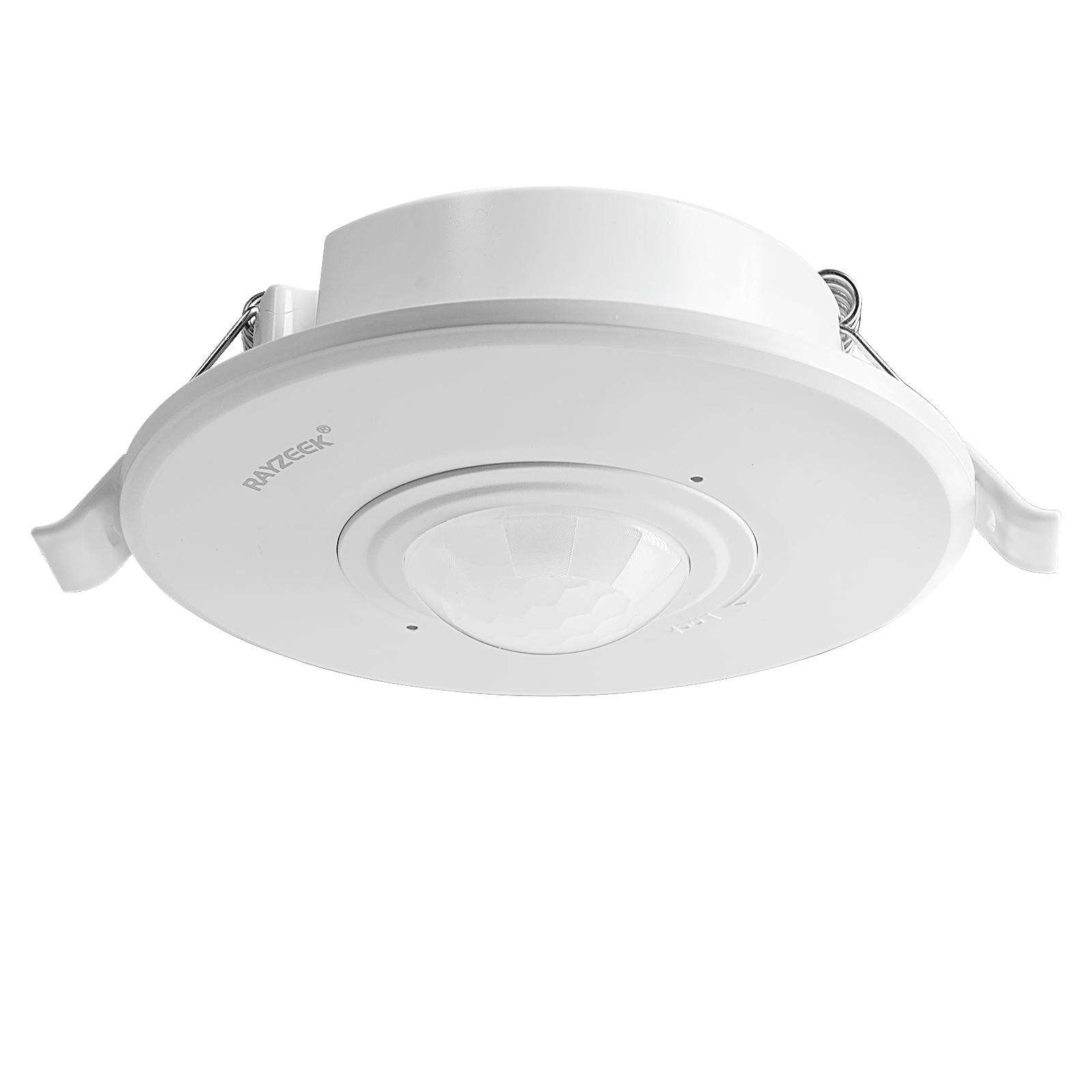
- Interruptor con sensor de movimiento PIR empotrable en techo para mayor carga
- Entrada de tensión de red de 100-265 VAC, modelo de 10A
- Detección de 360 grados con tiempo de retardo, umbral de luxes y sensibilidad ajustables
- Interruptor con sensor de movimiento PIR empotrable en techo
- Entrada de tensión de red de 100-265 VAC, modelo de 5A
- Detección de 360 grados con tiempo de retardo, umbral de luxes y sensibilidad ajustables
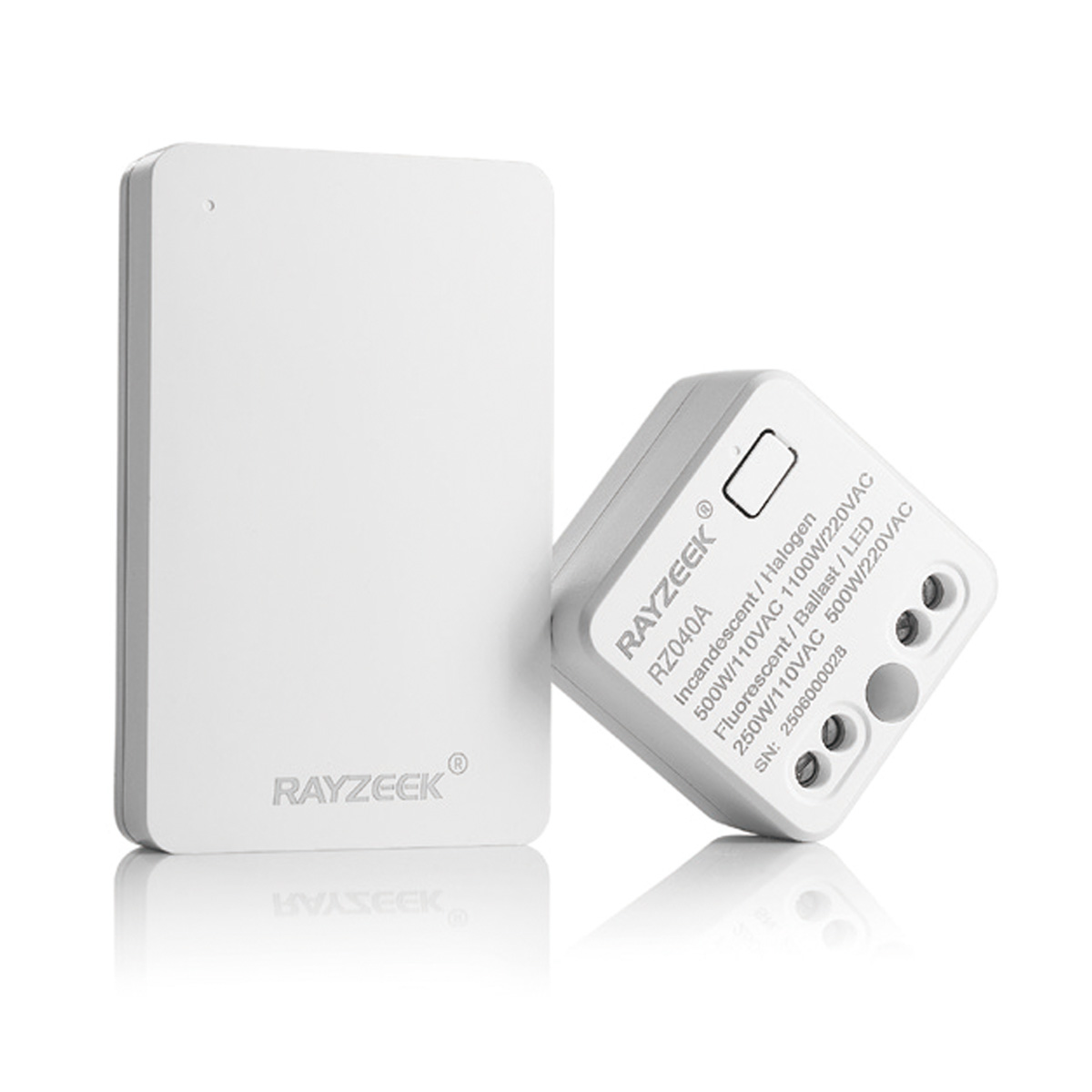
- Kit de emisor inalámbrico y receptor para el control de iluminación de encendido/apagado en interiores
- Receptor de 100-230 V CA, 50/60 Hz con corriente nominal de 5 A
- Interruptor inalámbrico alimentado por CR2032 con comunicación de 2,4 GHz
- Presencia (encendido automático/apagado automático)
- 12–24 V CC (10–30 V CC), hasta 10 A
- Cobertura de 360°, 8–12 m de diámetro
- Tiempo de retardo de 15 s a 30 min
- Sensor de luz Desactivado/15/25/35 Lux
- Sensibilidad alta/baja
- Modo de presencia con encendido/apagado automático
- 100–265V CA, 10A (requiere neutro)
- Cobertura de 360°; diámetro de detección de 8–12 m
- Temporización: 15 s–30 min; Lux OFF/15/25/35; Sensibilidad Alta/Baja
- Modo de presencia con encendido/apagado automático
- 100–265V CA, 5A (requiere neutro)
- Cobertura de 360°; diámetro de detección de 8–12 m
- Temporización: 15 s–30 min; Lux OFF/15/25/35; Sensibilidad Alta/Baja
- Climate: Understanding the outdoor temperature and humidity variations throughout the year is crucial for selecting the right system.
- Building Load: Accurately estimating the amount of heat that needs to be removed from the building is essential. This depends on factors like insulation, occupancy, and internal heat gains.
- Control Strategies: Employing advanced control systems, such as variable refrigerant flow (VRF) or variable-speed compressors, can optimize performance under varying loads.
Optimization Techniques for Maximum Efficiency
Optimization techniques can be used to minimize energy consumption while maintaining desired comfort levels. This may involve using simulation software to model system performance under different operating conditions. Life-cycle cost analysis can help evaluate the long-term economic and environmental impact of different design choices.
Thermodynamic Limitations: The Boundaries of Efficiency
- The Carnot cycle represents the theoretical upper limit of efficiency for any heat engine or refrigeration cycle operating between two temperatures.
- Real-world air conditioners have efficiencies significantly lower than the Carnot efficiency due to irreversibilities in the compression process, heat transfer limitations, and other factors.
The Future of Air Conditioning: Pushing the Boundaries
Current research is focused on developing new refrigerants with lower global warming potential and exploring alternative cooling technologies that can overcome the limitations of the conventional vapor-compression cycle.
One promising area is the development of more sophisticated control algorithms that can dynamically adjust system operation based on real-time weather data, occupancy patterns, and energy prices. This could lead to significant energy savings and improved comfort.
Another area of interest is the integration of thermal storage technologies with air conditioning systems. This could allow for shifting cooling loads to off-peak hours, reducing electricity costs and grid strain.