Este artigo explora se um ar condicionado se qualifica como um sistema térmico. Examinaremos o funcionamento interno dos aparelhos de ar condicionado, os princípios termodinâmicos por trás do seu funcionamento, os diferentes tipos de sistemas de ar condicionado e a sua eficiência. Quer tenha apenas curiosidade sobre como funciona o seu ar condicionado ou seja um investigador experiente, esta análise aprofundada tem algo para si.
O que É Exatamente um Sistema Térmico?
Um sistema térmico lida com a transferência ou conversão de energia térmica. Estes sistemas baseiam-se nos princípios da termodinâmica, o ramo da física que explora as relações entre calor, trabalho, temperatura e energia. Exemplos do dia a dia de sistemas térmicos incluem motores, frigoríficos e bombas de calor. Como veremos, os aparelhos de ar condicionado enquadram-se perfeitamente nesta categoria.
Os sistemas térmicos são amplamente classificados como abertos ou fechados. Os sistemas abertos trocam tanto matéria como energia com o meio envolvente. Imagine uma panela de água a ferver num fogão – absorve calor e liberta vapor para o ar. Em contrapartida, os sistemas fechados trocam energia, mas não matéria. Uma panela de pressão selada serve como uma boa ilustração de um sistema fechado.
Definição de Ar Condicionado
Um ar condicionado é um dispositivo concebido para arrefecer e desumidificar o ar interior. Consegue-o extraindo o calor do espaço interior e expelindo-o para o exterior. Embora seja utilizado principalmente para o conforto térmico em habitações, escritórios e veículos, o ar condicionado também desempenha um papel no arrefecimento de processos industriais.
O Funcionamento Interno: Componentes Principais de um Ar Condicionado
Vamos detalhar as peças essenciais que permitem a um ar condicionado cumprir a sua função:
Fluido Refrigerante
Este é o fluido de trabalho, uma substância especial que alterna entre os estados líquido e gasoso, absorvendo e libertando calor durante o processo de refrigeração. Os fluidos refrigerantes comuns, como o R-410A e o R-32, possuem propriedades termodinâmicas específicas, tais como ponto de ebulição e capacidade térmica, que os tornam adequados para esta tarefa.
Compressor
Muitas vezes considerado o coração do sistema, o papel do compressor é comprimir o gás refrigerante, aumentando significativamente a sua pressão e temperatura. Este processo com elevado consumo de energia, normalmente acionado por um motor elétrico, é crucial para que o fluido refrigerante possa libertar calor mais tarde no condensador. O processo de compressão pode ser modelado através de equações complexas, como a equação de compressão isentrópica, que relaciona a pressão, o volume e a razão de calor específico. Estas equações ajudam a determinar o trabalho realizado pelo compressor.
Condensador
Este componente atua como um permutador de calor, no qual o gás refrigerante quente e de alta pressão liberta o seu calor para o ambiente exterior. À medida que dissipa o calor, o fluido refrigerante transita para o estado líquido. O condensador possui tipicamente serpentinas de tubos e aletas concebidas para maximizar a transferência de calor. A quantidade de calor libertada pelo condensador está diretamente relacionada com o caudal mássico do fluido refrigerante e a variação da sua entalpia à medida que condensa.
Evaporador
Localizado no interior, o evaporador é outro permutador de calor. Aqui, o fluido refrigerante líquido absorve o calor do ar interior, fazendo com que se evapore novamente para o estado gasoso. Esta absorção de calor é o que arrefece o ar que circula através das serpentinas do evaporador. Os mesmos princípios utilizados para calcular a transferência de calor no condensador aplicam-se aqui, mas a variação de entalpia corresponde ao processo de evaporação.
Válvula de Expansão
Este dispositivo de dosagem regula o fluxo de fluido refrigerante para o evaporador. Reduz a pressão do fluido refrigerante líquido, fazendo com que este se vaporize parcialmente e arrefeça significativamente. Esta queda de pressão é essencial para que o fluido refrigerante absorva calor eficazmente no evaporador. O processo de expansão é tipicamente tratado como isentálpico, o que significa que a entalpia do fluido refrigerante permanece constante antes e depois de passar pela válvula.
Como Funciona um Ar Condicionado: O Ciclo de Refrigeração
O ciclo de refrigeração é um circuito contínuo composto por quatro etapas principais: compressão, condensação, expansão e evaporação. Eis uma explicação simplificada:
- O compressor pressuriza e aquece o fluido refrigerante em estado gasoso.
- No condensador, o gás quente liberta calor para o exterior e liquefaz-se.
- A válvula de expansão reduz a pressão do fluido refrigerante, provocando o seu arrefecimento.
- No evaporador, o fluido refrigerante frio absorve o calor interior, arrefecendo o ar e regressando ao estado gasoso.
Este ciclo repete-se continuamente para manter a temperatura interior desejada.
Tipos de Sistemas de Ar Condicionado
Existem vários tipos de sistemas de ar condicionado para dar resposta a diferentes necessidades e preferências:
Os sistemas split possuem uma unidade exterior (que alberga o compressor e o condensador) e uma unidade interior (que contém o evaporador). São populares para o arrefecimento de divisões ou zonas individuais, destacando-se pelo seu funcionamento silencioso e opções de instalação flexíveis.
As unidades de janela são sistemas monobloco concebidos para instalação no vão de uma janela. São habitualmente utilizadas para arrefecer divisões individuais, constituindo uma opção económica e de instalação relativamente simples.
Inspire-se com os portfólios de sensores de movimento da Rayzeek.
Não encontra o que pretende? Não se preocupe. Existem sempre formas alternativas de resolver os seus problemas. Talvez um dos nossos portfólios possa ajudar.
Os sistemas de ar condicionado central destinam-se a arrefecer edifícios inteiros através de uma rede de condutas. Dispõem de uma única unidade exterior e de uma unidade central interior ligada à rede de condutas, garantindo uma distribuição uniforme do arrefecimento e a capacidade de arrefecer grandes espaços com eficácia.
Os sistemas mini-split sem condutas são semelhantes aos sistemas split, mas dispensam a utilização de condutas. Dispõem de múltiplas unidades interiores ligadas a uma única unidade exterior, permitindo o controlo individual por zona e simplificando a instalação em edifícios existentes.
Os aparelhos de ar condicionado portáteis são unidades monobloco e móveis. São frequentemente utilizados para arrefecimento temporário ou suplementar, oferecendo as vantagens da mobilidade e da ausência de instalação permanente.
Aparelhos de Ar Condicionado como Sistemas Térmicos: Uma Ligação Clara
Afinal, os aparelhos de ar condicionado qualificam-se como sistemas térmicos? Com certeza! Transferem calor de um local (interior) para outro (exterior) e assentam nos princípios da termodinâmica, concretamente no ciclo de refrigeração. O ciclo de refrigeração é uma aplicação prática das leis fundamentais da termodinâmica.
Princípios Termodinâmicos no Ar Condicionado: Uma Análise Mais Aprofundada
Explore-se os princípios termodinâmicos que regem o funcionamento dos aparelhos de ar condicionado:
A Primeira Lei: Conservação de Energia
A Primeira Lei da Termodinâmica, também conhecida como a lei da conservação de energia, estabelece que a energia não pode ser criada nem destruída, apenas transferida ou transformada. Num aparelho de ar condicionado, a energia elétrica fornecida ao compressor é convertida em trabalho realizado sobre o fluido refrigerante. Esta energia é, em última análise, transferida sob a forma de calor para o ambiente exterior. O balanço energético pode ser expresso como: Energia Elétrica Fornecida igual a Calor Rejeitado para o Exterior menos Calor Absorvido do Interior.
A Segunda Lei: Entropia e o Fluxo de Calor
The Second Law of Thermodynamics dictates that the entropy of an isolated system always increases over time. In simpler terms, heat cannot spontaneously flow from a colder body to a hotter one. Air conditioners use work (provided by the compressor) to move heat from a colder space (indoors) to a hotter space (outdoors), a process that aligns with the Second Law. The refrigeration cycle is carefully designed to minimize entropy generation, thereby maximizing efficiency.
Entropy: A Measure of Disorder
Entropy is a measure of disorder or randomness within a system. The Second Law states that the total entropy of a system and its surroundings must always increase for any real process. In an air conditioner, the refrigerant’s entropy decreases as it releases heat in the condenser. However, the entropy of the surroundings increases by a larger amount, resulting in a net increase in overall entropy.
Analyzing the Compressor’s Performance
A compressor’s performance is often analyzed using its isentropic efficiency, which compares the actual work input to the ideal (isentropic) work input for the same pressure ratio. Well-designed compressors typically have isentropic efficiencies between 70-85%. The actual work input can be determined by dividing the isentropic work by the isentropic efficiency. Compressor performance curves, provided by manufacturers, illustrate the relationship between pressure ratio, mass flow rate, and power consumption.
Analyzing the Condenser’s Heat Transfer
The condenser’s heat transfer effectiveness can be analyzed using the Number of Transfer Units (NTU) method. NTU is a dimensionless parameter that represents the heat transfer size of the heat exchanger. The effectiveness of the condenser can be calculated using equations specific to the heat exchanger’s geometry. For instance, a simple counterflow heat exchanger’s effectiveness can be approximated as 1 minus the exponential of negative NTU. Higher effectiveness translates to better heat transfer and improved system efficiency.
Analyzing the Evaporator’s Performance
Similar to the condenser, the evaporator’s performance can also be analyzed using the NTU method. Factors like airflow rate, refrigerant flow rate, and heat exchanger design influence the evaporator’s effectiveness. Optimizing evaporator design can enhance heat transfer and reduce the temperature difference between the refrigerant and the indoor air, leading to better overall system performance.
Analyzing the Expansion Valve’s Role
The expansion valve’s performance is characterized by its ability to maintain a constant superheat at the evaporator outlet. Superheat is the difference between the refrigerant’s actual temperature and its saturation temperature at the evaporator pressure. Proper superheat control ensures that the evaporator is fully utilized and that no liquid refrigerant enters the compressor, which could cause damage. Thermostatic expansion valves (TXVs) use a feedback mechanism to adjust refrigerant flow and maintain a constant superheat.
Heat Transfer in Air Conditioners: A Closer Look
Heat transfer is a fundamental aspect of air conditioning. Let’s examine the three modes of heat transfer involved:
Procura Soluções de Poupança de Energia Ativadas por Movimento?
Contacte-nos para soluções completas de sensores de movimento PIR, produtos de poupança de energia ativados por movimento, interruptores com sensor de movimento e soluções comerciais de ocupação/vacância.
Conduction: Heat Transfer Through Direct Contact
Conduction is the transfer of heat through direct contact between molecules. In air conditioners, conduction occurs within the refrigerant, the metal walls of the tubing, and the fins of the heat exchangers. The rate of heat conduction is governed by Fourier’s Law, which relates the heat transfer rate to the material’s thermal conductivity, the cross-sectional area, and the temperature gradient.
Convection: Heat Transfer Through Fluid Motion
Convection is the transfer of heat through the movement of fluids (liquids or gases). In air conditioners, convection occurs between the refrigerant and the inner walls of the tubing, and between the air and the outer surfaces of the heat exchangers. Forced convection, driven by fans or pumps, significantly enhances heat transfer rates. Newton’s Law of Cooling describes the rate of heat convection, relating it to the convective heat transfer coefficient, the surface area, and the temperature difference between the surface and the fluid.
Radiation: Heat Transfer Through Electromagnetic Waves
Radiation is the transfer of heat through electromagnetic waves. While less prominent than conduction and convection in typical air conditioning operation, radiation can still play a role, particularly in the condenser. The condenser can radiate heat to the surrounding environment, especially if exposed to direct sunlight. The Stefan-Boltzmann Law governs the rate of heat radiation, relating it to the surface’s emissivity, the Stefan-Boltzmann constant, the surface area, and the absolute temperatures of the radiating surface and the surroundings.
Air Conditioner Efficiency and Performance Metrics: Understanding the Ratings
Several metrics are used to evaluate the efficiency and performance of air conditioners:
SEER (Seasonal Energy Efficiency Ratio)
SEER measures an air conditioner’s cooling output over a typical cooling season, divided by the total electric energy input during the same period. Higher SEER ratings signify greater energy efficiency. SEER is determined through standardized testing procedures that simulate a range of operating conditions.
EER (Energy Efficiency Ratio)
EER measures an air conditioner’s cooling output at a specific operating condition (95°F outdoor temperature, 80°F indoor temperature, and 50% relative humidity), divided by the electric power input at that condition. Higher EER ratings indicate better efficiency at that specific condition.
Coefficient of Performance (COP)
COP measures the efficiency of a heat pump or refrigeration system. It is the ratio of the desired output (heating or cooling) to the required work input. For cooling, COP is the Cooling Output divided by the Work Input. For heating, COP is the Heating Output divided by the Work Input. Higher COP values indicate greater efficiency.
Energy Efficiency Ratio (EER) – A Specific Type of COP
EER is a specific type of COP that applies to cooling systems. It is calculated as the cooling output (in Btu/h) divided by the power input (in watts) at a specific operating condition.
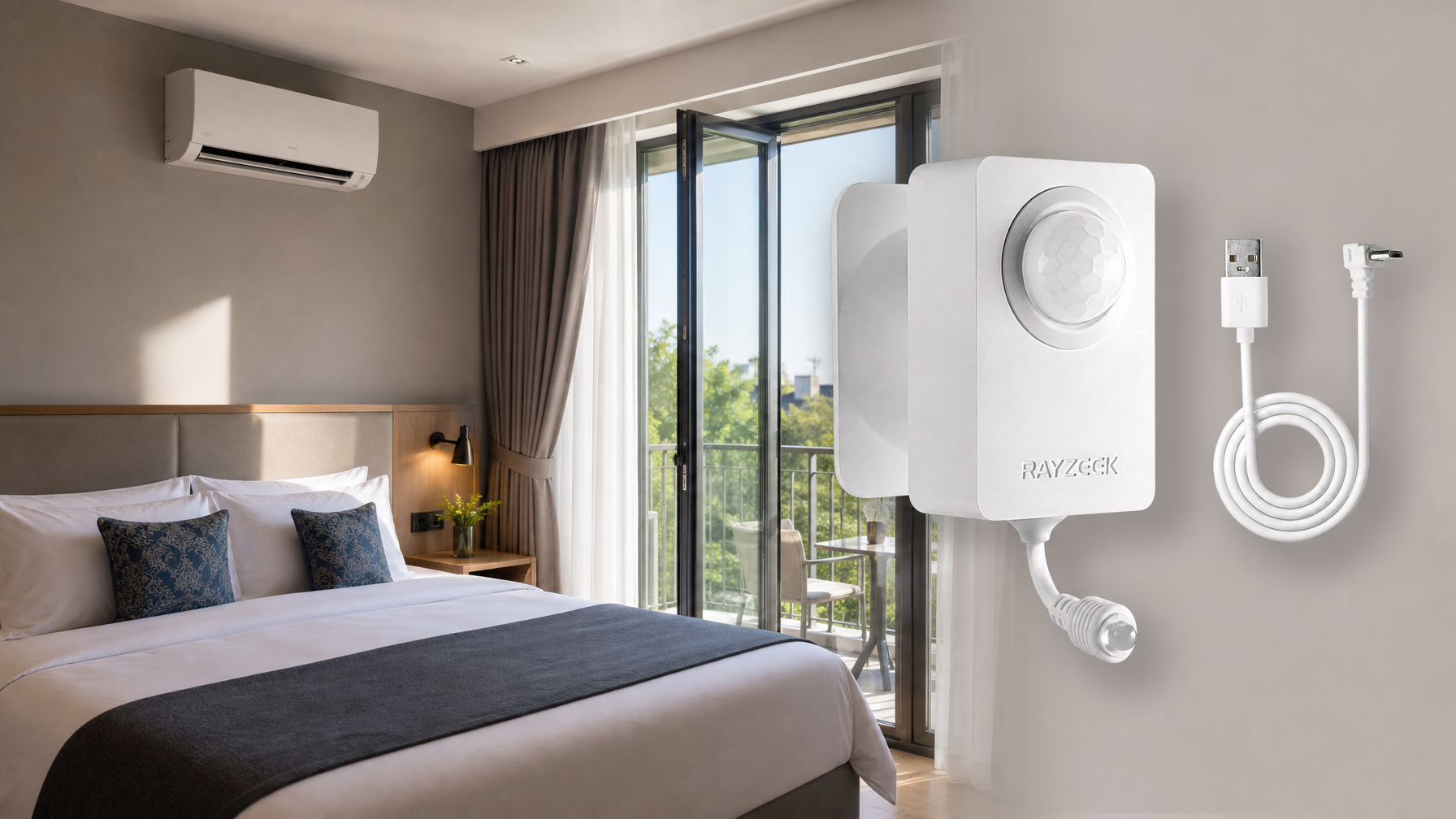
While SEER and EER ratings provide valuable insights into an air conditioner’s efficiency, real-world energy consumption often depends on usage patterns. For instance, leaving the AC running in an empty room drastically reduces its effective efficiency. The Rayzeek RZ050 Air Conditioner Motion Sensor addresses this issue directly by automating the AC’s operation based on occupancy.

Rayzeek RZ050: Maximize Your AC’s Efficiency
Intelligently automates your AC to boost its effective SEER and EER ratings.
- Reduces energy bills by up to 50% by turning off the AC in unoccupied rooms.
- Night mode ensures uninterrupted sleep while still saving energy during the day.
- Helps you achieve optimal energy efficiency beyond the standard ratings.
Is an Air Conditioner a Closed or Open Thermal System?
An air conditioner can be considered a closed thermal system concerning the refrigerant. The refrigerant remains contained within a sealed loop, never mixing with the external environment. However, the air conditioner itself is part of a larger open system, as it exchanges energy (heat) with both the indoor and outdoor environments. It takes in electrical energy and interacts with the air in the room, which is not a closed system.
Advanced Concepts in Air Conditioning Thermodynamics
Let’s explore some more advanced concepts:
Psychrometrics: Understanding Moist Air
Psychrometrics is the study of the thermodynamic properties of moist air. It’s crucial for understanding and designing air conditioning systems. Key psychrometric properties include dry-bulb temperature, wet-bulb temperature, relative humidity, humidity ratio, and enthalpy. Psychrometric charts are graphical tools used to visualize and analyze these properties. Air conditioners not only cool the air but also affect its humidity, making psychrometrics essential for proper system design and operation.
Enthalpy: The Total Heat Content
Enthalpy is a thermodynamic property that represents the total heat content of a system. In air conditioning, enthalpy quantifies the heat content of the refrigerant and the moist air. The change in the refrigerant’s enthalpy during evaporation and condensation determines the system’s cooling capacity. The enthalpy of moist air depends on its temperature and humidity ratio. Enthalpy calculations are essential for determining the cooling load and sizing air conditioning equipment.
Real-World Air Conditioner System Design and Optimization: Beyond the Basics
Designing an efficient air conditioning system involves considering various factors, including:
Poderá Também Estar Interessado Em
- Tensão: 2 pilhas AAA
- Modo Dia/Noite
- Temporização: 15min, 30min, 1h(padrão), 2h
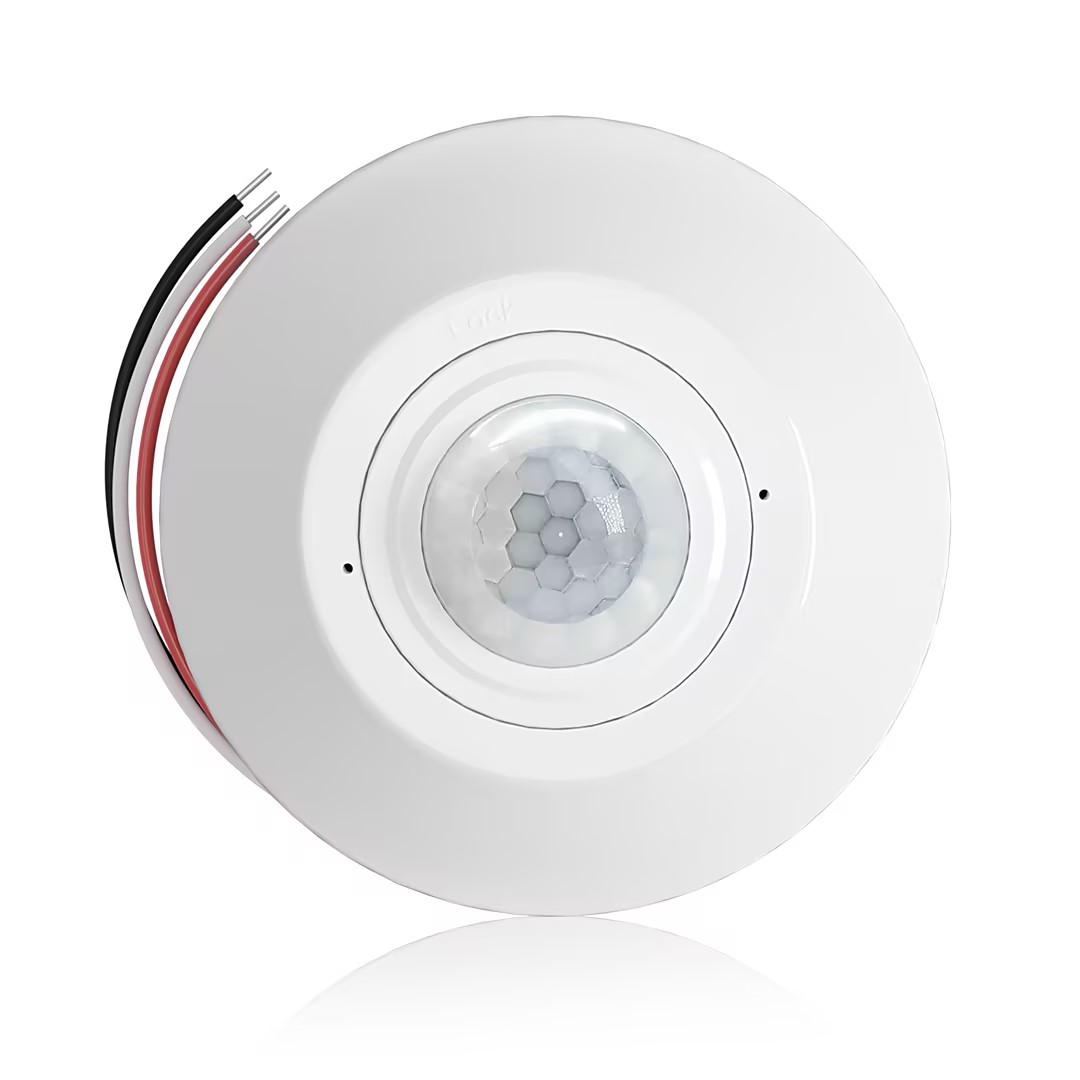
- Sensor de presença PIR para montagem no teto com saída de relé de contacto seco
- Alimentação de baixa tensão de 12/24VDC ou 12/24VAC
- Contactos de relé isolados COM, NO e NC para entradas de controlo de edifícios, HVAC e EMS
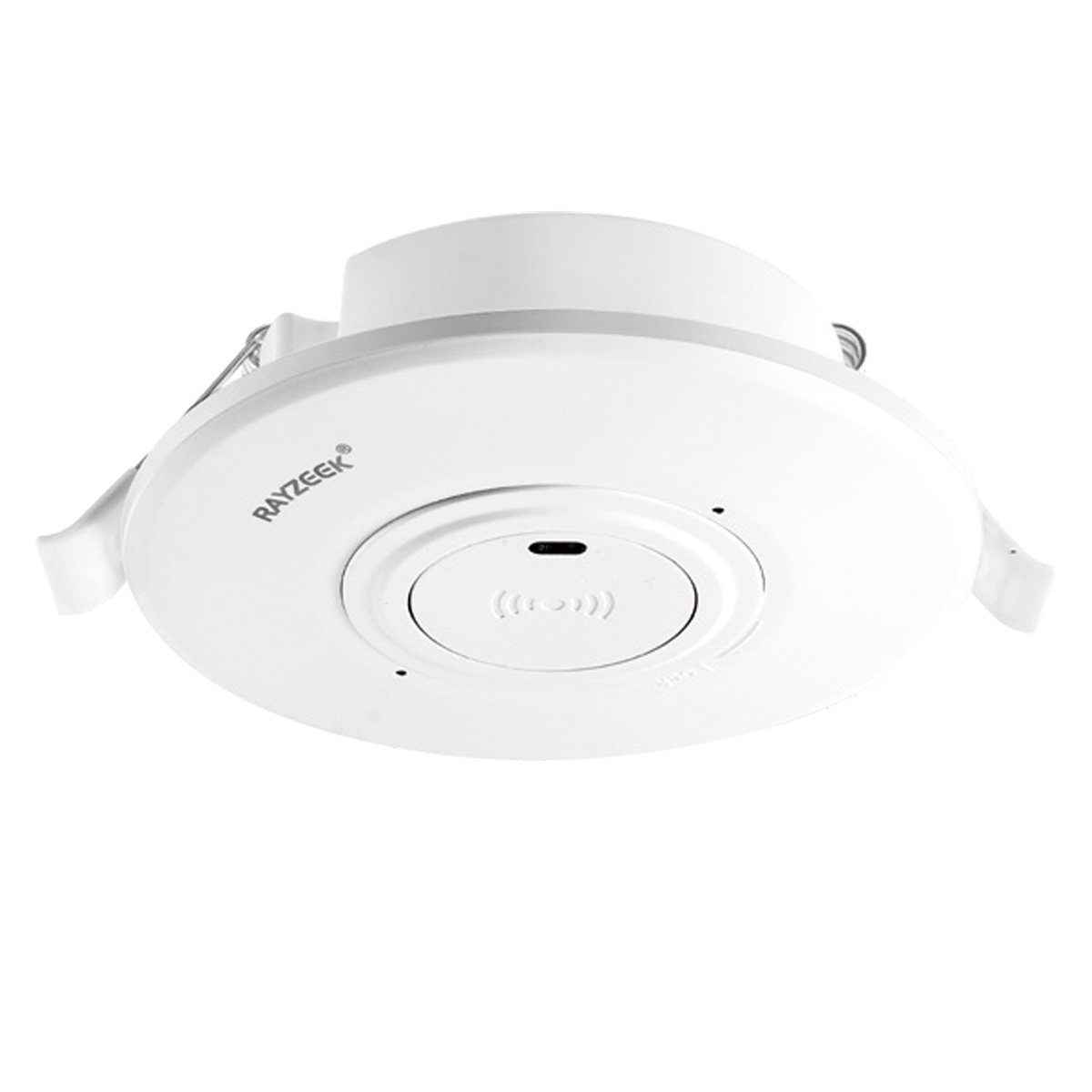
- Interruptor com sensor de movimento por micro-ondas encastrável no teto de baixa tensão DC
- Entrada de 12 VDC / 24 VDC com intervalo de 10-30 VDC
- Corrente máxima de trabalho de 10A com temporizador, limiar Lux e sensibilidade ajustáveis
- Interruptor com sensor de movimento de micro-ondas encastrável no teto para cargas mais elevadas
- Entrada de tensão de linha de 100-265 VAC, modelo de 10A
- Deteção por micro-ondas a 5,8 GHz com temporizador, limiar Lux e sensibilidade ajustáveis
- Interruptor com sensor de movimento de micro-ondas encastrável no teto
- Entrada de tensão de linha de 100-265 VAC, modelo de 5A
- Deteção por micro-ondas a 5,8 GHz com temporizador, limiar Lux e sensibilidade ajustáveis
- Dimmer com sensor de presença PIR RZ037 de montagem no teto para alimentação de 220V
- Corrente máxima de funcionamento de 3A com carga nominal de 660W
- O botão LUX controla o sensor de luz ON/OFF e o brilho de regulação definido pelo utilizador
- Dimmer com sensor de presença PIR RZ037 de montagem no teto para alimentação de 110V
- Corrente máxima de funcionamento de 3A com carga nominal de 330W
- O botão LUX controla o sensor de luz ON/OFF e o brilho de regulação definido pelo utilizador
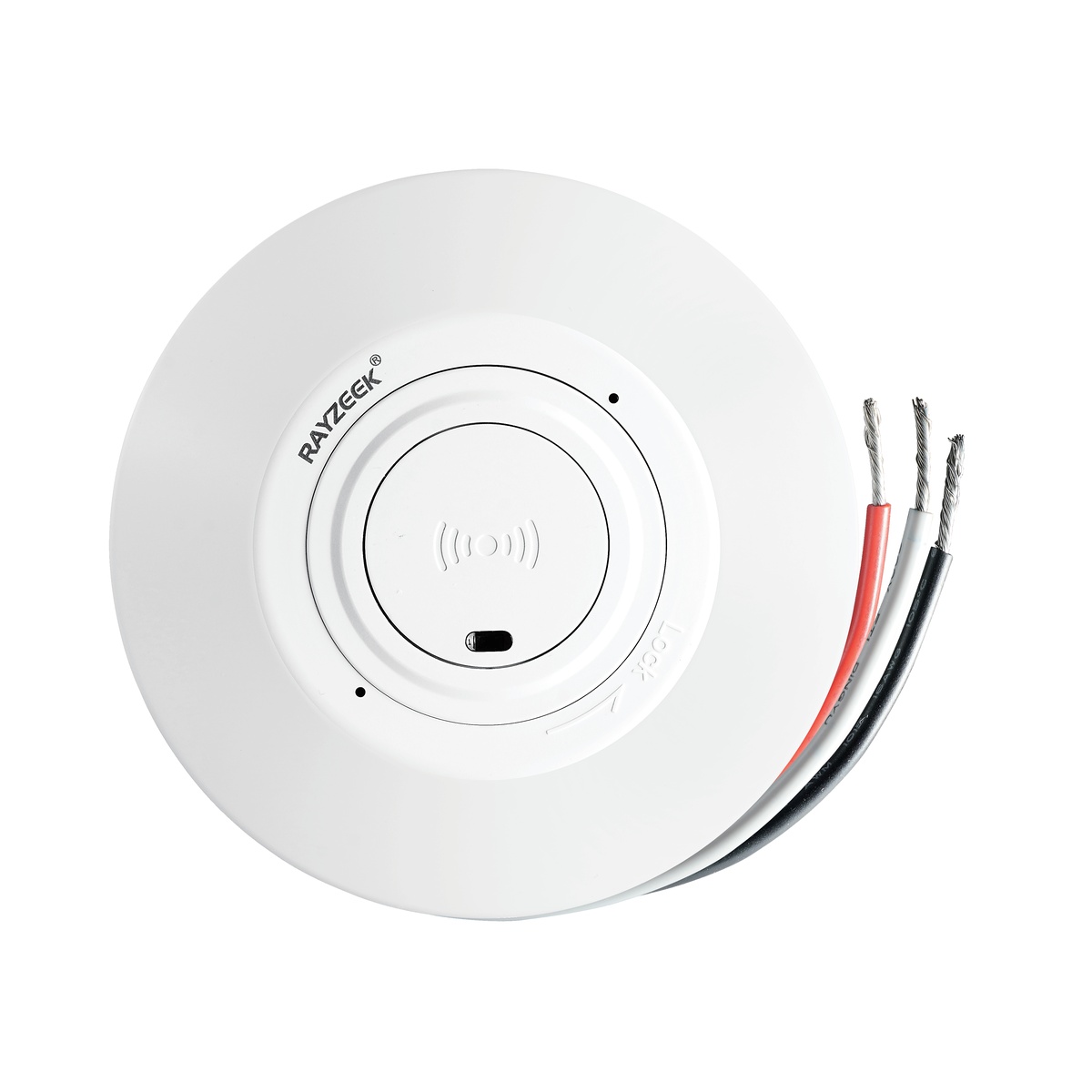
- Interruptor com sensor de movimento por micro-ondas de montagem no teto em DC de baixa tensão
- Entrada de 12 VDC / 24 VDC com intervalo de 10-30 VDC
- Corrente máxima de trabalho de 10A com temporizador, limiar Lux e sensibilidade ajustáveis
- Interruptor de sensor de movimento por micro-ondas para montagem no teto para cargas mais elevadas
- Entrada de tensão de linha de 100-265 VAC, modelo de 10A
- Deteção por micro-ondas a 5,8 GHz com temporizador, limiar Lux e sensibilidade ajustáveis
- Interruptor de sensor de movimento por micro-ondas para montagem no teto
- Entrada de tensão de linha de 100-265 VAC, modelo de 5A
- Deteção por micro-ondas a 5,8 GHz com temporizador, limiar Lux e sensibilidade ajustáveis
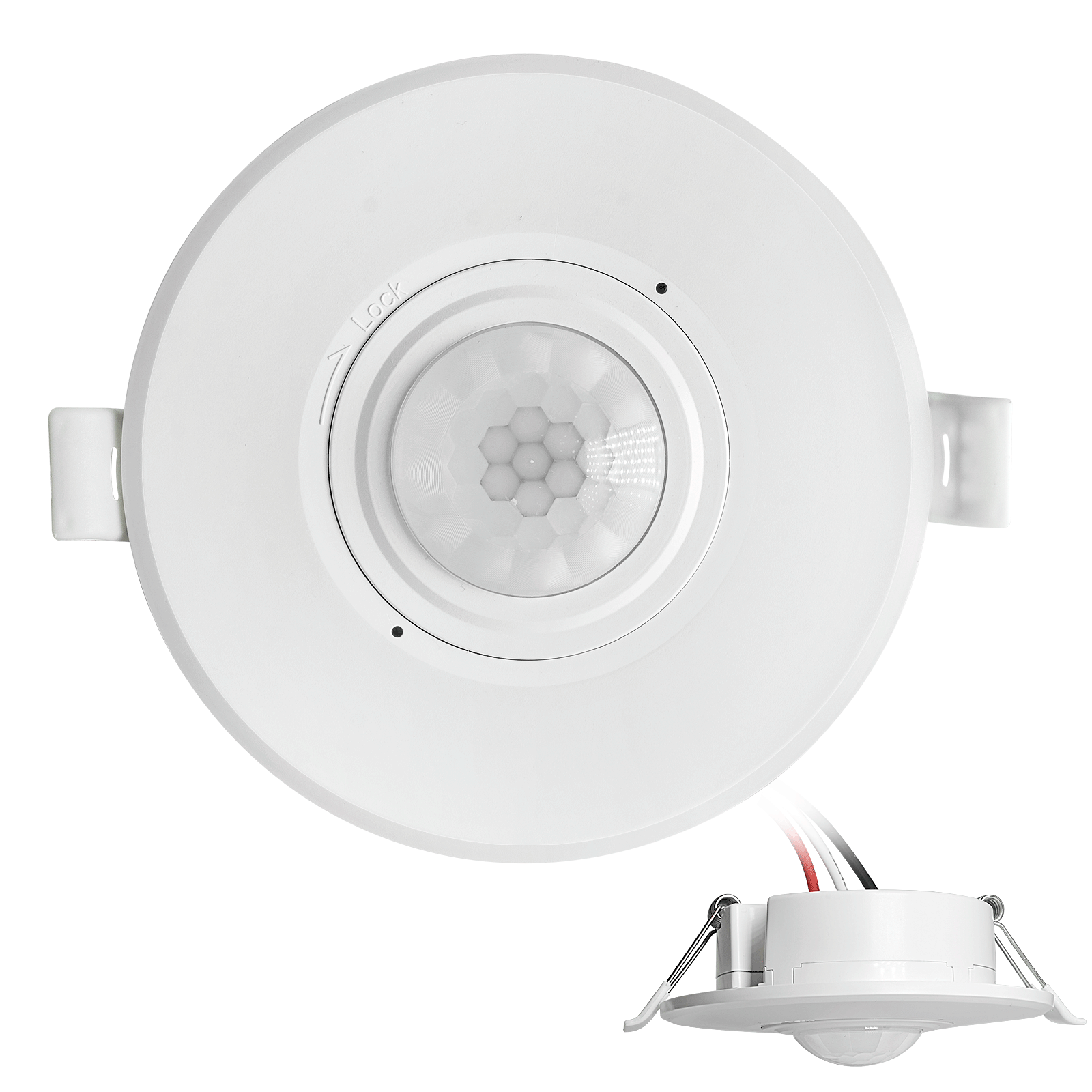
- Interruptor de sensor de movimento PIR para montagem de embutir no teto em CC de baixa tensão
- Entrada de 12 VDC / 24 VDC com intervalo de 10-30 VDC
- Corrente máxima de trabalho de 10A com temporizador, limiar Lux e sensibilidade ajustáveis
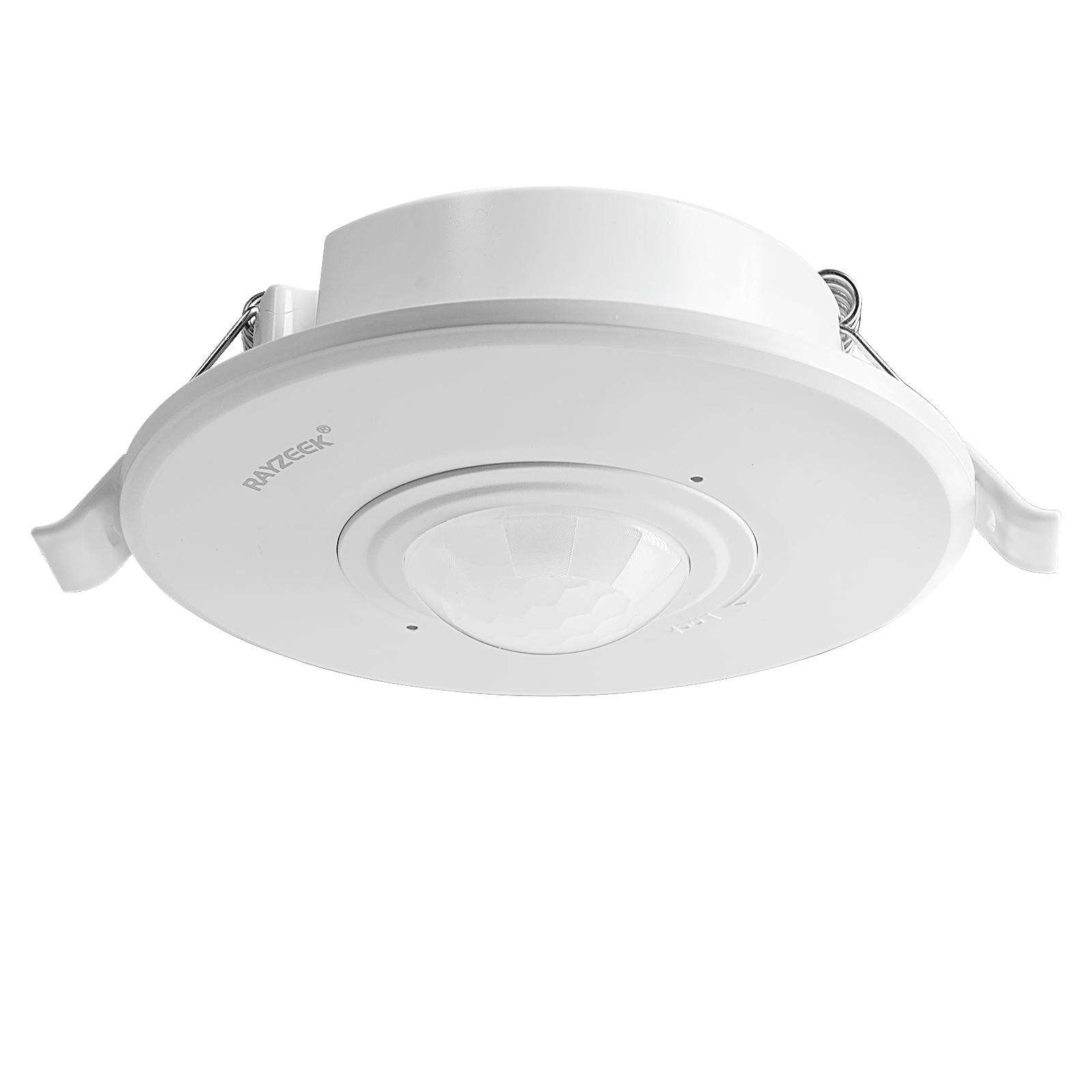
- Interruptor de sensor de movimento PIR para montagem de embutir no teto para cargas mais elevadas
- Entrada de tensão de linha de 100-265 VAC, modelo de 10A
- Deteção de 360 graus com temporizador, limiar Lux e sensibilidade ajustáveis
- Interruptor de sensor de movimento PIR para montagem de embutir no teto
- Entrada de tensão de linha de 100-265 VAC, modelo de 5A
- Deteção de 360 graus com temporizador, limiar Lux e sensibilidade ajustáveis
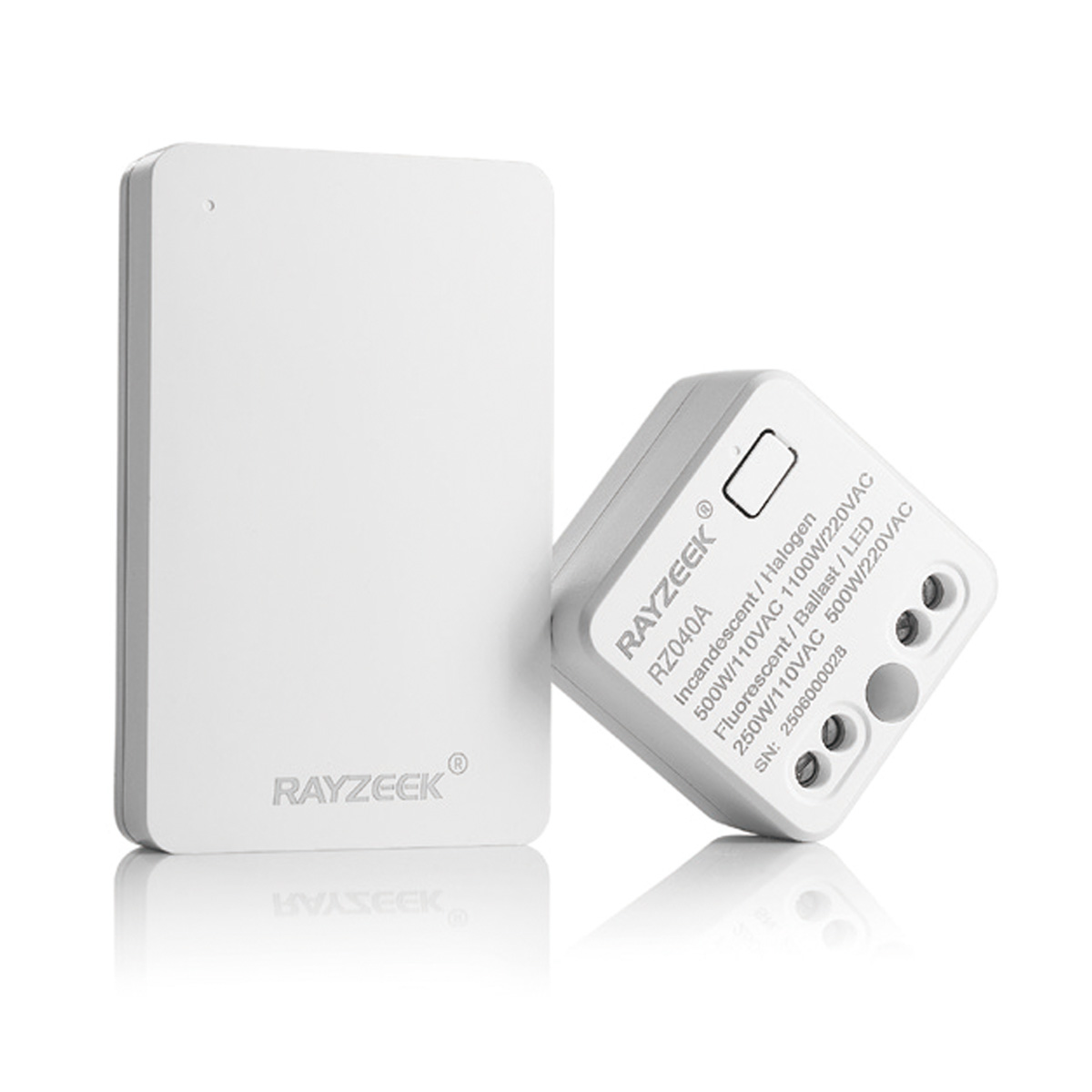
- Kit de interruptor sem fios e recetor para controlo de iluminação interior ON/OFF
- Recetor de 100-230VAC, 50/60Hz com corrente nominal de 5A
- Interruptor sem fios alimentado a pilha CR2032 com comunicação a 2.4GHz
- Ocupação (Ligado automático/Desligado automático)
- 12–24V DC (10–30VDC), até 10A
- Cobertura de 360°, diâmetro de 8–12 m
- Temporização de 15 s–30 min
- Sensor de luz Desligado/15/25/35 Lux
- Sensibilidade Alta/Baixa
- Modo de presença Ligado Automático/Desligado Automático
- 100–265V AC, 10A (neutro necessário)
- Cobertura de 360°; diâmetro de deteção de 8–12 m
- Temporização de 15 s–30 min; Lux Desligado/15/25/35; Sensibilidade Alta/Baixa
- Modo de presença Ligado Automático/Desligado Automático
- 100–265V AC, 5A (neutro necessário)
- Cobertura de 360°; diâmetro de deteção de 8–12 m
- Temporização de 15 s–30 min; Lux Desligado/15/25/35; Sensibilidade Alta/Baixa
- Climate: Understanding the outdoor temperature and humidity variations throughout the year is crucial for selecting the right system.
- Building Load: Accurately estimating the amount of heat that needs to be removed from the building is essential. This depends on factors like insulation, occupancy, and internal heat gains.
- Control Strategies: Employing advanced control systems, such as variable refrigerant flow (VRF) or variable-speed compressors, can optimize performance under varying loads.
Optimization Techniques for Maximum Efficiency
Optimization techniques can be used to minimize energy consumption while maintaining desired comfort levels. This may involve using simulation software to model system performance under different operating conditions. Life-cycle cost analysis can help evaluate the long-term economic and environmental impact of different design choices.
Thermodynamic Limitations: The Boundaries of Efficiency
- The Carnot cycle represents the theoretical upper limit of efficiency for any heat engine or refrigeration cycle operating between two temperatures.
- Real-world air conditioners have efficiencies significantly lower than the Carnot efficiency due to irreversibilities in the compression process, heat transfer limitations, and other factors.
The Future of Air Conditioning: Pushing the Boundaries
Current research is focused on developing new refrigerants with lower global warming potential and exploring alternative cooling technologies that can overcome the limitations of the conventional vapor-compression cycle.
One promising area is the development of more sophisticated control algorithms that can dynamically adjust system operation based on real-time weather data, occupancy patterns, and energy prices. This could lead to significant energy savings and improved comfort.
Another area of interest is the integration of thermal storage technologies with air conditioning systems. This could allow for shifting cooling loads to off-peak hours, reducing electricity costs and grid strain.