
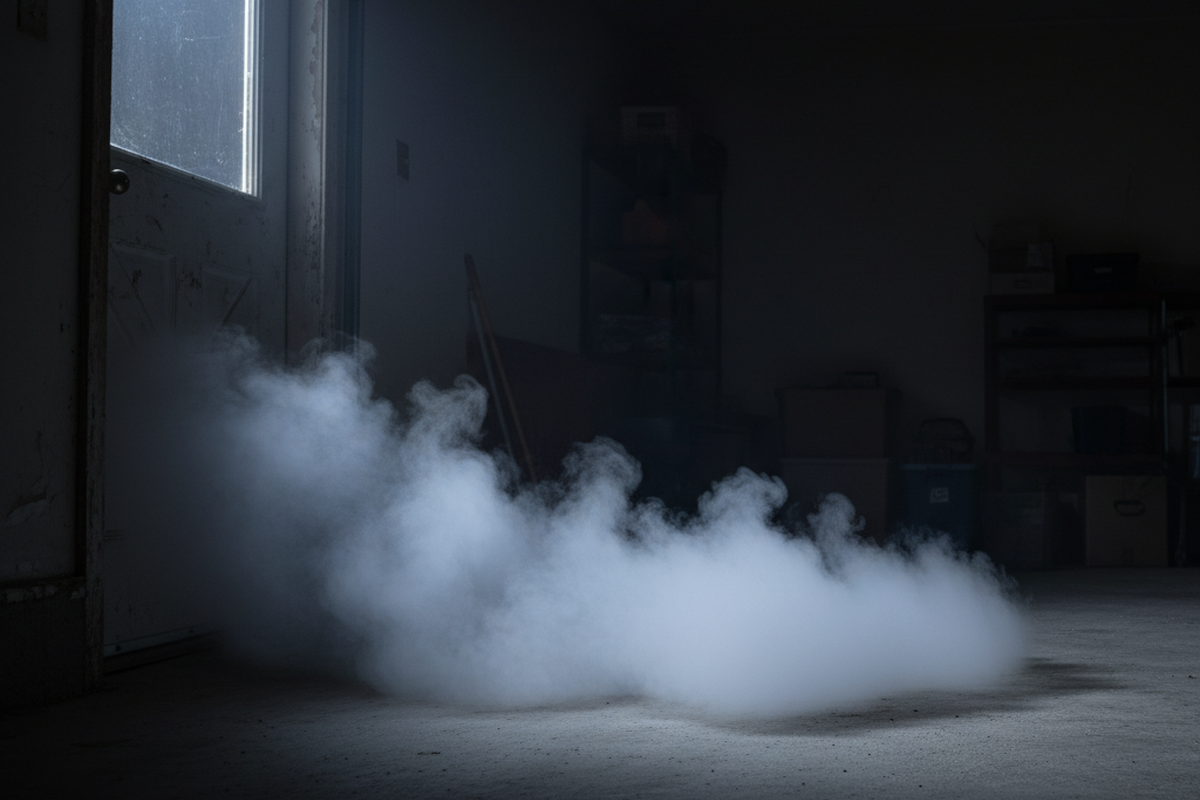
It usually happens at 2:14 AM. The siren rips through the house, sending the dog into a frenzy and the homeowner scrambling for a baseball bat. The keypad flashes “GARAGE MOTION.” But when the lights flicker on and the adrenaline fades, nobody is there. The overhead door is down. The windows are intact. The only thing moving is the subtle rattle of the side service door in the wind.
After three nights of this, trust evaporates. The homeowner stops arming the system, or worse, bypasses the garage zone entirely. They call the installer, demanding a replacement for the “defective” unit. But the sensor isn’t defective. It’s doing exactly what it was engineered to do: detecting a massive intrusion of energy. The problem isn’t the hardware; it’s a fundamental misunderstanding of what that white plastic box on the wall actually sees. It doesn’t look for people. It looks for heat, and in a garage, the air itself can look like a ghost.
The Eye Does Not See Movement
To stop the false alarms, you have to stop thinking like a human with binocular vision and start thinking like a pyroelectric element. A standard Passive Infrared (PIR) sensor—whether it’s a high-end Bosch Blue Line Gen2 or a generic wireless unit from a peel-and-stick kit—functions as a thermal camera with extremely low resolution. Inside the lens, the room is divided into dozens of invisible zones, like slices of a pie. The sensor sits in a state of voltage equilibrium, watching the background infrared radiation of the concrete floor, the drywall, and the parked car.
When a human walks across the room, they aren’t detected just because they move. The sensor spots them because they are 98.6°F radiators moving against a 60°F background. The sensor’s “eye” registers a rapid spike in temperature (Delta T) as the intruder crosses from one zone to the next. The circuitry counts these pulses. If the heat signature crosses enough zones in a short enough timeframe, the relay clicks open, and the police get dispatched. This mechanism is governed by physics, not firmware.
That mechanism also explains why spiders are such a nuisance in garage environments. A spider crawling directly on the lens isn’t just a bug; to the sensor, it’s a massive thermal object obscuring and revealing the background heat in rapid succession. If you find yourself constantly cleaning webs off the housing, check the cable entry hole on the back. If it isn’t sealed with silicone or duct seal, the heat from the circuit board acts as a beacon, drawing insects inside the unit itself where they trigger the pyro element directly.
But the most common ghost isn’t a bug. It’s air. The sensor cannot distinguish between a person walking at 3 miles per hour and a cloud of freezing air moving at the same speed. If a draft creates a sharp enough temperature contrast against the background, the sensor obeys the laws of physics and triggers the alarm.
The Thermal Lance

The side service door is the single most neglected entry point in residential security design. Installers often slap a magnetic contact on the door frame and mount the motion sensor in the corner of the garage, facing diagonally across the space to cover the overhead door and the main interior path. That setup creates a geometric disaster. By mounting the sensor in the corner, you are likely aiming its most sensitive zones directly at the seam of the side door.
In January, when the exterior temperature drops to 10°F and the garage interior sits at 50°F, that door seam becomes a nozzle. A wind gust hits the exterior, pressurizing the seal. If the weatherstripping has even a millimeter gap—common on wooden jambs that warp with humidity—that pressure forces a jet of freezing air into the room.
This isn’t just a gentle breeze. Through a thermal camera like a FLIR E6, this draft looks like a dark blue lance shooting five or six feet into the room. It has velocity, and crucially, it has a hard thermal edge. When that plume of 10°F air crosses the floor, the PIR sensor sees a massive negative Delta T moving across its field of view. It looks exactly like a person.
Hledáte úsporná řešení aktivovaná pohybem?
Kontaktujte nás pro kompletní PIR snímače pohybu, úsporné produkty aktivované pohybem, spínače s pohybovým senzorem a komerční řešení pro detekci přítomnosti či nepřítomnosti osob.
The same physics applies to garage heaters. A gas-fired unit heater, like a Modine Hot Dawg, hangs from the ceiling and cycles on and off. If the motion sensor is mounted opposite the heater, every time the blower kicks on, it blasts a wave of hot air across the room. The sensor sees the heat delta and trips. The fix for the heater is the same as the fix for the door, but the door is trickier because you can’t just turn it off.
Inspirujte se portfoliem snímačů pohybu Rayzeek.
Nenašli jste, co hledáte? Nemějte obavy. K vyřešení vašich požadavků existují vždy alternativní cesty. Možná vám pomůže některé z našich portfolií.
Many people attempt to solve this by adding more weatherstripping. While sealing the door is good practice, it often backfires as a false-alarm fix. If you seal 90% of the door but leave a pinhole at the bottom corner, you turn a low-pressure draft into a high-pressure jet. The turbulence increases, and the thermal signature becomes even sharper. You cannot caulk your way out of bad sensor placement.
The Sensitivity Trap
When the customer calls to complain about the false alarms, the amateur move is to open the sensor and turn down the sensitivity. On older units, this might be a potentiometer dial; on newer ones like the Honeywell 5800 series, it’s a jumper setting for “Pulse Count.” The logic is that if you make the sensor “dumber,” it will stop seeing the air.
That logic is a trap. Pulse count settings work by requiring the thermal target to cross more zones before triggering. A standard setting might be 2 pulses; “Pet Immune” or “Low Sensitivity” might be 4 pulses. While this might stop the alarm from triggering on a small puff of air, it also makes the sensor sluggish to detect a slow-moving intruder. A burglar who knows what they are doing—moving slowly, wearing heavy insulating clothing—can often defeat a sensor set to low sensitivity.
Furthermore, air doesn’t care about your settings. A strong gust hitting a mail slot or a bad door seal can easily generate enough thermal noise to satisfy a 4-pulse count. You end up degrading the security of the system to mask an environmental problem. Often, the result is a sensor that misses the bad guy but still catches the draft.
Geometry and The Tape Hack
The only reliable cure for thermal false alarms is geometry. You must change the relationship between the “eye” and the “lance.”
The golden rule of PIR placement in drafty environments is to mount the sensor on the same wall as the draft source, looking out. If the draft is coming from the side door, do not mount the sensor on the opposite wall facing the door. Mount the sensor on the same wall as the door, ideally high up, looking away from it. A PIR sensor cannot see what is directly underneath or behind it. By placing the sensor on the drafty wall, the jet of cold air enters the room underneath the sensor’s field of view. The sensor looks out at the stable interior of the garage, ignoring the turbulence at the entry point.
Sometimes, however, wiring constraints or room shape make this impossible. You might be stuck with a sensor that has to face the door. In this case, use the “Lens Tape Hack.”
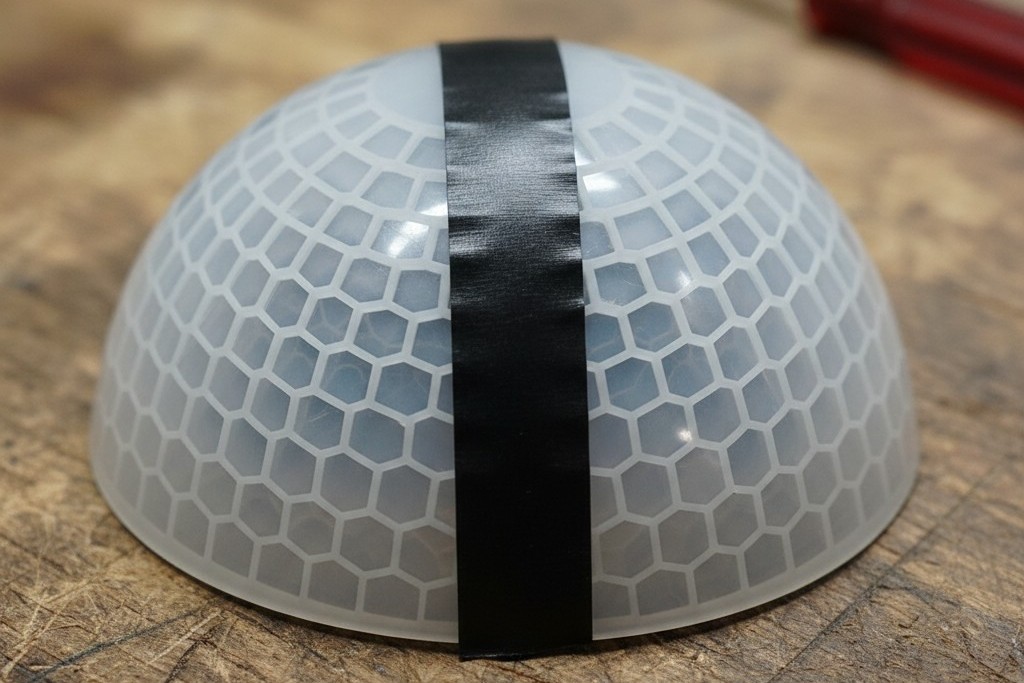
Crack the sensor housing open. Take the manufacturer’s masking strips (or a precise sliver of high-quality electrical tape) and apply it to the inside of the curved plastic lens. You want to mask off the specific segments that look at the door seam. This creates a vertical dead zone.
Walk test this obsessively. You want the sensor to be blind to the door seam itself but live as soon as a person steps two feet into the room. This is a surgical intervention. You are sacrificing a slice of coverage to gain reliability. It is far superior to turning down the global sensitivity, which blinds the entire unit.
The Nuclear Option
If the garage is a thermal nightmare—bad insulation, loose doors, erratic heating—and you cannot solve it with geometry, you may need to upgrade the hardware itself. This is where Dual-Technology (Dual-Tech) sensors come into play.
A Dual-Tech sensor, like the Bosch Blue Line Tritech, contains both a PIR element and a Microwave Doppler radar. For the alarm to trip, both technologies must trigger simultaneously. The PIR sees the heat change, and the Microwave sees physical mass moving. A draft of cold air will trigger the PIR, but because air has no density, the Microwave return will be flat. The sensor ignores the event.
Mohlo by vás také zajímat

- Napětí: 2 baterie AAA
- Režim Den/Noc
- Časové zpoždění: 15 min, 30 min, 1 h (výchozí), 2 h

- Stropní PIR snímač přítomnosti s výstupem relé s beznapěťovým kontaktem
- Nízkonapěťové napájení 12/24VDC nebo 12/24VAC
- Isolované kontakty relé COM, NO a NC pro vstupy systémů EMS, HVAC a řízení budov

- Nízkonapěťový stejnosměrný vestavný stropní mikrovlnný spínač snímače pohybu
- Vstup 12 VDC / 24 VDC s rozsahem 10–30 VDC
- Maximální pracovní proud 10 A s nastavitelným časovým zpožděním, prahem Lux a citlivostí
- Vestavný stropní mikrovlnný spínač snímače pohybu pro vyšší zátěž
- Síťové vstupní napětí 100–265 VAC, model 10A
- Mikrovlnné snímání 5.8 GHz s nastavitelnou časovou prodlevou, prahem Lux a citlivostí
- Vestavný stropní mikrovlnný spínač senzoru pohybu
- Síťové vstupní napětí 100–265 VAC, model 5A
- Mikrovlnné snímání 5.8 GHz s nastavitelnou časovou prodlevou, prahem Lux a citlivostí
- Stropní RZ037 PIR senzor přítomnosti se stmívačem pro napájení 220V
- Maximální pracovní proud 3A s jmenovitým zatížením 660W
- Tlačítko LUX ovládá zapnutí/vypnutí světelného senzoru a uživatelsky nastavený jas stmívání
- Stropní RZ037 PIR senzor přítomnosti se stmívačem pro napájení 110V
- Maximální pracovní proud 3A s jmenovitým zatížením 330W
- Tlačítko LUX ovládá zapnutí/vypnutí světelného senzoru a uživatelsky nastavený jas stmívání

- Nízkonapěťový stejnosměrný stropní mikrovlnný spínač senzoru pohybu
- Vstup 12 VDC / 24 VDC s rozsahem 10–30 VDC
- Maximální pracovní proud 10 A s nastavitelným časovým zpožděním, prahem Lux a citlivostí
- Stropní mikrovlnný spínač senzoru pohybu pro vyšší zatížení
- Síťové vstupní napětí 100–265 VAC, model 10A
- Mikrovlnné snímání 5.8 GHz s nastavitelnou časovou prodlevou, prahem Lux a citlivostí
- Stropní mikrovlnný spínač s pohybovým senzorem
- Síťové vstupní napětí 100–265 VAC, model 5A
- Mikrovlnné snímání 5.8 GHz s nastavitelnou časovou prodlevou, prahem Lux a citlivostí

- Nízkonapěťový stejnosměrný vestavný stropní spínač s PIR pohybovým senzorem
- Vstup 12 VDC / 24 VDC s rozsahem 10–30 VDC
- Maximální pracovní proud 10A s nastavitelným časovým zpožděním, prahem Lux a citlivostí

- Vestavný stropní spínač s PIR pohybovým senzorem pro vyšší zátěž
- Síťové vstupní napětí 100–265 VAC, model 10A
- 360stupňová detekce s nastavitelným časovým zpožděním, prahem Lux a citlivostí
- Vestavný stropní spínač s PIR pohybovým senzorem
- Síťové vstupní napětí 100–265 VAC, model 5A
- 360stupňová detekce s nastavitelným časovým zpožděním, prahem Lux a citlivostí

- Sada bezdrátového spínače a přijímače pro vnitřní řízení osvětlení ZAP/VYP
- Přijímač 100-230VAC, 50/60Hz s jmenovitým proudem 5A
- Bezdrátový spínač napájený baterií CR2032 s komunikací 2,4GHz
- Detekce přítomnosti (Automatické ZAP/Automatické VYP)
- 12–24V DC (10–30VDC), až 10A
- Pokrytí 360°, průměr 8–12 m
- Časové zpoždění 15 s–30 min
- Snímač jasu Vypnuto / 15 / 25 / 35 Lux
- Vysoká/nízká citlivost
- Režim detekce přítomnosti s automatickým zapnutím/vypnutím
- 100–265V AC, 10A (vyžaduje nulový vodič)
- 360° pokrytí; průměr detekce 8–12 m
- Časové zpoždění 15 s – 30 min; Lux VYPNUTO / 15 / 25 / 35; citlivost vysoká/nízká
- Režim detekce přítomnosti s automatickým zapnutím/vypnutím
- 100–265V AC, 5A (vyžaduje nulový vodič)
- 360° pokrytí; průměr detekce 8–12 m
- Časové zpoždění 15 s – 30 min; Lux VYPNUTO / 15 / 25 / 35; citlivost vysoká/nízká
These units are more expensive and require more power (often requiring a 4-wire setup rather than 2-wire loops on some older wireless transmitters), but they are the closest thing to a silver bullet for drafty garages. However, even Dual-Tech has limits. If the door rattles violently enough, the Doppler radar can pick up the vibration of the door itself as “movement.”
Physics always wins. You can buy better gear, but you can never stop the air from moving. The goal isn’t to stop the wind; it’s to make sure your security system stops watching it.







