
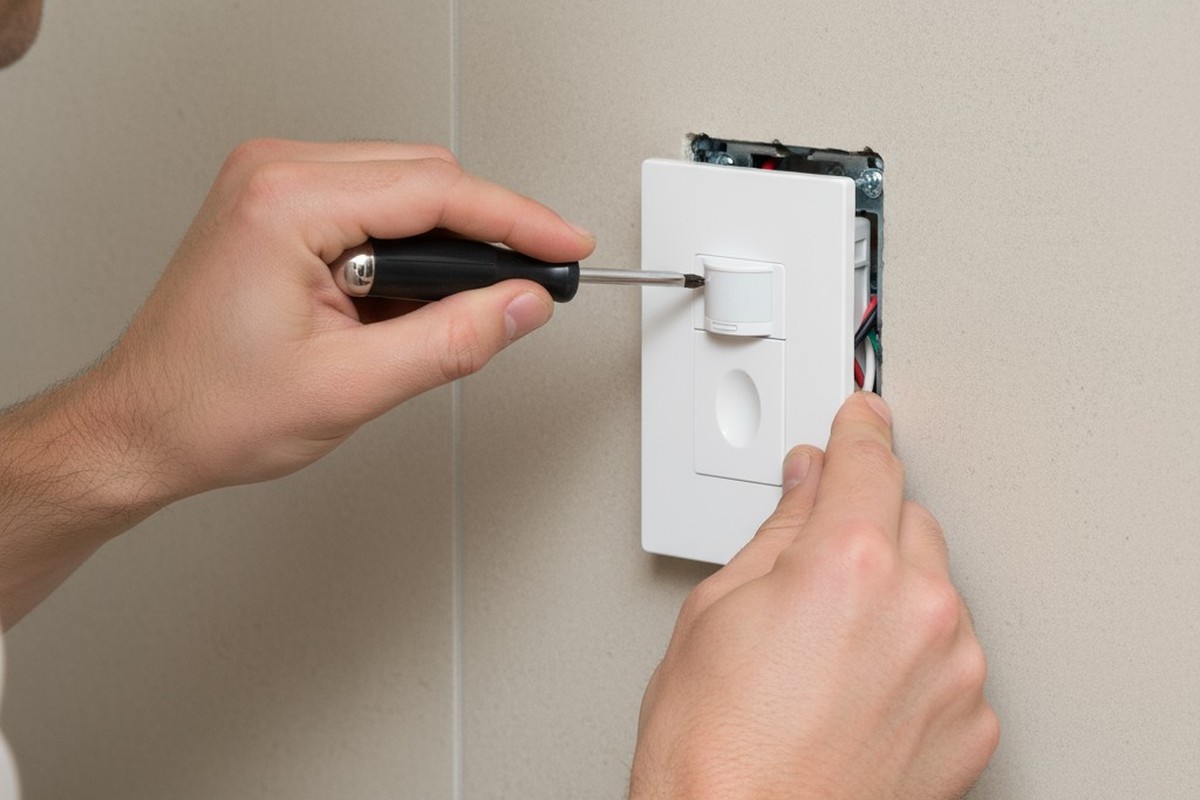
A facilities manager installs a new motion-activated lighting system, expecting the lights to snap on the instant anyone enters and cut off the moment the space is vacant. A homeowner adds a motion sensor to a bathroom, anticipating it will respond with the vigilance of a security device. Both are disappointed. The lights seem sluggish. The sensor ignores brief motion. The timeout feels interminable. The system is returned or criticized as defective.
The failure isn’t in the hardware; it’s in the expectation. Energy-saving motion sensors and security sensors are not two versions of the same tool. They are fundamentally different machines, engineered to solve opposing problems. The confusion arises because both use motion detection, but that surface similarity obscures a deep divergence in purpose and logic. An energy sensor is designed to be forgiving, smooth, and occupant-friendly. A security sensor is designed to be aggressive, instant, and uncompromising. When a buyer expects one and receives the other, dissatisfaction is inevitable.
Understanding this distinction is the difference between a system that works as intended and one that generates endless complaints. The intentional design choices that make an energy sensor effective at reducing waste are the same choices that make it unsuitable for security. This trade-off isn’t a flaw; it’s a feature.
The Conflation Problem: Why We Expect the Wrong Thing
The confusion is understandable. Both types of sensors detect movement. Both are often installed in similar locations. Both seem to serve a protective function—one against energy waste, the other against intrusion. Marketing language often blurs the lines further with terms like “smart detection” applied to both. For a non-technical buyer, the distinction is invisible.
This confusion costs money and time. A property manager buys motion sensors for a commercial restroom, expecting them to function like the building’s perimeter security alarms. When the lights don’t shut off immediately after the last person leaves, they assume the sensors are broken. An installer then spends hours trying to force the energy sensor to behave like a security device, shortening its timeout to an unreasonable duration. Soon, occupants complain that the lights cut off while they’re still in a stall. The cycle of recalibration, complaint, and frustration begins again.
The root cause is not a defect, but a mismatch between the buyer’s mental model and the sensor’s design. Energy sensors are purpose-built to balance detection with comfort. Security sensors are purpose-built to maximize vigilance at comfort’s expense. The goals are incompatible, and attempting to force one into the other’s role guarantees a compromised result. The solution isn’t better calibration; it’s setting the right expectations from the start.
Different Missions, Different Machines
The divergence between energy and security sensors begins with the design brief. That mission dictates every engineering choice, from the detector’s sensitivity to the timeout algorithm’s logic. These differences are the necessary consequences of the problem each sensor is built to solve.
Energy Sensors: Optimizing for Comfort and Efficiency

An energy-saving motion sensor’s prime directive is to eliminate waste without annoying people. In a room, hallway, or office, its job is to detect presence, maintain service as long as someone might reasonably be there, and then shut down after a safe margin of inactivity. The goal is not to react to every flicker of motion, but to provide a seamless, unobtrusive experience that never makes the occupant think about the sensor at all.
This mission imposes specific constraints. The sensor must avoid “false negatives”—turning the lights off on someone who is still present. A person reading in a library or working at a desk may remain nearly motionless for minutes. If the sensor is too quick to register stillness, it will cut power prematurely, forcing the occupant to wave their arms to bring the lights back on. This isn’t just an inconvenience; it’s a failure of the sensor’s core function to improve efficiency without degrading the user experience.
您可能也會感興趣

- 電壓:2 粒 AAA 電池
- 日/夜模式
- 延遲時間:15 分鐘、30 分鐘、1 小時(預設)、2 小時

- 吸頂式 PIR 人體感應器,配備乾觸點繼電器輸出
- 12/24VDC 或 12/24VAC 低電壓供電
- 用於 EMS、HVAC 和建築控制輸入的 COM、NO 和 NC 隔離繼電器觸點

- 低壓直流嵌入式天花安裝微波人體感應開關
- 12 VDC / 24 VDC 輸入,支援 10-30 VDC 範圍
- 最大工作電流 10A,配備可調節延時、光感閾值及靈敏度
- 高負載嵌入式天花安裝微波人體感應開關
- 100-265 VAC 市電輸入,10A 型號
- 5.8 GHz 微波感應,配備可調節延時、光感閾值及靈敏度
- 嵌入式天花安裝微波人體感應開關
- 100-265 VAC 市電輸入,5A 型號
- 5.8 GHz 微波感應,配備可調節延時、光感閾值及靈敏度
- 適用於 220V 電源的天花安裝 RZ037 PIR 被動式紅外線佔空感應調光開關
- 最大工作電流 3A,額定負載 660W
- LUX 按鈕控制光線感應器開關及用戶設定之調光亮度
- 適用於 110V 電源的天花安裝 RZ037 PIR 被動式紅外線佔空感應調光開關
- 最大工作電流 3A,額定負載 330W
- LUX 按鈕控制光線感應器開關及用戶設定之調光亮度

- 低壓直流天花安裝微波人體感應開關
- 12 VDC / 24 VDC 輸入,支援 10-30 VDC 範圍
- 最大工作電流 10A,配備可調節延時、光感閾值及靈敏度
- 高負載吸頂式微波動態感應器開關
- 100-265 VAC 市電輸入,10A 型號
- 5.8 GHz 微波感應,配備可調節延時、光感閾值及靈敏度
- 吸頂式微波動態感應器開關
- 100-265 VAC 市電輸入,5A 型號
- 5.8 GHz 微波感應,配備可調節延時、光感閾值及靈敏度

- 低壓直流嵌頂式 PIR 動態感應器開關
- 12 VDC / 24 VDC 輸入,支援 10-30 VDC 範圍
- 最大工作電流 10A,具備可調式時間延遲、光照度閾值及靈敏度

- 高負載嵌頂式 PIR 動態感應器開關
- 100-265 VAC 市電輸入,10A 型號
- 360度偵測,具備可調式時間延遲、光照度閾值及靈敏度
- 嵌頂式 PIR 動態感應器開關
- 100-265 VAC 市電輸入,5A 型號
- 360度偵測,具備可調式時間延遲、光照度閾值及靈敏度

- 用於室內開關照明控制的無線開關及接收器套裝
- 100-230VAC,50/60Hz 接收器,額定電流 5A
- CR2032 電池供電無線開關,採用 2.4GHz 通訊
- 佔用感應(自動開啟/自動關閉)
- 12–24V DC (10–30VDC),最高 10A
- 360° 覆蓋,直徑 8–12 米
- 延遲時間 15 秒至 30 分鐘
- 光感應器 關閉/15/25/35 Lux
- 高/低靈敏度
- 自動開啟/自動關閉佔用模式
- 100–265V AC,10A(需接零線)
- 360° 全方位覆蓋;8–12 米偵測直徑
- 延遲時間 15 秒至 30 分鐘;Lux 關閉/15/25/35;靈敏度 高/低
- 自動開啟/自動關閉佔用模式
- 100–265V AC,5A(需接零線)
- 360° 全方位覆蓋;8–12 米偵測直徑
- 延遲時間 15 秒至 30 分鐘;Lux 關閉/15/25/35;靈敏度 高/低
To prevent this, energy sensors are deliberately calibrated with forgiving parameters. The timeout is long, often five to thirty minutes, to account for periods of stillness. Sensitivity is tuned for larger, sustained motion, not tiny gestures. The trigger logic is smooth, sometimes ramping lights up gradually to avoid startling anyone. These are intentional choices that prioritize comfort over instantaneous response.
Security Sensors: Optimizing for Threat Detection

A security motion sensor exists to identify intrusion and trigger an immediate alert. It guards a perimeter, an entry point, or a restricted area where any unauthorized motion is a potential threat. Its job is to detect presence the instant it occurs, with no tolerance for delay and no concern for the comfort of the person detected. The goal is vigilance. The occupant experience is irrelevant because, in most cases, there should be no occupant.
This mission imposes a radically different set of constraints. The sensor cannot afford a false negative, as a single missed detection could mean a missed intrusion. It must respond instantly, because every second of delay gives a threat time to advance. It must assume hostility.
To achieve this, security sensors are calibrated aggressively. The timeout is near-zero, designed to sound an alarm and then immediately reset. Sensitivity is tuned high, often using dual-technology detection (like passive infrared combined with microwave sensing) to eliminate blind spots and catch even slow, cautious movement. The trigger logic is instant and binary. There is no gradual ramp. There is only detection or no detection, threat or no threat.
This design philosophy of zero ambiguity makes the sensor highly effective at its job—and unbearable for everyday use.
How Philosophy Shapes Hardware
The distinction between these sensors is embedded in the hardware itself. It’s not a software setting you can toggle; it’s an architectural choice reflecting the intended use.
Sensitivity Calibration: An energy sensor filters out minor motion from pets or air currents, looking for human-scale movement that indicates genuine occupancy. A security sensor does the opposite, using a hair-trigger threshold to catch even deliberate attempts to avoid detection, like crawling. Its hardware is often more sophisticated, incorporating multiple technologies to cross-verify motion.
Field of View: Energy sensors use a focused detection zone, covering a room’s primary activity area without bleeding into a hallway and causing false triggers. Security sensors use wide, overlapping fields of view to eliminate blind spots. The goal is total coverage.
Response Speed: Energy sensors have deliberate latency. They might require a second or two of sustained motion before triggering, to avoid reacting to someone just passing a doorway. Security sensors eliminate latency. The detection-to-alert chain is as close to instantaneous as possible.
正在尋找動態感應節能解決方案?
歡迎聯絡我們以獲取完整的 PIR 動態感應器、動態感應節能產品、動態感應器開關以及人體感應/無人感應商業解決方案。
These sensors solve for different variables. Energy sensors manage for occupant satisfaction and avoid false positives. Security sensors manage for threat capture and eliminate false negatives. The two objectives are mathematically opposed.
The Timeout Setting: Where the Difference Is Obvious
The timeout parameter is the most visible manifestation of this philosophical gap and the source of most complaints.
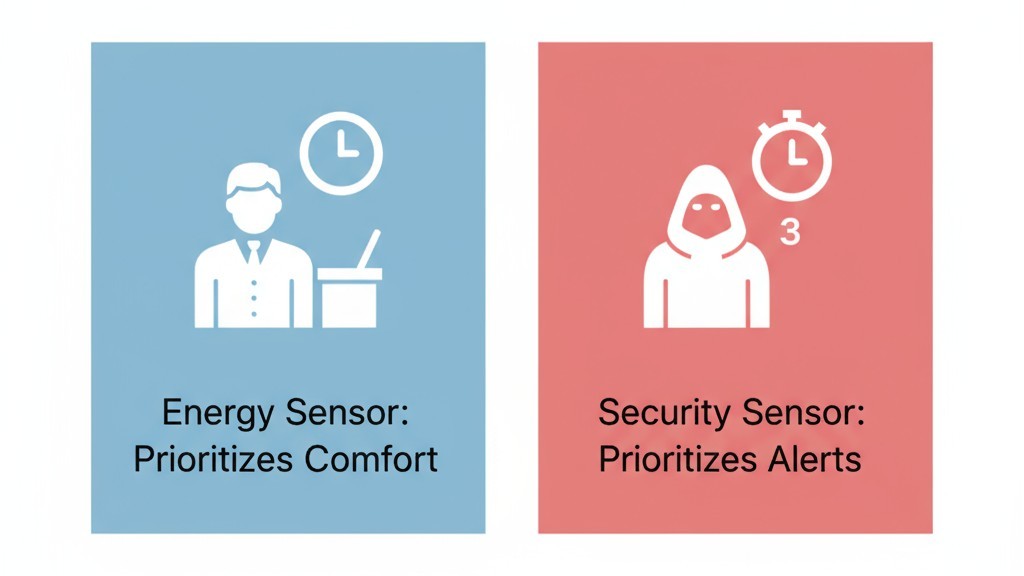
An energy-saving sensor’s timeout options typically range from five to thirty minutes. The logic is simple: keep the system active as long as someone might still be in the space, even if they’re momentarily still. A user in a bathroom stall or an office worker reading a document won’t trigger continuous detection. A short timeout would constantly plunge them into darkness, forcing them to wave their arms—exactly the friction the sensor is designed to prevent. A longer timeout trades a small amount of energy waste for a huge gain in user experience. It errs on the side of staying on, achieving an invisible, patient operation.
A security sensor operates on the opposite logic. Its timeout, if one exists at all, is measured in seconds. Its job is to detect an intrusion, trigger an alert, and immediately reset for the next event. It isn’t providing a service to the person it detects; that person is assumed to be an intruder. The short timeout is a feature, ensuring the system is always ready.
When a buyer installs an energy sensor expecting security-sensor speed, the long timeout feels broken. When they install a security sensor for lighting, the abrupt shutoff feels hostile. Neither is a defect. Both are a mismatch between the tool and the task.
從 Rayzeek 動態感測器產品組合中獲得靈感。
找不到您想要的產品?別擔心。總有其他方法可以解決您的問題。也許我們的其中一個產品組合可以幫到您。
When Mismatched Expectations Damage an Installation
The consequences of this conflation extend beyond disappointment. They create systemic problems for installers and property managers who must field complaints and waste labor on endless service calls.
The most common complaint about an energy sensor is that it doesn’t turn off quickly enough. This isn’t a defect; it’s the intentional buffer that prevents it from shutting off on a stationary occupant. The second complaint is the inverse: the lights turn off while someone is in the room. This happens when an installer, responding to the first complaint, shortens the timeout too much. In an attempt to meet the misguided expectation of security-sensor speed, the system begins to fail at its actual job.
For an installer, this cycle is maddening. The hardware isn’t defective and the configuration isn’t wrong. The problem is conceptual. No amount of technical adjustment will satisfy an expectation rooted in a fundamental misunderstanding of the product. The solution isn’t recalibration; it’s education.
Setting the Right Expectation
Successful motion sensor deployment isn’t about better hardware; it’s about better communication.
For energy-saving applications, the conversation must be about comfort and efficiency. The sensor is an occupant-friendly automation, and its timeout is a safety margin, not a flaw. Its job is to be invisible.
For security applications, the conversation is about vigilance and immediacy. The sensor is a detection tool, not a convenience. Its aggressive sensitivity and instant response are its core value.
While an energy-saving sensor can offer an incidental deterrent—an exterior light activating may discourage a casual intruder—it is not a security device. It isn’t designed to catch determined intruders or integrate with alarms. For that, you need a dedicated security sensor. Hybrid systems with dual-mode operation exist, but for most applications, the simplest approach is to deploy the right sensor for the right job.
When a buyer understands that an energy sensor is optimized for comfort, the long timeout becomes a feature. When they see a security sensor as a vigilance tool, its aggressive response becomes a strength. The distinction is not a technicality. It is a fundamental divide in design philosophy. The feature of an energy sensor isn’t that it can pretend to be a security device. The feature is that it is deliberately and intelligently optimized not to be one.







