
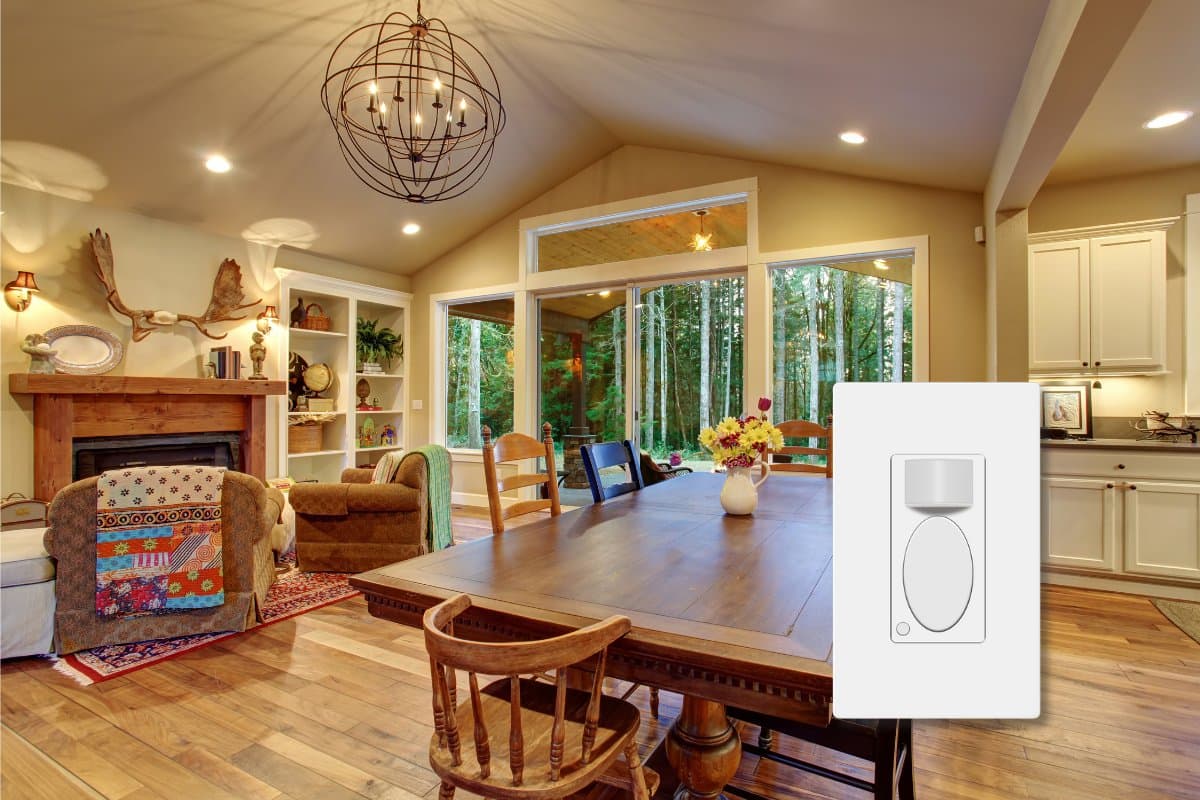
We’ve all been there, right? Walking into a room, the lights blaze on, and then we forget to turn them off when we leave. It’s a small thing, but it adds up. That’s where motion sensor light switches come in. They’re like your personal little energy-saving sidekicks, turning lights on when you need them and off when you don’t. But the question is, do they really save as much energy as they promise?
目錄
- What Is a Motion Sensor Switch and How It Works
- Types of Motion Sensor Switches and Features
- Main Benefits of Using Motion Sensor Switches
- How Much Energy Does It Save
- Are Motion Sensor Light Switches Worth the Investment
What Is a Motion Sensor Switch and How It Works
A motion sensor light switch is a special switch that detects movement in a room and automatically turns on/off the lights. This technology is particularly useful in areas such as bathrooms, staircases, or hallways, especially during nighttime. The beauty of motion sensor light switches is that they can fit in with any home decor style, replace any existing wall switch, and their installation is simple enough for anyone with basic DIY skills.
The working principle of motion sensor lights is relatively straightforward. They use a sensor(there are a variety of them; we’ll talk later) to detect motion and then automatically turn the light on upon detection and automatically turn off the lights when the detecting area is no longer occupied to save energy. Some motion sensor lights are designed to solely turn the lights off once a person leaves the room. The sensitivity of these lights may vary depending on the type of motion sensor light you install. There are also other useful features that make a motion sensor switch an all-around solution.
In addition to lighting, a motion sensor switch, similar to a regular single-pole switch, can also be used to trigger other devices. One of the common examples is ceiling fans. There are also special motion sensor switches that are designed to control lighting and ceiling fans simultaneously. This versatility makes motion sensor light switches a valuable addition to any home or business, providing convenience, energy efficiency, and enhanced security.
Types of Motion Sensor Switches and Features
In the world of motion sensor switches, there are primarily two types — occupancy and vacancy.
從 Rayzeek 動態感測器產品組合中獲得靈感。
找不到您想要的產品?別擔心。總有其他方法可以解決您的問題。也許我們的其中一個產品組合可以幫到您。
Both occupancy and vacancy sensors turn off the lights when people are not in the room. The difference is that occupancy sensors automatically turn on the light upon detection, yet vacancy sensors require you to manually turn on the light.
Occupancy Sensor Switches
An occupancy motion sensor switch automatically turns on the lights when you enter a room. This feature is particularly handy when your hands are full, such as when carrying groceries or a laundry basket. You won’t have to fumble for a switch or navigate a dimly lit room.
However, these switches might turn on the light even when it’s not needed as long as the motion sensor detects a movement. The common solution is to add a light sensor to allow the light to only turn on when it’s dark. They are most useful in areas where you don’t spend a lot of time or where you might not have a free hand to turn on a manual switch, such as your garage.
Vacancy Sensor Switches
Vacancy switches don’t turn the lights on automatically when you enter a room. Instead, you’ll need to turn on the lights manually. These switches only turn off the lights automatically when they don’t detect any movement for a set period. Vacancy switches provide more control over your lighting, preventing unnecessary energy usage if you’re only briefly entering a room or if there’s enough natural light.
While both types of switches have their advantages, many people find occupancy switches to be more convenient as they automatically provide light as soon as you enter a room. However, vacancy switches, mostly required in commercial buildings, offer more control over your lighting, preventing unnecessary energy usage if you’re only briefly entering a room or if there’s sufficient natural light.
In addition to these, there are also different types of motion sensor light switches based on the technology they use:
Passive Infrared Sensor
Passive infrared(PIR) sensors work by sensing changes in heat emitted by warm bodies in the environment. PIR sensors are the standard and most utilized sensor technology. They are cheap, durable, and very energy-efficient as they only passively detect infrared signals in the environment.
They are particularly useful in stairways, garages, and backyards as they minimize the need to navigate in dark places.
Ultrasonic Sensors
Ultrasonic sensors work by emitting ultrasonic sound waves and detecting the reflected sound waves bounced by moving objects in the environment. Ultrasonic sensors have the advantage of being very sensitive and able to detect small and fine motions.
The main disadvantage is that, being an active sensor, ultrasonic sensors need to consume a lot of energy by constantly emitting and receiving ultrasonic soundwaves. This makes them not as energy-friendly as PIR sensors.
Main Benefits of Using Motion Sensor Switches
The main benefits of using motion sensor switches are numerous and can be categorized into these areas:
Safety
Motion sensor switches significantly enhance safety in your home. They illuminate dark areas as soon as movement is detected, helping to prevent accidents such as falling on a staircase or tripping over objects in the entryway. For instance, they can light up a dark staircase or entryway when you come home late.
Security
These switches can deter potential intruders by activating lights when motion is detected. This increased visibility can help to identify and deter suspicious activity. This sudden illumination can startle and discourage burglars, thereby enhancing the security of your home.
便利性
The convenience offered by motion sensor switches is another significant benefit. They eliminate the need to manually turn on lights when you enter a room or fumble for switches in the dark, providing illumination exactly when and where it’s needed. For instance, they can ensure you never have to navigate a dark bathroom or laundry room. This is particularly useful in situations where your hands might be full, such as when carrying groceries.
Savings
One of the most compelling benefits of motion sensor switches is that they contribute to substantial energy savings on your electricity bill. By ensuring lights are only on when needed and automatically turning them off after a certain period of inactivity, these switches help to reduce unnecessary energy consumption, leading to lower electricity bills.
您可能也會感興趣

- 電壓:2 粒 AAA 電池
- 日/夜模式
- 延遲時間:15 分鐘、30 分鐘、1 小時(預設)、2 小時

- 吸頂式 PIR 人體感應器,配備乾觸點繼電器輸出
- 12/24VDC 或 12/24VAC 低電壓供電
- 用於 EMS、HVAC 和建築控制輸入的 COM、NO 和 NC 隔離繼電器觸點

- 低壓直流嵌入式天花安裝微波人體感應開關
- 12 VDC / 24 VDC 輸入,支援 10-30 VDC 範圍
- 最大工作電流 10A,配備可調節延時、光感閾值及靈敏度
- 高負載嵌入式天花安裝微波人體感應開關
- 100-265 VAC 市電輸入,10A 型號
- 5.8 GHz 微波感應,配備可調節延時、光感閾值及靈敏度
- 嵌入式天花安裝微波人體感應開關
- 100-265 VAC 市電輸入,5A 型號
- 5.8 GHz 微波感應,配備可調節延時、光感閾值及靈敏度
- 適用於 220V 電源的天花安裝 RZ037 PIR 被動式紅外線佔空感應調光開關
- 最大工作電流 3A,額定負載 660W
- LUX 按鈕控制光線感應器開關及用戶設定之調光亮度
- 適用於 110V 電源的天花安裝 RZ037 PIR 被動式紅外線佔空感應調光開關
- 最大工作電流 3A,額定負載 330W
- LUX 按鈕控制光線感應器開關及用戶設定之調光亮度

- 低壓直流天花安裝微波人體感應開關
- 12 VDC / 24 VDC 輸入,支援 10-30 VDC 範圍
- 最大工作電流 10A,配備可調節延時、光感閾值及靈敏度
- 高負載吸頂式微波動態感應器開關
- 100-265 VAC 市電輸入,10A 型號
- 5.8 GHz 微波感應,配備可調節延時、光感閾值及靈敏度
- 吸頂式微波動態感應器開關
- 100-265 VAC 市電輸入,5A 型號
- 5.8 GHz 微波感應,配備可調節延時、光感閾值及靈敏度

- 低壓直流嵌頂式 PIR 動態感應器開關
- 12 VDC / 24 VDC 輸入,支援 10-30 VDC 範圍
- 最大工作電流 10A,具備可調式時間延遲、光照度閾值及靈敏度

- 高負載嵌頂式 PIR 動態感應器開關
- 100-265 VAC 市電輸入,10A 型號
- 360度偵測,具備可調式時間延遲、光照度閾值及靈敏度
- 嵌頂式 PIR 動態感應器開關
- 100-265 VAC 市電輸入,5A 型號
- 360度偵測,具備可調式時間延遲、光照度閾值及靈敏度

- 用於室內開關照明控制的無線開關及接收器套裝
- 100-230VAC,50/60Hz 接收器,額定電流 5A
- CR2032 電池供電無線開關,採用 2.4GHz 通訊
- 佔用感應(自動開啟/自動關閉)
- 12–24V DC (10–30VDC),最高 10A
- 360° 覆蓋,直徑 8–12 米
- 延遲時間 15 秒至 30 分鐘
- 光感應器 關閉/15/25/35 Lux
- 高/低靈敏度
- 自動開啟/自動關閉佔用模式
- 100–265V AC,10A(需接零線)
- 360° 全方位覆蓋;8–12 米偵測直徑
- 延遲時間 15 秒至 30 分鐘;Lux 關閉/15/25/35;靈敏度 高/低
- 自動開啟/自動關閉佔用模式
- 100–265V AC,5A(需接零線)
- 360° 全方位覆蓋;8–12 米偵測直徑
- 延遲時間 15 秒至 30 分鐘;Lux 關閉/15/25/35;靈敏度 高/低
Time Efficiency
Finally, the automatic activation of lights means you no longer need to search for switches in the dark or remember to turn off lights when leaving a room.
In addition to these benefits, motion sensor switches can provide an element of modern sophistication to your home. They can be installed in various locations around your home, including long corridors, dressing rooms, bedrooms, living rooms, bathrooms, staircases, and entrances. This versatility further adds to their appeal.
How Much Energy Does It Save
Motion sensor light switches can indeed save a significant amount of energy, which in turn can lead to a reduction in your electricity bill. They work by automatically turning off the lights when no activity is detected in a room, thus preventing unnecessary energy consumption.
According to a study by the Environmental Protection Agency, businesses that use motion sensor switches can achieve an average of 30% ~ 60% energy savings. Another study conducted on a university campus found that installing wired occupancy sensors to control lighting in more than 200 rooms in 10 buildings provided an annual cost savings of about $14,000.
In terms of specific areas, studies have shown that installing occupancy sensors can reduce lighting energy use by 10% to 90% or more, depending on the type of space in which the motion sensors are installed. Here are some estimates of potential energy savings for different types of rooms: For instance, you can expect to save about 29% in a break room, 40-46% in a classroom, 45% in a conference room, 30-80% in a corridor, 13-50% in a private office, 10% in an open office, 30-90% in a restroom, 45-80% in a storage area, and 35-54% in a warehouse.
However, the savings also depend on the habits of the individuals in the space. If lights are often left on unnecessarily, then the savings will be greater. On the other hand, in high-traffic areas where lights are frequently in use, the savings might be less.
The Hidden Cost
Though motion sensor switches have some idle power usage for detecting movement on standby mode, it’s a relatively small cost. Let’s do math.
PIR motion sensors have a standby idle power consumption(from efficient to normal) from 0.1W to 1W. For 24 hours a day, 365 days a year. That’s 0.876KWh to 8.760KWh per year.
As of February 2023, the average residential electricity rate in the U.S. is about 23 cents per kilowatt-hour (kWh). So, a motion sensor switch itself, in standby mode, will cost $0.2 to $2 per year.
Given a common LED power consumption of 10 watts per hour, using a motion sensor switch a year is equivalent to forgetting an LED light on for 87.6 to 876 hours, that’s 14 mins to 2.4 hours per day.
Some manufacturers, like Lutron, Wattsstopper, and Leviton, claim much smaller idle current consumption than the example above. We can safely come to the conclusion that if you ever forget to turn off an LED for 14 minutes per day for a whole year, the motion sensor light switch is definitely worth it.
Are Motion Sensor Light Switches Worth the Investment
The final question is straightforward yet simple: are motion sensor light switches worth the investment?
The initial cost of a motion sensor light switch is relatively higher than that of a common wall switch. Let’s have a look at the motion sensor switches sold currently on Amazon. The price range is from $10 to $20. Let’s take $15 as an average.
From the above, we know that, on average, a motion sensor light switch itself will consume idle power, which is nearly $0.2 to $2 per year.
Let’s say, on average, you forget to turn off the light for 1 hour per day. That’s 10W/1000 X 1 hour X $0.23 kWh X 365 days = $0.8395 waste of lighting per year. The pure cost-saving minus the motion sensor’s own power consumption is $0.8395-$0.2 = $0.64 per year.
You will get your ROI in 23 years. Seems too long, right?
But that’s only for a 10W bulb. In reality, for a 150-square-foot dining room, you will need 40 watts of LED bulbs; for a 300-square-foot living room, you would need 85 watts of LED bulbs. Also, we are assuming the PIR idle power is 0.1 W. In reality, many sensor switch manufacturers claim much lower idle power costs.
正在尋找動態感應節能解決方案?
歡迎聯絡我們以獲取完整的 PIR 動態感應器、動態感應節能產品、動態感應器開關以及人體感應/無人感應商業解決方案。
So you will probably get your investment back in a few years and then only profit from the investment.
Don’t worry about the installation cost, either. Installing a motion sensor switch and/or replacing your existing switch is a DIY-level job. You don’t need to call an electrician to do it for you.







