A conformidade com os códigos de energia gera uma ansiedade familiar para proprietários de pequenas empresas. O requisito existe, o inspetor fará a verificação, e a reprovação significa retrabalho oneroso ou uma autuação. No entanto, o caminho para a conformidade muitas vezes parece exigir sistemas de automação predial e integração de rede — uma complexidade que uma operação de pequeno porte não pode justificar. O resultado é ansiedade, atrasos e infrações evitáveis.
Essa ansiedade fundamenta-se em um equívoco. Os códigos de energia modernos exigem o controle automático de iluminação, mas não uma infraestrutura de automação. O requisito é funcional, não tecnológico. Um sensor de presença autônomo em um escritório privativo, um sensor de ausência em um depósito ou um interruptor simples ativado por movimento em um banheiro podem satisfazer a norma completamente. Sem painel central, sem rede, sem software.
Este é um guia prático para a conformidade do controle de iluminação em pequenos espaços comerciais. Explicaremos os requisitos reais, demonstraremos como sensores básicos atendem ao propósito do código e forneceremos a estratégia espaço por espaço e a documentação mínima necessária para aprovação nas inspeções sem custos excessivos.
O mito do sistema complexo
Os códigos de energia são redigidos na linguagem de normas de engenharia, fazendo referências cruzadas a seções e exceções que ocultam o requisito fundamental. Os inspetores chegam com listas de verificação, e uma inspeção reprovada desencadeia ordens de alteração, custos adicionais de materiais e atrasos no cronograma. Para o proprietário de uma empresa que está reformando um escritório alugado ou abrindo uma nova unidade, o risco de cometer um erro parece significativo.
A suposição natural é de que a conformidade exige um sistema de controle sofisticado. Fornecedores oferecem soluções integradas com aplicativos para smartphone, análise de ocupação e aproveitamento da luz natural. Esses sistemas são eficazes e, para grandes edifícios em busca de grande economia de energia, fazem sentido. Porém, sua presença no mercado cria uma falsa impressão. O proprietário da empresa observa esses produtos avançados e conclui que o código exige um nível de investimento semelhante.
Não exige. O código requer o desligamento automático em espaços específicos. A forma como esse desligamento é alcançado é uma escolha de projeto, e a opção em conformidade mais simples é um sensor que controla uma única luminária ou uma pequena zona.
O que os códigos de energia realmente exigem
Os códigos de energia nos Estados Unidos derivam principalmente de duas normas modelo: a ASHRAE 90.1 para projetos comerciais e o Código Internacional de Conservação de Energia (IECC), que é amplamente adotado por estados e municípios. Alguns estados, notadamente a Califórnia com o seu Title 24, mantêm normas próprias. Apesar das variações, o requisito fundamental para o controle de iluminação é consistente.
A obrigatoriedade do desligamento automático
O princípio é simples: a iluminação em determinados espaços deve desligar automaticamente quando o local estiver desocupado. A intenção é eliminar o desperdício decorrente de luzes acesas em salas vazias. O acionamento manual não é suficiente porque as pessoas se esquecem ou não têm incentivo para apagar as luzes.
O código especifica um resultado, não uma tecnologia. Se a luz se apaga automaticamente quando ninguém está presente, o requisito é atendido. Isso pode ser realizado por um temporizador, um sensor de presença ou um sistema em rede. O teste do inspetor é direto: a luz se apaga sozinha dentro do intervalo de tempo permitido pelo código? Para a maioria das aplicações, esse intervalo é de 20 a 30 minutos de desocupação. A duração exata importa menos do que o fato de o desligamento ocorrer sem intervenção humana.
Quando o requisito se aplica
A obrigatoriedade do desligamento automático aplica-se de forma ampla, sendo acionada pelo tipo de espaço e pelo escopo do projeto.
Você Também Pode Se Interessar Por

- Tensão: 2 Pilhas AAA
- Modo Dia/Noite
- Atraso de tempo: 15min, 30min, 1h(padrão), 2h
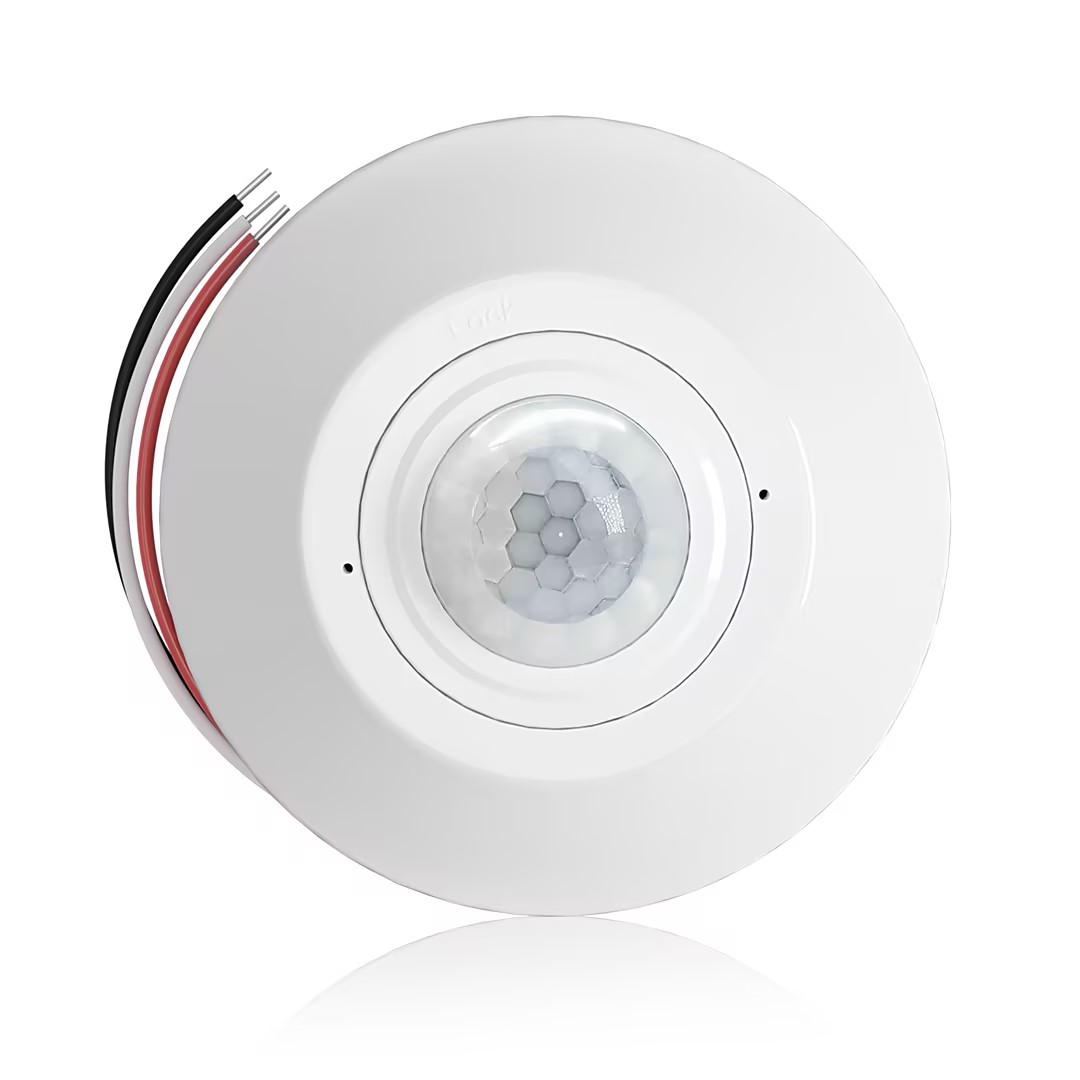
- Sensor de ocupação PIR para montagem no teto com saída de relé de contato seco
- Alimentação de baixa tensão de 12/24VDC ou 12/24VAC
- Contatos de relé isolados COM, NO e NC para entradas de EMS, HVAC e controle predial
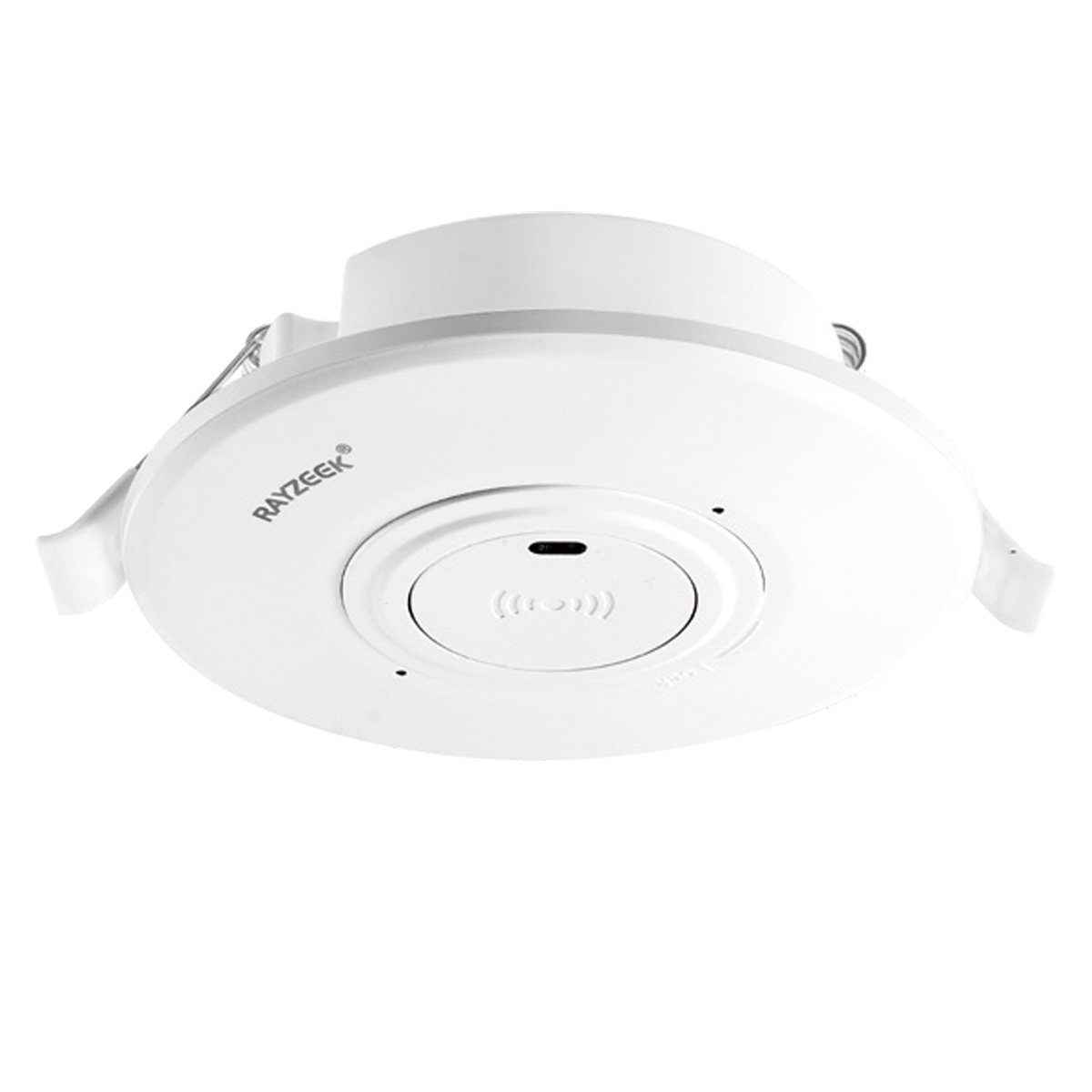
- Interruptor sensor de movimento de micro-ondas embutido no teto em baixa tensão CC
- Entrada de 12 VDC / 24 VDC com faixa de 10-30 VDC
- Corrente máxima de trabalho de 10A com tempo de retardo, limite Lux e sensibilidade ajustáveis
- Interruptor sensor de movimento de micro-ondas embutido no teto para maior carga
- Entrada de tensão de rede de 100-265 VAC, modelo 10A
- Detecção de micro-ondas de 5,8 GHz com tempo de atraso, limite de Lux e sensibilidade ajustáveis
- Interruptor de sensor de movimento de micro-ondas embutido para teto
- Entrada de tensão de rede de 100-265 VAC, modelo 5A
- Detecção de micro-ondas de 5,8 GHz com tempo de atraso, limite de Lux e sensibilidade ajustáveis
- Dimmer de sensor de presença PIR para teto RZ037 para alimentação de 220V
- Corrente máxima de trabalho de 3A com carga nominal de 660W
- O botão LUX controla o Ligar/Desligar do sensor de luz e o brilho de dimerização definido pelo usuário
- Dimmer de sensor de presença PIR para teto RZ037 para alimentação de 110V
- Corrente máxima de trabalho de 3A com carga nominal de 330W
- O botão LUX controla o Ligar/Desligar do sensor de luz e o brilho de dimerização definido pelo usuário
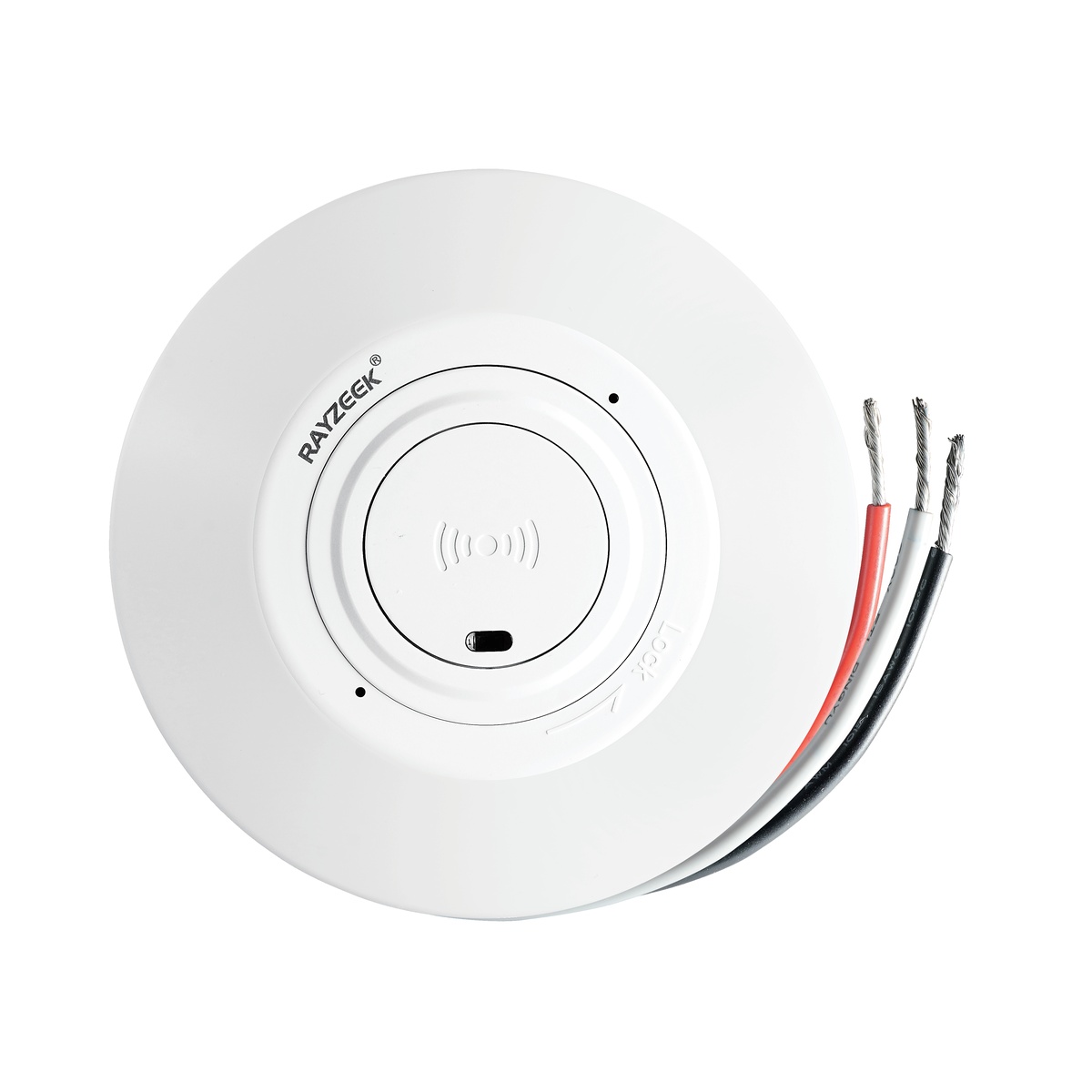
- Interruptor de sensor de movimento de micro-ondas para teto em baixa tensão CC
- Entrada de 12 VDC / 24 VDC com faixa de 10-30 VDC
- Corrente máxima de trabalho de 10A com tempo de retardo, limite Lux e sensibilidade ajustáveis
- Interruptor de sensor de movimento de micro-ondas para teto de maior carga
- Entrada de tensão de rede de 100-265 VAC, modelo 10A
- Detecção de micro-ondas de 5,8 GHz com tempo de atraso, limite de Lux e sensibilidade ajustáveis
- Interruptor com sensor de movimento por micro-ondas para montagem no teto
- Entrada de tensão de rede de 100-265 VAC, modelo 5A
- Detecção de micro-ondas de 5,8 GHz com tempo de atraso, limite de Lux e sensibilidade ajustáveis
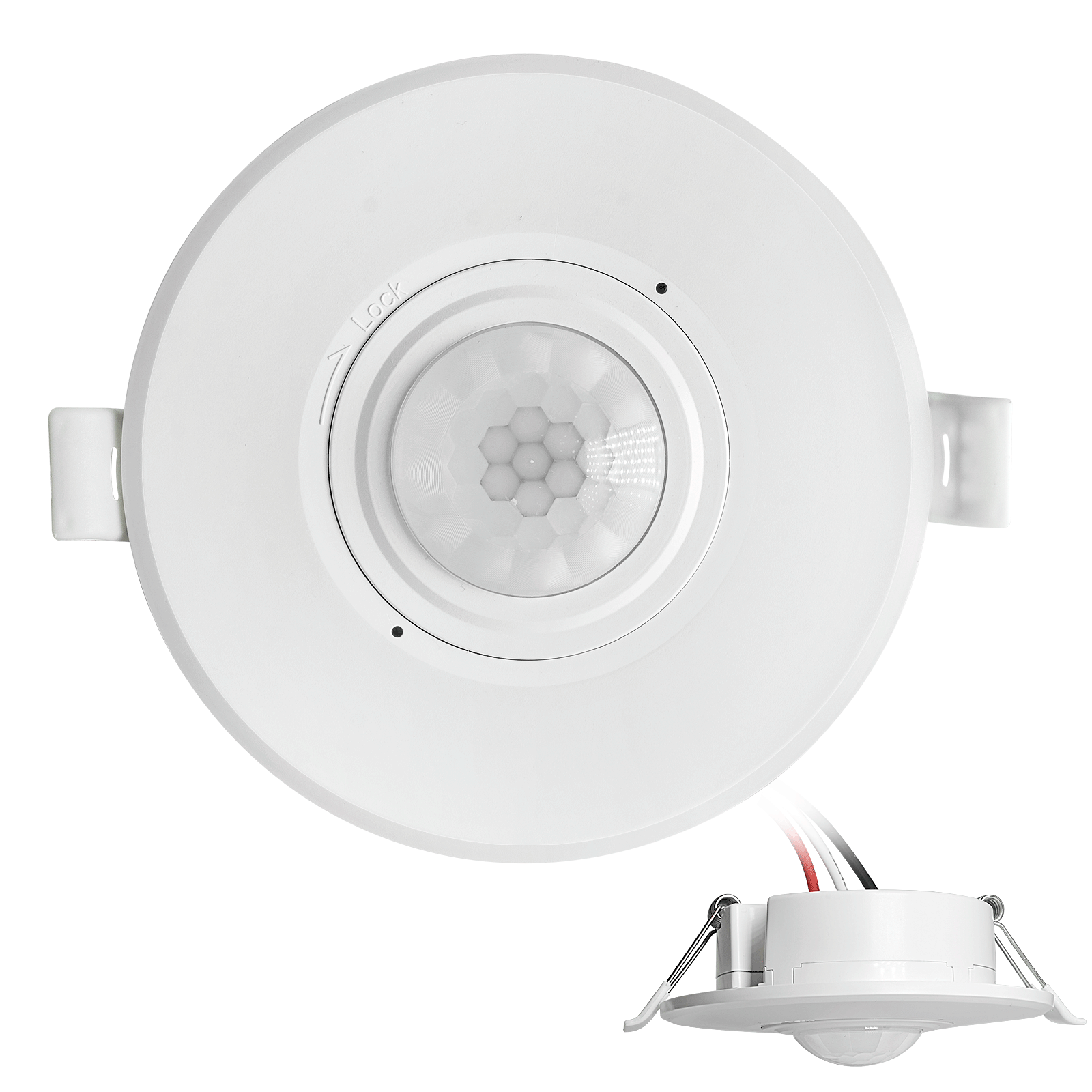
- Interruptor com sensor de movimento PIR de teto embutido CC de baixa tensão
- Entrada de 12 VDC / 24 VDC com faixa de 10-30 VDC
- Corrente máxima de trabalho de 10A com tempo de atraso, limite de Lux e sensibilidade ajustáveis
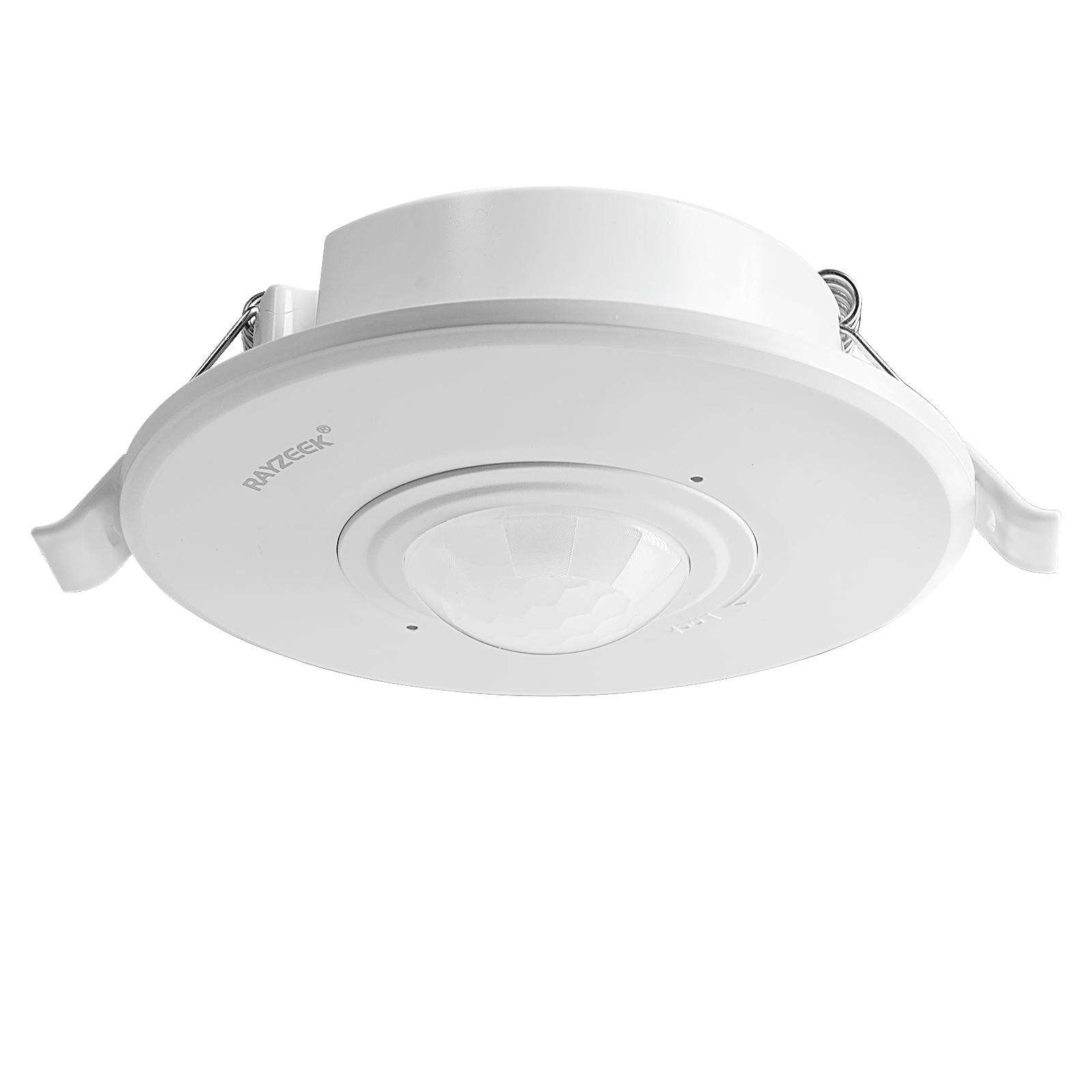
- Interruptor com sensor de movimento PIR de teto embutido para maior carga
- Entrada de tensão de rede de 100-265 VAC, modelo 10A
- Detecção de 360 graus com tempo de atraso, limite de Lux e sensibilidade ajustáveis
- Interruptor com sensor de movimento PIR de teto embutido
- Entrada de tensão de rede de 100-265 VAC, modelo 5A
- Detecção de 360 graus com tempo de atraso, limite de Lux e sensibilidade ajustáveis
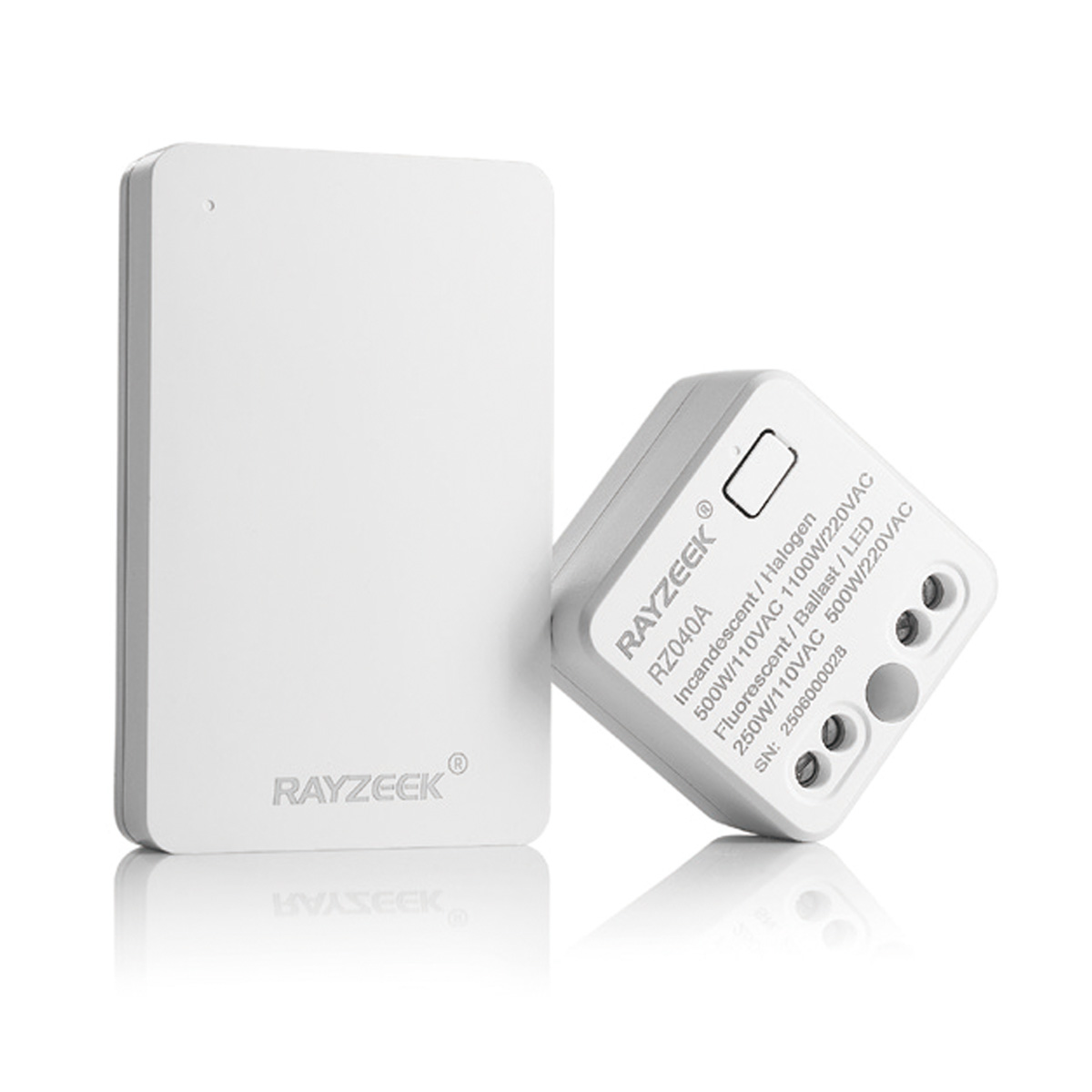
- Kit de receptor e interruptor sem fio para controle de iluminação LIGA/DESLIGA em ambientes internos
- Receptor de 100-230VAC, 50/60Hz com corrente nominal de 5A
- Interruptor sem fio alimentado por CR2032 com comunicação de 2,4 GHz
- Ocupação (LIGA automático/DESLIGA automático)
- 12–24V CC (10–30VDC), até 10A
- Cobertura de 360°, 8–12 m de diâmetro
- Temporização: 15 s–30 min
- Sensor de luz: Desligado/15/25/35 Lux
- Sensibilidade Alta/Baixa
- Modo de ocupação Liga-Automático/Desliga-Automático
- 100–265V AC, 10A (neutro obrigatório)
- Cobertura de 360°; diâmetro de detecção de 8–12 m
- Temporização: 15 s–30 min; Lux DESLIGADO/15/25/35; Sensibilidade Alta/Baixa
- Modo de ocupação Liga-Automático/Desliga-Automático
- 100–265V AC, 5A (neutro obrigatório)
- Cobertura de 360°; diâmetro de detecção de 8–12 m
- Temporização: 15 s–30 min; Lux DESLIGADO/15/25/35; Sensibilidade Alta/Baixa
Novas construções e grandes reformas quase sempre exigem conformidade total com o código de energia. Se você está construindo um novo conjunto de escritórios, adicionando divisórias e instalando nova iluminação, o requisito de controle automático será aplicado aos espaços fechados.
Projetos de modernização (retrofit) enfrentam um critério diferente. Se uma empresa está simplesmente substituindo as luminárias existentes em um edifício antigo, sem alterar o layout ou adicionar circuitos, o requisito pode não ser acionado. O critério varia de acordo com a jurisdição; alguns códigos aplicam a regra quando uma determinada porcentagem da iluminação é alterada, enquanto outros a aplicam sempre que novos dispositivos de controle são instalados. Se o seu projeto envolve novos interruptores ou circuitos, o inspetor esperará que eles atendam às normas atuais.
Na prática, isso significa que melhorias no imóvel alugado, mudanças de uso que envolvam novas divisórias ou atualizações que incluam o redimensionamento da iluminação quase certamente exigirão conformidade. Uma simples substituição de luminárias pode não exigir. Em caso de dúvida, o departamento de obras local pode prestar esclarecimentos antes do início do projeto.
Como sensores simples atendem à norma
The term “automatic lighting control” can suggest programmable panels and network integration, but the code is agnostic about system architecture. It only cares that the light responds automatically to occupancy.

A basic occupancy sensor does this directly. It detects motion, determines the space is occupied, and keeps the light on. When motion ceases for a set time, the sensor concludes the space is vacant and turns the light off. The sequence is automatic and self-contained.
An inspector verifies this simple logic. They will walk into a room to trigger the light, then stand still or leave to watch it turn off. They are not testing for network connectivity or software sophistication; they are testing for an automatic response to occupancy. A stand-alone sensor wired to a local fixture provides exactly that.
The elegance of this approach is its directness. There is no programming, software commissioning, or panel maintenance. The sensor’s internal logic handles the decision. If the time delay or sensitivity needs adjustment, the settings are on the device itself, usually as small dials or DIP switches. This simplicity is not a compromise—it is compliance at its most reliable.
Occupancy vs. Vacancy Sensors

The distinction between an occupancy and a vacancy sensor is functional, and the choice affects both compliance and user experience.
An sensor de presença is fully automatic. It turns the light on when it detects motion and turns it off after a period of vacancy. When someone walks into a dark storage room with their hands full, the light activates automatically. This is convenient and ensures the light is never left on by mistake.
A vacancy sensor provides the same automatic shutoff but requires manual activation. The occupant must turn the light on with a wall switch. Once on, the sensor monitors for motion and turns the light off automatically when the space is empty. The user controls the “on,” the sensor controls the “off.”
Both types satisfy energy codes because both provide the required automatic shutoff. The choice often comes down to user preference. A vacancy sensor is often preferred in private offices, as someone might enter during the day and not want the overhead light to turn on immediately. An occupancy sensor is a better fit for storage rooms or restrooms, where hands-free, touchless operation is valued.
Some local codes may have a preference. California’s Title 24, for instance, has historically favored manual-on controls in certain spaces to prevent unnecessary activation. Check your local code to clarify if a preference exists.
Procurando soluções de economia de energia ativadas por movimento?
Entre em contato conosco para sensores de movimento PIR completos, produtos de economia de energia ativados por movimento, interruptores com sensor de movimento e soluções comerciais de Presença/Ausência (Occupancy/Vacancy).
Room-by-Room Application Strategy
Applying these controls in a small business typically involves three common space types.
Private Offices
Codes almost universally require automatic shutoff in enclosed offices, often for spaces as small as 100 square feet.
The best solution is usually a vacancy sensor. The occupant turns the light on upon arrival, and the sensor turns it off if they step out for a long meeting and forget. This respects the user’s control while capturing energy savings from unplanned absences. A wall-switch sensor is a straightforward retrofit. For rooms with partitions that might block the view, a ceiling-mounted sensor offers better coverage. The key is ensuring the sensor can detect motion throughout the space, especially at the desk where an occupant might sit still for long periods.
Storage Rooms and Utility Spaces

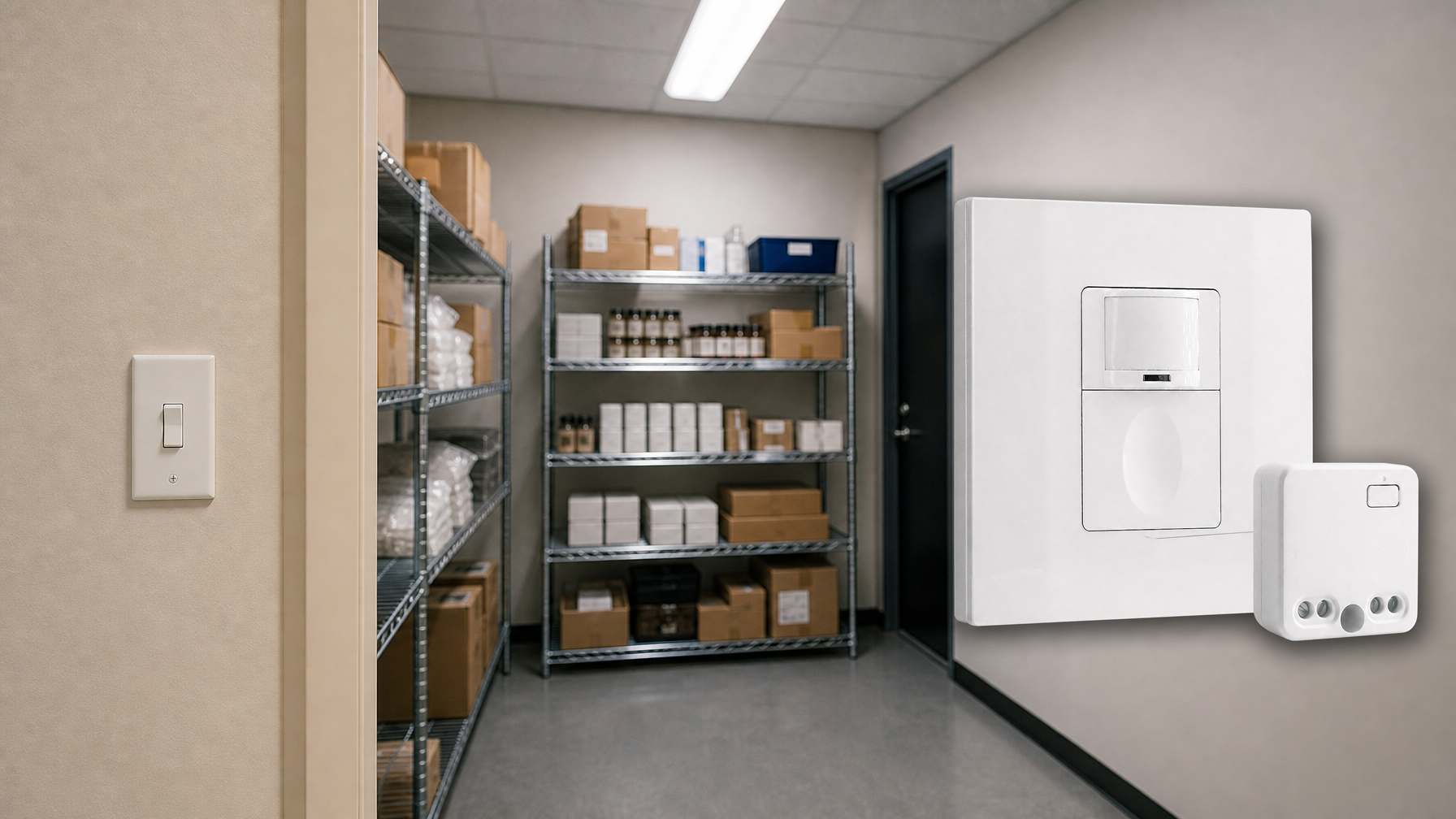
Storage rooms, janitorial closets, and mechanical rooms are entered briefly and intermittently, often by people with their hands full.
An sensor de presença is the logical choice. Auto-on provides immediate light, and auto-off ensures it’s never left on by accident. This is one of the highest-return applications for energy savings. A ceiling-mounted sensor often provides the best coverage around shelving and equipment. The time delay can be set shorter here—5 to 15 minutes—to maximize savings.
Banheiros e Salas de Descanso
Restrooms and break rooms are semi-public spaces where lights are frequently left on, leading to significant waste.
An sensor de presença is preferred in restrooms for hygiene and convenience. In multi-stall restrooms, a dual-technology sensor (combining infrared and ultrasonic detection) is ideal for reducing the risk of the lights turning off on a stationary occupant.
Inspire-se com os portfólios de sensores de movimento da Rayzeek.
Não encontrou o que procura? Não se preocupe. Sempre existem formas alternativas de resolver seus problemas. Talvez um de nossos portfólios possa ajudar.
Break rooms can use either sensor type. If the room has windows and good daylight, a vacancy sensor allows occupants to leave the lights off. If it’s an interior space or automatic operation is preferred, an occupancy sensor works well. In either space, be sure to account for obstructions like partitions and furniture that can create blind spots for the sensor.
The Minimal Documentation for Inspectors
Passing an inspection requires demonstrating compliance through documentation. For stand-alone sensors, this burden is light. The inspector needs to confirm three things: that automatic controls are specified, installed where required, and function correctly.
- Control Device Schedules: The electrical plan submitted for your permit should include a legend or note identifying the control device for each space (e.g., “Vacancy Sensor,” “Occupancy Sensor”). A simple table listing each room and its control type is often sufficient.
- Sequence of Operations: For more formal submittals, a brief narrative can be included: “Occupancy sensor detects motion and energizes lighting. Upon vacancy for 20 minutes, sensor de-energizes lighting.” This is rarely needed for simple projects.
- Product Data Sheets: Some jurisdictions require the manufacturer’s cut sheets for the specified sensors. These show the device’s features, coverage pattern, and compliance with standards. The inspector may verify that the installed model matches the submitted data.
- On-site Labeling: A wall-mounted sensor is self-evident, but a ceiling sensor might need a small label on the corresponding light switch so future occupants understand how it works.
Consistency is key. The documentation must match the field installation, and both must meet the code.
Common Installation Pitfalls

Even with the right sensor, common installation errors can lead to a failed inspection.
- Inadequate Coverage: The sensor’s field of view doesn’t cover the whole room, creating blind spots where an occupant goes undetected. Review the manufacturer’s coverage diagram before choosing a mounting location.
- Incorrect Time Delay: The delay is set too short, causing nuisance shutoffs, or too long, negating savings and potentially failing inspection. Most codes allow a range, typically 20-30 minutes.
- Missing Manual Override: Some codes require a physical switch that allows the user to turn the light off at any time. If this is required and not installed, the system fails.
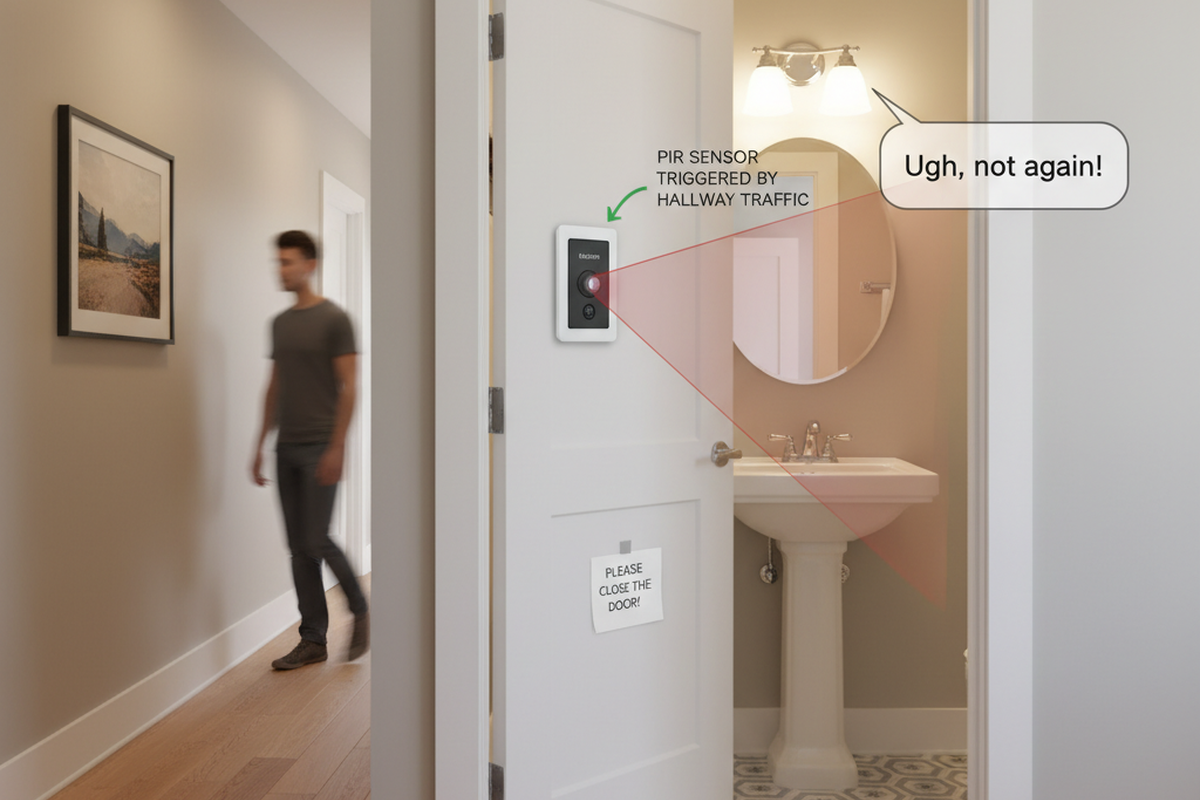
- Poor Sensor Placement: A passive infrared sensor is mounted where it’s triggered by an HVAC vent or sunlight, causing false-on events. Or, its view is blocked by new furniture, causing false-off events. Placement must account for the room’s conditions and the sensor’s technology.
- Failure to Demonstrate Functionality: On inspection day, the sensor doesn’t work because it isn’t powered or was left in a test mode. Always perform a simple walk-test before the inspector arrives to confirm it operates as intended.
Avoiding these pitfalls comes down to careful design, reading the manufacturer’s instructions, and verifying the installation before the final walkthrough. For a small project, this is a simple check by the electrician. For a larger one, a pre-inspection walkthrough can catch these issues before they become official deficiencies.