

The modern home is often a collection of expensive compromises, and nowhere is this more evident than in the master bathroom at 6:00 AM. You turn the handle. You wait. You stare at the mirror while gallons of potable water vanish down the drain, waiting for the thermal journey from the basement to the second floor to complete. It’s a daily ritual of waste that frustrates the efficiency-minded homeowner. But the standard industry solution, the recirculation pump, often introduces a problem worse than the one it solves: energy theft.
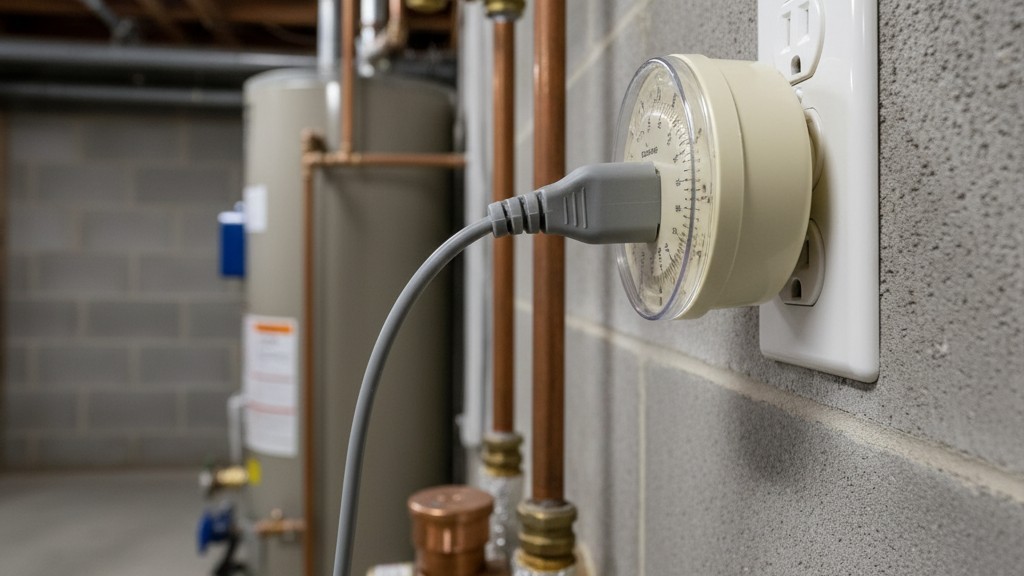
Most homeowners solve the “cold water wait” by installing a pump and letting it run. They plug a Grundfos or Taco cartridge pump into the wall, perhaps with a mechanical timer that uses those little plastic pins from the Nixon administration, and they walk away. This is a crude, blunt-force approach. A pump running 24/7, or even on a 16-hour timer window, isn’t a luxury. It’s a parasite. It keeps hot water moving through uninsulated pipes in crawlspaces and attics, effectively turning the plumbing system into a massive, inefficient radiator that heats the outdoors while driving up the electric bill.
The Case Against Continuous Circulation
There is a prevalent myth in residential plumbing that electricity is cheap enough to justify “always-on” comfort. This view ignores the physics of the system. A standard recirculation pump draws anywhere from 50 to 85 watts. Running that continuously costs money, but the real cost is hidden in the BTUs lost through the copper pipes. When 120-degree water circulates constantly through a loop that passes through a 50-degree crawlspace, the water heater must fire repeatedly to make up for that thermal loss. It’s not uncommon to see energy audits where a single 24/7 pump is responsible for $15 to $20 of monthly gas or electric costs, purely in standby losses.
Beyond the energy math, there is the issue of mechanical longevity. Pumps are simple machines, but they aren’t immortal. Running a residential circulator for 8,760 hours a year is a stress test, not a service cycle. We frequently pull seized pumps out of basements—units that burned out in two or three years because they never rested. Worse, the constant high-velocity flow of water through copper pipes can lead to erosion corrosion, creating pinhole leaks in elbows and joints. The “luxury” of instant hot water becomes the nightmare of a flooded basement. The goal isn’t constant circulation; it’s delivery only when needed.
Procurando soluções de economia de energia ativadas por movimento?
Entre em contato conosco para sensores de movimento PIR completos, produtos de economia de energia ativados por movimento, interruptores com sensor de movimento e soluções comerciais de Presença/Ausência (Occupancy/Vacancy).
The Logic of the Rayzeek Sensor
This is where the Rayzeek plug-in motion sensor fits in. In a home automation landscape where every device seems to demand a cloud account, a WiFi password, and a firmware update, the Rayzeek stands out for its stubborn locality. It is a “dumb-smart” device. It doesn’t speak to the internet. It doesn’t ask for your email address. It simply sits between the wall outlet and the recirculation pump, acting as a gatekeeper based on physical presence.
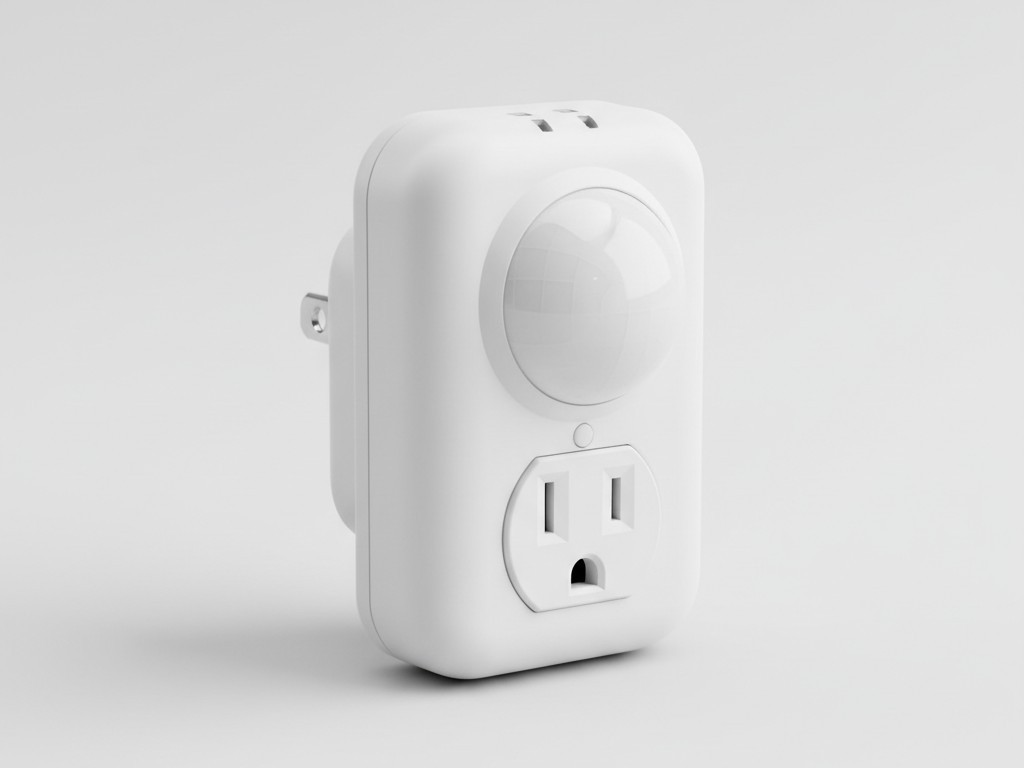
The mechanism is straightforward but critical for retrofit applications. The device uses a motion sensor (often a PIR or radar-based module depending on the specific model variant like the RZ016) to detect when a human enters the space where water is needed. When triggered, it powers the outlet for a set duration—typically adjustable from a few seconds to several minutes—and then cuts power. This creates an “on-demand” loop without the friction of manual buttons.
Tech-savvy homeowners are often tempted to overcomplicate this with smart plugs and voice assistants. We see it constantly: a Kasa or Wemo plug controlled by an Alexa routine. “Alexa, turn on hot water,” you shout while standing in the bathroom. The latency involved in sending that voice command to a server in Virginia, processing it, and sending a signal back to the plug can take three to five seconds. In the morning rush, that lag is annoying. Furthermore, if the internet goes down, you lose your hot water convenience. The Rayzeek operates on a local RF or direct sensor circuit. The relay click is immediate. There is no server to crash, and no dependency on a stable fiber connection to take a warm shower.
The Prep-Time Calculus
The primary criticism of motion-based activation is that it isn’t truly “instant.” If you sprint from your bed directly into the shower in under three seconds, yes, the water will be cold. But this ignores the reality of human behavior. We don’t teleport. We enter the bathroom, use the toilet, brush our teeth, undress, and look for a towel.
This “prep time” usually spans 60 to 90 seconds. A standard under-sink recirculation pump, moving water at 2 to 4 gallons per minute, can prime a loop in a typical 2,500-square-foot house in about 45 seconds. By the time the homeowner is actually ready to step into the water stream, the loop is hot. The sensor uses the natural friction of human routine to mask the mechanical delay. The result is an experience that feels instant without the financial penalty of maintaining heat 24/7.
We need to manage expectations here. If you are expecting magic, you will be disappointed. This is fluid dynamics, not teleportation. However, compared to the alternative—wireless buttons that require a free hand to press, or timers that drift out of sync with your actual wake-up time—the motion sensor is the only “Goldilocks” trigger. It requires no active thought. It accommodates the erratic schedule of a guest or a waking toddler without requiring reprogramming.
Inspire-se com os portfólios de sensores de movimento da Rayzeek.
Não encontrou o que procura? Não se preocupe. Sempre existem formas alternativas de resolver seus problemas. Talvez um de nossos portfólios possa ajudar.
Installation Realities and The Under-Sink Context
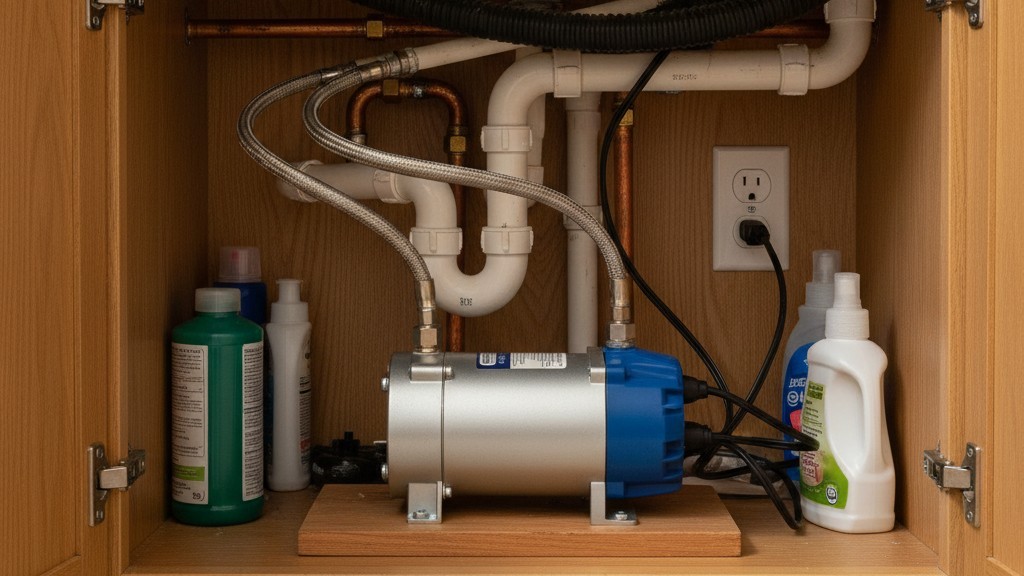
Implementing this requires a look at the physical constraints of the plumbing. The Rayzeek units are best suited for under-sink recirculation pumps—the kind that sit inside the vanity cabinet at the furthest fixture. These pumps (like the Watts Premier or similar retrofit kits) use the cold water line as a return path. The outlet under a sink is often crowded, shared with a hair dryer or an electric toothbrush charger.
Because the outlet is often buried deep in the back of a dark cabinet, plugging a motion sensor directly into it can render the sensor blind. The “eye” of the sensor needs to see the room. A practical workaround is to use a short, heavy-duty extension cord to bring the sensor unit forward, mounting it near the toe-kick or on the side of the vanity where it has a clear view of the doorway. The goal is to catch the user at the threshold, not when they are already at the sink.
Você Também Pode Se Interessar Por

- Tensão: 2 Pilhas AAA
- Modo Dia/Noite
- Atraso de tempo: 15min, 30min, 1h(padrão), 2h

- Sensor de ocupação PIR para montagem no teto com saída de relé de contato seco
- Alimentação de baixa tensão de 12/24VDC ou 12/24VAC
- Contatos de relé isolados COM, NO e NC para entradas de EMS, HVAC e controle predial

- Interruptor sensor de movimento de micro-ondas embutido no teto em baixa tensão CC
- Entrada de 12 VDC / 24 VDC com faixa de 10-30 VDC
- Corrente máxima de trabalho de 10A com tempo de retardo, limite Lux e sensibilidade ajustáveis
- Interruptor sensor de movimento de micro-ondas embutido no teto para maior carga
- Entrada de tensão de rede de 100-265 VAC, modelo 10A
- Detecção de micro-ondas de 5,8 GHz com tempo de atraso, limite de Lux e sensibilidade ajustáveis
- Interruptor de sensor de movimento de micro-ondas embutido para teto
- Entrada de tensão de rede de 100-265 VAC, modelo 5A
- Detecção de micro-ondas de 5,8 GHz com tempo de atraso, limite de Lux e sensibilidade ajustáveis
- Dimmer de sensor de presença PIR para teto RZ037 para alimentação de 220V
- Corrente máxima de trabalho de 3A com carga nominal de 660W
- O botão LUX controla o Ligar/Desligar do sensor de luz e o brilho de dimerização definido pelo usuário
- Dimmer de sensor de presença PIR para teto RZ037 para alimentação de 110V
- Corrente máxima de trabalho de 3A com carga nominal de 330W
- O botão LUX controla o Ligar/Desligar do sensor de luz e o brilho de dimerização definido pelo usuário

- Interruptor de sensor de movimento de micro-ondas para teto em baixa tensão CC
- Entrada de 12 VDC / 24 VDC com faixa de 10-30 VDC
- Corrente máxima de trabalho de 10A com tempo de retardo, limite Lux e sensibilidade ajustáveis
- Interruptor de sensor de movimento de micro-ondas para teto de maior carga
- Entrada de tensão de rede de 100-265 VAC, modelo 10A
- Detecção de micro-ondas de 5,8 GHz com tempo de atraso, limite de Lux e sensibilidade ajustáveis
- Interruptor com sensor de movimento por micro-ondas para montagem no teto
- Entrada de tensão de rede de 100-265 VAC, modelo 5A
- Detecção de micro-ondas de 5,8 GHz com tempo de atraso, limite de Lux e sensibilidade ajustáveis

- Interruptor com sensor de movimento PIR de teto embutido CC de baixa tensão
- Entrada de 12 VDC / 24 VDC com faixa de 10-30 VDC
- Corrente máxima de trabalho de 10A com tempo de atraso, limite de Lux e sensibilidade ajustáveis

- Interruptor com sensor de movimento PIR de teto embutido para maior carga
- Entrada de tensão de rede de 100-265 VAC, modelo 10A
- Detecção de 360 graus com tempo de atraso, limite de Lux e sensibilidade ajustáveis
- Interruptor com sensor de movimento PIR de teto embutido
- Entrada de tensão de rede de 100-265 VAC, modelo 5A
- Detecção de 360 graus com tempo de atraso, limite de Lux e sensibilidade ajustáveis

- Kit de receptor e interruptor sem fio para controle de iluminação LIGA/DESLIGA em ambientes internos
- Receptor de 100-230VAC, 50/60Hz com corrente nominal de 5A
- Interruptor sem fio alimentado por CR2032 com comunicação de 2,4 GHz
- Ocupação (LIGA automático/DESLIGA automático)
- 12–24V CC (10–30VDC), até 10A
- Cobertura de 360°, 8–12 m de diâmetro
- Temporização: 15 s–30 min
- Sensor de luz: Desligado/15/25/35 Lux
- Sensibilidade Alta/Baixa
- Modo de ocupação Liga-Automático/Desliga-Automático
- 100–265V AC, 10A (neutro obrigatório)
- Cobertura de 360°; diâmetro de detecção de 8–12 m
- Temporização: 15 s–30 min; Lux DESLIGADO/15/25/35; Sensibilidade Alta/Baixa
- Modo de ocupação Liga-Automático/Desliga-Automático
- 100–265V AC, 5A (neutro obrigatório)
- Cobertura de 360°; diâmetro de detecção de 8–12 m
- Temporização: 15 s–30 min; Lux DESLIGADO/15/25/35; Sensibilidade Alta/Baixa
A note of caution on pump compatibility: simplistic pumps work best. If you have a high-end “smart” pump that has its own internal timer or learning logic, it may not play nice with a power-cut sensor. When the Rayzeek cuts power, a smart pump might reset its internal clock or lose its settings. The best partner for a Rayzeek sensor is the dumbest pump you can find—a single-speed mechanical unit that simply runs when it gets power and stops when it doesn’t.
The Invisible Outcome
The ultimate victory in home automation isn’t a dashboard full of graphs. It’s a house that anticipates needs without asking for input. When properly dialed in—sensitivity adjusted to avoid triggering from the hallway, and duration set to just enough time to clear the cold water—the system disappears. You walk in, you hear the faint hum of the pump for a minute, and the water is hot. The sensor pays for itself in electricity savings in less than a year, but the real value is in the silence. The silence of a pump that isn’t running at 3:00 AM, and the silence of a homeowner who no longer has to think about the plumbing.







