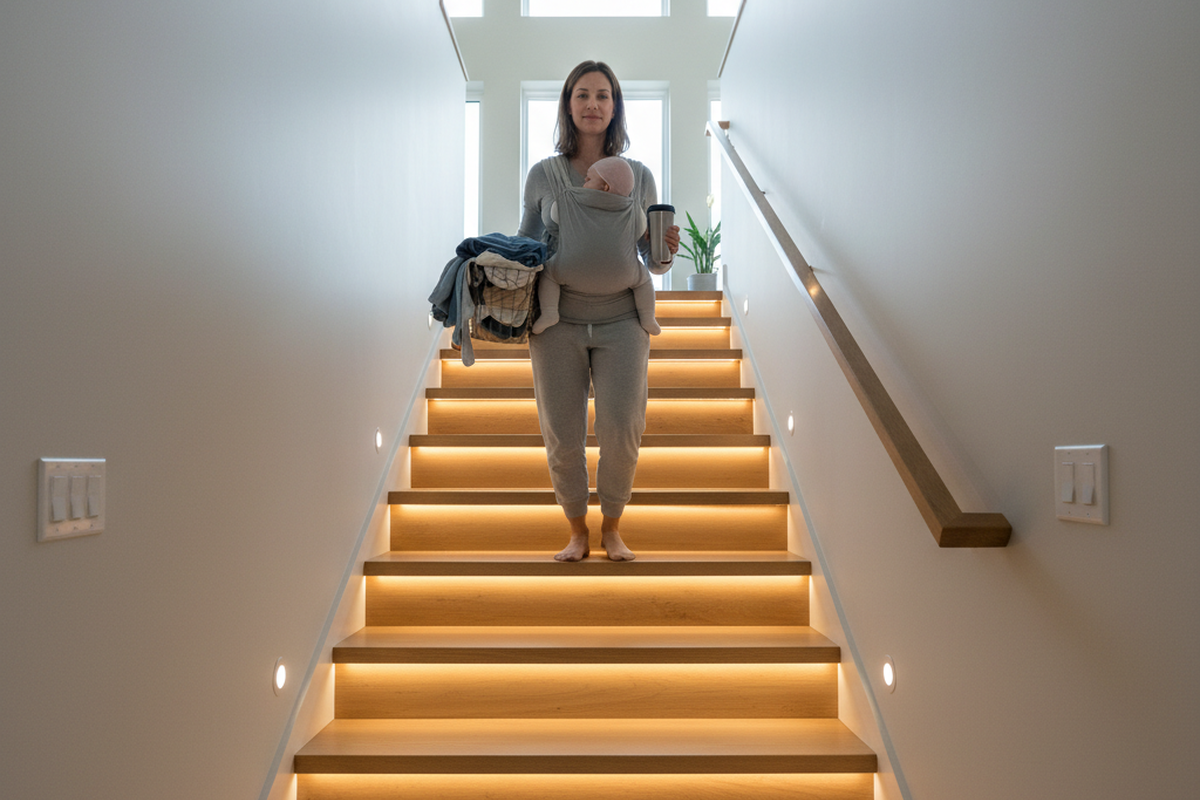
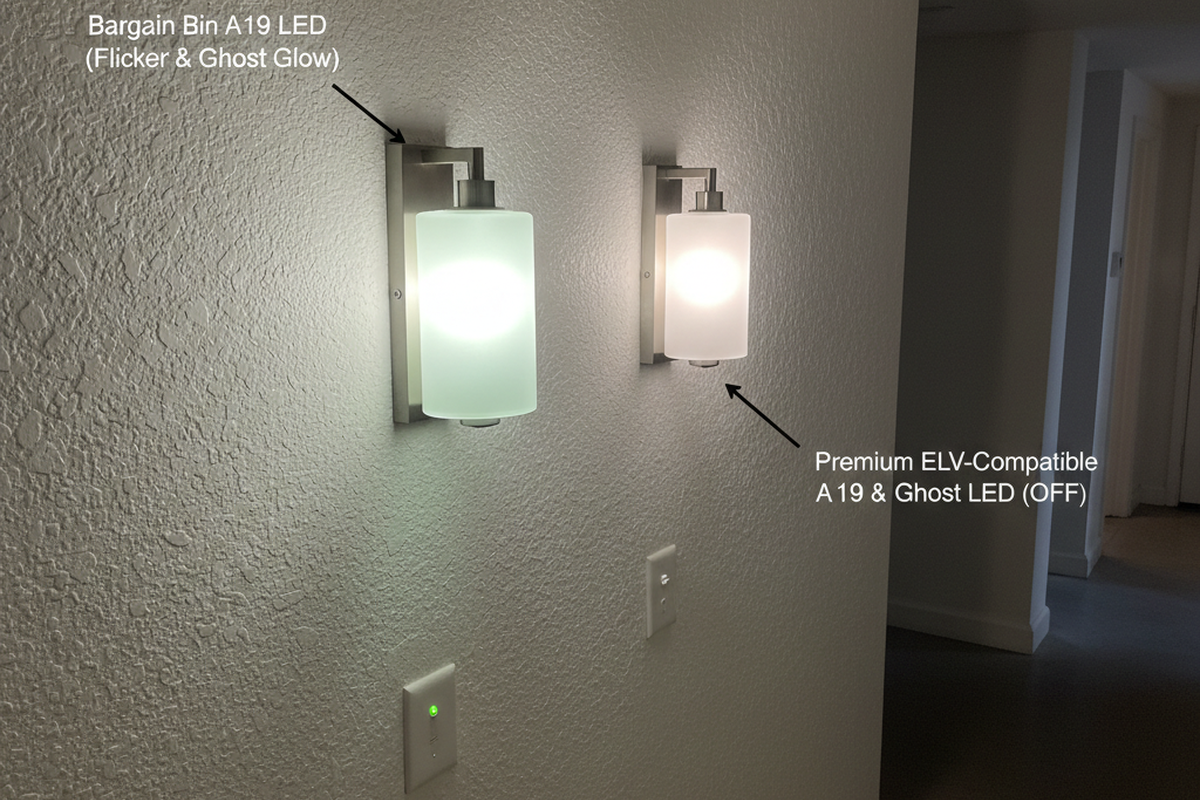
A iluminação com sensor de movimento promete conveniência, mas, para famílias com crianças pequenas, muitas vezes cria mais problemas do que resolve. Imagine a cena: uma criança acorda às 2h da manhã, caminha a passos lentos em direção ao banheiro e uma luz controlada por sensor acende com brilho total. O clarão suavemente agressivo desperta a criança, alerta os pais e, com frequência, acorda o cônjuge ou os irmãos. O que começou como uma simples ida ao banheiro agora se transformou em uma batalha de uma hora para fazer toda a casa voltar a dormir.

O dilema parece impossível. A escuridão convida a quedas e desorientação para uma criança pequena navegando por um espaço familiar com passos vacilantes. No entanto, luzes brilhantes acionadas por movimento destroem qualquer esperança de preservar o estado de sonolência que permite um retorno rápido para a cama. A maioria das famílias se resigna a essa escolha, assumindo que os sensores de movimento forçam uma opção entre segurança e sono.
Eles não precisam forçar essa escolha. O modo de vacância, uma configuração de sensor menos conhecida, elimina esse falso dilema. Ao contrário do modo de ocupação padrão, que acende as luzes automaticamente ao primeiro sinal de movimento, o modo de vacância exige que alguém acione um interruptor para ligar as luzes. Ele automatiza apenas o desligamento. Essa simples inversão de controle — colocar a decisão de “ligar” nas mãos humanas — transforma a tecnologia de uma causadora de distúrbios do sono em uma protetora do sono. Quando combinado com a ativação de baixo lux, que ajuda os sensores a detectar movimento com o mínimo de luz, o modo de vacância oferece a iluminação suave e previsível que as casas com crianças pequenas precisam desesperadamente.
O dilema do sensor de movimento à meia-noite
Crianças pequenas se movimentam de maneiras para as quais os sensores de movimento padrão nunca foram projetados. Diferentemente dos adultos, crianças entre um e quatro anos acordam com frequência devido a mudanças nos padrões de sono, sonhos ou simples curiosidade. Uma criança pequena pode vagar por um corredor uma dúzia de vezes por semana com o andar imprevisível de alguém que ainda está dominando o equilíbrio.
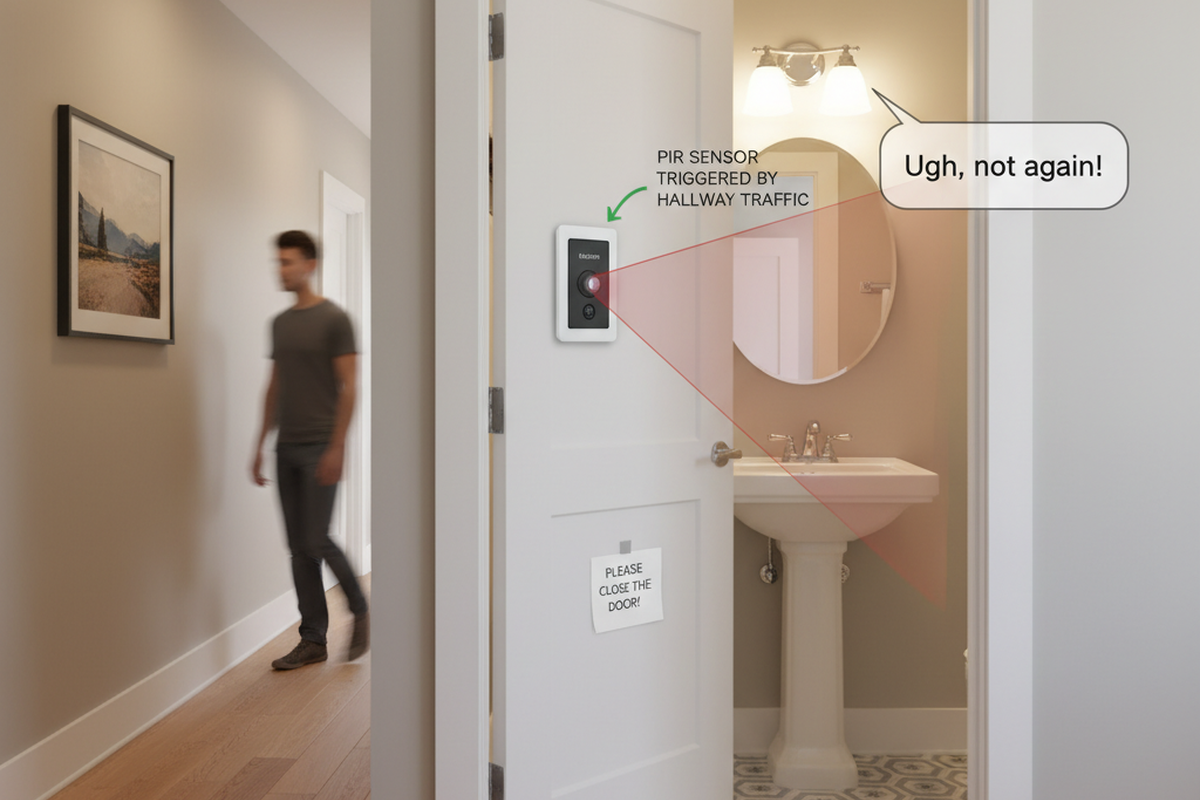
O modo de ocupação, a configuração padrão na maioria dos sistemas, interpreta qualquer movimento como um comando para ligar as luzes na potência máxima. A lógica é simples: movimento significa que alguém está presente, e a presença requer luz. Isso funciona perfeitamente em um prédio comercial ou em uma garagem, onde o brilho repentino não é um problema.
No mundo de uma criança pequena, essa lógica é uma catástrofe. O sensor não consegue distinguir uma criança sonolenta de um adulto totalmente acordado. Ele não pode se ajustar para a hora do dia ou para o fato de que a pessoa que acabou de detectar está meio adormecida. Ele simplesmente é ativado, inundando o espaço com luz equivalente à do dia. A criança, que poderia ter voltado para a cama com o mínimo de interrupção, agora está olhando para um corredor iluminado. O clarão repentino dispara uma resposta de cortisol, um alerta neurológico que sinaliza ao cérebro para ficar totalmente desperto. O efeito em cadeia começa.
O problema não é a luz em si, mas a perda de controle sobre quando e como ela aparece. As famílias precisam de uma iluminação que atenda às suas necessidades, não de um sistema que se imponha no pior momento possível.
Ocupação vs. Vacância: uma diferença fundamental
Os sensores de movimento não servem apenas para ligar e desligar luzes; eles operam com uma lógica de controle específica que dita quem — ou o quê — está no comando.
Modo de ocupação: a suposição da necessidade
O modo de ocupação é totalmente automatizado. O sensor controla tanto a função de “ligar” quanto a de “desligar”. Quando detecta movimento, a luz é ativada. Quando o movimento cessa por um tempo determinado, tipicamente de 30 segundos a vários minutos, a luz é desativada. O sistema supõe que, se você está lá, você quer luz.
O apelo é óbvio. Você pode entrar em uma despensa com as mãos cheias de compras e não precisa procurar um interruptor. Em muitos contextos, essa suposição é verdadeira. O sensor é um servo silencioso e eficiente.
Procurando soluções de economia de energia ativadas por movimento?
Entre em contato conosco para sensores de movimento PIR completos, produtos de economia de energia ativados por movimento, interruptores com sensor de movimento e soluções comerciais de Presença/Ausência (Occupancy/Vacancy).
O custo, no entanto, é a entrega total da autonomia. O sensor não pode saber se a pessoa que ele detecta realmente quer luz ou prefere a escuridão. Ele é ativado porque foi projetado para isso, e você precisa conviver com o resultado.
Modo de vacância: o controle devolvido

O modo de vacância inverte essa estrutura. Uma pessoa deve acionar manualmente o interruptor para ligar a luz. A única função do sensor é desligar a luz automaticamente após confirmar que o ambiente está vazio.
Essa mudança aparentemente sutil altera fundamentalmente a relação do usuário com o sistema. O sensor não pressupõe mais saber do que você precisa. Ele aguarda seu sinal explícito — o acionamento de um interruptor — antes de fazer qualquer coisa. Assim que a luz é ligada, o sensor assume a tarefa mais frequentemente esquecida: desligá-la. Esse design devolve o discernimento humano ao processo, enquanto automatiza a tarefa repetitiva.
Por que a lógica de acionamento manual protege o sono das crianças
For toddler households, the superiority of vacancy mode comes down to control during the most vulnerable hours of the night. Preserving sleep depends on gentle, predictable light that appears only when intended. Vacancy mode delivers.
Imagine a nighttime disruption in a home with vacancy mode. A parent, hearing a child stir, goes to the hallway and flips on the light, which is fitted with a dim, warm bulb perfect for 2 a.m. The light is already on—gentle and expected—before the toddler is even fully out of bed. The child encounters illumination that is sufficient for safety but not jarring enough to trigger full alertness. After a quick trip to the bathroom, the toddler is back in bed. The vacancy sensor, detecting that the hallway is now empty, turns off the light automatically. No one has to remember to go back and flip the switch.
Now contrast this with the occupancy mode scenario. The parent can’t pre-emptively turn on the light; the system won’t allow it. The toddler has to start moving first, triggering the sensor to snap the lights on at full brightness. The sudden shift from dark to light is a neurological shock. The human brain interprets abrupt changes like this as potential threats, releasing cortisol that promotes wakefulness. A child who was in a drowsy, half-asleep state is now wide awake.
A parent activating a light at 2 a.m. will choose the right amount of light for the moment. Occupancy mode makes no such distinction—it activates whatever bulb is connected to it, at whatever intensity it’s set for general use. A hallway light configured for daytime safety becomes a nighttime liability. Vacancy mode refines the sensor’s role, giving it the job it does best (automated shutoff) while taking away the job it does worst (deciding when light is wanted).
Inspire-se com os portfólios de sensores de movimento da Rayzeek.
Não encontrou o que procura? Não se preocupe. Sempre existem formas alternativas de resolver seus problemas. Talvez um de nossos portfólios possa ajudar.
Low-Lux Sensitivity: The Key to Gentle Lighting
Vacancy mode gives you control over when the light turns on, but the sensor’s sophistication determines how well it works with gentle, minimal light. This is where low-lux activation becomes essential.
Standard motion sensors need a fair amount of ambient light or contrast to detect movement reliably. This often means a dim nightlight isn’t bright enough for the sensor to “see” the subtle motion of a toddler, causing it to shut off prematurely.
Rayzeek’s low-lux technology allows its sensors to detect motion even in very low light. For parents, this means you can turn on a hallway light at a minimal, sleep-friendly intensity, and the sensor will still reliably track your toddler’s movement. It will keep the light on as long as needed and then switch it off when the coast is clear. The system doesn’t need brightness to function. It operates in that twilight zone of illumination perfect for preserving sleep: enough light to be safe, but not enough to wake everyone up.
The combination is powerful. Vacancy mode ensures a human decides when and how bright the light should be. Low-lux sensitivity ensures the sensor can do its job even when that light is incredibly dim. The result is a lighting environment that feels almost invisible—there when you need it, gone when you don’t.
Addressing the Safety Concern of Manual Activation
The most common objection to vacancy mode is an intuitive one: what if the toddler wakes up and wanders before a parent can turn the light on? Does relying on a manual switch create a safety risk?
This is a valid concern, and the answer depends on your family’s circumstances. Vacancy mode is best suited for households where parents are light sleepers who wake at the first sign of movement. It is also highly effective once toddlers are old enough to operate a light switch themselves.
When toddlers can operate switches: Around age three or four, many toddlers can reach and use light switches. Vacancy mode becomes a tool for teaching a routine: wake up, turn on the hall light, go to the bathroom. The sensor handles the shutoff after they’re back in bed, building their independence without leaving lights on all night.

When toddlers cannot operate switches: For younger toddlers, a hybrid approach is safest. A small, always-on nightlight provides a baseline level of visibility in hallways and bathrooms, ensuring the child is never in complete darkness. The overhead vacancy-mode light is then used by the parent to add more light for supervised trips. This layered approach provides redundancy without sacrificing control over the main light source.
Vacancy mode doesn’t eliminate the need for parental vigilance; it enhances a parent’s ability to provide the right light at the right time.
Você Também Pode Se Interessar Por

- Tensão: 2 Pilhas AAA
- Modo Dia/Noite
- Atraso de tempo: 15min, 30min, 1h(padrão), 2h
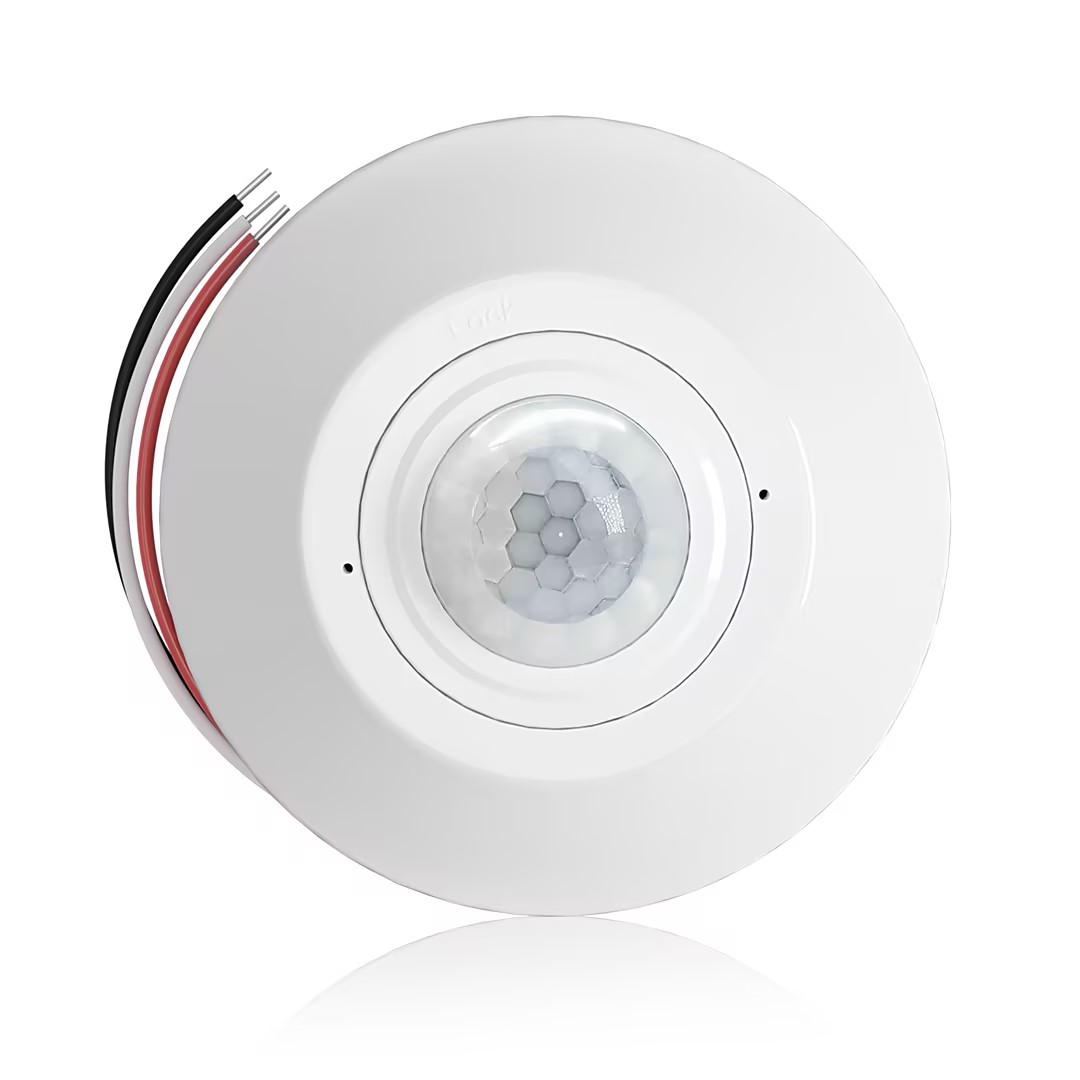
- Sensor de ocupação PIR para montagem no teto com saída de relé de contato seco
- Alimentação de baixa tensão de 12/24VDC ou 12/24VAC
- Contatos de relé isolados COM, NO e NC para entradas de EMS, HVAC e controle predial
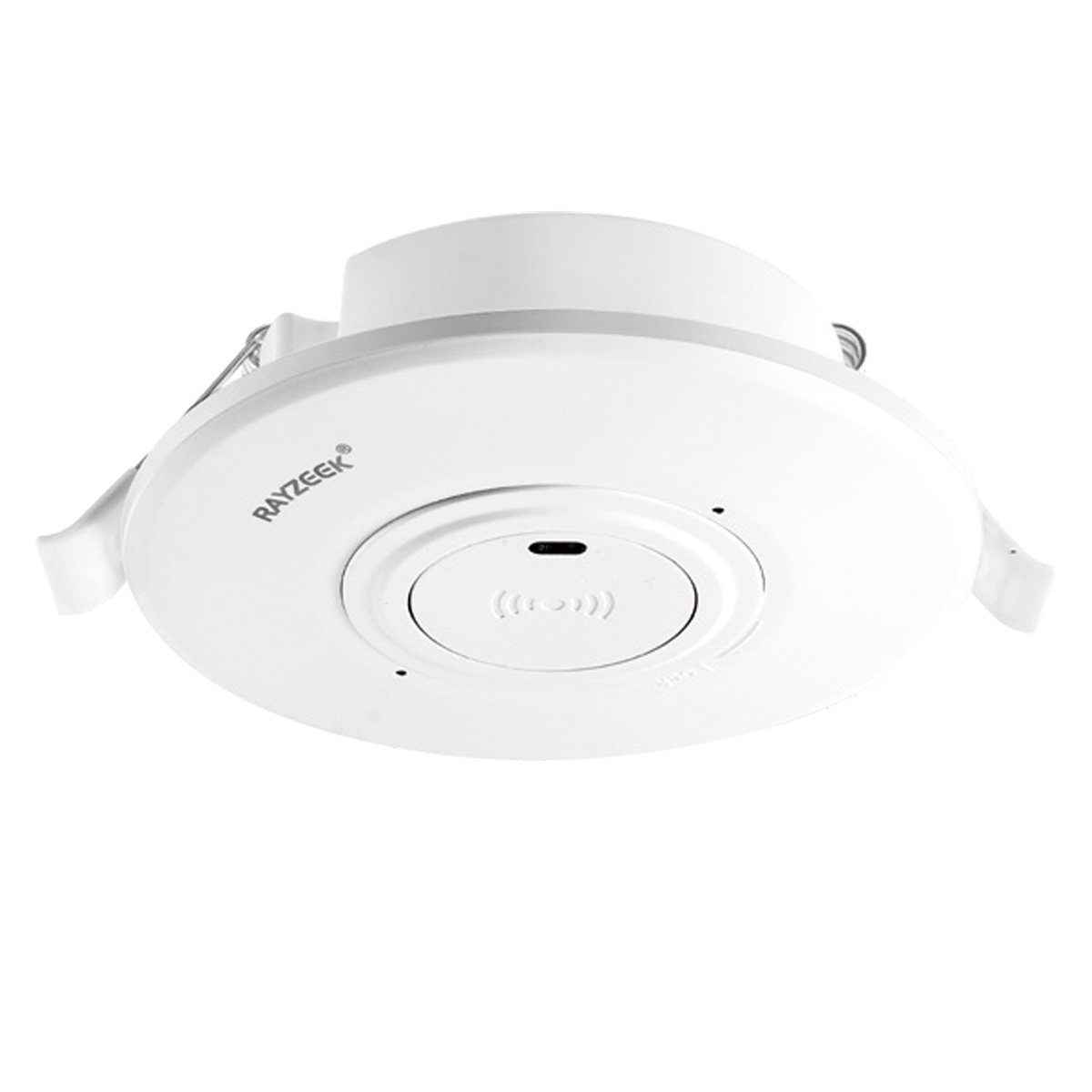
- Interruptor sensor de movimento de micro-ondas embutido no teto em baixa tensão CC
- Entrada de 12 VDC / 24 VDC com faixa de 10-30 VDC
- Corrente máxima de trabalho de 10A com tempo de retardo, limite Lux e sensibilidade ajustáveis
- Interruptor sensor de movimento de micro-ondas embutido no teto para maior carga
- Entrada de tensão de rede de 100-265 VAC, modelo 10A
- Detecção de micro-ondas de 5,8 GHz com tempo de atraso, limite de Lux e sensibilidade ajustáveis
- Interruptor de sensor de movimento de micro-ondas embutido para teto
- Entrada de tensão de rede de 100-265 VAC, modelo 5A
- Detecção de micro-ondas de 5,8 GHz com tempo de atraso, limite de Lux e sensibilidade ajustáveis
- Dimmer de sensor de presença PIR para teto RZ037 para alimentação de 220V
- Corrente máxima de trabalho de 3A com carga nominal de 660W
- O botão LUX controla o Ligar/Desligar do sensor de luz e o brilho de dimerização definido pelo usuário
- Dimmer de sensor de presença PIR para teto RZ037 para alimentação de 110V
- Corrente máxima de trabalho de 3A com carga nominal de 330W
- O botão LUX controla o Ligar/Desligar do sensor de luz e o brilho de dimerização definido pelo usuário
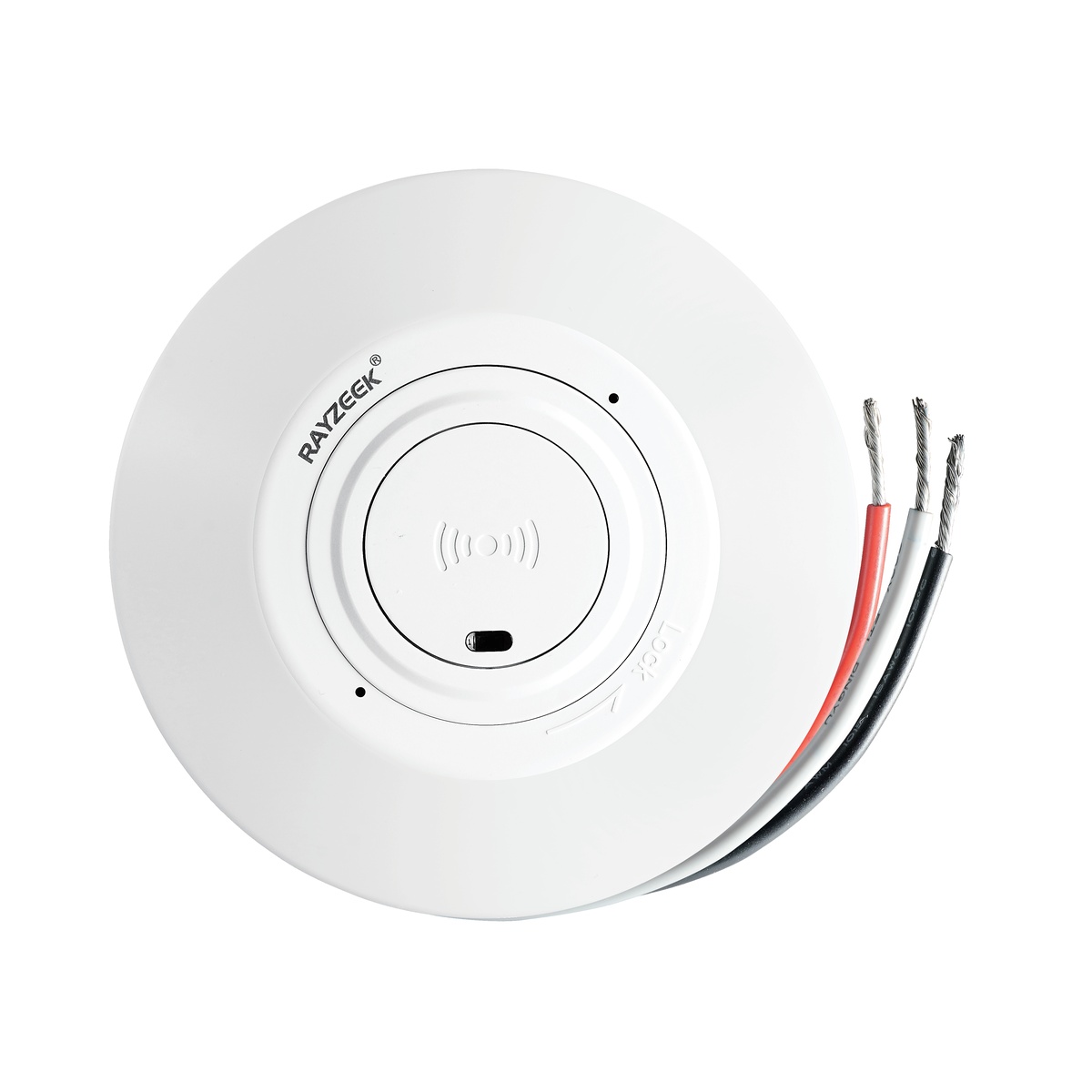
- Interruptor de sensor de movimento de micro-ondas para teto em baixa tensão CC
- Entrada de 12 VDC / 24 VDC com faixa de 10-30 VDC
- Corrente máxima de trabalho de 10A com tempo de retardo, limite Lux e sensibilidade ajustáveis
- Interruptor de sensor de movimento de micro-ondas para teto de maior carga
- Entrada de tensão de rede de 100-265 VAC, modelo 10A
- Detecção de micro-ondas de 5,8 GHz com tempo de atraso, limite de Lux e sensibilidade ajustáveis
- Interruptor com sensor de movimento por micro-ondas para montagem no teto
- Entrada de tensão de rede de 100-265 VAC, modelo 5A
- Detecção de micro-ondas de 5,8 GHz com tempo de atraso, limite de Lux e sensibilidade ajustáveis
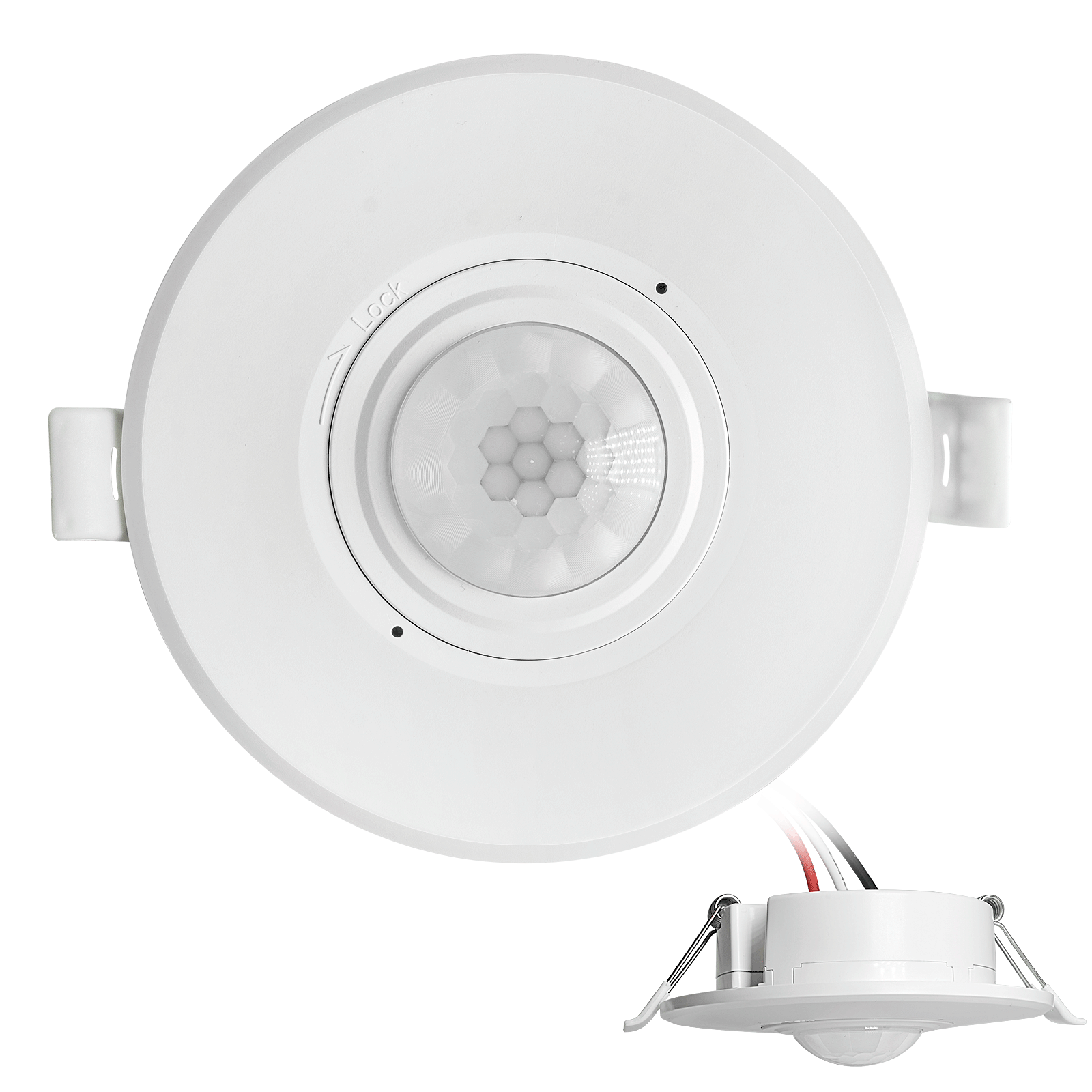
- Interruptor com sensor de movimento PIR de teto embutido CC de baixa tensão
- Entrada de 12 VDC / 24 VDC com faixa de 10-30 VDC
- Corrente máxima de trabalho de 10A com tempo de atraso, limite de Lux e sensibilidade ajustáveis
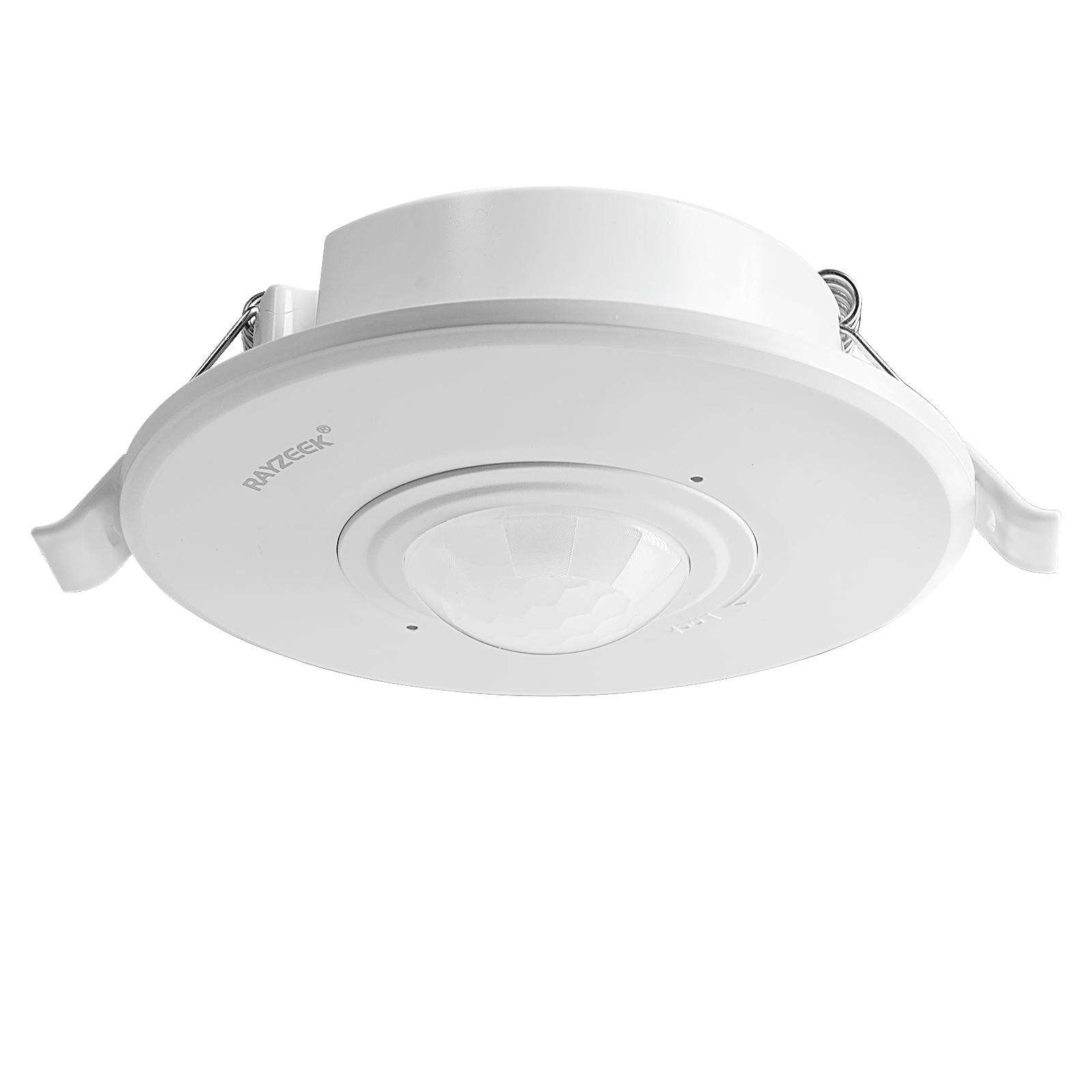
- Interruptor com sensor de movimento PIR de teto embutido para maior carga
- Entrada de tensão de rede de 100-265 VAC, modelo 10A
- Detecção de 360 graus com tempo de atraso, limite de Lux e sensibilidade ajustáveis
- Interruptor com sensor de movimento PIR de teto embutido
- Entrada de tensão de rede de 100-265 VAC, modelo 5A
- Detecção de 360 graus com tempo de atraso, limite de Lux e sensibilidade ajustáveis
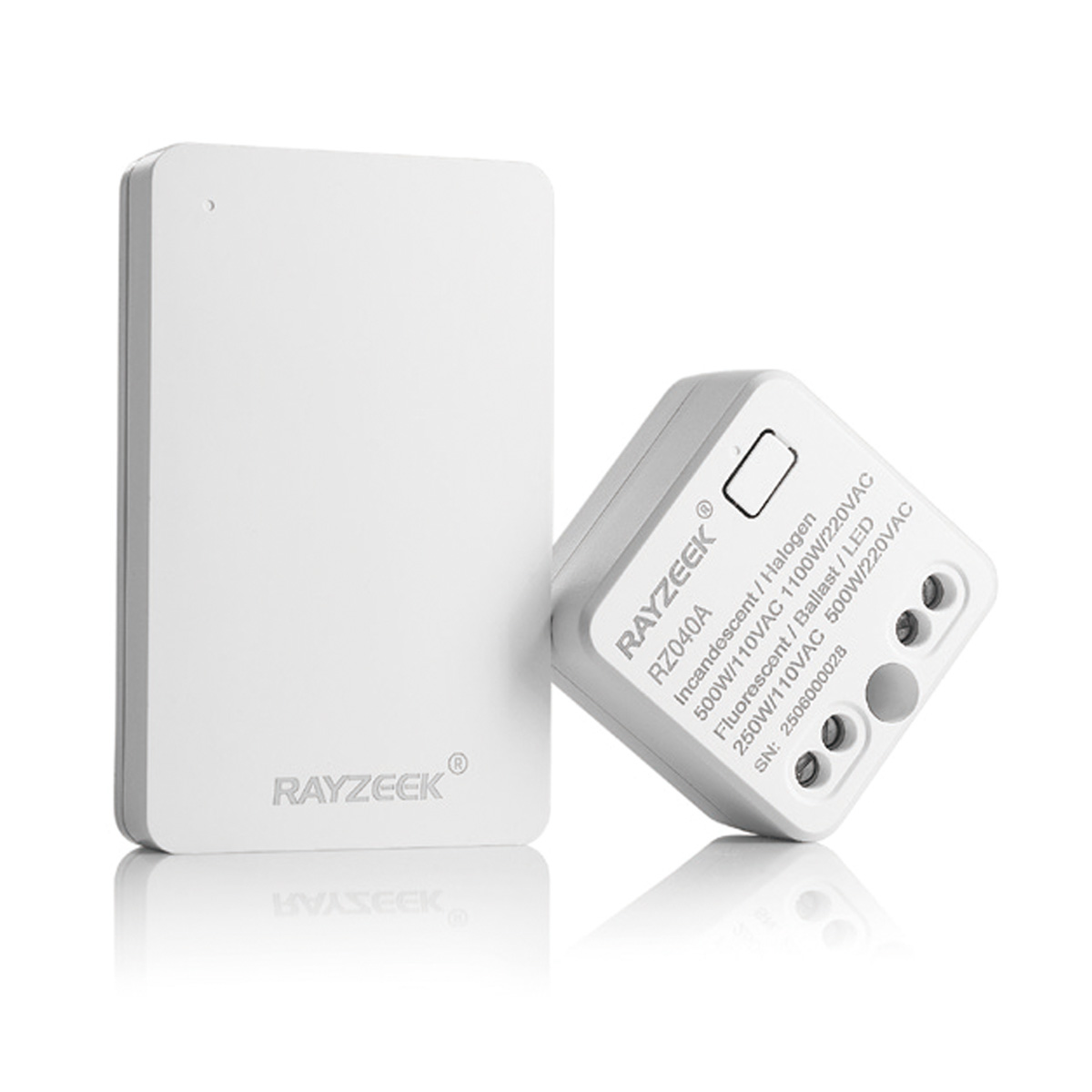
- Kit de receptor e interruptor sem fio para controle de iluminação LIGA/DESLIGA em ambientes internos
- Receptor de 100-230VAC, 50/60Hz com corrente nominal de 5A
- Interruptor sem fio alimentado por CR2032 com comunicação de 2,4 GHz
- Ocupação (LIGA automático/DESLIGA automático)
- 12–24V CC (10–30VDC), até 10A
- Cobertura de 360°, 8–12 m de diâmetro
- Temporização: 15 s–30 min
- Sensor de luz: Desligado/15/25/35 Lux
- Sensibilidade Alta/Baixa
- Modo de ocupação Liga-Automático/Desliga-Automático
- 100–265V AC, 10A (neutro obrigatório)
- Cobertura de 360°; diâmetro de detecção de 8–12 m
- Temporização: 15 s–30 min; Lux DESLIGADO/15/25/35; Sensibilidade Alta/Baixa
- Modo de ocupação Liga-Automático/Desliga-Automático
- 100–265V AC, 5A (neutro obrigatório)
- Cobertura de 360°; diâmetro de detecção de 8–12 m
- Temporização: 15 s–30 min; Lux DESLIGADO/15/25/35; Sensibilidade Alta/Baixa
When Occupancy Mode Is Still the Better Choice
Vacancy mode is the clear winner for protecting toddler sleep, but that doesn’t mean occupancy mode is useless. The two modes simply serve different priorities.
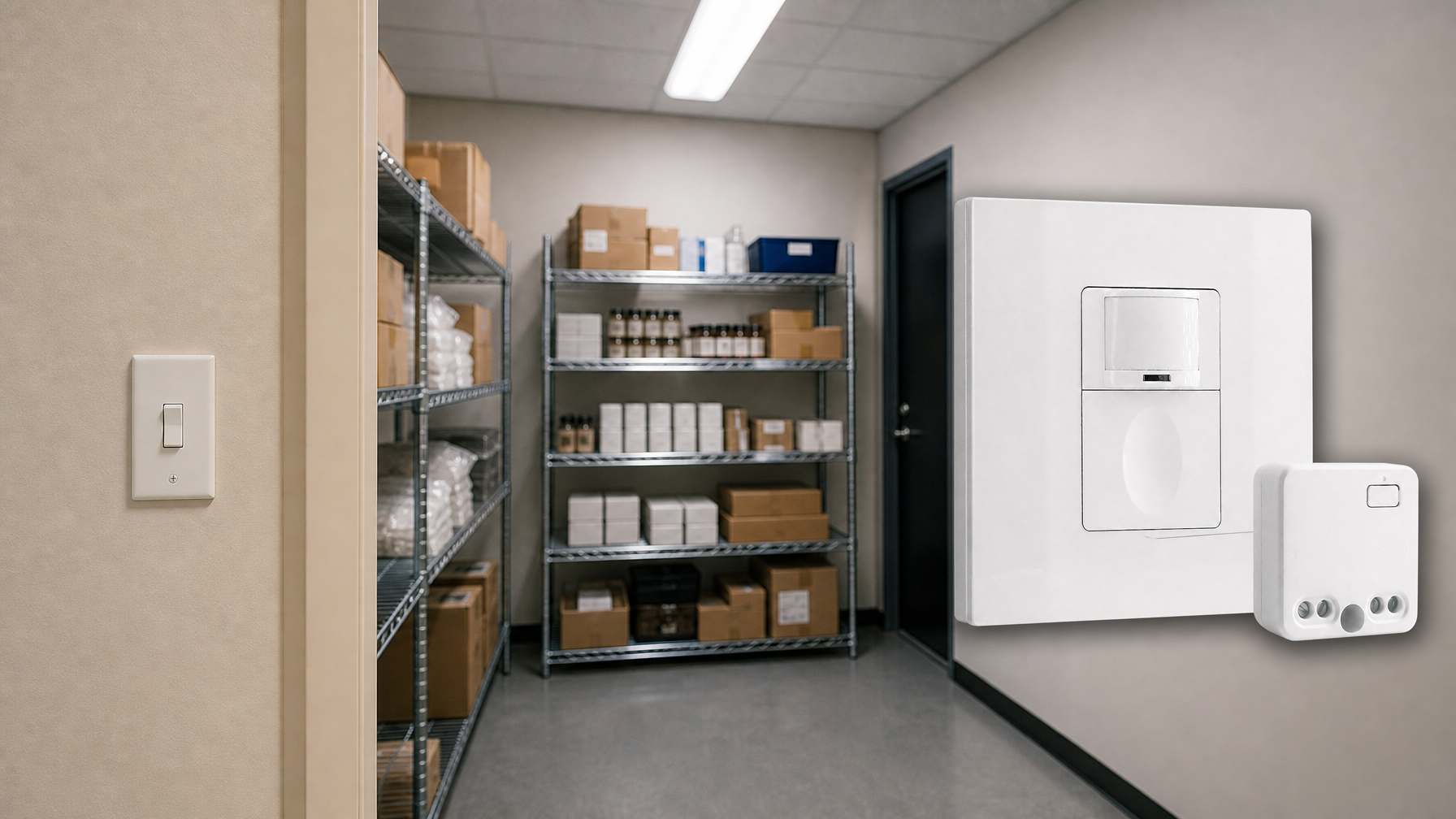
Occupancy mode excels in spaces where convenience is paramount and sudden light is not a problem. Basements, garages, storage closets, and utility rooms are perfect examples. In these areas, where your hands are often full and you just need the light to be on, the automatic activation of occupancy mode is a feature, not a flaw. It can also be useful in daytime spaces like playrooms or entryways, where motion reliably signals a need for light.
For the unique challenges of nighttime with a toddler, however, vacancy mode stands alone. It prevents the forgotten light switch while preserving the human judgment that decides when light is truly needed. It is the only configuration that lets a parent say, “I want light now, at this intensity, and I want it to turn off by itself when we’re done.” That is precisely the control a sleep-deprived family needs.
Implementing Vacancy Mode in Your Home
To get the most out of vacancy mode, you need to be strategic about where you install it and how you integrate it into your nighttime routines.
The highest-value locations are the pathways of nighttime toddler activity: hallways connecting bedrooms, the bathrooms themselves, and any common areas a child might enter. Installing vacancy sensors here gives parents control during sleep-sensitive hours while adding the convenience of automated shutoff.
Bedrooms are a more nuanced decision. A vacancy sensor can be useful if a parent often enters the room at night for diaper changes or to comfort a child, as it prevents the light from turning on when the toddler just rolls over in their sleep. However, many families prefer to keep bedroom lighting fully manual.
For the system to work, it must become part of your routine. If your child is learning to use the bathroom at night, make a habit of turning the hallway light on at a low setting before you go to bed. For younger toddlers, the routine is simpler: the parent activates the light upon hearing the child wake, and the sensor handles the rest.
Finally, configure the sensor’s sensitivity to detect the smaller, slower movements of a toddler. A sensor optimized for adult motion may shut off too early. Rayzeek sensors with adjustable, low-lux sensitivity can be fine-tuned to match your child’s specific movement patterns, ensuring the light stays on for as long as they need it.
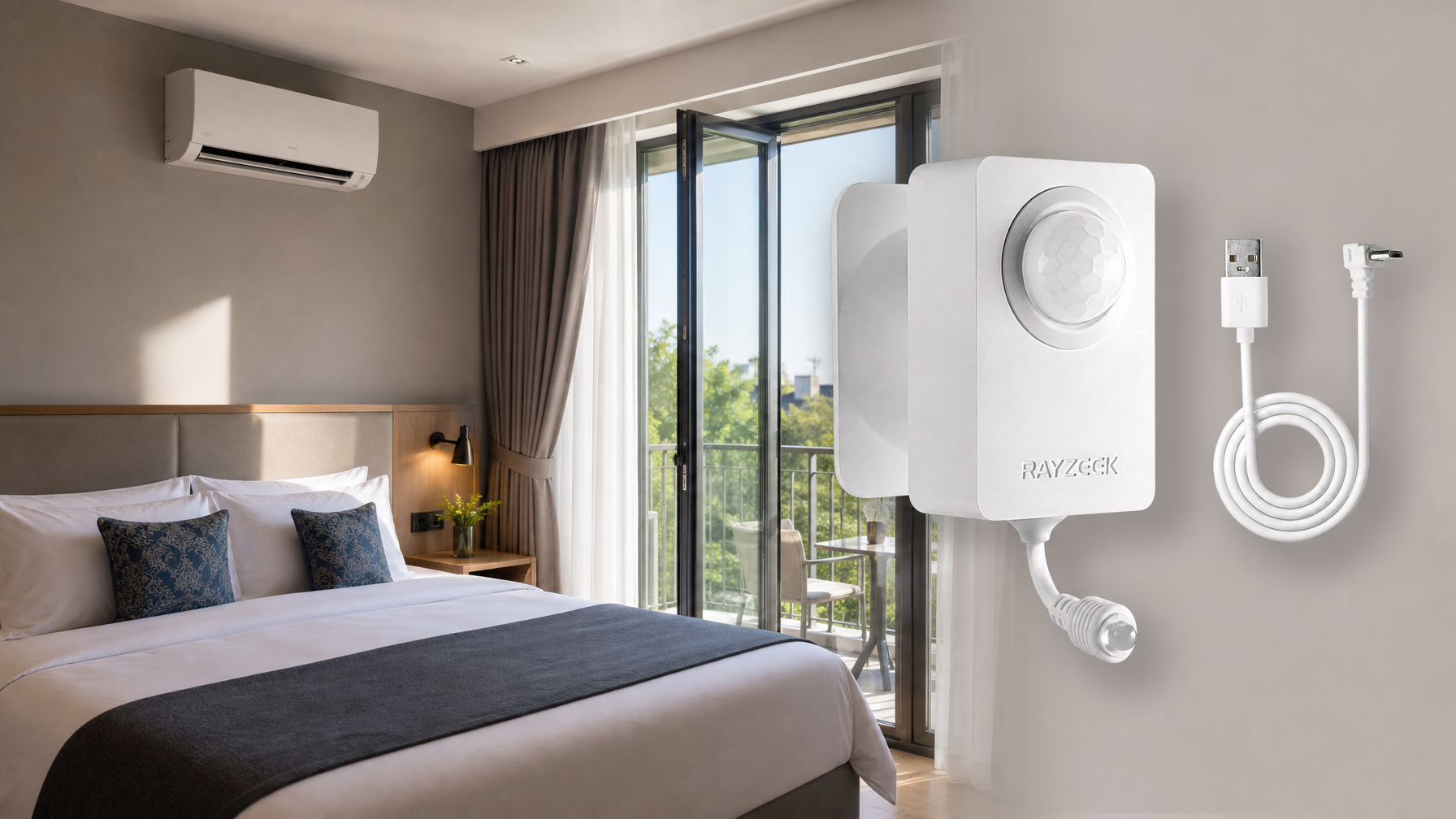
For families in rental properties, plug-in vacancy sensors that control lamps offer a great alternative to replacing light switches. A sensor controlling a small lamp in a hallway can deliver the same manual-on, auto-off function without permanent modifications. While not as seamless as a built-in switch, it preserves the core advantage: parental control.