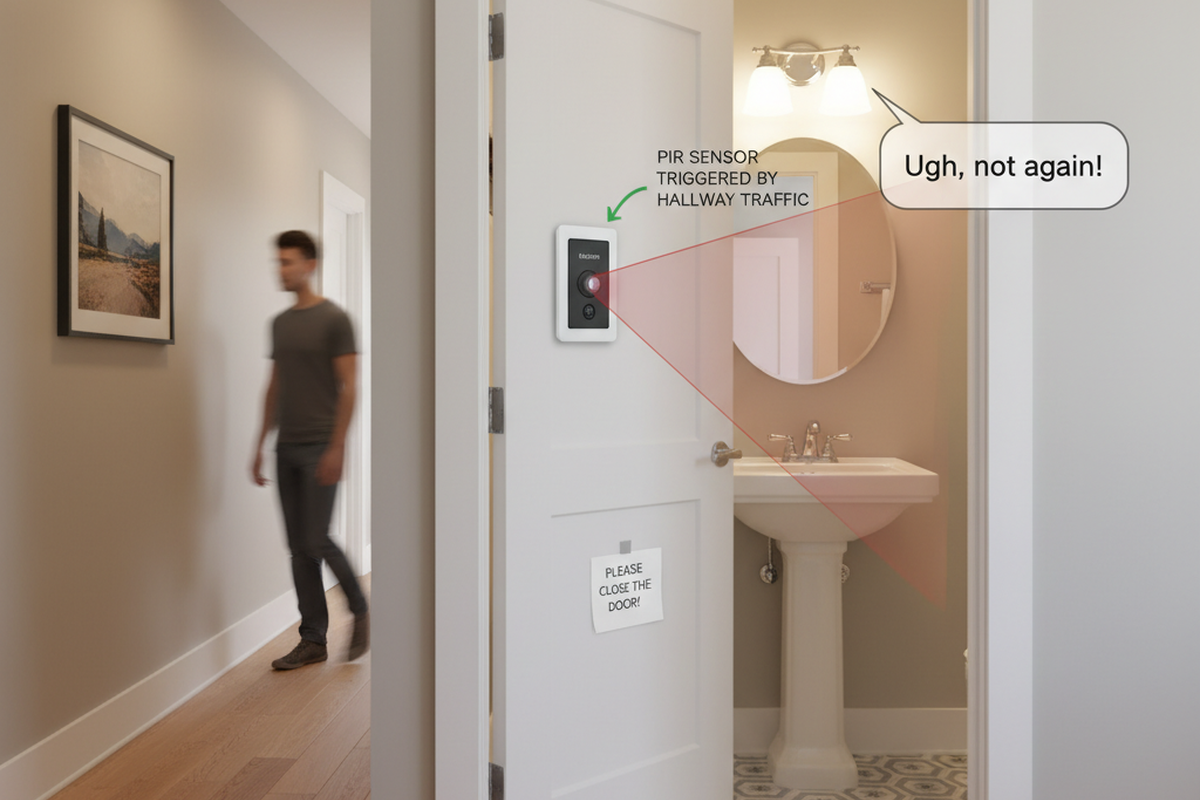
La iluminación con sensor de movimiento promete comodidad, pero para las familias con niños pequeños, a menudo genera más problemas de los que resuelve. Imagine la escena: un niño pequeño se despierta a las 2:00 a. m., camina tambaleándose hacia el baño y una luz controlada por sensor se enciende al máximo de brillo. El resplandor deslumbrante despierta abruptamente al niño, alerta a los padres y, con frecuencia, despierta al cónyuge o a un hermano. Lo que comenzó como un simple viaje al baño se ha escalado en una lucha de una hora para lograr que toda la casa vuelva a dormirse.

El dilema parece imposible. La oscuridad invita a caídas y desorientación para un niño pequeño que navega por un espacio familiar con piernas inestables. Sin embargo, las luces brillantes activadas por movimiento destruyen cualquier esperanza de conservar el estado de somnolencia que permite un rápido regreso a la cama. La mayoría de las familias se resignan a esta compensación, asumiendo que los sensores de movimiento obligan a elegir entre la seguridad y el sueño.
No tiene por qué ser así. El modo vacante, una configuración de sensor menos conocida, disuelve esta falsa elección. A diferencia del modo de ocupación estándar, que enciende automáticamente las luces a la primera señal de movimiento, el modo vacante requiere que alguien accione un interruptor para encender las luces. Solo automatiza el apagado. Esta simple inversión del control —poner la decisión de encendido en manos humanas— transforma la tecnología de un disruptor del sueño en un protector del sueño. Cuando se combina con la activación de bajo lux, que ayuda a los sensores a detectar movimiento en luz mínima, el modo vacante proporciona la iluminación suave y predecible que las casas con niños pequeños necesitan desesperadamente.
El dilema del sensor de movimiento a medianoche
Los niños pequeños se mueven de formas para las que los sensores de movimiento estándar nunca fueron diseñados. A diferencia de los adultos, los niños pequeños de entre uno y cuatro años se despiertan con frecuencia debido a patrones de sueño cambiantes, sueños o simple curiosidad. Un niño pequeño puede deambular por un pasillo una docena de veces a la semana con el andar impredecible de alguien que aún está dominando el equilibrio.
El modo de ocupación, la configuración predeterminada en la mayoría de los sistemas, interpreta cualquier movimiento como una orden para encender las luces a toda potencia. La lógica es simple: el movimiento significa que hay alguien presente, y la presencia requiere luz. Esto funciona perfectamente en un edificio de oficinas o en un garaje, donde el brillo repentino no representa un problema.
En el mundo de un niño pequeño, esta lógica es una catástrofe. El sensor no puede distinguir entre un niño adormilado y un adulto completamente despierto. No puede ajustarse a la hora del día ni al hecho de que la persona que acaba de detectar está medio dormida. Simplemente se activa, inundando el espacio con luz equivalente a la del día. El niño pequeño, que podría haber regresado a la cama con una interrupción mínima, ahora está mirando fijamente un pasillo intensamente iluminado. El resplandor repentino desencadena una respuesta de cortisol, una alerta neurológica que indica al cerebro que debe estar completamente despierto. Comienza la reacción en cadena.
El problema no es la luz en sí, sino la pérdida de control sobre cuándo y cómo aparece. Las familias necesitan una iluminación que sirva a sus necesidades, no un sistema que se imponga en el peor momento posible.
Ocupación vs. Vacante: Una diferencia fundamental
Los sensores de movimiento no solo encienden y apagan luces; funcionan según una lógica de control específica que dicta quién —o qué— tiene el mando.
Modo de ocupación: La presunción de necesidad
El modo de ocupación está completamente automatizado. El sensor controla tanto las funciones de encendido como de apagado. Cuando detecta movimiento, la luz se activa. Cuando el movimiento cesa durante un tiempo determinado, normalmente entre 30 segundos y varios minutos, la luz se desactiva. El sistema asume que, si usted está allí, desea luz.
El atractivo es evidente. Puede entrar a una despensa con las manos llenas de compras sin tener que buscar a ciegas un interruptor. En muchos contextos, esta suposición es cierta. El sensor es un sirviente silencioso y eficiente.
¿Busca soluciones de ahorro de energía activadas por movimiento?
Póngase en contacto con nosotros para obtener sensores de movimiento PIR completos, productos de ahorro de energía activados por movimiento, interruptores con sensor de movimiento y soluciones comerciales de presencia/vacancia.
El costo, sin embargo, es una renuncia total a la discreción. El sensor no puede saber si la persona que detecta realmente quiere luz o preferiría la oscuridad. Se activa porque fue diseñado para ello, y usted tiene que vivir con el resultado.
Modo vacante: El control devuelto

El modo vacante invierte esta estructura. Una persona debe accionar manualmente el interruptor para encender la luz. El único trabajo del sensor es apagar la luz automáticamente después de confirmar que la habitación está vacía.
Este cambio, aparentemente sutil, altera fundamentalmente la relación del usuario con el sistema. El sensor ya no presume saber lo que usted necesita. Espera su señal explícita —el accionamiento de un interruptor— antes de hacer cualquier cosa. Una vez que la luz está encendida, el sensor se hace cargo de la tarea que más a menudo se olvida: apagarla. Este diseño devuelve el criterio humano al proceso al tiempo que automatiza la tarea.
Why Manual-On Logic Protects Toddler Sleep
For toddler households, the superiority of vacancy mode comes down to control during the most vulnerable hours of the night. Preserving sleep depends on gentle, predictable light that appears only when intended. Vacancy mode delivers.
Imagine a nighttime disruption in a home with vacancy mode. A parent, hearing a child stir, goes to the hallway and flips on the light, which is fitted with a dim, warm bulb perfect for 2 a.m. The light is already on—gentle and expected—before the toddler is even fully out of bed. The child encounters illumination that is sufficient for safety but not jarring enough to trigger full alertness. After a quick trip to the bathroom, the toddler is back in bed. The vacancy sensor, detecting that the hallway is now empty, turns off the light automatically. No one has to remember to go back and flip the switch.
Now contrast this with the occupancy mode scenario. The parent can’t pre-emptively turn on the light; the system won’t allow it. The toddler has to start moving first, triggering the sensor to snap the lights on at full brightness. The sudden shift from dark to light is a neurological shock. The human brain interprets abrupt changes like this as potential threats, releasing cortisol that promotes wakefulness. A child who was in a drowsy, half-asleep state is now wide awake.
A parent activating a light at 2 a.m. will choose the right amount of light for the moment. Occupancy mode makes no such distinction—it activates whatever bulb is connected to it, at whatever intensity it’s set for general use. A hallway light configured for daytime safety becomes a nighttime liability. Vacancy mode refines the sensor’s role, giving it the job it does best (automated shutoff) while taking away the job it does worst (deciding when light is wanted).
Inspírese con los portafolios de sensores de movimiento Rayzeek.
¿No encuentra lo que busca? No se preocupe. Siempre existen formas alternativas de resolver sus problemas. Quizá alguno de nuestros portafolios pueda ayudarle.
Low-Lux Sensitivity: The Key to Gentle Lighting
Vacancy mode gives you control over when the light turns on, but the sensor’s sophistication determines how well it works with gentle, minimal light. This is where low-lux activation becomes essential.
Standard motion sensors need a fair amount of ambient light or contrast to detect movement reliably. This often means a dim nightlight isn’t bright enough for the sensor to “see” the subtle motion of a toddler, causing it to shut off prematurely.
Rayzeek’s low-lux technology allows its sensors to detect motion even in very low light. For parents, this means you can turn on a hallway light at a minimal, sleep-friendly intensity, and the sensor will still reliably track your toddler’s movement. It will keep the light on as long as needed and then switch it off when the coast is clear. The system doesn’t need brightness to function. It operates in that twilight zone of illumination perfect for preserving sleep: enough light to be safe, but not enough to wake everyone up.
The combination is powerful. Vacancy mode ensures a human decides when and how bright the light should be. Low-lux sensitivity ensures the sensor can do its job even when that light is incredibly dim. The result is a lighting environment that feels almost invisible—there when you need it, gone when you don’t.
Addressing the Safety Concern of Manual Activation
The most common objection to vacancy mode is an intuitive one: what if the toddler wakes up and wanders before a parent can turn the light on? Does relying on a manual switch create a safety risk?
This is a valid concern, and the answer depends on your family’s circumstances. Vacancy mode is best suited for households where parents are light sleepers who wake at the first sign of movement. It is also highly effective once toddlers are old enough to operate a light switch themselves.
When toddlers can operate switches: Around age three or four, many toddlers can reach and use light switches. Vacancy mode becomes a tool for teaching a routine: wake up, turn on the hall light, go to the bathroom. The sensor handles the shutoff after they’re back in bed, building their independence without leaving lights on all night.

When toddlers cannot operate switches: For younger toddlers, a hybrid approach is safest. A small, always-on nightlight provides a baseline level of visibility in hallways and bathrooms, ensuring the child is never in complete darkness. The overhead vacancy-mode light is then used by the parent to add more light for supervised trips. This layered approach provides redundancy without sacrificing control over the main light source.
Vacancy mode doesn’t eliminate the need for parental vigilance; it enhances a parent’s ability to provide the right light at the right time.
Quizás le interese

- Tensión: 2 pilas AAA
- Modo Día/Noche
- Temporización: 15 min, 30 min, 1 h (por defecto), 2 h
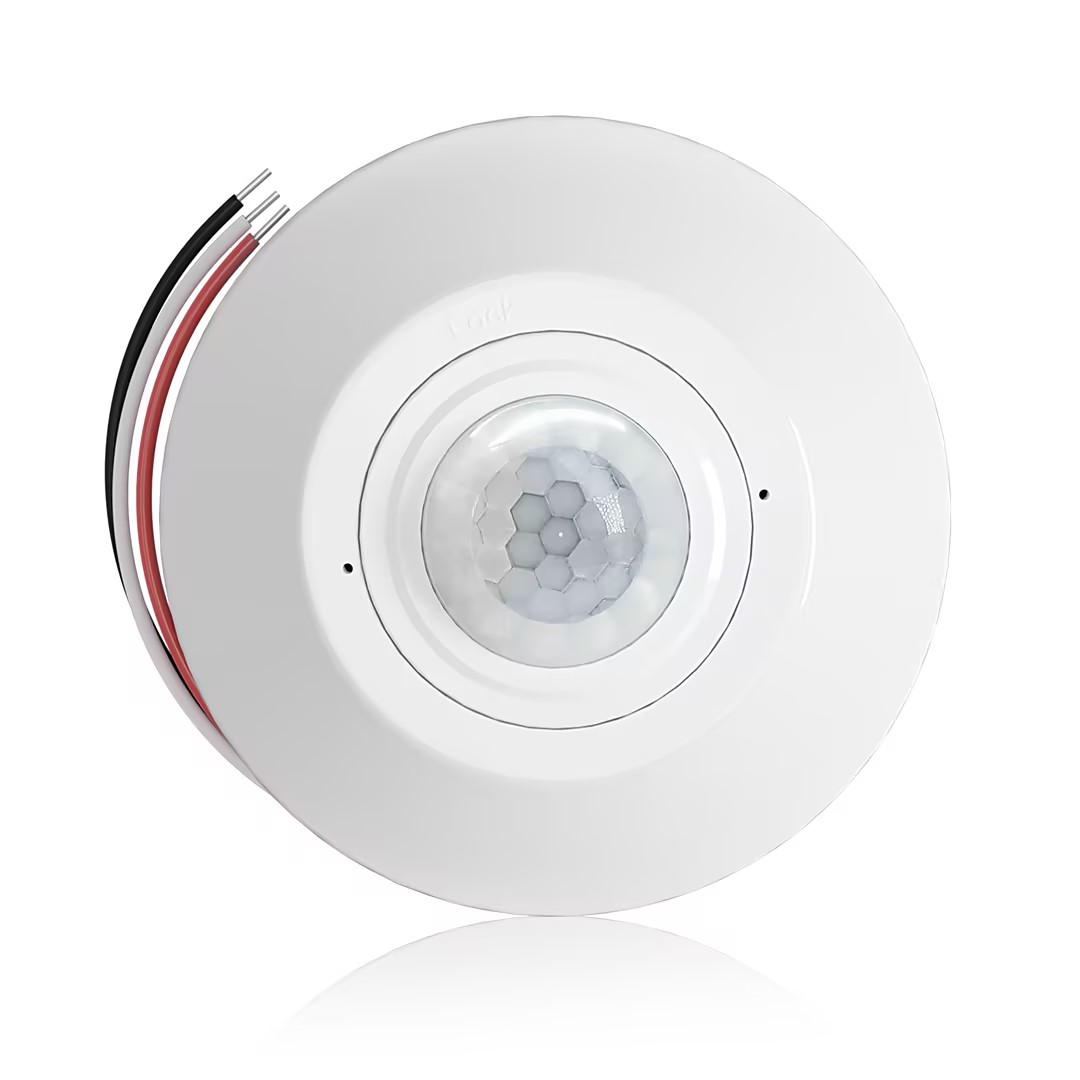
- Sensor de presencia PIR para montaje en techo con salida de relé de contacto seco
- Alimentación de baja tensión de 12/24VDC o 12/24VAC
- Contactos de relé aislados COM, NO y NC para entradas de EMS, HVAC y control de edificios
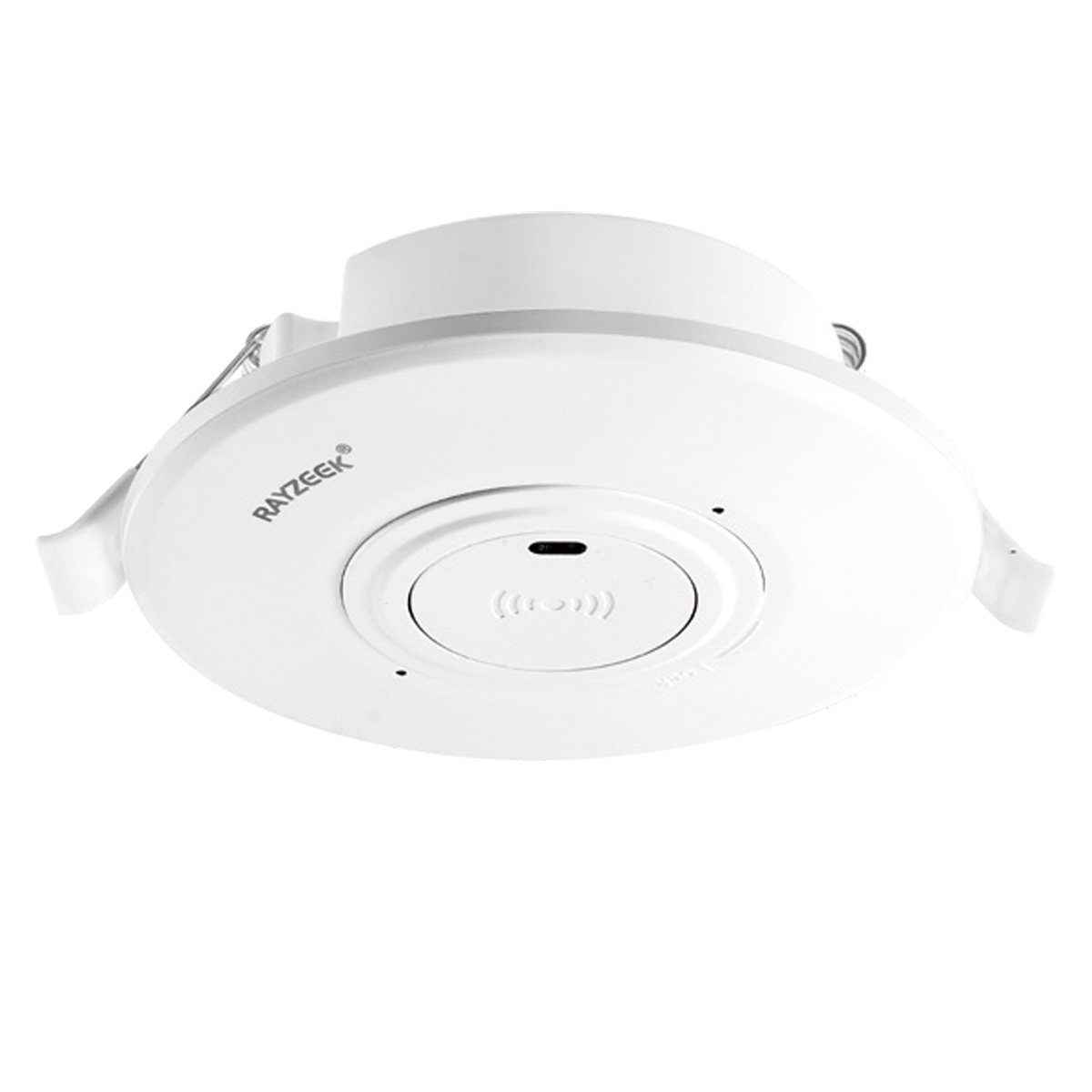
- Interruptor con sensor de movimiento por microondas empotrable en techo de baja tensión DC
- Entrada de 12 VDC / 24 VDC con rango de 10-30 VDC
- Corriente de funcionamiento máxima de 10A con retardo de tiempo, umbral de Lux y sensibilidad ajustables
- Interruptor con sensor de movimiento por microondas empotrable en techo para cargas más elevadas
- Entrada de tensión de red de 100-265 VAC, modelo de 10A
- Detección por microondas de 5,8 GHz con temporizador, umbral Lux y sensibilidad ajustables
- Interruptor con sensor de movimiento por microondas empotrable para techo
- Entrada de tensión de red de 100-265 VAC, modelo de 5A
- Detección por microondas de 5,8 GHz con temporizador, umbral Lux y sensibilidad ajustables
- Regulador con sensor de presencia PIR RZ037 de techo para alimentación de 220V
- Corriente de funcionamiento máxima de 3A con carga nominal de 660W
- El botón LUX controla el encendido/apagado del sensor de luz y la regulación de brillo ajustada por el usuario
- Regulador con sensor de presencia PIR RZ037 de techo para alimentación de 110V
- Corriente de funcionamiento máxima de 3A con carga nominal de 330W
- El botón LUX controla el encendido/apagado del sensor de luz y la regulación de brillo ajustada por el usuario
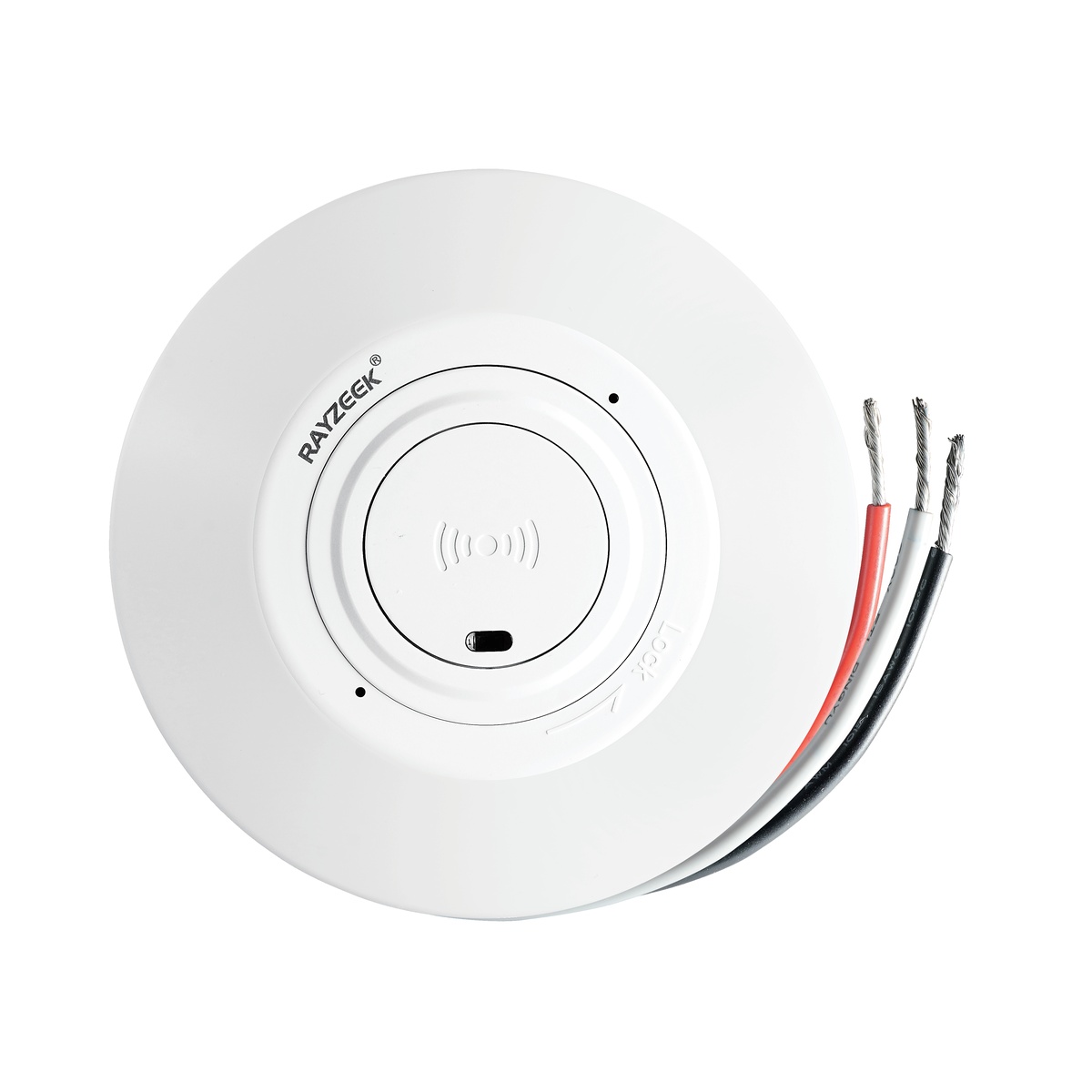
- Interruptor con sensor de movimiento por microondas de techo para CC de bajo voltaje
- Entrada de 12 VDC / 24 VDC con rango de 10-30 VDC
- Corriente de funcionamiento máxima de 10A con retardo de tiempo, umbral de Lux y sensibilidad ajustables
- Interruptor con sensor de movimiento por microondas de techo para mayor carga
- Entrada de tensión de red de 100-265 VAC, modelo de 10A
- Detección por microondas de 5,8 GHz con temporizador, umbral Lux y sensibilidad ajustables
- Interruptor con sensor de movimiento por microondas de techo
- Entrada de tensión de red de 100-265 VAC, modelo de 5A
- Detección por microondas de 5,8 GHz con temporizador, umbral Lux y sensibilidad ajustables
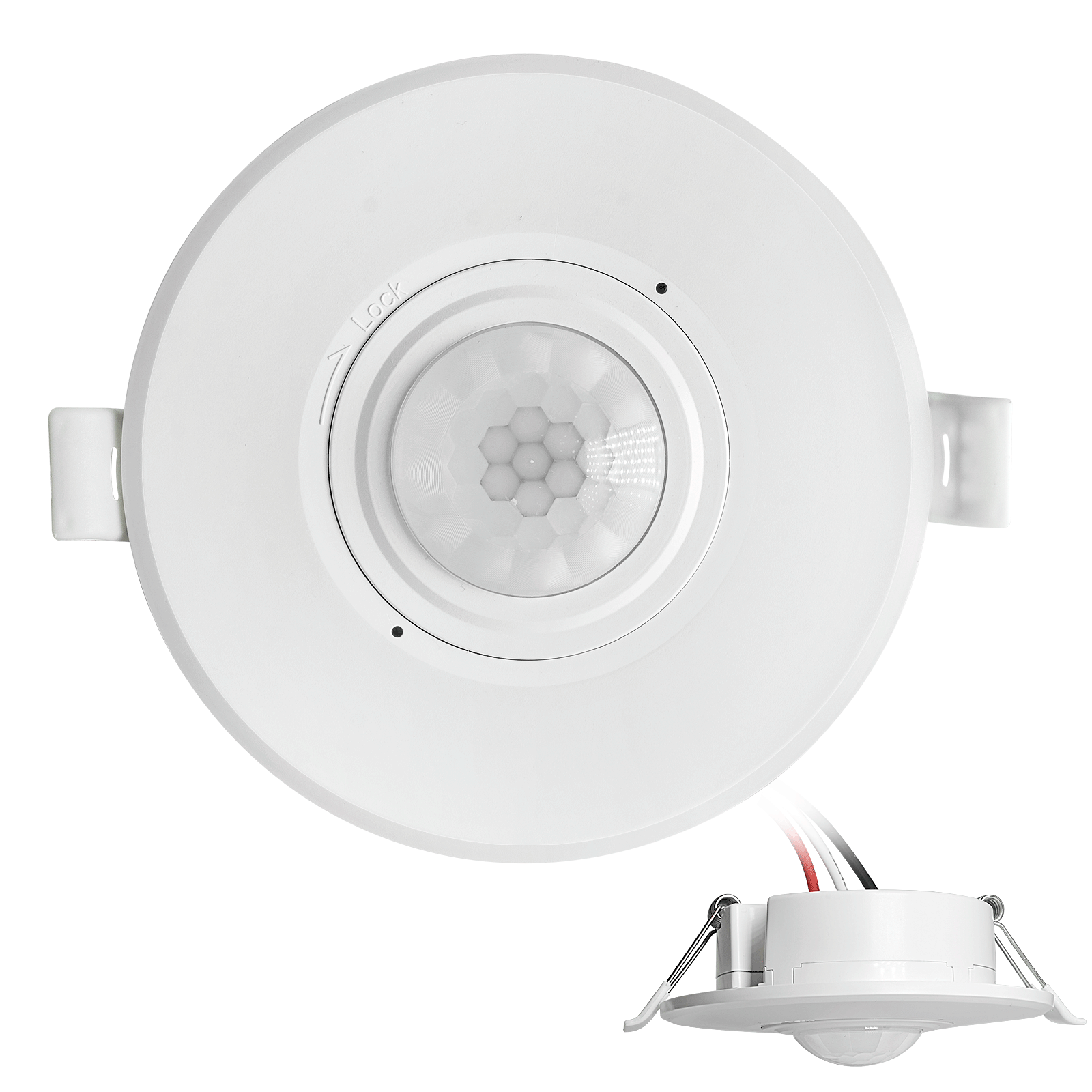
- Interruptor con sensor de movimiento PIR para montaje empotrable en techo de CC de bajo voltaje
- Entrada de 12 VDC / 24 VDC con rango de 10-30 VDC
- Corriente máxima de trabajo de 10 A con tiempo de retardo, umbral de luxes y sensibilidad ajustables
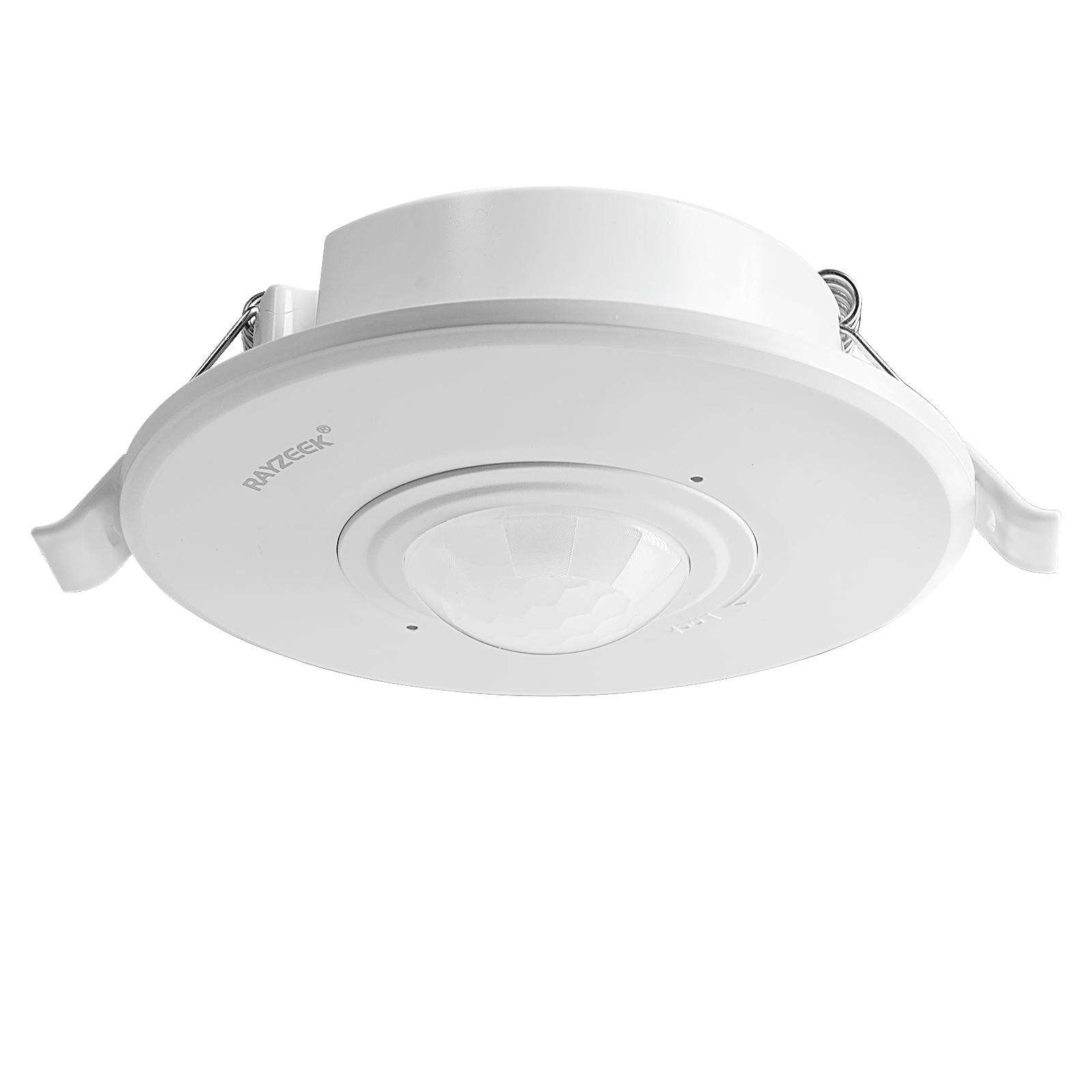
- Interruptor con sensor de movimiento PIR empotrable en techo para mayor carga
- Entrada de tensión de red de 100-265 VAC, modelo de 10A
- Detección de 360 grados con tiempo de retardo, umbral de luxes y sensibilidad ajustables
- Interruptor con sensor de movimiento PIR empotrable en techo
- Entrada de tensión de red de 100-265 VAC, modelo de 5A
- Detección de 360 grados con tiempo de retardo, umbral de luxes y sensibilidad ajustables
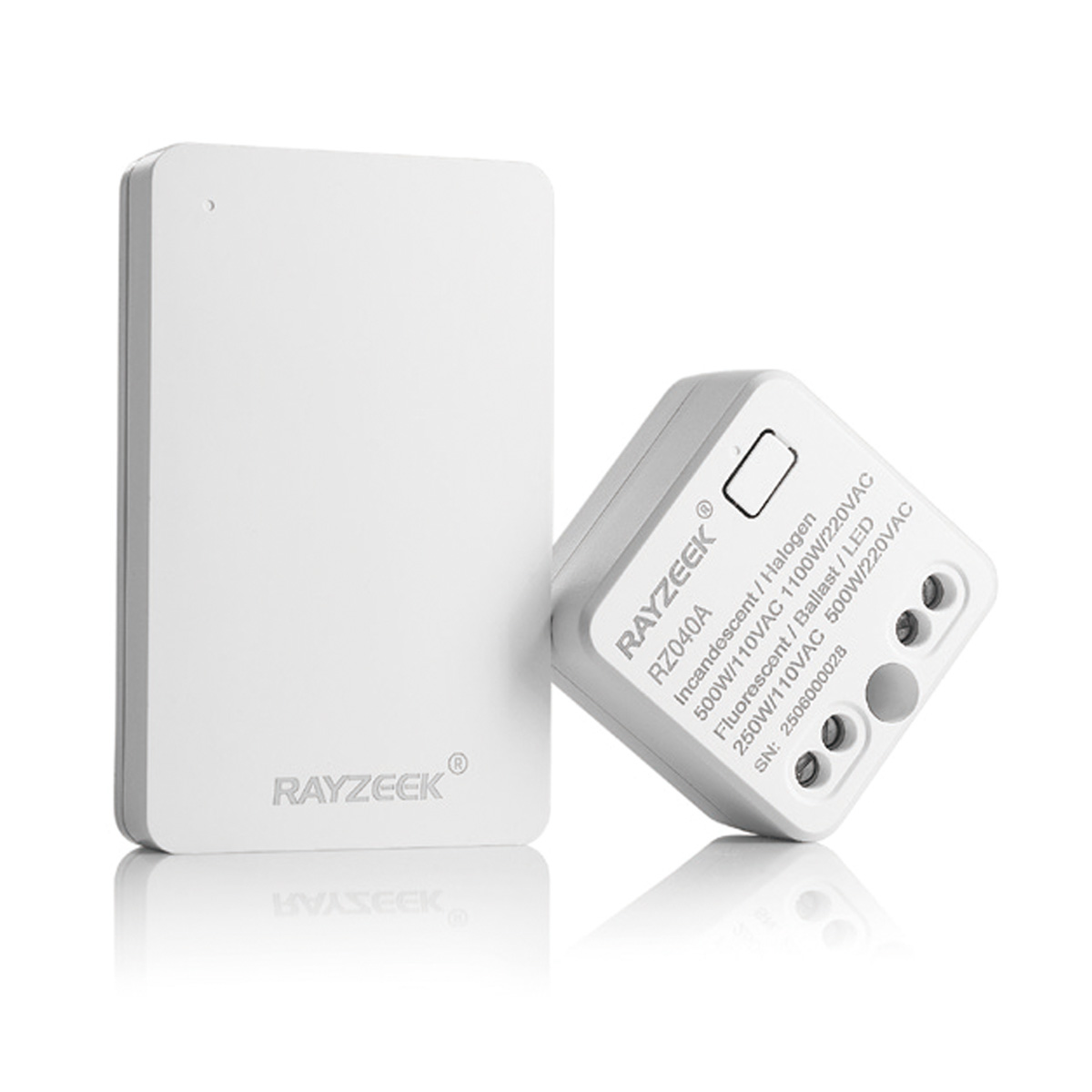
- Kit de emisor inalámbrico y receptor para el control de iluminación de encendido/apagado en interiores
- Receptor de 100-230 V CA, 50/60 Hz con corriente nominal de 5 A
- Interruptor inalámbrico alimentado por CR2032 con comunicación de 2,4 GHz
- Presencia (encendido automático/apagado automático)
- 12–24 V CC (10–30 V CC), hasta 10 A
- Cobertura de 360°, 8–12 m de diámetro
- Tiempo de retardo de 15 s a 30 min
- Sensor de luz Desactivado/15/25/35 Lux
- Sensibilidad alta/baja
- Modo de presencia con encendido/apagado automático
- 100–265V CA, 10A (requiere neutro)
- Cobertura de 360°; diámetro de detección de 8–12 m
- Temporización: 15 s–30 min; Lux OFF/15/25/35; Sensibilidad Alta/Baja
- Modo de presencia con encendido/apagado automático
- 100–265V CA, 5A (requiere neutro)
- Cobertura de 360°; diámetro de detección de 8–12 m
- Temporización: 15 s–30 min; Lux OFF/15/25/35; Sensibilidad Alta/Baja
When Occupancy Mode Is Still the Better Choice
Vacancy mode is the clear winner for protecting toddler sleep, but that doesn’t mean occupancy mode is useless. The two modes simply serve different priorities.
Occupancy mode excels in spaces where convenience is paramount and sudden light is not a problem. Basements, garages, storage closets, and utility rooms are perfect examples. In these areas, where your hands are often full and you just need the light to be on, the automatic activation of occupancy mode is a feature, not a flaw. It can also be useful in daytime spaces like playrooms or entryways, where motion reliably signals a need for light.
For the unique challenges of nighttime with a toddler, however, vacancy mode stands alone. It prevents the forgotten light switch while preserving the human judgment that decides when light is truly needed. It is the only configuration that lets a parent say, “I want light now, at this intensity, and I want it to turn off by itself when we’re done.” That is precisely the control a sleep-deprived family needs.
Implementing Vacancy Mode in Your Home
To get the most out of vacancy mode, you need to be strategic about where you install it and how you integrate it into your nighttime routines.
The highest-value locations are the pathways of nighttime toddler activity: hallways connecting bedrooms, the bathrooms themselves, and any common areas a child might enter. Installing vacancy sensors here gives parents control during sleep-sensitive hours while adding the convenience of automated shutoff.
Bedrooms are a more nuanced decision. A vacancy sensor can be useful if a parent often enters the room at night for diaper changes or to comfort a child, as it prevents the light from turning on when the toddler just rolls over in their sleep. However, many families prefer to keep bedroom lighting fully manual.
For the system to work, it must become part of your routine. If your child is learning to use the bathroom at night, make a habit of turning the hallway light on at a low setting before you go to bed. For younger toddlers, the routine is simpler: the parent activates the light upon hearing the child wake, and the sensor handles the rest.
Finally, configure the sensor’s sensitivity to detect the smaller, slower movements of a toddler. A sensor optimized for adult motion may shut off too early. Rayzeek sensors with adjustable, low-lux sensitivity can be fine-tuned to match your child’s specific movement patterns, ensuring the light stays on for as long as they need it.
For families in rental properties, plug-in vacancy sensors that control lamps offer a great alternative to replacing light switches. A sensor controlling a small lamp in a hallway can deliver the same manual-on, auto-off function without permanent modifications. While not as seamless as a built-in switch, it preserves the core advantage: parental control.