

The mudroom is the hardest-working space in any home. A transition zone between inside and out, it constantly bears the evidence of a life lived: damp coats, muddy boots, and the lingering scent of sports equipment. The typical solution is to run an air purifier or deodorizer continuously, trading a higher energy bill and constant background noise for the promise of fresh air.
This is a fundamentally inefficient strategy. Entryway odors are an intermittent problem, tied directly to when people and their belongings pass through. A 24/7 solution is a blunt instrument for a precise issue. A more intelligent approach exists—one that syncs air treatment with actual use. By using a simple plug-in motion sensor, you can create a system that activates an air purifier only when needed, and just as importantly, for a short while after.
The Mudroom’s Dilemma: Constant Odors vs. Constant Energy Use
The air quality challenge in an entryway stems from its function as a temporary holding area for items that introduce strong, fleeting odors. While these smells aren’t a constant presence, they require a prompt response to keep them from permeating the rest of the house. Running a fan or purifier nonstop seems like a logical defense.
This strategy, however, is profoundly wasteful. It incurs costs beyond the obvious electricity bill. The constant hum of a fan becomes a permanent part of the home’s soundscape, and the accelerated wear on the appliance shortens its operational life. The core issue is a mismatch between the tool and the timing.
A Smarter Approach: Tying Air Treatment to Presence
The most efficient solution ties energy expenditure directly to the problem. A plug-in motion control, like the Rayzeek motion-sensing plug, acts as an automated gatekeeper for the electrical outlet. The setup is simple: plug the motion sensor into the wall, and plug the air purifier into the sensor.
Szukasz energooszczędnych rozwiązań aktywowanych ruchem?
Skontaktuj się z nami w sprawie czujników ruchu PIR, energooszczędnych produktów aktywowanych ruchem, przełączników z czujnikiem ruchu oraz komercyjnych rozwiązań typu Occupancy/Vacancy.
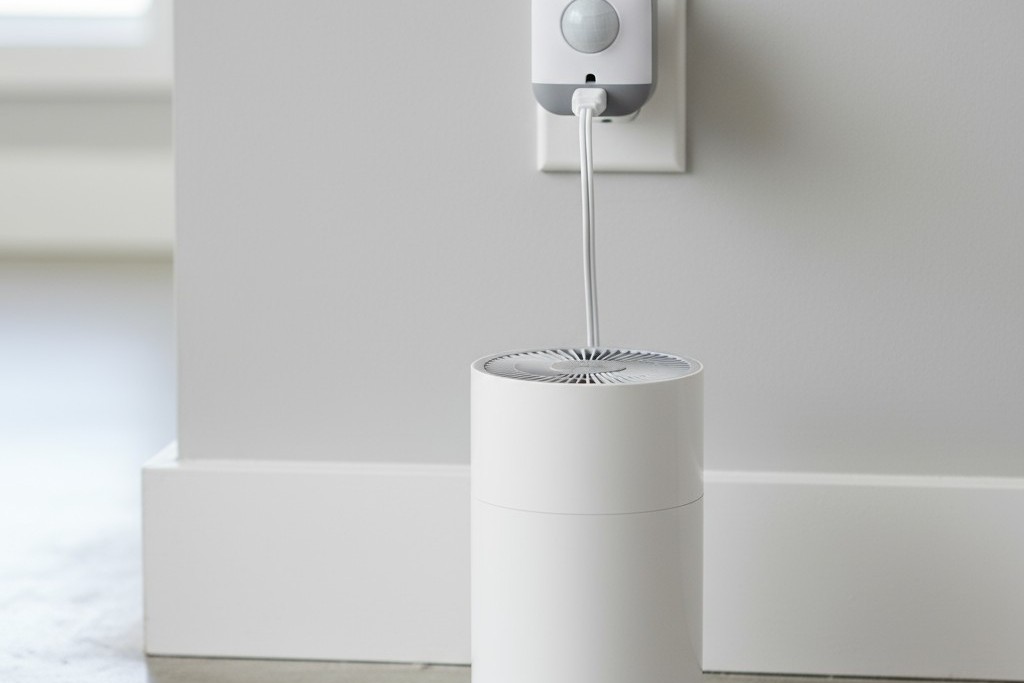
The logic is immediate. When someone enters the mudroom, the sensor detects the movement and powers on the purifier. The appliance runs as long as there is activity, treating the air precisely when new odors are being introduced. Once the person leaves and the room is empty, the sensor cuts the power. This simple connection ensures electricity is consumed only when the space is occupied, eliminating the waste of a 24/7 operation.
Beyond Simple Activation: The Post-Occupancy Timer
Activating a purifier upon entry is a major step, but a crucial problem remains. Odors from a wet jacket or muddy shoes don’t vanish the instant a person walks away. A basic motion sensor would turn the purifier off prematurely, leaving these smells to settle in the stagnant air.
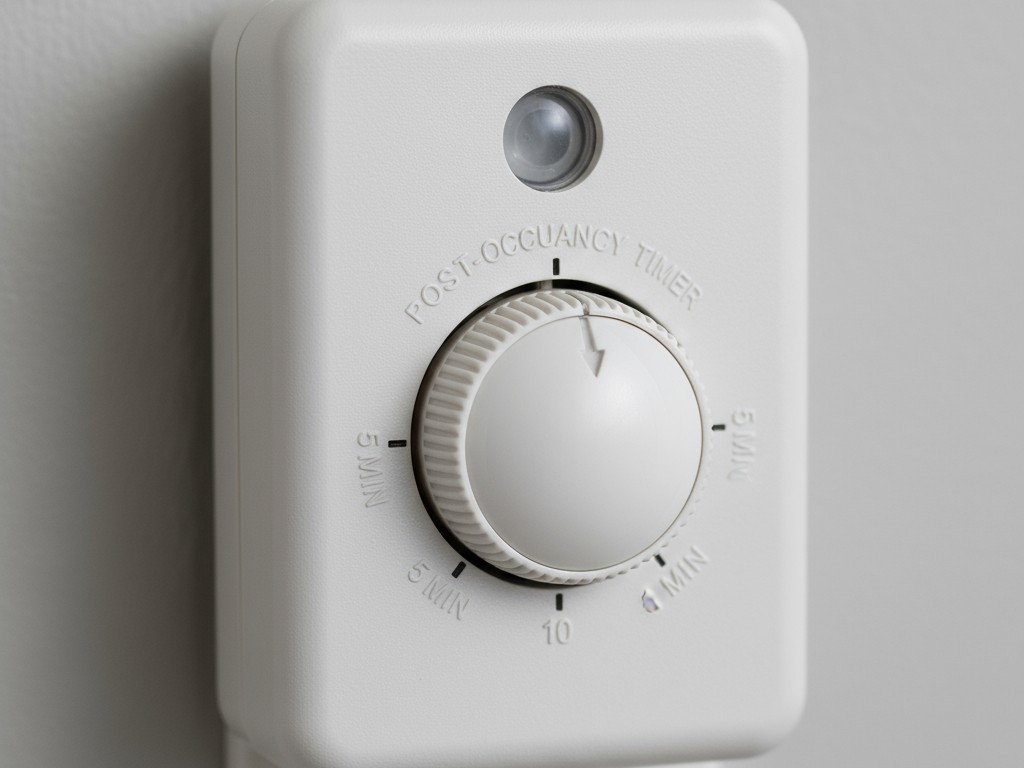
This is where a post-occupancy time delay becomes essential. Advanced motion-sensing plugs allow you to set a timer that keeps the appliance running for a specific period after motion is no longer detected. This creates an air-clearing “tail” that continues to cycle the air, capturing and neutralizing the odors left behind. A 5, 10, or 15-minute timer ensures the space returns to a neutral state without resorting to continuous operation.
Practical Considerations for a Safe, Effective System
Implementing a motion-activated system requires two key considerations to ensure it is both reliable and safe.
Match the Plug to the Purifier: Understanding Electrical Load
Air purifiers, especially larger models with powerful fans, can have a significant electrical draw measured in watts. Every plug-in motion sensor is rated for a maximum load it can safely handle. Before you buy, check the specifications for both the appliance and the motion control. The purifier’s wattage must be below the plug’s maximum rating. Overloading the sensor can cause it to fail or, in a worst-case scenario, create an electrical hazard.
Może Cię również zainteresować

- Napięcie: 2 baterie AAA
- Tryb Dzień/Noc
- Opóźnienie czasowe: 15min, 30min, 1h (domyślnie), 2h

- Sufitowy czujnik obecności PIR z wyjściem przekaźnikowym bezpotencjałowym
- Zasilanie niskonapięciowe 12/24 VDC lub 12/24 VAC
- Izolowane styki przekaźnika COM, NO i NC dla wejść systemów EMS, HVAC i sterowania budynkiem

- Niskonapięciowy, podtynkowy sufitowy mikrofalowy czujnik ruchu DC
- Wejście 12 VDC / 24 VDC w zakresie 10–30 VDC
- Maksymalny prąd roboczy 10 A z regulowanym opóźnieniem czasowym, progiem Lux i czułością
- Mikrofalowy czujnik ruchu do montażu podtynkowego w suficie o podwyższonej obciążalności
- Zasilanie sieciowe 100-265 VAC, model 10A
- Detekcja mikrofalowa 5,8 GHz z regulowanym opóźnieniem czasowym, progiem Lux i czułością
- Mikrofalowy czujnik ruchu do montażu podtynkowego w suficie
- Zasilanie sieciowe 100-265 VAC, model 5A
- Detekcja mikrofalowa 5,8 GHz z regulowanym opóźnieniem czasowym, progiem Lux i czułością
- Sufitowy czujnik obecności PIR ze ściemniaczem RZ037 do zasilania 220V
- Maksymalny prąd roboczy 3A przy obciążeniu znamionowym 660W
- Przycisk LUX steruje włączeniem/wyłączeniem czujnika światła oraz ustawionym przez użytkownika poziomem jasności
- Sufitowy czujnik obecności PIR ze ściemniaczem RZ037 do zasilania 110V
- Maksymalny prąd roboczy 3A przy obciążeniu znamionowym 330W
- Przycisk LUX steruje włączeniem/wyłączeniem czujnika światła oraz ustawionym przez użytkownika poziomem jasności

- Niskonapięciowy DC sufitowy mikrofalowy czujnik ruchu
- Wejście 12 VDC / 24 VDC w zakresie 10–30 VDC
- Maksymalny prąd roboczy 10 A z regulowanym opóźnieniem czasowym, progiem Lux i czułością
- Sufitowy mikrofalowy czujnik ruchu o podwyższonej obciążalności
- Zasilanie sieciowe 100-265 VAC, model 10A
- Detekcja mikrofalowa 5,8 GHz z regulowanym opóźnieniem czasowym, progiem Lux i czułością
- Sufitowy mikrofaliowy czujnik ruchu z przełącznikiem
- Zasilanie sieciowe 100-265 VAC, model 5A
- Detekcja mikrofalowa 5,8 GHz z regulowanym opóźnieniem czasowym, progiem Lux i czułością

- Niskonapięciowy prądu stałego (DC) przełącznik z czujnikiem ruchu PIR do montażu podtynkowego w suficie
- Wejście 12 VDC / 24 VDC w zakresie 10–30 VDC
- Maksymalny prąd roboczy 10A z regulacją opóźnienia czasowego, progu natężenia światła (Lux) oraz czułości

- Przełącznik z czujnikiem ruchu PIR o wyższym obciążeniu, do montażu podtynkowego w suficie
- Zasilanie sieciowe 100-265 VAC, model 10A
- Detekcja w promieniu 360 stopni z regulacją opóźnienia czasowego, progu natężenia światła (Lux) oraz czułości
- Przełącznik z czujnikiem ruchu PIR do montażu podtynkowego w suficie
- Zasilanie sieciowe 100-265 VAC, model 5A
- Detekcja w promieniu 360 stopni z regulacją opóźnienia czasowego, progu natężenia światła (Lux) oraz czułości

- Zestaw bezprzewodowego przełącznika i odbiornika do wewnętrznego sterowania oświetleniem WŁ./WYŁ.
- Odbiornik 100-230VAC, 50/60Hz o prądzie znamionowym 5A
- Przełącznik bezprzewodowy zasilany baterią CR2032 z komunikacją 2.4GHz
- Tryb obecności (Auto-ON/Auto-OFF)
- 12–24V DC (10–30VDC), do 10A
- Zasięg 360°, średnica wykrywania 8–12 m
- Opóźnienie czasowe 15 s–30 min
- Czujnik światła Wył./15/25/35 Lux
- Wysoka/Niska czułość
- Automatyczny tryb obecności (Auto-ON/Auto-OFF)
- 100–265V AC, 10A (wymagany przewód neutralny)
- Zasięg 360°; średnica wykrywania 8–12 m
- Opóźnienie czasowe 15 s–30 min; Lux WYŁ./15/25/35; Czułość Wysoka/Niska
- Automatyczny tryb obecności (Auto-ON/Auto-OFF)
- 100–265V AC, 5A (wymagany przewód neutralny)
- Zasięg 360°; średnica wykrywania 8–12 m
- Opóźnienie czasowe 15 s–30 min; Lux WYŁ./15/25/35; Czułość Wysoka/Niska
Maintain a Clear Path: Cord and Sensor Placement
By definition, mudrooms are high-traffic areas. Adding an appliance can introduce a trip hazard if not managed properly. Place the air purifier in a low-traffic corner and route its power cord securely along a baseboard, away from the main walking path. The motion sensor itself needs a clear line of sight to the room’s entrance and main activity zones to guarantee reliable activation. A well-placed system is both effective and invisible.
Expanding the Application: From Purifiers to Fans and Deodorizers
This principle of presence-based activation isn’t limited to sophisticated air purifiers. The same logic can transform a wide range of simple appliances into smart, efficient tools. A basic fan can be automated to dissipate humidity from wet clothing, or a plug-in deodorizer can be triggered to provide a burst of fragrance only when someone enters the room.
Of course, if an appliance already has its own advanced scheduling or occupancy-sensing features, adding an external motion control would be redundant. But by focusing on the control point—the plug—you can bring energy-saving automation to any room that suffers from an intermittent problem. [/ARTICLE]







