
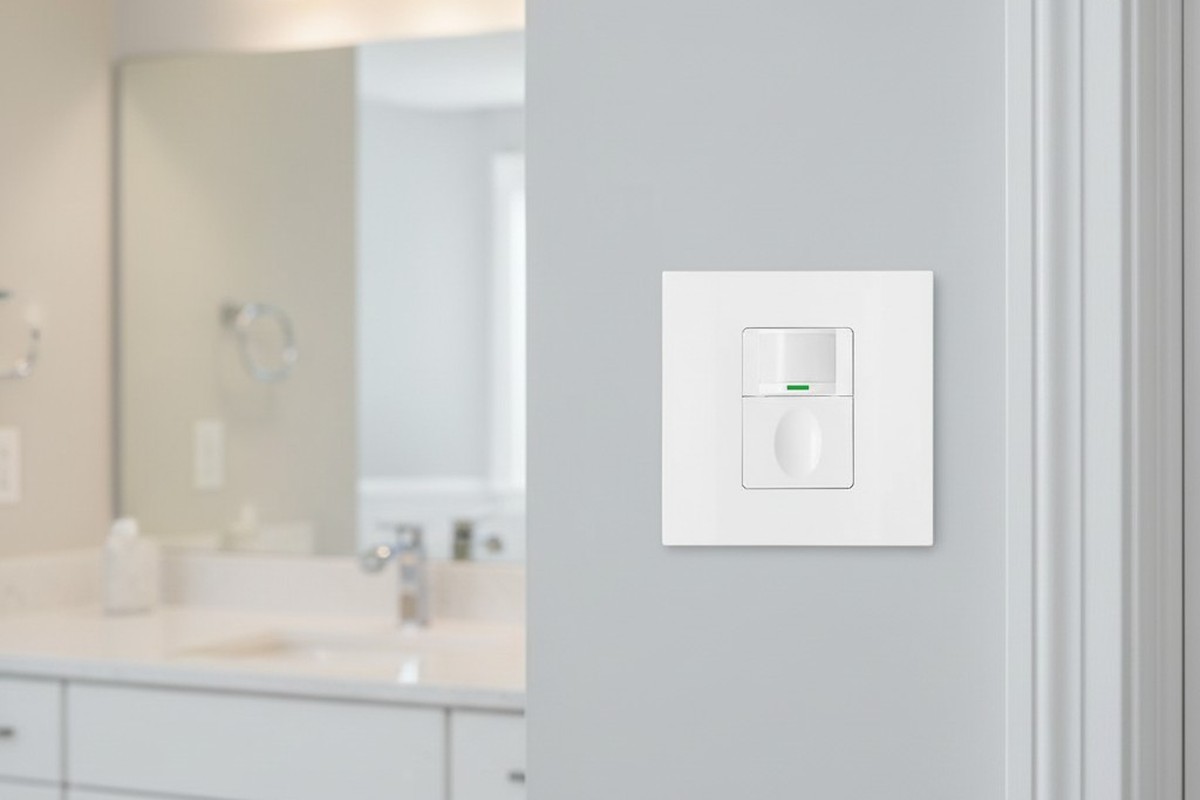
L'élément le plus dangereux dans une salle de bains communicante n'est ni le carrelage glissant, ni l'absence de verrou sur la porte d'en face. C'est l'interrupteur. Plus précisément, l'interrupteur à bascule standard activé à 2 h 00 du matin, qui inonde l'espace commun d'une lumière éclatante à 5000K avec un spectre de lumière du jour, puis reste allumé toute la nuit.
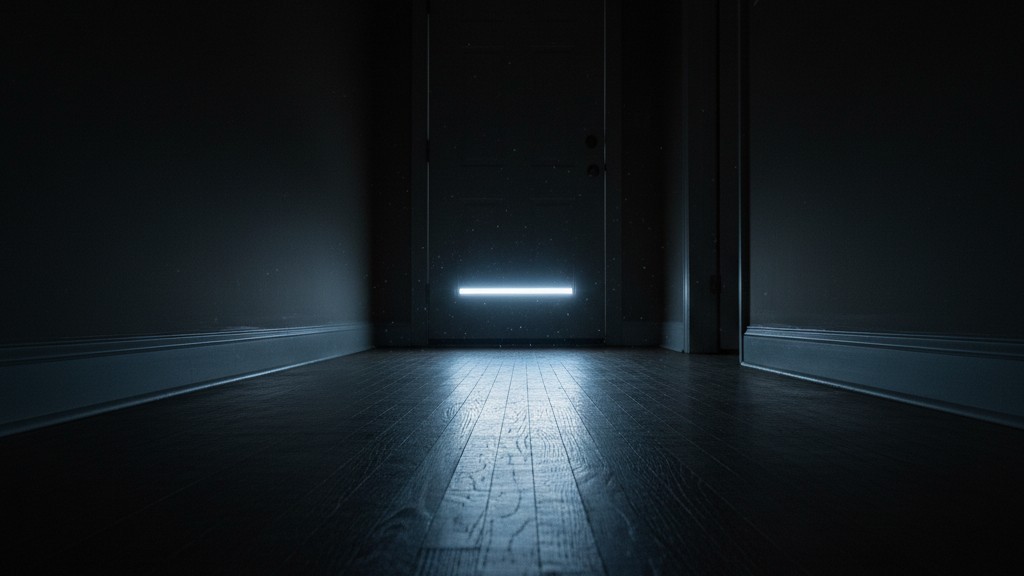
La lumière s'infiltre sous le cadre de la porte. Elle réveille le frère ou la sœur dans la chambre voisine et perturbe le rythme circadien de l'occupant. Les disputes n'émergent pas par conflit de territoire, mais en raison du manque de sommeil.
Cette dynamique s'observe constamment dans les maisons à étage de style colonial et les nouvelles constructions résidentielles où la salle de bains partagée est la norme. Les parents font appel à des électriciens pour “ réparer le câblage ” parce que les enfants se disputent, mais le câblage fonctionne généralement très bien. Le problème vient de l'interface. Le premier réflexe consiste à installer un détecteur de mouvement pour s'assurer que les lumières s'éteignent automatiquement lorsque les enfants quittent la pièce. L'intention est excellente. Cependant, la plupart des personnes — y compris de nombreux entrepreneurs généraux — achètent le mauvais détecteur ou configurent le bon détecteur de manière incorrecte. Ils installent un commutateur qui allume les lumières automatiquement . Dans une salle de bains, cela constitue une erreur stratégique.
L'éthique de l'automatisation : mode Occupation vs mode Vacance
Il existe une distinction fondamentale dans le contrôle de l'éclairage que la plupart des propriétaires ne remarquent que lorsqu'il est trop tard : la différence entre le mode Occupation (Allumage automatique / Extinction automatique) et le mode Vacance (Allumage manuel / Extinction automatique). Les arguments commerciaux des équipements de maison intelligente mettent en avant le mode Occupation comme le comble du confort : ” Le confort mains libres ! ”, “ Ne touchez plus jamais un interrupteur sale ! ”
Dans une salle de bains partagée par des adolescents qui dorment, le mode Occupation s'apparente à une agression.
La scène se répète chaque nuit : un enfant entre à demi endormi dans la salle de bains pour utiliser les toilettes. Si le détecteur est réglé sur le mode Occupation (Allumage automatique), le relais s'active dès le franchissement du seuil, éclairant le meuble lavabo à pleine puissance. Les pupilles se contractent, la production de mélatonine s'arrête et l'enfant se retrouve parfaitement éveillé. Pire encore, si la sensibilité du détecteur est trop élevée — ce qui est généralement le cas par défaut —, le chat de la famille qui se déplace à 3 h 00 du matin déclenche le même éclairage. Un système d'éclairage ne devrait pas pouvoir être actionné par un golden retriever.
La seule configuration appropriée pour une salle de bains résidentielle est le mode Vacance. Cela oblige l'utilisateur à appuyer physiquement sur le bouton pour allumer la lumière. Ce léger effort est essentiel ; il permet à un utilisateur somnolent d'entrer dans la pièce et d'utiliser les toilettes dans l'obscurité (ou à la lumière d'une veilleuse) sans déclencher l'éclairage principal. L'automatisation n'intervient que pour la automatiquement cycle. If they do turn the light on, the sensor watches for their departure and cuts the power five minutes later. The problem of the “lights left on” is solved, but the sanctity of the dark house is preserved.
The Hardware: Why Rayzeek Fits the Retrofit
If money were no object, you would install a Lutron Maestro system in every room. The plastics are nicer, the tactile feel of the button is premium, and the warranty support is legendary. But a Lutron sensor kit for a 3-way application (where two switches control one light) can run upwards of $60 to $80 per bathroom. When you are retrofitting a four-bathroom house, that math gets ugly fast.
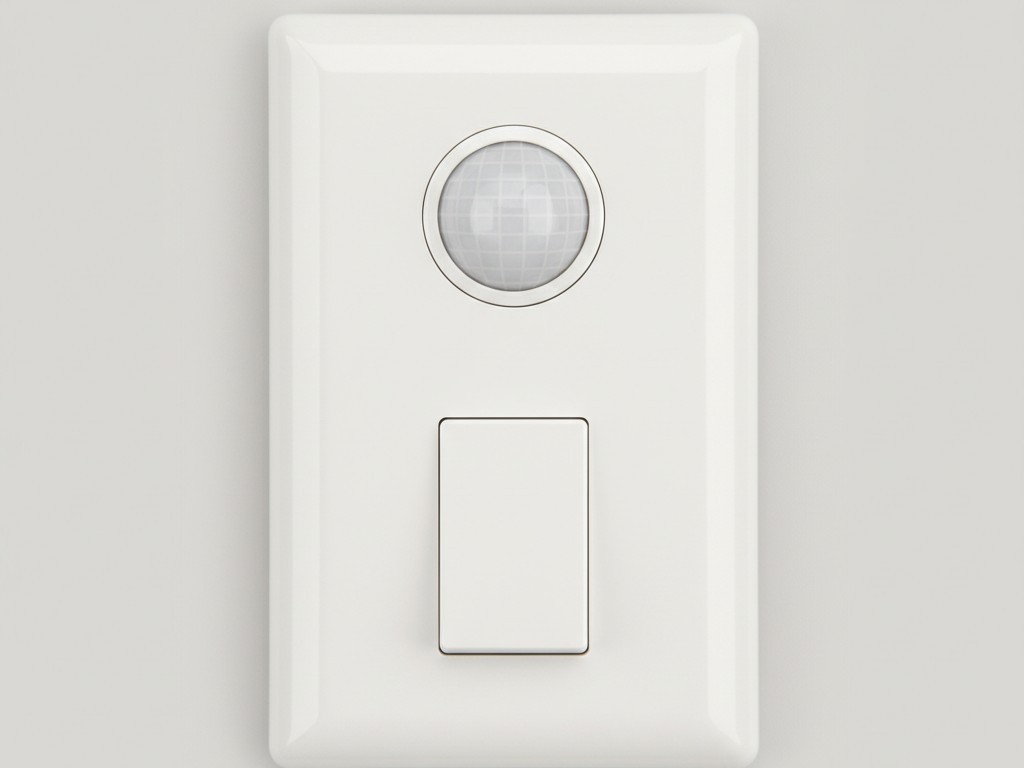
For the “Good Enough” retrofit, the Rayzeek RZ023 series has cornered the market. It offers about 90% of the performance for roughly 60% of the price—you’re looking at a price point closer to $35 for a 3-way kit. In a high-end custom build where the client is scrutinizing the bevel of the faceplate, stick with Lutron. But for a Jack-and-Jill bathroom used by kids who will likely draw on the walls with marker eventually, Rayzeek is the pragmatic choice.
A note on “Smart” integration: You will be tempted to buy a Wi-Fi enabled switch that connects to Alexa or a phone app. Resist this. A bathroom light switch should not require a firmware update. It should not fail because your router needs rebooting. You want a “dumb” sensor that relies on Passive Infrared (PIR) detection and a physical relay. It needs to work every single time, instantly, for the next ten years. Keep the Wi-Fi in the living room.
The Wiring Gauntlet: Surviving the 3-Way Setup
This is where the project usually falls apart. A Jack-and-Jill bathroom almost always has a 3-way switch setup: one switch at each door, controlling the same vanity light. Standard mechanical switches are forgiving; you can sometimes muddle through the wiring and get them to work. Motion sensors are not. They require precise identification of the circuit flow.
Ces produits pourraient vous intéresser

- Tension : 2 piles AAA
- Mode Jour/Nuit
- Temporisation : 15 min, 30 min, 1 h (par défaut), 2 h

- Détecteur de présence PIR pour montage au plafond avec sortie relais à contact sec
- Alimentation basse tension 12/24VDC ou 12/24VAC
- Contacts relais isolés COM, NO et NC pour les entrées de régulation CVC, GTC et de gestion de l'énergie

- Interrupteur détecteur de mouvement hyperfréquence encastré pour plafond basse tension continue
- Entrée 12 VDC / 24 VDC avec plage de 10-30 VDC
- Courant de fonctionnement maximal de 10A avec temporisation, seuil Lux et sensibilité réglables
- Interrupteur détecteur de mouvement à micro-ondes encastré au plafond pour charges plus élevées
- Entrée de tension secteur 100-265 VAC, modèle 10A
- Détection hyperfréquence (micro-ondes) 5,8 GHz avec temporisation, seuil Lux et sensibilité réglables
- Interrupteur détecteur de mouvement à micro-ondes encastré au plafond
- Entrée de tension secteur 100-265 VAC, modèle 5A
- Détection hyperfréquence (micro-ondes) 5,8 GHz avec temporisation, seuil Lux et sensibilité réglables
- Variateur détecteur de présence PIR RZ037 pour montage au plafond pour alimentation 220V
- Courant de fonctionnement maximal de 3A avec une charge nominale de 660W
- Le bouton LUX contrôle la marche/arrêt du capteur de lumière et la luminosité de variation réglée par l'utilisateur
- Variateur détecteur de présence PIR RZ037 pour montage au plafond pour alimentation 110V
- Courant de fonctionnement maximal de 3A avec une charge nominale de 330W
- Le bouton LUX contrôle la marche/arrêt du capteur de lumière et la luminosité de variation réglée par l'utilisateur

- Interrupteur détecteur de mouvement à micro-ondes basse tension CC pour montage au plafond
- Entrée 12 VDC / 24 VDC avec plage de 10-30 VDC
- Courant de fonctionnement maximal de 10A avec temporisation, seuil Lux et sensibilité réglables
- Interrupteur détecteur de mouvement à micro-ondes pour montage au plafond pour charges plus élevées
- Entrée de tension secteur 100-265 VAC, modèle 10A
- Détection hyperfréquence (micro-ondes) 5,8 GHz avec temporisation, seuil Lux et sensibilité réglables
- Interrupteur à détecteur de mouvement hyperfréquence pour montage au plafond
- Entrée de tension secteur 100-265 VAC, modèle 5A
- Détection hyperfréquence (micro-ondes) 5,8 GHz avec temporisation, seuil Lux et sensibilité réglables

- Interrupteur à détecteur de mouvement PIR encastré pour plafond à basse tension CC
- Entrée 12 VDC / 24 VDC avec plage de 10-30 VDC
- Courant de fonctionnement maximal de 10A avec temporisation, seuil Lux et sensibilité réglables

- Interrupteur à détecteur de mouvement PIR encastré pour plafond pour charges plus élevées
- Entrée de tension secteur 100-265 VAC, modèle 10A
- Détection à 360 degrés avec temporisation, seuil Lux et sensibilité réglables
- Interrupteur à détecteur de mouvement PIR encastré pour plafond
- Entrée de tension secteur 100-265 VAC, modèle 5A
- Détection à 360 degrés avec temporisation, seuil Lux et sensibilité réglables

- Kit d’interrupteur sans fil et récepteur pour le contrôle de l’éclairage intérieur MARCHE/ARRÊT
- Récepteur 100-230VAC, 50/60Hz avec courant nominal de 5A
- Interrupteur sans fil alimenté par pile CR2032 avec communication 2.4GHz
- Détection d'occupation (Auto-ON/Auto-OFF)
- 12–24V DC (10–30VDC), jusqu'à 10A
- Couverture 360°, diamètre de 8–12 m
- Temporisation 15 s–30 min
- Capteur de luminosité Désactivé/15/25/35 Lux
- Sensibilité Haute/Basse
- Mode d'occupation Auto-ON/Auto-OFF
- 100–265V AC, 10A (neutre requis)
- Couverture 360° ; diamètre de détection 8–12 m
- Temporisation 15 s–30 min ; Lux Désactivé/15/25/35 ; Sensibilité Haute/Basse
- Mode d'occupation Auto-ON/Auto-OFF
- 100–265V AC, 5A (neutre requis)
- Couverture 360° ; diamètre de détection 8–12 m
- Temporisation 15 s–30 min ; Lux Désactivé/15/25/35 ; Sensibilité Haute/Basse
The Master and The Slave
You cannot simply buy two standard motion sensors and install them at both doors. If you do, they will fight each other. When one sensor triggers, it sends voltage down the line that the other sensor isn’t expecting, often tripping the internal breaker or popping the device entirely. This is the “Two-Door Dilemma” that fills up DIY forums on Sunday nights.
You must use a specific 3-Way Kit containing a Master Unit and a Slave (or Auxiliary) Unit. The Master unit houses the actual sensor brain and the high-voltage relay. The Slave unit is just a remote trigger that tells the Master “Hey, I saw movement.”
The Traveler Wire Trap
In a standard 3-way setup, you have “Traveler” wires running between the two switch boxes. These are often red, but in older houses, they might be any color the original electrician had in his truck. Do not trust the wire colors. You need to use a multimeter to identify three specific wires:
Laissez-vous inspirer par les portfolios de détecteurs de mouvement Rayzeek.
Vous ne trouvez pas ce que vous cherchez ? Ne vous inquiétez pas. Il existe toujours d'autres solutions à vos besoins. L'un de nos portfolios peut sans doute vous aider.
- The Line: The wire bringing fresh power from the breaker panel (usually in only one of the two boxes).
- The Load: The wire going up to the light fixture (usually in the other box).
- The Travelers: The wires connecting the two boxes.
The Rayzeek RZ023 kit uses the existing traveler wires to communicate between the Master and Slave. However, unlike a mechanical switch, the Master unit needs a constant power source to keep its internal brain alive.
The Non-Negotiable Neutral
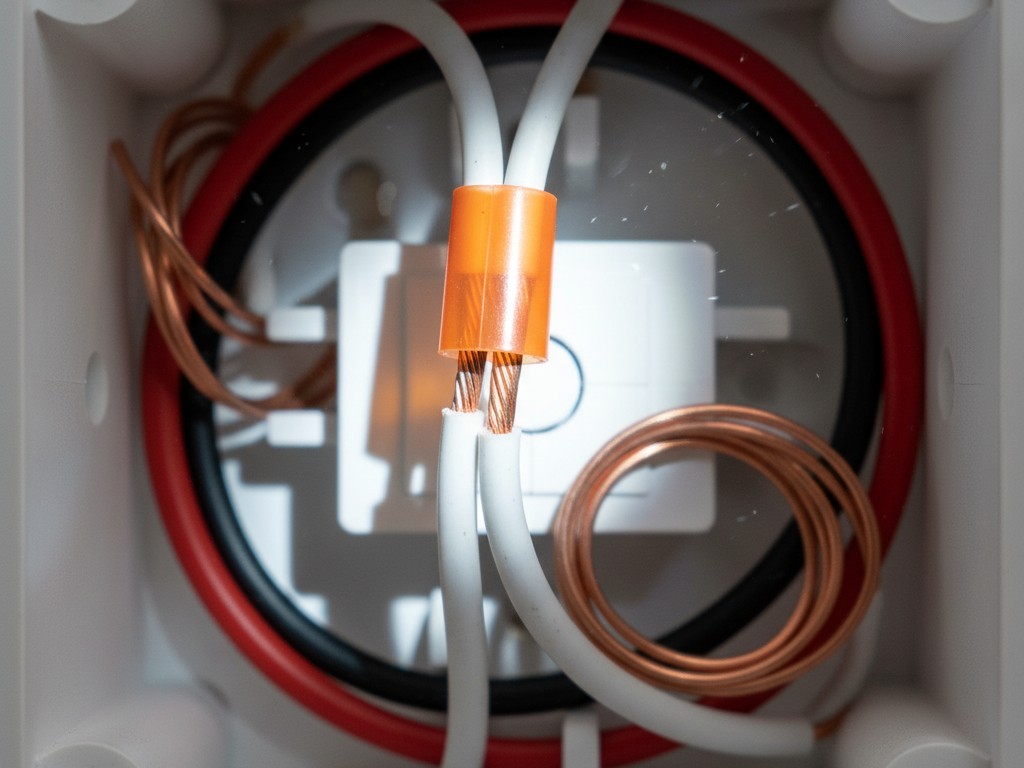
This brings us to the most critical failure point: the Neutral Wire.
Many older “No-Neutral Required” sensors work by trickling a tiny amount of electricity through the light bulb itself to complete the circuit to ground. This was fine when we all used 60-watt incandescent bulbs; the filament acted as a resistor and nobody noticed.
With modern LED bulbs, this “leakage current” is a disaster. The tiny trickle of electricity charges up the capacitor in the base of the LED bulb. When the capacitor gets full, it discharges—flash. Then it charges again. Flash. This is the “Ghost in the LED.” You will see the bathroom lights strobing faintly every 45 seconds, even when the switch is off.
To avoid this, you must use a sensor that requires a Neutral wire (usually the bundle of white wires tucked in the back of the box). The Rayzeek units need this hard path to ground so they can power their internal electronics without sending current through your expensive LED vanity bulbs. If your switch box does not have a neutral bundle, you are essentially out of luck for a reliable sensor installation without pulling new wire.
Note on Uncertainty: Be careful when reading the wiring diagrams included in the box. Rayzeek has revised their pigtail wire colors between the V1 and V2 models. Sometimes the traveler is Red, sometimes it is Black. Always read the paper insert that came with the specific unit you are holding, rather than relying on a PDF you found from three years ago.
Troubleshooting the Ghost
Even with a neutral wire, you may occasionally encounter a bulb that refuses to cooperate. Some builder-grade LEDs have such poor internal driver isolation that they will flicker if there is any electronics on the line. Before you tear the switch out of the wall, try swapping the bulb for a higher-quality brand like Cree or Philips. Often, the problem is the $2 bulb, not the $35 switch.
Also, be aware of what you are switching. These sensors are rated for Lighting Loads (resistive or capacitive). They are not always rated for Motor Loads (inductive). If you are trying to put this sensor on the exhaust fan to make it run automatically, stop. You need a switch rated for motors, or better yet, a humidity sensor. Putting a lighting sensor on a fan motor can fuse the relay contacts together, leaving the fan running permanently until you kill the breaker.
Final Configuration
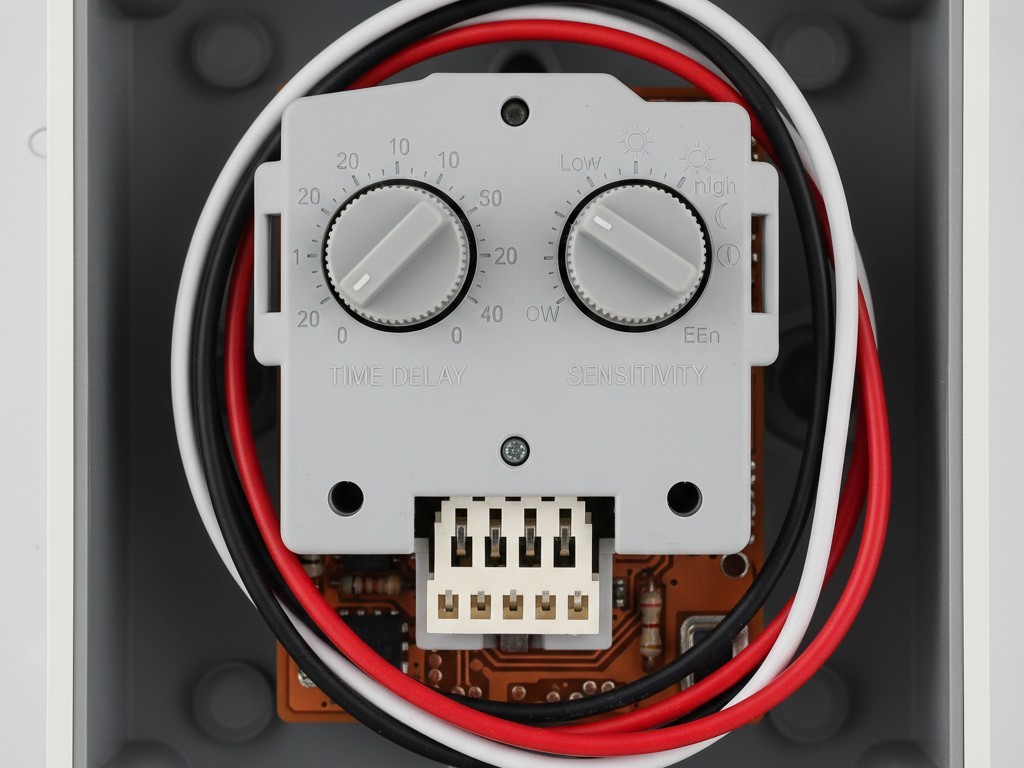
Once the unit is wired and the faceplate is screwed on—do not overtighten, or you will crack the plastic—you have two dials to adjust.
First is the Temporisation. Set this to 5 minutes. Anything less (like 1 minute) and the lights will go out while your child is brushing their teeth. Anything more (like 30 minutes) defeats the purpose of saving energy.
Second is the Sensibilité. Dial this down to about 70%. If you leave it at 100%, the sensor will pick up motion in the hallway every time the door is left ajar. You want the sensor to only care about people actually intérieur the bathroom.
Vous recherchez des solutions d’économie d’énergie activées par le mouvement ?
Contactez-nous pour obtenir une gamme complète de détecteurs de mouvement PIR, de produits d’économie d’énergie activés par le mouvement, d’interrupteurs à détecteur de mouvement et de solutions commerciales de présence/vacance.
There is a common complaint known as the “Shower Wave.” If the shower is recessed or has a thick curtain, the sensor cannot see the person inside. The lights go out mid-shampoo. The user has to stick a soapy hand out of the curtain and wave it around to re-trigger the sensor. This is annoying, but preferrable to the alternative of the lights staying on for hours. If this happens frequently, bump the timeout to 15 minutes, which is usually enough time to finish a shower.
You aren’t building a “smart” bathroom; you’re building a peaceful one. By forcing the manual-on (Vacancy) and automating the off, you remove the friction of remembering to flip the switch, without introducing the friction of being blinded at 2 AM. That is a trade-off worth $35 and an hour of wiring.







