
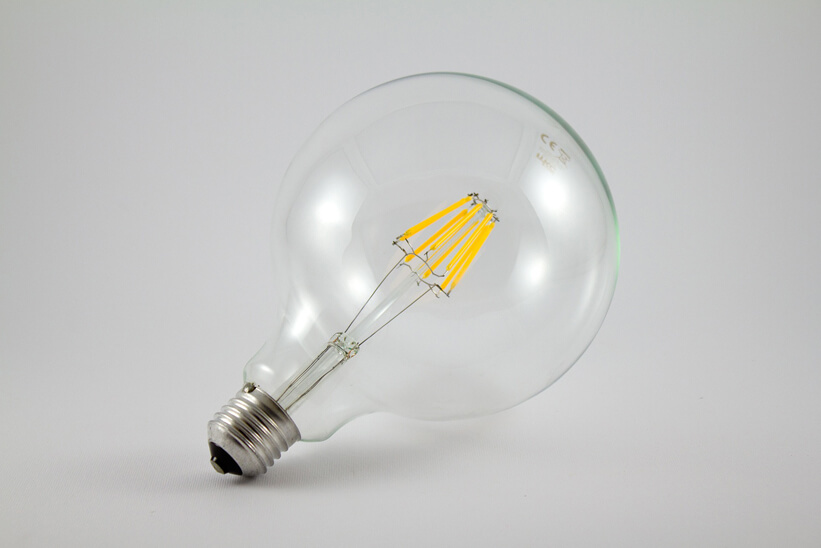
Erzielen Sie eine ansprechende Beleuchtung und senken Sie Ihre Stromkosten mit den passenden Leuchtmitteln.
Inhalt
- Begriffe rund um Leuchtmittel
- Warum energieeffiziente Leuchtmittel?
- Arten von Leuchtmitteln
- LED-Leuchtmittel
Angesichts der schier überwältigenden Auswahl an verschiedenen Leuchtmitteln auf dem Markt kann die Wahl des passenden Leuchtmittels für Ihre Leuchte oder Ihren Innenraum verwirrend sein. Unser Kaufberater soll den Branchenjargon verständlich machen und Ihnen klare Fakten liefern.
Begriffe rund um Leuchtmittel
Watt
Dies ist ein einfaches Maß für den Stromverbrauch. Herkömmliche Glühlampen sind typischerweise mit 40, 60 oder 100 Watt erhältlich. Die Leuchte gibt die maximale Wattzahl für das einzusetzende Leuchtmittel vor. Diese sollte niemals überschritten werden, da übermäßige Hitzeentwicklung zu Bränden führen kann.
Es ist wichtig zu beachten, dass die Wattzahl nicht immer die Lichtausbeute bestimmt. Wenn Sie eine Glühlampe durch ein energieeffizientes Leuchtmittel ersetzen, fällt die Wattzahl deutlich geringer aus. In der Regel erzeugt ein Leuchtmittel mit 7, 11 oder 13 Watt eine vergleichbare Lichtausbeute.
Lumen
Die Lichtausbeute eines Leuchtmittels wird in Lumen gemessen. Moderne Leuchtmittel geben ihren Lumenwert an, um Ihnen die Wahl des passenden Leuchtmittels für Ihren Raum zu erleichtern.
Lebensdauer
Suchen Sie nach bewegungsgesteuerten Energiesparlösungen?
Kontaktieren Sie uns für komplette PIR-Bewegungssensoren, bewegungsgesteuerte Energiesparprodukte, Bewegungsmelderschalter sowie gewerbliche Präsenz-/Präsenzabwesenheitslösungen.
Die durchschnittliche Lebensdauer eines Leuchtmittels wird in Stunden gemessen. Bei allen modernen Leuchtmitteln sollte die durchschnittliche Lebensdauer auf der Verpackung angegeben sein. Herkömmliche Glühlampen weisen typischerweise eine Lebensdauer von 750 Stunden auf, während energieeffiziente Kompaktleuchtstofflampen eine längere Lebensdauer von 10.000 Stunden erreichen.
Warum energieeffiziente Leuchtmittel?
Kompaktleuchtstofflampen bieten viele Vorteile gegenüber herkömmlichen Glühlampen. Sie besitzen eine deutlich längere Lebensdauer und verbrauchen bis zu 75% weniger Energie. Da die Beleuchtung etwa 30% der Stromkosten eines durchschnittlichen Haushalts ausmacht, lässt sich durch den Umstieg auf Kompaktleuchtstofflampen erheblich Geld sparen.
Kompaktleuchtstofflampen haben jedoch auch Nachteile. So ist bekannt, dass sie bis zu mehreren Minuten benötigen können, um ihre volle Helligkeit zu erreichen, und ihre Lichtqualität kann als kaltes, klinisches Weiß wahrgenommen werden. Die gute Nachricht ist, dass die meisten dieser Einschränkungen behoben wurden. Die neuesten Kompaktleuchtstofflampen erwärmen sich innerhalb von Sekunden und sind in vielen verschiedenen Farbtemperaturen mit hervorragender Farbwiedergabe erhältlich.
Berechnungen zufolge könnte der Kohlendioxidausstoß jährlich um 2,3 Millionen Tonnen reduziert werden, wenn alle Menschen im Vereinigten Königreich auf energiesparende Kompaktleuchtstofflampen umsteigen würden. Bei all diesen Vorteilen gibt es keinen Grund, nicht umzusteigen.
Arten von Leuchtmitteln
Glühlampen
Dabei handelt es sich um die traditionellen Leuchtmittel, die vor 20 Jahren in jedem Haushalt zu finden waren. Sie wurden vor über 100 Jahren erfunden und funktionieren, indem Strom durch einen Glühfaden im Inneren der Lampe geleitet wird, wodurch Licht entsteht. Wenn Sie eine solche Lampe nach längerem Betrieb berührt haben, wissen Sie, dass sie sehr viel Wärme erzeugt, was sie äußerst energieineffizient macht.
Je nach Leuchte sind die Lampen mit verschiedenen Sockeln erhältlich.
Bayonet Cap (BC)
Edison Screw (ES)
Small Bayonet cap (SBC)
Small Edison Screw (SES)
Incandescent light bulbs are available in a range of wattages
40-watt = 450 lumens (average light output)
60-watt = 800 lumens (average light output)
75-watt = 1,100 lumens (average light output)
100-watt = 1,600 lumens (average light output)
150-watt = 2,600 lumens (average light output)
They are available in a range of styles. See the more common variants below
A-line
This is the classic light bulb shape and the most common type of bulb, and these come in a range of colors and finishes.
Reflector
Used in fittings that focus light on a specific subject like spotlights or recessed lights.
Globe lamp
Light is defused from the bulb, making them perfect for use in pendant lights and fitting that does not have a shade.
Torpedo lamp
Common in table lamps and wall sconces.
Compact Fluorescent Lights (CFL)
These energy-efficient lamps are becoming more and more common as the cost of bulbs continues to fall while the quality continues to improve. With the potential to make significant savings on your energy bills, if you haven’t switched over the CFL lights yet there really isn’t a reason to hold back.
CFL lamps are available across a range of wattages and require fewer watts to produce the same lumen output as a traditional light bulb
9 to 13 watt CFL = 450 lumens (average light output)
13 to 15 watt CFL = 800 lumens (average light output)
18 to 25 watt CFL = 1,100 lumens (average light output)
23 to 30 watt CFL = 1,600 lumens (average light output)
30 to 52 watt CFL = 2,600 lumens (average light output)
Energy-efficient lamps are available in a range of styles and most caps
A-line CFL
Styled on the classic light bulb, these can be swapped directly with existing incandescent light bulbs.
Lassen Sie sich von den Rayzeek Bewegungssensor-Portfolios inspirieren.
Nicht das Richtige gefunden? Keine Sorge. Es gibt immer alternative Wege, Ihre Anforderungen zu erfüllen. Vielleicht kann eines unserer Portfolios helfen.
3-way CFL
Made specifically for table lamps.
Dimmable CFL
Works with existing dimmer circuits and lasts 13 longer than an incandescent light bulb.
Das könnte Sie auch interessieren

- Spannung: 2 AAA-Batterien
- Tag-/Nachtmodus
- Ausschaltverzögerung: 15min, 30min, 1h (Standard), 2h

- Deckenmontierter PIR-Präsenzmelder mit potenzielfreiem Relaisausgang
- 12/24VDC oder 12/24VAC Niederspannungsversorgung
- Isolierte Relaiskontakte (COM, NO und NC) für EMS-, HVAC- und Gebäudesteuerungs-Eingänge

- Niederspannungs-DC-Mikrowellen-Bewegungssensorschalter für den Deckeneinbau
- 12 VDC / 24 VDC Eingang mit 10–30 VDC Bereich
- 10A max. Arbeitsstrom mit einstellbarer Zeitverzögerung, Lux-Schwelle und Empfindlichkeit
- Decken-Mikrowellen-Bewegungssensorschalter für den Einbau für höhere Lasten
- 100–265 VAC Netzspannungseingang, 10A-Modell
- 5,8-GHz-Mikrowellenerfassung mit einstellbarer Zeitverzögerung, Lux-Schwelle und Empfindlichkeit
- Unterputz-Mikrowellen-Bewegungssensorschalter für die Deckenmontage
- 100–265 VAC Netzspannungseingang, 5A-Modell
- 5,8-GHz-Mikrowellenerfassung mit einstellbarer Zeitverzögerung, Lux-Schwelle und Empfindlichkeit
- PIR-Präsenzsensor-Dimmer RZ037 für Deckenmontage und 220V-Stromversorgung
- 3A maximaler Betriebsstrom mit 660W Nennlast
- LUX-Taste steuert Lichtsensor-EIN/AUS sowie benutzerdefinierte Dimmhelligkeit
- PIR-Präsenzsensor-Dimmer RZ037 für Deckenmontage und 110V-Stromversorgung
- 3A maximaler Betriebsstrom mit 330W Nennlast
- LUX-Taste steuert Lichtsensor-EIN/AUS sowie benutzerdefinierte Dimmhelligkeit

- Niederspannungs-DC-Mikrowellen-Bewegungssensorschalter für die Deckenmontage
- 12 VDC / 24 VDC Eingang mit 10–30 VDC Bereich
- 10A max. Arbeitsstrom mit einstellbarer Zeitverzögerung, Lux-Schwelle und Empfindlichkeit
- Decken-Mikrowellen-Bewegungssensorschalter für höhere Lasten
- 100–265 VAC Netzspannungseingang, 10A-Modell
- 5,8-GHz-Mikrowellenerfassung mit einstellbarer Zeitverzögerung, Lux-Schwelle und Empfindlichkeit
- Mikrowellen-Bewegungssensorschalter für die Deckenmontage
- 100–265 VAC Netzspannungseingang, 5A-Modell
- 5,8-GHz-Mikrowellenerfassung mit einstellbarer Zeitverzögerung, Lux-Schwelle und Empfindlichkeit

- Niederspannungs-DC-Unterputz-PIR-Bewegungssensorschalter für die Deckenmontage
- 12 VDC / 24 VDC Eingang mit 10–30 VDC Bereich
- Maximaler Betriebsstrom 10A mit einstellbarer Zeitverzögerung, Lux-Schwelle und Empfindlichkeit

- PIR-Bewegungssensorschalter für Deckeneinbau für höhere Lasten
- 100–265 VAC Netzspannungseingang, 10A-Modell
- 360-Grad-Erfassung mit einstellbarer Ausschaltverzögerung, Lux-Schwelle und Empfindlichkeit
- PIR-Bewegungssensorschalter für Deckeneinbau
- 100–265 VAC Netzspannungseingang, 5A-Modell
- 360-Grad-Erfassung mit einstellbarer Ausschaltverzögerung, Lux-Schwelle und Empfindlichkeit

- Funk-Schalter- und Empfänger-Set zur Ein/Aus-Lichtsteuerung im Innenbereich
- 100-230VAC, 50/60Hz Empfänger mit 5A Nennstrom
- CR2032-betriebener Funkschalter mit 2,4GHz-Kommunikation
- Präsenzmodus (Auto-EIN/Auto-AUS)
- 12–24V DC (10–30VDC), bis zu 10A
- 360°-Erfassungsbereich, 8–12 m Durchmesser
- Ausschaltverzögerung 15 s–30 Min.
- Lichtsensor Aus/15/25/35 Lux
- Hohe/Niedrige Empfindlichkeit
- Auto-EIN/Auto-AUS Präsenzmodus
- 100–265V AC, 10A (Neutralleiter erforderlich)
- 360°-Erfassungsbereich; 8–12 m Erfassungsdurchmesser
- Ausschaltverzögerung 15 s–30 min; Lux AUS/15/25/35; Empfindlichkeit Hoch/Niedrig
- Auto-EIN/Auto-AUS Präsenzmodus
- 100–265V AC, 5A (Neutralleiter erforderlich)
- 360°-Erfassungsbereich; 8–12 m Erfassungsdurchmesser
- Ausschaltverzögerung 15 s–30 min; Lux AUS/15/25/35; Empfindlichkeit Hoch/Niedrig
Spiral CFL
The compact spiral shape offers the greatest light distribution above other CFLs and lasts eight times longer than a traditional light bulb.
Halogen Lighting
Like incandescent light bulbs, halogen lights use a filament in a gas-filled capsule that is heated up using electrical current to produce light. Halogen lights however contain a larger more efficient filament and have halogen mixed into the gas in the capsule, the result is a bulb with a greater life span (up to 40%) and greater energy efficiency (10% – 20%).
The larger filament results in the light bulb operating at a much higher temperature, so parabolic reflectors deflect the heat from the lightbulb and focus the light on the subject. This makes halogen lights ideal for spotlights and recessed lighting.
Halogen lights are typically supplied at low voltage, they require a transformer to reduce the mains voltage from 240v down to 12v which increases the electrical current allowing the filament to glow brighter. The exception to this rule is the GU10 and GZ10 which operate directly of the mains power supply.
Low Voltage Halogen Lights – GU4 / GU5.3
Popular in homes and kitchens, low voltage lights produce a focused warm light, making them ideal for task lighting situations. They require a transformer to reduce the mains voltage down to a typical 12v.
The most common bulbs available are the GU4, which is commonly referred to as MR11 and MR8 (reflector diameter), and the GU5.3 is M50. These lamps can be found in a variety of fittings with a range of lighting angles and wattages.
Halogen Capsules – G4 / GY6.35 / G9
Capsules can be bought individually without a reflector casing, these are supplied to be installed in light fittings which come with light reflectors already incorporated into the design.
These are typically low voltage however the popular G9 capsule is designed to run directly from the mains power source, negating the need for an additional transformer.
LED-Leuchtmittel
Though not strictly ‘light bulbs’, light-emitting diodes are a fantastic replacement for traditional light bulbs. With typical energy costs only 10%-15% of traditional incandescent light bulbs, LED offers the potential to make tremendous savings on your energy bills.
Unlike other light bulbs on the market, LED lighting produces little to no heat which means they are incredibly safe to use in the house and above all run incredibly efficiently. Initially, prices for replacement bulbs were very high but more recently the costs have tumbled to super low price, an investment that will pay back dividends over the average ten-year LED lifespan.
LED lighting is now available in a wide range of styles to replace lightbulbs in most household light fittings
A-Line
This is the most common replacement LED bulb on the market, available in a variety of fixture caps it will fit most light fixtures.
Spotlights
These bulbs are built to replace most halogen lightbulbs on the market.
Floodlights
Easy to install with low power consumption, these are great for security and garden lighting.
Hopefully, our guide to light bulbs has answered any questions you may have.







