Inhalt
A
Wechselstrom (AC)
Elektrischer Strom, der kontinuierlich seine Richtung ändert. Die Frequenz wird in Zyklen pro Sekunde, genannt Hertz, gemessen. Wechselstrom ist die primäre Stromquelle in Wohn- und Gewerbeanwendungen. Es gibt zwei Wechselstromfrequenzen: 60 Hertz in den USA (Länder, die amerikanischen Standards folgen) und 50 Hertz in Europa sowie Ländern, die europäischen Standards folgen.
Umgebungsbeleuchtung
Das Licht innerhalb eines bestimmten Bereichs. Lichtsensoren erfassen die Umgebungsbeleuchtungsstärke, um das Licht automatisch ein- oder auszuschalten. In der Regel ist der Wert für das Umgebungslicht standardmäßig auf 15 Lux, 25 Lux und 35 Lux eingestellt.
Ampere / AMP
Die Einheit der Stromstärke. Ein Ampere ist der Strom, der bei einem Potenzial von einem Volt durch einen Widerstand von einem Ohm fließt.
B
Vorschaltgerät
Ein Vorschaltgerät ist ein elektrisches Gerät, das in Leuchtstofflampensystemen verwendet wird, um den Strom und die Spannung für Lampen und Leuchten zu regulieren und ausreichend zur Verfügung zu stellen.
Leuchtmittel
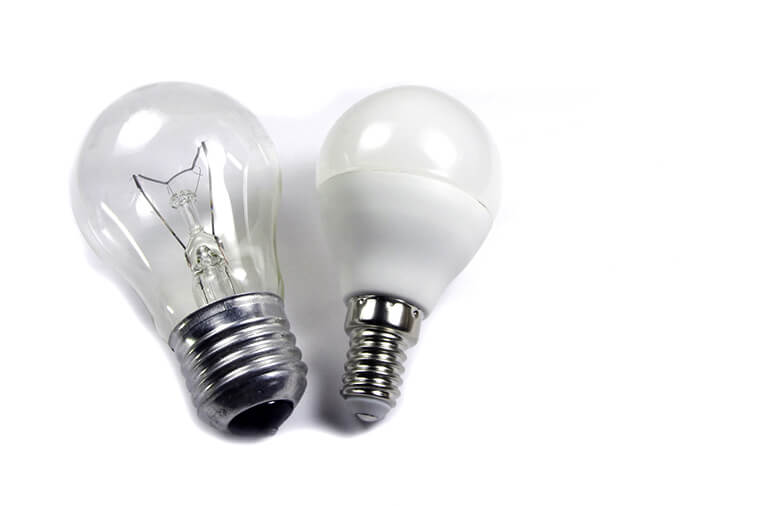
A Glühbirne ist eine eigenständige Lichtquelle, die in eine Fassung einer Leuchte eingeschraubt wird. In der Regel deckt eine Glas- oder Kunststoffkuppel die eigentliche Lichtquelle (Glühfaden oder LEDs) ab. Dies unterscheidet sich von einer Leuchte; das Leuchtmittel wird in die Leuchte eingeschraubt.
C
Kompaktleuchtstofflampe (CFL)
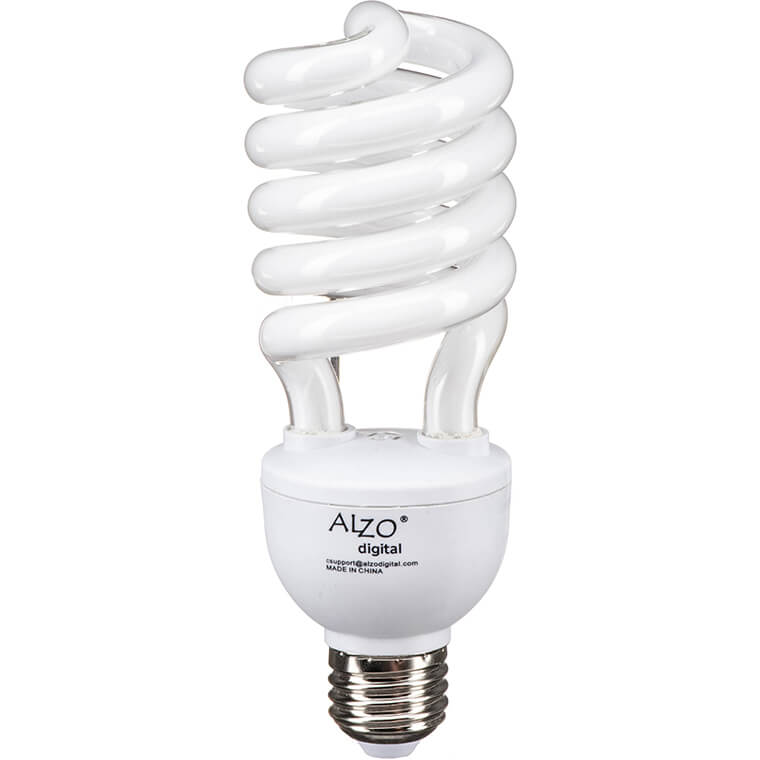
Eine Kompaktleuchtstofflampe (CFL), auch als Energiesparlampe bezeichnet, ist eine hocheffiziente Leuchtstofflampe, die als Ersatz für herkömmliche Glühlampen entwickelt wurde. Diese Lampen verwenden ein gebogenes oder gefaltetes Rohr, um in den Raum einer Glühbirne zu passen, sowie ein kompaktes elektronisches Vorschaltgerät im Sockel der Lampe.
Stromstärke
Die Fließrate von Elektrizität in einem Stromkreis, gemessen in Ampere.
D
Tageslichtnutzung
Lichter werden in Abhängigkeit vom vorhandenen Tageslicht herauf- oder heruntergedimmt, um ein vom Planer festgelegtes Beleuchtungsniveau gemäß den relevanten Normen aufrechtzuerhalten. Die Tageslichtnutzung ist auch als ‘konstante Beleuchtungsstärke’ und ‘Tageslichtregelung’ bekannt.
Direct Current (DC)
An electric current which flows in one direction only.
Dimmer
An electronic device or system connected to a light fixture to adjust the intensity of light output. Dimmer can lower the brightness of light to save energy and provides longer lamp life for incandescent, halogen, or low voltage sources.
Dual-technology Motion Sensor
Dual-technology motion sensors use two methods to detect motions. In most cases, they use a combination of PIR and ultrasonic technology to provide better motion detection performances.
Lassen Sie sich von den Rayzeek Bewegungssensor-Portfolios inspirieren.
Nicht das Richtige gefunden? Keine Sorge. Es gibt immer alternative Wege, Ihre Anforderungen zu erfüllen. Vielleicht kann eines unserer Portfolios helfen.
F
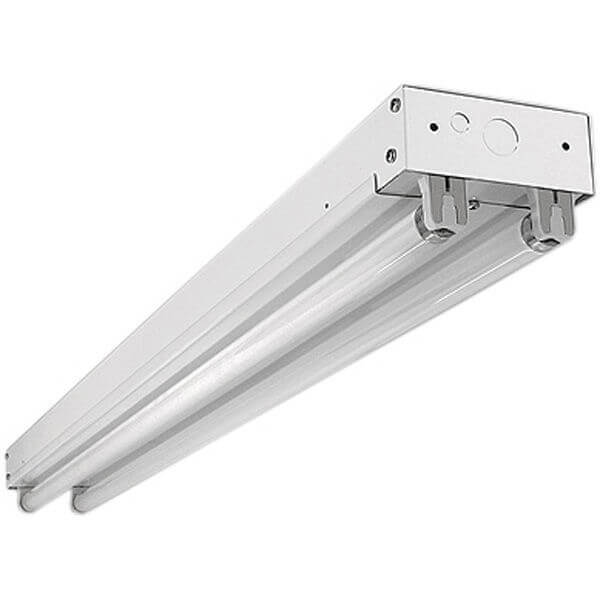
Leuchtstofflampe
A fluorescent lamp, or fluorescent tube, is a low-pressure mercury-vapor gas-discharge lamp that uses fluorescence to produce visible light.
G
Ground
A conducting connection between an electrical circuit and the earth or other large conductions body to serve as an earth thus makes a complete electrical circuit.
Ground Wire
A ground wire is an electrical wire that extends into the ground to give excess electrical charges a safe place to go for higher security purposes.
H
Halogen Lamp
A type of incandescent lamp with a small amount of a halogen added to the tungsten filament. The combination of the halogen gas and the tungsten filament redeposits evaporated tungsten on the filament, increasing its life and maintaining the clarity of the envelope.
HVAC
Heating, Ventilation & Air Conditioning.
I
IEC
International Electrotechnical Commission, is an international standards organization that publishes international standards for all electrical, electronic and related technologies.
Illuminance
The “lighting level” measured in foot-candles, which indicates the density of light on a surface per unit area, i.e. how much light is falling on a given area (ft-C = lm/ft2 or lux = lm/m2).
Suchen Sie nach bewegungsgesteuerten Energiesparlösungen?
Kontaktieren Sie uns für komplette PIR-Bewegungssensoren, bewegungsgesteuerte Energiesparprodukte, Bewegungsmelderschalter sowie gewerbliche Präsenz-/Präsenzabwesenheitslösungen.
Incandescent Lamp
An electric light with a wire filament that glows and gives off light when heated by an electric current. They are low costs and work equally well on either AC and DC.
IR (infrared)
Electromagnetic waves in the frequency range just below visible light corresponding to radiated heat. IR waves are often used for detecting motions in motion sensors.
L
Lamp life
Average time of the lamp that is capable of producing light before it fails. Usually, it’s defined as the point in time when 50% of the lamps have burned out.
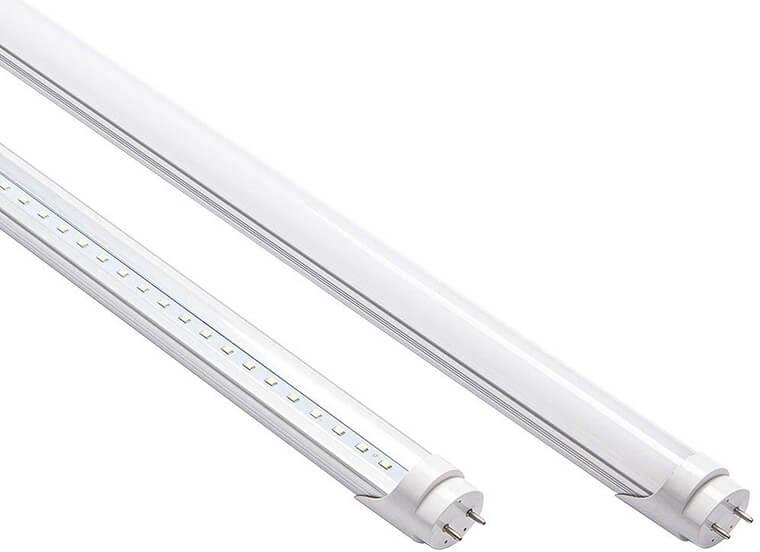
LED (Light-Emitting Diode)
A semiconductor light source that emits light when current flows through it. They are 90% more efficient than incandescent light bulbs, extremely long life and produce little heat on object being illuminated.
Line Voltage
The standard 120 V power provided by receptacles and for lighting fixtures in commercial spaces in the United States and Canada.
Luminaire
A luminaire or light fixture is an electrical device containing an electric lamp that provides illumination. All light fixtures have a fixture body and one or more lamps. The lamps may be in sockets for easy replacement—or, in the case of some LED fixtures, hard-wired in place.
M
Motion Detector / Motion Sensor
A motion detector or motion sensor is an electrical device that utilizes a sensor to detect nearby motion, particularly people. Typically, in the lighting control sector, there is PIR technology motion sensor, ultrasonic technology motion sensor and dual technology motion sensor that use a combination technology of both. Motion detectors are also known as ‘presence detectors’.
O
Präsenzsensor
An occupancy sensor is an indoor motion sensor used to detect the presence of a person to automatically control lights or temperature or ventilation systems. The purpose of using occupancy sensor is to save energy and increase convenience by automatically turning lights on when space is occupied and off when space is vacant.
P
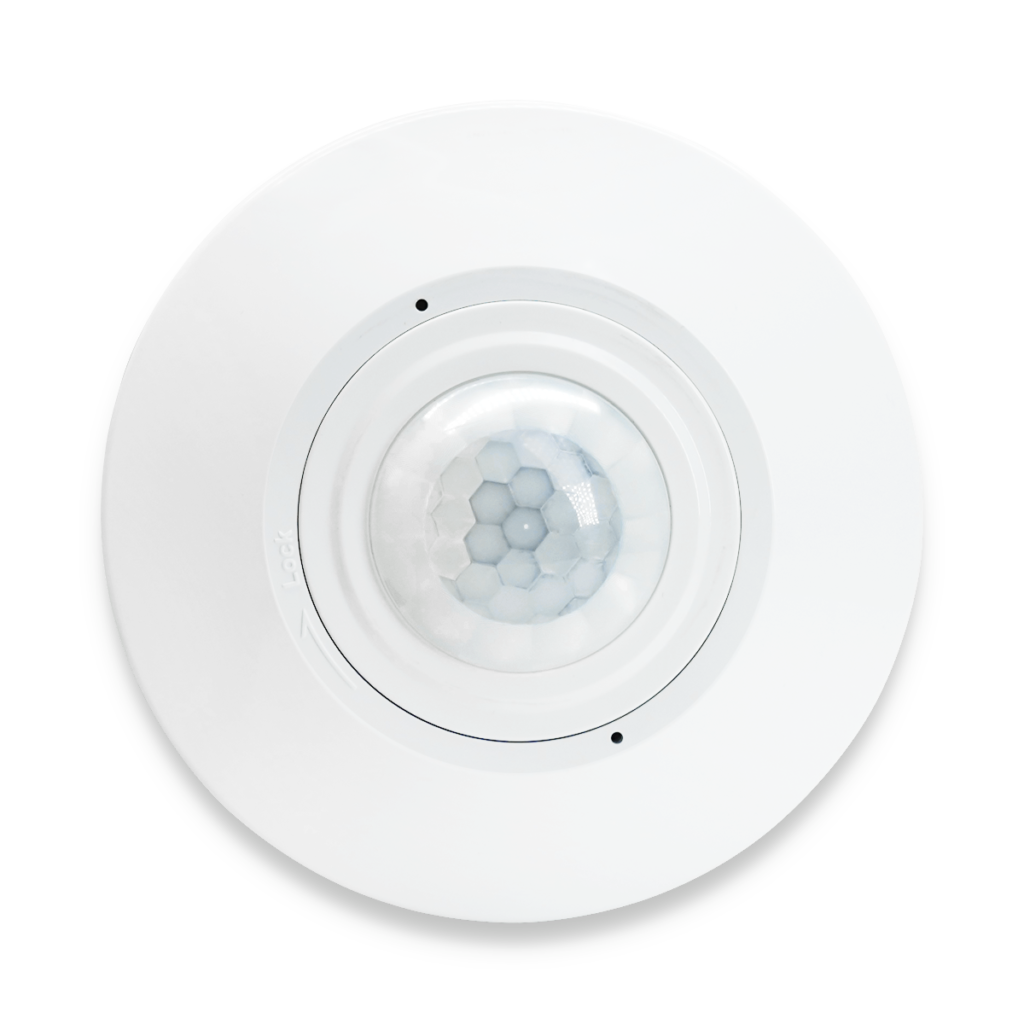
Passive Infrared Sensor / PIR Sensor
A passive infrared sensor (PIR sensor) is an electronic sensor that measures infrared (IR) light radiating from objects in its field of view. They are most often used in PIR-based motion detectors.
Photocell
A control agent for fixtures that can automate light levels. Some photocells qualify controls for certain rebates and incentives.
Das könnte Sie auch interessieren

- Spannung: 2 AAA-Batterien
- Tag-/Nachtmodus
- Ausschaltverzögerung: 15min, 30min, 1h (Standard), 2h

- Deckenmontierter PIR-Präsenzmelder mit potenzielfreiem Relaisausgang
- 12/24VDC oder 12/24VAC Niederspannungsversorgung
- Isolierte Relaiskontakte (COM, NO und NC) für EMS-, HVAC- und Gebäudesteuerungs-Eingänge

- Niederspannungs-DC-Mikrowellen-Bewegungssensorschalter für den Deckeneinbau
- 12 VDC / 24 VDC Eingang mit 10–30 VDC Bereich
- 10A max. Arbeitsstrom mit einstellbarer Zeitverzögerung, Lux-Schwelle und Empfindlichkeit
- Decken-Mikrowellen-Bewegungssensorschalter für den Einbau für höhere Lasten
- 100–265 VAC Netzspannungseingang, 10A-Modell
- 5,8-GHz-Mikrowellenerfassung mit einstellbarer Zeitverzögerung, Lux-Schwelle und Empfindlichkeit
- Unterputz-Mikrowellen-Bewegungssensorschalter für die Deckenmontage
- 100–265 VAC Netzspannungseingang, 5A-Modell
- 5,8-GHz-Mikrowellenerfassung mit einstellbarer Zeitverzögerung, Lux-Schwelle und Empfindlichkeit
- PIR-Präsenzsensor-Dimmer RZ037 für Deckenmontage und 220V-Stromversorgung
- 3A maximaler Betriebsstrom mit 660W Nennlast
- LUX-Taste steuert Lichtsensor-EIN/AUS sowie benutzerdefinierte Dimmhelligkeit
- PIR-Präsenzsensor-Dimmer RZ037 für Deckenmontage und 110V-Stromversorgung
- 3A maximaler Betriebsstrom mit 330W Nennlast
- LUX-Taste steuert Lichtsensor-EIN/AUS sowie benutzerdefinierte Dimmhelligkeit

- Niederspannungs-DC-Mikrowellen-Bewegungssensorschalter für die Deckenmontage
- 12 VDC / 24 VDC Eingang mit 10–30 VDC Bereich
- 10A max. Arbeitsstrom mit einstellbarer Zeitverzögerung, Lux-Schwelle und Empfindlichkeit
- Decken-Mikrowellen-Bewegungssensorschalter für höhere Lasten
- 100–265 VAC Netzspannungseingang, 10A-Modell
- 5,8-GHz-Mikrowellenerfassung mit einstellbarer Zeitverzögerung, Lux-Schwelle und Empfindlichkeit
- Mikrowellen-Bewegungssensorschalter für die Deckenmontage
- 100–265 VAC Netzspannungseingang, 5A-Modell
- 5,8-GHz-Mikrowellenerfassung mit einstellbarer Zeitverzögerung, Lux-Schwelle und Empfindlichkeit

- Niederspannungs-DC-Unterputz-PIR-Bewegungssensorschalter für die Deckenmontage
- 12 VDC / 24 VDC Eingang mit 10–30 VDC Bereich
- Maximaler Betriebsstrom 10A mit einstellbarer Zeitverzögerung, Lux-Schwelle und Empfindlichkeit

- PIR-Bewegungssensorschalter für Deckeneinbau für höhere Lasten
- 100–265 VAC Netzspannungseingang, 10A-Modell
- 360-Grad-Erfassung mit einstellbarer Ausschaltverzögerung, Lux-Schwelle und Empfindlichkeit
- PIR-Bewegungssensorschalter für Deckeneinbau
- 100–265 VAC Netzspannungseingang, 5A-Modell
- 360-Grad-Erfassung mit einstellbarer Ausschaltverzögerung, Lux-Schwelle und Empfindlichkeit

- Funk-Schalter- und Empfänger-Set zur Ein/Aus-Lichtsteuerung im Innenbereich
- 100-230VAC, 50/60Hz Empfänger mit 5A Nennstrom
- CR2032-betriebener Funkschalter mit 2,4GHz-Kommunikation
- Präsenzmodus (Auto-EIN/Auto-AUS)
- 12–24V DC (10–30VDC), bis zu 10A
- 360°-Erfassungsbereich, 8–12 m Durchmesser
- Ausschaltverzögerung 15 s–30 Min.
- Lichtsensor Aus/15/25/35 Lux
- Hohe/Niedrige Empfindlichkeit
- Auto-EIN/Auto-AUS Präsenzmodus
- 100–265V AC, 10A (Neutralleiter erforderlich)
- 360°-Erfassungsbereich; 8–12 m Erfassungsdurchmesser
- Ausschaltverzögerung 15 s–30 min; Lux AUS/15/25/35; Empfindlichkeit Hoch/Niedrig
- Auto-EIN/Auto-AUS Präsenzmodus
- 100–265V AC, 5A (Neutralleiter erforderlich)
- 360°-Erfassungsbereich; 8–12 m Erfassungsdurchmesser
- Ausschaltverzögerung 15 s–30 min; Lux AUS/15/25/35; Empfindlichkeit Hoch/Niedrig
T
Time-delay
If a switch is activated and no movement is detected the lights will switch off after a pre-set time.
U
UL-gelistet
A product that has been tested and listed by UL.
V
Kapselungs- und Präsenzmelder (Abwesenheitsmelder)
A device that detects the absence of people in a space and provides automatic switching or dimming of lighting. The primary purpose is to automatically turn lighting Off when an area is not occupied to ensure energy savings. A vacancy sensor relies on a person operating a manual switch to turn lighting On (Manual On/Auto Off).
Spannung
The electrical power, in volts, of force/pressure supplied by an electrical circuit to a lighting source. Standard US power supply is 120 V 60 cycle (277 V 60 cycles in commercial spaces). Standard power internationally is 220/240 V 50 cycles. It is conceptually the “pressure” of the power supply similar to the psi pressure in a pipe.
W
Wall Box
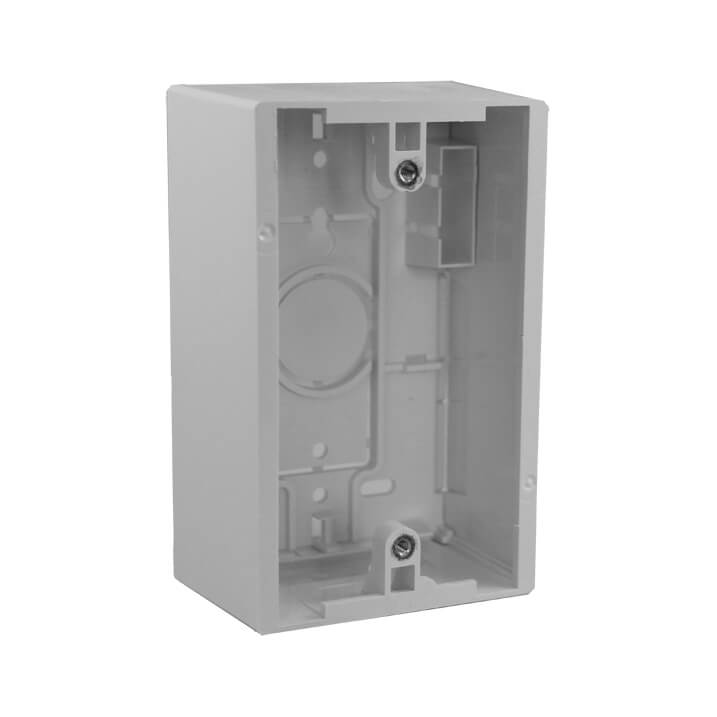
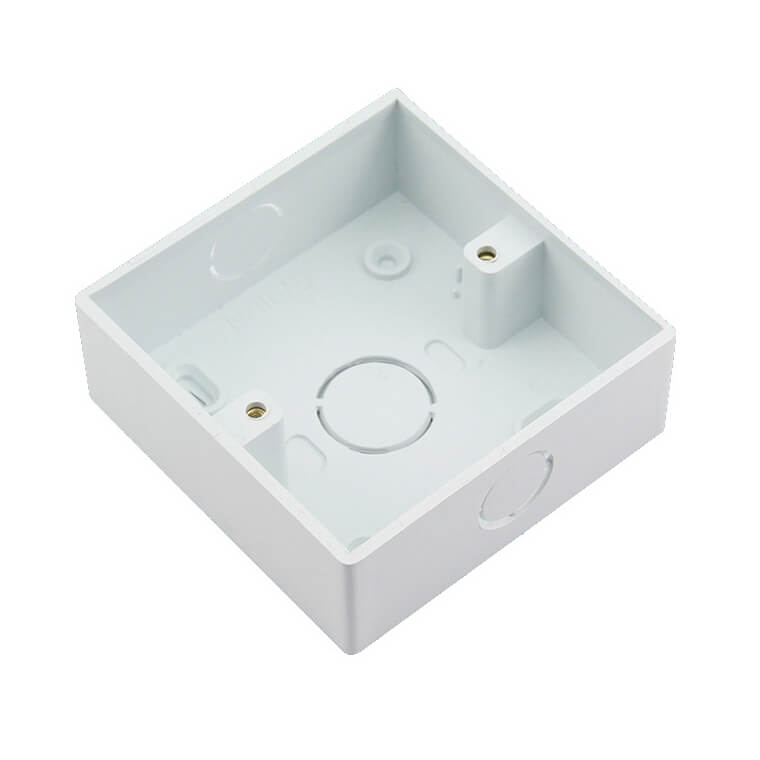
A metal or plastic enclosure housing one or more electrical devices. USA standard 1 gang size is 2” wide x 3.0” high. The UK standard 1 gang wall box size is 86mm (W) x 86mm (H) (3.425” x 3.425”). Also known as switch box or back box.