
[ARTICLE]
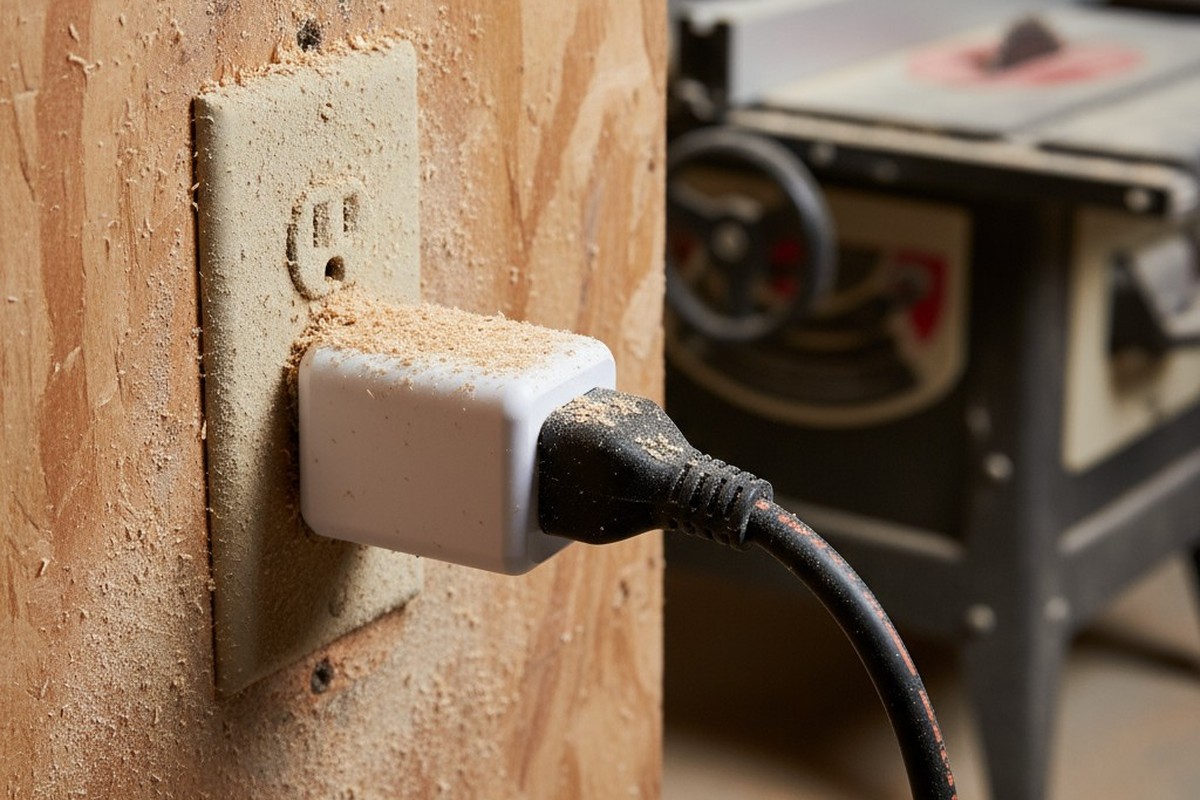
Workshop automation devices face a hostile gauntlet. Sawdust settles into ventilation slots, metal shavings create conductive bridges on circuit boards, and steel tool racks transform wireless signals into scattered ghosts. A smart plug that works perfectly in a climate-controlled home often becomes erratic or fails outright within months of being deployed in a workshop.
The failures are both mechanical and operational. Fine dust infiltrates enclosures, degrading electrical contacts and choking off airflow. Metal structures create electromagnetic dead zones that strangle Wi-Fi. The result is intermittent behavior that undermines the very purpose of automation: predictable, hands-free operation when your attention should be on your work.
In these environments, a simpler tool often wins. Plug-in motion sensors with physical controls and sealed designs offer measurable advantages over smart plugs where dust, debris, and network interference are daily realities. The real comparison isn’t about features, but about survival.
The Workshop Gauntlet
A workshop is not a dirty living room. It’s an active source of contamination. Sawdust from woodworking produces particles small enough to penetrate any ventilation grille. Metal machining creates even finer, conductive debris. This isn’t an occasional problem; it’s a constant byproduct of getting work done. At the same time, motors, metal cabinets, and steel workbenches create a storm of electromagnetic interference.
These conditions degrade consumer electronics from two directions at once. Dust infiltration is the primary mechanical failure. Once inside an enclosure, particles coat circuit boards, jam relay contacts, and obstruct cooling, shortening a device’s lifespan from years to months.
Wireless failure is the primary operational problem. Metal structures reflect and absorb radio signals, creating dead zones where Wi-Fi can’t penetrate. A smart plug may be electrically functional, but if it can’t talk to the network, its “smart” features are useless. It becomes a frustratingly dumb switch. One problem cripples the hardware, the other cripples the function. Either way, you’re left with automation that can’t be trusted.
Dust: The Silent Killer
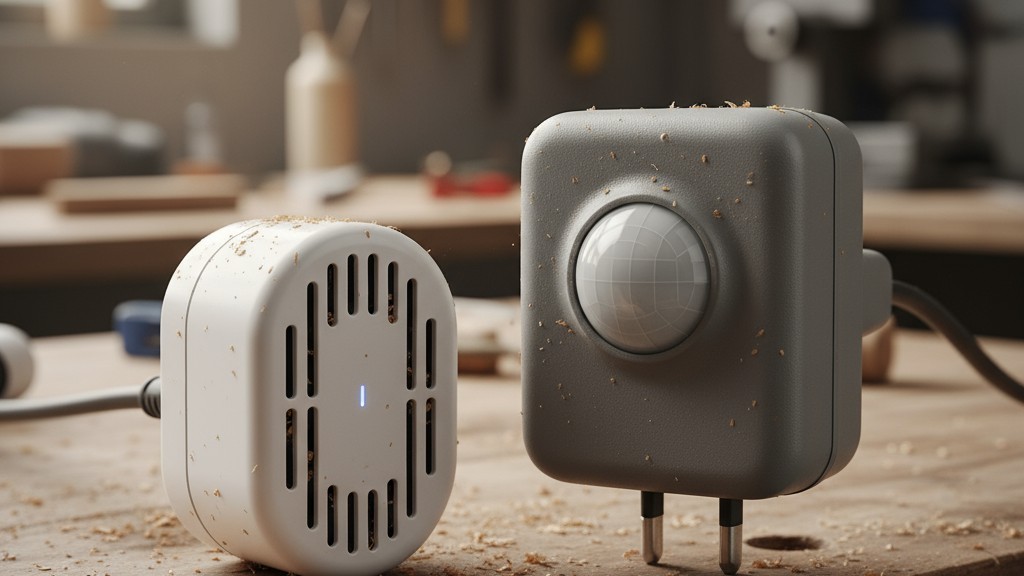
The difference between a motion sensor and a smart plug often comes down to a single design choice: ventilation.
Plug-in motion sensors, especially those designed for commercial or outdoor use, often use sealed enclosures. Their passive infrared sensors only need a small optical window to detect changes in heat signatures, not active airflow for cooling. This allows the internal circuitry and the power-switching relay to be isolated from the environment. By sealing the internals, these devices eliminate the primary pathway for dust contamination.
The trade-off is heat management. Components must be rated for higher temperatures, which typically limits the device to switching loads of 5 to 15 amperes—more than enough for lights, dust collectors, or individual tools. Some models carry Ingress Protection (IP) ratings, like IP54, which formally quantifies their resistance to dust. This level of sealing is rare in consumer-grade smart home devices, and it’s why a sealed motion sensor can run for years in a workshop where a smart plug fails in months.
Smart plugs, by contrast, are designed for clean, residential air. Their compact cases are packed with heat-generating components like Wi-Fi radios and control circuits. Ventilation slots are essential to prevent overheating. Unfortunately, these same slots act as a superhighway for sawdust and metal fines. Non-conductive dust insulates relay contacts, causing them to overheat and fail, while conductive metal dust can short-circuit the entire board. The very design that keeps a smart plug cool in a living room ensures its premature death in a workshop.
Rayzeek Hareket Sensörü Portföylerinden İlham Alın.
Aradığınızı bulamadınız mı? Endişelenmeyin. Sorunlarınızı çözmenin her zaman alternatif yolları vardır. Portföylerimizden biri size yardımcı olabilir.
Metal, Wi-Fi, and the Signal Graveyard
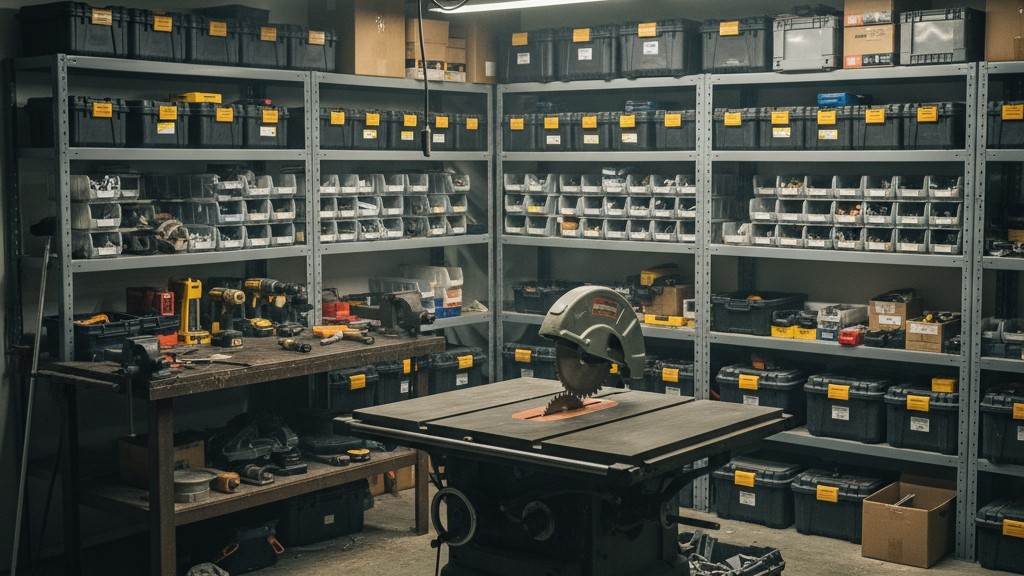
Workshops are graveyards for wireless signals. Steel tool cabinets, metal shelving, and even corrugated walls reflect and absorb the 2.4 GHz radio waves used by most smart devices. This creates a chaotic environment of signal reflections and dead zones where reliable connectivity is impossible.
A smart plug needs a stable, two-way connection to an access point to function. When signal strength drops, data packets are lost. The device tries to resend them, introducing lag. If packet loss climbs too high, the connection drops entirely. The device becomes a brick until it can re-establish a connection, which can take seconds or minutes.
İlginizi Çekebilecek Diğer Ürünler

- Voltaj: 2 Adet AAA Pil
- Gündüz/Gece Modu
- Zaman gecikmesi: 15dk, 30dk, 1sa (varsayılan), 2sa

- Kuru kontak röle çıkışlı, tavan tipi PIR varlık sensörü
- 12/24VDC veya 12/24VAC düşük voltaj güç beslemesi
- EMS, HVAC ve bina kontrol girdileri için COM, NO ve NC izole röle kontakları

- Düşük voltaj DC sıva altı tavan tipi mikrodalga hareket sensörlü anahtar
- 10-30 VDC aralığına sahip 12 VDC / 24 VDC giriş
- Ayarlanabilir zaman gecikmesi, Lüks eşiği ve hassasiyet özelliklerine sahip maks. 10A çalışma akımı
- Yüksek yük kapasiteli sıva altı tavan tipi mikrodalga hareket sensörlü anahtar
- 100-265 VAC şebeke voltajı girişi, 10A model
- Ayarlanabilir zaman gecikmesi, Lüks eşiği ve hassasiyete sahip 5,8 GHz mikrodalga algılama
- Sıva altı tavana monte mikrodalga hareket sensörlü anahtar
- 100-265 VAC şebeke gerilimi girişi, 5A model
- Ayarlanabilir zaman gecikmesi, Lüks eşiği ve hassasiyete sahip 5,8 GHz mikrodalga algılama
- 220V güç için tavana monte RZ037 PIR varlık sensörlü dimmer
- 660W nominal yük ile 3A maksimum çalışma akımı
- LUX düğmesi, ışık sensörünün AÇIK/KAPALI konumunu ve kullanıcı tarafından ayarlanan dimmer parlaklığını kontrol eder
- 110V güç için tavana monte RZ037 PIR varlık sensörlü dimmer
- 330W nominal yük ile 3A maksimum çalışma akımı
- LUX düğmesi, ışık sensörünün AÇIK/KAPALI konumunu ve kullanıcı tarafından ayarlanan dimmer parlaklığını kontrol eder

- Düşük voltajlı DC tavan montajlı mikrodalga hareket sensörlü anahtar
- 10-30 VDC aralığına sahip 12 VDC / 24 VDC giriş
- Ayarlanabilir zaman gecikmesi, Lüks eşiği ve hassasiyet özelliklerine sahip maks. 10A çalışma akımı
- Yüksek yüklü tavan montajlı mikrodalga hareket sensörlü anahtar
- 100-265 VAC şebeke voltajı girişi, 10A model
- Ayarlanabilir zaman gecikmesi, Lüks eşiği ve hassasiyete sahip 5,8 GHz mikrodalga algılama
- Tavan montajlı mikrodalga hareket sensörlü anahtar
- 100-265 VAC şebeke gerilimi girişi, 5A model
- Ayarlanabilir zaman gecikmesi, Lüks eşiği ve hassasiyete sahip 5,8 GHz mikrodalga algılama

- Düşük voltajlı DC sıva altı tavan montajlı PIR hareket sensörlü anahtar
- 10-30 VDC aralığına sahip 12 VDC / 24 VDC giriş
- Ayarlanabilir zaman gecikmesi, Lüks eşiği ve hassasiyet ile maks. 10A çalışma akımı

- Yüksek yüklü sıva altı tavan montajlı PIR hareket sensörlü anahtar
- 100-265 VAC şebeke voltajı girişi, 10A model
- Ayarlanabilir zaman gecikmesi, Lüks eşiği ve hassasiyet ile 360 derece algılama
- Sıva altı tavan montajlı PIR hareket sensörlü anahtar
- 100-265 VAC şebeke gerilimi girişi, 5A model
- Ayarlanabilir zaman gecikmesi, Lüks eşiği ve hassasiyet ile 360 derece algılama

- İç mekan AÇMA/KAPAMA aydınlatma kontrolü için kablosuz anahtar ve alıcı seti
- 5A nominal akımlı 100-230VAC, 50/60Hz alıcı
- 2.4GHz haberleşmeli CR2032 pille çalışan kablosuz anahtar
- Varlık (Otomatik AÇMA/Otomatik KAPATMA)
- 12–24V DC (10–30VDC), 10A'e kadar
- 360° kapsama alanı, 8–12 m çap
- Zaman gecikmesi 15 sn–30 dk
- Işık sensörü Kapalı/15/25/35 Lux
- Yüksek/Düşük hassasiyet
- Otomatik AÇMA/Otomatik KAPATMA varlık modu
- 100–265V AC, 10A (nötr hattı gereklidir)
- 360° kapsama alanı; 8–12 m algılama çapı
- Zaman gecikmesi 15 sn–30 dk; Lux KAPALI/15/25/35; Hassasiyet Yüksek/Düşük
- Otomatik AÇMA/Otomatik KAPATMA varlık modu
- 100–265V AC, 5A (nötr hattı gereklidir)
- 360° kapsama alanı; 8–12 m algılama çapı
- Zaman gecikmesi 15 sn–30 dk; Lux KAPALI/15/25/35; Hassasiyet Yüksek/Düşük
This is where the promise of smart convenience evaporates. A woodworker covered in sawdust can’t easily pull out a phone, open an app, and tap a button. The hands-free automation that smart plugs promise becomes unreliable precisely when it’s needed most. A plug-in motion sensor, however, operates independently. Its detection cone and time delay are set with a physical dial. It responds to your presence, not a command from a distant server, eliminating the fragile dependency that metal structures so easily break.
Seeing Through the Clutter
Motion detection in a workshop has to account for constant obstruction. Tool cabinets, lumber racks, and machinery create blind spots. A sensor with a narrow detection cone, optimized for a hallway, might miss you entirely if you’re standing behind a table saw.
Wide-angle detection cones—120 or even 150 degrees—dramatically reduce these blind spots. A single sensor mounted in a corner can cover an entire garage bay, activating lights or a dust collector the moment you walk in, regardless of your path. This reliability is key; you want the lights on before you navigate around a spinning blade, not after you fumble for a switch. While a wide cone might occasionally miss you if you stand perfectly still for a long time, that’s a far less common problem in an active workshop than the blind spots created by narrow-cone sensors.
Standalone vs. The Fragile Cloud
Reliability in a workshop demands independence. A plug-in motion sensor with physical dials is a self-contained system. It needs power, and that’s it. No Wi-Fi, no router, no internet connection, no cloud server. It is immune to internet outages, server maintenance, or a manufacturer deciding to shut down their service. Settings are adjusted instantly with the turn of a knob—a simple, tactile interface that works even when your hands are caked in grime.
A smart plug, however, relies on a fragile chain of dependencies. The plug needs the Wi-Fi. The Wi-Fi needs the router. The router needs the internet. The internet needs to connect to the manufacturer’s cloud server. The server needs to talk to your phone’s app. If any single link in that chain breaks, the plug stops being smart. It reverts to a manual switch with a tiny, inconvenient button you can’t press with gloves on. This isn’t a hypothetical risk. Routers reboot, internet service goes down, and cloud services fail. Each is a point of failure that a standalone motion sensor simply doesn’t have.
Matching the Plug to the Power Tool
A plug rated for “15 amps” can still fail spectacularly when connected to a 10-amp motor. That’s because the rating doesn’t tell the whole story. You have to distinguish between resistive and inductive loads.
A resistive load, like a light bulb or a heater, draws a steady current. An inductive load, like the motor in a table saw or dust collector, is completely different. When a motor starts, it creates a massive inrush current that can be three to ten times its normal running current for a fraction of a second. This surge of power puts immense stress on the mechanical relay inside a plug.
A cheap smart plug designed for lamps might have its relay contacts welded shut by the inrush from a 1.5-horsepower motor. That’s why robust motion sensors and industrial-grade plugs often provide a separate, lower rating for motors (e.g., “1/2 HP”) or inductive loads. Always check the fine print and match the device to the tool. For motor-driven equipment, a safety margin is not optional—it’s essential for preventing premature failure and potential fire hazards.
Hareket Algılamalı Enerji Tasarrufu Çözümleri Mi Arıyorsunuz?
Eksiksiz PIR hareket sensörleri, hareket algılamalı enerji tasarruflu ürünler, hareket sensörlü anahtarlar ve ticari Varlık/Yokluk (Occupancy/Vacancy) çözümleri için bizimle iletişime geçin.
Managing Cords and Trip Hazards
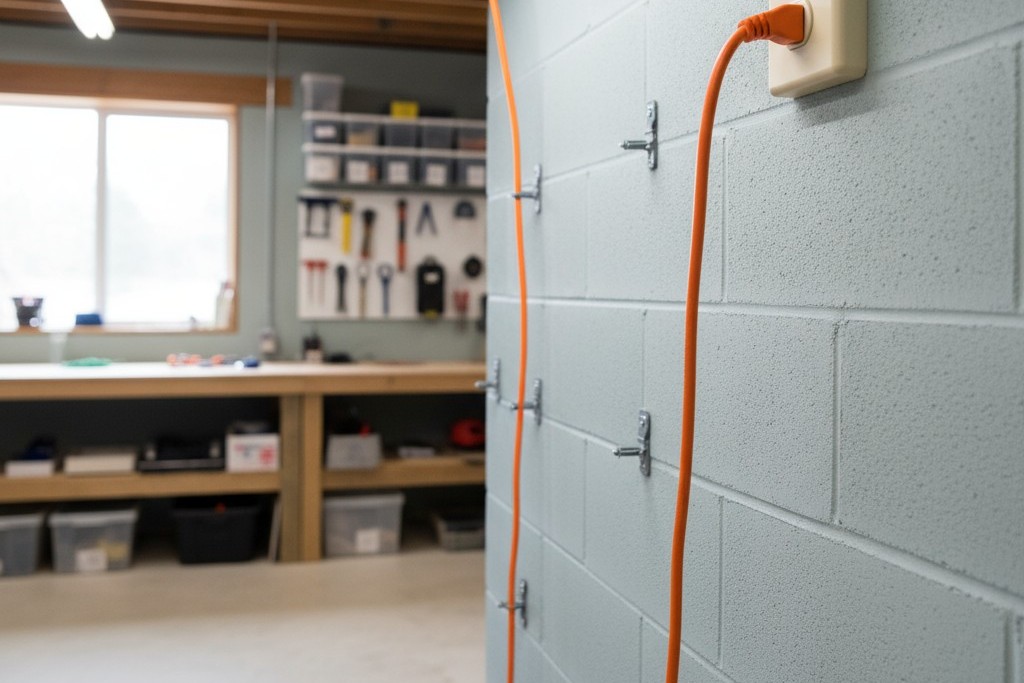
Plug-in devices mean cords, and in a workshop, a stray cord is more than an eyesore; it’s a serious trip hazard. Routing cords safely is critical. Keep them along walls, secure them overhead, or use cord covers in any open pathway. An outlet mounted high on a wall is ideal for controlling overhead lights, keeping the cord completely off the floor.
Also, pay attention to strain relief—the point where the cord enters the plug. Repeated flexing and tension will eventually cause the internal wires to break. Route cords with gentle curves, not sharp bends, and choose devices with well-designed, reinforced cord exits. These small details in physical construction determine whether a device will last for years or fail from mechanical stress.
When Smart Plugs Still Make Sense
Despite their vulnerabilities, smart plugs have a place in some workshop scenarios. For long-running processes that benefit from remote monitoring—like a battery charger running overnight or a dehumidifier in a lumber storage area—a smart plug can be invaluable. In these cases, the environment is often cleaner, and the need is for remote status checks, not instant motion activation.
A hybrid approach is often best. Use rugged, sealed motion sensors for lights and dust collection in the main, high-traffic work area. Deploy smart plugs selectively in cleaner zones for specific tasks like scheduled battery charging or monitoring equipment in an adjacent room. By playing to the strengths of each device, you can build a reliable automation system that fits the unique demands of the workshop.







